Category: Reviews

  • Movie Review: Star Wars Episode I — The Phantom Menace (1999)

    Movie Review: Star Wars Episode I — The Phantom Menace (1999)

    Star Wars the Phantom Menace

    Star Wars Episode I — The Phantom Menace came out when I was 11 years old, and I’m not going to lie to you: I liked it, so much so that my memory for it to this day is nearly word perfect. It’s an odd thing, remembering what I was like at 11, when the story of young Anakin Skywalker was aimed directly at my heart like a missile gunning towards a space station’s ventilation shaft, but this is hardly something I’m looking at through the lens of nostalgia. Before the release of The Force Awakens, while my various social media streams were reaching, in unison, for the films from the original trilogy, The Phantom Menace was the Star Wars film I reached for. As much as J.J. Abrams’ reboot/remaking of the Star Wars universe was a love letter to the Star Wars films everybody loves, it is very much a product of and response to the ecology of blockbuster film-making that The Phantom Menace largely created, one where the imagination was set free from the limitations of physical space by CGI and bound instead to the principal of narrative ease.

    Star Wars has always been a franchise dedicated to serving the whims of young boys. Its bright colors, easy charms, simplistic moral grounding, and elements borrowed from Joseph Campbell and the sci-fi serials of director/creator George Lucas‘ youth don’t leave much room for complication or nuance. But rather than examining my childhood (which wasn’t exactly damaged by the film) or the childhoods of the assembled horde of folks cheering that a film series owned by the Disney corporation has been liberated from the mind of its creator, The Phantom Menace needs to be examined in terms of the theoretical child George Lucas was directing for. Regardless of whether or not this represents the beginnings of a noble effort to document the fall of a democratic republic, the boy Lucas loved so completely when he made A New Hope is, with The Phantom Menace, a construct he holds in contempt.

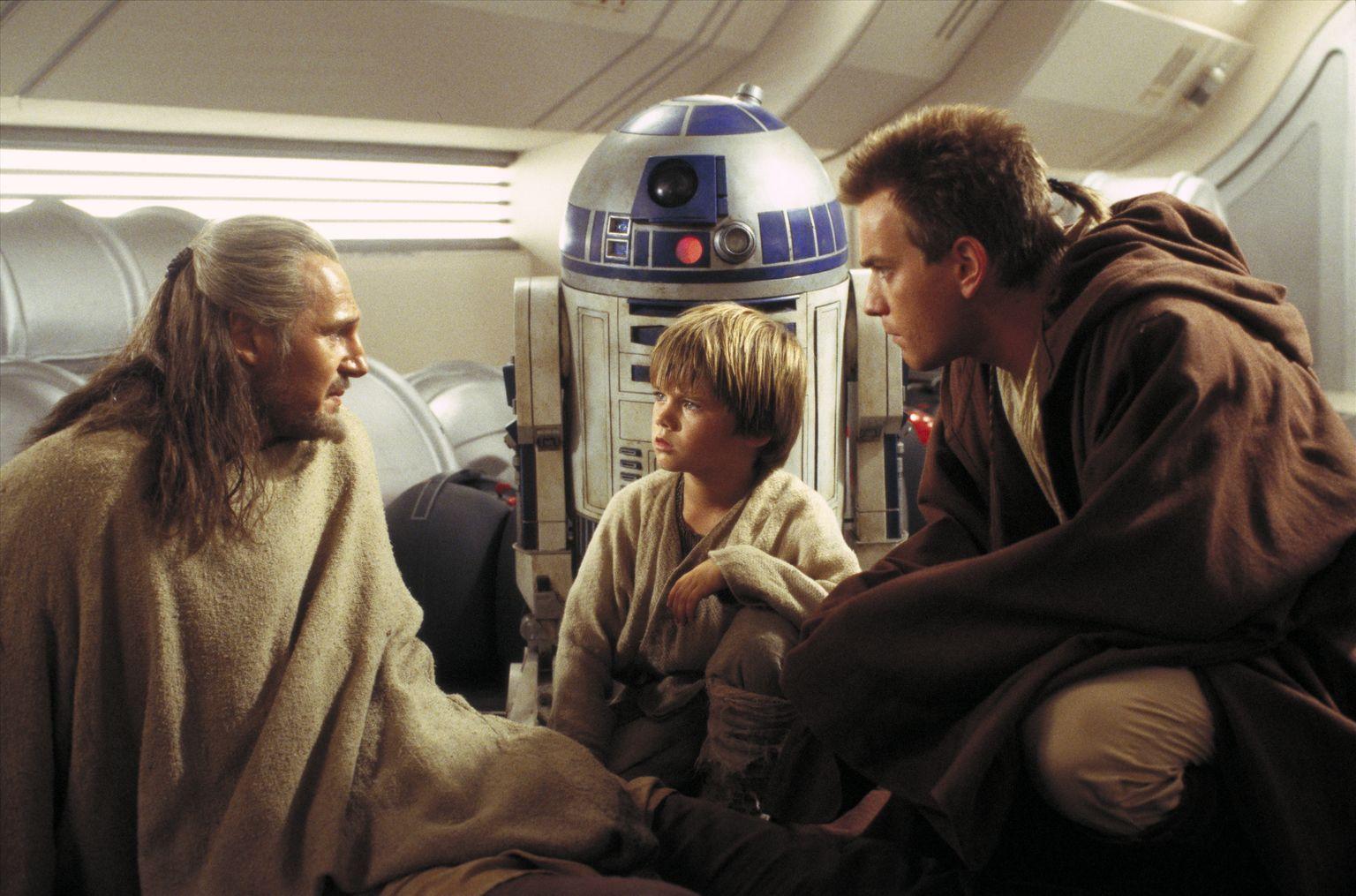
    There’s never a moment in The Phantom Menace where it feels like Lucas trusts his audience to understand what is happening, which is fair considering where he begins: In the middle of a treaty negotiation over blockaded trade routes. Like all great space-fairing epics, the galactic Senate is ineffectively wringing its hands over what to do about the Trade Federation’s illegal occupation of the routes to Naboo, waiting on a report from its Jedi ambassadors Qui-Gon Jin (Liam Neeson) and Obi-Wan Kenobi (Ewan McGreggor) before taking a vote on whether or not to sanction the Federation in some unspecified manner. In a way that’s clever (but not too clever considering the sheer number of corporate sponsorships attached to Star Wars), Lucas imagines the Trade Federation not merely as a corporation, but a body so large it has a seat in Senate. What they produce and who they service is unclear, but everything about The Phantom Menace is only clever on the surface, like the way Jedi Knights function in vaguely similar fashion to Jesuit priests. Because the Trade Federation are evil and stupid, they attack the Jedis with a squadron of easily dispatched droids, who spend the majority of The Phantom Menace bumbling about as various weapons cut through them like their sole purpose is to demonstrate the unspeakable power of the people they oppose. They also serve as a platform for Lucas to demonstrate both upgraded lightsaber techniques and his ability to create characters that would have once required an army of puppeteers and animatronics experts, the whole show meant to dazzle the eye at the cost of everything else.

    Through a series of contrivances involving a hair-raising number of racial stereotypes, Qui-Gon and Obi-Wan rescue Queen Amidala (Natalie Portman) and slip the blockade, landing on the familiar desert backwater of Tatooine. Their ship in desperate need of repair, they decide to rely on the help of a young boy named Anakin Skywalker (Jake Lloyd), who is the premier podracer in the galaxy despite his age. Qui-Gon sees something in the boy and seeks to free him, believing he might be the literal chosen one of a shadowy Jedi prophecy, and wagers it all on Anakin to win the big podrace. While the podracing sequence is a genuinely well-done setpiece that convincingly conveys the speed and danger of this NASCAR-like sport, there’s never any question that Anakin is winning the race. He’s important to the story, but decidedly a background figure, a child on the fringes of consciousness, let alone the centuries-long battle between the Jedi and the Sith, the film’s titular menace. As he jogs to the spacecraft that will take him from the only planet he’s ever known, his new friend is attacked by Darth Maul (Ray Park), a Sith with a double-bladed lightsaber and body modifications (woaaaaaaaaah, cool!).

    The first two acts are long—whatever sense of pacing Lucas had as a director all but swallowed up by the 20-year gap between The Phantom Menace and A New Hope. The film picks up noticeably with the introduction of Maul, cutting back and forth between a siege on the palace of Naboo, a battle on the outskirts of town, a starfight over the orbital blockade, and a duel between the Jedi and the Sith that is easily the standout sequence of the film. It is, at least, the one sequence that feels real, as if the bodies that interact with each other in the scene exist in the same physical space. While the unreal sheen of so many of the organisms and droids in this Star Wars outing may constitute a sort of campy fun for some, they stand out today as the harbingers of special effects shots that are more effect than special.

    The Phantom Menace uses the technological firepower at its command to present armies of droids, starfighters, and amphibious frog creatures from an underwater city, and in doing so it completely eliminates the need to creatively stage a battle sequence. It’s been said by Star Wars obsessives far angrier than me that the Gungans of this film are the Ewoks of Return of the Jedi. Regardless of whether or not that’s true, the battle sequences featuring both make for a good point of comparison. Shooting in a forest and utilizing actors in suits and miniature models, Richard Marquand created sequences that were ridiculous given the combatants, but effective in staging a ground battle like no Star Wars film had or would until The Force Awakens. Given the utter limitlessness of greenscreen film-making, Lucas put two armies across from each other on a visually uninspiring plain and had one walk towards the other.

    The tools refined here by Lucas were handed down to a generation of lesser directors and hacks who took high concept ideas and staged them for the lowest common denominator. This, more than box office (and possibly more than making Star Wars an unavoidable cultural juggernaut for a new generation of wallets), is the legacy of The Phantom Menace, a swath of low-stakes narratives complicated not by the corporeal risks faced by the characters we’re meant to identify with, but the glittering computerized metropolises they ostensibly inhabit. Any threat, large or small, can be conjured with the click of a mouse. So too can those threats be waved away.

    Phantom Menace posterStar Wars Episode I — The Phantom Menace (1999)

    With Liam Neeson (Qui-Gon Jin), Ewan McGregor (Obi-Wan Kenobi), Natalie Portman (Padmé Amidala), Jake Lloyd (Anakin Skywalker), Kenny Baker (R2-D2), Anthony Daniels (C-3P0), Frank Oz (Yoda), Ray Park (Darth Maul), and Samuel L. Jackson (Mace Windu). Directed by George Lucas from a screenplay by Lucas.
  • Movie Review: The Hateful Eight (2015)

    Movie Review: The Hateful Eight (2015)

    Hateful Eight

    Quentin Tarantino’s been flirting with a film like The Hateful Eight for awhile now, a beautifully shot, well designed film that goes beyond feeling minor (the way Death Proof feels, for instance) and just ends up being bad. An inverse of Django Unchained, where the bounty hunters and rogues are just as despicable as the murderers and thieves they encounter, The Hateful Eight plays on the director’s obsessions with race and torture and whimsical men who are good at murderin’ folks, but with so little in the way of narrative pull that it often seems like Tarantino is just playing with himself, making a movie for the sake of making a movie, without a hint of impulse control.

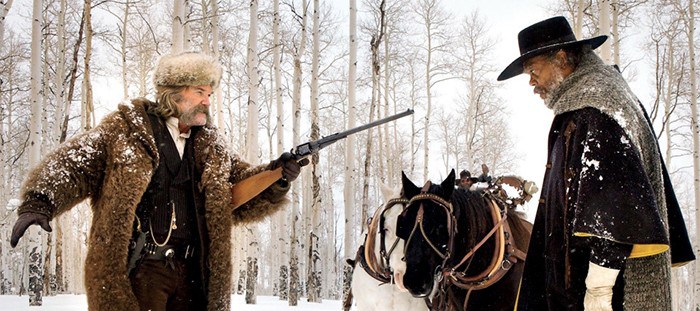
    The Hateful Eight concerns eight men and women who are all on their way to Red Rock, Wyoming, a blizzard nipping at their heels. Some of them are bounty hunters. Some are bounties. Some are working men. Not everybody is who they say they are, but there’s hardly any mystery to that considering the cast of regulars Tarantino’s assembled and the kinds of roles they’ve played for him in the past. Our lead bounty hunters—”Hangman” John Ruth (Kurt Russell) and Major Marquis Warren (Samuel L. Jackson)—are suspicious of everyone they encounter, and they’re usually right in their suspicions. Ruth encounters Warren on a trail, sitting atop a pile of dead bounties after his horse died in the snow. He’s on his way to Red Rock with Daisy Domergue (Jennifer Jason Leigh), an outlaw who is worth $10,000 dead or alive, and he prefers taking them in alive so as to not cheat the hangman, hence the nickname. The conversation between Warren and Ruth is intense—Tarantino is at his best when staging conversations between hypermasculine strangers—and when they pick up another snowbound traveler, Chris Mannix (Walton Goggins), the new sheriff—things get more tense. This is just after the Civil War and there’ still tensions between Union soldiers and Rebel ones. Ruth and Warren belonged to the Union. Mannix’s father led a battalion that continued fighting the war in the face of unconditional surrender. None of them could be said to’ve been good men, and Domergue, when she’s not getting punched or spitting up blood, watches them argue with glee.

    With the blizzard on them, the stagecoach holes up at Minnie’s Haberdashery, where four other men are already gathered around the fireplace. There’s a fussy British gentleman (Tim Roth), a cowpuncher (Michael Madsen), a Mexican (Demián Bichir) who says he’s looking after the place for Minnie while she visits her family, and a Confederate General (Bruce Dern) who is familiar with Major Warren, even if he doesn’t know it. The idea, according to Tarantino, is for these characters to get together and tell stories to one another like an arc on a western, each person trying to figure out the intention of the other. This has been a pretty basic mode of narrative storytelling for a long time now. You can go farther than westerns like Gunsmoke and The Virginian to Rashomon or The Canterbury tales, people telling stories about things seen and unseen, only here, as Tarantino often has it, our storytellers have guns. Those are mostly holstered until a blood-soaked finale, so much of The Hateful Eight is talk and menace, a locked room there’s only one way out of.

    That means lingering, for a long time, on the decisions Tarantino chooses to make. One of them, shooting in 70mm and keeping his characters mostly indoors, is ponderous, but there is a lot of loving detail put into Minnie’s Haberdashery and the sense that something’s off with it. The way-station is a one-room saloon with a couple of beds in it, but Tarantino and cinematographer Robert Richardson make use of cinematic space such that the Haberdashery feels both open and claustrophobic at the same time. There are eight people in the room, eight different perspectives of a single unfolding narrative, and were that narrative any better than it was, the way The Hateful Eight cuts from one to another would be invigorating. But it isn’t. So again, you get to linger with the decisions Tarantino makes. You have three hours to wonder how, even in a movie where he’s only the narrator, Tarantino manages to give himself the film’s most troublingly racist dialog, or why he figures on adding a race allegory to a film about eight miserable bastards to begin with. Sampling, as he has been for some time now, from spaghetti westerns, the Confederate/Union line is one Tarantino plays with and tries to extend to today, but he frankly isn’t good enough to make a salient point, even though Samuel L. Jackson is the man making it. After Christoph Waltz’s Jew Hunter in Inglourious Basterds and Leonardo DiCaprio’s impassioned speech on eugenics in Django—both characters and monologues that Tarantino luxuriated in—it’s hard to take him seriously when he tries to inject social consciousness into The Hateful Eight, which is otherwise the director’s career-long fascination with bondage and torture writ large and gracelessly.

    It takes a long time for The Hateful Eight to go anywhere, moving as slow as the stagecoaches that transport the players to their stage. Tarantino, as he’s done time and again since Kill Bill, is trying to make a film about outlaws and gunslingers who stand as legends that are of their time and outside it, but it just doesn’t work here, where he’s convinced to the marrow of his bones that it’s worth keeping the company of eight sadists who don’t have all that much to say. It’s a formula Tarantino has used effectively before, but here that formula is used to the point of exhaustion. And when everybody starts pulling guns on one another, as is Tarantino’s guarantee? More of the same, more of the same.


    The_Hateful_EightThe Hateful Eight (2015)

    With Samuel L. Jackson (Major Marquis Warren), Kurt Russell (John Ruth), Jennifer Jason Leigh (Daisy Domergue), Walton Goggins (Chris Mannix), Demián Bichir (Bob), Tim Roth (Oswaldo Mobray), Michael Madsen (Joe Gage), Bruce Dern (General Sandy Smithers), James Parks (O.B. Jackson), Zoë Bell (Six-Horse Judy), and Channing Tatum (Jody). Directed by Quentin Tarantino from a screenplay by Tarantino.

  • Movie Review: Star Wars: The Force Awakens (2015)

    Movie Review: Star Wars: The Force Awakens (2015)

    Star Wars The Force Awakens

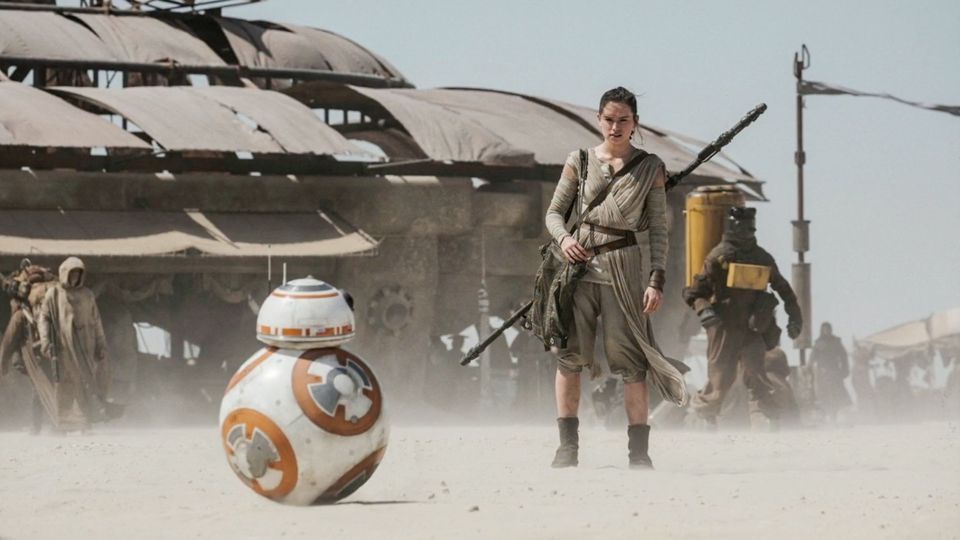
    At last, our long national nightmare is over: There is a new Star Wars movie, and it’s pretty good. It feels like we’ve been living with the fact of J.J. Abrams‘ The Force Awakens for as long as we’ve lived with the franchise itself—since Disney purchased Lucasfilm and the rights to Star Wars from George Lucas, the possibility of more Star Wars became the inevitability of Star Wars, and the cultural stewardship of this sainted popular object passed, once again, from people to the corporations that sell things to people. If you ate food, drank water, or breathed air at some point between the release of the first The Force Awakens trailer and now, odds are that its controlling bodies had signed a licensing agreement with Disney so it could stamp BB-8 or Kylo Ren on the box.

    As such The Force Awakens is a film designed to play as wide as possible, to get as much right as it can for the largest number of people. It’s a huge, exciting popcorn spectacle that both painstakingly sketches out its post-Rebellion world and has no real need to hit any beats that weren’t established by the original trilogy. Its heroes are orphans. Its villain is pulled between the light and dark sides of the Force. Decades have passed since the fall of the Empire and governments and regimes have changed, but this change, which is actually quite boring when played out in Senate chambers and offices, is mostly felt in costuming and set design tweaks, and what time has done to heroes like Han Solo (Harrison Ford), Leia Organa (Carrie Fisher), and Luke Skywalker (Mark Hamill). No longer controlled by an Empire, the galaxy is stalked by the First Order, a frightening band of sleek new Stormtroopers that seems to have found a balance between adherence to the force and belief in fascistic military rule. With Luke Skywalker vanished, The First Order and the Republic-backed Resistance are in a race to find him in a star system whose map has been compromised with the fall of the Empire. Like in A New Hope, that vital information is stored in the files of an otherwise unassuming droid that ends up stranded on a desert planet, searching for a way to a secret base that finds itself menaced by the enemy’s planet-destroying power.

    It’s hard to fault Abrams for nostalgia—Star Wars has largely been a callback machine since Return of the Jedi, and his script, co-written with Lawrence Kasdan, is at least using familiarity to push forward into new territory. That script is unbelievably smart when it comes to handling the legacy of the original films. Luke Skywalker is a mythological figure, the stories about he and his companions rendered unbelievable in the totality of his disappearance. The Force’s role has shifted somewhat, too, from science to sorcery to religion. Leia and Han, having taken their respective roles in the new world, are at the periphery—our principals characters are the cocksure pilot Poe Dameron (Oscar Isaac), Stormtrooper deserter Finn (John Boyega), and desert-bound scavenger Rey (Daisy Ridley). They’re an engaging trio, propelling Abrams’ vision of a Star Wars for the future while burnishing the figures they encounter as the legends of the past.

    As for its villains, Abrams really dials up the Riefenstahlesque staging to mark the First Order as the terror of the galaxy, and for however terrifying Darth Vader fanboy Kylo Ren (Adam Driver) appears, the fact that he’s a relative novice to the force means that the banners-and-battle-stations pageantry of these new, sleek Stormtoopers actually means something. The difference between Abrams’ conception of evil and George Lucas’ is stark. In the first action sequence, which is among the best in any Star Wars film, Stormtroopers disembark from a landing craft and fire into a crowd of villagers. Their laser bolts strike, accurate and deadly. There is blood. Finn, yet unnamed, is on his first battle mission and shakes. Dameron fires his rifle at Ren, who freezes the bolt. It hangs suspended in the scene for a minute, then slams home into a piece of machinery after Dameron’s capture. Later sequences don’t have the same impact, but they look like they were staged, directed, and shot by a crew that was having fun with everything, somehow unburdened by the fact that they are making a Star Wars for the sake of getting the gears turning again.

    That The Force Awakens is fun is probably Abrams’ biggest accomplishment. For years, he’s been laboring in the shadows of Lucas and Steven Spielberg, making epics that lived and died by the same principles as the epics of his heroes. Given the sandbox he’s so clearly wanted to play in for awhile, Abrams puts on a show that manages to rival his predecessors, creating some of the most indelible images in any Star Wars film to date. The best of these take place on the desert planet of Jakuu, which is littered with the hulks of Star Destroyers abandoned after an unseen battle, an elephant graveyard that scavengers pick scraps from to clean and sell for food. The economy of Jakuu works well as a metaphor for what The Force Awakens represents, which is the stirring of a great machine that will run much longer than anyone can account for. Some of those scraps are just junk, useless pieces of space debris that look cool but serve no real purpose. Some of those scraps are the Millennium Falcon, begging to be taken to lightspeed. This one’s all lightspeed.


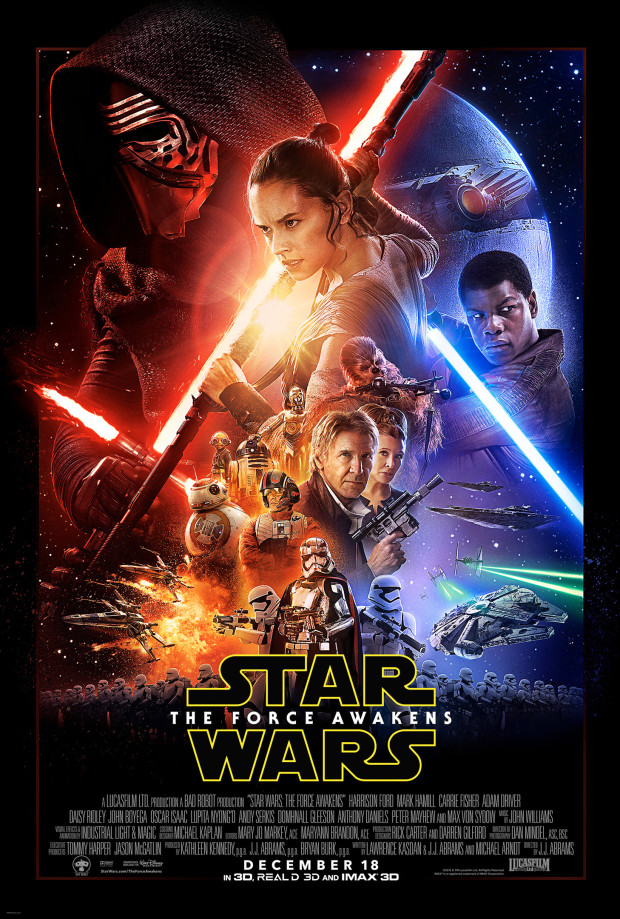
    Star Wars The Force Awakens posterStar Wars: The Force Awakens (2015)

    With Daisy Ridley (Rey), John Boyega (Finn), Oscar Isaac (Poe Dameron), Adam Driver (Kylo Ren), Harrison Ford (Han Solo), Carrie Fisher (Leia Organa), Domhnall Gleeson (General Hux), Andy Serkis (Supreme Leader Snoke), Lupita Nyong’o (Maz Kanata), and Mark Hamill (Luke Skywalker). Directed by J.J. Abrams from a screenplay by Abrams, Lawrence Kasdan, and Michael Arndt, based on characters created by George Lucas.


  • Movie Review: Creed (2015)

    Movie Review: Creed (2015)

    Creed 2015 filmessentialIt’s hard to write about Creed because it is a movie I fell in love with early and repeatedly, a film that had me on the verge of tears at times and past that verge at other times. So I’m going to start with what I found most impressive about director Ryan Coogler’s re-framing of Rocky and its legacy, which is that Creed has a heart of its own, not one merely borrowed from its predecessor. Considering that the likability of Rocky Balboa, one of the great screen characters of American history, is what propels the bulk of the franchise through bloat, bad script choices, and an inability to recall its own identity, Creed‘s ability to stand on its own merit is both necessary and surprising. Creed is less about the revitalization of a character that will see his 40th anniversary next year than it is about loving something so much that something new and, frankly, equal to the original is created.
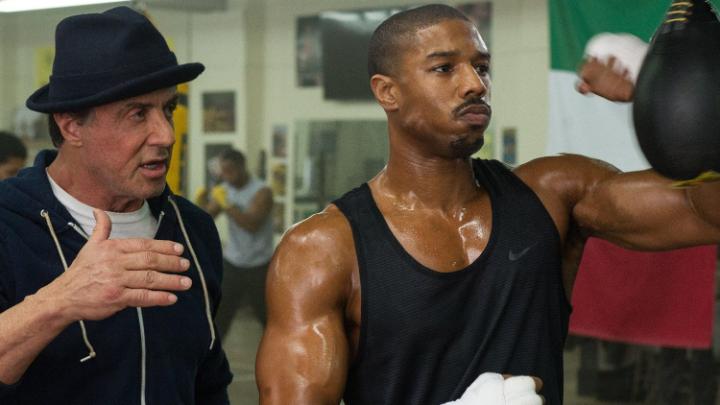
    It’s a Rocky film, so it is grounded largely in cliché. But, as the series has repeated over and over with a piston-like ferocity, it isn’t a fighters origins that matter so much as what he makes of them. To that end, Adonis Creed (Michael B. Jordan) was dealt a particularly bad hand of cards. The illegitimate son of boxing great Apollo Creed, Adonis is introduced as an orphan in a juvenile detention center, in lock-up for fighting to defend his dead mother’s name, which he later takes up as an adult looking to build his own name. He is adopted by Apollo’s wife (Phylicia Rashad) and raised in his home, but it’s obvious that he’s a second-class Creed: no gym will train him, and he’s stuck taking up bar fights on the weekend in Mexico for the experience. Self-taught and using his mother’s name so he can avoid the pressure of legacy, Adonis quits his job and rents a room in Philadelphia, hoping to convince his father’s former rival and training partner Rocky Balboa (Sylvester Stallone) to come out of the shadows and become his trainer.

    Creed recalls the narrative and structure of Rocky, playing on its themes and iconography in a way that would have been tired if this were once again a film about an aging Stallone putting on the gloves for one last fight. Wearing a hoodie and reading glasses, Rocky Balboa looks well past the aged, muscled fantasy warrior Stallone has been projecting for a decade now. He’s a hard worker whose instincts are keen, but Balboa is in his 70s and the torch he carried for so long, with his wife dead of cancer and his son estranged from him, is out. He’s a ghost, his image and name haunting Philadelphia and boxing, and Adonis finds him shuffling around a restaurant built to house both. There is the question of whether or not Rocky will train Adonis, but it’s never one that much hangs over the young Creed’s head. He came to Philadelphia with a purpose, and it’s clear that he’s going to try to achieve it with or without Balboa’s help.

    That Adonis is always his own man in a film that could have easily become a redemption story is due largely to Creed‘s smart script, by Coogler and Aaron Covington. Creed is never not a Rocky film, but it’s never Rocky’s film—Stallone’s arc here is the B-story, it serves to complicate Adonis’ already complicated rise to boxing prominence, but it is told so well by Coogler and Covington and acted so well by Stallone that the melodrama outside the ring acts as Creed‘s driving force. A boxer’s life outside of boxing, in film and in reality, is necessarily reduced to recognizable, sellable figures: Balboa the working-class palooka; Creed the unknown orphan; and Creed’s eventual rival, “Pretty” Ricky Conlan (Tony Bellew) the fighter who came from nothing and was compromised by his fame and fortune. Watching Creed, I thought of the year’s other boxing film, Southpaw, and how it reduced its fighters to the same necessary images. How the Rocky films after Rocky did the same. The assumption is that the audience’s payoff is a triumph of one body over another, which necessitates the long, erotic training sequences: if a man can transform his body enough, he can punch through any obstacle.

    Creed‘s strength is knowing that there are some obstacles a boxer can’t beat. There’s time, which Balboa is fighting a losing battle against. There’s regret. There’s pride. There’s the possibility that a man’s passion and skill can very literally kill him or leave him damaged beyond repair. Winning a boxing match changes none of this, and a good boxing story knows it. A good boxing story can use that knowledge to make the rest of the boxer’s world seem sharper, more necessary than a judge’s decision at the end of 12 rounds, and Creed is a very good boxing story. It is capable, at times, of feeling like more than a boxing story. It’s the story of a city. It’s a romance. It’s all of these things at once. Trying to sleep after a particularly fruitless day, Adonis is kept awake by the louder than necessary music of his downstairs neighbor, Bianca (Tessa Thompson). She’s a beautiful woman, and Adonis falls for her immediately, but again Creed‘s script is so good that Bianca never feels ancillary until the structure of a boxing film makes her so. A talented singer coming up in Philadelphia’s club scene, Bianca suffers from progressive hearing loss and continues to make music though she’ll someday be unable to. She’s a character with her own dreams and ambitions, and, like a boxer, she’s racing against time to put together something meaningful, something that will last longer than a body that will progressively fail her. It’s something of a departure for a film like Creed that the relationship between a boxer and a woman goes two ways, that her desires are as large and as important as his, but for Coogler, the triumph of one man’s body over another is secondary to watching people create something from nothing: a relationship, a life.

    If Creed falters, than it does so in its third act, where Bianca is largely Adonis’ cheerleader after the two have a falling out over a fight between he and a headlining musician at Bianca’s biggest gig. That she nails the show performance should feel triumphant, but Creed hasn’t quite figured out what to do with Bianca’s art beyond the fact that she makes it, and that its creation mirrors the way Adonis creates himself for the purpose of a fight. If there is a follow-up to Creed, then what’s already present here suggests that Coogler and his team are smart enough to not make the same decisions Stallone did decades ago, that he will focus on the humanity of Adonis and those around him, rather than the idea of him as a macho icon. Michael B. Jordan is clearly up to such a challenge, as are Stallone and Thompson. And if it is necessary to yield to the carnage of the ring (which, let’s be frank, it is), then at least boxing’s thrilling spectacle of excess seems as though its being put to some greater use, rather than being the end all of its players are the means to.


    Creed PosterCreed (2015)

    With Michael B. Jordan (Adonis Creed), Sylvester Stallone (Rocky Balboa), Tessa Thompson (Bianca), and Phylicia Rashad (Mary Anne Creed). Directed by Ryan Coogler from a screenplay by Coogler and Aaron Covington, based on characters created by Stallone.

  • Movie Review: Southpaw (2015)

    Movie Review: Southpaw (2015)

    Southpaw 2015

    There is an undeniable poetry to boxing, or there was, at least: To the ebb and flow of two bodies in the ring, weaving and ducking and lashing out; to the roar of the crowd; to the spare lyricism of a fighter’s oratory; to the satin finish of a ring robe or the gleam of sweat or a sudden burst of blood from a ruined nose. Though boxing’s popularity has been and still is in decline, films like Antione Fuqua’s Southpaw keep the embers glowing, using the pugilist’s chiseled body and dazzling fight choreography to create an impression of the sport that it is increasingly incapable of producing upon its own canvas.

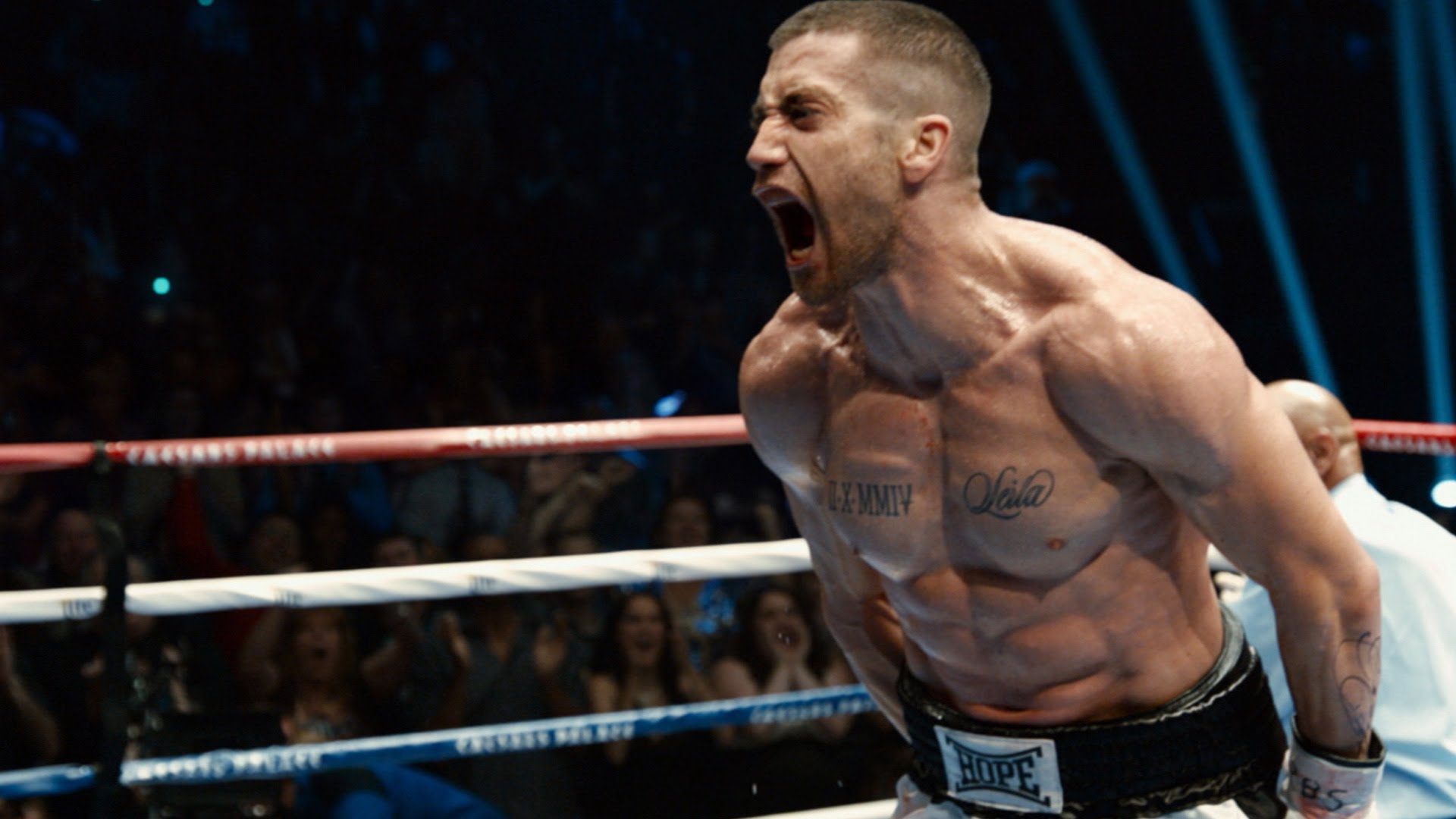
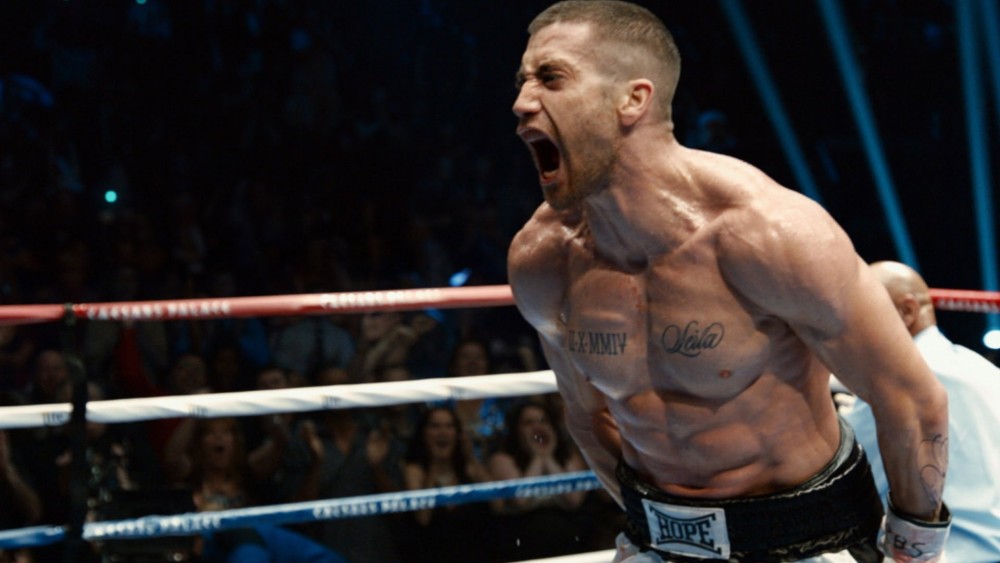
    As shot by Mauro Fiore, Southpaw has a dazzling grace between the ropes despite its lead’s strategy of taking punches to the face. Billy “The Great” Hope (Jake Gyllenhaal) is battered from the start, bleeding from the mouth and dripping onto the canvas like a splatter artist, but even with a gristly cut over his eye he is in firm control over his opponent. It takes him longer than expected to put his challenger down, but he is an aging fighter who was born punching, a product of the system who has spent time in orphanages and in lock-up—getting beaten up is how he motivates himself to finish off his opponents. His wife (Rachel McAdams) is rightly concerned that if he keeps fighting the way he fights, he’ll end up punch drunk before retiring.

    If Southpaw were just that, an examination of a declining championship boxer caught between his motivation to headline pay-per-views and his wife’s desire that he live a long life, it would have been something interesting, a realtime take on some of the darker corners suggested by the later, poppier offerings of the Rocky franchise. For Fuqua and Sons of Anarchy creator Kurt Sutter, decline is not enough. After that first successful fight, Hope (notice the name) has to survive an odyssey of melodrama to arrive at a somehow fight-hungry nation’s much-wanted bout against number one contender Miguel Escobar (Miguel Gomez). His wife is shot and killed by an associate of Escobar’s during a charity event, and, lost in a tumult of grief, Hope loses everything: His will to fight, his championships, his money, his promotor, his house, and, after nearly killing himself while driving under the influence, his daughter (Oona Laurence). Picture somebody snapping their fingers—that’s how fast Hope loses everything.

    This is, of course, necessary for the former champion, out of place in his opulent mansion and buying bezeled watches for his crew, to find himself at the mercy of an old pro turned trainer (Forest Whitaker) who believes in boxing as a tool by which men make themselves men. The relationship between the two is effective, as Whitaker has long brought soul to even thankless roles like cornerman, and Gyllenhaal has become one of the most interesting actors working today. Both Billy Hope and Tick Willis are men as wounds, one trying to heal and one that can’t. That Willis wants to teach Hope how not to get punched, to control the anger that was both his advantage in the ring and, the trainer presumes, the thing that got Hope’s wife killed, adds some necessary texture to a training montage that otherwise would have been all-marveling at Gyllenhaal’s amazing physical transformation.

    Southpaw plays out as one might expect it to, as a boxing movie about a man named Hope must. Its use of every boxing film cliche and its inclination to fridge Billy Hope’s wife (not to mention a young fighter at Willis’ Gym) feels tired—cynical, even—but Gyllenhaal’s deft touch, his body language in scenes where Hope is dealing with grief and his failure to be a father, redeems the material to the point that it’s possible to enjoy its fights regardless of what they mean narratively, as pure, violent spectacle. Sutter has called this film a spiritual successor to 8 Mile, the clumsy, working-class fable about a hardscabble white rapper who makes good on his phenomenal talent, and that explains a lot of the choices Southpaw makes and doesn’t make, the way the pyrotechnic flair of the protagonist’s occupation is meant to make up for the flatness of his surroundings and the script’s failure to examine the nature of Billy Hope’s second chance. Of course the boxer redeems himself. That’s what our culture demands.


    Southpaw. With Jake Gyllenhaal (Billy Hope), Forest Whitaker (Tick Willis), Rachel McAdams (Maureen Hope), Naomie Harris (Angela Rivera), Curtis “50 Cent” Jackson (Jordan Mains), and Oona Laurence (Leila Hope). Directed by Antoine Fuqua, from a script by Kurt Sutter.

  • Television Review: Sense8 (Season 1: 2015)

    Television Review: Sense8 (Season 1: 2015)

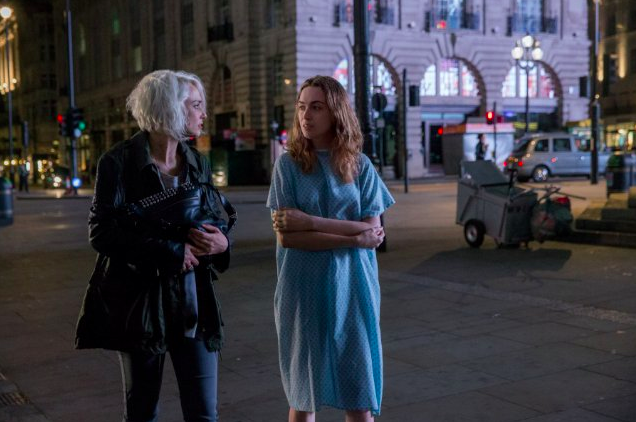
    Sense8 Nomi and Riley

    When I came to this space in order to praise Jupiter Ascending, I did so with the belief that, with 10 or 12 hours to tell their ludicrous story of star-crossed love between a human-bee genetic duplicate of a murdered immortal and a space werewolf sporting an especially bad goatee Andy and Lana Wachowski would have really had something. Sense8, created by the Wachowskis and Babylon 5’s J. Michael Straczynski, disabused me of that notion quickly, using its time and format to do little more than sketch out its interesting high-concept science fiction premise and build a world that is remarkably similar to our own.

    On the surface, there’s a lot going on here, as eight people from eight radically different parts of the world and stations of life find themselves psychically linked and, it seems, randomly dropping in on each other’s lives. For the show to really work, all eight of the “senseates” need to feel like their own people, so that there’s really something to the idea that, together, they’re more than their individual qualities. The problem is that, with eight central characters, it’s hard to get most of them out of the blocks. Here’s who and what we know at the beginning of the series:

    • Will Gorski (Brian J. Smith): A good, white cop from Chicago.
    • Riley Blue (Tuppence Middleton): An up-and-coming DJ living in London; formerly of Iceland.
    • Nomi Marks (Jamie Clayton): A trans woman from San Francisco who is a skilled computer hacker.
    • Lito Rodriguez (Miguel Ángel Silvestre): A superstar actor in Mexico who is in the closet about his homosexuality.
    • Sun Bak (Bae Doona): The daughter of a powerful Korean businessman. Skilled in kung-fu.
    • Wolfgang Bogdanow (Max Riemelt): An expert safecracker out of Berlin with a lot of unresolved father issues.
    • Kala Dandekar (Tina Desai): A pharmacist in Mumbai who is struggling with the implications of her pending arranged marriage to a man who doesn’t keep her religion.
    • Capheus (Aml Ameen): A Jean-Claude Van Damme-obsessed van driver from Nairobi who is desperate to purchase medicine for his mother.

    Looking beyond Gorski, whose good, white cop is the default focal point of television as a medium, that’s a pretty solid foundation for a show about strangers who need to come together to solve a problem, an engaging mix of queer faces and global perspectives that serve to make Sense8 interesting until it becomes clear that, for the most part, these characters and their stories are window dressing for a presumably doomed romance between the cop and the DJ. Once the show is beyond the benefit of a doubt, one wonders what the point of having so many brief sketches of life in India or South Korea or Kenya is, as the Wachowskis and Straczynski are never able to move beyond broad stereotypes for these people and their circumstances.

    Their chief achievement here is to split the atom that was Neo, the quintessential 90s action hero, who was an expert in everything because everything was loaded onto a floppy disc and downloaded directly into his brain. Split up, its more than a little disappointing that those traits are a) the point of grouping these eight people together and b) that some of these skills and character traits don’t go much father than a vague, American understanding of the world. Of course the only thing we know about the Indian woman (beyond her eventual fascination with the white criminal) is that she’s arranged to be married to someone she doesn’t love. Naturally, the kung-fu master of the group is from Asia. And yes, there is heart to the idea of a son trying to provide his mother with AIDS medication, but for an American audience whose conception of Africa is Blood Diamond and Hotel Rwanda, grisly gang violence is a more engaging backdrop. Maybe this would be excusable if the pieces on the board moved much, but as Sense8 narrows its focus to Will and Riley and the plot to capture and experiment on one or both of them, it’s clear that a multitude of queer, colored shoulders are being put to the wheel for the sake of white heteronormativity.

    This is particularly underwhelming given how much The Wachowskis seem to relish a character like Lito, whose lover (Alfonso Herrera) is something of a renaissance man, a skilled chef with a passion for Diego Rivera and lucha libre. The two are walking a thin line between bliss and public shame, and when they are blackmailed by an acquaintance (Eréndira Ibarra) who becomes their live-in beard to get out of an abusive relationship with a violent ex-lover, he has to figure out whether to play the coward to protect his career and identity, or to rescue his friend from her stalker and deal with the consequences. I want to see how that storyline plays out. Similarly, there’s Nomi, who is not only trans but in a relationship with a woman (Freema Agyeman) who loves her fiercely. Nomi is the first of the senseates captured by Whispers (Terrence Mann, who has to deal with that name), an evil senseate who runs the shadowy organization that functions as the main threat to our heroes, and she is sedated and secreted away to a private, heavily armed wing of a hospital where her mother (who insists on using Nomi’s birth name) strips her of any right to medical independence, agreeing to what is essentially a lobotomy after some slick talk from the medical professionals. This deliberate violation of autonomy is a thing that really happens to trans persons every day and to see it here (or in Orange Is the New Black and Transparent) is still new, still has a capacity for horror. Nomi and Amanita are given a lot of time and backstory before it’s necessary to saddle the hacker at a computer, and the Wachowskis use that time to explore Nomi as a sexual and political person, a figure who isn’t on the spectrum between tragic and life-affirming, but who just is. Other than a sex scene that sees Lito and Will accidentally having the best orgasms of their lives together, my favorite bit of Sense8 is a flashback to Nomi and Amanita’s first Pride as a couple, where Amanita steps up to defend her girlfriend from a friend who is dressing Nomi down for being a man colonizing a woman’s space. It’s a small moment, but it manages to make both of these characters feel like people, which is something Sense8 desperately needs more of. More than that, the sequence is a bit of queer politics that isn’t aired out much in popular culture, which is still struggling to find much use for trans women (and has yet to find a purpose for trans men) beyond totemic symbols for Living Authentically by assimilating as much as possible.

    Sense8 has potential, maybe more than this season lets on. In terms of science fiction concepts, this is one of the best that’s made it to series since Battlestar Galactica, which used the threat of human extinction and the promise that not every human was as he or she seemed to ramp up the drama in lieu of constant violence. The eight senseates here barely know each other beyond what skills they bring to the table, and maybe with every individual threat to them tied off they’ll have time to sit down and chat, become themselves without having to be told, over and over, how their powers work and what that means for them. As much as I enjoyed the quieter moments of the show, Sense8 was too frequently punctuated by mandatory violence and sex, meaningless sequences that suggested a real lack of ideas. Even in episodes directed by The Wachoskis or Tom Tykwer, those sequences frequently lack the visual flair or sexual energy that makes their films stand out, as if television is a language they’re still trying to learn. If nothing else, I’m curious to see if they have anything to say once they have that language figured out.


    Sense8. With Aml Ameen (Capheus), Bae Doona (Sun Bak), Jamie Clayton (Nomi Marks), Tina Desai (Kala Dandekar), Tuppence Middleton (Riley Blue), Max Riemelt (Wolfgang Bogdanow), Miguel Ángel Silvestre (Lito Rodriguez), Brian J. Smith (Will Gorski), Freema Agyeman (Amanita), Terrence Mann (Whispers), Naveen Andrews (Jonas Maliki), and Daryl Hannah (Angelica Turring). Created by The Wachowskis and J. Michael Straczynski, with episodes directed by The Wachowskis, Tom Tykwer, James McTeigue, and Dan Glass.