Category: Reviews

  • Wrestling Review: WWE NXT (5/27/15)

    Wrestling Review: WWE NXT (5/27/15)

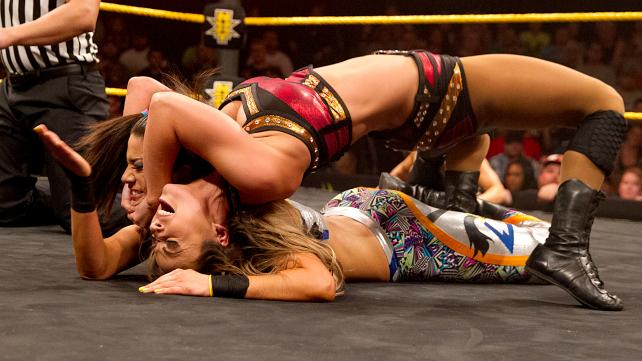
    Emma vs bayley

    Last week, NXT aired another live Takeover special, which means that this week was used to hit pause and take a deep breath before soldering on to the next two-hour event that convinces the bored, jaded folks constantly threatening to cancel their subscription to the WWE Network to keep hanging in there for more of that good stuff. Considering that two out of five of Triple H’s prized NXT stars—Sami Zayn and Hideo Itami—are out of action with injuries for awhile, that pause is warranted. But if anybody tuning into a regular episode of NXT for the first time after Takeover was expecting the same kind of breakneck-paced action of that show, then this week’s show is a lesson in tempered expectations. It’s not so much that anything about NXT this week was bad. It’s always a solid hour of wrestling, able to tell its stories in clear, concise, and (mostly) compelling fashion, featuring at least one match that’s worth remembering, but when NXT pumps the breaks, it really pumps the breaks.

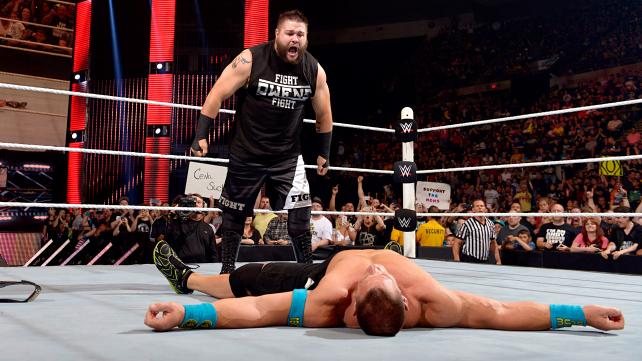
    Kevin Owens is, of course, preparing for his first match on the main roster, which is, as you may or may not have heard, against John Cena. After putting Sami Zayn out of action last week and crushing John Cena with another pop-up powerbomb, he’s got a lot of momentum on his side and he knows it. He hits the ring to begin the show, entering to Zayn’s music, which he says will never be played again. I don’t envy Owens in this spot at all, as he has to address a lot of moving parts in this promo: Zayn, John Cena, Samoa Joe—and that’s before NXT General Manager William Regal comes to the ring to make clear that he doesn’t appreciate what Owens has done as champion. Their brief exchange is great—I love Owens’ character, a bad man who really believes that his actions are good, and Regal is one of my favorite wrestlers and personalities ever. The NXT General Manager is a thankless role, one that doesn’t get a lot of airtime (which means that it’s honestly a waste of Regal), but this week William Regal makes it count. He’s tired of watching Owens beat his roster up to the point that they have to take a stretcher out of the arena. Last week they teased Regal vs. Owens and brought out Samoa Joe. This week their disagreement brings out Solomon Crowe. Crowe is still newish to NXT but is no stranger to Owens, the two having met in the indies, but their rivalry is considerably less storied than the one between Owens and Zayn, so Owens plays Crowe like a nobody. Crowe’s gimmick is that he’s a computer hacker, but in the ring with Owens he is all nebbish babyface, mad about what Owens did to Zayn. He questions Owens’ moral turpitude and “earns” a main event match against the champion. Owens vows that, just like his other rivals, Crowe will leave the NXT Arena on a stretcher.

    With Kevin Owens being pulled in so many directions, NXT has also been focusing on its strong women’s division in a way that no other wrestling promotion on television has proven themselves capable of. After a match of the year candidate against Sasha Banks, Becky Lynch was the subject of NXT‘s best video package, spotlighting her journey from a young woman with a dream to her show-stealing match last week. Alexa Bliss’ sudden allegiance with NXT Tag Team Champions Blake and Murphy means that Carmella will be physically involved in the issue surrounding those titles, and Bliss has an edge to her character beyond the default girl-next-door bubbliness she debuted with. It’s a vaguely defined edge, though, as Blake and Murphy, despite being an able team, don’t really have characters themselves beyond being kind of dirty and maybe into dubstep. That’s been one of NXT’s major failings for me, is how beyond former indie darlings and high concept characters like Tyler Breeze, most of the roster is interchangeable. The point, I suppose, is whether or not they can go in the ring, but it’s nice when NXT provides a template for the lazy, downtrodden Raw and SmackDown! writers so that a call-up isn’t forced to stand around pumping their fists in silence like the Lucha Dragons.

    The strongest work this week was put in by Emma, who has taken NXT’s other female cliché (a “change in attitude”) and run with it much farther than I would have expected given her goofy, dance-centered character. That she flopped so hard on Raw and was at the center of a weird shoplifting saga that resulted in her being fired and rehired in short order, so it’s within the realm of believability that her change of attitude is motivated by something real. She’s been saddled with Dana Brooke, who is super green. I wasn’t particularly impressed with her at Unstoppable, and, standing ringside, all she really has to do is flex her rather impressive muscles. Her role, like most roles women play on WWE program, is not unfamiliar to anybody watching Raw or SmackDown!, as Tamina Snuka has been playing it since her debut, for the Usos, A.J. Lee, and now Naomi. While it’s a good idea, a sneaky, bitter heel looking for help in their crusade against another woman, the lady version of the Shawn Michaels/Diesel relationship has yet to really play itself out. There’s no denying that NXT is a much more satisfying experience when it comes to women’s wrestling, but a sketch of an idea is still a sketch of an idea. Why does Dana Brooke do the things Dana Brooke does? Who is she? For that matter, who is Alexa Bliss and why is she hanging with a pair of mean dudes after spending so much time as a bubbly cheerleader who called her moves things like “the sparkle splash?” I appreciate how much NXT focuses on women, but beyond those who’ve had careers outside of NXT or who came to it attached to their father’s legacy, that “focus” often means just being on screen while something else happens.
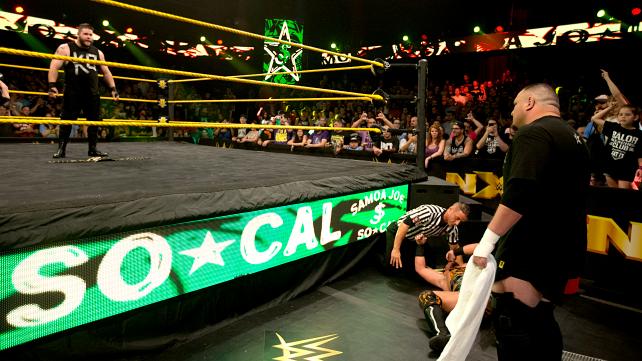
    Samoa Joe Kevin Owens

    Actually, that’s become something of a noticeable problem on NXT as time passes and certain stars get called up to the main show: Beyond Triple H’s acclaimed, no-brainer “leaders of the new school” signings and those who had a character before their arrival, the show is almost shockingly bereft of depth. So many of the WWE-bred NXT regulars, like poor Tye Dillenger, look and wrestle in this beyond flavorless manner that suggests there’s little more to them than being dropkick fodder for Finn Bálor. Solomon Crowe represents something of an experiment, a hybrid of WWE’s predilection towards hiring buzzed about indie wrestlers who wouldn’t have stood a chance of signing even two years ago and their penchant for goofy gimmicks. Looking at Crowe, it’s more than a little hard to buy him as some cyberpunk hacker on the fringes of society, and that character did not mesh well with the ancient babyface fire he was meant to channel in the opening segment of the night. As Sami Callihan, he wrestled main events on the indies against Kevin Owens (née Steen), so tonight’s NXT main event is another that’s happened before, but not under the WWE’s bright lights, and not in the WWE’s gadget-heavy ring.

    In one sense, it was actually kind of refreshing to see a formerly big match-up turned into a tune-up for Owens as he heads into the biggest match of his life at Elimination Chamber. 1.3 million or so people subscribe to the WWE Network, and Owens/Cena is an exclusive to that platform, but over the past two weeks he has brought his unlikely presence to the largest possible audience for wrestling in 2015, and is, in fact, being billed as the next big thing for it. And it’s not just Owens’ career that’s in the balance here, but the perception of NXT as a brand. WWE has tried and failed to market outsider offshoots of itself for a long time now—Shotgun Saturday Night, the revival of the ECW brand, and the original concept for NXT were failures because, despite branding, they felt a lot like WWE, just with the lights dimmed down a bit. NXT as it is now does not have that problem, as WWE has succeeded in building a bubble universe, an arena full of people whose fervor for what they’re seeing would rival the crowds at an ROH, PWG, AIW, Chikara, or Beyond Wrestling show if there wasn’t such an overbearing sense of mandatory fun at the NXT Arena. Moments like the confrontation between Owens and Samoa Joe are cool, but I think it’s time to recognize that they’re not cool because of anything the WWE is doing, unless we want to say (to admit?) that what WWE is doing is piling money onto a product whose presentation has been mastered by other promotions for a decade plus, and at an operating budget that would make Triple H laugh. It’s not enough to put Samoa Joe and Kevin Owens in the same ring together—the rest of the show, for it really be that much better than the main roster, needs to be clicking at the same level as its indie stars. If that seems like an unrealistic expectation, well, that kind of comes with the territory of booking an indie promotion on a million dollar budget.


    WWE NXT: 5/27/15, Tampa, Florida

    1. Emma (w/Dana Brooke) def. Bayley via submission. GRADE: B-

    2. Blake and Murphy (w/Alexa Bliss) def. Elias Samson & Mike Rollins via pinfall. GRADE: C+

    3. Finn Balor def. Tye Dillenger via pinfall. GRADE: C

    4. Kevin Owens def. Solomon Crowe via pinfall. GRADE: B-
  • Wrestling Review: WWE Raw 5/25/15

    Wrestling Review: WWE Raw 5/25/15

    Dean Ambrose is a cop you idiot

    I know, I know. I haven’t reviewed an episode of Raw since February. In truth, I just haven’t watched that much wrestling since the build into and great release of WrestleMania. I can’t afford the indies like I used to, and beyond NXT and Lucha Underground, everything I watch (even New Japan Pro-Wrestling) seems content to remain in a post-big show holding pattern that isn’t going to cure me of the fact that, for whatever reason, I’m just flat burnt out on the stuff. World Wrestling Entertainment’s main programming has been stuck in this holding pattern since Survivor Series, for whatever that’s worth, and, heading into this Sunday’s surprise Elimination Chamber special, the company is only capable of manufacturing one or two moments or matches that pique my interest. This Sunday, that match is Kevin Owens vs. John Cena, a dude I stumped hard for when he was on the independents against a guy who I think ranks among the all-time greatest. So, wearily, I turned on Raw to see how that program would build, and was greeted by the WWE roster reciting a speech by Ronald Reagan, who is this (and every) year’s hot president for Vince McMahon, beacon not only of that shining city on a hill, but for the last time McMahon’s now incredibly dated concept of narrative storytelling worked without anybody wondering why nobody on his staff had the guts to tell him “no.”

    In a month, it’ll have been four years since C.M. Punk dropped his famous “pipe bomb” promo, the worked shoot where he went off on John Cena and Vince McMahon and Triple H and anybody else he perceived as having held him back despite being the best in the ring, on the microphone, and so on. This ushered in what Grantland‘s The Masked Man dubbed “The Reality Era,” but that’s never really panned out. If anything, what Punk’s sudden ascent marked was the beginning of WWE’s Indie Era, which, like the much maligned WWF New Generation era that launched with the departure of Hulk Hogan in 1993, has had its share of ups and downs. At no other point in wrestling history was it possible for someone like CM Punk to become a star on mainstream television, or Daniel Bryan, or Seth Rollins and Dean Ambrose, or, if the Internet has its way, Sami Zayn and Kevin Owens. All of these wrestlers had careers, great careers, before they came to World Wrestling Entertainment, but the fact that they don’t exactly build wrestlers like Hulk Hogan anymore means that it’s possible for somebody who used to toil in an Indiana barn for a bunch of hillbillies who paid $10 to see some blood to rub elbows with Jon Stewart or main event a WrestleMania despite the clear wishes of those writing the show. Punk has, obviously, since left wrestling, disgruntled to the point that he’d rather get wrecked in the UFC and write comic books. Daniel Bryan, who will go down as the biggest success story of the Indie Era, has injured his neck to the extent that he probably shouldn’t wrestle again. NXT is currently a warehouse for former indie darlings to keep wrestling while waiting for a call-up to the main roster, a WWE-built alternative to WWE that, giving credit where credit is due, has largely convinced folks that the WWE, finally, is on the road to something that looks like real, substantive change. That, or everybody is so pleased with NXT that they actively hope that their favorites won’t get the call, because the main roster might take a good thing like Kevin Owens and ruin him.

    Kevin Owens John Cena

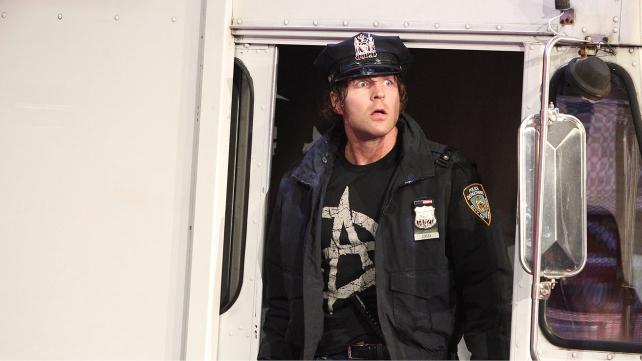
    Those fears are perhaps unfounded, as Owens is showing up on Raw in basketball shorts destroying Cena with his wicked pop-up powerbomb like he’s not a 15-time WWE Champion, but, then again, looking at Seth Rollins and Dean Ambrose as they head into a WWE Championship match at Elimination Chamber, perhaps not. This Raw was booked around that match, made unofficial last week when Ambrose threatened to crush Rollins’ head on a pile of cinderblocks—a nice callback to last year’s goofy angle that took the beyond-hot Ambrose out of action for a few months so he could film a movie nobody is going to see. The Authority, which, by now, is Rollins and a bunch of old dudes in suits, opened the show by giving Ambrose the evening to put his name on a contract to make the match official, first inviting him to an obvious ambush (spoiled by Ambrose’s running buddy Roman Reigns), then conspiring to have him arrested for accidentally assaulting a camera man. With Ambrose in jail, all Raw had to do was kill time until the end of the night, when he would obviously be freed and sign the contract. Saved at the last minute by a WWE staff member uploading a video to YouTube (reality!), Ambrose either stole or was allowed to borrow an NYPD van and officer’s uniform, whereupon he returned triumphant to the Nassau Colosseum to rescue Reigns and ink his name on the contract. It was an angle straight out of the Attitude Era, Stone Cold Steve Austin commandeering a zamboni or a beer truck or his own skull-festooned pick-up to ruin Vince McMahon’s night, but the Austin character (and the McMahon one, for that matter) was able to command “reality” in a way the Ambrose one isn’t, or isn’t allowed to. Of all the ex-Shield members, Dean Ambrose has unquestionably been the worst-written since that unit’s dissolution last year, but he’s the one that fans have most latched on to. He’s teflon-coated, whether he’s rolling a hot dog cart to the ring or threatening to make J&J Security work barefooted, like Hobbits. His continued popularity is a testament to the sort of connection that WWE’s indie-bred stars are able to foster with an audience that likely isn’t aware that indie wrestling exists, but it’s a complete mystery to me after a year of goofy, go-nowhere promos that are way too light on the fact that his ex-friend Seth Rollins tried to end his career once.

    That said, assuming the goofy garbage of a marquee Dean Ambrose match is left to the side, the in-ring quality of this Sunday’s match will be hard for anything else on the card to live up to. In Raw‘s opening contest, a tag match that saw Ambrose joined by Reigns and Rollins by Kane, the two brought a lot of flash to the now beyond-tired Roman Reigns vs. Kane formula, going so far as to exchange the signature moves of Kazuchika Okada and Hiroshi Tanahashi, two of New Japan Pro Wrestling’s ace performers who are also, more often than not, rivals. And that Ambrose won the match with a backslide and not his finishing maneuver or through disqualification suggests that his match against Rollins, however uninspired Raw‘s storyline was, won’t just be a throwaway title defense on a show otherwise devoted to Cena vs. Owens and the titular Elimination Chamber match.

    Given the decidedly low-stakes of both Chamber matches, that’s good. I’m generally not a fan of WWE booking pay-per-views around specific match genres beyond the Royal Rumble—in a medium that requires the occasional bit of surprise spectacle, calling an event Hell in a Cell and giving us three Hell in a Cell matches on it robs us of both—and the return of the Elimination Chamber for a Tag Team Title match and to decide the once-again vacant Intercontinental Championship only reveals how weak the tag team division is beyond the champions and their primary challengers, and how low the current writer’s rooms energies are ebbing. The Intercontinental Championship was just decided in a multi-man ladder match at WrestleMania, and, with June’s Money in the Bank approaching, yet another multi-man ladder match, likely involving a fair number of the men featured in the Elimination Chamber, will take center stage. Thus the build for the Chamber isn’t on the danger of the match itself or the struggle to get into the match, but on the fallout of the John Cena vs. Rusev I Quit match from this month’s Payback, which saw Lana throw in the towel for her man when she heard him say “I quit” in his mother tongue. Their promo on Raw was half-amazing, half-train-wreck, a pile-up of cold war and sitcom marriage cliches largely sold by the fact that Rusev is one of wrestling’s more engaging characters on the microphone, and Lana a rare great managerial presence whose character, sadly, will not work with anybody but her now former charge. Once Rusev convinces Lana to come to the ring, he starts plying her with rhetoric so pig-headed that even the crowd knows they’re watching something sexist, saying that Lana clearly just wants Rusev’s attention, and that he is ready to give it to her. In what is unquestionably the best thing said on WWE TV since Nikki Bella said she wished her sister died in the womb, Rusev tells Lana “I know you want to crush America and the American spirit just as bad as I,” and he means it. The two embrace, and, just as I’m starting to get misty-eyed for this pair of crazy kids, Rusev asks Lana to admit that she was wrong. This, obviously, she does not do. Rusev goes off, saying that he’s done being nice and that, well, he owns Lana. Lana has none of this, says “I am no longer your victim,” and leaves. Here’s the thing. World Wrestling Entertainment has set the bar so low for female characters that this isn’t just a step in the right direction, it’s Neil Armstrong walking on the moon. But then Lana leaves the ring and makes out with Dolph Ziggler to “get back” at Rusev, and that fantasy is over right quick because it’s 2015 and women on Raw can only be defined by how much they hate other women (see every Diva’s Championship feud, including the current issue between Paige, Naomi, and the Bella Twins), or their relationship with a man. The small blessing here is that Rusev would later return fire by beating Ziggler up in front of Lana, putting him in the Accolade while screaming “KISS HIM NOW!” That ruled.

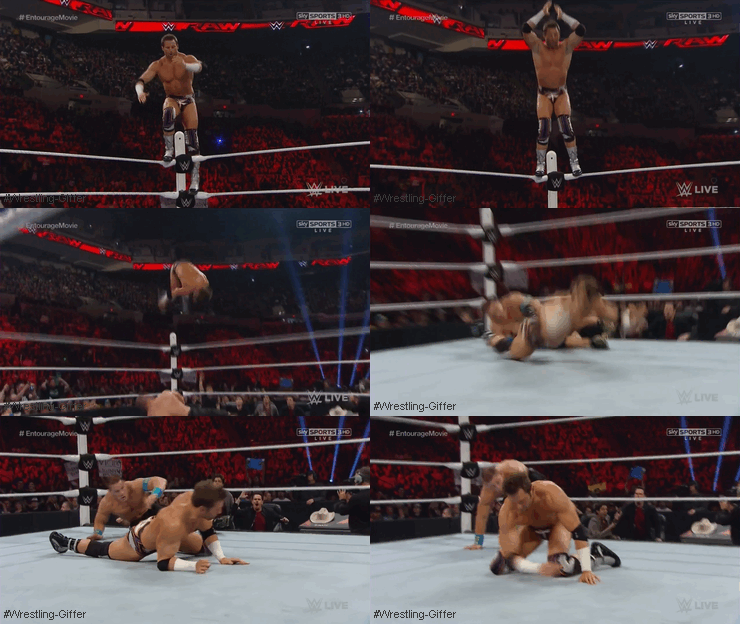
    Raw didn’t cure what ails me when it comes to professional wrestling, and, in truth, I’m not sure Elimination Chamber will, either. I know that NXT is out there tearing it up (and yes, Unstoppable was another impressive live special from that crew), and my beloved indies soldier on though I am currently unable to pay for them. WWE thrives because it is the easiest wrestling program to access, and ease-of-access breeds complacency. For too long now, it feels like there’s been talk of “grabbing the brass ring” and little actual follow-through. Owens changes that, maybe, but then again, maybe not. His fellow NXT alum Neville is currently wrestling good-to-great matches on the main roster in near-silence because some idiot decided to call him “The New Sensation” instead of just letting him grow organically. Too much of Raw feels perfunctory, there in hopes that a familiar face or move will get the live crowd to pop, and, as such, it feels like I’m watching the most talented wrestlers in the world do battle in a pool of molasses. It’s gotten to the point that John Cena’s usual pandering to the WWE Universe now includes a caveat that it may, in fact, be time for something new. He was talking about the “LET’S GO CENA/CENA SUCKS” chant finally giving way to a name his detractors could believe in, but I’m not sure the solution is as drastic as having Kevin Owens come in and destroy an already barren planet. Nah. If the roster were doing half as much as Zack Ryder did in his match against John Cena, pushing his envelope way beyond what any reasonable person expected of him because he was wrestling his last match in the arena where he learned to love wrestling, we’d be doing just fine. Sure, Ryder ate shit on his 450 splash, but I’d rather watch a beautiful failure than a wrestling promotion in cruise control.

    from Wrestling Giffer
    from Wrestling Giffer 


    WWE RAW 5/25/15 – Long Island, New York

    1. Dean Ambrose & Roman Reigns def. Seth Rollins & Kane via pinfall. GRADE: B

    2. Rusev def. R-Truth via submssion. GRADE: N/A

    3. Ryback def. Wade Barrett via pinfall. GRADE: B-

    4. Neville def. Stardust via pinfall. GRADE: C

    5. Dolph Ziggler def. Sheamus via pinfall. GRADE: C+

    6. UNITED STATES CHAMPIONSHIP: John Cena (champion) def. Zack Ryder via pinfall. GRADE: B

    7. Tamina def. Paige via pinfall. GRADE: D

    8. 10 VS. 3 HANDICAP MATCH: The New Day def. Tyson Kidd & Cesaro, The Ascension, Los Matadores, The Prime Time Players, and the Lucha Dragons via disqualification. GRADE: N/A

  • Movie Review: Fifty Shades of Grey (2015)

    Movie Review: Fifty Shades of Grey (2015)

    Fifty Shades of Grey

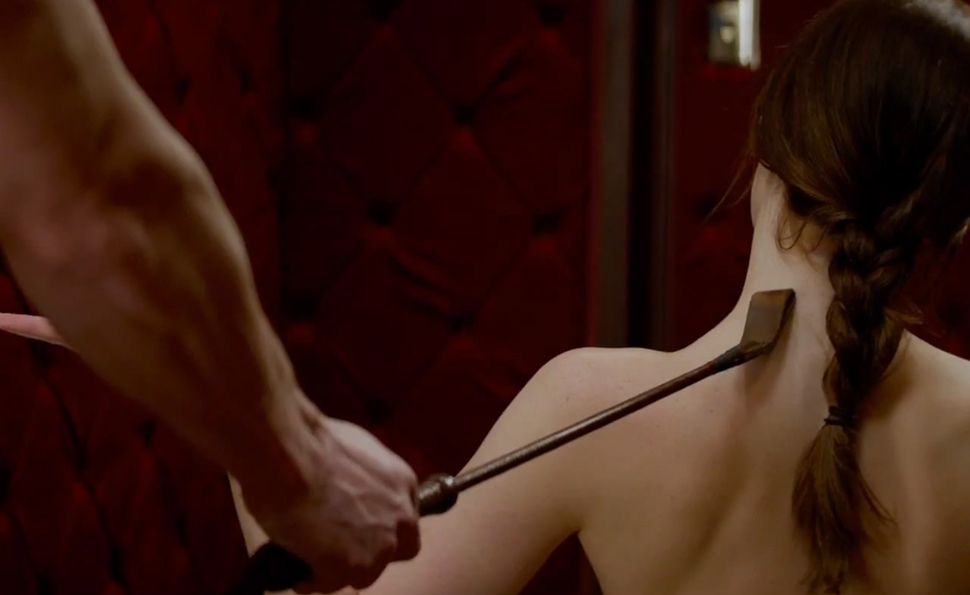
    Fifty Shades of Grey is a movie based on a book about an undergraduate English major who works in a hardware store. Her apartment—an immaculately appointed two- or three-bedroom brick loft with a ton of open space that she shares with another undergraduate—is nicer than most houses. How does she—or anybody—in her position afford such a place? How killer is the hourly rate at the hardware store? How hit was Washington by the economic downturn that this apartment might be the nicest place Anastasia Steele (Dakota Johnson) ever lives? It’s unrealistic, I know, for an erotic sex fantasy to opine at any great length upon the real estate it happens to occupy, but Fifty Shades of Grey is just as turned on by space and material possession as it is Christian Grey’s (Jamie Dornan) extensive collection of riding crops and silk blindfolds. It draws up a long, involved contract detailing its heroine’s sexual boundaries but has no clue about the dimensions of its own space. I found this curious, at first, then irritating. With each passing setpiece meant to wow us not with Christian Grey’s worth as a human being or a sex object, but with his bankroll, I wondered at Anastasia’s motivation for seeing her mysterious billionaire paramour and, not being able to realistically pin that on his wealth or the way he displayed it, was left wanting to know why so many people found this white, white, white, white, white dude so appealing.

    Fifty Shades of Grey is staged as a series of interrogations, all of them at least verging on creepy. In the first one, the powerless Anastasia interviews Christian—a god-king by comparison—for the school newspaper. He is cool and composed behind his desk, the Seattle skyline at his back. She is trying to collect herself after tripping and falling on his office carpet. Roger Ebert used to call contrivances like this Meet Cutes, and this is the prototypical one except that Anastasia falls and Christian does not help her. And then Anastasia keeps falling and falling and falling, and again, Christian isn’t helping. In fact, more often than not, he’s the one pushing her down. Later, he’ll say that it’s “for her pleasure.” He says this clinically, the way a pack of Trojan condoms claim to be ribbed for the same purpose. But first there is this scene, where it is all too obvious that the two should never see each other again. They are almost literally from two different worlds, and Grey is too obvious in lording it over his guest. The interview, of course, is a disaster, but Grey sees something in her—considering the impossible number of supermodel blondes working reception in his office tower, maybe its her hair—and decides that the two must have relations, but not a relationship.

    The implications of the film’s plot are disturbing, but considering that long stretches of it take place over iMessage, director Sam Taylor-Johnson and cinematographer Seamus McGarvey do a good (if thankless) job of making E.L. James’ globe-conquering novel look like it belongs on the screen. This is an achievement, really, because I can’t think of too many movies where one character confesses to not knowing something, only for the other to tell them to Google it. Fifty Shades‘ problem goes beyond the fact that it settles for telling over showing—too often, its characters are the ones telling each other what they mean instead of showing it, which, given the allegedly sensual content the film deals with, is particularly disappointing. It’s good that Anastasia often finds herself in beautiful environs, even when her face is buried in one screen or another, as Christian Grey himself is as sexy as a PowerPoint presentation. He drones on and on about contracts and playrooms and pleasure like the words, on their own, are enough to convince a near-complete stranger of the worth of anal fisting. Considering the success of the franchise that bears his name, perhaps he is not wrong.

    One of the film’s posters, depicting a reclining Dakota Johnson, asked a simple question: “Curious?” And, I’ll admit, I was. Until Fifty Shades of Grey was optioned by Focus Features, it was destined to live in my memory as a series of novels that gave rise to a million breathless TV spots where embarrassed journalists uttered the words “mommy porn” and pretended such things were beneath their Kindle. It was an awful display, so many major media outlets rushing to condemn the very thought of women—gasp—having an interest in something beyond vanilla sex or objectification, but now we’ve got this movie and the promise of two more, all of which feed back into this negative, patriarchal portrayal of women as weak-willed naifs without one wit of the Twilight Saga‘s camp or batshit lunacy. When Christian Grey is involved, Fifty Shades of Grey is so male gaze-y that it’s hard to believe that women directed, wrote, adapted, produced, and edited the film. As a malevolent presence (that has been mocked in remixes of the film’s other semi-iconic poster), Grey is omnipresent. If he’s not shaming Anastasia for being a virgin or not immediately being into the idea of butt plugs, he is dropping everything at his job of being the CEO of a vaguely-defined multinational corporate entity so he can fly to Arizona to break up a much-needed conversation between Anastasia and her mother, the whole thing playing out like he’s a man out to reclaim a piece of stolen property. When he takes her on a date to go glider flying, it’s to once again remind her of all the great things she’ll be missing out on by not signing the contract and becoming his weekend lover. Not mentioned, however, is the biggest perk of refusal: A decided lack of Christian Grey hovering over you, making even the largest spaces claustrophobic.

    When Anastasia finally has the gumption to reject Christian (something she does not once, but several times), the moment isn’t so much victory as temporary relief. The outcome of this series being all but a foregone conclusion, however, even that relief is fleeting. I want to believe in a film ecology that has space for mainstream films about sex that are driven by women, but as each of Fifty Shades of Grey‘s 125 minutes passes, it became more and more clear that this was, really, our one shot at such a thing, and no matter how profitable it ends up being, we’ve rather spectacularly blown it. If my curiosity dictated that I wanted to see something where women are humorlessly, horrifically tortured psychologically for the sake of a man’s pleasure, I could have chosen almost anything else. Hell, some of them would have at least been films.


    Fifty Shades of Grey. With Dakota Johnson (Anastasia Steele), Jamie Dornan (Christian Grey), Eloise Mumford (Kate), Jennifer Ehle (Carla Wilks), and Marcia Gay Harden (Grace). Directed by Sam Taylor-Johnson from a screenplay by Kelly Marcel, adapted from the novel Fifty Shades of Grey, by E.L. James.

  • Movie Review: Furious 7 (2015)

    Movie Review: Furious 7 (2015)

    Furious 7
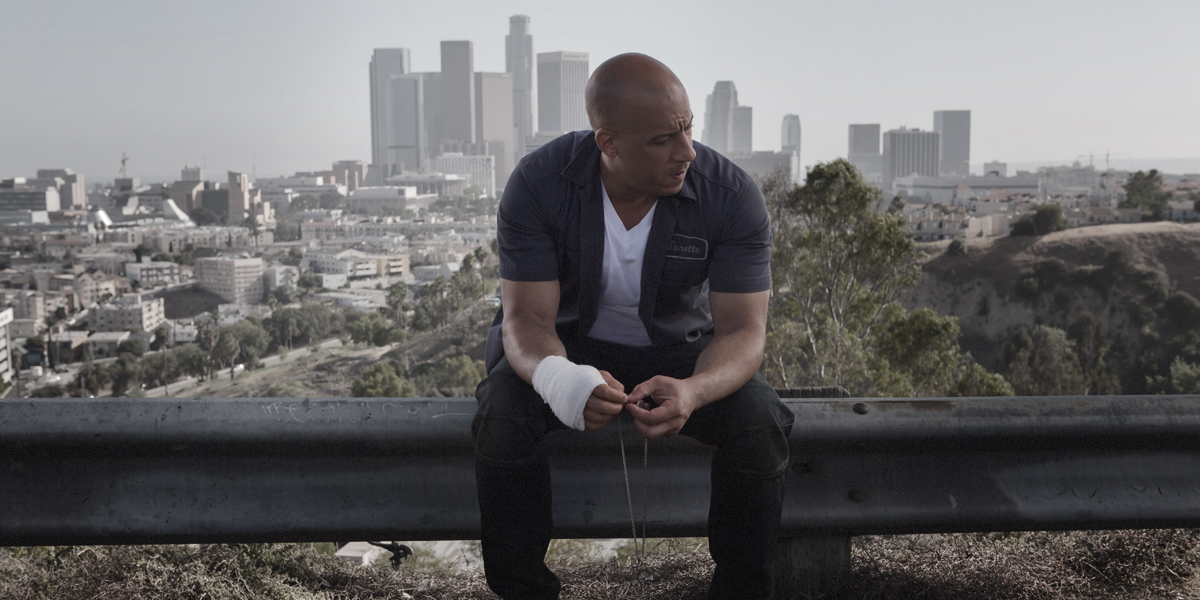
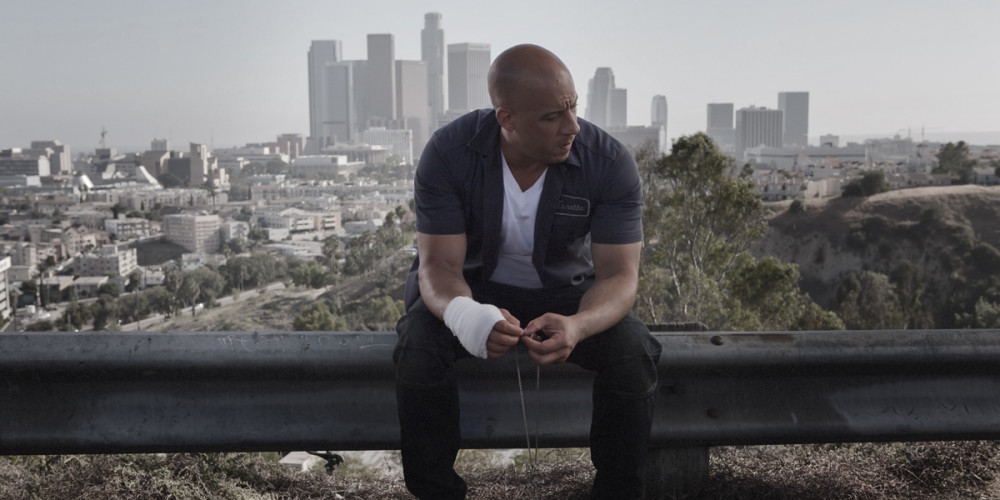
    Let’s start here: Furious 7 is the latest in a growing list of action movies that I found myself simultaneously awed and troubled by. While I am continuously surprised that a franchise as pleasurable as this one frequently is came from the same film that spawned listless spinoffs like Torque and Biker Boyz, the seventh installment of The Fast and the Furious‘s now thankfully untangled universe spends a not insignificant amount of time arguing that, in the right hands, global surveillance is a good thing. You’ve seen this before—Batman, needing to find the Joker, convinces his tech guy, with little more than a shrug, to let him jack into every phone in Gotham City. Superman flies up, up, and away so that he can listen very carefully for the heartbeat of the one specific person in Metropolis he’s looking for. Professor X builds a machine that can let him listen to the thoughts of hundreds of thousands of human beings at once so he can identify the mutants in the crowd, show up on their doorstep, and give them a hug. The Avengers spent half a movie trying to fix a flying boat that was being used to spy on the world and only got upset about it later. Dominic Toretto (Vin Diesel) is a superhero, too, perhaps the 21st century’s first original one, and here, in 2015, when a government agent named Mr. Nobody (Kurt Russell) tells him that there’s a flash drive that’ll let him or whoever has it tap into every Internet-ready device on the planet, he is completely unfazed. Hell, that kind of thing might even be useful.

    Furious 7 means nothing by its MacGuffin, of course. Mr. Nobody promises that it can be used to track down Deckard Shaw (Jason Statham), a shadow who has been hunting Toretto and his makeshift family for crippling his brother in Fast & Furious 6, but Shaw is never exactly hiding, unless that’s what he’s doing by showing up on a mountain pass with a specially rigged car designed to force Toretto and his crew off the edge of a cliff. Dom’s proposed alternate plan of hanging out and drinking Corona until Shaw found him probably would have worked, truth be told. But as all the fancy computers in the world bleep and bloop until they’re locked on to the face and voice of a computer hacker who is trying to bring this spy system down with a prayer and a digital readout screen, one can’t help but wonder how important these big, dumb, exciting action spectacles will be in normalizing the already near-constant state of surveillance we live under.

    Director James Wan, taking over for Justin Lin, is taken by quick-edited establishing shots of Furious 7‘s many foreign cities and rapid-fire montages of female anatomy just, you know, standing around during the series’ now perfunctory drag racing and beachfront sequences, a somewhat goofy throwback to the series as it was before Lin made it a canvas for spectacle. That nostalgia serves both narrative and extra-narrative purposes, though, as the film is at least nominally about the creation and evolution of a makeshift family, and is absolutely about giving deceased star Paul Walker a final bow. As Letty (Michelle Rodriguez) struggles with her memory and her place in the crew, Furious 7 wrings the most tension out of the action sequences revolving around Walker’s Brian O’Conner, a new father who would be struggling with his adjustment to the domestic life if Deckard Shaw’s revenge plot didn’t involve cutting every branch of the Toretto family tree. The Fast and the Furious has struggled in the past to make Walker and Jordana Brewster’s domestic quibbles seem relevant to the business of whipping around exotic cities in cars capable of lightspeed, but if Furious 7 isn’t focused on these characters (and Brewster has been relegated to pregnancy and staying back at the fort for some time now), then it is at least dedicated to giving them a real ending, a thing not often afforded to the main character of a decade-spanning action franchise.

    The attention paid to the core characters from The Fast and the Furious means that there is less for the ancillary characters to do, Tej (Ludacris) and Roman (Tyrese Gibson) getting their tech guy/comic relief licks in from the fringes of the film so that Kurt Russell can wax sarcastic about the shadowy government organization he works for. Dwayne Johnson, whose character completely changed the scope and tenor of the series, spends most of this installment hospitalized. When he’s in play, though, he’s in play: flexing, waggling his eyebrows, spouting catchphrases—Hobbs is Dwayne Johnson in “The Rock” mode, pure brain candy. With each film he appears in, it’s clear that Johnson is on another level as an action star, bringing together physical presence and charisma in a way that suggests peak Schwarzenegger or Stallone, if either of those men were capable of having fun with themselves as living action figures. He and Diesel are compelling foils to each other and to the Schwarzenegger/Stallone rivalry, Johnson’s best vehicles being those where he is all mega-watt charm and Diesel’s being those where he can brood and menace. Diesel is forever the philosopher-king of the quarter-mile, and it’d be easy for a movie with Furious 7‘s purpose to get lost, gazing into its own navel. If Furious 7 is the last film in the series that suggests a family barbecue and a return to normalcy is ever going to be possible for these characters, Toretto is going to need his buddy Hobbs around to remind him that there’s a whole world out there to simultaneously save and destroy, one car at a time.


    Furious 7. With Vin Diesel (Dominic Toretto), Paul Walker (Brian O’Conner), Jason Statham (Deckard Shaw), Michelle Rodriguez (Letty), Jordana Brewster (Mia), Tyrese Gibson (Roman), Ludacris (Taj), Dwayne Johnson (Hobbs), Kurt Russell (Mr. Nobody), Nathalie Emmanuel (Ramsey), Tony Jaa (Kiet), Djimon Hounsou (Jakande), and Ronda Rousey (Kara). Directed by James Wan, from a screenplay by Chris Morgan.

  • Movie Review: Mad Max: Fury Road (2015)

    Movie Review: Mad Max: Fury Road (2015)

    Mad Max Fury Road

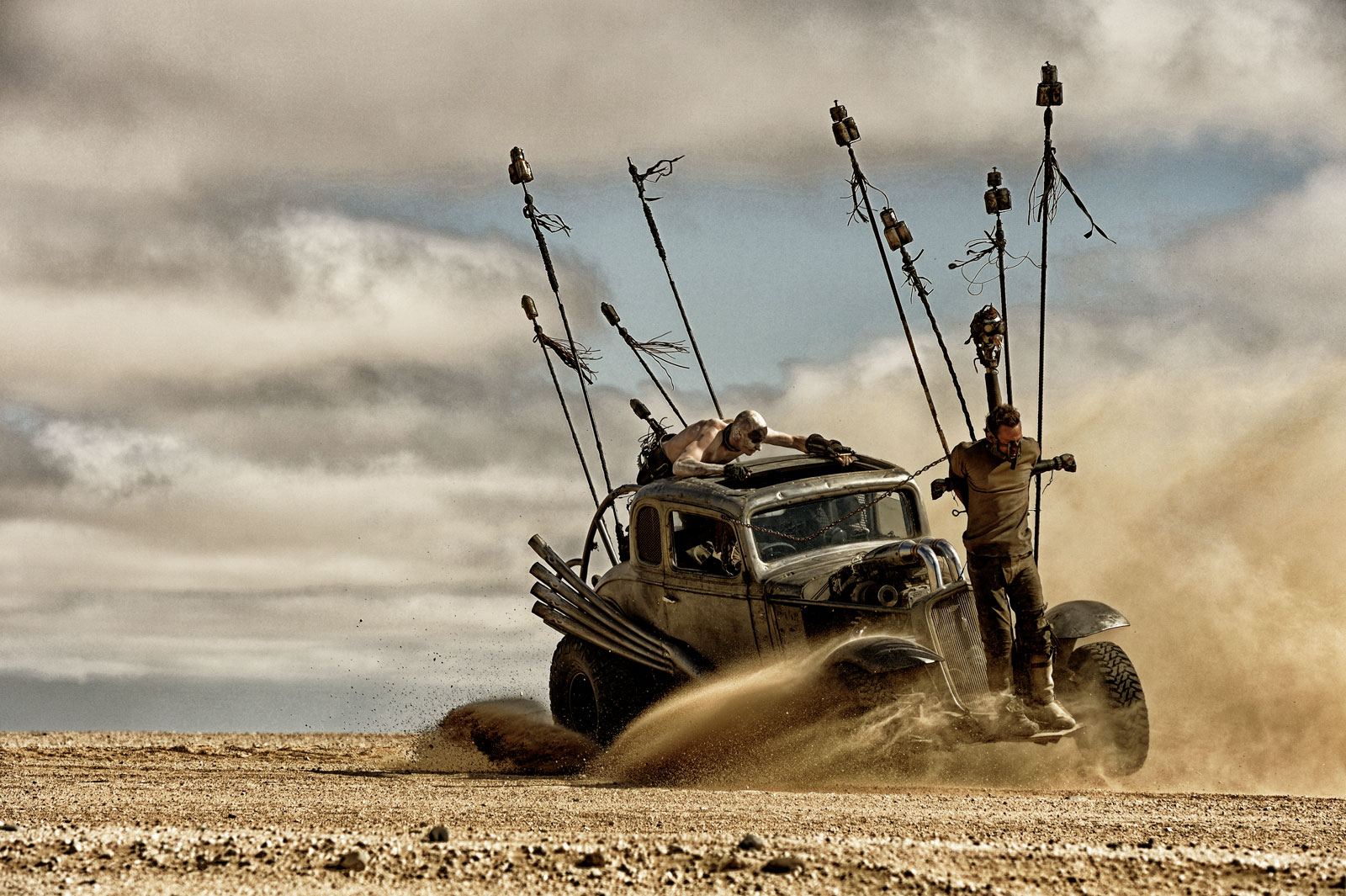
    essentialMax Rockatansky is not his own man, never the focal point of the franchise that bears his name. He’s a cipher, a way for writer-director George Miller to slip into a ruined world, a world that’s too stupid to live and too stubborn to die. If the doomsday prepper set is right and there is something left of our world once we’re done hollowing it out and wasting it away, it’ll take more than a bunker full of Gatorade and beef jerky to survive what’s coming. Beyond any extreme, beyond Beyond Thunderdome, the argument George Miller has made over the course of four films and 36-years is that survival, on such a vast and awful scale, is not something you can prepare for, but is something that’s thrust upon a person, something one suffers until the world stops playing with its food and swallows whole. Max Rockatansky is mad, but he’s never his own man for long. First he’s eating, then he’s the property of a marauding band  of chalk-painted dieselpirates, personal bloodbag for a dying lunatic soldier who’d like nothing more than to dip himself in chrome and punch his ticket to Valhalla. It’s one way of living when nothing’s meant to live, at least.
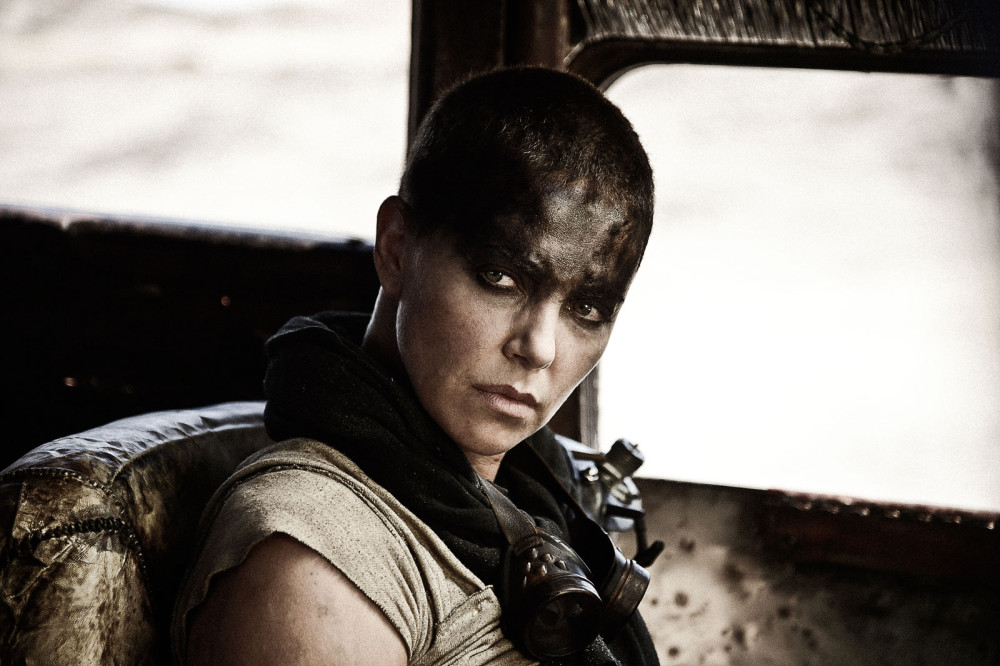
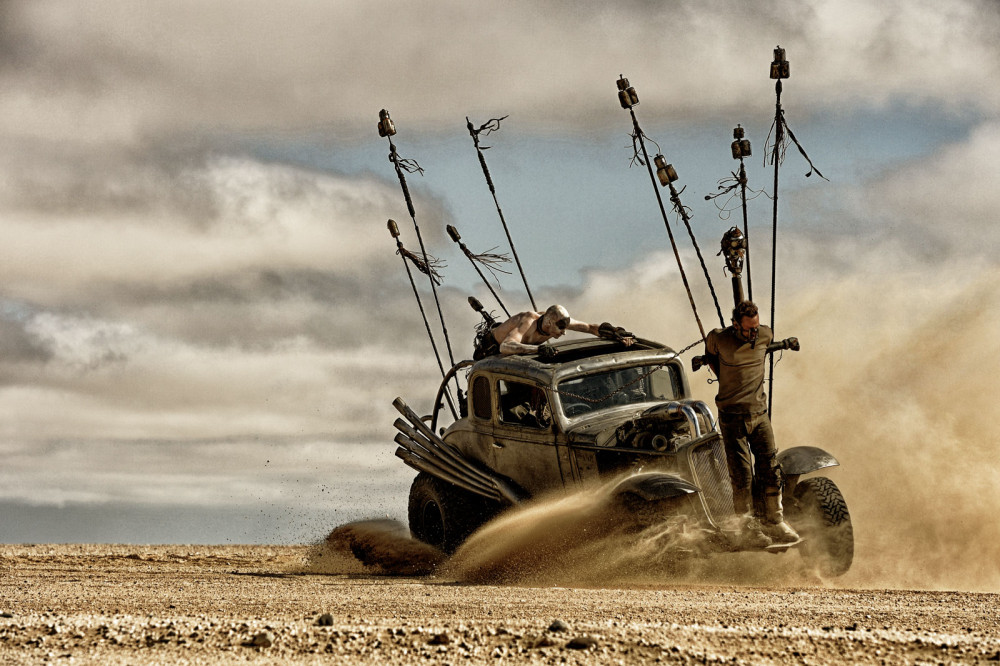
    Mad Max: Fury Road starts hot and never lets up. It is two hours of tight, ferocious lunacy, audaciously shot and deftly edited, ugly to the point of surreal beauty, a bomb dropped in an era of action filmmaking cowed by expectation and formula. There has been nothing better since Terminator 2: Judgment Day. There has never been anything quite like it. Max (Tom Hardy) finds himself the hood ornament of a suicide engine that’s chasing after a woman, Imperator Furiosa (Charlize Theron), who has made off with the brides of a warlord (Hugh Keays-Byrne) that figured out a way of pumping clean water up from the bowels of the earth. That he has carved something beautiful out of the desert is beyond the point—Immortan Joe can turn the water off and on as he pleases, and that makes him the figurehead of one of the most perverse cults in film history. He counts his army not in henchmen, but in lumpen blobs of flesh and apocalyptic guitar players, chalkfaced worshipers at the altar of American muscle and syphilitic bankers who kill for sport while complaining of the cost. The goal for Furiosa and the brides—several of whom are pregnant via rape—is unspecific even by the standards of a Mad Max film, a “Green Space”  where they can live, provided for and protected. Immortan Joe wants these women back. His warriors hope that he will escort them to Valhalla. To say that Furiosa’s cause is doomed is obvious. In a world like this, all causes are.

    Mad Max Fury Road

    Of course, Miller’s film has unending potential as thinkpiece material. That The Vagina Monologues‘ Eve Ensler was hired as a consultant and that Furiosa is ostensibly the protagonist in a film bearing the name of a man made Fury Road the subject of a pitiful boycott on the part of the toxic men’s rights movement. The women in this film seek revenge and/or redemption from their rapist. Max spends nearly a third of the film strapped to a cross, giving his blood to an undeserving sinner (Nicholas Hoult). Immortan Joe calls his water supply Aqua Cola, which is something of a throwaway line until you remember that companies like Nestlé have been working for years to privatize that very resource and are run by men who have flat-out said that water is not a basic human right. Yes, yes, but all of this is secondary to the filmmaking, which is trash-beautiful to a point I didn’t believe even George Miller capable of. If you can call the grease and grunge and engine exhaust of Mad Max an aesthetic, then this permutation of the series is that aesthetic at its peak, inviting us to delight and disgust in its orgy of mutants, cars, and war.

    Fury Road is fast, and not in an illusionary sense. Too many action movies are edited to compensate for a lack of physicality, the absence of actors in real space or a dearth of body to body contact. Think of how The Avengers cuts from a CGI Iron Man punching a CGI Hulk to Robert Downey, Jr.’s face, eyes scanning a CGI computer readout. Or how an action movie sans an “action star” cuts away from a punch, using rapid editing and sound design to imply the force of a blow. Miller and cinematographer John Seale want something more. They want us to taste gasoline in our mouths and feel the sun blazing on our necks. They want every bullet to matter and every twisted wreck to cause one to wince. Their camera hovers over Immortan Joe’s armada like a buzzard looking to pick clean the bones of whatever dies first. I don’t want to say that every action movie should be shot like this, but if every action movie had even an ounce of this one’s unflinching courage to just be different, there’d never be cause to leave the multiplex. But that’s not the world we live in, and, as such, Mad Max: Fury Road is less a breath of fresh air than it is one giant gulp after another after clawing oneself out of an airless grave. We emerge to a world ruined beyond any hope of repair. Increasingly, it’s the only one left to love.


    Mad Max: Fury Road. With Tom Hardy (Max Rockatansky), Charlize Theron (Imperator Furiosa), Nicholas Hoult (Nux), Zoë Kravitz (Toast), Hugh Keays-Byrne (Immortan Joe), and Nathan Jones (Rictus Erectus). Directed by George Miller, from a screenplay by Miller, Brendan McCarthy, and Nick Lathouris.

  • Movie Review: Avengers: Age of Ultron (2015)

    Movie Review: Avengers: Age of Ultron (2015)

    Avengers

    I remember spending a lot of time in my local library as a kid. It was close, within safe walking distance from my house, and beyond a few people who hung out and read magazines they didn’t want to subscribe to, it was just me, the librarians, and a whole lot of books. Browsing the stacks one day, I found these gigantic treasury editions of 60s and 70s Marvel Comics, which I checked out and read every week for three years. My favorite of them was Marvel’s Greatest Superhero Battles, its cover promising an epic clash between The Hulk and The Thing, my two favorite characters in the yet cinematically undiscovered country that was the Marvel Universe. This was the 1990s, and, say what you will about Stan Lee, but the way he wrote his superheroes (and the way Jack Kirby, Herb Trimpe, Sal Buschema, and John Romita (among others) drew them) still had a way of speaking that appealed directly to this very particular sense of selfhood I was developing. Bruce Banner was a quiet man, Benjamin Grimm a soft-hearted lunk. One wanted to be left alone. The other was doomed to be forever unhappy with his body. I got that. I identified with it. And, sealed away in these treasury books, they belonged to a world that only I had access to.

    Had you told nine-year-old me that The Hulk would be a cornerstone of one of the world’s most successful film franches—man, I don’t even know. 27-year-old me can hardly believe it, and I have lived experience of summers spent in multiplexes that weren’t showing a superhero of some kind. Sitting in the dark waiting for Avengers: Age of Ultron to start, there were three trailers for upcoming superhero films, and I was late. The next in Disney’s Avengers sequence, Ant-Man, is coming out in July. We barely get a month to rest up between episodes now, such is the cultural demand for city-destroying bacchanalia. I was tired. I was restless. I wanted to shove nine-year-old me into a locker for liking this stuff. And when the film started, I was largely still exhausted. Joss Whedon’s latest venture into the Marvel Cinematic Universe is overstuffed and overlong, struggling to contain itself, even at two-hours and 20-minutes. A lot of the bloat, at this point, must be attributed to the fact that an Avengers movie isn’t just a movie—it’s part of a cycle, and, as such, is part of a feedback loop that looks back as far as 2008 and looks forward as far as the heat death of the universe. Around that, Whedon, admirably, is going for something more here than in Avengers. Meglomaniacs get smashed-up real good and the physical and psychic trauma of 9/11 is exported to a countries real and imaginary, but it’s clear at this point that Whedon is most in his element when the world is quiet and his team has divested itself of their spandex.

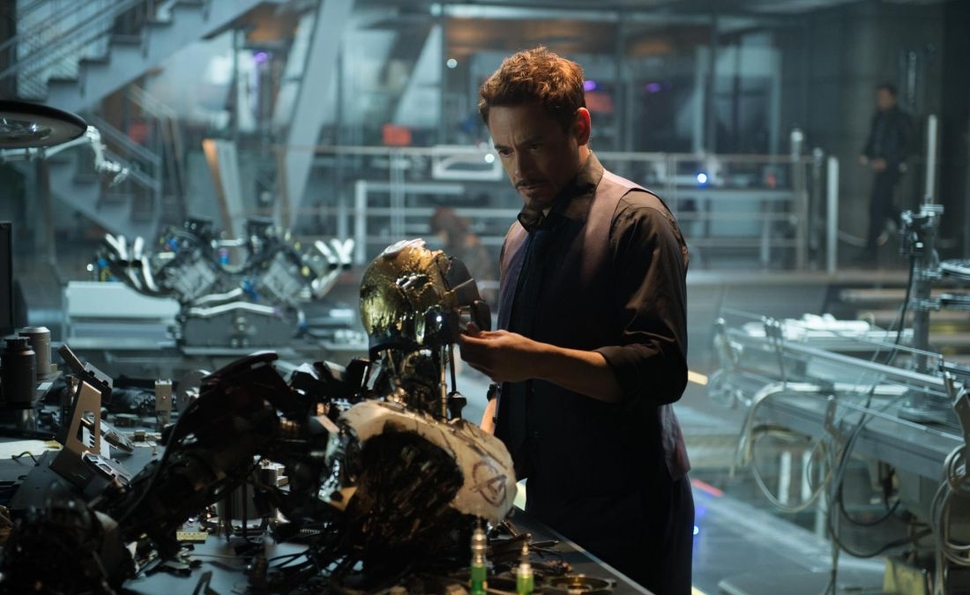
    Then, he can get down to the real meat of Marvel Comics, which is that beneath the spectacle and muscle, superheroes are really just damaged human beings who are very uncomfortable with their bodies. This has been a sub-plot of most MCU films for awhile now, the whole “He’s just a man, but I’ve got an army!” deal, but Whedon’s script ventures beyond that, ruminating on the fallibility of flesh. His villain, Ultron (James Spader), a malevolent, sassy robot whose AI bears a striking resemblance to Tony Stark (Robert Downey, Jr.), sees the body as a necessary step forward in his evolution. Stark knows he will die, leaving his project of world peace unfinished. Hawkeye (Jeremy Renner) is just a regular dude with a bow and arrow. Captain America (Chris Evans) is still acclimating to a world where most of his friends have died. Bruce Banner (Mark Ruffalo) is doomed to be ashamed of his monstrous, green alter-ego, and Black Widow (Scarlett Johansson) has a past that involves bodily disfiguration. Where a villain like Ultron (or Loki, or the assembled horde of Hydra bad guys, or men in knock-off Iron Man gear) see this as the team’s weakness, it’s the axis upon which the whole thing spins—there aren’t many people who could understand their individual circumstances, but they’re all here in a room together, drunkenly trying to lift the hammer that lets Thor (Chris Hemsworth) lay claim to the throne of Asgard.

    But at this point, it’s not enough to truly satisfy. MCU films are, like a hang-out sitcom, an excuse to sit around and chuckle with a group of favorite characters, mind turned off. Battle sequences are well-executed, if perfunctory and consequence free. If you don’t check in on Marvel’s televised output, it’d be easy to assume that the fallout from any given fight is a paycheck from the Stark Relief Fund (which, man, that name) and a new life in a city that maybe won’t host a rampaging Hulk. I feel like complaining about the lack of stakes after eleven Marvel films, far from being a fruitless endeavor, reveals something about the limits of popcorn filmmaking, or at least the men responsible for making them. The Avengers: Age of Ultron can be nitpicked to death or praised for things that happen or are imagined to have happened at its fringes, but at heart this is a big, dumb action movie trying a little too hard to sound smart. This, in general, works for me. I am, if anything, overly enthusiastic about The Fast and the Furious‘ focus on makeshift chosen families, and am still fascinated with The Dark Knight and The Dark Knight Rises‘ attempt and failure to engage with philosophical theory and political science. Whedon does the same here, toying with ideas of fatherhood, Catholicism, and ruined women, but all too frequently it feels like he’s wrestling a Wikipedia page and not the idea itself. The drama will continue in the next wave of Avengers movies, we’re promised, but just once I’d like to see a Marvel movie that is a movie first, rather than an advertisement for an upcoming slate. I’d like something real to chew on. I’d like to go home not dreading the prospect that, someday soon, it will not be enough for a comic book movie to merely entertain me for three hours. Like the villains of these pieces so frequently say, it’s time to evolve. If only the folks behind the camera were listening.


    The Avengers: Age of Ultron. With Robert Downey, Jr. (Tony Stark/Iron Man), Chris Hemsworth (Thor), Mark Ruffalo (Bruce Banner/Hulk), Chris Evans (Steve Rogers/Captain America), Scarlett Johansson (Natasha Romanoff/Black Widow), Jeremy Renner (Clint Barton/Hawkeye), Aaron Taylor-Johnson (Quicksilver), Elizabeth Olsen (Scarlet Witch), James Spader (Ultron), and Samuel L. Jackson (Nick Fury). Directed by Joss Whedon from a screenplay by Whedon, based on the Marvel Comics characters created by Stan Lee and Jack Kirby.