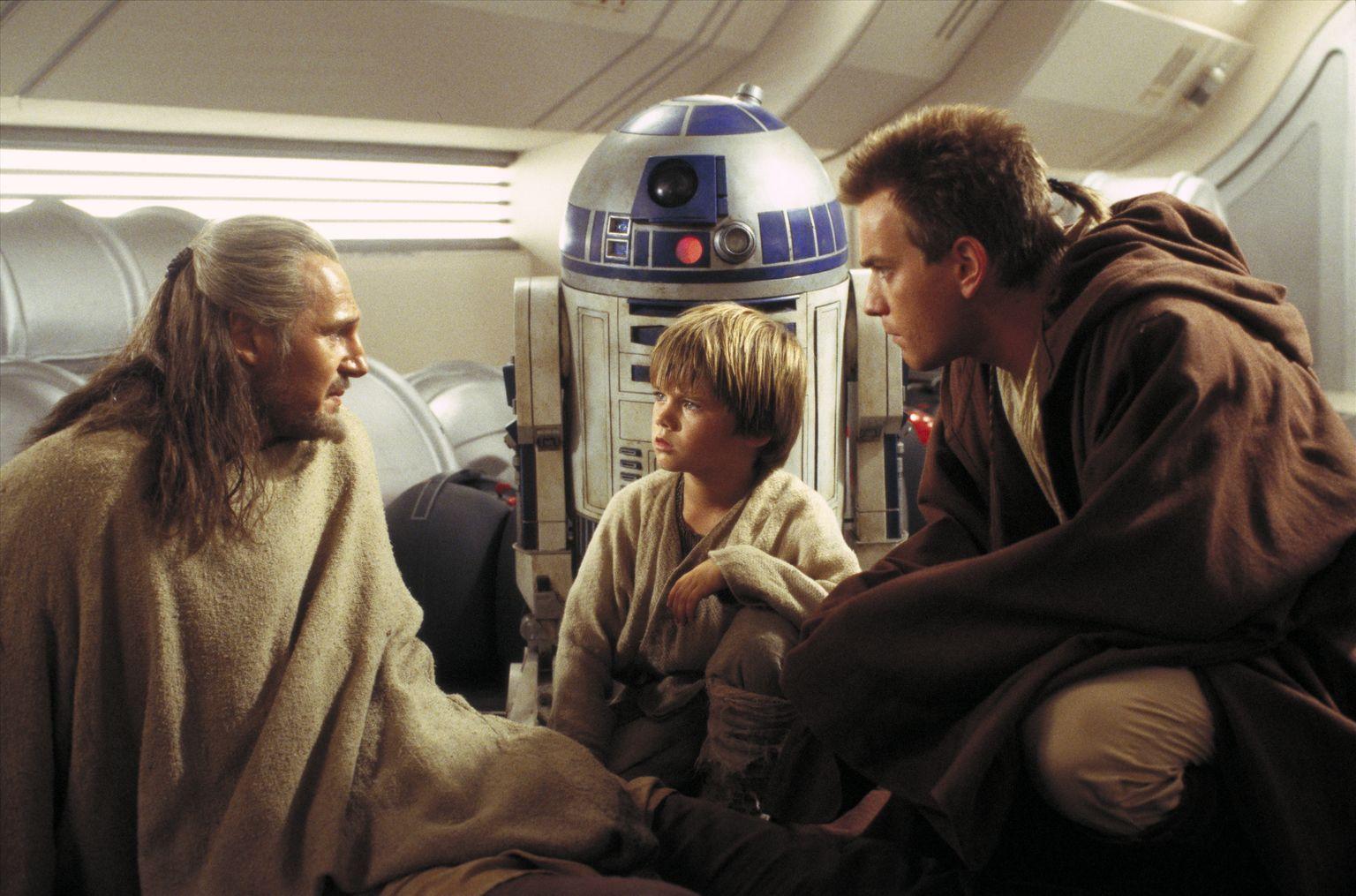
Star Wars Episode I — The Phantom Menace came out when I was 11 years old, and I’m not going to lie to you: I liked it, so much so that my memory for it to this day is nearly word perfect. It’s an odd thing, remembering what I was like at 11, when the story of young Anakin Skywalker was aimed directly at my heart like a missile gunning towards a space station’s ventilation shaft, but this is hardly something I’m looking at through the lens of nostalgia. Before the release of The Force Awakens, while my various social media streams were reaching, in unison, for the films from the original trilogy, The Phantom Menace was the Star Wars film I reached for. As much as J.J. Abrams’ reboot/remaking of the Star Wars universe was a love letter to the Star Wars films everybody loves, it is very much a product of and response to the ecology of blockbuster film-making that The Phantom Menace largely created, one where the imagination was set free from the limitations of physical space by CGI and bound instead to the principal of narrative ease.
Star Wars has always been a franchise dedicated to serving the whims of young boys. Its bright colors, easy charms, simplistic moral grounding, and elements borrowed from Joseph Campbell and the sci-fi serials of director/creator George Lucas‘ youth don’t leave much room for complication or nuance. But rather than examining my childhood (which wasn’t exactly damaged by the film) or the childhoods of the assembled horde of folks cheering that a film series owned by the Disney corporation has been liberated from the mind of its creator, The Phantom Menace needs to be examined in terms of the theoretical child George Lucas was directing for. Regardless of whether or not this represents the beginnings of a noble effort to document the fall of a democratic republic, the boy Lucas loved so completely when he made A New Hope is, with The Phantom Menace, a construct he holds in contempt.
There’s never a moment in The Phantom Menace where it feels like Lucas trusts his audience to understand what is happening, which is fair considering where he begins: In the middle of a treaty negotiation over blockaded trade routes. Like all great space-fairing epics, the galactic Senate is ineffectively wringing its hands over what to do about the Trade Federation’s illegal occupation of the routes to Naboo, waiting on a report from its Jedi ambassadors Qui-Gon Jin (Liam Neeson) and Obi-Wan Kenobi (Ewan McGreggor) before taking a vote on whether or not to sanction the Federation in some unspecified manner. In a way that’s clever (but not too clever considering the sheer number of corporate sponsorships attached to Star Wars), Lucas imagines the Trade Federation not merely as a corporation, but a body so large it has a seat in Senate. What they produce and who they service is unclear, but everything about The Phantom Menace is only clever on the surface, like the way Jedi Knights function in vaguely similar fashion to Jesuit priests. Because the Trade Federation are evil and stupid, they attack the Jedis with a squadron of easily dispatched droids, who spend the majority of The Phantom Menace bumbling about as various weapons cut through them like their sole purpose is to demonstrate the unspeakable power of the people they oppose. They also serve as a platform for Lucas to demonstrate both upgraded lightsaber techniques and his ability to create characters that would have once required an army of puppeteers and animatronics experts, the whole show meant to dazzle the eye at the cost of everything else.
Through a series of contrivances involving a hair-raising number of racial stereotypes, Qui-Gon and Obi-Wan rescue Queen Amidala (Natalie Portman) and slip the blockade, landing on the familiar desert backwater of Tatooine. Their ship in desperate need of repair, they decide to rely on the help of a young boy named Anakin Skywalker (Jake Lloyd), who is the premier podracer in the galaxy despite his age. Qui-Gon sees something in the boy and seeks to free him, believing he might be the literal chosen one of a shadowy Jedi prophecy, and wagers it all on Anakin to win the big podrace. While the podracing sequence is a genuinely well-done setpiece that convincingly conveys the speed and danger of this NASCAR-like sport, there’s never any question that Anakin is winning the race. He’s important to the story, but decidedly a background figure, a child on the fringes of consciousness, let alone the centuries-long battle between the Jedi and the Sith, the film’s titular menace. As he jogs to the spacecraft that will take him from the only planet he’s ever known, his new friend is attacked by Darth Maul (Ray Park), a Sith with a double-bladed lightsaber and body modifications (woaaaaaaaaah, cool!).
The first two acts are long—whatever sense of pacing Lucas had as a director all but swallowed up by the 20-year gap between The Phantom Menace and A New Hope. The film picks up noticeably with the introduction of Maul, cutting back and forth between a siege on the palace of Naboo, a battle on the outskirts of town, a starfight over the orbital blockade, and a duel between the Jedi and the Sith that is easily the standout sequence of the film. It is, at least, the one sequence that feels real, as if the bodies that interact with each other in the scene exist in the same physical space. While the unreal sheen of so many of the organisms and droids in this Star Wars outing may constitute a sort of campy fun for some, they stand out today as the harbingers of special effects shots that are more effect than special.
The Phantom Menace uses the technological firepower at its command to present armies of droids, starfighters, and amphibious frog creatures from an underwater city, and in doing so it completely eliminates the need to creatively stage a battle sequence. It’s been said by Star Wars obsessives far angrier than me that the Gungans of this film are the Ewoks of Return of the Jedi. Regardless of whether or not that’s true, the battle sequences featuring both make for a good point of comparison. Shooting in a forest and utilizing actors in suits and miniature models, Richard Marquand created sequences that were ridiculous given the combatants, but effective in staging a ground battle like no Star Wars film had or would until The Force Awakens. Given the utter limitlessness of greenscreen film-making, Lucas put two armies across from each other on a visually uninspiring plain and had one walk towards the other.
The tools refined here by Lucas were handed down to a generation of lesser directors and hacks who took high concept ideas and staged them for the lowest common denominator. This, more than box office (and possibly more than making Star Wars an unavoidable cultural juggernaut for a new generation of wallets), is the legacy of The Phantom Menace, a swath of low-stakes narratives complicated not by the corporeal risks faced by the characters we’re meant to identify with, but the glittering computerized metropolises they ostensibly inhabit. Any threat, large or small, can be conjured with the click of a mouse. So too can those threats be waved away.
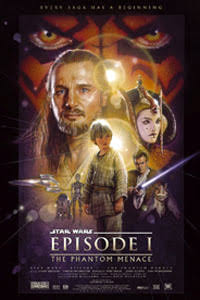 Star Wars Episode I — The Phantom Menace (1999)
With Liam Neeson (Qui-Gon Jin), Ewan McGregor (Obi-Wan Kenobi), Natalie Portman (Padmé Amidala), Jake Lloyd (Anakin Skywalker), Kenny Baker (R2-D2), Anthony Daniels (C-3P0), Frank Oz (Yoda), Ray Park (Darth Maul), and Samuel L. Jackson (Mace Windu). Directed by George Lucas from a screenplay by Lucas.
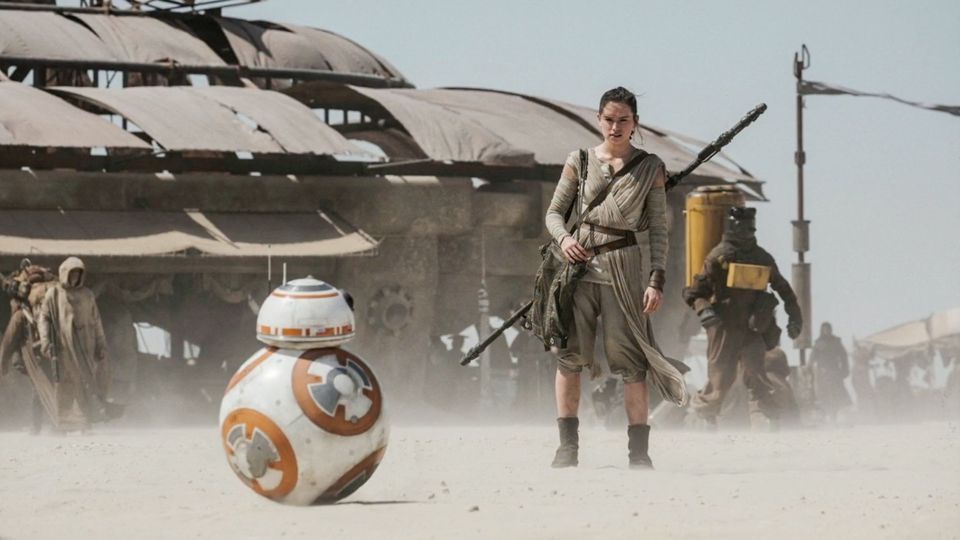
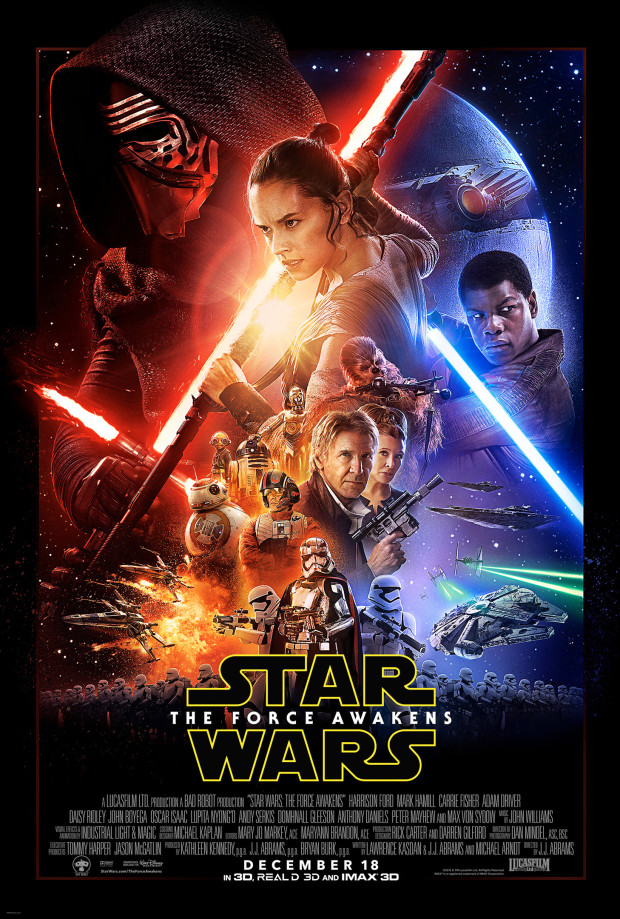 Star Wars: The Force Awakens (2015)