Tag: Forest Whitaker

  • Movie Review: Southpaw (2015)

    Movie Review: Southpaw (2015)

    Southpaw 2015

    There is an undeniable poetry to boxing, or there was, at least: To the ebb and flow of two bodies in the ring, weaving and ducking and lashing out; to the roar of the crowd; to the spare lyricism of a fighter’s oratory; to the satin finish of a ring robe or the gleam of sweat or a sudden burst of blood from a ruined nose. Though boxing’s popularity has been and still is in decline, films like Antione Fuqua’s Southpaw keep the embers glowing, using the pugilist’s chiseled body and dazzling fight choreography to create an impression of the sport that it is increasingly incapable of producing upon its own canvas.

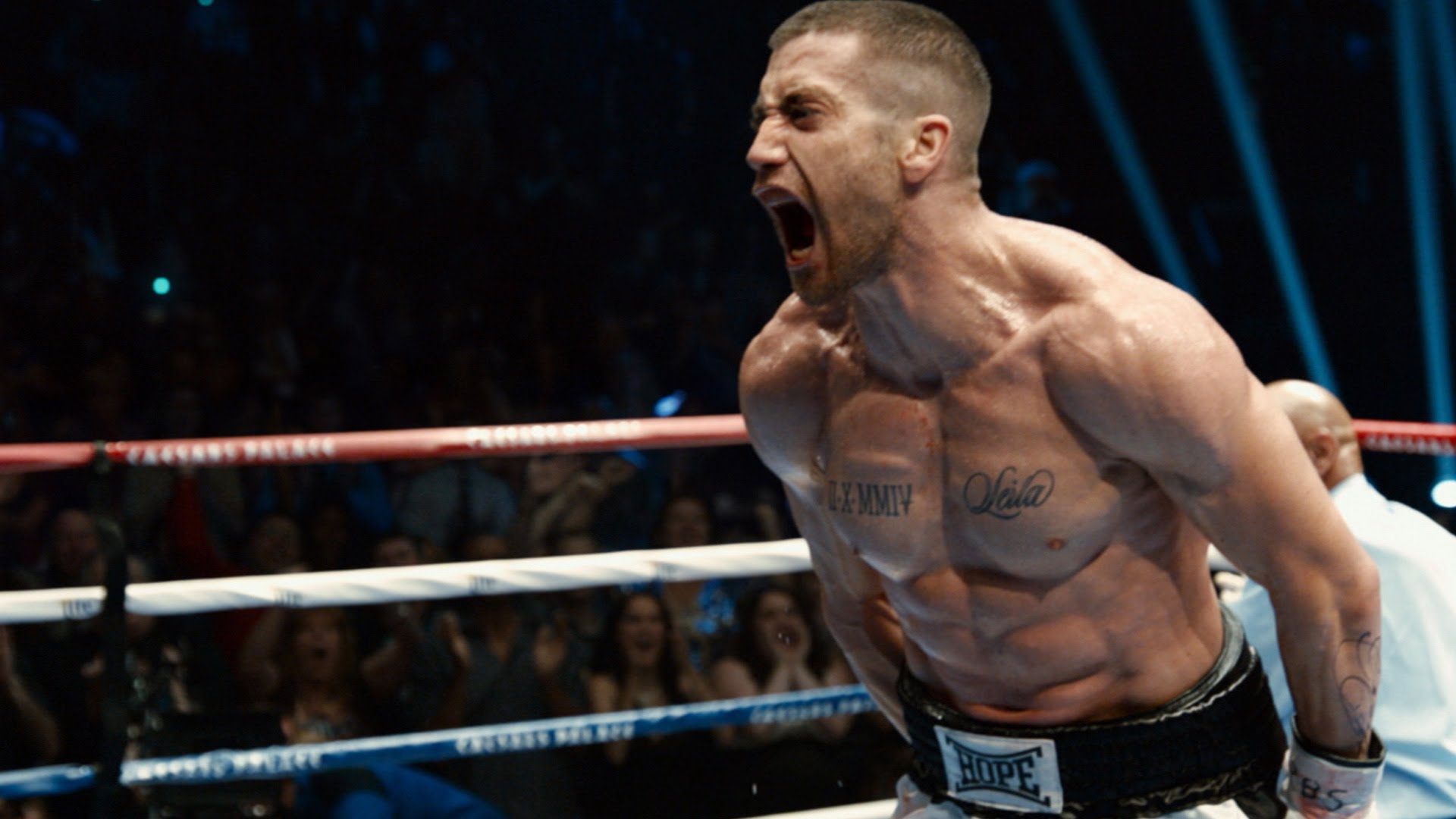
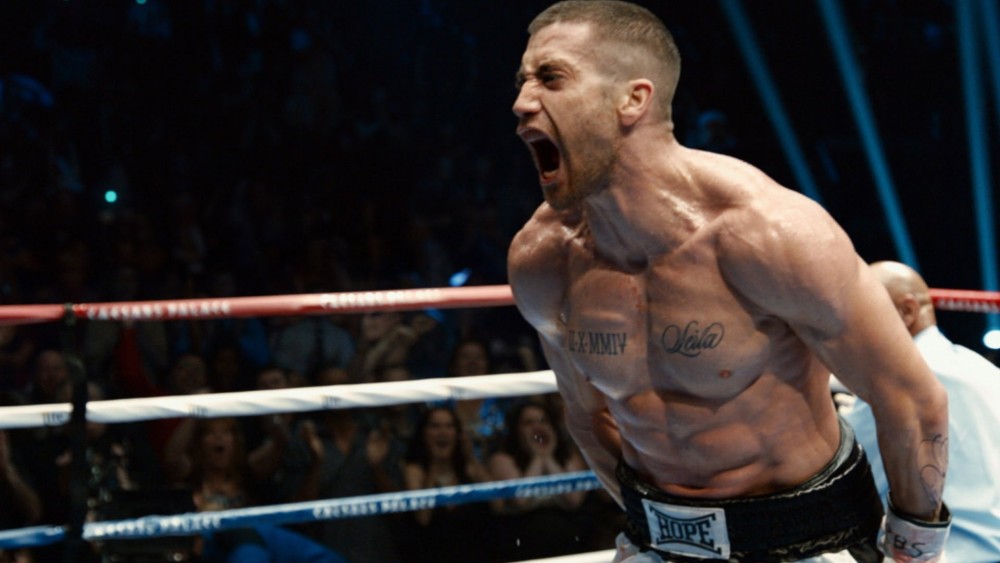
    As shot by Mauro Fiore, Southpaw has a dazzling grace between the ropes despite its lead’s strategy of taking punches to the face. Billy “The Great” Hope (Jake Gyllenhaal) is battered from the start, bleeding from the mouth and dripping onto the canvas like a splatter artist, but even with a gristly cut over his eye he is in firm control over his opponent. It takes him longer than expected to put his challenger down, but he is an aging fighter who was born punching, a product of the system who has spent time in orphanages and in lock-up—getting beaten up is how he motivates himself to finish off his opponents. His wife (Rachel McAdams) is rightly concerned that if he keeps fighting the way he fights, he’ll end up punch drunk before retiring.

    If Southpaw were just that, an examination of a declining championship boxer caught between his motivation to headline pay-per-views and his wife’s desire that he live a long life, it would have been something interesting, a realtime take on some of the darker corners suggested by the later, poppier offerings of the Rocky franchise. For Fuqua and Sons of Anarchy creator Kurt Sutter, decline is not enough. After that first successful fight, Hope (notice the name) has to survive an odyssey of melodrama to arrive at a somehow fight-hungry nation’s much-wanted bout against number one contender Miguel Escobar (Miguel Gomez). His wife is shot and killed by an associate of Escobar’s during a charity event, and, lost in a tumult of grief, Hope loses everything: His will to fight, his championships, his money, his promotor, his house, and, after nearly killing himself while driving under the influence, his daughter (Oona Laurence). Picture somebody snapping their fingers—that’s how fast Hope loses everything.

    This is, of course, necessary for the former champion, out of place in his opulent mansion and buying bezeled watches for his crew, to find himself at the mercy of an old pro turned trainer (Forest Whitaker) who believes in boxing as a tool by which men make themselves men. The relationship between the two is effective, as Whitaker has long brought soul to even thankless roles like cornerman, and Gyllenhaal has become one of the most interesting actors working today. Both Billy Hope and Tick Willis are men as wounds, one trying to heal and one that can’t. That Willis wants to teach Hope how not to get punched, to control the anger that was both his advantage in the ring and, the trainer presumes, the thing that got Hope’s wife killed, adds some necessary texture to a training montage that otherwise would have been all-marveling at Gyllenhaal’s amazing physical transformation.

    Southpaw plays out as one might expect it to, as a boxing movie about a man named Hope must. Its use of every boxing film cliche and its inclination to fridge Billy Hope’s wife (not to mention a young fighter at Willis’ Gym) feels tired—cynical, even—but Gyllenhaal’s deft touch, his body language in scenes where Hope is dealing with grief and his failure to be a father, redeems the material to the point that it’s possible to enjoy its fights regardless of what they mean narratively, as pure, violent spectacle. Sutter has called this film a spiritual successor to 8 Mile, the clumsy, working-class fable about a hardscabble white rapper who makes good on his phenomenal talent, and that explains a lot of the choices Southpaw makes and doesn’t make, the way the pyrotechnic flair of the protagonist’s occupation is meant to make up for the flatness of his surroundings and the script’s failure to examine the nature of Billy Hope’s second chance. Of course the boxer redeems himself. That’s what our culture demands.


    Southpaw. With Jake Gyllenhaal (Billy Hope), Forest Whitaker (Tick Willis), Rachel McAdams (Maureen Hope), Naomie Harris (Angela Rivera), Curtis “50 Cent” Jackson (Jordan Mains), and Oona Laurence (Leila Hope). Directed by Antoine Fuqua, from a script by Kurt Sutter.
  • Movie Review: The Last Stand (2013)

    Movie Review: The Last Stand (2013)

    The Last StandThough botox, spray tans, and intense training regimens can try to reverse the ill-effects of time, even the most stalwart action hero will eventually succumb to the ravages of his old age. Though Channing Tatum, Sam Worthington, Gerard Butler, and Jason Statham are for one reason or another incapable of claiming the skull- and gun-hewn thrones of 80s titans Arnold Schwarzenegger and Sylvester Stallone, nearly every role the two have taken since Terminator 3 has acknowledged that their heads will eventually be unable to bear those heavy crowns. Of course, the empire the pair surveyed has shrunken considerably since the 1980s. While Stallone has been able to make hay by revisiting Rocky and Rambo and has made a small fortune with the Expendables movies, the kind of dumb, charming action movies he and Schwarzenegger used to make between tentpole movies like First Blood or Predator are no longer the cash cows they once were, nor do they make tentpole movies like First Blood or Predator anymore. After an extended dalliance with politics, Schwarzenegger makes his proper return to action films with The Last Stand but, instead of being hailed as a conquering hero, finds himself saddled with a January release date—typically the death knell for films that aren’t expanding Oscar contenders.

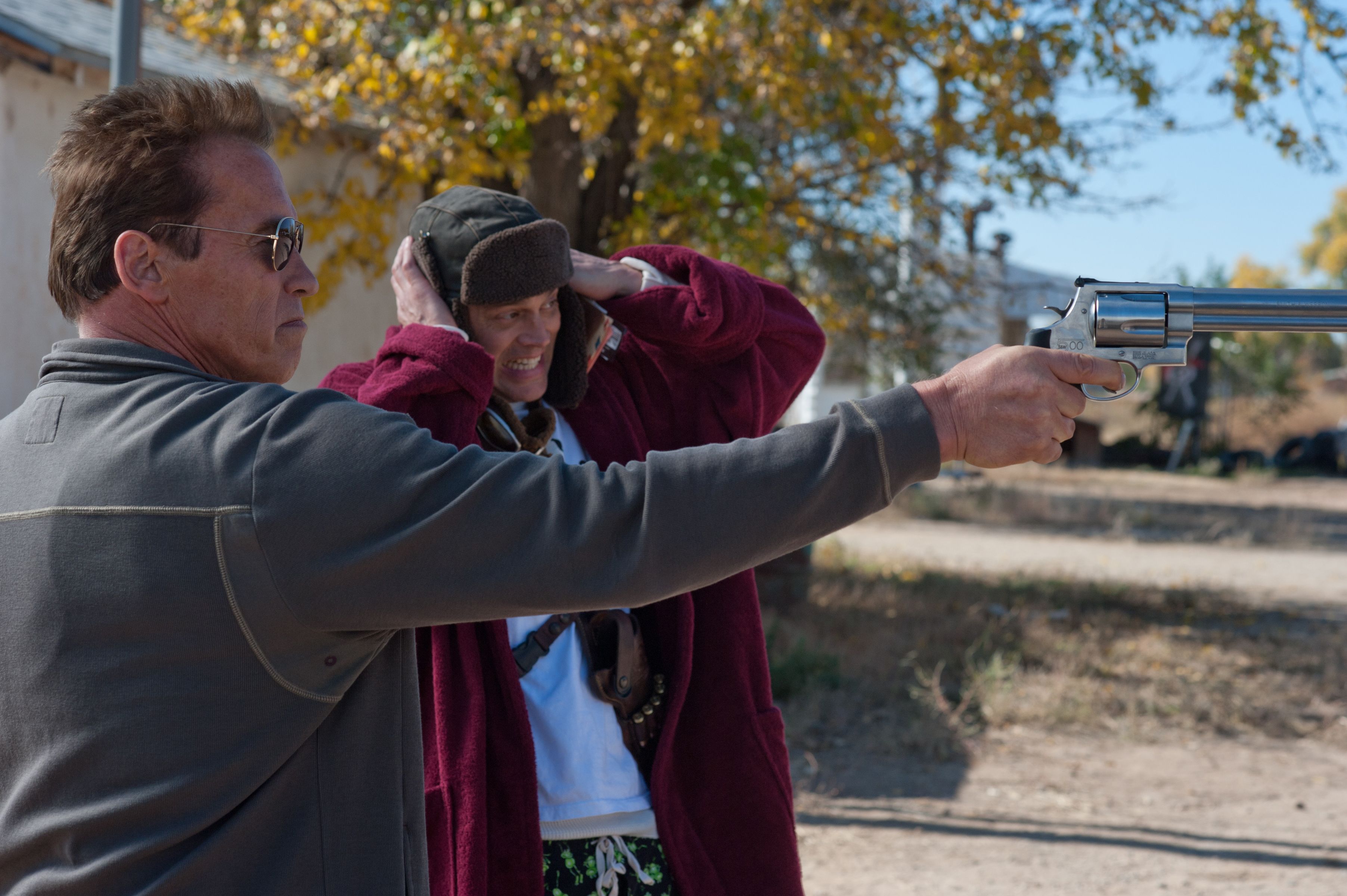
    Is this fate necessarily fair? Yes and no. The majority of The Last Stand, in making every accommodation for Schwarzenegger’s considerable rust, creaks and groans with its star as he goes through the motions. Even during his prime, that a movie would ask its audience to believe in Arnold Schwarzenegger, small town sheriff, is a stretch—something from a lazy sketch comedy show—and yet there he is, patrolling the dusty streets of an Arizona hamlet, teaching his bumbling deputies (Luis Guzmán, Zach Gilford, and Jaime Alexander) the finer points of police-work while bemoaning that the town’s war hero (Rodrigo Santoro) has become the town drunk. Things on patrol are so boring that most of Sheriff Ray’s deputies can hang out with local gun nut Lewis Dinkum (Johnny Knoxville) without missing a beat. Out in the big city, however, the FBI botches the transfer of a big-time Mexican drug kingpin (Eduardo Noriega) who takes an FBI agent (Génesis Rodríguez) hostage and takes off for the border in a souped up muscle car. With head agent John Bannister (Forest Whitaker) utterly powerless to stop that kingpin from slipping over the border, its up to Sheriff Ray and his skeleton crew to make a stand.

    This is the American debut of director Kim Ji-woon, whose versatility and appreciation for genre filmmaking makes him uniquely suited for a modern Schwarzenegger film. He’s hamstrung by a screenplay that divides its time between Whitaker’s bumbling pursuit of the bad guy and Schwarzenegger’s bumbling attempt to stop the bad guy’s henchmen (led by a wonderfully hammed-up Peter Stormare) from constructing a bridge that spans the ravine separating America and Mexico. Drug kingpin Gabriel Cortez almost smothers The Last Stand with his cheap suits and macho platitudes; every scene save his demise at the hands of Sheriff Ray is forgettable, though they try really hard to make something more of him. The FBI is also patently unnecessary save for your usual exchange between local law enforcers about how ticked that the FBI is coming to town to take over jurisdiction. In fact, The Last Stand is so overstuffed with inessential characters and details that its easy to miss out on the fact that Ji-woon is setting up for an impossibly pleasing final firefight in Sommerton Junction, abandoned for the weekend for an out-of-town high school football game.

    That battle—really the film’s third act—is one of the most satisfying bloodlettings a standard action movie has featured in awhile, using effective staging, a varied arsenal, and a car chase that sends two muscle cars through an endless cornfield before Sheriff Ray and Gabriel Cortez meet on the bridge for their final slugfest. Even that feels like a breath of fresh air: despite Schwarzenegger’s imposing physique, very few of his movies end in hand-to-hand combat. Here, both Ray and Cortez rely on an arsenal of brutal looking maneuvers adapted from professional wrestling and combat sports. It used to be that wrestlers and martial artists showed up in Schwarzenegger movies with guns and grimaces to serve as cannon fodder. That the man himself ends up in a triangle choke feels like a more genuine acknowledgement of changing tastes than Chuck Norris’s deployment in The Expendables 2 as a man dispensing seven-year-old internet memes.

    Were Stormare the main villain and the FBI left behind at the scene of their botched operation  it’d be possible to talk about The Last Stand in terms of it being a comeback vehicle. Instead, we’re given Schwarzenegger and a collection of incomplete characters creating chaos in the desert. Say this for the man: though Hollywood has strip mined his formula, he still manages an effortless charisma. He’s not much of an actor, but he’s still a hell of a personality, and within his genre, that counts for a lot. Movies like The Last Stand and men like Arnold Schwarzenegger may not prop up the industry like they did 20 years ago, but they’re also not a bad accompaniment for a tub of popcorn.


    The Last Stand. With Arnold Schwarzenegger (Sheriff Ray Owens), Johnny Knoxville (Lewis Dinkum), Forest Whitaker (Agent John Bannister), Peter Stormare (Burrell), Jamie Alexander (Deputy Sarah Lawrence), and Luis Guzmán (Deputy Mike Figuerola). Directed by Kim Ji-woon and produced by Lorenzo di Bonaventura. Screenplay by Andrew Knauer.