Author: Colette Arrand

  • 15 Books By, Featuring, & About Transgender People You Can Read Right Now

    I hate lists. I cringed just typing the title above, as it feels reductive and clickbaity in all the ways I detest about this particular genre of web content, web content also being a thing I don’t have much use for. But, as someone who often posits that it is possible, indeed necessary, for people outside the world of transgender literature to read literature by transgender people, I’m regularly asked where people should start. Then, after doing the work of listing as many trans writers as I’m familiar with, the list slides down Twitter, disappearing forever from view. So I’m going to make something a little more permanent.

    A few caveats, though. First, these books are not unified by theme. I’m not listing books by transgender people that you should read because something happened, but because you need to be reading transgender people. The books themselves will instruct you what, if anything, they are a response to. Second, it would be possible for me to do a list like this every week for a period of time that stretches out far longer than I can comprehend, so this is just what’s on my mind as I’m typing. Third, as I don’t want to fall prey to the pitfalls of the capsule review, rather than describe these books to you in my words, I’ll be using the cover material from the publishers and authors themselves. Where applicable, I’ll link to their work in The Wanderer, which is the literary magazine that I edit that can also function as an answer to the question “Hey Colette, which trans people should I be reading?”

    Y’all have got some catching up to do. Let’s start!

    Poetry

    Mannish Tongues, by jayy doddTo speak in tongues is to be possessed / overcome by your own body. This collection speaks to these charades of understanding / some things about language, something about possessions & higher powers. [read jayy’s work at The Wanderer]

    trigger, by Venus Selenitetrigger is the debut poetry collection from Venus Selenite, a bold, intimate, and comfortable/uncomfortable quest in being Black, being queer, being trans, and being a woman in the 21st century, in what continues to be systemic and oppressive, but also adventurous and ecstatic.

    Reacquainted with Life, by KOKUMO. KOKUMO’s poetry, is what happens when survivors spit sperm and other bodily excretions in the face of those who abuse them. KOKUMO’s poetry, is what happens when Aunt Jemima becomes Rambo. KOKUMO’s poetry, is what happens when the piece of shit you stepped in, corporealizes then knocks you the fuck out. And no! Resilience, has never sounded sexier. [read KOKUMO’s work at The Wanderer]

    There Should Be Flowers, by Joshua Jennifer Espinoza. “Espinoza’s debut is a searing interrogation of the world and the self at once. Here, the body is a fixation-as if to look away from it, even briefly, is to risk having it erased. As such, this is a book of unblinking human preservation, and how we trespass ourselves seeking safer spaces. “There is nothing I love more than an honest storm,” Espinoza writes. There Should Be Flowers is a storm to ravage and rearrange us from our crushing certainties. This book doesn’t need a blurb. It simply needs to be read.” -Ocean Vuong, author of Night Sky with Exit Wounds

    To be human once more, by Esdras Parra, translated by Jamie Berrout. This ebook spans over 216 pages in total, including 190 individual poems. I won’t say much on Parra’s poetry here, as its extended meditation on interior and physical landscapes – marked by recurring images like stepping forward through chasms, blossoming bones, the trembling foliage of plantain trees, a sky sculpted from stone, abandoned lakes, the city where a life smolders – defies efforts to be categorized or summarized, but samples of these translations can be read here at my blog. [read Jamie’s work at The Wanderer]

    Never Coming Home, by Tyler Vile. What do you do when you live in a moldering mansion with a disappointed megalomaniac father and a mother who can’t stay conscious long enough to cook her own dinner? [read Tyler’s work at The Wanderer]

    oropel/tinsel, by Raquel Salas-RiveraRaquel Salas Rivera has published poetry and essays in numerous anthologies and journals. In 2011, their first book, Caneca de anhelos turbios, was published by Editora Educación Emergente. In 2016, their chapbook, oropel/tinsel, was published by Lark Books & Writing Studio, and their chapbook huequitos/holies was published by La Impresora. Currently, they are a Contributing Editor at The Wanderer. If for Roque Dalton there is no revolution without poetry, for Raquel there is no poetry without Puerto Rico. You can find out more about their work at raquelsalasrivera.com. [read Raquel’s work at The Wanderer]

    Sea-Witch vol. 1 (May She Lay Us Waste), by Moss Angel Witchmonstr. Sea-Witch is a genre-phobic novel-in-fragments of contemporary transsexuality that focuses on the life of a girl monster named Sara who lives inside a witch-god named Sea-Witch. Follow the occult fairytale story of how this young monster came to be, of the origins of Sea-Witch, of Sea-Witch’s god family that preceded her & of 78 men who cause pain by using their laws and cops against monsters like Sea-Witch. Also there’s lots of hot trans-on-trans sex. [read Moss’ work at The Wanderer]

    Prose

    Fierce Femmes and Notorious Liars: A Dangerous Trans Girl’s Confabulous Memoir, by Kai Cheng ThomFierce Femmes and Notorious Liars: A Dangerous Trans Girl’s Confabulous Memoir by Kai Cheng Thom is the highly sensational, ultra-exciting, sort-of true coming-of-age story of a young Asian trans girl, pathological liar, and kung-fu expert who runs away from her parents’ abusive home in a rainy city called Gloom. Striking off on her own, she finds her true family in a group of larger-than-life trans femmes who live in a mysterious pleasure district known only as the Street of Miracles.

    Small Beauty, by jia qing wilson-yang. The novel Small Beauty by jia qing wilson-yang tells the story of Mei. Coping with the death of her cousin, she abandons her life in the city to live in his now empty house in a small town. There she connects with his history as well as her own, learns about her aunt’s long-term secret relationship, and reflects on the trans women she has left behind.

    If I Was Your Girl, by Meredith Russo. Amanda Hardy is the new girl in school. Like anyone else, all she wants is to make friends and fit in. But Amanda is keeping a secret, and she’s determined not to get too close to anyone. But when she meets sweet, easygoing Grant, Amanda can’t help but start to let him into her life. As they spend more time together, she realizes just how much she is losing by guarding her heart. She finds herself yearning to share with Grant everything about herself, including her past. But Amanda’s terrified that once she tells him the truth, he won’t be able to see past it. Because the secret that Amanda’s been keeping? It’s that at her old school, she used to be Andrew. Will the truth cost Amanda her new life, and her new love?

    Video Games for Humans, edited by merritt k. Behind the fluorescent veil of modern big-business video games, a quiet revolution is happening, and it’s centered on a tool called Twine. Taken up by nontraditional game authors to describe distinctly nontraditional subjects—from struggles with depression, explorations of queer identity, and analyses of the world of modern sex and dating to visions of breeding crustacean horses in a dystopian future—the Twine movement to date has created space for those who have previously been voiceless within games culture to tell their own stories, as well as to invent new visions outside of traditional channels of commerce. Videogames for Humans, curated and introduced by Twine author and games theorist merritt kopas, puts Twine authors, literary writers, and games critics into conversation with one another’s work, reacting to, elaborating on, and being affected by the same. The result is an unprecedented kind of book about video games, one that will jump-start the discussions that will define the games culture of tomorrow.

    The Black Emerald, by Jeanie Thornton. A high schooler finds her drawings corrupted by a haunted stone she inherits from a suicidal underground cartoonist. A video game addict discovers a vast, hidden dimension to colonize in the walls of his girlfriend’s apartment. A philosophy student seeks anonymous Craigslist sex with the ubiquitous devil that stalks her. In this new collection from Jeanne Thornton, author of The Dream of Doctor Bantam (a Lambda Literary Award finalist in 2012), reality and relationships blur, creating a queer pulp experience with a literary sensibility, a hallucinatory journey into despair…and, possibly, toward hope.

    Queer and Trans Artists of Color: Stories of Some of Our Lives Vol. 1 & Vol. 2, by Nia King. Vol. 1: A collection of sixteen unique and honest conversations you won’t read anywhere else… Mixed-race queer art activist Nia King left a full-time job in an effort to center her life around making art. Grappling with questions of purpose, survival, and compromise, she started a podcast called We Want the Airwaves in order to pick the brains of fellow queer and trans artists of color about their work, their lives, and “making it” – both in terms of success and in terms of survival. In this collection of interviews, Nia discusses fat burlesque with Magnoliah Black, queer fashion with Kiam Marcelo Junio, interning at Playboy with Janet Mock, dating gay Latino Republicans with Julio Salgado, intellectual hazing with Kortney Ryan Ziegler, gay gentrification with Van Binfa, getting a book deal with Virgie Tovar, the politics of black drag with Micia Mosely, evading deportation with Yosimar Reyes, weird science with Ryka Aoki, gay public sex in Africa with Nick Mwaluko, thin privilege with Fabian Romero, the tyranny of “self-care” with Lovemme Corazón, “selling out” with Miss Persia and Daddie$ Pla$tik, the self-employed art activist hustle with Leah Lakshmi Piepzna-Samarsinha, and much, much more. Welcome to the future of QPOC art activism. Vol. 2: A celebration of queer and trans Black and brown genius… Building on the groundbreaking first volume, Queer and Trans Artists of Color: Stories of Some of Our Lives, NIA KING is back with a second archive of interviews from her podcast We Want the Airwaves. She maintains her signature frankness as an interviewer while seeking advice on surviving capitalism from creative folks who often find their labor devalued. In this collection of interviews, Nia discusses biphobia in gay men’s communities with JUBA KALAMKA, helping border-crossers find water in the desert with MICHA CÁRDENAS, trying to preserve Indigenous languages through painting with GRACE ROSARIO PERKINS, revolutionary monster stories with ELENA ROSE, using textiles to protest police violence with INDIRA ALLEGRA, trying to respectfully reclaim one’s own culture with AMIR RABIYAH, taking on punk racism with MIMI THI NGUYEN, the imminent trans women of color world takeover with LEXI ADSIT, queer life in WWII Japanese American incarceration camps with TINA TAKEMOTO, hip-hop and Black Nationalism with AJUAN MANCE, making music in exile with MARTÍN SORRONDEGUY, issue-based versus identity-based organizing with TRISH SALAH, ten years of curating and touring with the QTPOC arts organization Mangos With Chili with CHERRY GALETTE, raising awareness about gentrification through games with MATTIE BRICE, self-publishing versus working with a small press with VIVEK SHREYA, and the colonial nature of journalism school with KILEY MAY. The conversation continues. Bear witness to QTPOC brilliance.
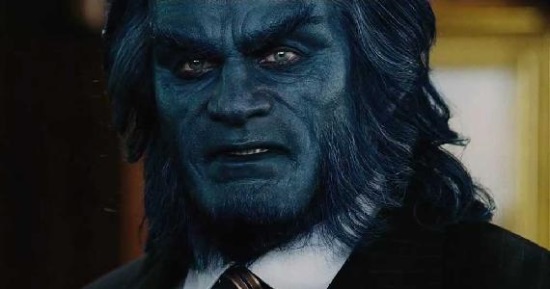
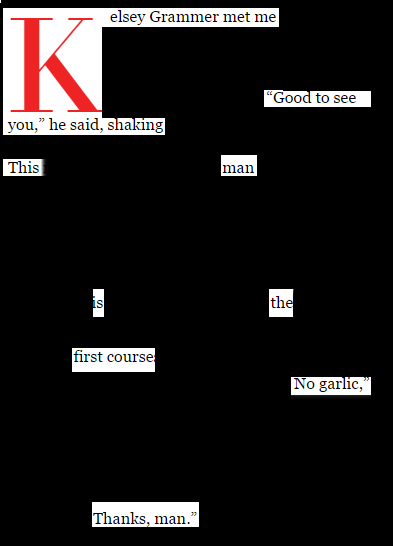
  • Met Me For Lunch: Kelsey Grammer

    Met Me For Lunch: Kelsey Grammer

    Kelsey Grammer Poem


    Met Me For Lunch is a series of erasures using the first two paragraphs John Heilpern’s celebrity profiles from Vanity Fair.

  • Movie Review: Star Wars Episode I — The Phantom Menace (1999)
    Movie Review: Star Wars Episode I — The Phantom Menace (1999)

    Star Wars the Phantom Menace

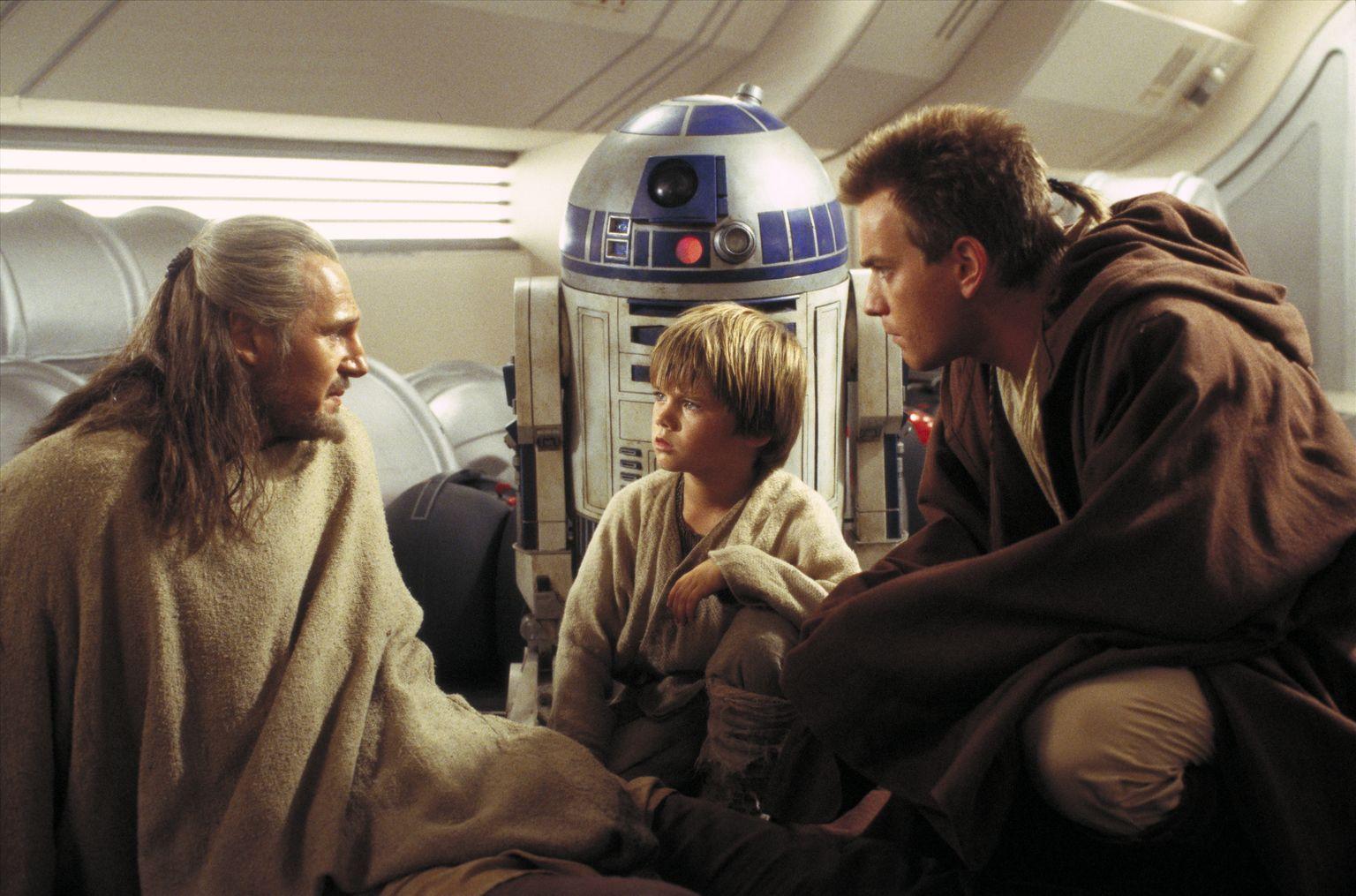
    Star Wars Episode I — The Phantom Menace came out when I was 11 years old, and I’m not going to lie to you: I liked it, so much so that my memory for it to this day is nearly word perfect. It’s an odd thing, remembering what I was like at 11, when the story of young Anakin Skywalker was aimed directly at my heart like a missile gunning towards a space station’s ventilation shaft, but this is hardly something I’m looking at through the lens of nostalgia. Before the release of The Force Awakens, while my various social media streams were reaching, in unison, for the films from the original trilogy, The Phantom Menace was the Star Wars film I reached for. As much as J.J. Abrams’ reboot/remaking of the Star Wars universe was a love letter to the Star Wars films everybody loves, it is very much a product of and response to the ecology of blockbuster film-making that The Phantom Menace largely created, one where the imagination was set free from the limitations of physical space by CGI and bound instead to the principal of narrative ease.

    Star Wars has always been a franchise dedicated to serving the whims of young boys. Its bright colors, easy charms, simplistic moral grounding, and elements borrowed from Joseph Campbell and the sci-fi serials of director/creator George Lucas‘ youth don’t leave much room for complication or nuance. But rather than examining my childhood (which wasn’t exactly damaged by the film) or the childhoods of the assembled horde of folks cheering that a film series owned by the Disney corporation has been liberated from the mind of its creator, The Phantom Menace needs to be examined in terms of the theoretical child George Lucas was directing for. Regardless of whether or not this represents the beginnings of a noble effort to document the fall of a democratic republic, the boy Lucas loved so completely when he made A New Hope is, with The Phantom Menace, a construct he holds in contempt.

    There’s never a moment in The Phantom Menace where it feels like Lucas trusts his audience to understand what is happening, which is fair considering where he begins: In the middle of a treaty negotiation over blockaded trade routes. Like all great space-fairing epics, the galactic Senate is ineffectively wringing its hands over what to do about the Trade Federation’s illegal occupation of the routes to Naboo, waiting on a report from its Jedi ambassadors Qui-Gon Jin (Liam Neeson) and Obi-Wan Kenobi (Ewan McGreggor) before taking a vote on whether or not to sanction the Federation in some unspecified manner. In a way that’s clever (but not too clever considering the sheer number of corporate sponsorships attached to Star Wars), Lucas imagines the Trade Federation not merely as a corporation, but a body so large it has a seat in Senate. What they produce and who they service is unclear, but everything about The Phantom Menace is only clever on the surface, like the way Jedi Knights function in vaguely similar fashion to Jesuit priests. Because the Trade Federation are evil and stupid, they attack the Jedis with a squadron of easily dispatched droids, who spend the majority of The Phantom Menace bumbling about as various weapons cut through them like their sole purpose is to demonstrate the unspeakable power of the people they oppose. They also serve as a platform for Lucas to demonstrate both upgraded lightsaber techniques and his ability to create characters that would have once required an army of puppeteers and animatronics experts, the whole show meant to dazzle the eye at the cost of everything else.

    Through a series of contrivances involving a hair-raising number of racial stereotypes, Qui-Gon and Obi-Wan rescue Queen Amidala (Natalie Portman) and slip the blockade, landing on the familiar desert backwater of Tatooine. Their ship in desperate need of repair, they decide to rely on the help of a young boy named Anakin Skywalker (Jake Lloyd), who is the premier podracer in the galaxy despite his age. Qui-Gon sees something in the boy and seeks to free him, believing he might be the literal chosen one of a shadowy Jedi prophecy, and wagers it all on Anakin to win the big podrace. While the podracing sequence is a genuinely well-done setpiece that convincingly conveys the speed and danger of this NASCAR-like sport, there’s never any question that Anakin is winning the race. He’s important to the story, but decidedly a background figure, a child on the fringes of consciousness, let alone the centuries-long battle between the Jedi and the Sith, the film’s titular menace. As he jogs to the spacecraft that will take him from the only planet he’s ever known, his new friend is attacked by Darth Maul (Ray Park), a Sith with a double-bladed lightsaber and body modifications (woaaaaaaaaah, cool!).

    The first two acts are long—whatever sense of pacing Lucas had as a director all but swallowed up by the 20-year gap between The Phantom Menace and A New Hope. The film picks up noticeably with the introduction of Maul, cutting back and forth between a siege on the palace of Naboo, a battle on the outskirts of town, a starfight over the orbital blockade, and a duel between the Jedi and the Sith that is easily the standout sequence of the film. It is, at least, the one sequence that feels real, as if the bodies that interact with each other in the scene exist in the same physical space. While the unreal sheen of so many of the organisms and droids in this Star Wars outing may constitute a sort of campy fun for some, they stand out today as the harbingers of special effects shots that are more effect than special.

    The Phantom Menace uses the technological firepower at its command to present armies of droids, starfighters, and amphibious frog creatures from an underwater city, and in doing so it completely eliminates the need to creatively stage a battle sequence. It’s been said by Star Wars obsessives far angrier than me that the Gungans of this film are the Ewoks of Return of the Jedi. Regardless of whether or not that’s true, the battle sequences featuring both make for a good point of comparison. Shooting in a forest and utilizing actors in suits and miniature models, Richard Marquand created sequences that were ridiculous given the combatants, but effective in staging a ground battle like no Star Wars film had or would until The Force Awakens. Given the utter limitlessness of greenscreen film-making, Lucas put two armies across from each other on a visually uninspiring plain and had one walk towards the other.

    The tools refined here by Lucas were handed down to a generation of lesser directors and hacks who took high concept ideas and staged them for the lowest common denominator. This, more than box office (and possibly more than making Star Wars an unavoidable cultural juggernaut for a new generation of wallets), is the legacy of The Phantom Menace, a swath of low-stakes narratives complicated not by the corporeal risks faced by the characters we’re meant to identify with, but the glittering computerized metropolises they ostensibly inhabit. Any threat, large or small, can be conjured with the click of a mouse. So too can those threats be waved away.


    Phantom Menace posterStar Wars Episode I — The Phantom Menace (1999)

    With Liam Neeson (Qui-Gon Jin), Ewan McGregor (Obi-Wan Kenobi), Natalie Portman (Padmé Amidala), Jake Lloyd (Anakin Skywalker), Kenny Baker (R2-D2), Anthony Daniels (C-3P0), Frank Oz (Yoda), Ray Park (Darth Maul), and Samuel L. Jackson (Mace Windu). Directed by George Lucas from a screenplay by Lucas.

  • 2015 Complete Works

    Fear of a Ghost Planet is taking a nap until January 1 so that I can work on making 2016 the most successful year of this ongoing project yet. 2015 was a large, complicated year. I adopted a cat. I came out as transgender. I frequently did not have the time or emotional capacity to update this website, or really see, hear, or read all that much, so I’m not going to be doing a 2015 best of for anything because I’d have to admit to things like having a good time at The Last Witchhunter and not seeing virtually every interesting film that came through town. Instead of all of that, I’m leaving 2015 on a self-affirming note, posting all of the things that I managed to publish here and elsewhere. I thought there wouldn’t be a lot to list, but I was wrong.

    If you’ve enjoyed this blog or anything I’ve done, there are a few ways to support me. The easiest would be to follow me on Facebook or Twitter. If you want to back Fear of a Ghost Planet monetarily, you can do that by purchasing a PDF copy of my zine You Have to Deal with Me Breathing or by subscribing to my Patreon.

    Elsewhere

    Tumblr

    Fear of a Ghost Planet

    January

    February

    May

    June

    July

    October

    November

    December

  • Movie Review: The Hateful Eight (2015)

    Movie Review: The Hateful Eight (2015)

    Hateful Eight

    Quentin Tarantino’s been flirting with a film like The Hateful Eight for awhile now, a beautifully shot, well designed film that goes beyond feeling minor (the way Death Proof feels, for instance) and just ends up being bad. An inverse of Django Unchained, where the bounty hunters and rogues are just as despicable as the murderers and thieves they encounter, The Hateful Eight plays on the director’s obsessions with race and torture and whimsical men who are good at murderin’ folks, but with so little in the way of narrative pull that it often seems like Tarantino is just playing with himself, making a movie for the sake of making a movie, without a hint of impulse control.

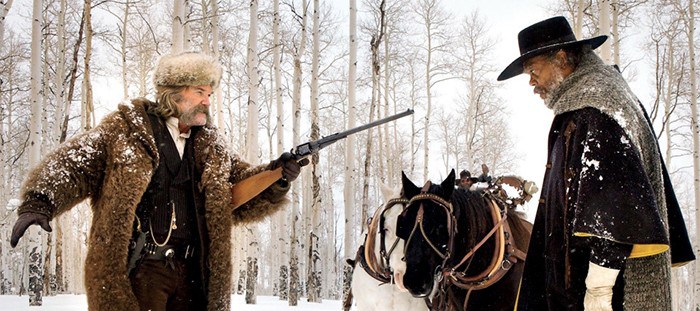
    The Hateful Eight concerns eight men and women who are all on their way to Red Rock, Wyoming, a blizzard nipping at their heels. Some of them are bounty hunters. Some are bounties. Some are working men. Not everybody is who they say they are, but there’s hardly any mystery to that considering the cast of regulars Tarantino’s assembled and the kinds of roles they’ve played for him in the past. Our lead bounty hunters—”Hangman” John Ruth (Kurt Russell) and Major Marquis Warren (Samuel L. Jackson)—are suspicious of everyone they encounter, and they’re usually right in their suspicions. Ruth encounters Warren on a trail, sitting atop a pile of dead bounties after his horse died in the snow. He’s on his way to Red Rock with Daisy Domergue (Jennifer Jason Leigh), an outlaw who is worth $10,000 dead or alive, and he prefers taking them in alive so as to not cheat the hangman, hence the nickname. The conversation between Warren and Ruth is intense—Tarantino is at his best when staging conversations between hypermasculine strangers—and when they pick up another snowbound traveler, Chris Mannix (Walton Goggins), the new sheriff—things get more tense. This is just after the Civil War and there’ still tensions between Union soldiers and Rebel ones. Ruth and Warren belonged to the Union. Mannix’s father led a battalion that continued fighting the war in the face of unconditional surrender. None of them could be said to’ve been good men, and Domergue, when she’s not getting punched or spitting up blood, watches them argue with glee.

    With the blizzard on them, the stagecoach holes up at Minnie’s Haberdashery, where four other men are already gathered around the fireplace. There’s a fussy British gentleman (Tim Roth), a cowpuncher (Michael Madsen), a Mexican (Demián Bichir) who says he’s looking after the place for Minnie while she visits her family, and a Confederate General (Bruce Dern) who is familiar with Major Warren, even if he doesn’t know it. The idea, according to Tarantino, is for these characters to get together and tell stories to one another like an arc on a western, each person trying to figure out the intention of the other. This has been a pretty basic mode of narrative storytelling for a long time now. You can go farther than westerns like Gunsmoke and The Virginian to Rashomon or The Canterbury tales, people telling stories about things seen and unseen, only here, as Tarantino often has it, our storytellers have guns. Those are mostly holstered until a blood-soaked finale, so much of The Hateful Eight is talk and menace, a locked room there’s only one way out of.

    That means lingering, for a long time, on the decisions Tarantino chooses to make. One of them, shooting in 70mm and keeping his characters mostly indoors, is ponderous, but there is a lot of loving detail put into Minnie’s Haberdashery and the sense that something’s off with it. The way-station is a one-room saloon with a couple of beds in it, but Tarantino and cinematographer Robert Richardson make use of cinematic space such that the Haberdashery feels both open and claustrophobic at the same time. There are eight people in the room, eight different perspectives of a single unfolding narrative, and were that narrative any better than it was, the way The Hateful Eight cuts from one to another would be invigorating. But it isn’t. So again, you get to linger with the decisions Tarantino makes. You have three hours to wonder how, even in a movie where he’s only the narrator, Tarantino manages to give himself the film’s most troublingly racist dialog, or why he figures on adding a race allegory to a film about eight miserable bastards to begin with. Sampling, as he has been for some time now, from spaghetti westerns, the Confederate/Union line is one Tarantino plays with and tries to extend to today, but he frankly isn’t good enough to make a salient point, even though Samuel L. Jackson is the man making it. After Christoph Waltz’s Jew Hunter in Inglourious Basterds and Leonardo DiCaprio’s impassioned speech on eugenics in Django—both characters and monologues that Tarantino luxuriated in—it’s hard to take him seriously when he tries to inject social consciousness into The Hateful Eight, which is otherwise the director’s career-long fascination with bondage and torture writ large and gracelessly.

    It takes a long time for The Hateful Eight to go anywhere, moving as slow as the stagecoaches that transport the players to their stage. Tarantino, as he’s done time and again since Kill Bill, is trying to make a film about outlaws and gunslingers who stand as legends that are of their time and outside it, but it just doesn’t work here, where he’s convinced to the marrow of his bones that it’s worth keeping the company of eight sadists who don’t have all that much to say. It’s a formula Tarantino has used effectively before, but here that formula is used to the point of exhaustion. And when everybody starts pulling guns on one another, as is Tarantino’s guarantee? More of the same, more of the same.


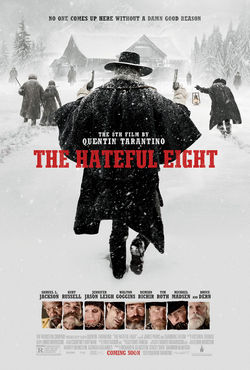
    The_Hateful_EightThe Hateful Eight (2015)

    With Samuel L. Jackson (Major Marquis Warren), Kurt Russell (John Ruth), Jennifer Jason Leigh (Daisy Domergue), Walton Goggins (Chris Mannix), Demián Bichir (Bob), Tim Roth (Oswaldo Mobray), Michael Madsen (Joe Gage), Bruce Dern (General Sandy Smithers), James Parks (O.B. Jackson), Zoë Bell (Six-Horse Judy), and Channing Tatum (Jody). Directed by Quentin Tarantino from a screenplay by Tarantino.

  • Movie Review: Star Wars: The Force Awakens (2015)

    Movie Review: Star Wars: The Force Awakens (2015)

    Star Wars The Force Awakens

    At last, our long national nightmare is over: There is a new Star Wars movie, and it’s pretty good. It feels like we’ve been living with the fact of J.J. Abrams‘ The Force Awakens for as long as we’ve lived with the franchise itself—since Disney purchased Lucasfilm and the rights to Star Wars from George Lucas, the possibility of more Star Wars became the inevitability of Star Wars, and the cultural stewardship of this sainted popular object passed, once again, from people to the corporations that sell things to people. If you ate food, drank water, or breathed air at some point between the release of the first The Force Awakens trailer and now, odds are that its controlling bodies had signed a licensing agreement with Disney so it could stamp BB-8 or Kylo Ren on the box.

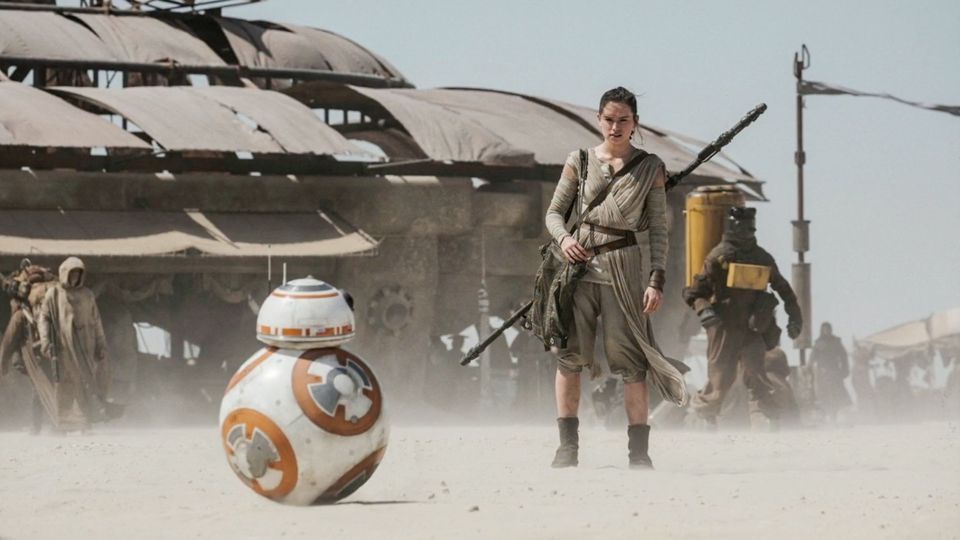
    As such The Force Awakens is a film designed to play as wide as possible, to get as much right as it can for the largest number of people. It’s a huge, exciting popcorn spectacle that both painstakingly sketches out its post-Rebellion world and has no real need to hit any beats that weren’t established by the original trilogy. Its heroes are orphans. Its villain is pulled between the light and dark sides of the Force. Decades have passed since the fall of the Empire and governments and regimes have changed, but this change, which is actually quite boring when played out in Senate chambers and offices, is mostly felt in costuming and set design tweaks, and what time has done to heroes like Han Solo (Harrison Ford), Leia Organa (Carrie Fisher), and Luke Skywalker (Mark Hamill). No longer controlled by an Empire, the galaxy is stalked by the First Order, a frightening band of sleek new Stormtroopers that seems to have found a balance between adherence to the force and belief in fascistic military rule. With Luke Skywalker vanished, The First Order and the Republic-backed Resistance are in a race to find him in a star system whose map has been compromised with the fall of the Empire. Like in A New Hope, that vital information is stored in the files of an otherwise unassuming droid that ends up stranded on a desert planet, searching for a way to a secret base that finds itself menaced by the enemy’s planet-destroying power.

    It’s hard to fault Abrams for nostalgia—Star Wars has largely been a callback machine since Return of the Jedi, and his script, co-written with Lawrence Kasdan, is at least using familiarity to push forward into new territory. That script is unbelievably smart when it comes to handling the legacy of the original films. Luke Skywalker is a mythological figure, the stories about he and his companions rendered unbelievable in the totality of his disappearance. The Force’s role has shifted somewhat, too, from science to sorcery to religion. Leia and Han, having taken their respective roles in the new world, are at the periphery—our principals characters are the cocksure pilot Poe Dameron (Oscar Isaac), Stormtrooper deserter Finn (John Boyega), and desert-bound scavenger Rey (Daisy Ridley). They’re an engaging trio, propelling Abrams’ vision of a Star Wars for the future while burnishing the figures they encounter as the legends of the past.

    As for its villains, Abrams really dials up the Riefenstahlesque staging to mark the First Order as the terror of the galaxy, and for however terrifying Darth Vader fanboy Kylo Ren (Adam Driver) appears, the fact that he’s a relative novice to the force means that the banners-and-battle-stations pageantry of these new, sleek Stormtoopers actually means something. The difference between Abrams’ conception of evil and George Lucas’ is stark. In the first action sequence, which is among the best in any Star Wars film, Stormtroopers disembark from a landing craft and fire into a crowd of villagers. Their laser bolts strike, accurate and deadly. There is blood. Finn, yet unnamed, is on his first battle mission and shakes. Dameron fires his rifle at Ren, who freezes the bolt. It hangs suspended in the scene for a minute, then slams home into a piece of machinery after Dameron’s capture. Later sequences don’t have the same impact, but they look like they were staged, directed, and shot by a crew that was having fun with everything, somehow unburdened by the fact that they are making a Star Wars for the sake of getting the gears turning again.

    That The Force Awakens is fun is probably Abrams’ biggest accomplishment. For years, he’s been laboring in the shadows of Lucas and Steven Spielberg, making epics that lived and died by the same principles as the epics of his heroes. Given the sandbox he’s so clearly wanted to play in for awhile, Abrams puts on a show that manages to rival his predecessors, creating some of the most indelible images in any Star Wars film to date. The best of these take place on the desert planet of Jakuu, which is littered with the hulks of Star Destroyers abandoned after an unseen battle, an elephant graveyard that scavengers pick scraps from to clean and sell for food. The economy of Jakuu works well as a metaphor for what The Force Awakens represents, which is the stirring of a great machine that will run much longer than anyone can account for. Some of those scraps are just junk, useless pieces of space debris that look cool but serve no real purpose. Some of those scraps are the Millennium Falcon, begging to be taken to lightspeed. This one’s all lightspeed.


    Star Wars The Force Awakens posterStar Wars: The Force Awakens (2015)

    With Daisy Ridley (Rey), John Boyega (Finn), Oscar Isaac (Poe Dameron), Adam Driver (Kylo Ren), Harrison Ford (Han Solo), Carrie Fisher (Leia Organa), Domhnall Gleeson (General Hux), Andy Serkis (Supreme Leader Snoke), Lupita Nyong’o (Maz Kanata), and Mark Hamill (Luke Skywalker). Directed by J.J. Abrams from a screenplay by Abrams, Lawrence Kasdan, and Michael Arndt, based on characters created by George Lucas.