Author: Colette Arrand

  • B Show: TAKA Michinoku and Scott Taylor vs. Tajiri and Brian Christopher (1/11/97)

    B Show: TAKA Michinoku and Scott Taylor vs. Tajiri and Brian Christopher (1/11/97)

    [su_youtube url=”https://www.youtube.com/watch?v=EGc2eDON4kI”]https://www.youtube.com/watch?v=EGc2eDON4kI[/su_youtube]
    This match, from an episode of Shotgun Saturday Night, functions as something of a preview for the WWF’s Light Heavyweight division, which was launched in 1997 as a half-assed response to WCW’s Cruiserweight division, which was on fire at the time. Just five days prior to the airing of this tag team match, Eddie Guerrero and Rey Mysterio Jr. wrestled in a title vs. mask match that still stands as one of the best of that era, and the WWF wanted in on the sort of high-flying excitement WCW’s use of lucha libre stars from Mexico gave them in support of main event matches largely promoted around ex-WWF talent. They brought in a fair number of luchadores, but what’s ultimately memorable about the WWF’s Light Heavyweight division is its reliance upon Memphis stalwarts Brian Christopher and Scott Taylor, and the way they featured super junior stars who’d built their names in the Japanese independents, namely TAKA Michinoku.

    Taylor and Christopher would later become famous as Scotty 2 Hotty and Grandmaster Sexay who, along with Rikishi, formed the unit known as Too Cool. Here, they’re on opposite sides of the ring. Christopher, working a Memphis heel character, teams up with Tajiri, who moonlighted in the WWF and was a member of the Big Japan Pro Wrestling promotion before becoming a regular in ECW. Taylor tags with TAKA Michinoku of Michinoku Pro who, as is noted in the commentary, has signed a long-term contract with the WWF. TAKA’s contract was long term and largely a waste of a wonderful talent, but in November 1997 it’s pretty clear that they’re building the division around TAKA, who is in the ring against his opponents for much of the contest.

    There’s a fundamental weirdness to this match, the Memphis studio-style babyface fire of Taylor and heel heat of Christopher mix strangely with their Japanese counterparts. TAKA is all natural charisma, but Tajiri has yet to find his edge as a character. Shot in Tulsa, Oklahoma, it makes perfect sense that Taylor and Christopher would start things off. Christopher and Taylor are, watching them work, two guys that seem both distinctly out of time and of it, if that makes any sense. Before a studio audience in Memphis, Christopher’s strutting and stalling would have a crowd seething—he’s the kind of wrestler you wish went through a territory in its prime. I hated watching them as a kid, but the opening exchange reminds me that I think Taylor and Christopher were and remain fairly underrated. They’re safe, exciting hands, and that’s why they’re in the ring introducing the crowd to the concept of “Light Heavyweights.”

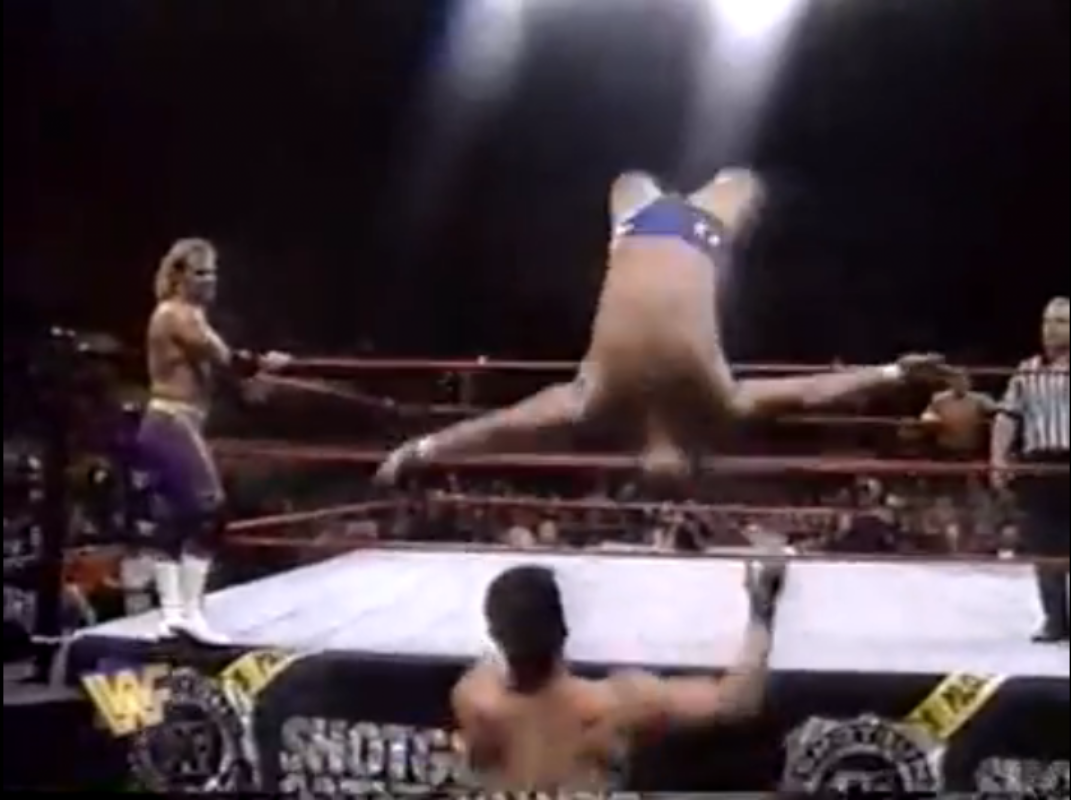
    The pair tag in their partners, and the tenor of the match changes. Of the four people involved, Tajiri has the least to do with the new division, but he looks impressive early on, tying TAKA up in a bow-and-arrow hold, sending the future champion out of the ring with a spinning heel kick, and nailing him with a beautiful Asai Moonsault. In three moves, you have what Japanese Super Juniors brought to the table: deft technical wrestling, hard strikes, and nimble acrobatics. TAKA responds with a massive springboard crossbody to the outside, and even if they’re sweetening the crowd in post (I usually can’t tell), it’s pretty clear that what these two men are able to do in the ring has the Tulsa crowd interested. TAKA is on point until a combination of Christopher’s cheapness ant Tajiri’s kicks put him down again.

    Christopher is so good at his cocky, shitheel persona. He’s small compared to the majority of the WWF roster at the time, but he manages to fill up the room. Christopher’s ego gets the better of him, and his inability to communicate gets the better of Tajiri, and Scott Taylor puts his power mullet to work. Some of the stuff he tries works. Some of it doesn’t. He’s just there to give TAKA a breather before he comes in to finish Tajiri off with the Michinoku Driver, which was and remains one of my favorite finishing moves in wrestling.

    This match may not seem like much, and there’s a sequence or two that are compromised by a language or style gap, but that difference in styles is exactly why I like it, and why I liked watching weekend wrestling shows in general. It was something new and different compared to the brawling at the top of the card, and it feels even more different now as the WWE pushes its homogenized wrestling style further and further away from anything that feels organic. The idea of a Cruiserweight or Light Heavyweight division in wrestling is less necessary now when guys like Daniel Bryan and Seth Rollins are able to win the WWE World Heavyweight Championship, but they were a staple of B shows and will be a staple of this feature. In this kind of cosmic mismatch, you’re able to see something new as it’s being born. There’s something worthwhile about that, even if the end product as misunderstood and ultimately neglected by its promoter.


  • Movie Review: Creed (2015)

    Movie Review: Creed (2015)

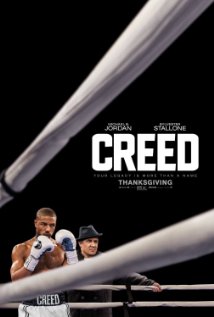
    Creed 2015 filmessentialIt’s hard to write about Creed because it is a movie I fell in love with early and repeatedly, a film that had me on the verge of tears at times and past that verge at other times. So I’m going to start with what I found most impressive about director Ryan Coogler’s re-framing of Rocky and its legacy, which is that Creed has a heart of its own, not one merely borrowed from its predecessor. Considering that the likability of Rocky Balboa, one of the great screen characters of American history, is what propels the bulk of the franchise through bloat, bad script choices, and an inability to recall its own identity, Creed‘s ability to stand on its own merit is both necessary and surprising. Creed is less about the revitalization of a character that will see his 40th anniversary next year than it is about loving something so much that something new and, frankly, equal to the original is created.

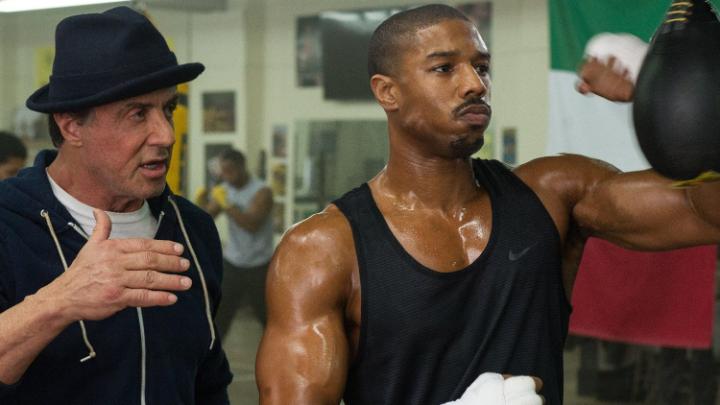
    It’s a Rocky film, so it is grounded largely in cliché. But, as the series has repeated over and over with a piston-like ferocity, it isn’t a fighters origins that matter so much as what he makes of them. To that end, Adonis Creed (Michael B. Jordan) was dealt a particularly bad hand of cards. The illegitimate son of boxing great Apollo Creed, Adonis is introduced as an orphan in a juvenile detention center, in lock-up for fighting to defend his dead mother’s name, which he later takes up as an adult looking to build his own name. He is adopted by Apollo’s wife (Phylicia Rashad) and raised in his home, but it’s obvious that he’s a second-class Creed: no gym will train him, and he’s stuck taking up bar fights on the weekend in Mexico for the experience. Self-taught and using his mother’s name so he can avoid the pressure of legacy, Adonis quits his job and rents a room in Philadelphia, hoping to convince his father’s former rival and training partner Rocky Balboa (Sylvester Stallone) to come out of the shadows and become his trainer.

    Creed recalls the narrative and structure of Rocky, playing on its themes and iconography in a way that would have been tired if this were once again a film about an aging Stallone putting on the gloves for one last fight. Wearing a hoodie and reading glasses, Rocky Balboa looks well past the aged, muscled fantasy warrior Stallone has been projecting for a decade now. He’s a hard worker whose instincts are keen, but Balboa is in his 70s and the torch he carried for so long, with his wife dead of cancer and his son estranged from him, is out. He’s a ghost, his image and name haunting Philadelphia and boxing, and Adonis finds him shuffling around a restaurant built to house both. There is the question of whether or not Rocky will train Adonis, but it’s never one that much hangs over the young Creed’s head. He came to Philadelphia with a purpose, and it’s clear that he’s going to try to achieve it with or without Balboa’s help.

    That Adonis is always his own man in a film that could have easily become a redemption story is due largely to Creed‘s smart script, by Coogler and Aaron Covington. Creed is never not a Rocky film, but it’s never Rocky’s film—Stallone’s arc here is the B-story, it serves to complicate Adonis’ already complicated rise to boxing prominence, but it is told so well by Coogler and Covington and acted so well by Stallone that the melodrama outside the ring acts as Creed‘s driving force. A boxer’s life outside of boxing, in film and in reality, is necessarily reduced to recognizable, sellable figures: Balboa the working-class palooka; Creed the unknown orphan; and Creed’s eventual rival, “Pretty” Ricky Conlan (Tony Bellew) the fighter who came from nothing and was compromised by his fame and fortune. Watching Creed, I thought of the year’s other boxing film, Southpaw, and how it reduced its fighters to the same necessary images. How the Rocky films after Rocky did the same. The assumption is that the audience’s payoff is a triumph of one body over another, which necessitates the long, erotic training sequences: if a man can transform his body enough, he can punch through any obstacle.

    Creed‘s strength is knowing that there are some obstacles a boxer can’t beat. There’s time, which Balboa is fighting a losing battle against. There’s regret. There’s pride. There’s the possibility that a man’s passion and skill can very literally kill him or leave him damaged beyond repair. Winning a boxing match changes none of this, and a good boxing story knows it. A good boxing story can use that knowledge to make the rest of the boxer’s world seem sharper, more necessary than a judge’s decision at the end of 12 rounds, and Creed is a very good boxing story. It is capable, at times, of feeling like more than a boxing story. It’s the story of a city. It’s a romance. It’s all of these things at once. Trying to sleep after a particularly fruitless day, Adonis is kept awake by the louder than necessary music of his downstairs neighbor, Bianca (Tessa Thompson). She’s a beautiful woman, and Adonis falls for her immediately, but again Creed‘s script is so good that Bianca never feels ancillary until the structure of a boxing film makes her so. A talented singer coming up in Philadelphia’s club scene, Bianca suffers from progressive hearing loss and continues to make music though she’ll someday be unable to. She’s a character with her own dreams and ambitions, and, like a boxer, she’s racing against time to put together something meaningful, something that will last longer than a body that will progressively fail her. It’s something of a departure for a film like Creed that the relationship between a boxer and a woman goes two ways, that her desires are as large and as important as his, but for Coogler, the triumph of one man’s body over another is secondary to watching people create something from nothing: a relationship, a life.

    If Creed falters, than it does so in its third act, where Bianca is largely Adonis’ cheerleader after the two have a falling out over a fight between he and a headlining musician at Bianca’s biggest gig. That she nails the show performance should feel triumphant, but Creed hasn’t quite figured out what to do with Bianca’s art beyond the fact that she makes it, and that its creation mirrors the way Adonis creates himself for the purpose of a fight. If there is a follow-up to Creed, then what’s already present here suggests that Coogler and his team are smart enough to not make the same decisions Stallone did decades ago, that he will focus on the humanity of Adonis and those around him, rather than the idea of him as a macho icon. Michael B. Jordan is clearly up to such a challenge, as are Stallone and Thompson. And if it is necessary to yield to the carnage of the ring (which, let’s be frank, it is), then at least boxing’s thrilling spectacle of excess seems as though its being put to some greater use, rather than being the end all of its players are the means to.


    Creed PosterCreed (2015)

    With Michael B. Jordan (Adonis Creed), Sylvester Stallone (Rocky Balboa), Tessa Thompson (Bianca), and Phylicia Rashad (Mary Anne Creed). Directed by Ryan Coogler from a screenplay by Coogler and Aaron Covington, based on characters created by Stallone.

  • Facebook and the Intersectionality of Intolerance

    Facebook and the Intersectionality of Intolerance

    Jenner woman of the year

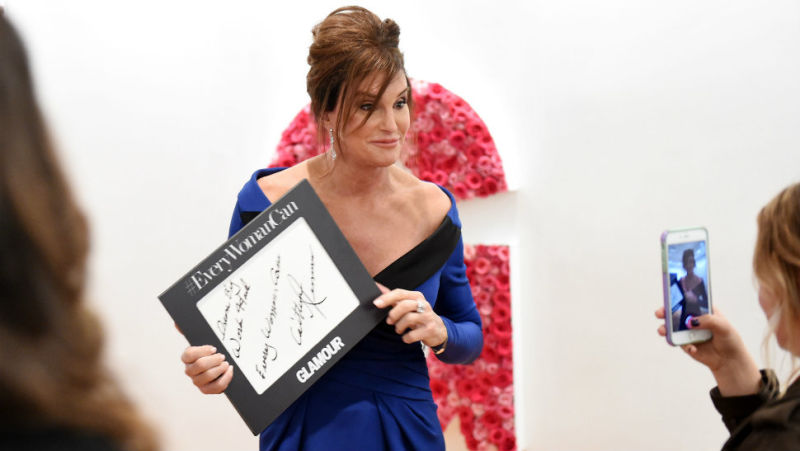
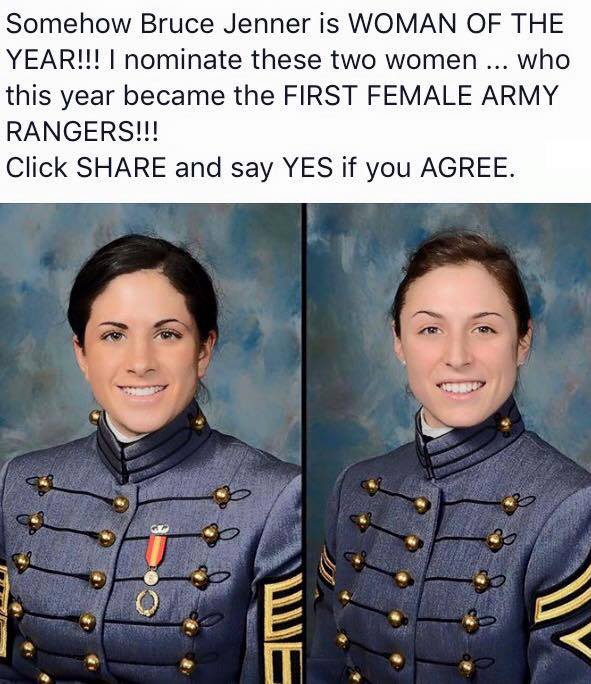
    I woke up this morning and saw somebody that I thought I respected, somebody I would have considered a mentor at one time, post a transphobic meme about Caitlyn Jenner. It was an updated version of the ones that were floating around when ESPN gave her a nice (but ultimately meaningless) courage award. Instead of wondering why Jenner had been given an award instead of this or that disabled veteran athlete, the new meme pondered how she a) could possibly be given a “woman” of the year award and b) howCosmopolitan had seen fit to give her the award over not one, but two female Army Rangers. I blocked and unfriended the person and fruitlessly reported the meme, but I’m stuck thinking about the rhetorical structure of the meme. How such things remain popular, how people deem them okay to share, even when they know a trans person.

    Jenner

    “Somehow Bruce Jenner.” Ignore the lack of a comma. Ignore the multiple exclamation points. We are not looking to figure a person’s intelligence here—smart people often share stupid memes. But it’s that old trick, the oldest trick, maybe, when it comes to dragging a trans woman: The use of her old name. The implication that she still is what culture once perceived her to be. The nomination of other women, real women, and the request that people share if they agree. From the page where my former mentor, whom I met as the Dean of Students at the college from which I received my undergraduate degree, shared the meme, there are over 3,000 affirmative shares. This seems like a small number, but it isn’t, not when Facebook’s algorithm puts a trans woman’s nose up to a transphobic meme and asks her what she’s going to do about it.

    Today, many people on Facebook are temporarily filtering their profile pictures with the blue, white, and red flag of France. I know this because Facebook asked me if I wanted to do this myself, and I know this because I am scrolling through some 3,000 shares of this meme seeing many, manyprofile pictures that have been thus altered. Curious, I click on the profile of one such person, whose Facebook cover photo is Jackie Robinson’s iconic number 42. A man would stand in solidarity with France. A man would remember the legacy of an athlete who broke the color barrier in Major League Baseball. A man who would share that kind of meme. Who is he? Scrolling through his page, it appears that he is excited about the upcoming World Wrestling Entertainment event, Survivor Series. It appears that he won’t be voting for Hillary Clinton, to put it politely. It appears, despite his pronounced love of Jackie Robinson, that he is an anti-black racist. Here is another meme on his wall:

    white people

    This meme, sourced from the page Right Wing News, has close to 8,000 shares, and twice as many likes. Scrolling down the comment page for it, once again one is confronted with the altered avatars. You can get lost in a rabbit hole like this, clicking avatars and scrolling through to this meme or that hashtag, seeing which ones repeat, which fears are most pronounced. Caitlyn Jenner is far in the distance now, but still visible among calls for “another holocaust,” this time against Muslims, jokes about France just now closing its borders, fears that it will happen here next, the wishful white thinking that it is possible to publicly say racist things and not be a racist. The fear that many Americans harbor about Muslims is the same that animates a person’s willingness to publicly mock a transgender woman, the fiction of wolves in sheep’s clothing.

    The Jenner meme on my timeline had populated among plenty of well-intentioned friends offering apologies in advance to Muslim people, both in the United States and France, who will assuredly face horrific repercussions due to events they had nothing to do with. There will be another round of articles posted about how white terrorism, which is a thing we are hesitant to name, has accounted for more death than non-white terrorism. Those articles will be true and well-sourced and result in plenty of head-nodding and the outing of one or two racists in the group, surprises, like my former mentor, wolves wearing liberal clothes. A big deal will be made about unfriending or unfollowing or blocking. Eventually, profile pictures will begin to revert back to their pre-solidarity state, and we will resume the long-but-not-long-enough wait between tragedies. Right now, we are united. Or at least we say we are. That unity can mask any number of intolerances. Such unity, ultimately, is impotent.

    While we white-knuckle through this tragedy and toward the next, all of us, in one way or another, are playing this game: Wolf. Sheep. I want to say that some people out themselves easily as wolves, but if I do that then I have to say that I buy into the metaphor. Not that some people are dangerous who appear otherwise, but that there is such a thing as purity and, by believing this, that I would mark myself as pure. What I am recognizing today, what I have recognized for some time, is that this is not true. All of us have failed one group or another, have had or still have prejudices. That prejudice is a thing you marinate in forever or that you spend a life recovering from. That prejudice is intersectional and can be interrogated. That it must be interrogated. It isn’t enough to share hashtags and shame right-wingers. To leave it at that is to leave unshouldered some portion of the blame that we are accountable for. To accept the things we say we cannot accept. I don’t want to live in a world where I can call myself pure. Thankfully, there are no end to the memes that remind me that purity is something I threaten.

  • Hasta La Vista, Silver Screen: Arnold Schwarzenegger on The Celebrity Apprentice

    Hasta La Vista, Silver Screen: Arnold Schwarzenegger on The Celebrity Apprentice

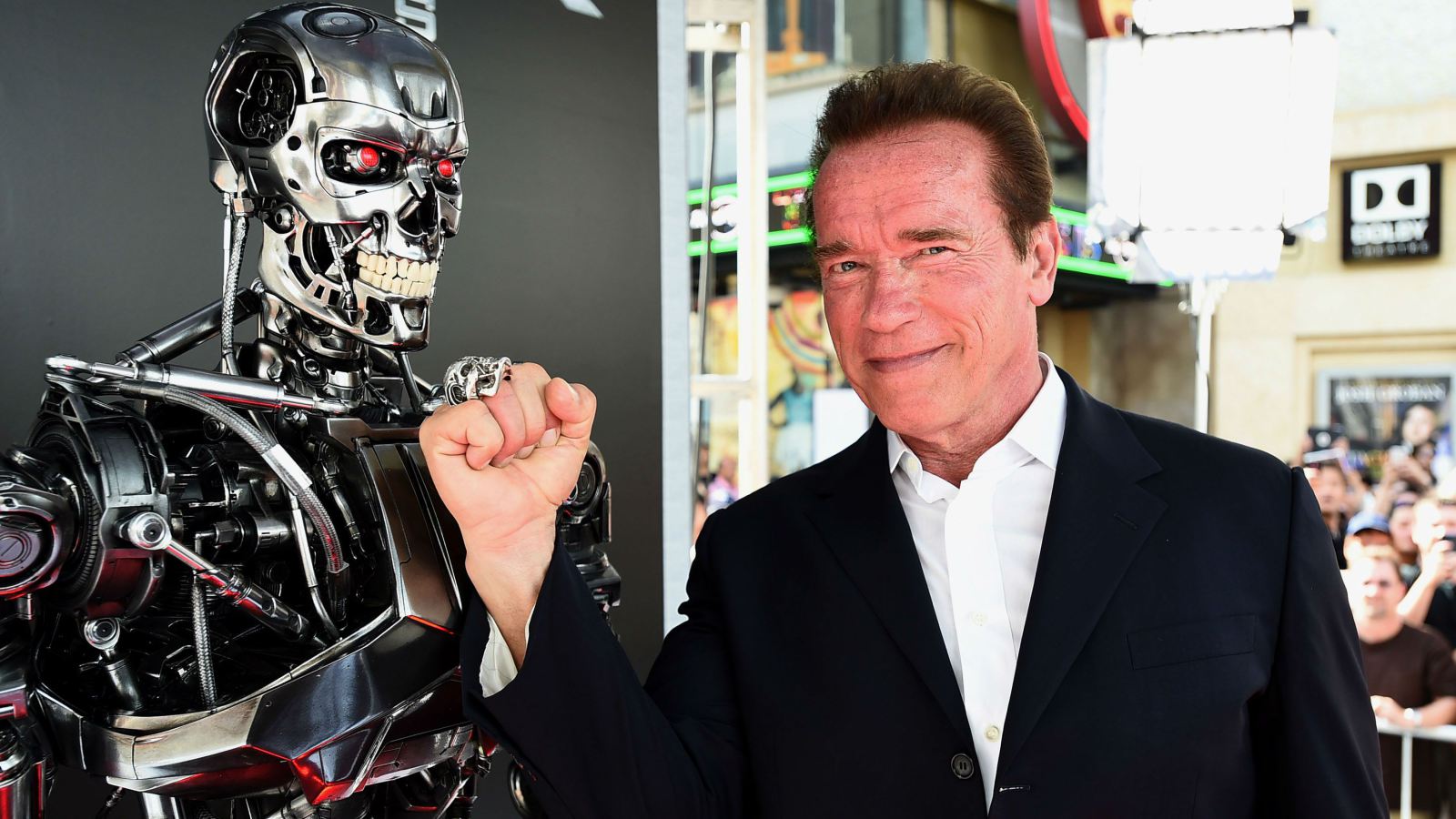
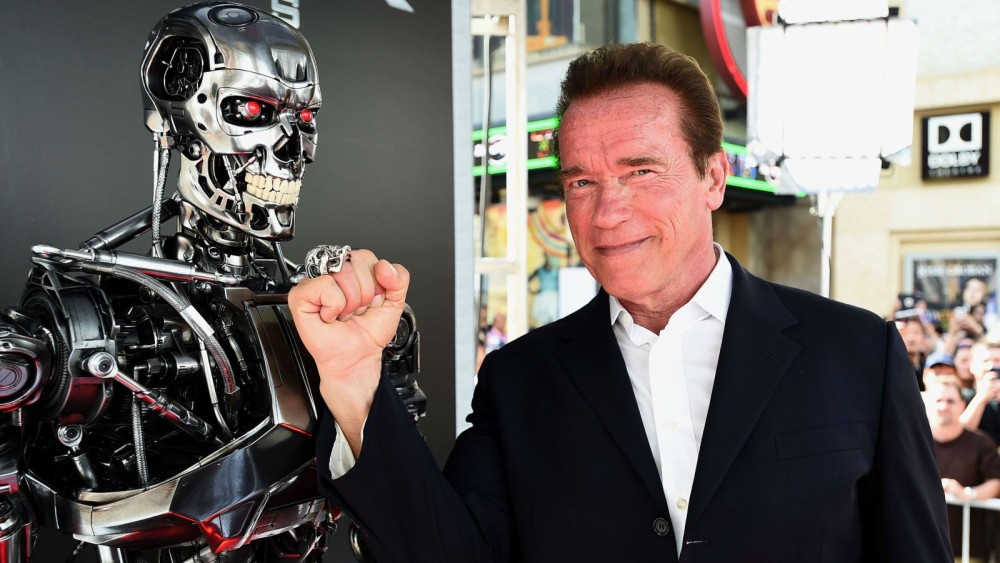
    Arnold Schwarzenegger taunts a T-1000 with the skull of one of its babies.
    Arnold Schwarzenegger taunts a T-800 with the skull of one of its babies.

    Sure, Donald Trump is running to be the man who brings about Idiocracy, but the National Broadcast Corporation couldn’t just let his show, Celebrity Apprentice, end gracefully, whatever “grace” looks like for a show where a sentient hair clippings sloshes the words “you’re fired” around like so much bourbon, more smug than he should be considering that he’s firing a stage magician who is actually quite secure in the knowledge that not catching a bullet in his teeth would, in fact, be better than another week of Celebrity Apprentice. To that end, NBC has hired a new host to take over until the show becomes President Trump’s preferred means of formal address: Arnold Schwarzenegger, who has, to his credit, been known to publicly fire folks for their harebrained schemes as far back as 1994.

    [su_youtube url=”https://www.youtube.com/watch?v=lf3Kyv_iaNs”]

    Seeing Schwarzenegger, the former governor of California and box office champion of the universe, on a television show that wasn’t initially developed for him is something of a shock: Though Celebrity Apprentice draws millions of viewers every week, judging a celebrity talent contest, regardless of how good the paycheck is, is a stunning departure from his attempted silver screen comeback. With the recent failure of Terminator: Genysis, however, a move like this had to be coming: If the revitalization of his most popular character flopped, what else could Schwarzenegger do to rehabilitate his image? Smoking cigars and chuckling with minor celebs actually isn’t a bad idea, considering what it’s done for his grotesque predecessor’s image in the popular consciousness.

    I’m actually a huge fan of Arnold Schwarzenegger, Action Star, and think that several of his post-politics films rank among his best work. Films like The Last Stand and Sabotage deal with the realities of aging and regret with much more maturity than, say, The Expendables, and Maggie, though something of a bore, sees the Austrian Oak bust out some legit acting chops in service of a father-saves-daughter plot that can’t be solved by single-handedly toppling an entire autocratic dictatorship. All of these, it should be noted, failed without much notice. When I mention Sabotage as a movie that slipped through the cracks, people look at me with their head cocked, like a dog hearing something strange and distant. Sabotage? they ask, looking it up. It’s got, like, 18% on Rotten Tomatoes. To this I say Yeah, but, only to quickly realize the futility of liking Arnold Schwarzenegger in 2015: Politics. scandal, Batman and Robin—not only is he box office poison, but it’s hard to figure any of his recent outings as future cult favorites. So here he is on a show where his big, awkward charm will play huge with your grandparents. They’ll speak of his extramarital affairs and allegations of sexual abuse in disapproving tones before adding a Yeah, but of their own about how cool he seems in the boardroom, how affable, how nice. My, how people can change.

    As a fan who was rooting for a return to form, the Celebrity Apprentice announcement was a letdown. With the exception of the heavily hyped Terminator reboot, most new Schwarzenegger films are now released in the first quarter of the year, doomed to their failure and obscurity. Justifiably, it seemed as if studios had no faith to draw money at the theater, and hosting Celebrity Apprentice suggests that he knows the same, that his name is worth something, but only if it’s attached to a sure thing. How did this happen? Scandal, yes, but there’s something…off…about Schwarzenegger’s comeback pictures, something preventing them from becoming the kind of artistic successes (yes, artistic) that attract true cult followings: A decided lack of bad-ass women to compliment Schwarzenegger’s alien grace.

    It’s weird, probably, to think about Arnold Schwarzenegger films in terms of the women who fought with him or against him, but as a child I was fascinated with the Schwarzeneggerian equivalent of the Bond girl. Jamie Lee Curtis, Sharon Stone, Grace Jones, Brigitte Nielsen, Linda Hamilton—they cycled through Arnold’s movies as warriors and revolutionaries, heroes and villains. Hamilton’s Sarah Connor is both one of the great Final Girls in film and an affecting portrait of a woman dealing with unimaginable trauma. She’s an icon whose image matters as much to the Terminator franchise as the killer cyborg she’s running from. The first time I saw her in T2: Judgement Day, I thought That’s it—that’s the woman I want to be. And I still want to be Linda Hamilton. But, thinking about his late period films, I’m stuck. There are no icons here—just faces in the crowd.

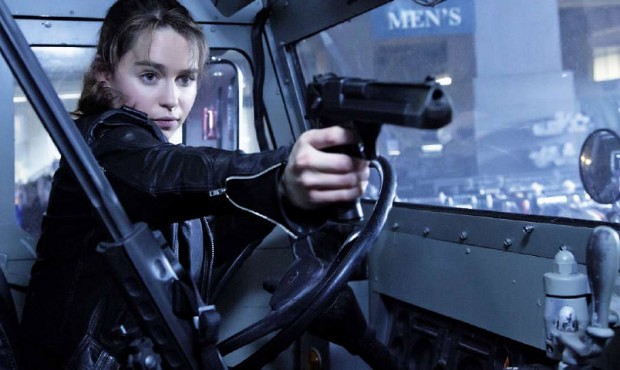
    emilia clarke sarah connor

    Even Terminator: Genysis, with Sarah Connor recast as Game of Throne’s Emilia Clarke, seemed to fundamentally misunderstand the crucial role of women in Schwarzenegger’s best work. Updated for 2015, Connor mostly stands around and listens to her robot guardian and her maybe-lover from a potential future bicker about the fate of her womb while trying to stop a killer app from uploading, U2-style, onto every smartphone on Earth. Where the early Terminator films are about Connor and the dangers of being a woman and mother, Genysis included the character as a point of obligation—not to the franchise, per se, but to the idea of casting Just One Woman in an action film.

    2015, thanks largely to Mad Max: Fury Road and its scores of women warriors, is the end of it being acceptable for women to exist in these mainstream universes as useless objects blocking our view of the beefcake parade, but the men responsible for Arnold Schwarzenegger’s comeback scripts left them entirely out. The end result was the failure of Terminator: Genysis, which might, mercifully, be the end of the franchise. What’s obvious now is that Schwarzenegger needs a break, and, not to disparage the network, that’s what a stint on NBC represents. Beyond sequels for Conan (yay!) and Twins (really?), Celebrity Apprentice is the only work on Schwarzenegger’s docket for some time. When he comes back, I hope the people working on new vehicles for him reassess what, to me, is an essential part of his success. If, at the end of his television obligation, they’re unable to come up with something better than a creaky excuse for Schwarzenegger to mention his advanced age, then it’s time for him to pass the torch he used to call the Predator out with to Imperator Furiosa and the future.

  • The Danish Girl and Marketing Trans Narratives

    The Danish Girl and Marketing Trans Narratives

    danish-girl

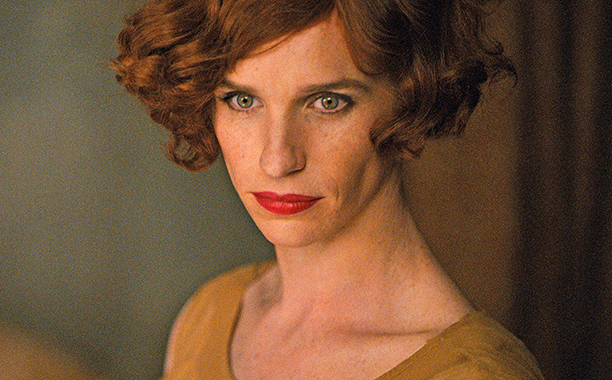
    Since the release of its trailer last month, something about The Danish Girl Academy Award-winning director Tom Hooper’s Eddie Redmayne-starring biopic about Lili Elbe, the first trans woman to undergo gender confirmation surgery—has nagged at me, tugging at some part of my consciousness that refuses to allow me to look past another Oscar-hopeful film that’s cast a cis man as a trans woman. I’m a trans woman, and I’m tired of this trend (and the trend of cis actors receiving awards for trans stories while trans actors and actresses struggle to find work), but I like Redmayne and find Hooper’s films audacious enough to admit that I’ll be giving The Danish Girl a shot when it is out of the festival circuit and in wide release.

    But there’s my consciousness and how it keeps poking at me, like a burr stuck in my collar. The Danish Girl isn’t like Dallas Buyer’s Club, which garnered Jared Leto an Oscar for Best Supporting Actor amidst article after article of criticism for that film’s handling of its (fictional) trans character and Leto’s handling of the acclaim. Here, I just Googled The Danish Girl, which currently clocks in at 81% Fresh on Rotten Tomatoes. Variety put Redmayne’s “transformation” on its coverWIRED helpfully suggests that I “prepare all of my tears” for the trailer. Buzzfeed, too, is excited, calling the trailer “incredibly powerful.” I’ll watch the trailer again in a minute, but my eye is wandering over to Google Images, laden with pictures of Eddie Redmayne en femme. I’m looking at the film’s poster, which is the sort of sleepy, respectable design work that will get your elders whispering excitedly about that transexual movie with the guy who played that guy. Scan down past Redmayne and his co-star, Alicia Vikander. Stop just before the credits that note that this movie, “inspired by the extraordinary true story,” is not based on Lili Elbe’s own memoir, but on a novel written by a cis man. There, the tagline: Find the courage to be yourself.

    There it is: The Trans Narrative.

    Trans people are useful, in mainstream culture, as an inspirational teaching tool. Here is a woman who was trapped in a man’s body, the narrative goes, and how she fixed that should serve as inspiration to us all. Well, yes and no. If popular culture is going to slowly (but surely) peddle in trans narratives as inspirational pablum, the ultimate result (one hopes) is the kind of sympathy that makes real, substantive change happen for us. When a cis actor wins an award for a trans role and dedicates his or her performance to the trans community, it is this that they are ultimately gesturing to. It’s an actor’s job to find the humanity in their character, and to translate that so that it comes across to the audience. At the same time, to watch a film or a television show with a cis actor in a trans role is to confront the reality that trans bodies and narratives are often commodified without the benefit of trans remuneration, and that the process of change through narrative storytelling is slow. In short, representation really does matter, not just in front of the camera but behind it.

    How our stories are told and who tells them is just as important as any casting decision. Consider, for instance, Dallas Buyer’s Club director Jean-Marc Vallée’s that in casting for a trans role, he wasn’t “looking for the real thing,” pondering whether or not there even was such a thing as a trans actress. (The interview on CBC’s Radio Q was purged when former host Jian Ghomeshi was released amid accusations of sexual assault, but lives on through a back channel of trans- and ally-maintained Tumblrs that decried the transmisogyny of the film.) That’s not a failing on Jared Leto’s part, but a failure of vision at the highest level. Which is why, with The Danish Girl, it’s important to look past the casting of Redmayne as Elbe towards the promotional material, since this is how trans bodies will be packaged and sold until the film’s wide release, whereupon it will be repackaged and resold as a daring, brave performance by a gifted actor.

    [su_youtube url=”https://www.youtube.com/watch?v=d88APYIGkjk”]

    Tom Hooper, obviously, has a profound love of period pieces and biopics, and all the trappings of that genre are here. The subjects are monied, the sets are grand, the dresses are lavish. The big hook, of course, is seeing Redmayne as Lili Elbe, and, yes, he is beautiful in a dress and make-up. When a man at a party says that he feels compelled to ask her permission to kiss her (which, woah, buddy, way to seek consent in a way that borders on sociopathic), the audience says Of course! because Lili Elbe is so goddamn radiant. Red wig, red lips, green dress—she pops against the muted blues and grays of the set design, whereas Elbe’s masculine presentation (Einar Wegener, a name which, you’ll find, the film’s promotional material frequently refers to Elbe by, which is a rather deliberate act of misgendering) blends in completely with the surroundings.

    This is a key piece of The Trans Narrative, which supposes that trans women (pop culture has yet to find any purchase for trans men) live dull, colorless lives until they discover lipstick and rouge, that our identities are no more complex than a fresh coat of paint. I’ve wondered, as a trans woman who has written about film for seven years, if movies were capable of something as intense and intimate as a transition narrative, and The Danish Girl’s trailer suggests that it is not. Two hours is a brief, unenviable amount of time when dealing with what is, for many, the unfathomable idea that a person might identify as something other than the gender they were assigned at birth. So the trailer focuses as much as it can on the things that have become hallmarks of The Trans Narrative: life “as a man,” the moment one discovers that they are trans, and, most titillatingly, The Surgery.

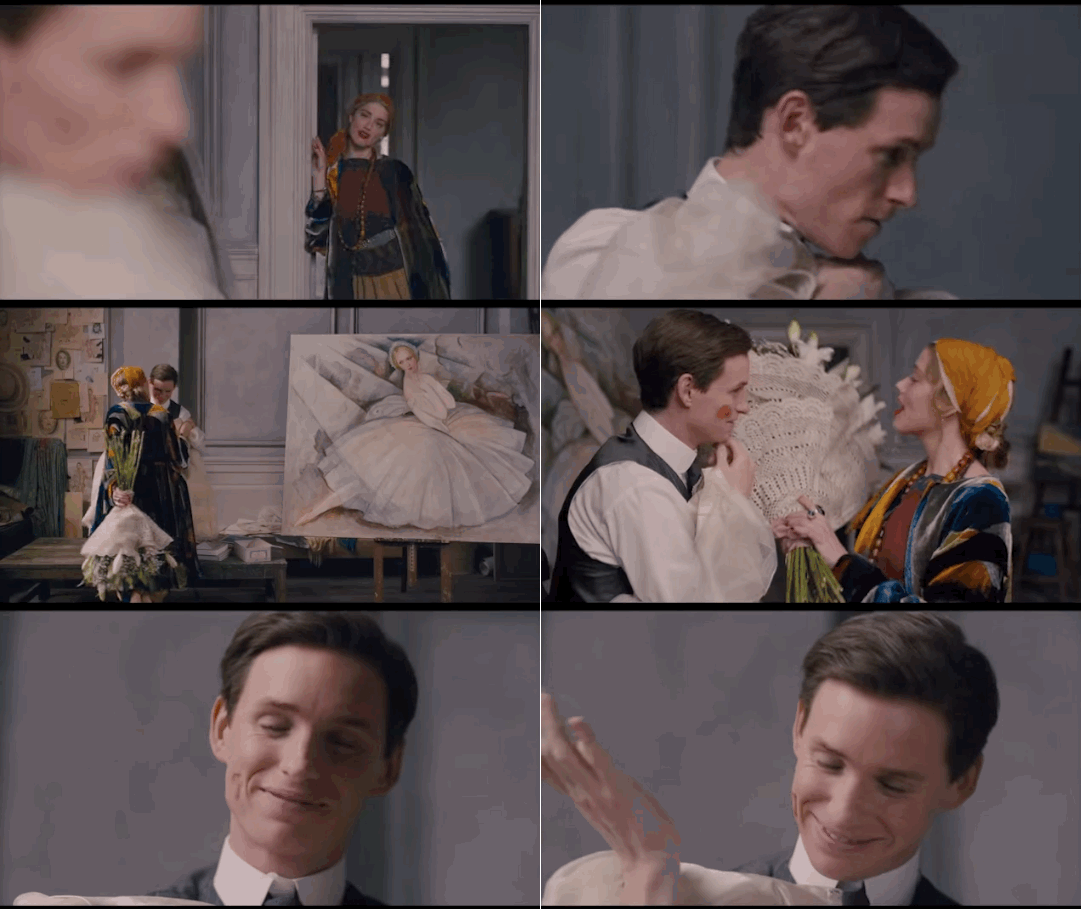
    The trailer leaves The Surgery and its consequences (here, Elbe’s death) as it relates to Elbe’s life to the imagination: There’s Magnus Hirschfeld speaking quietly about the never-before-performed procedure, Elbe and Gerda Wegener declaring their devotion to one another despite the risk they are taking. The trailer thus hinges on the moment of discovery, Elbe modeling a dress for her partner’s painting.

    Danish Girl 1

    Hooper’s cinematographer shoots Redmayne’s hands, feet, and face in an extreme close-up, resembling Hooper’s brazen decision to focus tight on his actors’ faces in Les Miserables. The way the trailer cuts from stockings to bodice to face lends Elbe’s moment of discovery a sense of tactility that is frankly impressive, given that we’re not there fingering the dress with Redmayne. But it’s also knowingly erotic—here, we’re voyeurs looking in on a private moment between husband and wife, and the look upon Elbe’s face as she traces the dress is one of pleasure and desire. It’s also the look of a person who, oddly, seems to have never touched a dress before, as The Trans Narrative demands of its protagonist that every feminine article she comes in contact with carries the shock of something new.

    Despite the frock draped upon her posed body, Elbe remains a mute, gray figure in her mute, gray house. The trailer’s first real touch of color breezes into the room at the precise moment Elbe discovers, to her surprise, that she’s a woman: It’s Amber Herd’s Oola Paulson, dressed like she’s completely unaware of the somber tone Hooper is otherwise aiming for. She bequeaths unto Lili her name and a kiss—color!—and cuts to an establishing shot of the lights in a room turning on for a party.
    Danish Girl 2

    It’s hard to miss the metaphor here, but again, it’s in keeping with the narrative. Here’s a lifeless, broken person in need of repair, a trans person made better through the concern and kindness of her cis contemporaries. I’ve got nothing against framing The Danish Girl as a love story where two people have to work through a series of incredible (and incredibly dangerous) circumstances (even if that’s, as they say, not the whole story), but as a trans narrative, again, we have a failure of imagination that is inherent to the system that birthed it.

    The Danish Girl is a movie about a man who wants to become a woman, which is a false narrative cis culture uses to “understand” us. Lili Elbe was a woman, and her story is one of a woman taking great pains for society to accept her as such. Casting a trans actor in this version of events would change nothing without a fundamental shift in the production’s understanding of what’s at stake for Elbe and the trans women that came before and after her. That Hooper’s production appears to suck all the marrow out of this story is hardly surprising. This is the business of inspiration, after all, to take real people and turn them into a message. To take a woman and reduce her to a Girl.
  • Movie Review: Southpaw (2015)

    Movie Review: Southpaw (2015)

    Southpaw 2015

    There is an undeniable poetry to boxing, or there was, at least: To the ebb and flow of two bodies in the ring, weaving and ducking and lashing out; to the roar of the crowd; to the spare lyricism of a fighter’s oratory; to the satin finish of a ring robe or the gleam of sweat or a sudden burst of blood from a ruined nose. Though boxing’s popularity has been and still is in decline, films like Antione Fuqua’s Southpaw keep the embers glowing, using the pugilist’s chiseled body and dazzling fight choreography to create an impression of the sport that it is increasingly incapable of producing upon its own canvas.

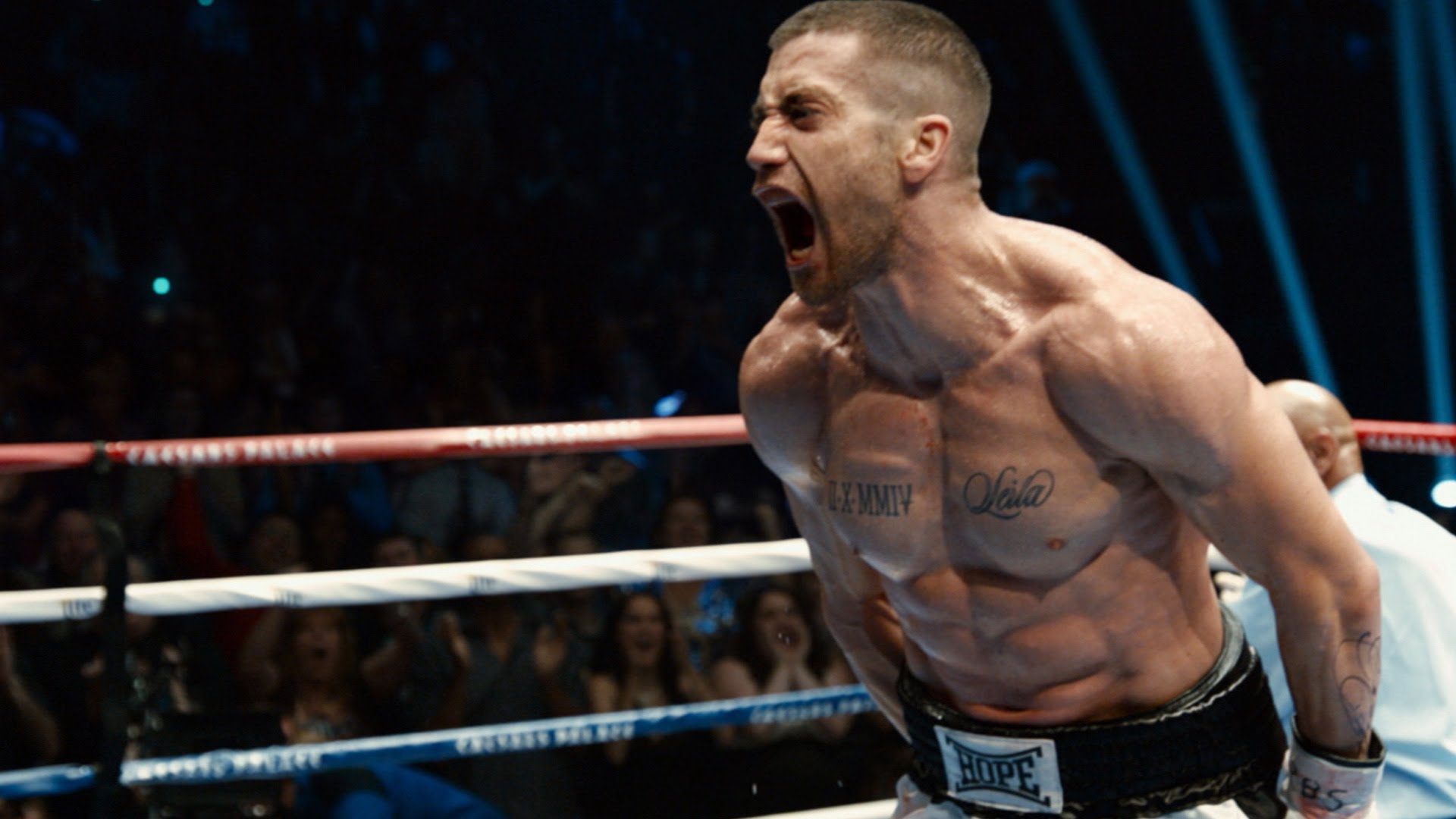
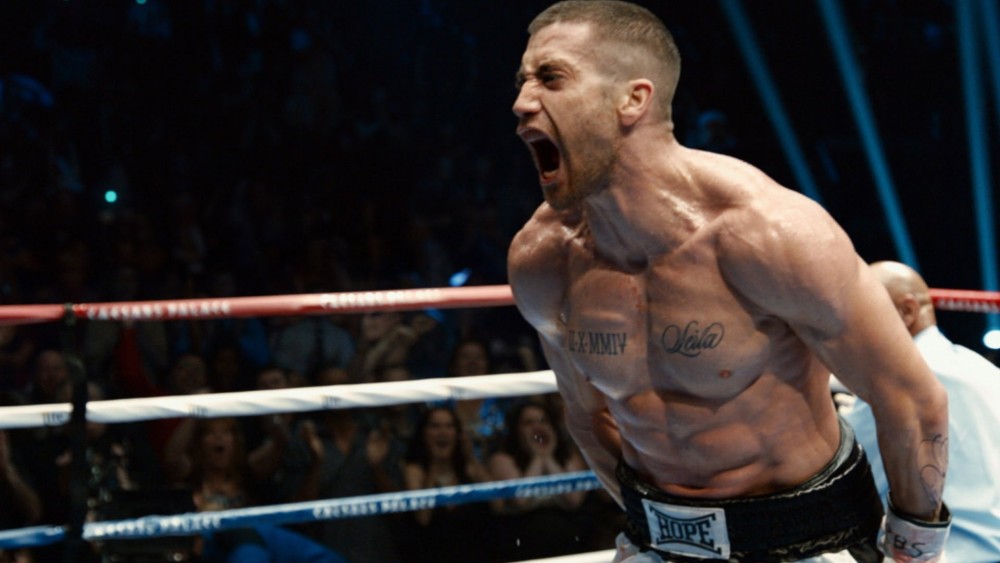
    As shot by Mauro Fiore, Southpaw has a dazzling grace between the ropes despite its lead’s strategy of taking punches to the face. Billy “The Great” Hope (Jake Gyllenhaal) is battered from the start, bleeding from the mouth and dripping onto the canvas like a splatter artist, but even with a gristly cut over his eye he is in firm control over his opponent. It takes him longer than expected to put his challenger down, but he is an aging fighter who was born punching, a product of the system who has spent time in orphanages and in lock-up—getting beaten up is how he motivates himself to finish off his opponents. His wife (Rachel McAdams) is rightly concerned that if he keeps fighting the way he fights, he’ll end up punch drunk before retiring.

    If Southpaw were just that, an examination of a declining championship boxer caught between his motivation to headline pay-per-views and his wife’s desire that he live a long life, it would have been something interesting, a realtime take on some of the darker corners suggested by the later, poppier offerings of the Rocky franchise. For Fuqua and Sons of Anarchy creator Kurt Sutter, decline is not enough. After that first successful fight, Hope (notice the name) has to survive an odyssey of melodrama to arrive at a somehow fight-hungry nation’s much-wanted bout against number one contender Miguel Escobar (Miguel Gomez). His wife is shot and killed by an associate of Escobar’s during a charity event, and, lost in a tumult of grief, Hope loses everything: His will to fight, his championships, his money, his promotor, his house, and, after nearly killing himself while driving under the influence, his daughter (Oona Laurence). Picture somebody snapping their fingers—that’s how fast Hope loses everything.

    This is, of course, necessary for the former champion, out of place in his opulent mansion and buying bezeled watches for his crew, to find himself at the mercy of an old pro turned trainer (Forest Whitaker) who believes in boxing as a tool by which men make themselves men. The relationship between the two is effective, as Whitaker has long brought soul to even thankless roles like cornerman, and Gyllenhaal has become one of the most interesting actors working today. Both Billy Hope and Tick Willis are men as wounds, one trying to heal and one that can’t. That Willis wants to teach Hope how not to get punched, to control the anger that was both his advantage in the ring and, the trainer presumes, the thing that got Hope’s wife killed, adds some necessary texture to a training montage that otherwise would have been all-marveling at Gyllenhaal’s amazing physical transformation.

    Southpaw plays out as one might expect it to, as a boxing movie about a man named Hope must. Its use of every boxing film cliche and its inclination to fridge Billy Hope’s wife (not to mention a young fighter at Willis’ Gym) feels tired—cynical, even—but Gyllenhaal’s deft touch, his body language in scenes where Hope is dealing with grief and his failure to be a father, redeems the material to the point that it’s possible to enjoy its fights regardless of what they mean narratively, as pure, violent spectacle. Sutter has called this film a spiritual successor to 8 Mile, the clumsy, working-class fable about a hardscabble white rapper who makes good on his phenomenal talent, and that explains a lot of the choices Southpaw makes and doesn’t make, the way the pyrotechnic flair of the protagonist’s occupation is meant to make up for the flatness of his surroundings and the script’s failure to examine the nature of Billy Hope’s second chance. Of course the boxer redeems himself. That’s what our culture demands.


    Southpaw. With Jake Gyllenhaal (Billy Hope), Forest Whitaker (Tick Willis), Rachel McAdams (Maureen Hope), Naomie Harris (Angela Rivera), Curtis “50 Cent” Jackson (Jordan Mains), and Oona Laurence (Leila Hope). Directed by Antoine Fuqua, from a script by Kurt Sutter.