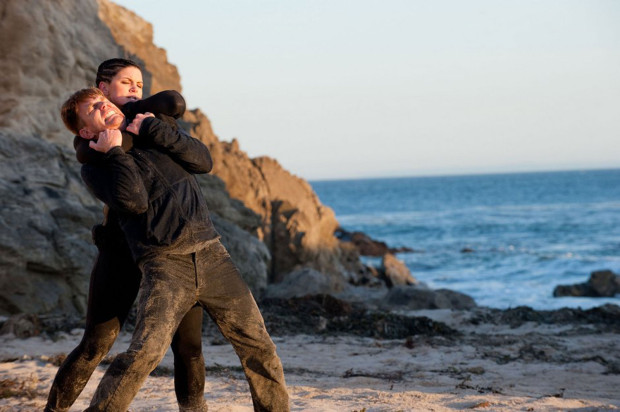
 Beyond the Black Rainbow is a curiosity; were it released in the heydey of low-budget, straight-to-VHS horror films, it would have been the format’s most staggering achievement, an ambitious blend of Kubrickian visual cues and DIY attitude. In 2012, with VOD services and endless ways of accessing talented, self-assured gems that’d otherwise slip between the fingers, there are plenty of movies vying to occupy the same space as this one, films using the same low-fidelity ethic, films with the same influences, films purporting to de or reconstruct a genre. As such Beyond the Black Rainbow is a victim of its time, a retro-futuristic slasher film with a tense atmosphere, but not much that holds up to intense scrutiny.
Director Panos Cosmatos spends the majority of Beyond the Black Rainbow building an intensely mysterious world, an odd dome in Parts Unknown where resides the last remaining members of the Arboria Institute, an ironically named cult-cum-learning-center that proposes, in the film’s infomercial-like prelude, to help its adherents reach a higher purpose. Twenty years elapse between what’s shown in the Arboria Institute’s pitch and the events of Beyond the Black Rainbow. If the Institute is thriving, we don’t know. Working in its dome are a nurse and a doctor. Living there (against her will) is a girl, her room a bed, a television, and a computer-controlled glass door. The harsh whites of the Institute suggest an extreme sterility, like somebody walking its hallways has something to hide. The score is dark and threatening, a dirty, synth-driven engine to rival the one propelling Drive.
Though Cosmatos has been accused of taking inspiration from and composing his film inbetween bong rips, focusing more on what’d look good to somebody under the influence than on his film’s narrative, it’s the vibe and atmosphere of the Arboria Institute that stand as Beyond the Black Rainbow‘s greatest achievement. The rest of the film, despite the relative paucity of hand-holding dialog, is much simpler than it looks. Trim away the fat—the Institute, the protagonist’s telekinetic powers, most of the supporting cast—and Beyond the Black Rainbow reveals itself as the story of a man driven to do terrible things by his obsession over a woman.
A doctor (Michael Rogers) makes daily interrogations of a patient (Eva Allen). The patient appears to be the only person living at the Arboria Institute, though she is visited by the doctor and a nurse. What’s unclear initially is if the doctor seeks to cure his patient, or torture her. For that matter, it’s unclear if the doctor is even a doctor, or if Barry Nyle is something else entirely. Elsewhere within the Institute, there’s a pyramid made of light. When the light is on, the girl is weak, helpless. She takes Dr. Nyle’s abuse. She sits in the corner of her cell like a ragdoll. When the light is off, she can move. She can think. Considering what she’s able to do when given this ability, it seems like a bad idea for Dr. Nyle to turn the pyramid off, but he’s toying with her. He wants to see what she will do. When the illusion of freedom is complete, he turns the light back on. They start over again.
The other elements of Beyond the Black Rainbow aren’t nearly as compelling as the relationship between Dr. Nyle and his patient. The nurse is disposed of after she sees what Nyle has been drawing in his diary. Dr. Nyle’s wife is disposed of once his intentions towards the girl become clear. The founder of the Arboria Institute still lives within its walls, but he’s dying alone in a room deep within the compound. Beyond the Black Rainbow visits these people to show Dr. Nyle’s psyche unraveling. It’s effective until midway through the movie, when we flash back to Nyle’s initiation an unnerving scene bathed in white, a white Nyle vomits all over. It’s the other side of 2001‘s lysergic ultimate trip. What comes out the other end is a man willing to kill to consumate his obsessive behavior.
Emerging from the flashback, suffers from narrative sloppiness and a sudden urge to shock its viewers. I suppose that, in a lair as large as the one this film occupies, anything could be living within its many rooms, but the decisions Cosmatos makes are often confusing, robbing the girl’s escape of the sense that Dr. Nyle is the threat until he stalks out into the open after her, his head newly shaven. The imagery is often compelling, but a sketchy sense of narrative is a big impediment to anything like a lasting impression. Were the scenes in this movie the sentences of an essay, you could rearrange them at will without losing (or further granting) it meaning.
Beyond the Black Rainbow. With Michael Rogers (Barry Nyle), Eva Alan (Elena), Scott Hylands (Mercurio Arboria), Marilyn Norry (Rosemary Nyle), and Rondel Reynoldson (Margo). Directed by Panos Cosmatos from a screenplay by Cosmatos.

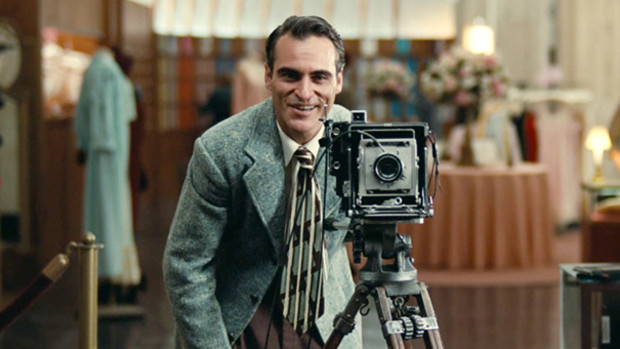
 Paul Thomas Anderson’s The Master is an often impenetrable movie, its characters—masters of obfuscation, all—shroud themselves in secrecy and purposeful vagueness in much the same way their real-life counterparts did. Forget the Church of Scientology, though. If you go into this film looking to see how Anderson does or doesn’t explore the motivations of a man like L. Ron Hubbard, you’ll only end up lost. The Master is a movie involving a cult. For it’s members, it is The Way, not The Cult. That’s how all cult members see their cult of choice, and that’s all anybody can really say about the subject-at-large. Instead of considering The Master as a film about a cult, think of it as a film about the strange, seemingly incongruous relationship between the man at the helm of a burgeoning movement and another man who is very much an outsider. The common denominator between the two? Magnetism.



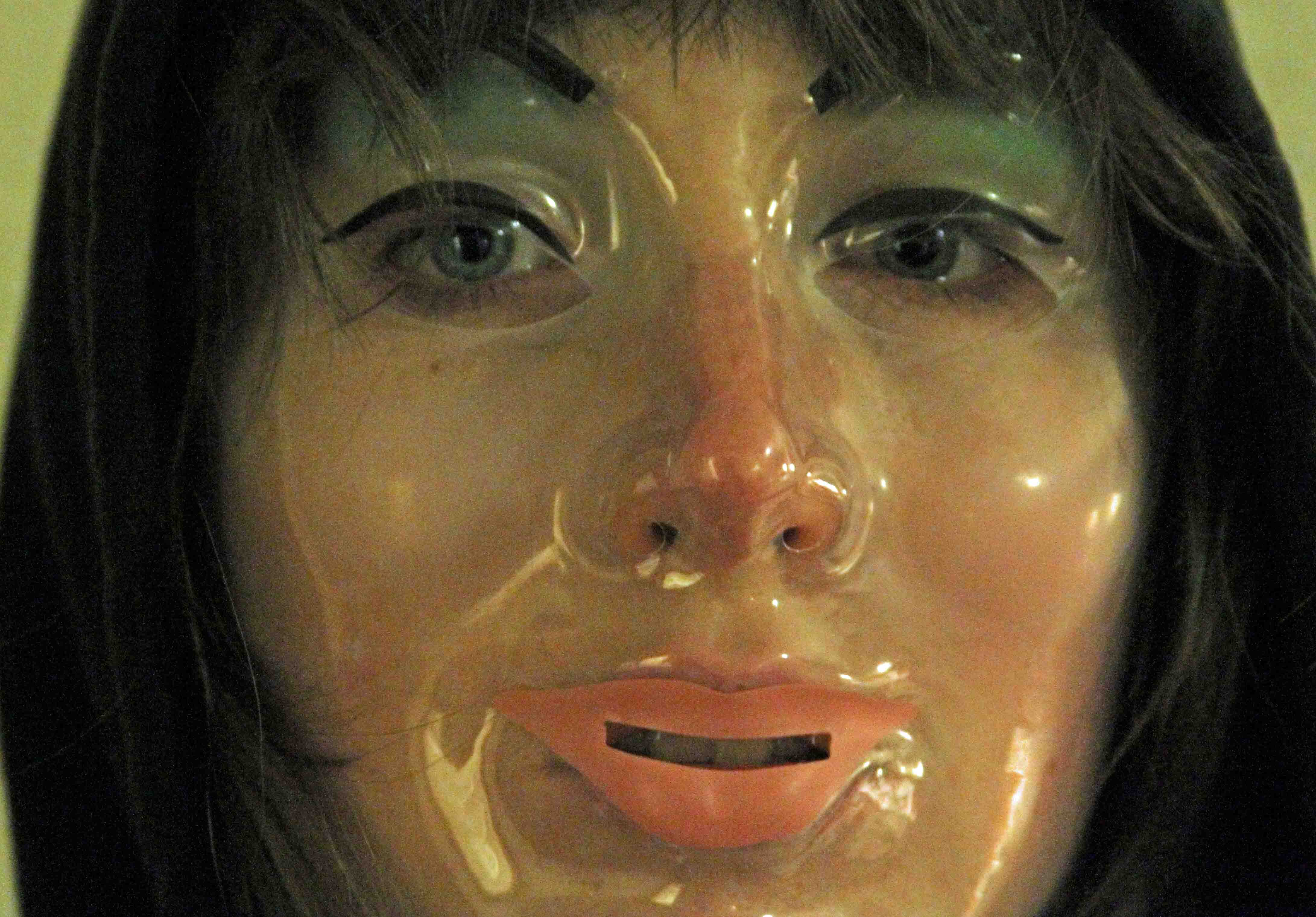
 V/H/S is a horror anthology presented as one complete story, the tale of a gang of thugs who break into a house to recover a specific video cassette for an unidentified employer. They break into a seemingly empty house, scouring it for the cassette, and make two discoveries: a pile of tapes in the basement, and a room with a dead body slumped in a chair. The dead man has apparently been watching some cassettes, so one member of the crew is tasked with watching what’s already loaded into the VCR. Like a child invoking the Candyman in the bathroom mirror, the thought of pressing play and glimpsing whatever the dead guy watched proves irresistible, and, thanks to a cadre of tapes directed by a constellation of indie horror filmmakers, the loop binding together this anthology is closed. Not logically, and not so far as it bears on the plot of the wraparound feature, but it’s closed.