
Category: Essentials

  • Book Review: Master of Reality by John Darnielle (2008)

    Book Review: Master of Reality by John Darnielle (2008)

    Black Sabbath Master of Reality

    essentialI don’t read many books about music. I don’t write much about music either, so it seems important for me to confess, up front, my willful ignorance of the 33 & 1/3 series of critical texts on classic records, many of which I love to the very core of my being. I guess I never felt the need. I was raised in a house where there was always something good being listened to. Eight-years-old and driving somewhere with my mom and my sister, our sing-alongs were to The Clash. Or Marvin Gaye. Or Al Green. Or Parliament-Funkadelic. There was no “discovering” punk or soul or funk in my house. My sister and I knew Never Mind the Bullocks Here’s the Sex Pistols because we were born into it, so, denied our opportunity to rebel, we found Korn and shit like Korn. When we found out that Mom hated bands like The Beatles and guys like Bob Dylan becuse she’d lived through that era and had their music hammered into her subconscious by the radio and her brothers on their reel-to-reel, we rebelled by listening to good music instead.

    All of this is to say that I don’t read about music because music is a thing that I feel, and I don’t want my ability to feel getting brought down by my knowledge of process or humanity. That’s ridiculous and impossible, and hasn’t even been true for most of my life. Somewhere in Detroit there’s a box full of books about The Beatles and DVD documentaries about the making of albums like The Dark Side of the Moon. The White Stripes tour documentary Under Great White Northern Lights made me cry, and Metallica’s Some Kind of Monster made St. Anger forgivable. But the prospect of reading a slim volume of prose about In the Aeroplane Over the Sea seemed (seems) daunting because, no matter what that book says about that record, it will say nothing about my experience of it: How I purchased it blindly from Shake-It Records in Cincinnati because I had a lot of disposable income in those days and thought the cover looked cool. How it was the album I turned to after I botched the miserable job of coming out to some of my friends and teachers as an undergraduate. How I beat the shit out of my playing chops trying to get my trumpet to sound like every instrument from “[untitled].” Not that I expect the books in 33 & 1/3 to do this for me, but I’m just not in the market for an experience of a record that isn’t mine.

    John Darnielle’s Master of Reality is different, though. It’s a novella, for one, and it’s by a lyricist whose music often feels like a spiritual event. It’s about a kid for whom Black Sabbath’s masterful trudge through the glop and doom of hopelessness is the soundtrack to everything: good times, bad times, depression, teenage kicks. Darnielle, a devoted metalhead, enters Master of Reality through a troubled kid’s journal. It’s 1985, and Roger Painter is in a mental hospital, trying to convince his caseworker to give back his Walkman and his cassettes. If he would just listen to Master of Reality and read what Roger has to say about it, Gary (fucking Gary) would know how important that record is, how healthy it would be for Roger to have it. He’d have no choice but to get the Walkman out from the cubbyholes behind the nurses’ desk and hand them back to Roger and admit that, yeah, this thing matters. But it’s October 1985, two months removed from Frank Zappa and John Denver and Dee Snider testifying before the United States Senate, two months from Susan Baker’s claim that “Much has changed since Elvis’ seemingly innocent times,” hilarious given the moral outrage his hips inspired. Roger doesn’t know any of that, or maybe he does and that’s why his treatise on Master of Reality and Sabbath and all the music out there like it is so earnest and vulnerable: It’ll take a miracle for him to get those tapes back. No such miracle is forthcoming.

    Everything that gets tied into the experience of an important album is part of Roger’s story, which he spills out to Gary in good faith. There’s inside jokes and figures of speech between friends, sex, obsession, and rock mythology, the way your favorite band feels like your band, something you might have joined were you born in the right time and place. Roger, as he comes to realize, was not in the right time or place. The shelled-out England that birthed Ozzy Osbourne and Black Sabbath is impossible to imagine from a California choked out by freeways and strip malls:

    Ozzy Osbourne was born in the late 40s, so he probably grew up looking at a lot of bomb craters. I grew up in southern California, so what I grew up looking at was a lot of strip malls. Same basic idea. The only difference is that my neighborhood looked like it was waiting to be bombed instead of recovering from the bombing.

    It’s easy, I think, for some kids to look at modern desolation and get romantic for old blight. I know that’s how I was. All of the geniuses I listened to, it seemed, were born in those bomb craters. I know I still get that way, sometimes, when it’ late and the music’s right and I’m walking past a strip mall with a Jos. A. Bank or something in it. And when the music’s right, yeah, it’s like exploring a cave or listening to a wizard deliver a sermon from a mountaintop. “We are the Masters of Reality!” Roger imagines Sabbath shouting from the mountains, black-and-purple capes flowing. “This is your reality!” I’m with him. I’d follow Ozzy anywhere, even knowing the only place he has in mind is Hell.

    This book is perfect, small and agonizing. I read it once, then I read it again with Master of Reality on low in the background so I could feel every note, every wheeze, every plea. So I could feel Black Sabbath invading my brain. It’s not my experience, but it’s something close. Darnielle’s prose is all alienation and uplift and staggering heartbreak, a teen anthem in its own right. Its crescendos and peaks triggered my memories of Sabbath. Here’s one: I’m young and it’s my father’s weekend to take my sister and I, but the whole divorce/visitation thing has left him without whatever mechanisms fatherhood requires. He tries, taking us around with him to the places he works and showing us the cars he has built for others to race. His ass-crack is hanging out in a picture from an issue of Super Ford Magazine about some NASA-designed engine he put into a Mustang. We spent a lot of time at drag races, at go-kart tracks, playing slot cars. But neither my sister nor I have a proficiency for cars, and my big Black Sabbath memory takes place in the half-rusted Ford Bronco he drove from wherever he was living at the time to his work, where he’d fiddle around with that engine.

    We’re in the Bronco, my father and I (I don’t remember if my sister was there), and it’s 5:00pm on a Friday, Arthur Penhallow on 101.1 WRIF playing the working man into the weekend. The opening chords of “War Pigs” cut in over the rumble of the truck. Dad asks if I’ve ever heard this song before and I haven’t, so he turns the radio up as loud as he can, just as the air raid sirens hit. We’re there in a vacant parking lot, feeling the song. Actually feeling it. Tony Iommi’s guitar, Geezer Butler’s bass, Bill Ward’s drums, so loud my teeth are vibrating. Ozzy over all of this, “OH, LORD YEAH!” and its the greatest thing I’ve ever heard because I’m hearing it with my father, because now I have something with him that I never had before, a connection. The song ends. Dad does a few donuts in the parking lot because there’s nobody there to stop us. We go home. Master of Reality was like that for me, like going home and driving past that parking lot. Sometimes it’s good to go home and sometimes it hurts, and every memory, good or bad, is an unexploded bomb I’m not equipped to handle. So I do it with care, hold them close and hope they don’t explode. Then I read a book like this, and they all go off at once. This is your reality, it says. There are no masters.


    John Darnielle Master of RealityMaster of Reality (33 & 1/3). By John Darnielle. Published by Bloomsbury Academic on April 15, 2008. Order a copy of it at your local bookstore, from Powells Books, or Amazon.
  • Free Wrestling: Sara Del Rey vs. Claudio Castagnoli (Cesaro) (7/31/11)

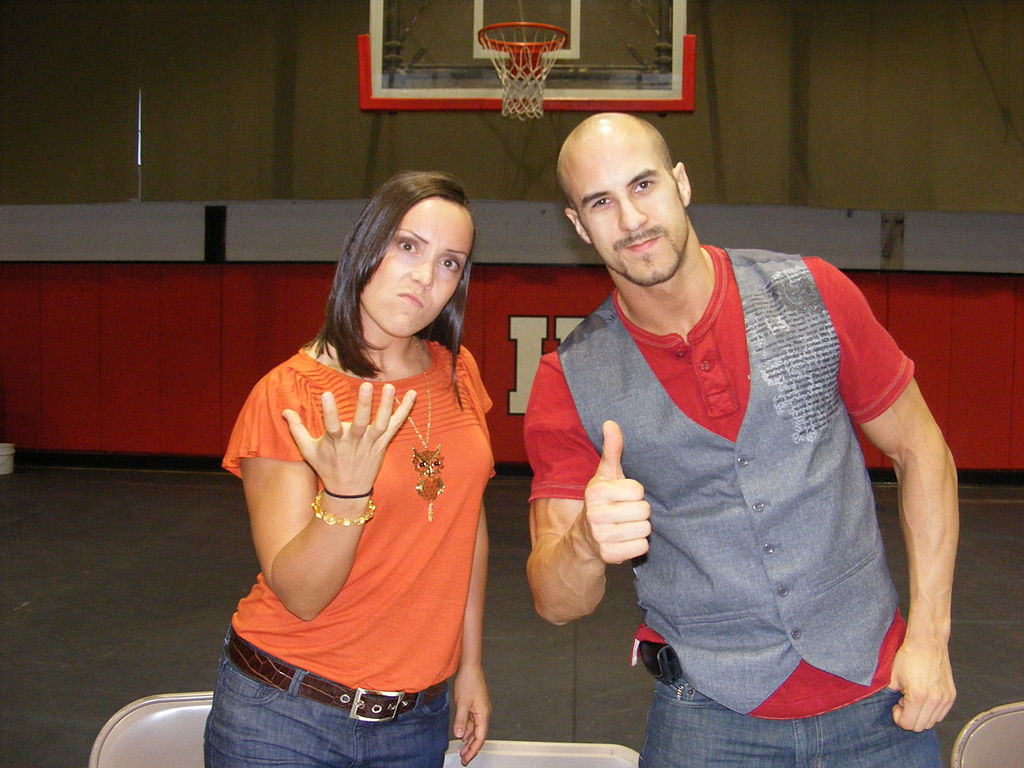
    Free Wrestling: Sara Del Rey vs. Claudio Castagnoli (Cesaro) (7/31/11)

    essentialI don’t know how, but I was sitting in the front row of what was formerly known as the ECW Arena for this match, which is still the best I’ve ever seen live. My experience at live events covers a lot of ground, too, from WCW and WWF shows as a child to working Absolute Intense Wrestling cards as an announcer to WrestleMania this year. This match still stands out to me even watching it today for the first time in a year. I remember everything about that day, the last of a three day trip from Detroit to Cleveland to Reading to Philadelphia. Four days of driving and three nights of wrestling, Sara Del Rey on each card. We were in Philadelphia early enough to go to the Mûtter Museum and the Edgar Allen Poe house. To be frustrated by the lines at both Pat’s and Geno’s and settle instead for a mediocre pizza place down the block. To stand in line at the arena on Swanson and Ritter, waiting, chatting about the match that got me and two friends to drive all that way, occupying the cheapest, sketchiest motels any of us had slept in, driving on no sleep and three or four energy drinks. Sara Del Rey and Claudio Castagnoli wrestled three years ago, but it feels like three persons ago, as if the chubby dude in the Colt Cabana shirt slapping five with Dasher Hatfield and yelling dumb shit at all of the heels never existed. When I see myself sitting there, or hear the things that I yelled, I cringe.

    The concept of intergender wrestling was not new to me in 2011. Men and women occasionally mixed it up in WWE—Chyna was an Intercontinental Champion before she ever wrestled a woman, for example, and there was a 2003 “Battle of the Sexes” tag team match that pit Christian and Chris Jericho against Trish Stratus and Lita. But Chyna’s run and that tag team match were built around the premise that it was odd that women might compete with men, break out from their section of the roster and shoot for something greater than a gendered championship. That shouldn’t be a big problem on the independent wrestling scene, but even in 2014 it seems to be a sticking point for some. There are size differences and muscles and societal norms and, really, it’s about realism in professional wrestling. This match, and Del Rey’s entire 2011 and 2012 (before she was hired by World Wrestling Entertainment to train women at their Performance Center), were part of breaking this perception. Every intergender wrestling match that has followed in the United States can be traced back to this one.

    From the start, the story this match tells is brilliant. And that’s without the actual story this match is telling. Put in context, Claudio Castagnoli is the leader of the BDK, a villainous stable of wrestlers who made it their business to conquer CHIKARA and were quite successful in doing so. Castagnoli and his partner Ares were successful tag team champions, and they used Sara Del Rey and her partner, Daizee Haze, as a shield, positioning them against other teams that were on the verge of challenging Castagnoli and Ares. Del Rey and Haze were quite successful, accruing enough points in CHIKARA’s contendership system to challenge their leaders, but they never did. When CHIKARA instituted a Grand Championship, they decided to crown the first singles champion with a 12-person Round Robin tournament. Each wrestler on the CHIKARA roster was allowed to vote somebody into the Round Robin, and Del Rey made it thanks to the votes of Madison Eagles and Daizee Haze, who disobeyed BDK dictum by voting for Del Rey over Castagnoli. This wasn’t the final match of the tournament, but it was the most heated: Sara and her partner had grown tired of being held down by the BDK, who promised them opportunities in a promotion that hadn’t given women too many, and this match was an opportunity for her to make a statement against the man most responsible for holding her down. The match has since been presented without any of that context, and it doesn’t need it. Claudio Castagnoli, though not quite in the shape he’s in now as WWE’s Cesaro, was the most imposing man on the independents, 260-pounds of muscle, a man of old-school strongman strength. Del Rey wasn’t small by any means—against most American women wrestlers, she was more akin to the likes of Bull Nakano—but Castagnoli outweighs her easily and has every conceivable advantage. He knows it, too, and isn’t shy. He shoves Del Rey to the canvas and slaps her when she refuses to take the easy way out, and Del Rey responds with kicks that’d cause a lesser human being to crumble.

    Sara Del Rey Kicks Claudio

    Castagnoli needs the outside interference of Tursas to gain the advantage, but once he has it he never really lets go. As hard as Del Rey’s kicks are, the Swiss superman’s European uppercuts are just as visceral, catching his opponent on the chin and sending her down to the canvas. The way he hoists Del Rey up from the mat in a gutwrench position and walks around the ring before suplexing her might not seem impressive given the monsters he’s lifted and slammed since becoming a member of the WWE roster, but as close as I was to it, and for how hot it was in the arena, his strength seemed impossible. His strength is certainly why he continues to treat Del Rey as an afterthought, taunting her as he doles out punishment. The match teases and teases an improbable Del Rey win via a surprise pinfall as she tries to bring Castagnoli down with a sunset flip (only to be crushed with a leg drop) or a schoolboy (only for Castagnoli to kick out and complete his attempted suplex), but he’s too strong and too fresh for Del Rey to ever really make a comeback on. A Castagnoli victory seems like a sure thing at every turn. When Del Rey’s bridges out of a fourth Castagnoli elbow drop, it’s like witnessing a tiny miracle just before the apocalypse: Nice, but meaningless.

    All of this, of course, makes Del Rey’s eventual comeback feel that much more special. She’s beaten, exhausted, and dehydrated. Her opponent has been hitting her with his best strikes for the better part of eight minutes. It’s 100-degrees in the ECW Arena and this is her third match of the weekend. But she dodges a Castagnoli shoulderblock in the corner, takes Tursas out with a cannonball senton, and dives onto her rival with a crossbody block. When Claudio kicks out, she takes his outstretched arm and applies a cross-armbreaker submission maneuver and wrenches back like her future in wrestling depends on the outcome of this match. Because it does. But Castagnoli struggles and gets his foot on the ropes, and the match continues, which allows Castagnoli a knockout blow with a bicycle kick and, when Del Rey manages to get her foot on the ropes, this absolute nightmare of a move, the UFO:

    Claudio Castagnoli UFO Sara Del Rey

    Del Rey’s comeback from this is unreal—the audio doesn’t quite capture it, but the sold out crowd, mostly silenced by the heat, comes unglued when she kicks out and manages to go on the offensive again, hitting Castagnoli with her signature capo kicks in the corner and reapplying the armbar. It’s the second time, and Castagnoli has been selling his arm, but his freakish strength allows him to lift Sara up from the canvas and onto his shoulder before he sends her smashing back down to the mat… only for her to reapply the armbar! This is one of the coolest sequences I’ve seen in wrestling, a perfect crescendo relying on power, emotion, and positioning, and the explosion when Del Rey once again gets the arm bar is the most genuinely impassioned reaction I’ve seen in on an independent wrestling show. Had Castagnoli tapped out, the match would have been perfect, but he’s a final boss on his last legs, and the big bastard, now desperate, has some fight in him yet. There is nothing pretty about the lariats he clubs Del Rey with, nothing held back from his Ricola Bomb finish. They’re raw and brutal, and the powerbomb should end it, but having been embarrassed by the fight in Del Rey he lifts her shoulders up and positions her for an uppercut. That doesn’t satisfy him either, but this time Del Rey is present enough to cradle Castagnoli, roll his shoulders to the mat, and score the win.

    You can see me pop out of my seat, lean over the guardrail and scream in adulation. You can hear the crowd. After this video’s runtime, Claudio gets his revenge, bicycle kicking Del Rey and chokeslamming Haze, but he is soon on his way to WWE developmental. Del Rey had another year on the circuit—she was signed by the WWE as a trainer in July and reported to their training facility in September. That year, though, she was unquestionably the best wrestler in CHIKARA, working a number of matches that were among the best of the year. But none were better than this one, and few matches, in fact, mean as much to me in terms of my development as a fan or as a person. I forget, exactly, what I’m leaning over to tell my friend Caleb as the bell rings, but the conversation we’re having and will continue over the next few weeks will grow and expand as we finish our respective degrees. We talk about maybe doing wrestling school together, but when he and his girlfriend break up he goes to wrestling school by himself because he needs a distraction. I give Absolute Intense Wrestling some money in a Kickstarter and they let me call a match as a try out—Sara Del Rey vs. Mickie Knuckles—and I do well enough that they call me back, and for a year and a half I get to live out my weird kid dream of being a professional wrestling announcer. Caleb finishes wrestling school, but he only wrestles a few times before he moves to Philadelphia to attend the writing program at Temple; I never get to see him in the ring. When I graduate with my MFA in creative writing I take the prize money I won from a fellowship and go to wrestling school myself. I don’t last a night before I get a concussion, before I get so mad at myself for bumping too soft that I decide to really throw myself down to the mat and, in doing so, land head first,  but the essay that I write gets me into a PhD program in Georgia, where I am now, and out of an office gig in Detroit. It’s weird, how connected these things are. When I watch this match now, when I watch myself react to it, it’s like I’m watching a ghost.

    Del Rey Pie 2


  • Movie Review: The Texas Chain Saw Massacre (1974)

    Movie Review: The Texas Chain Saw Massacre (1974)

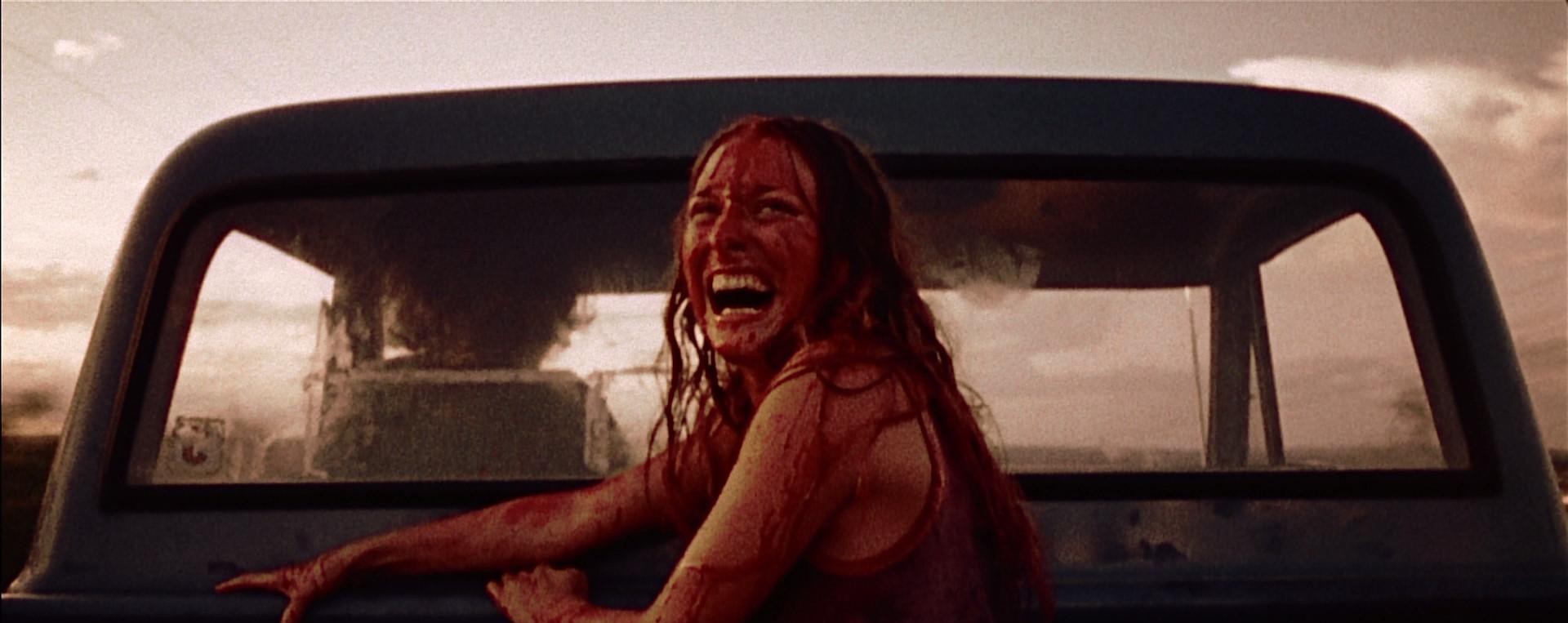
    The Texas Chain Saw Massacre 01

    essentialForty years later, The Texas Chain Saw Massacre shouldn’t be as powerful as it ultimately is. Tobe Hooper’s film is written in the bones of anybody who has even a slight appreciation for horror, and has been diminished by sequels and remakes and the continued recycling of its plot and scares. When I saw it recently at an anniversary screening, the audience spent much of their time laughing. Until Leatherface. With his hammer. With his mask. With his chainsaw. The plight of young adults looking to screw speaks to the young, I guess, but a man wearing another person’s skin over his face? That’s universal terror.

    The film is unsettling from the opening note of its score, which is set against the title card’s laughable claim that the young men and women who found their way into Leatherface’s clutches were enjoying an “idyllic summer” (because the idylls of youth are often spent wondering if your grandfather was dug up by a cult of art-maniacs and pissing into a bottle on the side of the freeway). The first shots are disorienting, a sequence of flashbulbs casting an intense, brief light on rotting meat. Human meat. A corpse in the awful Texas summer. There’s nothing right about the world here, and yet, for the kids assembled in that van, there’s nothing to do but move forward. The worst is always behind them until it’s right there, screaming and swinging his chainsaw.

    It’s never clear why Sally Hardesty (Marilyn Burns), her brother Franklin (Paul Partain), and their friends (Allen Danziger, William Vail, and Teri McMinn) decide to stay the night at the old Hardesty homestead. They’re out of gas (because of course they are) and the closest station won’t have any until morning, but the house they’re planning to sleep in is a husk (because of course it is) and their van is smeared with the blood of a lunatic hitchhiker, who slashed Franklin with a straight razor after terrifying everybody in the van by pulling faces and cutting open the palm of his hand. They can’t leave, but it doesn’t seem like they want to. Texas is gritty and hot, a miserable, sick place where people tailgate at the local cemetery, but the Hardestys can’t help where they are, nor what those places do to them.

    This is America, Hooper’s film argues, a brutal land that hides away its psychopaths in places where they can quietly maim the innocent. It’s an argument made more visceral by the conditions the film was shot under—brutal sixteen-hour days in excessive heat, with no pay up front. The sweat, exhaustion, exasperation, and terror is real. But the screening I attended would seem to suggest that these things no longer hold sway the way they did in 1974. The audience laughed at the crazed hitchhiker (Edwin Neal), Grandfather (John Dugan), Old Man (Jim Siedow) and Leatherface (Gunnar Hansen) in drag; twice—when the opening scene reveals the corpse art, and when the family has Sally over for dinner—a man raised a digital camera to his eye and took pictures of the screen. As The Texas Chain Saw Massacre was creating its grim spectacle from ramshackle houses and chicken bones, I found myself as agitated by the crowd watching the film as I was by the film being watched.

    The Texas Chain Saw Massacre is not a film that allows its audience to get comfortable for long, though. Leatherface’s murders are too brutal for that, deftly edited so that the shock of seeing a man get clubbed by a hammer quickly moves to the nausea of watching him twitch on the ground. Though its influence is unmistakable, few American slasher films work to this level. Its elements—the houses, the masks, the power tools, the fresh-faced victims—are endlessly transplanted, but are powerless when divorced from their original context. Its descendants play up the camp or the gore, gaze longingly at the bodies of those wandering into hell, or are completely undermined by the utter clarity of digital cinema. The Texas Chain Saw Massacre warns the audience that the events it is about to see are real, then presents those events through so many layers of grime and filth it’s hard to believe that anybody left the set unscathed. If the image of the family gathered around Sally at dinner seems ridiculous in 2014, the shots it is cut with—Sally’s eye in extreme close-up, widened and darting around the room for a means of escape—cast that image as real; the eye screams though she doesn’t. Her eye screams even if we refuse to scream along with it.

    Finally, we are left with Leatherface, dancing with his chainsaw in the morning sun. Are there many horror films that do their gristly work in the daylight? Or with such unsettling beauty? Made on a paltry budget with limited physical resources, Hooper and cinematographer Daniel Pearl subtly shift gears from the docu-realism of the graveyard scenes to the grotesque tableau of Leatherface’s murders so that it all feels unmistakably real, even when a man in a bad latex mask is feebly trying to live up to his reputation as the best killer at the old slaughterhouse. Far from operating under the pretense that a good murder or two is all that it needs to be memorable, The Texas Chain Saw Massacre revels in a miasma of sick, miserable images. It takes a prism to our world and twists it something awful, but manages, even in its darkest corners, to delight and disgust the viewer, often in the same frame.


    The Texas Chain Saw Massacre.  With Marilyn Burns (Sally Hardesty), Paul A. Partain (Franklin Hardesty), Allen Danziger (Jerry), William Vail (Kirk), Teri McMinn (Pam), Edwin Neal (Hitchhiker), Jim Siedow (Old Man), and Gunnar Hansen (Leatherface). Directed by Tobe Hooper, from a screenplay by Hooper and Kim Henkel.

  • Television Review: On Death Row (Season 1: 2012)

    Television Review: On Death Row (Season 1: 2012)

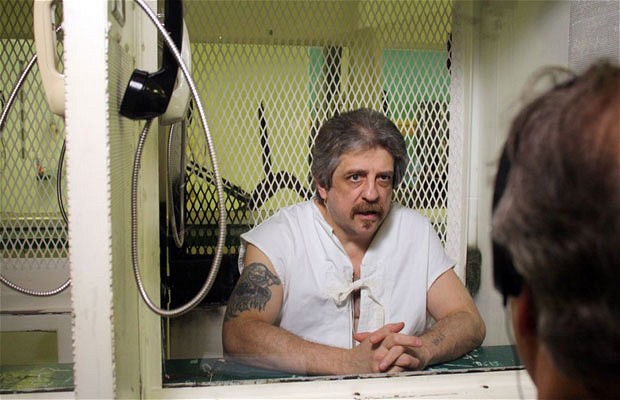
    Herzog on death row


    essentialClocking in at about the length of an ambitious arthouse film, it is perhaps generous to consider the act of watching the four episodes of Werner Herzog’s On Death Row “binge-watching,” but Herzog’s shortform meditation on the American justice system and its use of capital punishment is nevertheless an act of attrition. Hidden away from the world by the machinations of the prison-industrial complex, it isn’t until cameras are brought to bear on the men and women of death row that the implications of their sentence truly resonate. Articulate, impassioned, and more knowledgeable about the American justice system than the average true crime junkie, the subjects of these interviews (and those of Herzog’s companion film, Into the Abyss) are fascinating not because of the crimes they’ve been convicted of committing, but because, like many of the individuals Herzog focuses his camera on, they live in pockets of the universe too uncompromising and barbarous to be properly rationalized.

    On Death Row profiles five men and women whose lives are consumed  by their long wait for execution. Though Herzog is the one who conducts interviews with the convicted and those involved with the case, he never appears on camera, instead shooting his subjects in such a way that they speak directly to the viewer. Were this any other project, such a set-up might inspire pleas of innocence to a sympathetic ear. Though Herzog cannot see the case for capital punishment, his is not a forum for exoneration. “Sympathizing with your quest to have procedural injustices corrected in your case does not necessarily mean that I have to like you,” he tells James Barnes, a Florida man convicted of murdering his estranged wife. After converting to Islam, Barnes was compelled to confess to an infamous unsolved murder, which saw him sentenced to death. His conversations and letters with Herzog would later prompt Barnes to confess to two additional unsolved cases. With this revelation, however, Herzog must consider if Barnes is being truthful, or if his confessions are a ruse meant to prolong his life.

    Barnes is unquestionably guilty of the two murders he’s previously confessed to, and George Rivas, the leader of the Texas Seven, a gang of inmates who led the largest jailbreak in Texas history, carries the burden of knowing that he shot and killed a police officer on Christmas Eve. His other interviewees, Linda Carty and Hank Skinner, find themselves caught in impossibly complex legal situations. Carty is a British citizen who claims to have been an undercover informant for the DEA. Skinner, on death row for the murder of his girlfriend and her two sons, was only minutes away from his execution when he received a stay from the U.S. Supreme Court, who found that he could successfully sue for the right to have unused evidence from his trial tested for DNA. Joseph Garcia, one of the Texas Seven, is awaiting execution despite not having fired a shot at the slain police officer; Texas law has it that accomplices to crimes are culpable to the same degree as the perpetrators, so his sentence was the same as Rivas’.  He joined the Texas Seven because he was sentenced to life in prison for a murder he claims was self-defense. His conviction to that end was so strong that he refused to take a plea bargain of fifteen years. His testimony—which involved a demonstration of his skills with a butterfly knife—could not have gone more disastrously.

    Herzog on death row 2

    The circumstances of On Death Row‘s production—Herzog’s interviews were limited to an hour, and repeat visits were permitted months apart—and Herzog’s rather blunt way of telling the inmates that his interest in their case does not indicate a wish to be friends makes the resulting intimacy of each episode something of a surprise. One senses that Rivas, despite being guilt-ridden over the murder of Officer Aubrey Hawkins, is proud of his achievements, not only his ability to coordinate a jailbreak and evade capture for so long, but in the sheer cleverness of his many heists. Skinner is a natural-born storyteller, and if one is willing to suffer his excursions into Templar history and the connectedness of all things, he has one hell of a story to tell. What the mini-series makes clear is how remarkable an interviewer Herzog is. A German national with a deliberate way of speaking, he’s able to draw from James Barnes’ twin sister a heartbreaking portrait of being raised by their father, a strict disciplinarian who forced his children to whip James when he misbehaved, which was frequently. He manages to push Skinner beyond the realm of coincidence and into the mindset of a man who has been served his last meal. The attorneys he speaks to, of course, are more than willing to talk, but he hardly allows them to use his camera as a bully pulpit. When the prosecuting attorney in the Linda Carty case warms against humanizing Carty, Herzog replies “I do not make an attempt to humanize her. She is simply a human being, period.”

    When thinking of a partner for Herzog to present a TV miniseries about death row inmates, Investigation Discovery seems the least likely option. The network’s bumper, an insidious voice whispering “investigate” in a manner shrill enough to haunt dreams, is more of piece with the network’s regular offerings, shows like Who the (Bleep) Did I Marry? and I (Almost) Got Away With It. Scanning through these shows on Netflix, Herzog’s presence among them is the only thing separating something like Stalked: Someone’s Watching  from John Beard’s To Entrap a Local Predator: Orange County Edition: Super Creeps; a calm, contemplative voice in a room crowded with lunatics. Investigation Discovery somewhat mitigates this by bringing in Paula Zahn as a “presenter.” This role sees her standing imperiously next to the words “ON DEATH ROW,” which are presented in an austere typeface in Herzog’s film but are bold and oppressive otherwise, fading into a grungy Photoshop filter to emulate dirt that won’t wash out. Zahn does little more here than issue the usual rhetoric about “hardened criminals” and “brutal murders,” and her presence eventually diminishes to the point that her overly simplistic case notes amount to little more than minor annoyance. The experience of these people and their account of the crimes they either confess to committing or fight vehemently against are far beyond the bounds of rote description.

    This is a remarkable project which, along with Into the Abyss, comprises two four-episode seasons, one film, and, one assumes, plenty of unpublished literature. In keeping his focus on the inmates and their circumstances, Herzog is able to avoid the pitfall of much true crime programming, which is to lionize both the circumstances of the crime and the punishment meted out. Though these men and women live in cages so small that facial hair is a privilege and dreams of avocados are treasured, it is those privileges and dreams Herzog is fascinated with, that inspire him to a conclusion worthy of one of his most heralded films. Driving the same 40-mile route the Texas Department of Corrections  uses to transport convicts from the Allan B. Polunsky Unit, where death row inmates are housed, to the Huntsville Unit, which contains Texas’ death house, Herzog observes “the landscape, bleak, forlorn. And yet everything there all of the sudden looked magnificent. As if entering the holy land.” It’s a strange path Herzog cuts through the world, much of it maudlin and courting insanity. He is the same as the mannequins he discovers between the Polunsky and Huntsville units, an apostle on the road to death. His subjects may not deserve the freedom they fitfully dream of, but neither do they deserve the torment of knowing when and how that road terminates.

  • Movie Review: Happy People: A Year in the Taiga (2010)

    Movie Review: Happy People: A Year in the Taiga (2010)

    happy people a year in the taiga

    essentialThere are no filmmakers quite like Werner Herzog, who has been so prolific over the course of his career that it’s hard to fathom how his every move construes a passion project of some kind. Working in fiction or documentary, in books and lectures, in scripts and plays, Herzog’s is a voice so indelible, so distinct, that not even the strictures of a three-part miniseries on the sensationalist true crime cable network Investigative Discovery could hope to suppress him. Happy People: A Year in the Taiga finds Herzog editing and narrating a series of documentaries by videographer and “co-director” Dimitry Yasyukov, and the result is something of an inverse Grizzly Man. Herzog is clearly enamored with both subjects, but where he couldn’t understand (and was even somewhat frustrated by) the life of Timothy Treadwell, he looks upon the fastidious men of Siberia as if there’s was a life he could settle into. Here, he’s looking into another kind of abyss, but returning with something warm.

    Of course, when speaking of “warmth” in a Werner Herzog film, that quality is relative to the environment. Even beyond the snow-crusted, freezing forests of Siberia and Encounters at the End of the World‘s Antarctic wastes, those environments are universally extreme, cruel, and fit to be occupied only by the world’s most clever—and most stubborn—human beings. The fur-trappers who live in Siberia, who have lived in Siberia since the government dropped them from a helicopter in the 1970s with a rifle and a weak promise to return with food and supplies, aren’t phased by the conditions, nor are they particularly philosophical about their place in the world. Yasyukov’s cameras capture them at work building huts and crafting skis, fetching driftwood from the river so the village will have fuel for the winter, and Herzog makes reference at several points to the modern tools the trappers allow themselves—snowmobiles, mostly—but what looks backwards to an westernized city-dweller is a necessity of the Taiga. Modern tools and methodology aren’t built with a fur trapper’s use in mind.

    Happy People: A Year in the Taiga is as methodical in its approach to the life of a trapper as its subjects are to the business of trapping. Each man has a tract of land in the Taiga, and each spends an entire year preparing that tract for the winter’s hunt, which is performed in utter solitude. In spring, summer, and early fall, the 300-person village of Bakhtia prepares for the season in the same way, planting, fishing, building dug-out canoes, baking bread, getting ready for the business of survival in a region where, beyond the snowmobiles and chainsaws employed by the trappers, the only hint of the outside world is the Pokemon t-shirt a child wears. Later, before the river freezes over for the year, a politician visits on a luxury boat bearing sacks of grain and a karaoke machine. The village’s children dance along to the music, but the adults wordlessly load the politician’s gift into the truck and drive it away without listening to his pledge to rid Russia of corruption. There’s no corruption in Bakhtia, just work.

    HAPPY PEOPLE - A YEAR IN THE TAIGA

    And the trappers are exceedingly good at their work, otherwise the merciless Taiga (or its bears, who make fleeting cameo appearances at the fringes of Yasyukov’s camera) would’ve had its way with them decades ago. The documentary’s central hunter, at rest, tells Yasyukov a few stories from his decades in the region. The partner the Soviet government left him with? He didn’t make it through the first winter. His favorite dog? Eviscerated by a bear. This second event, he says, caused him emotional distress, but the dog did her duty, she was a useful tool. Late in fall, he and the other trappers head back into the forest. “These are happy people,” Herzog intones, in his way. Somehow, it’s hard to disagree.

    If Happy People is flawed, it’s in that the film is only partially Herzog’s. He edited and narrated this finished product, but it was stitched together from four complete documentaries, and, unlike Grizzly Man, the questions Herzog is answering are not his own, but Yasyukov’s. Over the last decade, Herzog’s camera has grown into something more than an extension of the director—it’s as though the camera is a person the director is in conversation with, as if both beings are contemplating the same vast unknown. The images Yasukov captures are startling in their beauty, but are more interested in recording fact than theory. The film never feels more like a Werner Herzog film than when the camera comes to rest on the trapper’s dogs, for whom Herzog’s voice is a wonderful medium. Leaping from their masters boat to swim after a moose or running behind a snowmobile for 150 kilometers between camp and the village, Herzog is as awed by their determination as he is by the trappers’. The master, Herzog says, leaves the village and is able to contemplate space and solitude. The dog is afforded no such luxury, but, finding an animal in a hollowed out tree, is able to provide for himself and the trapper. For this, he is rewarded. There’s a measure of happiness in that act, too.


    Happy People: A Year in the Taiga. Directed by Werner Herzog and Dimitry Yasyukov. Produced by Herzog and Timur Bekmanbetov. Screenplay by Herzog, Yasukov, and Rudolph Herzog.

  • Movie Review: Antichrist (2009)

    Movie Review: Antichrist (2009)

    antichrist2

    essentialLars von Trier’s Antichrist is a film as beautiful as it is horrifying, its beautiful compositions juxtaposed against emotional and physical brutality. Its leads, Charlotte Gainsbourg and Willem Dafoe, are given occupations rather than names, and it is the weight of those occupations, as well as the weight of their grief, that crushes them both. She is an academic. He is a therapist. While making love one afternoon in the winter, their son manages to escape his cradle, climb out onto the window-ledge, and fall to his death. During the funeral, She faints and is placed in a hospital for psychiatric evaluation. He, being a therapist, believes himself more capable of treating his wife than the new doctor she’s been assigned and, proscribing a course of exposure therapy, removes the two to their cabin in the forest, which, without irony, the two call Eden.

    von Trier, who declared himself the world’s greatest director after Antichrist‘s contentious showing at the Cannes Film Festival, has said that the film began as an exercise in making a horror picture, and elements of the genre certainly inform Eden’s trappings. The couple take a train and a rented Jeep out to the woods, where they must hike through the woods to their cabin, which is every bit the genre’s typical rickety shack, with secrets hidden in the attic and beneath the floorboards. When the two sleep, acorns rain from the sky as though trying to soften the resolve of an obstinate Pharaoh. He leaves his hand hanging from an open window and wakes to find it covered in fungus. These are Biblical trials, made no easier by the appearance of “Three Strangers,” but they pale in comparison to the psychological horror Eden represents for the therapists wife, and the physical manifestations of that fear that she will later visit upon him.

    Antichrist is a movie with witchcraft in its heart. Though She casts no spells and He isn’t under any but the pull of his own ego, the reason for their trip to Eden ties back to her attempt to finish a thesis on gynocide; notebooks He finds in the attic are covered in with-hunt imagery and handwritten notes that grow more erratic as she becomes unbalanced. What’s clear is that she not only came to believe that women were inherently evil, but that she came to practice as a witch, in essence becoming her double. Until ramping up the violence in its final act, Antichrist plays on witch imagery are subtle, but there: child endangerment, insatiable libido, desire to commune with the impenetrable will of nature. He is so off-put by his surroundings—a deer with a stillborn fetus hanging from its vulva, a decomposing fox—that her behavior passes as part of the grieving process until it’s far too late.

    Charlotte Gainsbourg’s performance as She is brutal and uncompromising. Antichrist doesn’t make her the villain, but she is a puzzle Dafoe’s character must solve, and her resolute sadness over the death of her son creates a mask that’s impossible for that character to permeate, but one that nevertheless engages the viewer. Antichrist—written by von Trier as he was coming out of a bout of depression that he believed would be his undoing as a filmmaker—is sly in arranging the puzzle pieces; the viewer and Dafoe are given the key piece of information that fits everything together at the exact same time. The result is the creation of two viewing experiences, one in which the audience fumbles around in the forest as lost as Dafoe, and one with all the facts in evidence; one film about depression, the other about a demonic vessel.

    Throughout both versions of the film, it is Gainsbourg, not Dafoe, who is our hero. Never mind the torture she employs to his anatomy, Antichrist is first about a grieving mother, second about a woman’s power. Both are considered from the point of view of the film’s male character—and thus rendered abstract—and both happen to be more terrifying than the compelling bits of body horror von Trier conjures. In grief or in thrall to the devil, Gainsbourg’s character is the same: without God, or, put secularly, living in the absence of mercy. There’s certainly an element of horror to what von Trier puts Dafoe through, but that’s just window dressing. Hers is the struggle, and with such futility: chaos has already reigned over Eden so long.


    Antichrist. With Willem Dafoe (He) and Charlotte Gainsbourg (She). Directed by Lars von Trier and produced by Meta Louise Foldager. Screenplay by von Trier.