
Author: Colette Arrand

  • Movie Review: The Master (2012)

    Movie Review: The Master (2012)

    essentialPaul Thomas Anderson’s The Master is an often impenetrable movie, its characters—masters of obfuscation, all—shroud themselves in secrecy and purposeful vagueness in much the same way their real-life counterparts did. Forget the Church of Scientology, though. If you go into this film looking to see how Anderson does or doesn’t explore the motivations of a man like L. Ron Hubbard, you’ll only end up lost. The Master is a movie involving a cult. For it’s members, it is The Way, not The Cult. That’s how all cult members see their cult of choice, and that’s all anybody can really say about the subject-at-large. Instead of considering The Master as a film about a cult, think of it as a film about the strange, seemingly incongruous relationship between the man at the helm of a burgeoning movement and another man who is very much an outsider. The common denominator between the two? Magnetism.

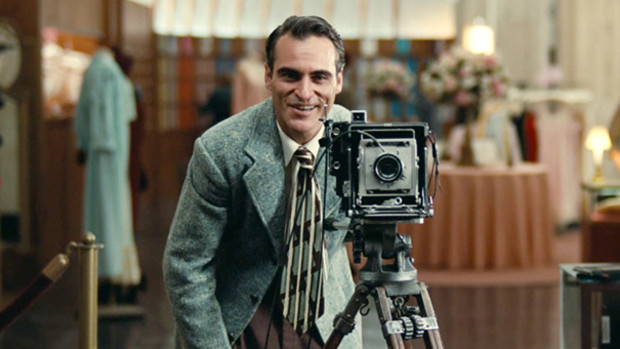
    Of course, magnetism is what draws devotees to a master, but Freddie Quell (Joaquin Phoenix) is a rabid, masterless animal whose primary concerns are sex and alcohol. In the Navy, as a department store photographer, working fields in California, Quell is an artist of unorthodox liquors, guzzling rocket fuel, paint thinner, mouthwash—everything but beer, whiskey, or wine, so long as he remains in a pleasant stupor. The men and women Quell works with are inexplicably drawn to Quell and his potions, surrendering sex and sense for the stuff in Freddie’s flask. That some people end up dead after drinking his liquor is of no greater consequence to him than a morning hangover, the realization that he can’t remember his evening. That a migrant worker dies because of Freddie’s mixture has him on the run, but fortune smiles upon him: he stows himself aboard a private yacht belonging to a wealthy author who agrees to take him on as a seaman so long as he produces more of “that wonderful potion.”

    The author in question is Lancaster Dodd (Phillip Seymour Hoffman), a man who claims that his books hold the key to humanity’s shedding its animaistic urges and ascending to a higher plane of being. He’s promised the world—and his growing group of followers—a sequel that will reveal more of what’s necessary. On the boat, he entertains guests by day and locks himself in the study at night, working on the book. Then he finds Freddie. Freddie with his potions. Freddie the animal. Freddie whose conversion to Dodd’s way of thinking would represent a major breakthrough for The Cause. Freddie who hasn’t felt at home, who hasn’t been purposed, since returning from the war. Lancaster Dodd offers Freddie Quell a home and a purpose. Of course he joins.

    Inevitably, this has repercussions neither party foresaw, though it’s probably worth questioning if Freddie thinks any of his actions through before undertaking them. Dodd has in Quell something of a Pit Bull, an animal who lashes out to protect his master. A man like that has his uses, but if the aim is to civilize the beast within Freddie, his boorish behavior isn’t helping. Dodd, staring into the jagged, broken crevasse of Quell’s face, must wonder if his new devotee hears his message, or if he merely pretends to, having no other place to go. Freddie, meanwhile, takes to the rituals and routines of The Cause like a tortured psychiatric patient, which, I would argue, he is. The film’s best sequences have Dodd and Quell seated across from one another, Dodd pestering Quell with a series of questions, statements, or tasks. His rules are strict. If Freddie makes an error, they begin again. Freddie makes many errors. Dodd’s relentless calm taunts him. Quell breaks down. Screams. Cries. Pours forth stories he’s never told anyone. Then Dodd asks if he’s a liar. They begin again. Sometimes Dodd’s son-in-law (Rami Malek) is in the room with him as an agent provocateur, theorizing about and insulting Freddie as he calmly tries to take this round of abuse. He’s often unable to sit through the first sentence, having already jumped to the conclusion. They begin again.

    The impenetrability of The Master, whatever the codified messages contained in the mostly un-preached-from books of The Cause stand for, are subterfuge for a narrative mostly concerned with the deeply intense relationship that quickly develops between Dodd and Quell, who find themselves wrestling—sometimes literally—with opponents they’ve grossly underestimated. This is most evident observing the behavior of Dodd, the man who wants to cure man of its animal impulse. The façade he’s built and strengthened, the movement he’s grown, the success he’s experienced, all that comes under fire as it becomes more and more clear that Freddie isn’t improving, that the methods of The Cause are inspiring little to no change him. The pressure this causes leads Dodd—who flawlessly presents himself as an erudite man of class and good standing on most nights—to blow-up at the timid followers who know more about Dodd’s Cause than he does, rebuking them more harshly than he does Freddie because, unlike Quell, they won’t fight back.

    Quell, either because he wants to ride this train as long as possible or because he really does see The Cause as a way to better himself, finds temptation everywhere. Despite the war and his behavior, women are drawn to him. There’s always a steady supply of alcohol, always a man who needs to be assaulted to protect Dodd’s interests. Dodd tries breaking Quell’s behavior through the endless repetition of question and task, often leading Freddie to bash his head against the wall. Peggy Dodd (Amy Adams)—Lancaster’s wife—takes a more direct approach as members of The Cause grow increasingly wary of him, threatening abandonment if he can’t stop drinking. He agrees, but, again, Freddie’s a liar. He can’t stop himself from drinking anymore than he can stop Dodd’s daughter (Ambyr Childers) from flirting with him. Both, after all, are methods of escape Freddie has experience with, that he knows will feel good, even if only for a little while.

    It won’t take much deep reading to see Peggy as the true driving force of The Cause, a woman who knows she’s married to a fraud and has every intention to continue perpetuating it. She drives Dodd to write, pushes him across country to promote his teachings, perceives the damage Freddie has caused them. Lancaster’s actions are not those of a man who is the master, but of a man who finds himself serving two taskmasters: his wife, and his mission to cure Freddie. One has to give. When he hugs Quell, congratulating him on finally passing examination, it is very much like the kiss Judas gave to Christ, simultaneously a knife in the back and an act for those around them left not bleeding. Really, the hug is meant to assuage Freddie Quell’s growing doubt and rage, but Dodd has made another critical underestimation of his pupil, not nearly the simpleton rube he seems.

    Plenty has been written about Paul Thomas Anderson’s decision to film The Master in 65mm, both in terms of how the format may have been wasted on a film that doesn’t spend much time outdoors, and how the increasingly rare process draws the viewer into the landscapes provided by Hoffman and Phoenix. The way a film is shot often rates as minutia, but here, I think is purpose. There’s an intensity between the characters that matches the scope of the screen, the two men struggling with their need and desire to conquer each other, the woman losing sight of the small empire she’s built. The triangle between the three is not unlike the relationships between characters in a D.H. Lawrence novel: there’s a sexual charge to the proceedings, but the men lack the vocabulary necessary to trigger any release. Anderson’s focus on interior space here also recalls Lawrence, making the brief interludes when the film opens to wide spaces—the ocean, the desert—all the more terrifying. As Freddie rides a motorcycle out to the vanishing point, leaving Lancaster Dodd and his family to observe him growing smaller and smaller in the distance, the silent space between the two men could suffocate them both.


    The Master. With Joaquin Phoenix (Freddie Quell), Phillip Seymour Hoffman (Lancaster Dodd), Amy Adams (Peggy Dodd), Laura Dern (Helen Sullivan), Ambyr Childers (Elizabeth Dodd), Jesse Plemons (Val Dodd), and Remi Malek (Clark). Directed by Paul Thomas Anderson from a screenplay by Anderson.
  • Movie Review: Moonrise Kingdom (2012)

    Movie Review: Moonrise Kingdom (2012)

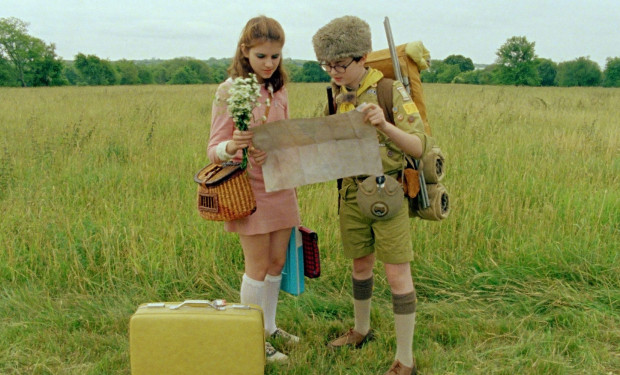
    essentialWes Anderson’s Moonrise Kingdom, like many of his films, functions as a nostalgist’s guide to childhood and the weightiness of romance. The difference here is that Anderson focuses on two children, children who, unlike Rushmore‘s Max Fisher, are actually children. They don’t approach love in Fisher’s clinical, precise way, nor do they regard life as a bitter procession of tragic events, as do the man-children of The Life AquaticThe Royal Tenenbaums, and The Darjeeling Limited. Their way is more innocent, one ignorant of societal norm and responsibility, but still couched in the grim truths of reality. Considering how movies now try to appeal to children through the liberal use of rainbow wigs and catchphrases, this attitude, and the intelligence of Moonrise Kingdom, seems reliquary, lost to the past.

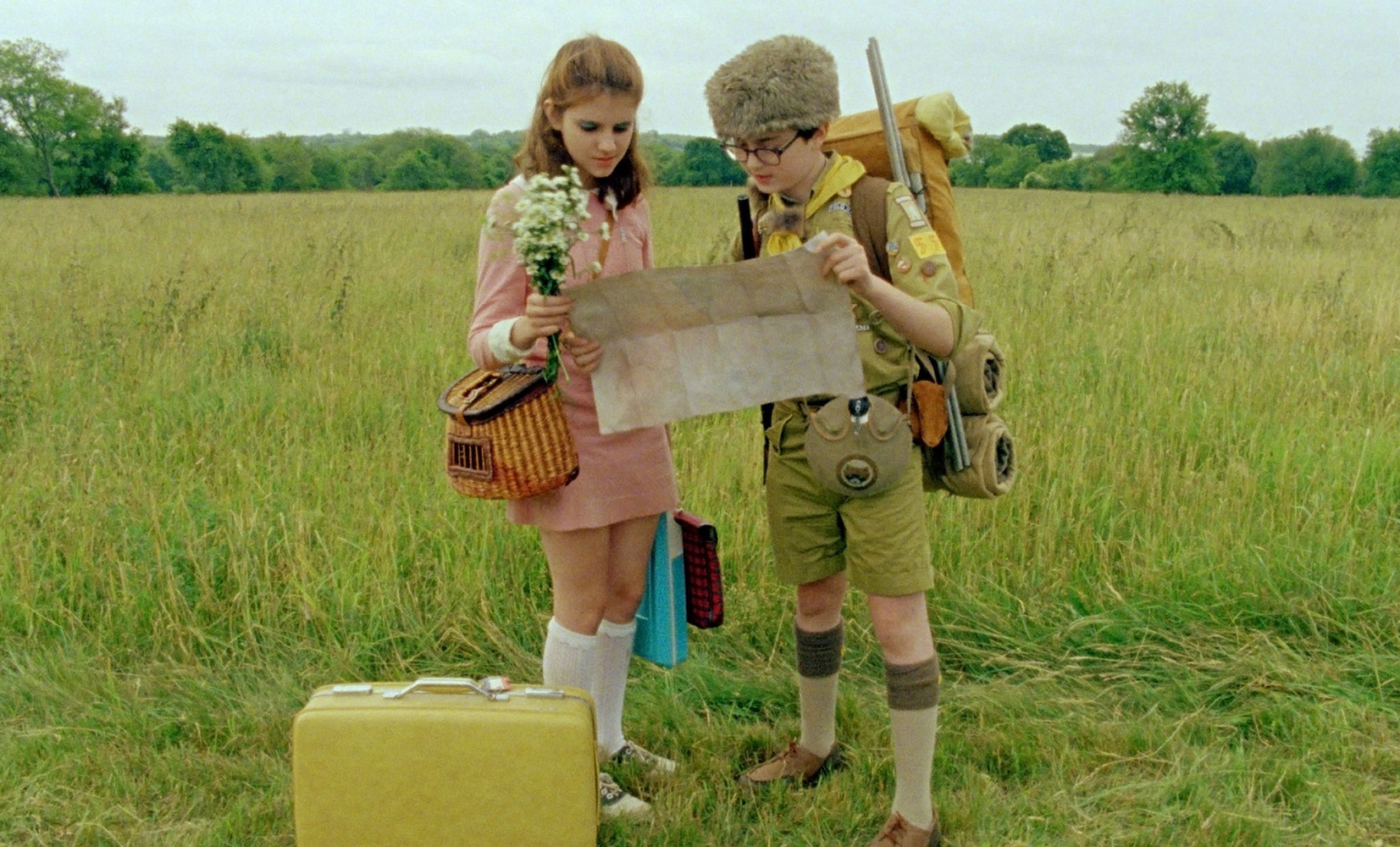
    In the summer of 1965, Sam (Jared Gilman) and Suzy (Kora Hayward) run away together, into the secluded New England wilderness of New Penzance, an island Suzy and her family live on which is only accessible by plane or ferry. The pair spent an entire year plotting their escape, beginning with a chance meeting between the two while performing in a school play, and continuing through a series of business-like correspondences. Sam is an orphan and a Khaki Scout. Suzy is the record- and book-collecting daughter of wealthy parents who are strangers to each other. Same brings with him camping equipment and the ability to read maps. Suzy has her records, her books, her binoculars, and her cat. They are decidedly ill-prepared for the coming journey.

    Their plot discovered, Sam and Suzy’s flight brings together the disparate members of the small community. Walt (Bill Murray) and Laura Bishop (Frances McDormand)—Suzy’s parents—Captain Sharp (Bruce Willis)—the island’s lone police officer—and Scout Master Ward (Edward Norton)—the meticulous leader of New Penzance’s pack of Khaki Scouts—spread out and go looking for the kids. The remaining Khaki Scouts, having long considered Sam a weirdo, hunt for him like he’s an animal they want to mount on the treehouse wall. When they’re found, it’s in a beachfront kingdom they’ve made for themselves. It’s just them, the cat, her records and books, a campfire, and the moon. It’s a perfect kingdom—an idyllic place right out of the books Suzy carries—but, like all utopias, Sam and Suzy’s piece of land is doomed from the start.

    Walt and Laura Bishop, ever the reactionary, mostly absent parents, expressly forbid their daughter from seeing that strange boy again. Sam’s foster parents decided they can’t handle the responsibility anymore, so Captain Sharp takes him in while Social Services (here represented by Tilda Swinton) flies to the island so Sam can be shipped off to a juvenile refuge. The Khaki Scouts, meanwhile, having learned a valuable lesson about friendship and impressed with Sam’s resiliency  decide to spring the couple and get them to the mainland, that wild, unspoiled stretch of earth to large and secretive for even the most obsessive parents and public servants to uncover them.

    That the relationship between Sam and Suzy never wears thin is Moonrise Kingdom‘s most considerable accomplishment. The threat of precociousness looms large over every story about a couple of crazy kids, but Anderson manages to exercise restraint, stopping just short of letting his children run amok in the woods. Again, there’s something to be said here about the difference between Anderson and Roman Coppola’s script in comparison that of any other recent children’s entertainment: say what you will about Anderson’s appreciation for and liberal application of whimsy and hipster quirk, but his characters don’t abandon their parents so they can gulp soda, gobble candy, and have endless and endlessly merchandisable fun. Nobody sits Suzy down for some big, lame speech about morals, and halfway through the one he delivers to Sam, Captain Sharp realizes how stupid, futile, and condescending he’s being and pours out a little beer for the sad kid whose dreams have been wrecked. The adults at the corners of this film are more than vacuous governors of joy. They bring their own problems to the island. They’re as ill-prepared to face them as their runaways.

    The most obvious problem is that Laura is cheating on Walt with Captain Sharp. Beneath the unhappiness of this particular damaged relationship, there’s a subcontinent of grief. The Bishops, of course, remain together for their children. Captain Sharp, living alone in a trailer on the island, is by no means a bad person. Neither, for that matter, is Laura. He is driven to her by loneliness, she to him because he represents something wholly different—and thus more exciting—than the family she knows. Theirs is a relationship running parallel to Sam and Suzy’s. Where the Bishops would seek to end it, Sharp comes to see himself in the orphan, seeking a way to keep him out of the system.

    The outlier here is Scout Master Ward. As tempting as it is to lump him in with Anderson’s stable of man-children, few of his characters live as meticulously or selflessly. He, like many adults, is oblivious to the inner-workings of the children he looks after. When he realizes this, he becomes Moonrise Kingdom‘s most vulnerable character. He considers himself a failed scout master when Sam runs away, is depressed when Sam tenders his resignation from the troop, and is largely helpless before Social Services. He begins the film as a man as well-manicured as any number of Anderson’s dollhouse sets. Like New Penzance, the Belafonte, Rushmore, and the Darjeeling Limited, Ward’s put-togetherness is a facade, something that’s beginning to crack and fissure.

    Moonrise Kingdom is Anderson’s eighth film, and hardly the first to deal with dysfunction and longing. He’s no chameleon—even the claymation of The Fantastic Mr. Fox looked, felt, and sounded like something distinctly of his brand—but Anderson continues finding subtle ways to express his themes differently. Here, it’s the intersection of Sam and Suzy’s dream with the reality of the adults who watch over them. The lives led by the Bishops, Captain Sharp, and Scout Master Ward are fractured and sometimes terrible. However well they think they’re hiding this, however much they assume their children remain oblivious, the two understand the problems of the real world, perhaps better than their wards. That the unknown holds so much potential is why they run away. But potential is often not realized, and is rarely perfect. Their utopia, the Moonrise Kingdom, lies at the edge of the sea. Storm clouds are gathering. Look at their empire. How easily the ocean could sweep it away.


    Moonrise Kingdom. With Jared Gilman (Sam), Kara Hayward (Suzy), Bruce Willis (Captain Sharp), Edward Norton (Scout Master Ward), Bill Murray (Walt Bishop), Frances McDormand (Laura Bishop), Tilda Swinton (Social Services), Jason Schwartzman (Cousin Ben), and Harvey Keitel (Commander Pierce). Directed by Wes Anderson from a screenplay by Anderson and Roman Coppola.

  • Best Worst Movie, or Worst Movie? — Zombie Strippers (2008)

    Best Worst Movie, or Worst Movie? — Zombie Strippers (2008)

    Cultish devotees of film often celebrate failure, box office, critical, or otherwise. By designating awards to the year’s worst movies, organizing midnight screenings of a film on the fringe, and writing endlessly about one flop or another, bad movies have a way of sticking around well beyond their typical cultural sell-by date. The phrase “so bad it’s good” is often ascribed to these movies when, in a pre-Internet, pre-Mystery Science Theatre 3000 world, they used to be considered so bad, they’re virtually forgotten. In Best Worst Movie, or Worst Movie? Fear of a Ghost Planet takes a good, hard look at the supposed jewels hiding in a cinematic junk heap. This week, it’s 2008’s strippers-and-zombies epic, Zombie Strippers.

    In 2008, as a means of introducing a decidedly NSFW review of the straight-to-DVD breasts-and-gore-fest Zombie Strippers, I wrote that I had never visited a strip club. A weird boast, but something that remains true four years later. My impression of the typical strip club is still informed by what I’ve seen in movies and what I’ve heard from people who have been. In my mind, they’re a strange mixture of Las Vegas glitz and Detroit misery, over-the-top routines and under-the-table transactions, beautiful women bearing it all while also bearing scars. Zombie Strippers presents a world wholly unlike the one I believe in, a world where the only desperation in the job is that it’s been made illegal by a long-reigning Bush/Cheney oligarchy, the only desperate people behind the club’s closed doors the men desperate to get their rocks off. This being a movie starring Jenna Jameson, they do just that. Then they’re eaten.

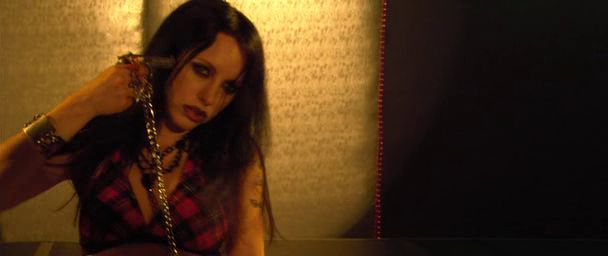
    This is the movie that launched dozens of hopeful Strippers vs. _______ films into the straight-to-DVD sea, and is, in most ways, the only one worth a cursory glance. Beyond Jameson—who plays, appropriately enough, the lead stripper-turned-zombie-stripper—Zombie Strippers functions as an introductory class in stunt casting. Blink and you’ll miss Tito Ortiz as the club’s cowardly bouncer. Stay long enough, and you’ll see Robert Englund in one of his meatiest non-Nightmare roles, the sleazy proprietor of Club Rhinoceros who offers up “face dances” to his customers, leering at the dismay of his dancers, a cadre of women cast as if director Jay Lee was trying to complete a Stereotypical Stripper BINGO card. Vying for the sliver of spotlight that isn’t Jameson’s are a goth (Roxy Saint), Jameson’s rival (Shamron Moore), and a bubbly Christian girl (Jennifer Holland), new to the city but determined to make enough money to keep up with the bills for grandma’s colostomy.

    Since Jenna Jameson’s character is the first to be turned into a zombie, it’s Holland’s Jessy whom the film comes to rest upon. When it turns out that being an undead, rotting stripper results in more turned heads and flashed cash, she’s left in a pickle more typical of Ugly Duckling teen romances: submit to peer pressure and join up with the gaggle of flesh-eaters, or be herself, lose everything, and end up mid-afternoon lunch. Given her cornhusking ways, aww shucks accent, and her devotion to Jesus Christ, what she ultimately decides shouldn’t be hard to figure out. The rest of the strippers aren’t nearly as levelheaded. Once the guys in the club go nuts for Jameson and Saint’s living dead girl routine—which isn’t a world of difference from the 15 minutes of stripping Zombie Strippers featured before anybody lost a limb—the rest of the strippers line up and ask to be bitten.

    Wondering why the women zombies can strip while the male ones moan and shamble? That’s just the first instance of Zombie Strippers trying its hardest to have and eat as much cake as possible. Early, a scientist explains that the zombie virus remains pure in women and goes bad in men—reanimated women soldiers come back with the strength and ability of ten highly skilled operatives, while reanimated women shuffle around with their arms outstretched. So a good stripper becomes a super stripper when bitten, twirling around the pole like a tornado while the bros in the club make it rain. If I were to die tomorrow, the zombified stripping in this movie would likely go down as the least erotic thing I’ve seen in a movie. The routines of the live strippers here rate a close second.

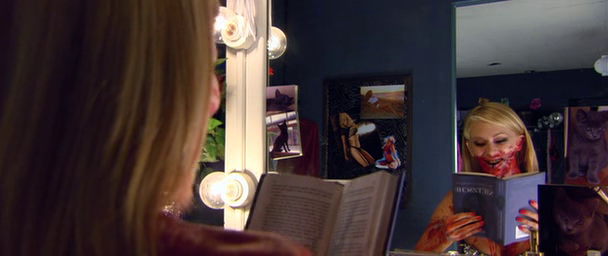
    Famously—if anything in Zombie Strippers remains famous four years later—the inspiration for this film comes from an existentialist play. Existentialism’s fingerprints are everywhere, from the name of the town (Sartre) to the hardcover copy of Thus Spoke Zarathustra Jameson reads (“This really, really makes sense now,” she claims) to and the identity crises suffered by the strippers who still number among the living, but the film is only playing at being smart. In terms of depth, Zombie Strippers‘ treatment of existentialist thought runs as shallow as its criticisms of the Bush presidency, a compendium of bumper-sticker sloganeering laid out on a one-page pamphlet dropped onto a group of unsuspecting shoppers at a mall by an anarchist collective trying to hide the gigantic cups of Jamba Juice occupying whatever hand isn’t striking down the man.

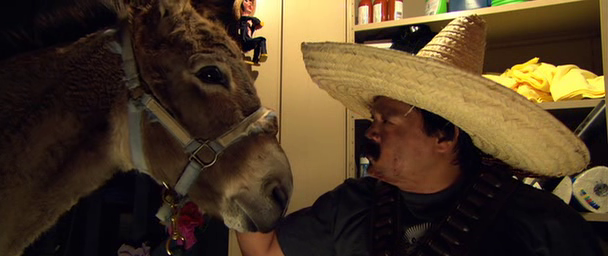
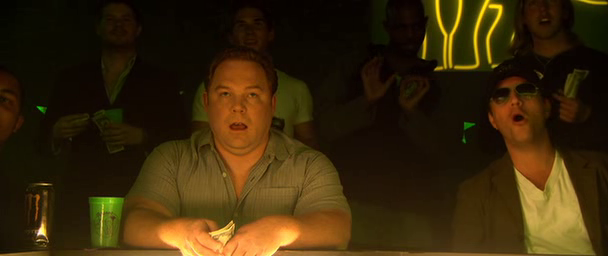
    The fact is, Zombie Strippers is as bad—and, at times, as bigoted—as the machine it purports to rage against. The closest this film comes to making a solid argument is when Holland’s character goes up on stage for the first time and tearfully enters her routine. The men surrounding the stage, pumping their fists and waving dollar bills in the air, moan and gnash their teeth like a zombie horde. Men are pigs! the movie lazily points out, but when Robert Englund holds his Mexican janitor’s hand up to the poor guy’s face and asks what color it is, when that janitor is naming his bullets after Mexican heroes before calling the last two “Cinco De Mayo” and “guacamole” because the screenwriters can’t use Wikipedia, when the zombie super-strippers, rotting on stage, take to insulting each other’s hair and cellulite, when the club’s black DJ approaches a a zombified stripper and, in an effort to subdue her, uses a pimp-slap, the marketing copy of this film being some subversive political and social thought piece goes out the window, leaving Zombie Strippers with one leg to stand on: its special effects.

    Those, at times, are impressive. Beyond their purpose, what often separates SyFy Original Movies from a proper release in theatres or on a VOD platform is that the special effects fail to live up to the promise of the week’s exotic, too-expensive-to-be-properly-realized title. The zombie make-up here is often pretty good, the best fleshwalker being the unfortunate patron who has his head pried apart like a bag of chips. Chin distended and tongue lolling around, it’s the closest thing to horror in Zombie Strippers, horror not being the film’s aim, but nevertheless an effective image. The work done on Jameson and the rest of the strippers once again suggests that Jay Lee wanted something that’d generate buzz—Jenna Jameson, zombie!—but not at the risk of failing to titillate those who popped the DVD in just wanting to see zombies strip. That goes out the window in the film’s final firefight, as Lee uses every hokey CGI trick at his disposal to crush zombie heads like watermelons, blow their heads up, and have Jameson fire billiard balls howitzer-like from her vagina before getting torn apart, limb by limb. The only things keeping this from SyFy’s Saturday line-up? Nudity, and Robert Englund. That’s an incredibly thin line.

    I’ve yet to see anything anointing Zombie Strippers the dubious honorarium of being “so bad it’s good,” but I’ve seen a lot of processed trash in the years following Grindhouse, and this example still stands out, made more noticeable by movie like this year’s Strippers vs. Werewolves and the dozen-or-so uninspired zombie movies that rise every year to stalk the OnDemand section of your local cable operator. It’s easy to see why so many get made: this is a fairly lavish production in comparison to most, but it’s still cheap enough to score a profit on even the most modest return, the big set-pieces looking like a bunch of kids playing a point-and-click shooter at the local arcade. The big, egregious sin here is dressing up a story about strippers and the zombies that bite them as something more than a 90-minute buffet of breasts and blood. Only those with the most sophomoric tastes will find anything here worth remembering. I imagine that sad bastard before his television, gnashing his teeth and pumping his fist. What he would give to be eaten alive by one of these women. No judgement here. We all have immature fantasies about the first time. It’s growing up that matters, and in that regard, Zombie Strippers has aged about as fine as the prospect of a face dance from one of its stars.

    Best Worst Movie, or Worst Movie: Worst Movie

    Zombie Strippers. Directed by Jay Lee. With Jenna Jameson (Kat), Robert Englund (Ian), Jennifer Holland (Jessy), and Roxy Saint (Lillith). Released April 18, 2008, by Stage 6 Films.

  • The World Series Is a Terrible Burden

    The World Series Is a Terrible Burden

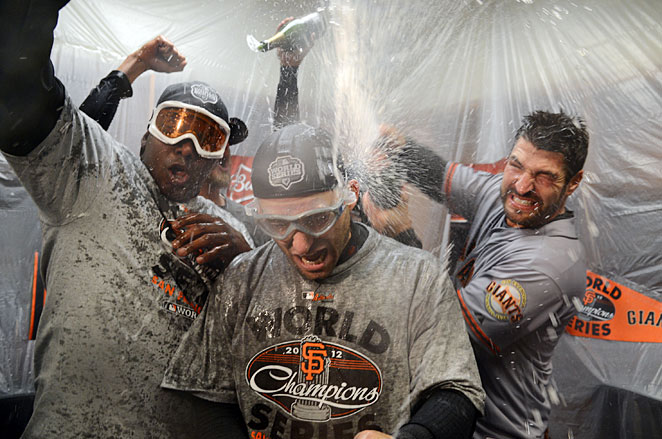
    I fell asleep last night at 11:00 p.m., Game 4 of the World Series locked in a 3-3 tie. I love baseball. I love the Detroit Tigers even more. But somethings, believe it or not, are more important than sport, more important than rooting for a team. I had a job to report to in the morning. I had to greet the day at 5:00 a.m., something I hadn’t done in years. There are few things certain in baseball, but there were two options open as my head hit the pillow: either my beloved Tigers pull one off and extend the series to Game 5 and another Justin Verlander outing, or they don’t. They didn’t—a small mercy, ending a postseason that started so promisingly exciting before descending into a madness of blowouts, sweeps, and shutouts, cold bats and advantageous pitchers—and amidst the Tigers’ frustration and the Giants’ joy, soon there’ll be an article about how this year’s World Series was the lowest rated such event of all time.

    After Game 1, a surprising 8-3 blowout that, in damaging the perception of Justin Verlander as an unhittable postseason juggernaut and promoting Pablo Sandoval to the position of unstoppable hitting machine, likely sealed the Tigers’ fate, one such article appeared on Sports Illustrated‘s website. It was small, a blurb, really, but then, all articles about trivial things like ratings are. The article has since been edited, but at the time of its initial release, it noted that the record established by 2012’s Game 1—The Lowest Rated Game 1 of All Time—broke the record established in 2011, which broke the record established in 2010, and so on. Tigers/Giants, Cardinals/Rangers, Giants/Rangers; what’s implied by this annual expose on the Fall Classic’s dwindling numbers is that largely nationally unknown teams end up clashing for the championship—an unexpectedly hot wild card team,the favorite sons of a town lost in “flyover country,” the titans of a city whose glory days have long-since past. Major League Baseball is often accused of rooting for teams like the New York Yankees (“east coast bias” is a common theme dominating the sports talk radio stations west of the coast), and even if it’s not true (there’s no real way for Major League Baseball to satisfy a conspiracy theorist), the logic of such theories is remarkably sound: with a team like New York in the World Series, not only do you secure a large share of the largest television market in the world, but you have, in the most important series of the year, a team the common fan likes or detests, one it’d like to see triumph or parish. Either way, so long as they’re watching.

    The New York Yankees are a team that needs no introduction. Detroit and San Francisco aren’t exactly small markets, but the casual fan may not be able to name any Giants beyond Buster Posey, Kung-Fu Panda, and that bearded guy from last year’s Taco Bell commercials. The Tigers aren’t much better. They were a team so defined by the production of Verlander, newly-acquired Prince Fielder, and triple crown winner Miguel Cabrera that their efforts were regularly described as being put together by a coalition of “stars and scrubs.” The burden of the World Series is to craft and sell an effective narrative to a nation that spends 162 games uninterested in the two teams battling for the crown. Without a gigantic team—your Yankees, your Dodgers, your Phillies, your Cubs (yeah, right)—this is a terrible burden, a losing proposition. It’s little wonder each year sees the shattering of an ignoble record that was just shattered the year prior. Watching the numbers dwindle isn’t exactly like chasing Hank Aaron.

    Without the easy storyline provided by baseball’s monoliths (“David vs. Goliath” or “Hogan vs. Andre,” usually), the buzzword going into the World Series is usually “momentum.” Depending on which sportscasters you listen to and what writers you read, either the Giants had it, or the Tigers, with arguments for and against either team being fairly compelling despite the idea of “momentum” meaning absolutely nothing at the beginning of a series, something rendered hokey and boring by the time the first pitch crosses the plate during Game 1. The Detroit Tigers swept the New York Yankees in the American League Championship Series, often making the richest, longest-tenured team in the postseason look like a hapless single-A affiliate. The San Francisco Giants rebounded from an 0-2 start in the NLCS against the St. Louis Cardinals to advance to the World Series, the team often described as “riding a karmic wave” due to their reliance upon previous playoff non-entities like Barry Zito and Pablo Sandoval, the bullpen heroics of an otherwise struggling Tim Lincecum, and the searing bat of Marco Scutero, a late-season pickup turned postseason mascot thanks to his production and his withstanding a questionable slide by Cardinals slugger Matt Holiday.

    Despite winning the World Series in 2010, the Giants, entering this year’s Fall Classic, were a team of nationally unknown quantities. Many of their heroes from 2010 are now bench and bullpen pieces. Sandoval, the hero of Game 1, was a rotund afterthought two years ago. Brian Wilson, the quirkiest character in the history of sports’ quirkiest position, watched his team from the dugout—the world’s beardiest cheerleader after undergoing Tommy Johns surgery in April. Melky Cabrera, the Giants outfielder who provided much of the team’s offensive spark through the first half of the season, watches from home, exiled from San Francisco after serving a 50-game suspension for the use of P.E.D.s and the unearthing of a conspiracy to undermine the league’s testing system. This Giants team was a resilient one, just as they’d been billed. Resiliency, however, is only a selling point when the team is reeling off come-from-behind victories or facing a team that’s easy to beat. Were the 2012 San Francisco Giants paired with the 2011 chicken-and-beer Red Sox, a nation would have cheered for its scrappy, orange-and-black underdogs.

    Despite the appearances given by an 8-1 exclamation point at the end of a four game sweep against the Yankees—not to mention the fact that the Tigers hadn’t trailed a game in five straight contests, starting with Justin Verlander’s dramatic Game 5 shutout of the Oakland Athletics in the ALDS—the Tigers were anything but a herculean team. For the majority of the season, they were an underachieving franchise, a team that boasted the best pitcher, the best hitter, and the most valuable free agent acquisition, but who entered the regular season’s final month locked in struggle with the Chicago White Sox. If Detroit had anything beyond its triumvirate of stars going when the postseason started, it was their starting rotation. Beyond Verlander, Max Scherzer, Doug Fister, and Annibal Sanchez provided enviable rotation depth. The four, combined, were a Voltron capable of blistering fastballs and knee-buckling breaking pitches. There was little hint of weakness—Scherzer suffered from a strained deltoid, Verlander occasionally gave up a first inning home run, Fister had a weak first half, and Sanchez took time to adjust to his new league, team, catchers, and pitching coach, but came on strong after a few rocky starts—beyond the Tigers’ bullpen. Overcoming a 2-0 Detroit lead, with that staff, in the postseason, would be more like overcoming a 4-0 lead.

    That was the narrative. That was, in addition to the promise of a free taco should anybody steal a base, what was used as the hook to this first time World Series match-up. Sports, however, rarely live up to a pre-ordained narrative. Justin Verlander was lit up in Game 1, giving up three home runs and exiting the game prematurely. Two of those home runs came against Sandoval, who etched a place in baseball history by blasting a third home run, joining the likes of Babe Ruth, Reggie Jackson, and Albert Pujols as the only men in the history of the World Series to hit three round-trippers in a game. By the time Sandoval’s bat was on its way to Cooperstown, the Giants were on their way to a World Series title.

    Beyond Sandoval, though, this World Series played in a way that’s just anemic to television ratings: small. Even Sandoval’s second home run during Game 1 was preceded by the sort of small, peculiar play that seemed to vex the tigers, as Angel Pagan hit a ground ball that struck third base and rolled lazily onto the edge of the left field grass. When Barry Zito, of all people, struck for an RBI single, a potential play at the plate was spoiled by Delmon Young turfing the ball, the Tigers’ ALCS hero reduced to a clumsy Little Leaguer on a routine throw.

    Beyond Sandoval’s display of home run hitting, the series was devoid of highlights until Game 4. Games 1, 2, and 3 featured sparking defensive play by the Giants and dazzling pitching from both teams. Doug Fister, in particular, put in a particularly gutty performance during Game 2, taking a line drive to the head but remaining in the game, allowing just one run in six innings. Didn’t matter. San Fransisco’s pitching was hotter than Detroit’s. Their hitters out performed Detroit’s when the situation required them to do so. Fister’s performance? Sanchez’s? Scherzer’s? Spoiled. The Tigers struck out an astonishing 33% of the time they came to the plate, actually a little better than the Giant’s 37%, but however ridiculous the idea of a “kharmic wave” seems, the Giants were riding something during their sweep of the Tigers. How else to explain a bunt dying just before reaching the foul ground, a rare Austin Jackson error in centerfield, Verlander’s futility on the mound, the spectacular grabs that robbed Cabrera and Fielder of sharp hits when the Tigers were looking to rally from one blow or another?
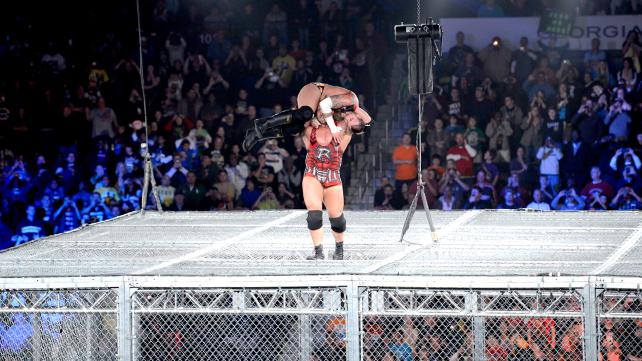
    But these aren’t things that sell the World Series. The slow motion camera and the cameraman who runs in a semi-crouch down the third-base line after a batter on a home run trot were not invented for games decided by bunts, pop-ups, and titan batters looking at 89 mile-per-hour fastballs. Joe Buck and Tim McCarver—more comfortable gabbing with Erin Andrews and reading trite PowerPoint presentations than watching the game—are not men given to nuance, nor is FOX the kind of network that accepts baseball as baseball. The World Series will hopefully never pause during the seventh inning stretch for a fifteen minute sound and light show promoting the year’s biggest concert, the world’s best tire, the summer’s most expensive movie, or the world’s most mediocre beer, or the season’s new TV shows but that doesn’t mean that FOX couldn’t find clever ways of slipping its stars into high profile slots—New Girl star Zooey Deschanel and The X-Factor judge Demi Lovoto singing the national anthem, Lovoto’s rendition begging the question of her expertise—or product placement at every turn. The game’s first pitch was sponsored by Budweiser. Every pitching change was brought to you by Jeanie-O’s campaign to switch America to turkey bacon. Once Angel Pagan stole a base, Taco Bell’s director of marketing was interviewed during play.

    “We’ll try not to make this a commercial,” the FOX announcer said, as though Taco Bell’s director of marketing had anything to say about baseball beyond that it’d cost his company a bunch of free tacos. “America thanks you.”

    Perhaps America did. After all, Sandoval’s homers aside, this was a World Series that decidedly did not live up to the mantle of being the Fall Classic. Something needed to fill the air between strikeouts, the long pauses between stunning plays, the awkward silence of Comerica Park. It’s the word “classic” that serves as the World Series’ terrible burden, the albatross around its neck. Even as Miguel Cabrera’s Game 4 home run drifted and drifted and drifted until it fell beyond the wall, the 2012 World Series had an air of finality to it, of anticlimax. That’s the way sports are sometimes, why it’s ridiculous to attempt foisting a pre-packaged narrative on it. Scripted comedy? Reality singing competitions? Those are easy. Until the World Series returns to break its record next year, New Girl and The X-Factor will air at their regularly scheduled times. Enjoy them with your free Doritos Locos Taco. Be sure to thank Angel Pagan, America.

  • Wrestling Worth Watching 10/22/12 – 10/28/12

    Wrestling Worth Watching 10/22/12 – 10/28/12

    Welcome to the new, hopefully improved edition of Wrestling Worth Watching. Back when Fear of a Ghost Planet started, this post was a way of looking at everything that happened in the world of televised wrestling that was good, from Chris Jericho trolling the crowd to Brodus Clay debuting as a funk-loving tubbo from outer space to a decent match on some indie fed’s YouTube channel. It was an ambitious project, and one that ultimately failed. In 2012, there is just too much wrestling out there to keep track of it all as it happens. So I’ll be forward and honest from the start of this new project: I don’t watch Impact Wrestling, as they don’t make an honest effort to make their shows available beyond airdate, and Ring of Honor doesn’t air where I live, though I’ll try to catch it whenever possible. These posts may seem like they’re dominated by the WWE, but that’s the reality of nearly every wrestling fan’s situation: the promotion who airs the most free wrestling is the one that gets watched the most. If you’d like to chime in with matches from elsewhere that should be noted, hit me up in the comments section.
    Monday Night Raw (8/22/12)

    Team Rhodes Scholars vs. Rey Mysterio & Sin Cara: For a month now, the WWE has done everything in its power to revitalize its tag team division, waking the dead by calling a time-tested audible in the long-running Daniel Bryan/Kane feud by pairing the two up and giving them the Tag Team Titles, running an angle where a rival team formed as a result of the champions’ dysfunction, then having a month-long tournament featuring several new teams. The only team that’s broken up as a result of not winning the tournament was the one pairing Kofi Kingston and R-Truth, the previous champions. Now there’s a power tag team (Primetime Players), a team of brothers (The Usos), a high-flying tag team (Justin Gabriel and Tyson Kidd) and these two teams, the most popular/hated and established of the bunch. Theirs was the best tag team match of the week, setting up the long-anticipated slight-letdown of a match between the Rhodes Scholars (I think putting “Team” in front of everything has been the worst part of the division’s rebuild. Team is implied!) and Team Hell No (the exception to the rule, as “team” is meant pseudo-ironically, though “Team Friendship” will forever be the better name). The only reason this wasn’t the best match on Raw is because Dolph Ziggler and Daniel Bryan would later take the floor for 15 minutes.

    Daniel Bryan vs. Dolph Ziggler: For a long time, the only person the Money in the Bank briefcase turned into a star was Edge, and really all his surprising title victory over John Cena did was solidify his place as a top-tier talent. The second person to benefit from the odd bump the briefcase provides was C.M. Punk, though it took two tries—and an incredibly good feud against Jeff Hardy—to get it right. Everybody else either wasn’t ready, or wasn’t given something beyond that moment of glory, but in Edge and Punk, the briefcase has found purpose: either a crafty, dickish heel cashes it in and proves himself, or a mawkish good guy cashes it in and quickly turns evil. Dolph Ziggler and Daniel Bryan are the next generation of men who’ve somehow taken that gaudy briefcase and turned it into a platform from which better careers are launched, Ziggler by taking Edge’s role, and Bryan by taking to Punk’s. While both remain a title reign away from true greatness, their match Monday on Raw was a gift from the ghost of WWE’s future, a thrilling contest teasing at the possibilities a full-blown rivalry between the two contain. The point of this was to reestablish the dysfunction between Bryan and his tag team partner Kane, and while that mission was accomplished and the work those two have done together has been very good, matches like this mean I can’t wait much longer to see Bryan on his own again, a mean little man with a nasty beard and a worse submission hold.

    C.M. Punk vs. Sheamus: Though they didn’t mention it, there was a nice synergy to this contest, the 30 or so men around the ring not only serving as flesh-and-blood metaphor for the inescapability of the Hell In a Cell structure, but as closure to the mini-issue between Punk and Sheamus that started at the Raw in Chicago, when Punk bolted on a slated title vs. title match to eat at The Wiener’s Circle and hang with Paul Heyman. I haven’t seen every Lumberjack Match ever, but I feel pretty confident in claiming this as one of the best. The match is a throwback to a time when a sheer mass of humanity was enough to pique a crowd’s interest, and lately has been relegated to the typical blow-off match between Divas, the lumberjill match, if you will. Anymore, they’re confusing affairs, the lumberjacks rarely doing their job—containing the action in the ring—and instead clubbering on any poor bastard who ends up on the floor. So it was a sigh of relief when C.M. Punk landed on the floor, in a sea of humanity, and was merely tossed back into the ring. And it was surprisingly O.K. when Sheamus was thrown out there and got beat up, because he landed amongst a crowd of heels and wound up brawling back. Barroom brawls are an environment Sheamus thrives in, and lumberjack matches are a situation where crafty bad guys have to be their most cunning. C.M. Punk was just that, Sheamus was in his element, and the result was the most satisfying Raw main event in some time. The stuff with Ryback I covered last week, but having 30 men around the ring, overkill in any other match, was worthwhile just to see them split when the dude’s music hit.

    WWE Main Event (8/24/12)

    Dolph Ziggler vs. Ryback: There’s really no better opponent for Ryback than Dolph Ziggler, a wrestler who is, in every aspect, the second coming of “Mr. Perfect” Curt Hennig. If you’ve ever seen Hennig pinball around the ring for a larger, more muscular opponent, then you know what I’m talking about. Ryback’s an act only the most cynical wrestling fan doesn’t like, a monster in the Goldberg fashion who steamrolls through opponents with a variety of ridiculous power moves and stiff-looking strikes. Ziggler flopped around the ring for Ryback’s routine like a mad-man, putting over the legitimate danger presented by the monster while also showing that there’d be no escape for C.M. Punk on Sunday, even without the presence of a gigantic steal cage. The match did its job very well without tanking Ziggler. Credit for that goes to the length of the match—thus far the longest match of Ryback’s run—and to The Miz’s commentary, which pointed out that, against Ryback, everybody is off their game.

    WWE Hell In A Cell (8/28/12)

    The Miz vs. Kofi Kingston: The third match between these two in as many weeks, and, in many ways, the best of the bunch. Hard to believe that their issue began when Larry King’s wife threw a cup of water in The Miz’s face, but I’ve come away from their series as a fan of both men, when before I was ambivalent towards both of them. The opening two minutes or so were great, Miz and Kingston both fighting and failing to apply their finishing maneuvers, the fact that spots from previous matches evolved and became something else was a very nice touch, and the finishing struggle between the two, with Miz keeping the full nelson he uses in the Skull-Crushing Finale on as the two rolled to the ring and got back up to their feet, was tremendously exciting. Lately, Kofi’s Trouble in Paradise kick has been a devastating-looking, come-from-nowhere move akin to Shawn Michael’s Sweet Chin Music. That’s worked a lot better than the old set-up, where Kofi stands in the corner and tries to pump the crowd for it, much like Michaels did for his kick. And while you wouldn’t know it from the anemic crowd, the last three or four minutes of the match, from when Miz started targeting Kofi’s leg with a weird-looking, over-the-shoulder knee-breaker to the finish, was tremendously compelling stuff. Knee braces and leg casts are things the heel usually removes on an injured opponent, but they took things a step further here, with Miz injuring Kofi’s leg mid-match and stripping his boot and knee pad to further exploit the injury. I loved everything about it, even The Miz’s awkward execution of the half-crab.

    The Big Show vs. Sheamus: For me, this was the match of the week, but I’m a big fan of Hoss vs. Hoss battles, something they featured plenty during the championship run of Mark Henry, and not enough during Sheamus’s time with the belt. Built up as a showdown between two knockout blows—The Big Show’s Knockout Punch and Sheamus’s Brogue Kick—the story of this contest wound up being much more complex, with Sheamus withstanding a number of Big Show’s past and present finishing moves, including the giant punch, and Big Show kicking out of the Brogue Kick, becoming the first man to do so in the process. The crowd—dead most of the evening—came alive when Sheamus picked up The Big Show and dropped him with a perfect-looking White Noise, and for good reason: however good Sheamus’s matches as champion have been (and however much he’s been built as the best champ in 10 years), they’ve lacked effective spectacle. The only other guy on the roster who has picked a guy like Show up on his shoulders is John Cena, but you expect that from him. This was built as blow vs. blow, a straight brawl, but that maneuver, more than Sheamus’ triumph over Daniel Bryan at WrestleMania, will be the defining moment of his championship reign. The finish, which saw Show sidestep a second Brogue Kick while throwing a K.O. Punch the champion’s way, was the best moment of the week, two semi-trucks playing chicken in the rain, only one driving away without jackknifing. This one wasn’t pretty, but boy was it effective.

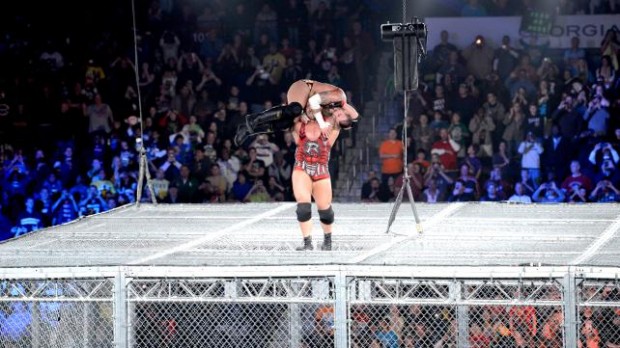
    C.M. Punk vs. Ryback: The most controversial match of the year, as even anti-Ryback partisans realized the risk of this match: Ryback loses the “wrong way,” and the WWE is out one potential game-changing superstar. Popular wrestling journalist (a three-word oxymoron, if ever there was one) Dave Meltzer says that he read through dozens of bad-to-middling ideas for the finish of this match, and that all of them were better than the one chosen here. Whatever. In 1998, Ryback’s ancestor Bill Goldberg defeated Hulk Hogan in the Georgia Dome in Atlanta, ushering in what many felt was a new era in WCW. He was undefeated. He was slightly green. But he was at the apex of his popularity and ready for the championship. At Starrcade that year, he was defeated by Kevin Nash, who was aided by long-time running buddy Scott Hall, who used a taser to put “Da Man” (Bobby Heenan’s spelling, not mine) down for the count. It was an awful finish, an anti-climax that didn’t make a whole lot of sense (Hall and Nash were feuding, Goldberg was on the verge of reaching Hogan-esque levels of global fame), and Goldberg—and WCW—never quite recovered. The finish to the Hell in a Cell match between Punk and Ryback is similar in a way—Ryback was screwed over—but the circumstances are different. It doesn’t matter if the “GOLDBERG” chants that follow Ryback are now affectionate, if the same people who chant that stop to join the rest of the crowd in Ryback’s WWE-mandated “FEED ME MORE” chant, Ryback was not ready for the WWE Championship. To my recollection—hardly a useful tool, but one that probably feeds the WWE machine better than a photographic memory of every Ryback match—the man hadn’t bumped for move one of any opponent he faced before this match, from the jobbers named after presidents to the duet of former champions he faced leading into his main event this week. Here’s what Punk needed in order to win: the most biased official in wrestling history. Brad Maddox, last seen close to a month ago missing C.M. Punk’s foot on the ropes, stopped Ryback while he was marching around the ring with Punk on his shoulders. He low-blowed the man, slipped behind him, and quickly counted to three as soon as Punk pushed him over the ref and made the cover. I don’t want to say that it was brilliant, but it clearly shows that someone in the back learned from the essential mistake of the Nash/Goldberg issue, which was never successfully resolved. This was a FIRST TIME ENCOUNTER. That it happened in one of WWE’s most legendary matches was something of a head-scratcher, a calendar-based necessity, but really, it’s the only place it should have happened. Ryback’s destructive ways aided and got in the way of his goal. The cage provided a place where he could look momentarily weak, but also like the freaking monster he is. It allowed Paul Heyman to be at his panicked best. It meant that Punk and the referee would be unable to escape swiftly into the night. It meant Ryback would get his revenge. And he did so memorably, tossing Maddox into the cage as if he were Bam Bam Bigelow and the poor referee his Spike Dudley before chasing Punk up the cage and delivering Shellshocked 20-feet in the air. The show ended with Ryback nodding his head to his own music, foot planted firmly on Punk’s chest. Those who don’t think Ryback got his due last night, that his star was aborted rather than born, aren’t paying attention. The focus of this match, after all, was Punk establishing his legacy, finally gaining the respect of the WWE Universe. Punk is an asshole. A dick of the highest order. His legacy is that of a great, long-tenured heel champion. He stands in defiance of what the fans want to see. He makes those fans want to see his comeuppance even more. He finds and exploits the loophole and expects you to respect him for it. I’m going to come just short of calling this match brilliant, but it’s another example of why Punk’s run as WWE Champion, of late, has been one of the most effective such runs in memory. You wanted Ryback to win? You’re upset with the finish? That’s exactly how WWE wants you to feel. Tune in tonight on Raw to see that snide jerk get what’s coming to him.


  • Movie Review: Bernie (2012)

    Movie Review: Bernie (2012)

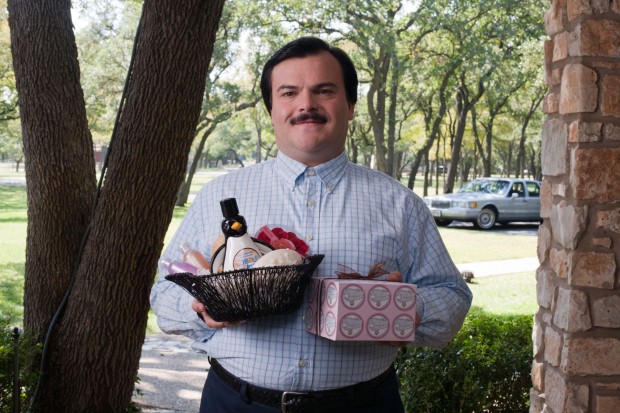
    essentialImmediately, Bernie doesn’t seem like much of a film beyond the performance of Jack Black in the titular role. Based on Skip Hollandsworth’s Texas Monthly article “Midnight In the Garden of East Texas,” the pseudo-documentary style director Richard Linklater brings to the story of genteel assistant funeral director turned murderer Bernie Tiede (Black) seems destined to keep things small potatoes. Beyond the core cast, Bernie fills itself out with character actors and townsfolk, talking into the camera about a beloved community figure—devout christian, endlessly charitable, patron of the arts—who nobody believes is capable of grisly murder. Yes, Bernie is a film buoyed by Black, Matthew McConaughey, and Shirley MacLaine, but as the community continues to assert Bernie’s innocence (despite his tearful confession), it’s clear that Linklater’s aim is not merely strong, character driven drama, but the portraiture of a town driven temporarily insane by its passion for a favorite son.

    Bernie is most certainly guilty, but what he’s guilty of beyond the murder of curmudgeonly millionaire widow Marjorie Nugent (MacLaine) is the question the townsfolk pose to exasperated D.A. Danny Buck (McConaughey). Figuring that Bernie is otherwise “too light in the loafers” to shoot someone in cold blood, they propose that he must have been temporarily insane to shoot Nugent in the back and stuff her in the freezer. It’s a fair point, one that Linklater is careful to examine. Bernie, who routinely dotes upon the little old ladies of his church, the newly widowed women who happen into his funeral home, gives his life to Nugent. As the owner of a prominent local bank, she’s the kind of person who’d shred a person’s loan application before thinking to look at it. Is it Bernie’s persistance that wins her over, or does she see in him a simpleton rube, a man she can exploit endlessly and without complaint? How culpable is Mrs. Nugent in her own demise, the townsfolk ask?

    Linklater crafts an extremely effective procedural despite there being little in the way of actual police work. His film acts as an anthropologist, unearthing details of the relationship between Bernie and Nugent—who wouldn’t be driven crazy by someone’s habit of chewing each bite of refried beans 25 times?—and examining a D.A. driven to wit’s end by a city sympathetic towards a confessed killer. McConaughey’s performance is less showy than Black’s—indeed, Linklater seems one of only a few directors well-suited to Jack Black’s bombast and propensity to sing—but serves as an anchoring neutral between the overwhelming niceness of Bernie and the spiteful nastiness of the woman he serves. The townsfolk paint Danny Buck as a guy just seeking reelection at Bernie’s expense, and the way Buck brags about the way he’s nabbed perpetrators in the past, that’s more than a bitter claim. But this case is a no-doubter, something he should be able to sleepwalk through. Instead, he’s assailed in restaurants, pestered at the grocery store, taunted by everybody in town that they’ll acquit Bernie if called to the jury. Sure, it’d be easy to acquit a man like Bernie Tiede, but what kind of justice is that?

    It’s the trial of Bernie Tiede that serves as the best scene here. After moving the case to a different county, Danny Buck does everything he can to paint Bernie as a big city liberal, and Bernie plays right into his hands. His love of theatre, the vacations he and Mrs. Nugent took to New York, the first class seats on the plane to the city—outside of Carthage, away from those who know him and his victim, Bernie’s a freak, a man who murdered and old lady for her considerable fortune. It’s brilliant, the way Buck barbecues Bernie, and the disbelief with which the accused responds is genuine. He’ll admit to being a murderer, but a monster? Hardly.


    Bernie. With Jack Black (Bernie Tiede), Shirley MacLaine (Marjorie Nugent), and Matthew McConaughey (Danny Buck). Directed by Richard Linklater from a screenplay by Linklater and Skip Hollandsworth, based on the Texas Monthly article “Midnight in the Garden of East Texas” by Hollandsworth.