
Lincoln begins in full Spielbergian splendor, capturing the smoky, mud-caked futility of full-scale war. It pulls back quickly and returns to the battlefield only to survey a battle’s aftermath, as the purpose of this film is not to document the ebb and flow of a costly, generation destroying war, but the effect of that war on one man: Abraham Lincoln, 16th President of the United States. As played by Daniel Day-Lewis, Lincoln is a troubled man. His limbs creak. His mind races. The Civil War is nearly at an end, but its major undertaking remains unfinished.
The passage of the 13th Amendment is paramount to Lincoln’s second term as president, and the line he walks to get it passed in the House of Representatives is perhaps the thinnest in American political history. The South, buckling under the weight of Sherman’s march to the sea and Grant’s pursuit of the Army of Northern Virginia, is ready to capitulate. The North, having seen tremendous losses on both sides, is ready to hear terms of surrender. It is widely thought that the Confederacy will put down their guns if the Union allows them to keep their slaves, but, however much that would please a wounded nation, it is not good enough for Lincoln that so many men die to maintain the status quo. According to Secretary of State William Seward (David Strathairn), there exists a chance for the passage of the 13th Amendment. It requires two concessions on Lincoln’s part: the continuation of an all-but-concluded war, and the extension of bribes to those members of the Democratic Party who could be convinced to change their vote.
To anybody with even a minute knowledge of American politics, that Lincoln would bribe the opposition in order to get a bill passed will not come as a surprise. Nevertheless, it’s refreshing to see him portrayed as something deeper than the simple, sainted American politician who saved the country and freed the slaves. His decision to push for the 13th Amendment had real, horrifying consequences, and it fell on his shoulders to spin that decision to a country that didn’t so much care if the right thing got done. In one of the film’s best sequences, Lincoln meets with a husband and wife who are disputing with another party over the rights to a toll road. Seward, fuming in the corner, takes the opportunity to ask the pair if they support abolition. Supposing it ends the war more quickly, as the president has promised, then yes, they do. And supposing it doesn’t? Well, better to end the war now than waste the lives of more white boys on the behalf of another race.
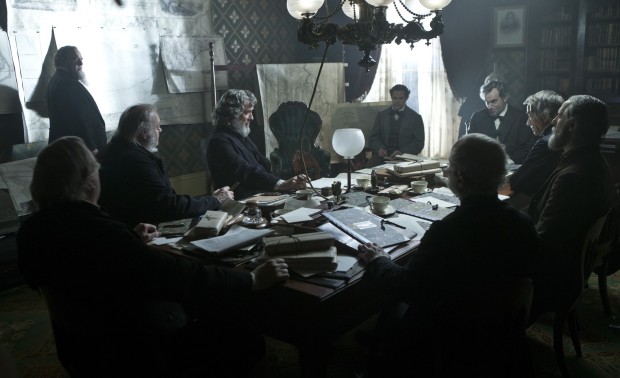
In sticking to candlelit meeting rooms and harrumphing political chambers, Steven Spielberg’s film takes on overtones of a Shakespearian tragedy. Lincoln is not without its comedic elements—William Bilbo (James Spader), a Republican lobbyist, finds that his particular brand of salesmanship doesn’t work with every Democrat, even those who stand to gain plenty from his propositions—but, when it wanders off from the main narrative, is mostly taken by melodrama. Given the various tragedies that befall the Lincoln family, a preoccupation with doom and gloom is perhaps understandable. Squeezed in here, Robert Todd Lincoln’s (Joseph Gordon-Levitt) preoccupation with joining the Union war effort, Tad Lincoln’s fascination with daguerreotype images of slave children, and Mary Todd Lincoln’s (Sally Field) stormy, madwoman-in-the-attic private mannerisms seem like loose threads from a much longer cut of the film. Compared to a shot of Lincoln juxtaposed against flickering candlelight or the decision to keep going past the film’s logical endpoint to squeeze in as much of Lincoln’s assassination as possible without making it interesting, these are minor trespasses.
The resulting film is sloppy and frustrating at times, but fitfully as inspired as anything Spielberg has made. He manages to bring together melodrama, comedy, political tension, and baiting, crowd-pleasing performances like Tommy Lee Jones’ radical Republican leader Thaddeus Stevens in a way that’s rarely insulting, and manages to wring a good amount of drama to one of the most written about eras of American history. Tony Kushner’s adaptation of Team of Rivals: The Political Genius of Abraham Lincoln is sharp and precise. Lincoln’s backwoods lawyer persona comes across in the many parables he tells, but these stories are more important to Lincoln than to those gathered around him. Wrestling with the constitutionality of the Emancipation Proclamation, debating the merits of sending his son to war, the president spends as much time trying to convince himself that he’s taking the proper course of action as he does anybody else. No wonder the war looks to have crippled him. It’s not just the soul of the country he’s gambling on, but his own.
Lincoln. With Daniel Day-Lewis (Abraham Lincoln), Sally Field (Mary Todd Lincoln), David Strathairn (William Seward), Tommy Lee Jones (Thaddeus Stevens), Hal Holbrook (Francis Preston Blair), Joseph Gordon-Levitt (Robert Todd Lincoln), James Spader (William Bilbo), John Hawkes (Colonel Robert Latham), and Tim Blake Nelson (Richard Schell). Directed by Steven Spielberg from a script by Tony Kushner, based on the book Team of Rivals: The Political Genius of Abraham Lincoln by Doris Kearns Goodman.


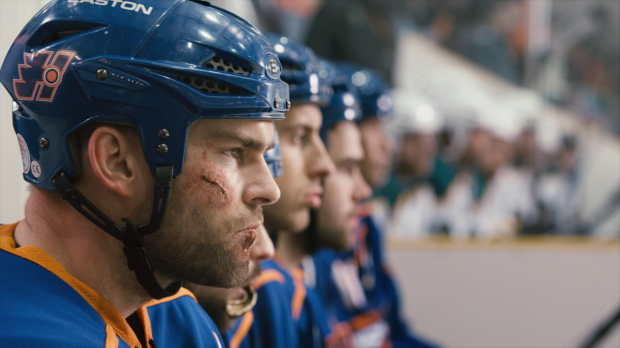
 Given the National Hockey League’s flirtation with work stoppage-induced disaster, Goon plays like an unrequited love letter to a sport whose heart is three sizes too small. The hockey immortalized here—the slow, bone-crunching, blood curdling style of play where one or two men on every squad was hired more for their fists than their abilities with a stick—has been on the endangered list for some time now, first as a consequence of the League’s desire for a faster game, then as concerns over concussion-related brain damage rose, but that doesn’t matter. The hockey of Goon is that of pop-culture past, three twenty-minute periods of blood, mullets, and dirty-minded foreign players. Those wondering how hockey could engender such a devoted, wounded fan base would find their answer here.
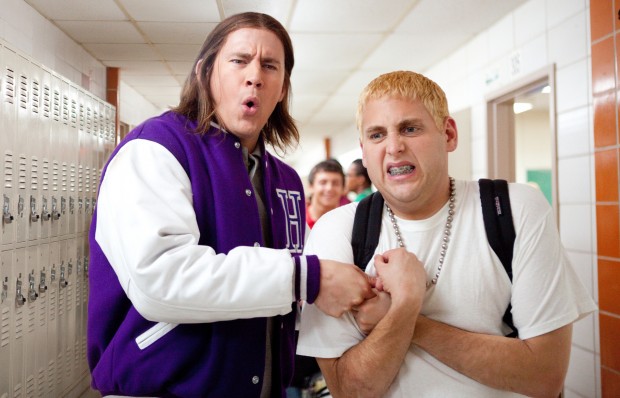 When Easy A was released last year, it ushered in a brief era of John Hughes nostalgia and the feeling that things within the high school comedy genre could, in fact, get better. A year of repeat viewings and Emma Stone Tumblr .gifs later, and the shine of Will Gluck’s comedy has mostly diminished. It’s a ramshackle tribute to a bygone era in teen filmmaking, its obsolescence made clear by a lack of Hollywood follow-through It’s much easier to throw a handful of Disney Channel stars into a foreign country or move the cheerleader movie plot into another sport than to hit the sweet spot Easy A was lucky enough to find. No matter. For all that film’s charm and quirk, I was left waiting to see if the high school comedy’s raunchier parasitic twin would crawl its way out of the ditch a legion of Superbad imitators left it dying in. Finally, with 21 Jump Street, it has.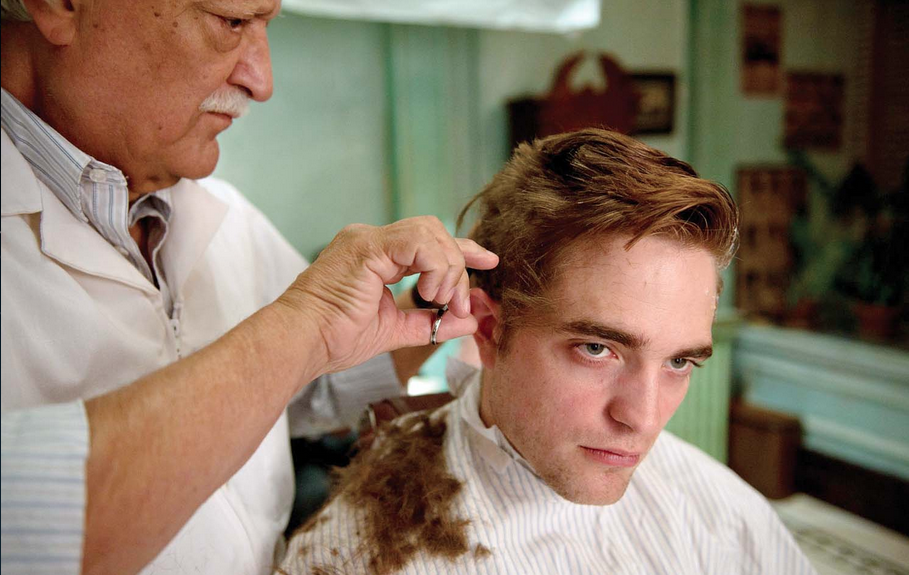

 Beyond the Black Rainbow is a curiosity; were it released in the heydey of low-budget, straight-to-VHS horror films, it would have been the format’s most staggering achievement, an ambitious blend of Kubrickian visual cues and DIY attitude. In 2012, with VOD services and endless ways of accessing talented, self-assured gems that’d otherwise slip between the fingers, there are plenty of movies vying to occupy the same space as this one, films using the same low-fidelity ethic, films with the same influences, films purporting to de or reconstruct a genre. As such Beyond the Black Rainbow is a victim of its time, a retro-futuristic slasher film with a tense atmosphere, but not much that holds up to intense scrutiny.