Category: Wrestling

  • Wrestling Review: Lucha Underground Episodes 01 and 02 (2014)

    Wrestling Review: Lucha Underground Episodes 01 and 02 (2014)

    Lucha Underground

    I wouldn’t exactly say that I’m in the market for a WWE alternative. There’s so much wrestling in the world, most of it available on demand, that any time I want something different than what Vince McMahon, Triple H, and the rest of the gang at World Wrestling Entertainment are doing, I can watch New Japan Pro Wrestling instead. Or CHIKARA. Or Pro Wrestling Guerrilla, Ring of Honor, and Absolute Intense Wrestling. Or over 100 years of wrestling that has been filmed and dumped on YouTube, both legally and extra-legally, that is streets ahead of anything being produced this decade. It’s easy. Easier, at least, than watching an episode of Total Non-Stop Action Wrestling’s Impact Wrestling for its occasional glimpses of brilliance, or tuning in to whatever cable network, buried deep in a subscription package I can’t afford, has decided to tape their answer to WWE. Lucha Underground is the latest attempt at that second brand, and boy is it buried deep, playing on Robert Rodriguez’s El Ray Network, which, as I understand it, is available to DirecTV, Comcast, and Time Warner Cable subscribers only. I cut the cable a long time ago and I’m not likely to go back, so I should admit, up front, that I am part of the problem faced by most WWE competitors: I’m an interested wrestling fan without the means necessary to pay much more for wrestling than the $9.99 I’m already paying to tune out the current product that’s disenchanted me.

    Despite all that, Lucha Underground gained my attention very quickly. Its opening video package, which veers from the ridiculous to the informative and has its foot on the gas pedal the entire time, lays everything out thusly: Luchadores are, in effect, superheroes whose heritage extends all the way back to the Aztec empire.  One saves a kid from being beaten up in a back alley, then asks him to help save lucha libre, likely from the clutches of Dario Cuteo, a smooth-talking Spaniard who invaded AAA’s TripleMania event (the WrestleMania of Mexico) to throw his money around ala Vince McMahon, offering the best wrestlers in the world a chance to prove themselves in the United States of America. Cuteo is obviously a villain, but he walks to the ring to kick off the first episode of Lucha Underground, offering $100,000 to the man or woman who impresses him the most. Without delving into the action (which I’ll get to shortly), here’s what you know five minutes into the show:

    1. That, beyond the world of kayfabe, Lucha Underground is backed by AAA, which is one of the biggest wrestling promotions in the world.
    2. That Lucha Underground takes place, as many attempted third wrestling brands have (including WWE’s relaunch of ECW), in a faux-dirty, Hollywood disgusting industrial wasteland. Cuteo calls this his temple, but if that’s how he really felt he probably could have afforded some clean ring mats.
    3. That a briefcase full of money is no substitute for a good looking championship belt.
    4. That the camera work is going to be slick in ways that might hinder the presentation. There’s a camera directly above the ring and a foggy, fisheye camera in the announce desk, ostensibly so that the editing team can present the action in the ring with a minimum of in-ring goofs. Still, I think wrestling is best shot using a hard camera and one or two camera operators ringside. Nobody sane demands absolute perfection from wrestlers, because to do so is unreasonable. Nobody is requesting shots of Matt Stryker and Vampiro (the commentary duo) during matches, either.
    5. That in 2014, we still live in a post-Montreal Screwjob world. The next televised wrestling promotion to debut without an evil Vince McMahon surrogate will automatically be my favorite promotion ever.

    Since I’m getting into the flow of Lucha Underground‘s universe, I’m going to review the first two episodes at once, match by match. An overall rating for both episodes can be found at the end of the recap.

    Episode 01
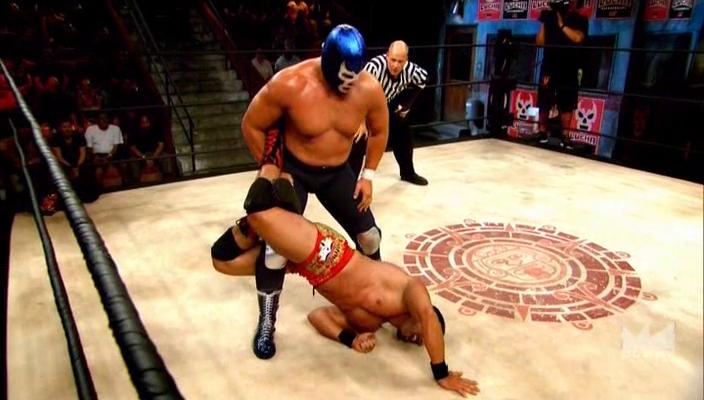
    :ucha Underground Chavo Guerrero Jr vs Blue Demon Jr

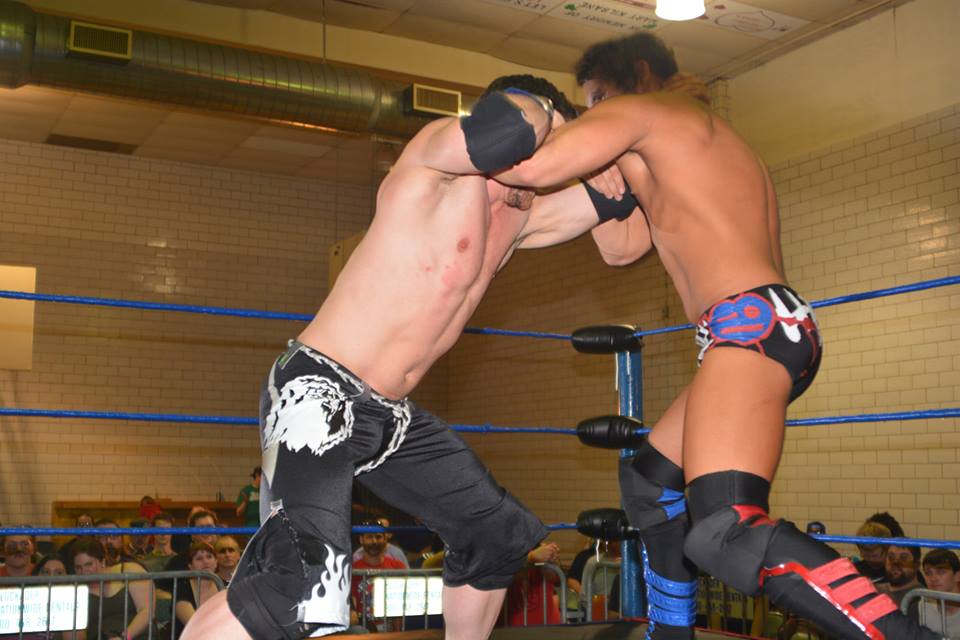
    Chavo Guerrero Jr. vs. Blue Demon Jr.: After Dario Cueto introduces himself and the concept that the best fighter on his roster will receive $100,000, the first match leaves aside all of Lucha Underground‘s high-flying Fight Club aspersions by getting down to the fundamentals of lucha libre: Masked luchadores and prestigious family bloodlines. Blue Demon Jr. just looks like a luchadore, thick and barrel-chested, and Chavo Guerrero Jr., of course, has wrestled on nationally televised promotions for years, plying his trade in World Championship Wrestling, WWE, and TNA. Chavo Jr. has always been an under-the-radar favorite of mine. When I was a child, he was tremendous playing the role of Eddie Guerrero’s deranged nephew, finally snapped after months of humiliation and heartbreak. His career has largely been spent in Eddie’s shadow, understandable considering that his uncle was probably the best wrestler in the world from 1995-1998, reclaimed that status late in his WWE career, and died tragically. When Vampiro mentions the Guerreros here, it’s not to garner Chavo any sympathy, but to mention that the family has mostly been hated by lucha libre fans, a pack of liars, cheaters, and thieves in a tradition that holds honor as its highest virtue. Demon and Guerrero work a pretty good opening contest, testing each other with the ol’ Greco-Roman knucklelock that goes through a few permutations while Matt Stryker and Vampiro point out for the fans some of the differences between American wrestling and lucha libre. Nine minutes into the first show, and I’m already not a fan of a lot of the camera work: The overhead camera above the ring is disorienting, as is the pan-and-zoom into the crowd during a Guerrero headlock. Fan reactions are important, but you cut to those while wrestlers are selling big maneuvers, not during the action itself. The progression of cuts from camera to camera is too fast, actually exacerbating things that it is trying to cover up, like a Blue Demon Jr. headscissors that Chavo Guerrero Jr. has to finish for his older opponent. Demon’s got some nice-sounding slaps that Vampiro is quick to point out are “nice, because they’re not closed fists,” because the rules of wrestling still matter. Blue Demon Jr. sells his knee before going for a top rope senton, “a move made famous by his pops,” and Chavo has more than enough time to roll out of the ring, so he does and gets a two count. Guerrero goes for a top-rope hurricanrana, but Demon counters it into a powerbomb, which isn’t enough to put Guerrero away. Demon quickly transitions into his sharpshooter variation, El Pulpo, and Guerrero quickly taps out. Rating: B-

    In a pre-taped segment, Dario Cuteo tries to align himself with Mexican wrestling legend Konnan. At one time, Konnan was considered the Hulk Hogan of Mexico. Then he signed with WCW, where the Hulk Hogans of Everywhere Else were made to bow down to Hulk Hogan himself, and he became the Mexican gangster character that every Mexican gangster character since has tried, unsuccessfully, to mimic. His WCW work hasn’t aged particularly well since I grew up and stopped being charmed by sing-song rhyming catchphrases, but he has a natural charisma that comes across in this segment, where he’s playing an aged fighter-turned-trainer who has found a protege who might change everything for lucha libre.  Cuteo says that he has a new signing, Johnny Mundo, who used to go by a different name. One of those names, of course, was John Morrison, he of a billion abs and a style that leaned a little on his parkour training routine. Cuteo wants Konnan’s guy to make an example out of the cocky, fame-hungry Mundo, and Konnan nods significantly. They show Mundo doing pull-ups on this weird pull-up bar, then introduce his opponent, Prince Puma. Puma is better known to indie wrestling enthusiasts as Ricochet, but in Lucha Underground he’s wearing Aztec jungle cat gear and is billed by Konnan as a kind of Aztec champion. The way Konnan talks and the slow-motion effect applied to Puma’s kicks put everything over huge. It’s the first show, but it’s pretty clear that Lucha Underground knows how to promote the wrestlers it sees as stars.
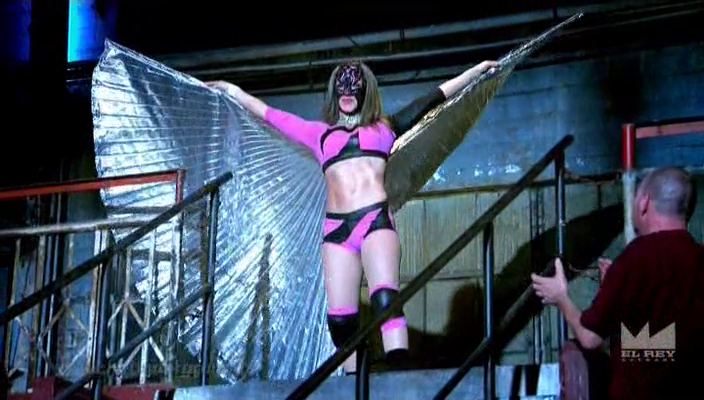
    Lucha Underground Sexy Star

    Son of Havoc vs. Sexy Star: Son of Havoc is Matt Cross, a contestant on the WWE’s revamped Tough Enough who has had about as interesting a career as someone can have without wrestling for a major promotion. Cross is in tremendous shape and has a distinct look, so of course he’s wearing pants, a vest, and a terrible luchadore mask to cover all of that up. Sexy Star is a fixture in Mexico, a legitimate star with a great look who I am mostly unfamiliar with. The assumption here is that most people watching are like me, so they play a video where Sexy Star introduces herself. It’s really good, given that English is Star’s second language. She talks about how lucha libre saved her life from a world of abuse, and how she trains and fights so that women might know they are capable of the same. So of course, Son of Havoc beats her with a roll-up, and even though Stryker says, in post, that he had the tights, he didn’t have them convincingly. It’s a shame, too, because everything was built for this really great angle. Intergender wrestling is still rare on television, but Star and Havoc are a good match, of similar builds for those mutants out there on the realism train, and Havoc cuts a promo in this Son of Shockmaster voice about how he’s not going to waste his time fighting a woman, so she may as well quit. She doesn’t, of course, but the match isn’t long enough to do what Vampiro and Stryker keep insisting it does, which is to put over that Star is capable of going toe-to-toe with men. There are some good exchanges back and forth between the two, but the match is about the length of an average Diva’s match on Raw, and they should have re-shot the finish to make the pulled tights look like something that’d actually be advantageous in a pinning combination. Rating: C-

    Dario Cueto finds Chavo Guerrero Jr. backstage to tell poor Chavo that his family is probably going to be upset that he lost to Blue Demon Jr. earlier in the night. He says that he wanted Chavo to be the one to put Blue Demon Jr. out of the industry for good, but that since he couldn’t, he’s bringing in someone who can. And with him, “1,000 deaths might be coming for us all.” 1,000 is a number of deaths I’m into, and I’m in for whatever that means for the next episode.

    Johnny Mundo vs. Prince Puma: They bill this as Mundo’s first match in three years, which it isn’t, but at least you know that the universe Lucha Underground is in only concerns itself with the kind of wrestling everybody in the world is familiar with. So to that extent, Prince Puma is a complete unknown, the buzz about him being that Konnan discovered him in a Los Angeles bario and thinks the world of his potential. Puma plays the SoCal crowd like a fiddle, as if they all know who he is. (They do.) There’s no better main event for a project like this, as it puts in stark relief what this promotion will be doing with its television time in comparison to WWE and TNA. Puma has an argument for being one of the best wrestlers in the world, and Mundo, three years removed from a WWE run that had many thinking he had the potential to be a legit main event star, has matured into the kind of wrestler who actually fits that bill. Puma and Mundo chain wrestle for a bit, drawing baffling comparisons to Dynamite Kid and World of Sport (I mean, sure, they are masters of chain wrestling and innovative escapes, but the next time I see a Dynamite Kid or Rollerball Rocco match where they reverse a wristlock by doing a standing backflip will be the first), but instead of explaining their references, Stryker encourages you to stop watching Lucha Underground and watch some other stuff on YouTube. Puma and Mundo have an array of impressive kip ups and flips, and they put them to use early and often.

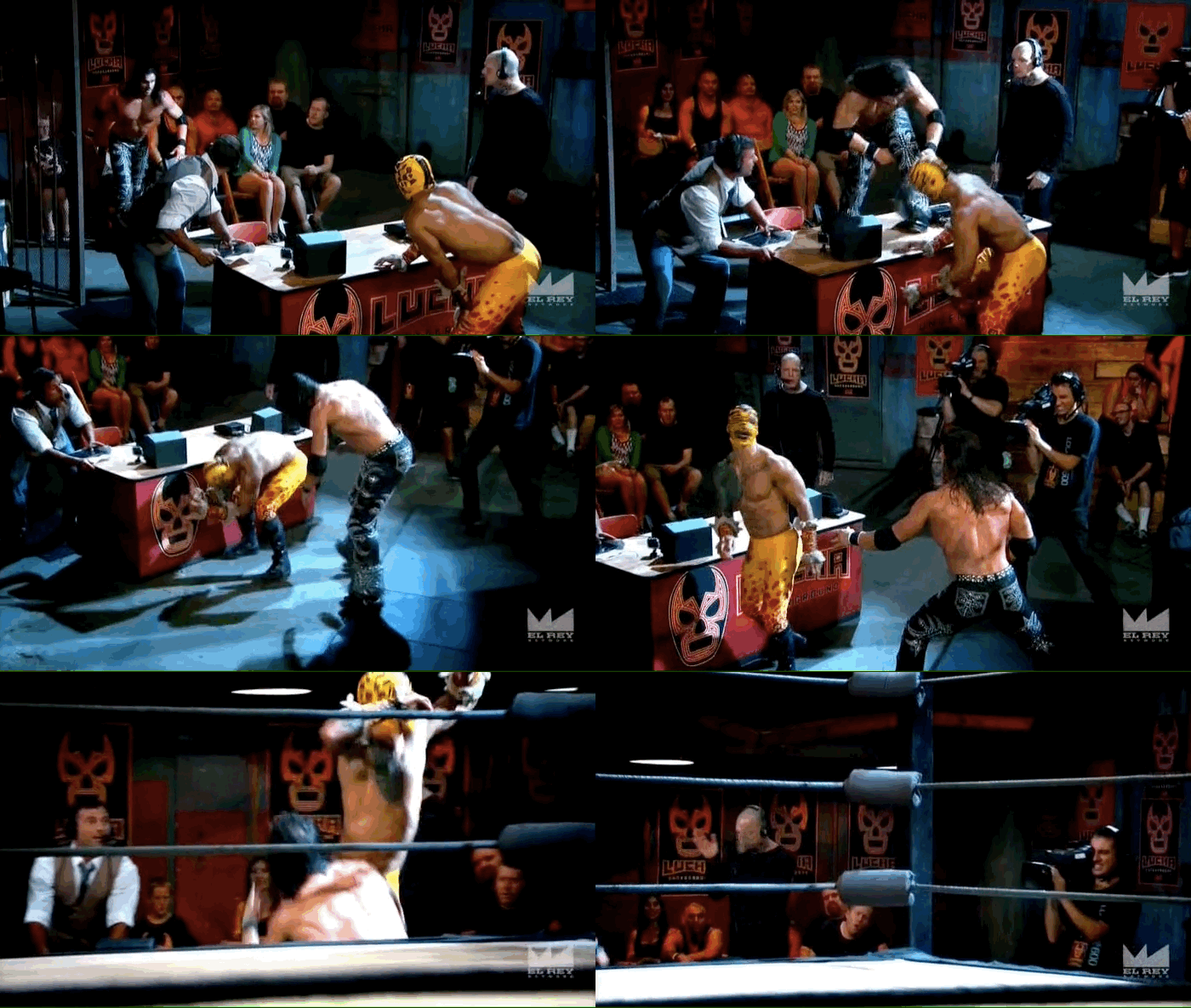
    Lucha Underground Puma Prince

    Lucha Underground Johnny Mundo

    The crowd give Prince Puma a standing ovation for his athletic skills and start a “THIS IS AWESOME” chant, which is something that needs to be retired. Mundo’s parkour comes into play, first with a kick that’s, if anything, a glancing blow (a problem that has dogged Morrison since he began his ascent in WWE—his moves often look like they connect with a feather’s impact), then with the sequence above at the announce table, which is what marked him as a breakout star. The fans at the taping react to it all like they’re seeing a great main event, which they are. Vampiro calls this a Match of the Year Candidate, which is often said of matches that have no prayer of being considered for that honor, but Raw has matches this good maybe three or four times a year, and it’s rarer still when they feel like they’re building towards something more than a temporary talking point. It’s the kind of stuff instant replay was made to showcase, but Lucha Underground has no time for the past and keeps things moving forward as quickly as possible. Knowing that it’s been three years since the average wrestling fan last saw Mundo, they do a good job teasing his spectacular finishing manuver, The End of the World (formerly known as the Starship Pain). Puma counters with a roll up, by rolling out way and hitting him with a springboard double knee, but takes too long setting up for a springboard 450 splash and succumbs to Mundo’s third attempt. Rating: B+

    The crowd and announcers give Johnny Mundo and Prince Puma a standing ovation as they celebrate with each other in the spirit of sportsmanship. Dario Cueto comes out with his briefcase and congratulates Mundo, but he plays keepaway long enough to allow a pair of unnamed gangster types and former WWE wrestler Ezekiel Jackson (“I know that face,” Stryker says, inadvertently cheapening the moment) to hit the ring and beat down our heroes. Jackson hits Mundo with a chokeslam, and the first episode ends with Cueto declaring that neither Mundo nor Prince Puma will be receiving $100,000, as he’s paid these three men with that money, instead. Seeing as he’s paid three wrestlers instead of one, I guess you have to laud the guy for creative financing, even if what he’s bought is a half-ass New World Order. All of that segues easily enough into…

    Episode 2

    …where Cueto’s gangsters introduce themselves as Big Ryck (Jackson), Cortez Castro (Rickey Reyes), and Cisco (‘Lil Cholo), which, along with Son of Havoc, are some of the worst gimmick names this side of Kassius Ohno. As a unit, they look and sound more generic than impressive, but I guess with a show like this you take what you’re given. They’re here to beat people up and take their money and, in Cisco’s case, probably look real sad when people start humming “The Thong Song” at his expense. Jackson puts a lot of emphasis on his new Big Ryck moniker to stop people from chanting his WWE-owned one before they start (which wasn’t going to be an issue, dude), but before he can bring out a chalkboard and write out a pronunciation key for it, Johnny Mundo hits the ring and starts beating up on his buddies. Big Ryck leaves the ring like the boss that he is (and, really, I love GIGANTIC DUDES who play the role of coward heel), leaving Castro and Cisco (The C+C Wrestling Factory) to face Mundo’s well-chiseled wrath. It’s a decent enough wrestling brawl, but again, the camera work is suspect. I think the point of the overhead camera is to show the wrestlers running across the ring, with the entire ring in the plane of vision. The problem with that theory is that it only takes three steps to cross the ring from rope to rope, four from turnbuckle to turnbuckle, and a dude like Mundo can do it pretty quickly. Moves do not look good from the overhead cam, and there is little precedence in wrestling for a hard cut from an overhead perspective to one in the ring. Lucha Underground might be attempting to retrain the eye of its viewers, but I’ve been watching wrestling for most of my life, and that is unlikely to happen. The C+C Wrestling Factory escape from the ring and grab some hilariously old-school wooden chairs, which prompts the arrival of Prince Puma. Dario Cuteo asks for an official and declares that Puma and Mundo will take on Cortez and Cisco right now, and Big Ryck smokes a cigar indoors because he’s a goddamn deviant.
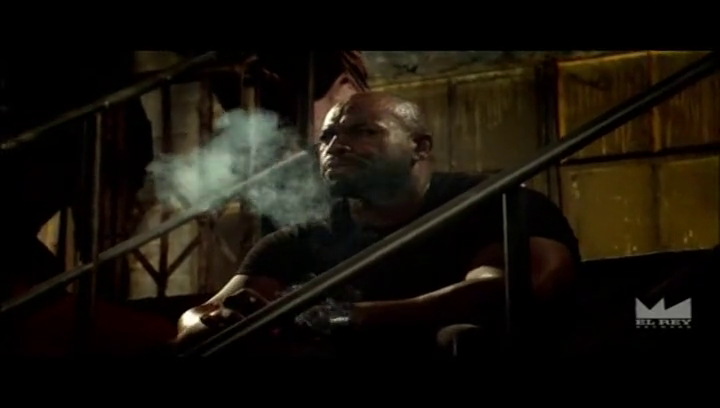
    Lucha Underground Big Ryck

    Johnny Mundo and Prince Puma vs. Cortez Castro and Cisco: Lucha Underground‘s first tag team match keeps the story from last week going, pitting two white meat babyfaces against mean gangsters. The match gets off to a fast start, as Puma hits a few variations of the hurricanrana on both members of C+C. Puma and Mundo work together as a team, scoring with a double enziguri before Mundo takes over. It’s early, but Vampiro continues to talk about Konnan as a corrupting influence upon Prince Puma, which is interesting. Stryker says that Cisco told him that he wrestled “prison shower style, holmes,” which a) did not happen and b) is the kind of stupid bullshit I’m used to Matt Stryker saying into a live microphone. Cisco, believe it or not, does not wrestle like he’s trying to rape somebody, but he’s a pretty solid hand. Cortez Castro and Cisco get some decent looking stuff in, but this match is all about Mundo and Puma, their coup and their future respectively. Prince Puma is an absolute joy to watch, and Mundo definitely seems to have found some of the focus that eluded him in WWE. Sadly, the camera is out of position to catch a crazy bump by Mundo to the outside, but it’s thankfully there to see Puma do a handspring moonsault over the ropes and to the floor. The heels don’t stand a prayer and are finished off from there by stereo 450 splashes in short order. Rating: B
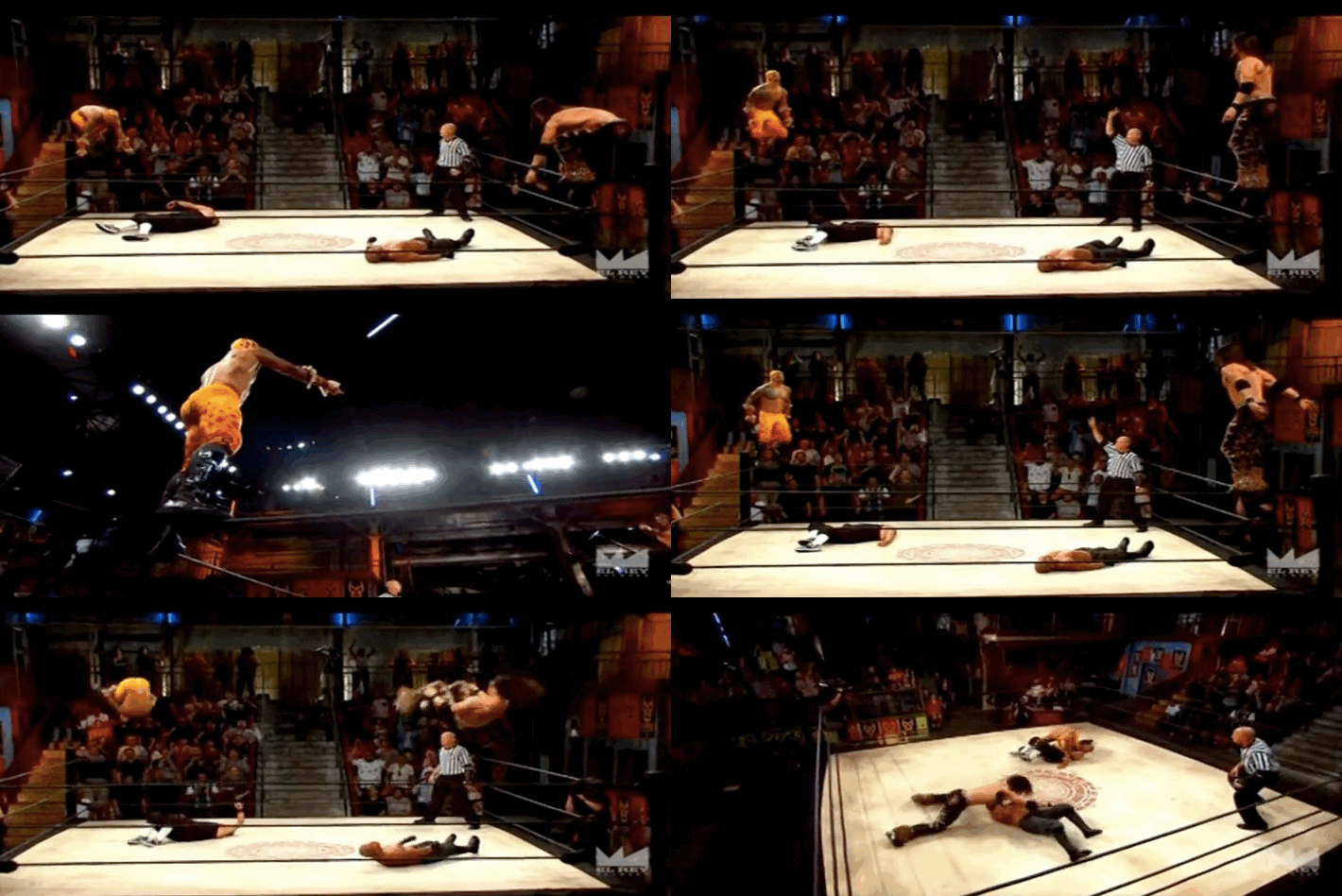
    Lucha Underground Mundo Puma

    The SoCal hipsters in attendance cheer on their favorites while Big Ryck glowers and stalks away. In the back, Konnan says that he was right about Prince Puma, but that he needs to stay away from Johnny Mundo. He’s a sage adviser, like Mick from Rocky if Mick was once a member of nWo Wolfpac. The backstage angles in Lucha Underground are actually pretty entertaining because they’re coupled with serious, soap operatic music, and the wrestlers are all doing their best to act like they’re trapped in a telenovela, which I suppose they are. Puma and Konnan leave the artfully gritty locker room, and Stryker and Vampiro introduce a video for Mil Muertes, the 1,000 deaths Dario Cueto threatened to unleash upon the world in episode one. Mil Muertes, of course, sounds much cooler than 1,000 deaths, and beneath that mask (sorry to ruin any illusion that Muertes is some old rival of Mil Masceras’) is Rickey Banderas, perhaps better known as Judas Mesias. I’m vaguely familiar with him from Wrestling Society X and his brief time in TNA, but not enough to comment on anything beyond what Lucha Underground gives us, which is quite fantastic. He is seconded by former WWE Diva Maxine, now going by the name Catrina, who talks about how Mil Muertes is is actually worse than 1,000 deaths. Mil Muertes appears and, with the aid of post-production, roars like a lion, and we’ve got our main event attraction.
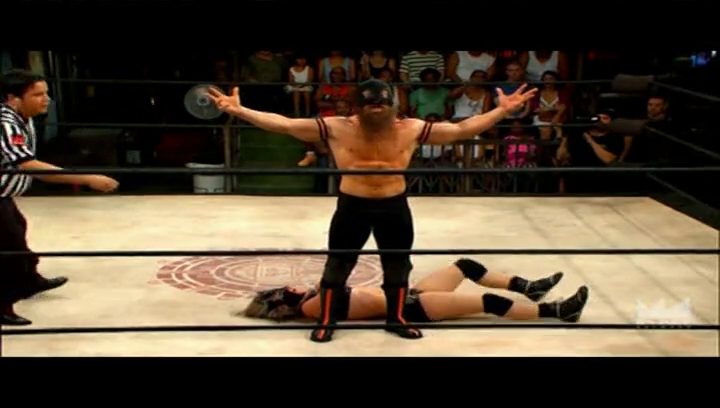
    Lucha Underground Matt Cross

    Son of Havoc and Ivelisse vs. Chavo Guerrero Jr. and Sexy Star: Picking up from where last week’s slight storyline debacle took off, Son of Havoc returns to the ring flanked by former WWE Tough Enough contestant Ivelisse Vélez, who is among the most positively buzzed about women on the independents today. It’s too bad that they put Cross under a mask, because in Absolute Intense Wrestling this year he started displaying the kind of charisma he was often accused of not having. Chavo Guerrero Jr. and Sexy Star get star entrances and reactions while Matt Stryker plugs Chris Jericho’s Talk Is Jericho podcast and talks about how different things are, as this mixed tag team match won’t adhere to the usual man vs. man, woman vs. woman rules.  As one of the people behind Wrestling Fashion, let me just say that I love Sexy Star’s entrance cape. Son of Havoc gets to show off more than he did during the first episode of Lucha Underground and is dragged around the ring by his beard by Guerrero. Immediately, Ivelisse gets involved by kicking Guerrero in the back, and she gets into the ring and puts the boots to Guerrero. The intergender stuff, which I am a huge proponent of, would come across so much better if the announcers (all announcers, not just Vampiro and Stryker) stopped putting so much emphasis on how disadvantaged women are in the ring against men. When a small dude is in the ring with a huge man, they talk about size differences. Here, two women are in the ring with two men of roughly equal size, and the women are proving to the world that they can hang with men or whatever. I just want to watch Ivelisse kick the shit out of a third generation Guerrero. Don’t stick me with your gender hang-ups, okay? Chavo tags in to Sexy Star, who comes into the ring with retribution on her mind. Son of Havoc drills her with an elbow, though, which causes Chavo to wince in his corner. Matt Stryker, who once went on a rant about how unfortunately liberal America had become on an episode of ECW on SyFy, says that in 2014, women are on the same exact level as men, “some would say above men in many professions,” and between his tenuous understanding of gender politics and his belief in the humor of prison rape jokes, he can pretty much go fuck himself. Star and Ivelisse go at each other with punches and kicks, managing, quite easily, to put together one of the more enjoyable sequences two women wrestlers have had on free television in 2014. Son of Havoc continues playing the chauvinist dirtbag rubbing his heel into Star’s face. Naturally, being a scumbag costs him, as Sexy Star gets her knees up when Son of Havoc goes for a standing moonsault. She tags Chavo Guerrero Jr. in, Guerrero takes him out with a Jushin Liger capo kick, and everything breaks down. The woman fight to the outside, Chavo takes Son of Havoc out with a frog splash, and Sexy Star tags in to take the win with a roll-up. The chivalry aspect of the finish isn’t nearly as satisfying as Star straight up defeating Havoc would have been, but this match does a better job all around of showcasing her skills, Havoc’s, and introducing us to the idea of a Lucha Underground women’s division that won’t suffer the same stagnation their peers on WWE television are often subject to. Rating: B

    Blue Demon Jr. is shown preparing for his match with Mil Muertes when the aforementioned Catrina shows up to distract him. I don’t have many memories of Maxine’s matches in WWE, as NXT was a never-ending procession of awkward gimmicks and matches before it became a cult phenomena, but I do remember that she and Derrick Bateman were a pretty effective unit, or at least a memorable one, as the two frequently engaged in Pro-Wrestling Make Out Sessions every time they were on camera. Her gimmick here, it seems, is to plant wrestlers with the Kiss of Death. Straight wrestling fans probably swooned all over the place when they heard this. She says that Mil Muertes has sent her with a message and licks Blue Demon Jr., which, I dunno. When one man’s message to another man is delivered via tongue, that message comes with some strong homosexual undertones. I don’t care whose tongue he’s sexting with. Then Konnan appears to talk more about the horrible barrio he found Prince Puma in. It’s good, but Konnan doesn’t lick anybody.
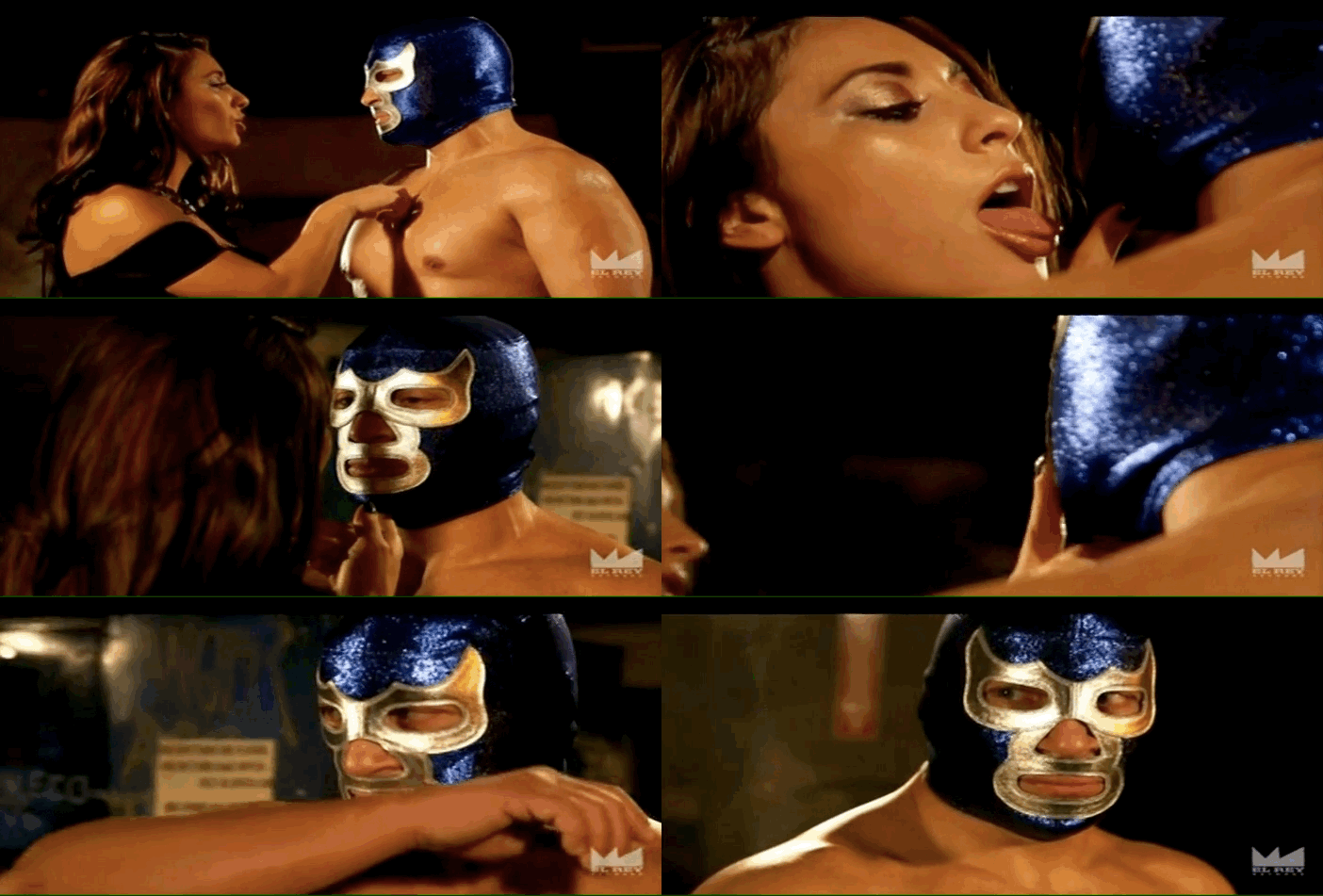
    Lucha Underground Maxine

    Blue Demon Jr. vs. Mil Muertes: Blue Demon Jr. gets an early-90s jobber entrance, and we get our first real look at Mil Muertes. He and Catrina look fantastic together, a pair of pulpy villains looking to stick their knives straight into the heart of a stalwart technico. Stryker, one of the worst human beings in the world when it comes to talking about women, says that Catrina exudes “some type of dark seduction.” Honestly, I prefer Vampiro just saying that he finds women hot. It’s more flattering than Stryker trying to be the most eligible brony on OKCupid. Muertes and Catrina have a mysterious, maroon handkerchief that they pass back and forth to each other, and this, too, is fantastic, because Lucha Underground is doing in a few minutes what the WWE often struggles to accomplish given months and a much higher budget, which is to imbue their new characters with as much purpose and personality as the ones we’re already familiar with. Muertes kisses Catrina and immediately goes on the attack, taking Blue Demon Jr. down and dominating from there. Vampiro mentions that Mil Muertes looks like something Blue Demon Jr.’s father and uncles would have seen in the science fiction films they once starred in, and he’s not wrong. It’s a great detail to pull out, and Vampiro, it seems, is a natural to calling a show like this, with one eye on the history of the genre and the other on the target demographic. The match is two stocky dudes gone a’clubbering all over each other, old school and enjoyable. Catrina, too, fits the old school aesthetic, distracting Blue Demon Jr. and attacking him when the referee’s back is turned. Demon’s slaps really pop off of Muertes’ massive chest, and Muertes’ spear look more like a football tackle than most iterations of that move. Mil Muertes hits Blue Demon Jr. with a flatliner, which makes sense but is a terrible finishing maneuver in 2014, and gets the win. Rating: B

    After the match, Mil Muertes continues pressing the advantage until Chavo Guerrero Jr. hits the ring with a chair. Muertes exits the ring and Demon gets up… and Chavo hits him right between the eyes with the chair! Guerrero takes out the referees as the crowd chants “WHY CHAVO WHY,” and every luchadore who comes down to the ring to stop him gets brained as well. Sexy Star rushes to the ring to calm her tag team partner down, but Chavo takes her out, too!
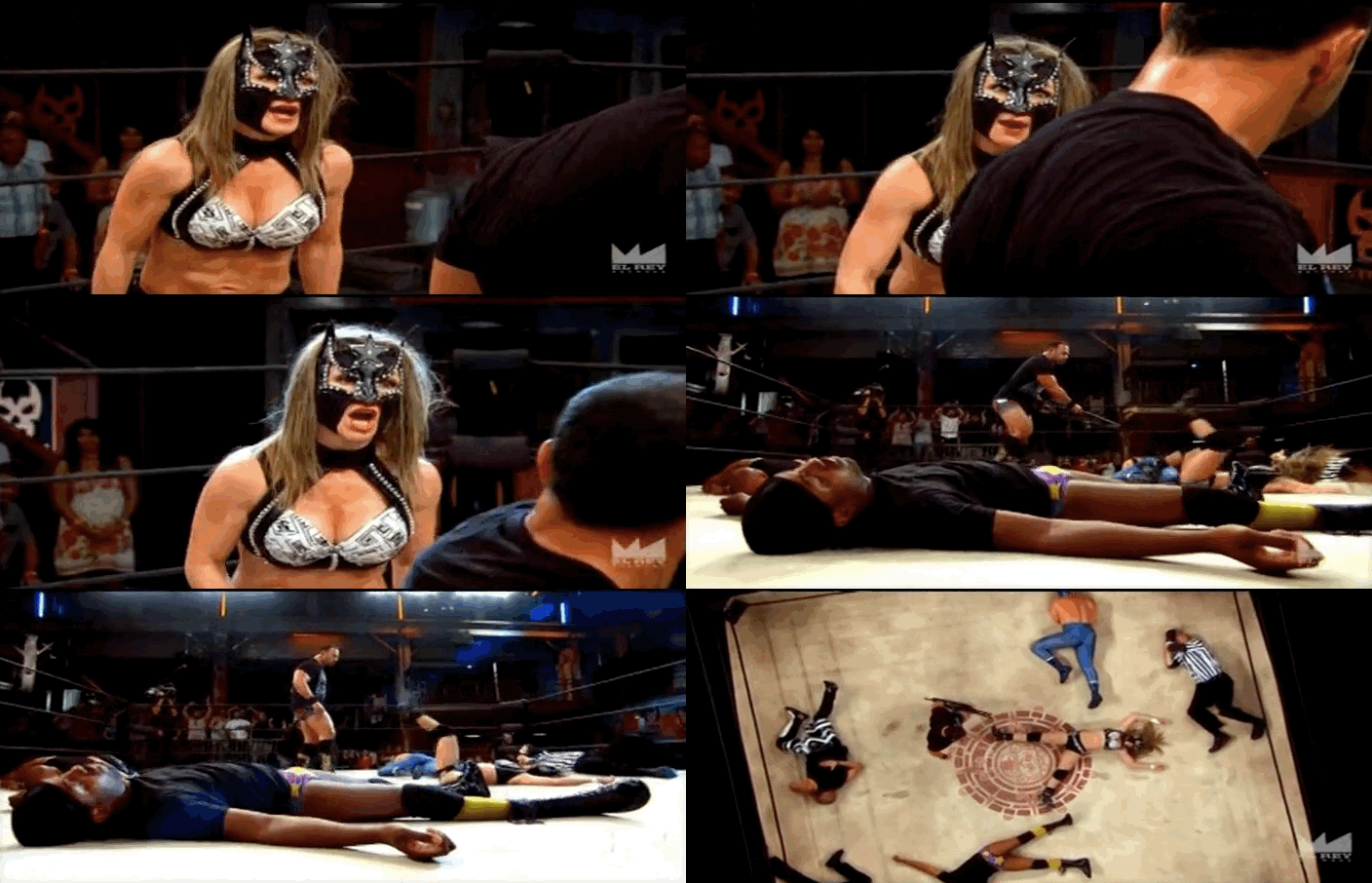
    Lucha Underground Chavo Sexy Star

    The show ends with Chavo in full-blown Guerrero bastard mode, and it is a welcome sight. If, next week, Chavo goes up to the top rope for the frog splash before leaping down and refusing to pay tribute to his uncle Eddie, I will lose my mind. Chavo prevents the EMTs from taking Blue Demon Jr. out on a stretcher, taunts the crowd, and the fans in the sweatbox warehouse give Guerrero hell because he deserves it. In two episodes, Lucha Underground has established a fairly compelling new world and introduced a limited number of familiar faces into it. It’s established two new characters, Prince Puma and Mil Muertes, as forces to be reckoned with within that world. With a few hiccups, it’s managed to credibly integrate women wrestlers with the men, and it featured one of the better heel turns of the year. I’m not yet won over by the idea of yet another evil authority figure, and I think it’ll be a good five years or so before a faction comes along that doesn’t remind me, for good or for ill, of the nWo, but this is a solid foundation for a new brand, the cliffhangers from episode one were paid off well in episode two, and the final, melodramatic shot of the chair dented over Blue Demon Jr. and Sexy Star’s head has me wanting to tune in to see what happens next. As a wrestling fan, that’s all I can ask for.

    Rating:
    ghost starghost starghost star

  • Free Wrestling: Johnny Gargano vs. Chris Sabin (AIW: 5/24/14)

    Free Wrestling: Johnny Gargano vs. Chris Sabin (AIW: 5/24/14)

    Here’s how it works: you get into a car accident the first day you move to a new city and don’t drive again for nearly a year. When you do, it’s not because you want to, but because you’ve booked yourself on a solo three-day roadtrip across the United States of America to see some professional wrestling. You fly from Atlanta to Detroit. You are given a Nissan Sentra at the Hertz counter though you are promised a Ford Focus. You get behind the wheel, turn the ignition, put the car in drive, place your foot on the pedal, and drive all the way to Cleveland, Ohio, which was a second home for you once, because once, you were part of a wrestling promotion there that was starting to build a reputation for itself before you moved. That wrestling promotion is Absolute Intense Wrestling. Before you can go to Easton, Pennsylvania to watch the rebirth of CHIKARA, you’ve got a double-shot of AIW, The J.T. Lightning Invitational Tournament. It’s AIW’s wildest night of the year, a two-day party thrown by 24 of the best wrestlers in the world, but you’re tired and you’re catching up with friends and everything is a blur, and holy shit you need to be awake early tomorrow to make it out to Easton. So Johnny Gargano and Chris Sabin are in the ring having their match and it just kinda passes you by. Jesus, how does that happen?

    This match is Chris Sabin’s AIW debut, and Johnny Gargano is AIW’s ace wrestler. Whenever there’s a big debut, it seems Gargano is the hand-picked opponent, and it is hard to question the logic of that choice. Gargano, as Pedro DeLuca’s introduction lets you know, is a son of Cleveland. He was born there, trained there, and lives and wrestles there still. He’s one of the top names in Dragon Gate USA, he wrestles in Pro Wrestling Guerrilla, and he was a major part of CHIKARA’s roster until their relaunch, but in AIW he is unfettered by DGUSA’s storyline expectations or where he’s placed on PWG’s show. In AIW he is the attraction, and any match against him is the main event. When Gargano stops to flash a money sign to the crowd after driving his knees into Sabin’s gut, it’s not because he’s a prick, but because he is Cleveland, Johnny Wrestling to the Brown’s Johnny Football, and nobody standing across the ring from him will leave an encounter forgetting it.

    This match has a definite “showcase” feel to it. Gargano had wrestled in PWG the night before and was recovering from a dislocated jaw. There was still novelty in seeing Sabin on a show that wasn’t promoted by TNA Wrestling. Wedged in-between rounds of the JLIT tournament, there were no storyline implications and nothing on the line between the two but pride, as they say, so the feeling-out process between the two is prolonged and the action, while heated, never threatens to overwhelm the rest of the show. What ends up happening is that this encounter becomes an example where good, competent announcing elevates the entire match. Matt Wadsworth and Leonard F. Chikarason are both storytellers, and halfway through the match Wadsworth’s point about Gargano’s dislocated jaw making it harder to breathe through his mouth as the match goes on segues into Chikarason saying that Sabin knows about Gargano’s injury because the two follow each other on social media. And then Sabin dropkicks Gargano in the jaw and follows with a European uppercut, and it all syncs so well with what’s being said at the commentary table that you remember the impact that wrestling moves must have on the anatomy.

    Maybe it’s because of Gargano’s jaw, but the match never quite makes it out of first gear. Granted, when you’re talking about Johnny Gargano and Chris Sabin, first gear is going to get you pretty far. The two do a good job of working around Gargano’s big spots—the corner lawn dart, the grounded kicks, and the Garga-No Escape—but late in the second night of a two day wrestling orgy, it’s pretty clear that the audience at Turners Hall is saving themselves for the conclusion of the tournament. The attention they pay to the wrestlers in the ring is polite, but reserved, and beyond a suicide dive that nearly sees Gargano fly into the first row and his two transitions into the Garga-No Escape (which has grown into a beautifully applied submission maneuver), there’s not really much for them to get out of their seats for. This is two of the best on the independents firmly in cruise control; good but not great. Gargano continues building his name, and Sabin continues reestablishing his reputation on the independents. It’s a good debut, and Sabin would later return to AIW to face Kevin Steen in the opening match of Absolution IX (which, wow—the opening match?), but both men are capable of more. With the introductory phase now behind them, I’d be interested in seeing what they’d do in a rematch.


    This match was provided for free courtesy of Absolute Intense Wrestling. Follow them on YouTube. Buy the J.T. Lightning Invitational Tournament from AIW, or from their partners at Smart Mark Video. Full disclosure: I used to work for AIW as an announcer and as a member of their social media team. Fear of a Ghost Planet is also the sponsor of this video.

  • Wrestling Review: WWE Raw (10/22/14)

    Wrestling Review: WWE Raw (10/22/14)


    Hulk Hogan Brock Lesnar

    Last night, I watched wrestling. This is admittedly nothing new. Since the advent of the WWE Network, I watch wrestling every day, sometimes for hours. I’m writing a book of poetry about wrestling, I run a few Tumblrs about wrestling—it all comes with the territory. But last night I watched Raw, which I haven’t gotten a chance to do much this summer because the work that I’ve done this summer and the reason I do it often leaves me scrambling to bask in the warm glow of nostalgia. Though I can’t imagine a scenario where my friends and I don’t gather in my new house to watch the WWE Network’s less-than-stellar stream of Summerslam this Sunday, anything going on right now serves as a less-than-welcome reminder that soon enough I’ll be sitting down in front of a computer to listen to the rich talk about the problems inherent with having only a million dollars put away in an IRA. But it’s Hulk Hogan’s birthday, and even though The Hulkster now exists largely to talk about the virtues of the WWE Network (which, at 700,000 subscribers paying $9.99 a month to watch video footage Vince McMahon acquired for pennies on the dollar, is somehow considered a failure because the world of business has rules as made up, impenetrable, stupid, and fake as professional wrestling), I love the big orange bastard and always will. True fact: I went to WrestleMania XXX this year mostly because I wanted to see a 60 year old man rip his shirt off and flex his ancient muscles. When he messed up and called the Superdome the Silverdome (where he body slammed Andre the Giant some 27 WretleManias earlier), I was the only person in the arena not booing, because that was my WrestleMania, brother. The one in Detroit. The one that set the records. The Greatest Night In the History of Our Sport.

    I had to get through three hours of Raw for Hulk Hogan’s birthday celebration, which, frankly, is insane. Exactly zero things on television this side of a holiday marathon of The Twilight Zone should last three hours, but that’s exactly what Raw does: It lasts. It staggers. It lurches. It finishes, out of breath and somehow overtime, maneuvering its various pieces around in an effort to hide the fact that nothing is happening. The recurring theme of an episode of Raw these days is the price point of the WWE Network, where, oddly, you can’t watch Raw, because even though Vince McMahon has cast his lot with the future, he still finds his business shackled to the mediums of the past. 700,000 is, to me, an impressive number of human beings who are willing to pay for access to a staggering number of frankly mediocre wrestling shows, but the last I checked, the average episode of Raw manages to pull in 3,000,000, and they sit through ads for things like Juicy Drop Pops and Sonic Chili Cheese Dogs. They’ll sit through the not-infrequent advertisements that air during an episode of Raw, too, where the comedic wrestlers on the show shill food or beverage in a way that makes me wish I couldn’t ingest things. But I can, and I do. Often during wrestling. Tonight, it was curry. Sunday, when my $9.99 will allow me to watch Summerslam? Who knows? Summerslam was the focus of tonight’s episode of Raw, as all of the men and women who will have matches on the show did their bit to advance their storyline to the point where that match would take on some semblance of meaning. Some of the matches on Summerslam, you can tell, are just there to eat the clock. While I know a lot of people are looking forward to Dean Ambrose vs. Seth Rollins, and while I suppose it makes a certain amount of sense that a feud based on one man’s quest to hunt down another who keeps running away would come to a head in a lumberjack match—that’s a match where the ring is surrounded by the wrestlers who will not be wrestling that evening—Ambrose and Rollins work much better when they have the arena as their playground. Similarly, an old-school Russia vs. USA Flag Match—the winner is the man who retrieves his flag from a pole that rises high above the ring—seems like a fun idea, but the WWE writer’s room stopped having interesting-if-poorly-informed things to say about the current political situation in Russia a few months ago, and Tea Party Patriot cum hirsute manager Zeb Coulter (picture Yosemite Sam on a fly fishing trip) constantly making reference to Rocky and Bullwinkle isn’t going to make Rocky IV feel any fresher in 2014.

    Paul Heyman Brock Lesnar

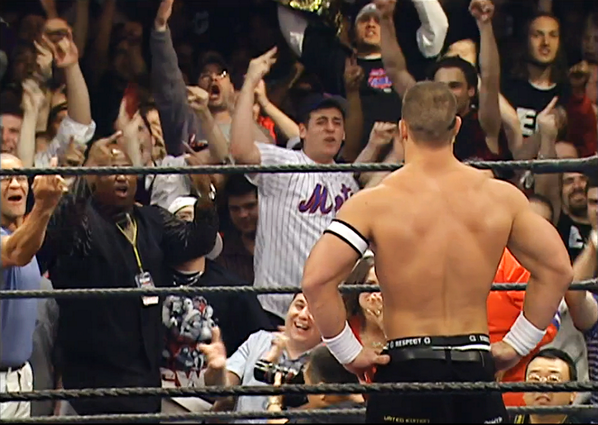
    But WWE can do a remarkable job of promoting a big match, and that is the axis upon which Summerslam revolves, the WWE World Heavyweight Championship clash between 15-time champion John Cena and unleashed Kraken Brock Lesnar. I like John Cena. I really like John Cena. I think the first John Cena match I saw was against Rob Van Dam at a WWE-produced revival of Extreme Championship Wrestling, a 90s entity that is responsible for revolutionizing wrestling in a number of ways large and small, one of which was to turn every professional wrestling fan over the age of 25 into an overly-entitled rage monster. I wasn’t watching wrestling much in 2006, but I remembered and liked ECW, so I went to a Buffalo Wild Wings in Taylor, Michigan to watch the somewhat local ECW legend Van Dam (from Battle Creek, MI) finally ascend to the WWE Championship (something I’d “borrowed” my mom’s credit card a few times to see in 2001, though Van Dam never clinched the title). ECW One Night Stand took place in the Hammerstein Ballroom in New York City, which was a major hotbed for the organization when it was a real thing and not a marketing tool, and which remains a magnet for large independent wrestling events to this day. When John Cena’s music hit, 2,460 adult human beings really got on John Cena’s case for daring to be a professional wrester. He wore jean shorts, sneakers, and useless sweatbands, sure, but watching Cena go to work in that environment, 2,460 human adults chanting things like “Cena swallows” (a “hardcore” addendum to the time-tested chant of “Cena sucks”), I was won over by him immediately. By the time the people in the Buffalo Wild Wings, several thousand miles from New York City, started joining in on the chants emanating from the Hammerstein Ballroom, I knew I had a new favorite wrestler.

    John Cena ECW One Night Stand

    And so it’s been for me since then, which is a decision that’s treated me well. I’m into wrestling for the wrestling matches these days, and more often than not, on big shows, against big opponents, John Cena has one hell of a match. My favorite John Cena match in the past few years was the one that he had against Brock Lesnar at Extreme Rules in 2012, a stupidly named and often poorly booked show of “hardcore” matches that exists as a way to get a few thousand extra orders on a show that isn’t WrestleMania or Summerslam and that should go away post-haste, since the WWE Network exists, and, for $9.99, I’d watch WWE Singles Match if that’s what they wanted to call the damn thing. Cena vs. Lesnar had happened before, when John Cena was new and Brock Lesnar was thinking about quitting wrestling to try out for the National Football League, but I wasn’t watching and neither man was the symbol they’d become by the time 2012 brought Lesnar back to the world of fake fighting. Cena was the face of the WWE. Lesnar had gone legit, capturing the UFC Heavyweight Championship and maneuvering that sport towards an atmosphere that looked and sounded a lot like WWE, just without the benefit of goosed narratives. Diverticulitis took Lesnar out of the UFC, and a gigantic contract brought him back to a limited schedule of dates for the WWE. Now he functions much like Godzilla: When a major event comes around, he surfaces, wrecks a bunch of stuff, and leaves. He is the closest thing we have on this planet to a legitimate movie monster, and he is a glorious thing to behold. I love John Cena, but I want to see Brock Lesnar break him in half. I want him to make it look easy, like he’s hanging out on his ranch, shooting rifles with his brother, and eating a pile of terrible submarine sandwiches. Because John Cena is at his absolute best against guys like Lesnar, who are so good at the work they’ve been put here to do that they hate that work and the people who’d pay to witness it. Cena is great when he has to work for something, and ridding the WWE of the guy who crushed The Undertaker at WrestleMania, whose 21-0 streak going into WrestleMania XXX was the only thing in wrestling that could be said to mean more than any given title, is the only something left.

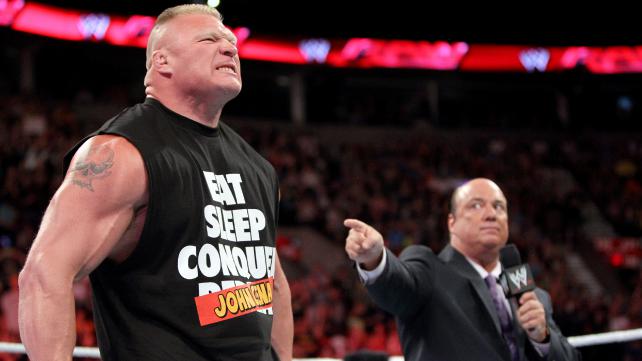
    This episode of Raw presented something of a debate between Lesnar—represented by his advocate, Paul Heyman—and Cena; two extended interview segments that were both quite good. Heyman rapped, which, when you’re a 48-year-old man who was once prominently billed as “The Psycho Yuppie,” sounds more like Dr. Seuss than N.W.A., and Cena spoke largely about passion, how he has it, and how Lesnar’s lack of it means that he doesn’t deserve the WWE World Heavyweight Championship. Heyman hit his peak a few weeks ago when he brought Lesnar out as the man who would conquer John Cena’s 15th reign as champion and has been coasting a bit since—making fun of Cena’s origins as the horrible white rapper from the mean streets of West Newbury has been a thing since Cena was that character—but that’s kind of the point. He’s the dude standing behind King Kong. He doesn’t need to try very hard, because even a subpar effort from Paul Heyman on the microphone is museum quality compared to anybody else in the game.

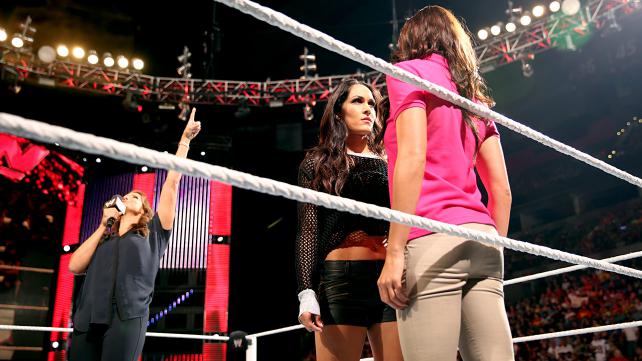
    This was made painfully obvious by the evening’s other large piece of non-physical storytelling, the ongoing saga of Brie Bella and Stephanie McMahon. An offshoot of last summer’s program that saw the rise of bearded populist hero Daniel Bryan in the face of a heartless corporate power structure that didn’t get why arenas across the country were making a big deal out of a guy they’d branded “goat face,” Bryan’s triumph at WrestleMania XXX (he beat Triple H, the head of the Authority, and then defeated Randy Orton and Batista to become the WWE World Heavyweight Champion) quickly turned sour, as his father died and he suffered a severe neck injury. This has caused him to relinquish the championship and largely disappear from television as he rehabs en route to an eventual return. Since, they’ve shunted the Bryan vs. Authority storyline to Brie Bella and Stephanie McMahon, the wives (in reality and in wrestling) of Bryan and Triple H.

    Stephanie McMahon Brie Bella

    Sometimes, when Stephanie McMahon is leading Brie through segments, everything is fine. Stephanie McMahon has grown considerably as a character over the past 15 years of her being in the spotlight, and is perhaps the second best Evil Boss character in the history of the medium, behind only her father. Brie Bella…is not good at talking. That’d be fine in a reality television show, where she actually thrives, but in a storyline that requires her to garner sympathy from an arena full of angry dudes, it’s going to take more than blackmailing the boss and calling her a bitch every week to get people invested. So this week, Stephanie brought out Daniel Bryan’s personal trainer, who awkwardly admitted to having an affair with the former champion, Brie’s husband, etc. This was, I guess, supposed to embarrass Brie Bella, but the segment was mostly terrible because, for starters, the woman playing the physical therapist was an atrocious actor even by wrestling standards. McMahon intimating Bryan’s cries “Yes! Yes! Yes!” in a tone suggesting the fake pornographic moans of an Herbal Essences commercial was funny, and I guess it makes sense that a heel would resort to slutshaming (the poor physical therapist is there in the corner watching McMahon imitate her during sex) in an effort to make the live fans cheer for Brie, but I checked out on this angle around the time McMahon was thrown into a gigantic kiddie pool of human waste, and whatever loyalty I have to Daniel Bryan doesn’t automatically transfer over to his spouse, because that isn’t how well-developed characters are created. Still, McMahon vs. Bella is the second most important match on the second most important show on the WWE calendar, and the crowd absolutely eats it up whenever the two get into a physical confrontation. There’s probably something to be said about the fact that these confrontations have been built around the signature moves of their husbands, but I’m not swimming through the kiddie pool of human waste to retrieve it. Therein you’ll probably also find a salient point about the biggest insult hurled by McMahon or Bella, beyond “bitch,” is the insinuation that Brie Bella is not good at sexually satisfying Daniel Bryan, which is, I guess, the job you sign up for when you get married.

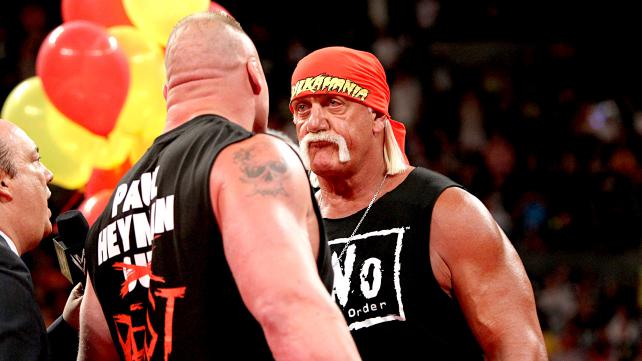
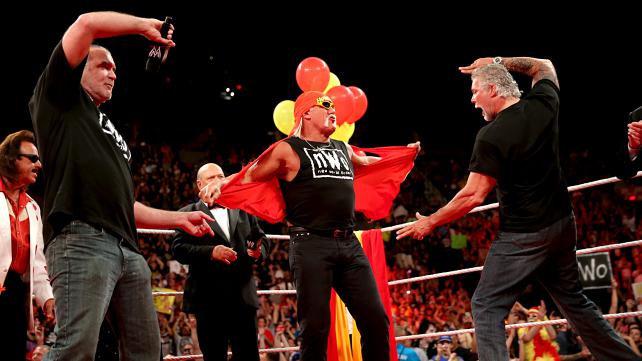
    Finally, Brock Lesnar crashed Hulk Hogan’s birthday party, because of course he did. “Party’s over, grandpa,” he said, leering like the villain of an 80s film. Brock Lesnar is there to beat up the collective childhoods of everybody in that arena—beyond Hogan, the ring had filled with Roddy Piper, Ric Flair, the nWo of Scott Hall and Kevin Nash, “Mean” Gene Okerlund, Jimmy Hart, and “Mr. Wonderful” Paul Orndorff. John Cena saved the day, because of course he did, but that doesn’t matter much. Nothing happened between he and Lesnar, because that can wait until Sunday, until Summerslam, until you’ve given up $9.99 for it and the rest of the card. Before those two had their final confrontation, and before all of the old-timers came out and Scott Hall had a bit of fun running through his old nWo catchphrases and Hogan ripped off his red and yellow Hulkamania shirt to reveal the black and white New World Order shirt beneath, Gene Okerlund directed Hogan’s attention to the video screen, where a legitimately touching tribute to Hogan played. It was set to Bob Dylan’s “Forever Young.” Hulk Hogan is 61 now, and while he can come out and run through the catchphrases and rip his shirt off and do the same bodybuilding poses I saw as a four-year old, he’s never going to wrestle again. Time has officially caught up to Hulk Hogan, and seeing clips of him dropping leg after leg to Dylan was strange at first, somehow dissonant to what Hogan was, until it hit me that, well, it kind of fit. The Ultimate Warrior died this year. Randy Savage died in 2011.”When you turn 61-years-young,” Hogan said, bringing down the energy after mustering a bit of that vintage Hogan hype, “you start to reflect back on a few things.”

    Hulk Hogan nWo

    Nothing Hogan could say on a night that ended with him cutting into a birthday cake festooned with candles spelling out “9.99” was going to reach the zenith of what turned out to be the final public appearance of The Ultimate Warrior, but last night, The Immortal Hulk Hogan pondered his mortality. And while the footage of his staring down Brock Lesnar will likely be replayed over and over for the next year, if not longer, the fact that there was no physical altercation between the two—not even Lesnar shoving Hogan to the mat, which would have blown the roof off of the building—speaks volumes about what Hulk Hogan is capable of in 2014. Hulkamania may be willing, brother, but all the training, prayers, and vitamins in the world can’t stop time. Beyond a paycheck, this is why someone like Hulk Hogan might be interested in forking over $9.99 for the WWE Network. Not for Summerslam, which will be there regardless, but because he’ll be dropping legs and shredding t-shirts on it forever, immortal, as promised. For a wrestler—for the wrestler—that’s not a bad legacy.

    Results:

    • Paul Heyman addressed Brock Lesnar’s upcoming match against John Cena by “rapping.” Since he did so without a beat, one could even say he freestyled.
    • Roman Reigns def. RybAxel (Ryback and Curtis Axel) via disqualification.
    • Bray Wyatt and Chris Jericho had a face-to-face confrontation that was lifted entirely from The Silence of the Lambs.
    • Seth Rollins def. Rob Van Dam via pinfall. After the match, Dean Ambrose emerged from a giant gift box to attack Rollins, who ran away through the crowd.
    • Stephanie McMahon interviewed Daniel Bryan’s physical therapist, who admitted to having an affair with Bryan. This led Bryan’s wife, Brie Bella, to slap the therapist and attack McMahon, putting her in Bryan’s signature finishing maneuver, the Yes! Lock.
    • Jack Swagger def. Cesaro via submission. He then stared down Rusev, their inactivity a metaphor for the Cold War.
    • Eva Marie def. WWE Diva’s Champion AJ Lee by pinfall due to a distraction by Paige, who then read a terrible poem to mock her “frienemy,” which is an awful word to hear a trio of middle-aged men repeat seven or eight times in six minutes.
    • John Cena called out Brock Lesnar, who did not respond.
    • Brie Bella vs. Stephanie McMahon did not occur, as Brie Bella was arrested for assaulting Daniel Bryan’s physical therapist.
    • Heath Slater def. Dolph Ziggler via count-out, as The Miz was distracting Ziggler from the announce table.
    • Randy Orton def. WWE United States Champion Sheamus by pinball.
    • Hulk Hogan’s birthday party was interrupted by Brock Lesnar. The assembled old folks there to celebrate Hogan’s 61 years of Hulkamania running wild were saved from a beating by John Cena. Rather than fight, Lesnar ditched the ring, saving the inevitable clash for this Sunday’s Summerslam.

    Rating: far out

    For no reason other than that they played him down to the ring to it last night, be sure to listen to Paul Orndorff’s brilliant theme song:

  • The Ultimate Warrior

    The Ultimate Warrior

    Ultimate Warrior

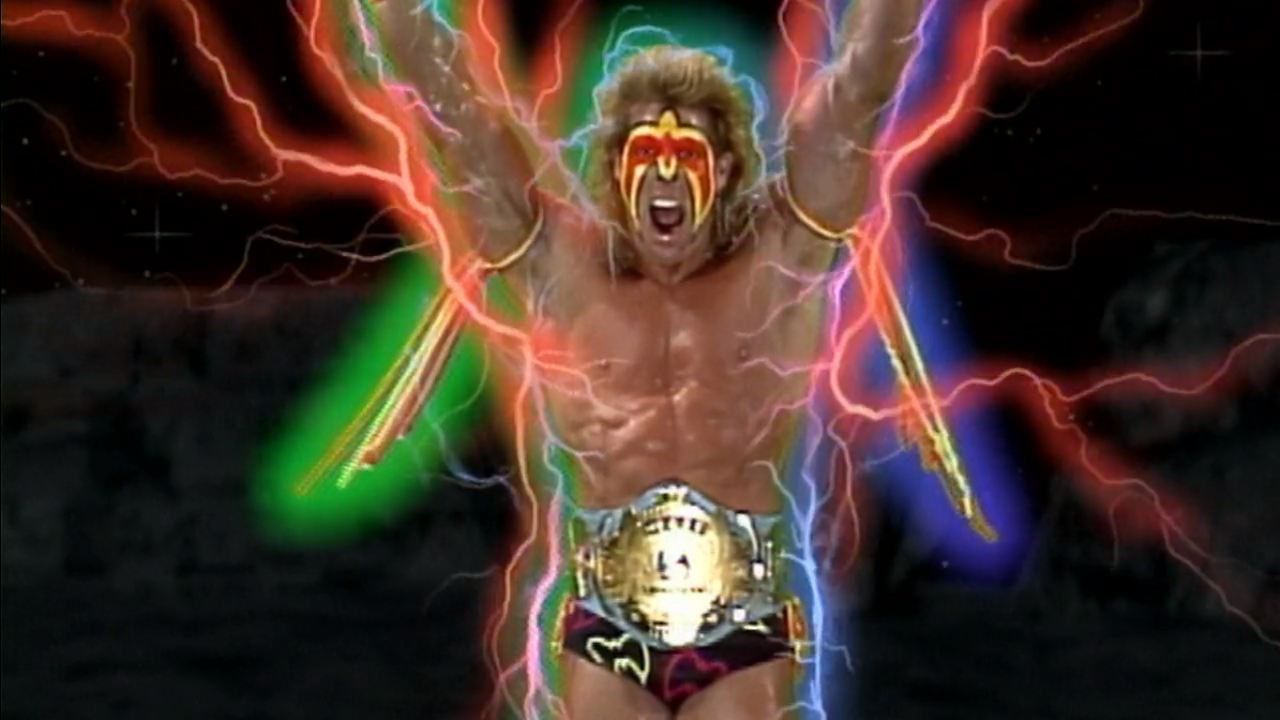
    I’ve been thinking a lot about The Ultimate Warrior lately. I’ve also been thinking a lot about the man, Warrior (or Jim Helwig, if you’re not into calling people by the names they choose to self-apply). I was at WretleMania XXX in New Orleans, and despite everything on the card being custom-designed to appeal to my lizard brain, there was no bigger reason for my being there than the promise that The Ultimate Warrior’s music would play, he would charge down to the ring in full gimmick—face paint and airbrushed duster—and shake the ropes a bit before once again disappearing into the recesses of my memory, where he exists in an odd liminal zone I’ll eventually come around to discussing. His music played, and what emerged was a middle-aged man in a tuxedo. I would have to wait until I was at home on Monday, watching Raw, to see The Ultimate Warrior. He shook the ropes a bit. He put on a plastic mask that approximated his famous warpaint (but wasn’t half as satisfying). He cut a promo about his legacy that, in all honesty, ranked among his absolute best even without its later context. He left the ring. He went home. He died.

    The Ultimate Warrior has always been in my life, even in the spaces that are filled in largely by old photographs or memories that may have actually been dreams. There’s a picture of my sister and I from one Christmas. I was four, I think, and she three. We’re tearing open our gifts. Mine is a WWF Brawling Buddy of Hulk Hogan. Her’s is The Ultimate Warrior. My mom would put us in a crib with these things, me an avid Hulkamaniac and wrestling lunatic even that young, her accepting the Warrior because he had make-up on his face and tassels on his arms, and we’d put on impromptu steel cage matches.The first wrestling event I can remember seeing is WrestleMania VI, The Ultimate Challenge, on a bootleg tape at my babysitter’s house. Warrior won the WWF Championship from Hulk Hogan that night and every weekend thereafter, until I learned that there was such a thing at new wrestling on TBS. But there was always the Warrior. Always his music, his sprinting, his paint, his tassels, his shaking the ropes. Forever.

    I was disappointed that Warrior—this is the man I’m talking about, now—didn’t appear at WrestleMania XXX in The Ultimate Warrior’s face paint because I’m petty, maybe, and because I expect nostalgia acts to play their part in my satisfaction. But Warrior wasn’t there for nostalgia’s sake. He was there to settle old scores. I don’t care about long-held grudges in wrestling and just don’t have much use for Warrior beyond nostalgia, so no number of DVD releases, tell-all interviews, or motivational speeches would have made up for his appearing at WrestleMania as Warrior, husband and father and inspiration, and not the character that allowed him to do this. Still, I found it hard to be too bitten by this—The Ultimate Warrior was always something of an enigma; unlike Hulk Hogan or Randy Savage or Bret Hart or Jake “The Snake” Roberts, he was a figure from the tapes I devoured who came and went as he pleased, too frequently for me to attach the role of childhood hero to. I wanted that face paint—I needed that face paint—because anything else was a reminder that The Ultimate Warrior was just a man, just Warrior, and Warrior wasn’t enough.

    Looking up to wrestlers as a kid, I think, taught me a valuable skill. It taught me to distinguish a human being from their work, the art from its artist. Most of my childhood heroes are dead now. One of them died having murdered his family. It isn’t easy, going back and watching these men work, knowing what I now know about the body, the brain, why it’s a bad idea to take a steel chair to one’s face. But this doesn’t stop me. It’s difficult art that I appreciate the most. Difficult artists, however, I can do without. Warrior, the man, was a difficult artist. I don’t mean that in the sense that I watched WWE’s hatchet-job DVD The Self-Destruction of The Ultimate Warrior and thought “Wow, this guy was an asshole.” I mean that he was a difficult artist in that he was a homophobe in an extremely public manner, taking money to give lectures about how “queering doesn’t make the world work,” and penning missives about how Heath Ledger’s child was better off without a father who’d stoop to playing a faggot cowboy in some Hollywood film with a queer liberal agenda. This from a man who, in 1989, participated in an angle where his opponent was rubbed down with oil in front of 15,000 men who were asked to vote, with their full-throated cheers, for the wrestler they believed to possess the better physique.

    I tend to cry when wrestlers die. At least the ones from my childhood. The ones who’ve always been there. The video package for “Macho Man” Randy Savage that played the Monday after his passing is the last thing that made me weep openly. The Chris Benoit tribute episode of Monday Night Raw, the one for Eddie Guerrero, the one for Owen Hart—each one had me inconsolable. With the exception of Benoit, whose transgressions became public during the course of the event held in his honor, I think what unified these men, what made their passing significant for me, was that I didn’t know them as human beings, but as something more than human. I knew them as wrestlers. The Ultimate Warrior I know as a wrestler. Warrior I know as a man. I’m able to separate the two, and, given Warrior’s attempt to launch a reality show where he yelled at swoop-haired nu-metal bands about not being in shape and enjoying alcohol too much to be “real men,” I can even appreciate what the lesser being had to offer. But Warrior was a man, a public figure who I knew through shoddy videos of him saying one thing or another that I didn’t merely disagree with, but that violated some part of me, or would have, could something like a viral video violate my autonomy as a queer man. The Ultimate Warrior exists in too many hours of archival footage to truly die. Warrior is dead, and it’s only a little weird because I was there, occupying the same space as him. I watched him at the Hall of Fame ceremony. I saw him at WrestleMania. I listened to him on Raw. He seemed fine, if a bit wounded. Then he simply wasn’t.

    This is fate, of course. As he said, every man’s heart one day beats its final beat, his lungs breathe their final breath. And I owe the man, Warrior for being the man inside The Ultimate Warrior, who was no small part of my early infatuation with professional wrestling, which was the beginning of my infatuation with words. His words. Ric Flair’s words. Paul Bearer’s words. Randy Savage’s. Mine. When a wrestler dies, there is generally the temptation to burnish the legacy of the man who occupied that wrestler. This is something that I have been guilty of in the past, and will probably be guilty of in the future. But I’ve been thinking a lot about The Ultimate Warrior lately, and I find myself unable to do the same for him. Because I can’t think about the man too much. Because I won’t. So instead, I’ll think about wrestling. I’ll speak to it and of it and for it. Because there is nobody there to speak to. Because he wouldn’t listen were he there.

  • Free Wrestling: Repo Man vs. Randy Savage (1/25/1993)

    Free Wrestling: Repo Man vs. Randy Savage (1/25/1993)

    Background: The Repo Man—one of Barry Darsow‘s many faces once the Demolition well ran dry—is, in my humble opinion, one of the great bad gimmicks of all time. (For the record, Darsow’s stint as angry golfer “Hole in One” Barry Darsow on WCW Saturday Night is another.) During this time, with Vince McMahon fresh from federal trial and casting aside the notion that wrestling was a legitimate sport to throw off the yoke of state athletic commissions, it wouldn’t be farfetched to accuse the chairman of having a persecution complex, and the things McMahon hates, loves, or finds funny often manifest themselves in his product. So in the early 1990s, he had two men running around stealing things from his good-hearted fans: I.R.S., who’d take your money, and The Repo Man, who’d take your ride. This wonderful clip should explain Repo Man’s motivations quite nicely:

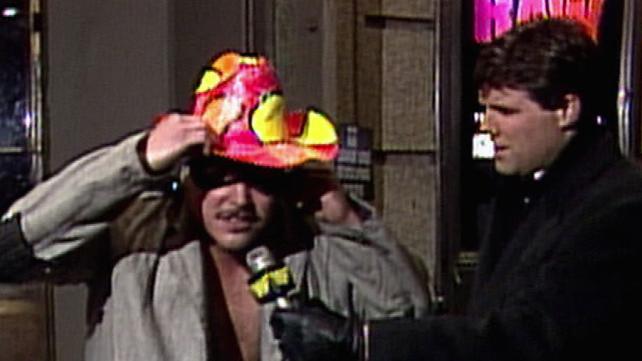
    Where most bad WWF gimmicks of this period (Bastion Booger, Mantaur, Phantasmo, and so on) came and went before developing a catchphrase or receiving a theme song, Repo Man came to the WWF fully formed with a truly great Jim Johnston theme song and the kiss-off line of “What’s mine is mine, and what’s yours is mine!” Also unlike the majority of goofball jobbers the WWF would come to feature, Repo Man actually had a televised feud with “Macho Man” Randy Savage, notable for its sheer weirdness. Savage had been around the WWF block a few times by 1993, and everything he could possibly feud with another wrestler over, he’d already done. Miss Elizabeth, Queen Sherri, crowns, and championship belts were meaningless to Repo Man, who had his heart set on hooking his towing claw into the one thing he really couldn’t be without: his hat.

    The best thing about this mini-feud, beyond how passionate Macho Man is about his hat, is Repo Man’s insinuation that the sequined monstrosity required multiple payments that Savage was somehow delinquent on. Boiled down, the two-week program is a familiar one, where the unappreciated mid-card guy gets a shot at somebody way above his pay-grade because he destroyed their property. Think Kofi Kingston wrecking Randy Orton’s NASCAR, or Paul Heyman stealing The Undertaker’s urn and forcing the Deadman to wrestle The Dudley Boys and bury Paul Bearer in a concrete tomb. The difference, of course, is that Repo Man is a cackling, C-level Batman villain riding shotgun in a tow truck, and Randy Savage is God. Nothing about this can end well.

    http://www.youtube.com/watch?v=g2M61oURweM

    The Match: Savage is so angry that Repo Man enters the ring wearing his hat that he bombards the poor bastard without so much as being introduced, which is too bad considering how infrequently “Pomp and Circumstance” played on Raw. He is all over Repo Man from the opening bell, beating him up so badly that Repo Man tries high-tailing it out of the Manhattan Center, which, of course, Randy Savage does not allow.

    In Rob Bartlett news, pay attention to the commentary when Repo Man takes over. The guy was a hack comedian and a worse broadcaster, which becomes increasingly obvious as he makes fun of Savage’s bald spot, something a face commentator would never do. McMahon covers for him as best as he can until, finally, Bobby Heenan asks Vince where he found the schmuck. Sure, it goes along with Heenan’s character to be exasperated with Bartlett, but his exasperation seems genuine and is something a heel commentator generally gets away with. Vince McMahon is somewhat infamous for the way he dresses down his commentary team during broadcasts—an entire chapter of Mick Foley’s Countdown to Lockdown is dedicated to the subject—and Heenan and Jim Ross have told stories about how Gorilla Monsoon, who produced segments backstage, could pick out bad announcers and tell the regular crew “not to remember his name” almost immediately. Bartlett only lasted 13 weeks—long enough for him to roll out various match- or show-length impersonations of Mike Tyson, Elvis, and Vince McMahon—but his last few weeks with the company were spent mostly being the butt of jokes. Years later, the WWE would make the mistake of hiring another guy ill-suited to professional wrestling to fill the shoes of Joey Styles and Jim Ross before cutting him loose, but at least Mike Adamle was funny.

    http://www.youtube.com/watch?v=YAfTuhC8FJA

    Repo Man maintains his advantage for awhile, but it isn’t long before Savage gets the better of him, nails the flying elbow drop, and puts Repo Man away, reclaiming his hat and his manhood. Like the match between Shawn Michaels and Max Moon, this is another example of what Raw did very well in its early days: the showcase bout. Repo Man manages to look like a legitimate threat for awhile, much like Max Moon made a brief bid to take Michaels’s Intercontinental Championship, but he’s eventually put in his place and forgotten about so Savage can go on to train his buddy Crush for a WrestleMania clash against Doink the Clown.

    Guys like Barry Darsow aren’t fixtures on television anymore, and that’s too bad. Not that Darsow was the most brilliant wrestler, but as he shows here and in his 1994 feud against Dustin Rhodes in WCW, he makes for an able foil, and manages to look good even in a losing effort. The advent of the Monday Night War did away with Darsow’s role on flagship programming, as the need for marquee matches led to matches like Arn Anderson vs. Hulk Hogan or Randy Savage vs. Ric Flair being given away for free instead of being used to sell pay per views. WWE didn’t start giving away marquee matches until the end of the brief Invasion era that followed their buyout of WCW, but when 225,000 people purchase a pay per view and four million watch Raw, it’s perhaps understandable why Alberto Del Rio wrestles The Big Show on a weekly basis.


  • Wrestling Worth Watching 10/22/12 – 10/28/12

    Wrestling Worth Watching 10/22/12 – 10/28/12

    Welcome to the new, hopefully improved edition of Wrestling Worth Watching. Back when Fear of a Ghost Planet started, this post was a way of looking at everything that happened in the world of televised wrestling that was good, from Chris Jericho trolling the crowd to Brodus Clay debuting as a funk-loving tubbo from outer space to a decent match on some indie fed’s YouTube channel. It was an ambitious project, and one that ultimately failed. In 2012, there is just too much wrestling out there to keep track of it all as it happens. So I’ll be forward and honest from the start of this new project: I don’t watch Impact Wrestling, as they don’t make an honest effort to make their shows available beyond airdate, and Ring of Honor doesn’t air where I live, though I’ll try to catch it whenever possible. These posts may seem like they’re dominated by the WWE, but that’s the reality of nearly every wrestling fan’s situation: the promotion who airs the most free wrestling is the one that gets watched the most. If you’d like to chime in with matches from elsewhere that should be noted, hit me up in the comments section.

    Monday Night Raw (8/22/12)

    Team Rhodes Scholars vs. Rey Mysterio & Sin Cara: For a month now, the WWE has done everything in its power to revitalize its tag team division, waking the dead by calling a time-tested audible in the long-running Daniel Bryan/Kane feud by pairing the two up and giving them the Tag Team Titles, running an angle where a rival team formed as a result of the champions’ dysfunction, then having a month-long tournament featuring several new teams. The only team that’s broken up as a result of not winning the tournament was the one pairing Kofi Kingston and R-Truth, the previous champions. Now there’s a power tag team (Primetime Players), a team of brothers (The Usos), a high-flying tag team (Justin Gabriel and Tyson Kidd) and these two teams, the most popular/hated and established of the bunch. Theirs was the best tag team match of the week, setting up the long-anticipated slight-letdown of a match between the Rhodes Scholars (I think putting “Team” in front of everything has been the worst part of the division’s rebuild. Team is implied!) and Team Hell No (the exception to the rule, as “team” is meant pseudo-ironically, though “Team Friendship” will forever be the better name). The only reason this wasn’t the best match on Raw is because Dolph Ziggler and Daniel Bryan would later take the floor for 15 minutes.

    Daniel Bryan vs. Dolph Ziggler: For a long time, the only person the Money in the Bank briefcase turned into a star was Edge, and really all his surprising title victory over John Cena did was solidify his place as a top-tier talent. The second person to benefit from the odd bump the briefcase provides was C.M. Punk, though it took two tries—and an incredibly good feud against Jeff Hardy—to get it right. Everybody else either wasn’t ready, or wasn’t given something beyond that moment of glory, but in Edge and Punk, the briefcase has found purpose: either a crafty, dickish heel cashes it in and proves himself, or a mawkish good guy cashes it in and quickly turns evil. Dolph Ziggler and Daniel Bryan are the next generation of men who’ve somehow taken that gaudy briefcase and turned it into a platform from which better careers are launched, Ziggler by taking Edge’s role, and Bryan by taking to Punk’s. While both remain a title reign away from true greatness, their match Monday on Raw was a gift from the ghost of WWE’s future, a thrilling contest teasing at the possibilities a full-blown rivalry between the two contain. The point of this was to reestablish the dysfunction between Bryan and his tag team partner Kane, and while that mission was accomplished and the work those two have done together has been very good, matches like this mean I can’t wait much longer to see Bryan on his own again, a mean little man with a nasty beard and a worse submission hold.

    C.M. Punk vs. Sheamus: Though they didn’t mention it, there was a nice synergy to this contest, the 30 or so men around the ring not only serving as flesh-and-blood metaphor for the inescapability of the Hell In a Cell structure, but as closure to the mini-issue between Punk and Sheamus that started at the Raw in Chicago, when Punk bolted on a slated title vs. title match to eat at The Wiener’s Circle and hang with Paul Heyman. I haven’t seen every Lumberjack Match ever, but I feel pretty confident in claiming this as one of the best. The match is a throwback to a time when a sheer mass of humanity was enough to pique a crowd’s interest, and lately has been relegated to the typical blow-off match between Divas, the lumberjill match, if you will. Anymore, they’re confusing affairs, the lumberjacks rarely doing their job—containing the action in the ring—and instead clubbering on any poor bastard who ends up on the floor. So it was a sigh of relief when C.M. Punk landed on the floor, in a sea of humanity, and was merely tossed back into the ring. And it was surprisingly O.K. when Sheamus was thrown out there and got beat up, because he landed amongst a crowd of heels and wound up brawling back. Barroom brawls are an environment Sheamus thrives in, and lumberjack matches are a situation where crafty bad guys have to be their most cunning. C.M. Punk was just that, Sheamus was in his element, and the result was the most satisfying Raw main event in some time. The stuff with Ryback I covered last week, but having 30 men around the ring, overkill in any other match, was worthwhile just to see them split when the dude’s music hit.

    WWE Main Event (8/24/12)

    Dolph Ziggler vs. Ryback: There’s really no better opponent for Ryback than Dolph Ziggler, a wrestler who is, in every aspect, the second coming of “Mr. Perfect” Curt Hennig. If you’ve ever seen Hennig pinball around the ring for a larger, more muscular opponent, then you know what I’m talking about. Ryback’s an act only the most cynical wrestling fan doesn’t like, a monster in the Goldberg fashion who steamrolls through opponents with a variety of ridiculous power moves and stiff-looking strikes. Ziggler flopped around the ring for Ryback’s routine like a mad-man, putting over the legitimate danger presented by the monster while also showing that there’d be no escape for C.M. Punk on Sunday, even without the presence of a gigantic steal cage. The match did its job very well without tanking Ziggler. Credit for that goes to the length of the match—thus far the longest match of Ryback’s run—and to The Miz’s commentary, which pointed out that, against Ryback, everybody is off their game.

    WWE Hell In A Cell (8/28/12)

    The Miz vs. Kofi Kingston: The third match between these two in as many weeks, and, in many ways, the best of the bunch. Hard to believe that their issue began when Larry King’s wife threw a cup of water in The Miz’s face, but I’ve come away from their series as a fan of both men, when before I was ambivalent towards both of them. The opening two minutes or so were great, Miz and Kingston both fighting and failing to apply their finishing maneuvers, the fact that spots from previous matches evolved and became something else was a very nice touch, and the finishing struggle between the two, with Miz keeping the full nelson he uses in the Skull-Crushing Finale on as the two rolled to the ring and got back up to their feet, was tremendously exciting. Lately, Kofi’s Trouble in Paradise kick has been a devastating-looking, come-from-nowhere move akin to Shawn Michael’s Sweet Chin Music. That’s worked a lot better than the old set-up, where Kofi stands in the corner and tries to pump the crowd for it, much like Michaels did for his kick. And while you wouldn’t know it from the anemic crowd, the last three or four minutes of the match, from when Miz started targeting Kofi’s leg with a weird-looking, over-the-shoulder knee-breaker to the finish, was tremendously compelling stuff. Knee braces and leg casts are things the heel usually removes on an injured opponent, but they took things a step further here, with Miz injuring Kofi’s leg mid-match and stripping his boot and knee pad to further exploit the injury. I loved everything about it, even The Miz’s awkward execution of the half-crab.

    The Big Show vs. Sheamus: For me, this was the match of the week, but I’m a big fan of Hoss vs. Hoss battles, something they featured plenty during the championship run of Mark Henry, and not enough during Sheamus’s time with the belt. Built up as a showdown between two knockout blows—The Big Show’s Knockout Punch and Sheamus’s Brogue Kick—the story of this contest wound up being much more complex, with Sheamus withstanding a number of Big Show’s past and present finishing moves, including the giant punch, and Big Show kicking out of the Brogue Kick, becoming the first man to do so in the process. The crowd—dead most of the evening—came alive when Sheamus picked up The Big Show and dropped him with a perfect-looking White Noise, and for good reason: however good Sheamus’s matches as champion have been (and however much he’s been built as the best champ in 10 years), they’ve lacked effective spectacle. The only other guy on the roster who has picked a guy like Show up on his shoulders is John Cena, but you expect that from him. This was built as blow vs. blow, a straight brawl, but that maneuver, more than Sheamus’ triumph over Daniel Bryan at WrestleMania, will be the defining moment of his championship reign. The finish, which saw Show sidestep a second Brogue Kick while throwing a K.O. Punch the champion’s way, was the best moment of the week, two semi-trucks playing chicken in the rain, only one driving away without jackknifing. This one wasn’t pretty, but boy was it effective.

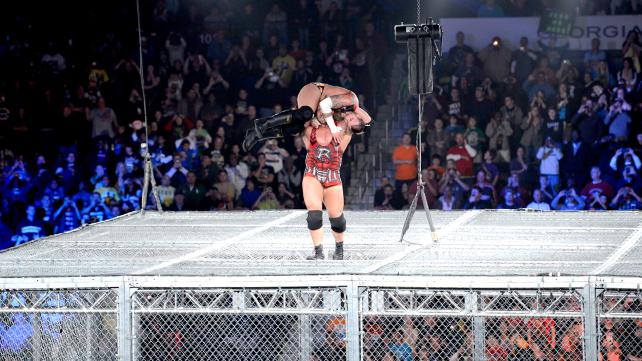
    C.M. Punk vs. Ryback: The most controversial match of the year, as even anti-Ryback partisans realized the risk of this match: Ryback loses the “wrong way,” and the WWE is out one potential game-changing superstar. Popular wrestling journalist (a three-word oxymoron, if ever there was one) Dave Meltzer says that he read through dozens of bad-to-middling ideas for the finish of this match, and that all of them were better than the one chosen here. Whatever. In 1998, Ryback’s ancestor Bill Goldberg defeated Hulk Hogan in the Georgia Dome in Atlanta, ushering in what many felt was a new era in WCW. He was undefeated. He was slightly green. But he was at the apex of his popularity and ready for the championship. At Starrcade that year, he was defeated by Kevin Nash, who was aided by long-time running buddy Scott Hall, who used a taser to put “Da Man” (Bobby Heenan’s spelling, not mine) down for the count. It was an awful finish, an anti-climax that didn’t make a whole lot of sense (Hall and Nash were feuding, Goldberg was on the verge of reaching Hogan-esque levels of global fame), and Goldberg—and WCW—never quite recovered. The finish to the Hell in a Cell match between Punk and Ryback is similar in a way—Ryback was screwed over—but the circumstances are different. It doesn’t matter if the “GOLDBERG” chants that follow Ryback are now affectionate, if the same people who chant that stop to join the rest of the crowd in Ryback’s WWE-mandated “FEED ME MORE” chant, Ryback was not ready for the WWE Championship. To my recollection—hardly a useful tool, but one that probably feeds the WWE machine better than a photographic memory of every Ryback match—the man hadn’t bumped for move one of any opponent he faced before this match, from the jobbers named after presidents to the duet of former champions he faced leading into his main event this week. Here’s what Punk needed in order to win: the most biased official in wrestling history. Brad Maddox, last seen close to a month ago missing C.M. Punk’s foot on the ropes, stopped Ryback while he was marching around the ring with Punk on his shoulders. He low-blowed the man, slipped behind him, and quickly counted to three as soon as Punk pushed him over the ref and made the cover. I don’t want to say that it was brilliant, but it clearly shows that someone in the back learned from the essential mistake of the Nash/Goldberg issue, which was never successfully resolved. This was a FIRST TIME ENCOUNTER. That it happened in one of WWE’s most legendary matches was something of a head-scratcher, a calendar-based necessity, but really, it’s the only place it should have happened. Ryback’s destructive ways aided and got in the way of his goal. The cage provided a place where he could look momentarily weak, but also like the freaking monster he is. It allowed Paul Heyman to be at his panicked best. It meant that Punk and the referee would be unable to escape swiftly into the night. It meant Ryback would get his revenge. And he did so memorably, tossing Maddox into the cage as if he were Bam Bam Bigelow and the poor referee his Spike Dudley before chasing Punk up the cage and delivering Shellshocked 20-feet in the air. The show ended with Ryback nodding his head to his own music, foot planted firmly on Punk’s chest. Those who don’t think Ryback got his due last night, that his star was aborted rather than born, aren’t paying attention. The focus of this match, after all, was Punk establishing his legacy, finally gaining the respect of the WWE Universe. Punk is an asshole. A dick of the highest order. His legacy is that of a great, long-tenured heel champion. He stands in defiance of what the fans want to see. He makes those fans want to see his comeuppance even more. He finds and exploits the loophole and expects you to respect him for it. I’m going to come just short of calling this match brilliant, but it’s another example of why Punk’s run as WWE Champion, of late, has been one of the most effective such runs in memory. You wanted Ryback to win? You’re upset with the finish? That’s exactly how WWE wants you to feel. Tune in tonight on Raw to see that snide jerk get what’s coming to him.