Kim Kardashian going out for Halloween as Joel Schumacher’s Poison Ivy. Only Batman and Robin is more accomplished than any of the Kardashian sisters. I only bring this up because I’m a staunch defender of Batman and Robin (rubber lips may be immune to its charms, but I’m not), and because it gives me an excuse to troll for hits to point out that, in Hollywood, failure is the new success.
vs.
Not only are Uma Thurman’s scarf and sleeves are much more conscious of the season, but somehow, the costume from a Joel Schumacher movie manages to look more authentic than something made for use in real life, some fourteen years after the film’s release. You go, Joel.
TJ Perkins vs. Mike Mondo: I’m going to go out on a limb and say that being in the Spirit Squad wasn’t the best showcase for Kenny, Johnny, Nicky, Mitch, or Mikey, as only one of them got on TV right after the dissolution of the group (Kenny), and only one of them is on TV right now (Nicky, AKA Dolph Ziggler AKA “The Heel”). Having not seen Mike Mondo outside the constraints of that gimmick (five on two handicap matches are a horrible showcase, by the way), I had to wonder what the hell they saw in the dude, but he’s a fine enough worker with a Crash Hardy style gimmick that’d probably work better if the dudes he encountered in ROH were absolute giants. TJ Perkins has been wrestling since he was 14 and, at 27-years-old, is a very well-rounded wrestler with some nifty moves. The one I liked the most was the figure-four deathlock, a cross between the figure four (obviously) and the Texas Cloverleaf. Good match to start out the second round of ROH TV tapings, and both men were signed to contracts as a result.
The Briscoes Man Up: After being informed by Jim Cornette that they’d need to beat the All-Night Express again in order to get a shot at Wrestling’s Greatest Tag Team, the boys from Sandy Forks, DE started beating up on each other. Cornette, as usual, was fabulous in his understatement here, at once afraid of the Briscoes and trying to make sure his word was kept law.
Kevin Steen Signs: ROH is doing with Kevin Steen what WWE should have been content to do with CM Punk–let his name be a rumor, a wave building momentum before it crashes onto the shore. When Steen does make his return for ROH, it’ll be awesome. That was less true of Punk’s return.
Jay Lethal vs. Mike Bennett: The more I see him, the more I like Mike Bennett. His gimmick, a wrestler who is using wrestling to break into Hollywood, is exactly the sort of thing that would work in a dirty, grungy fed like Ring of Honor, and I especially like that he has some chumpy ex-Jobber with a Burgess Merrideth gimmick and the name of a horrible restaurant. What puts him over more is simply the fact that he’s a good wrestler, one who’ll probably go far in the business, and here, for the ROH TV Championship, he faces the also good Jay Lethal, who has made the most of his recent departure from TNA. Watching Jay Lethal’s ROH output directly before or after an episode of TNA’s IMPACT Wrestling is a stark reminder of the sort of star the company could have had were they actually interested in having stars, and he continues to prove that. I think that, five shows in, Ring of Honor knows that it doesn’t have to give as much away for free as it did with the last set of tapings, so this here’s a draw, and, unlike Lethal’s win over El Generico, it doesn’t go to overtime. Good match, good show. This is a good formula, regardless of how slow ROH’s build is.
Questionable Decision of the Week: Having the second TV Title match on TV go to a draw. I get that the time limit is part of the deal, and I know that, with one TV show and the constraints of a four-shows-at-a-time taping schedule, fitting more than one TV Title match in a month is a hard proposition. Regardless, the anti-climax isn’t really a good finish for a good-guy champion. Hell, the anti-climax is rarely a good finish for the bad guy, unless you’re Lord Steven Regal, who practically owned WCW’s television title division for much of the 90s, escaping from bouts via time limit draw and sneaky victories. Lethal and Bennet ended the match clubbering each other as the bell rang, but if I wanted to see that kind of thing, I’d probably watch MMA. If the face is going to pull out a draw via time limit, I’m under the impression that he should either be saved by the bell, or the heel should do the same. It’s a slight blemish on what was otherwise one of the best matches of the week, but there you go.
TNA IMPACT Wrestling (10/27/11)
Samoa Joe Remembers Samoa Joe: I’m a big sucker for sentimental speeches by first time title holders, and James Storm’s was certainly that, talking about how he and his dad watched Hogan vs. Andre and how he always wanted to be a champion, even if his dad wouldn’t live to see it. But I was more excited by the prospect of Samoa Joe getting back into the main event picture. As a company, TNA should be doing everything in their power to show that they’re the exact opposite of the WWE. Putting Samoa Joe back in the title picture is a step in the right direction, even if I get the feeling that he’s going to be used as the really good wrestler who makes other decent wrestlers look really good themselves.
Christopher Daniels Calls Rob Van Dam “Bob Van Dam:” Why this hasn’t happened before is a mystery.
Christopher Daniels Gets Disqualified For Hitting RVD With a Toolbox: It was plastic. Because TNA is hardcore.
Ric Flair Give Parenting Advice: “Tough love. I’m an expert at it.” According to that Grantland article, he really is.
Bully Ray Continues to Rule: “Jeff, I’ve never respected you, because rehab is for quitters.”
Samoa Joe vs. Bobby Roode: Given seven minutes, Bobby Roode continues to prove that TNA probably should have given him the title at Bound For Glory, and Samoa Joe continues to prove that he should be a bigger part of the company. I imagine, given an extra ten or so minutes, the two would have had a match in the running for TNA’s match of the year. But hey, Bischoff and Son needed to have another segment devoted to posturing and light McMahon Family Drama.
Questionable Decision of the Week I: Bringing in a cast member from the Jersey Shore. TNA’s already done this once, and it didn’t work. WWE brought in Snookie for WrestleMania, and her participation has all but been swept under the rug. The worst part was that they kept talking about it. Jeff Hardy’s return match? “Watch for Ronnie next week!” Number one contentership match? “RONNIE’S GONNA BE HERE!” Ric Flair mugging Eric Bischoff’s kid in the night’s most important (to TNA management, at least) segment? THEY TALKED ABOUT RONNIE AS FLAIR STOMPED THE KID’S FACE. There is no discernible benefit to bringing in any castmates from the Jersey Shore, so I think I speak for everybody who watches wrestling when I post the following image macro:
Questionable Decision of the Week II: Not letting Roode vs. Joe be the actual main event of the evening. Instead, the non-drama between Eric Bischoff and his son, a lesser Vince McMahon vs. Shane McMahon for those interested in the dusty corners of WCW trivia (the irony of Flair sticking up for Bischoff in a family matter is rich in irony for all of four people) got to chew up not one, not two, but three whole segments. The first one was amusing for the “Let’s Go Garrett” chants, further proof that TNA fans will chant anything. The second one was OK for an incoherent Ric Flair telling Garrett that his name wasn’t Ric Flair, but God. The third one, beyond being overkill, saw the invention and abortion of the Ric Flair Kiss My Ass Club, and a father punching his own son in the balls. Flair, as he gets older, looks nastier and nastier as he lays in chops and stomps and punches, but Hogan and Sting no longer appear to be part of this storyline, and it looks like we’re headed to a situation where Flair will be taking on Eric Bischoff’s son in a wrestling match. Jay Lethal? Sting? Fine. Do what you gotta do, Slick Ric. Garrett Bischoff? I hope he’s the wrestling equivalent of Rembrandt, otherwise this smacks not only of nepotism, but of a guy clearly out of touch with the realities of his age and abilities. Flair, as he’s shown a few times since “retiring” at WrestleMania 24, can still go, given either an incredibly game opponent (Lethal) or one who knows him in and out (Sting), but the dude’s got to realize that the term “special attraction” only applies if you’re not wrestling everybody, if you’re not the focus of the big angle. Two weeks ago it looked like the company was set to turn a new page, ready to focus on new people. If I’d known one of those new people was going to be Flair, as much as the guy’s an icon, I probably wouldn’t have started covering TNA on a week-to-week basis.
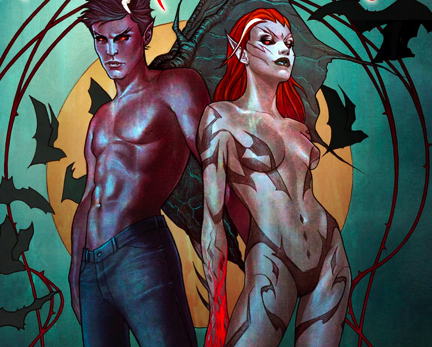
In 1981, perennially underrated comics scribe J.M. DeMatteis began writing I…Vampire, a back-up feature in DC’s monthly horror anthology House of Mystery. It’s main character was a vampire (obviously), who, in order to maintain his humanity, drank only animal or bottled human blood. It’s been over 25 years, but the concept of the “vegetarian vampire” has permanently embedded itself in pop culture, not only because of the sullen Cullen clan at the heart of the Twilight series, but because of the synthetic human blood that’s allowed vampires to come out of the casket in HBO’s True Blood and the Sookie Stackhouse mystery novels that inspired them. Not that Stephenie Meyers or Charlene Harris were DeMatteis fangirls in the eighties (if they were, they might both be better at depicting the human element that is so often absent in their work), but it’s understandable why DC Comics, in relaunching their entire universe, would choose to publish a book like I, Vampire, no matter how obscure the original property was. Like a dog, the company is returning to territory it’s previously marked. Yes, DC Comics are fighting well out of their weight in the vampire market–comic books that aren’t about Batman or the X-Men stand virtually no chance outside the ever-shrinking comic book market–but there’s still some cash left to be milked from the vampiric cow and, by rights, I suppose some of that cash should go to the company that unwittingly gave much to the new vampire.
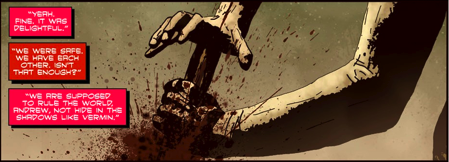
Unfortunately, I, Vampire can’t quite break free from the new vampire’s current deathgrip on culture, meaning that any money it does manage to wring out of a seemingly coffinbound genre will be grubbed up by being exactly like everything else. Essentially a romance with the promise of world-ending destruction, Andrew Bennett’s a vampire-killing vampire, the sort of dude whose been around the block several thousand times, the kind of cat who puts others out of their misery so he can hang on to whatever scrap of humanity is left after a few centuries of nightjobs and vampire slayings. Unfortunately, Andrew turned his lover, Mary, into a vampire as well and–surprise!–she likes the experience, tires of drinking animal blood and, unsurprisingly, calls for a vampire uprising. The book will eventually get to the uprising, but first there’s a lot of hand-wringing, a ton of baby-come-ons that are pretty much like every discussion a vampire’s ever had on the subject of their humanity.
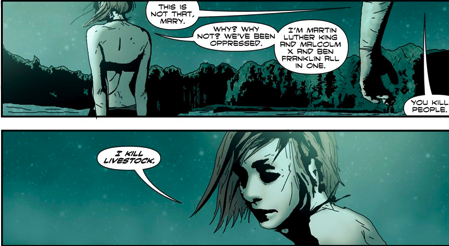
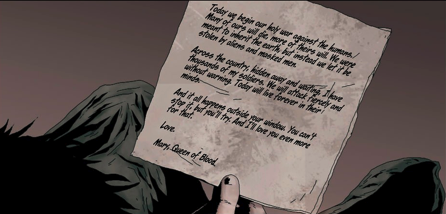
Maybe there’s something to the theme of vampires finding or losing their humanity, but I, Vampire does not do a good job of bringing something new to an incredibly crowded party. Matter of fact, it rushes into some decidedly Twilight-esque platitudes, particularly where the male/female dynamic is concerned. Granted, it’s hard to write a piece of vampire fiction with a vampire villain that isn’t couched in cliche, but after Twilight, it’s hard to read something where the male protagonist harshly chastises his lady-love over a disagreement. Andrew even goes so far as to warn Mary that starting a war against the human race might be dangerous, especially considering that said race calls Batman, Wonder Woman, Superman, and half the Green Lantern Corps its protectors. Were another guy sitting with Andrew by the lake, casually chatting about his plans to kill everything and have the vampires take over, the conversation would end with a stake in that vampire’s heart. Here, Andrew is hesitant because it’s his lover, sure, but when are we going to move beyond the point where the male is The Protector in a male/female relationship? Moreover, when will women in popular entertainment realize that their men are unsupportive jerks and leave them in the dust without a pleasantly written note pledging her undying love despite their differences?
As if the dynamic between Andrew and Mary wasn’t enough, I, Vampire‘s another book where the fate of the world seems at stake. Andrew wakes up one night and sees the streets of Boston littered with corpses, casualties of Mary’s newly-declared holy war. I understand the need to quickly ramp up excitement, but I would be more interested in the eventual Andrew vs. Mary showdown had not other #1s in the DC relaunch done the “we’re all gonna die” thing much better. I, Vampire very clearly isn’t interested in exploring the relationship between the two, is clearly convinced that the way to a reader’s heart is through the sort of vampire-cum-video-game violence that derailed the half-brilliant Daybreakers, the emotional investment of a beach read. I should have known all of this going in. The difference between this and the 80s iteration is as clear as the difference between a comma and an ellipsis, I…Vampire and I, Vampire. One is hesitant, full of trepidation. The other doesn’t give a damn. Full speed ahead. Blow everything up and pick through the rubble later. I don’t know–I guess I figure that, in 2011, we deserve a better class of vampire lit.
Magic is a curious thing in the world of mainstream superhero comics, cryptic and undefined, with the power to do precisely what the writer or editorial edict decrees necessary. In (forgotten?) Marvel Comics mega-event The House of M, the Scarlet Witch used magic to significantly alter the reality of the world, creating a dystopian society ruled by her father, where mutants were supreme beings and humans were second class. The biggest complaint, looking past Hawkeye’s rather inconsequential death, was that House of M represented a massive upgrade in Scarlet Witch’s power–before that event, she’d never displayed any powers of the magnitude required to change reality. But changing reality is at the heart of all magic, even parlor tricks. When the way we perceive reality changes, when magicians are writing the rules, anything is possible.
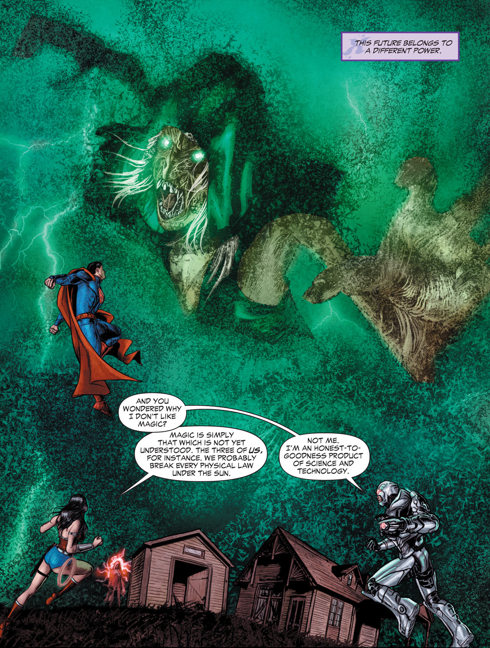
This is why, in the DC Universe, Superman’s other weakness is magic, writ large and ill-defined. His physiology follows very precise rules, but comic book magic undermines all of those, replaces the rules with its own logic. The magician says that Superman is capable of feeling pain? Superman is capable of feeling pain. This is the unexploited crisis of the DC Universe: There are a lot of magicians running around, many of them driven mad by their power. That’s a lot of extranormal juju to be messing with, and a guy like Superman, hell, any number of guys in the DC Universe, are going to be helpless in the face of chaos. When this is the case, who ya gonna call?
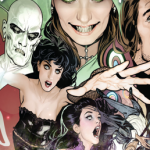
In Justice League Dark #1, it’s a yet-unnamed collective of hero magicians, comprised of the expected (Zatanna, Madame Xanadu), the unexpected (John Constantine, back from his incredibly lengthy stay in the Vertigo “universe” ), and the somewhat obscure (Shade the Changing Man). None of them seem particularly pleased to be in this circumstance, which is to be expected, but when Superman, Cyborg, and Wonder Woman fail to stop the encroaching madness of The Enchantress, it’s up to a league of oddballs to stop a mad witch.
The Justice League’s involvement in Justice League Dark is tangential at best, so people picking it up hoping that there’ll be new team adventures featuring Batman, Wonder Woman and Superman may be disappointed to find them easily defeated/on the sidelines. Justice League Dark is a horrible name for a book, and in it, Superman seems to have forgotten both about his weakness against magic and his costume change, but, beyond the book’s ties to the DC Universe’s heavy hitters, Justice League Dark #1 manages to get me interested in DC’s magic-based heroes, which isn’t easy. Seeing Shade the Changing Man and Constantine–who is literally dropped back into the DC Universe–back in DC continuity is welcome, and writer Peter Milligan (X-Force) not only has a handle on his widely disparate cast of characters, but he’s an expert with team dynamics and the offbeat. If Justice League Dark is allowed to be weird and on the outer limits of what constitutes a DC Comics superhero book, it’ll continue being one of the more pleasant surprises of the brand-wide relaunch.
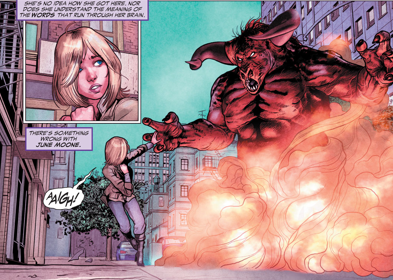
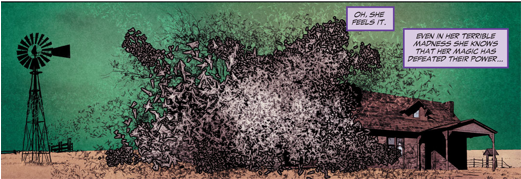
The art, by Mikel Janin, shows a surprising amount of depth as the issue sinks further and further into the Enchantress’ madness. The first seven or so pages are fairly standard of mainstream comics, but the Enchantress’ attack on the Justice League is drawn huge and intimidating, the chaos enveloping the Justice League convincingly morbid, rightly grotesque. Watching the team come together against a world-threatening event would be enough to get me to come back, but I’m especially looking forward to seeing how the Enchantress pulls reality away from a group of heroes whose ties to it were tenuous at best.
The great sham of the haunted house film is the premise that something unknowable, something larger than the relatively normal tenants of its modestly upscale suburban houses (read: us) is lurking behind the drywall, in every creak of floorboard, in every blown fuse. Having ascended to the top of the food chain, few things beyond money and oppressive governments can smother us, so we fear the invisible, gods and monsters alike. The potential for truly great film-making lies within that premise, but the low-budget, low-on-horror Paranormal Activity 3 is not interested in the profundity of human fear. Its great sham is that this movie has already been made twice before, that the promise of filling in past events is enough to look past the law of diminishing returns, the number one killer of horror movie franchises.
Paranormal Activity 3 is a prequel, unnecessarily tracking back to 1988 and providing answers as to why the lives of Katie (Katie Featherston) and Kristi Ray (Sprague Grayden) are later compromised by paranormal activity. The answer is both rushed and fairly derivative—the film’s eventual interest in the occult is merely as a way to bring the film to a creepy conclusion. Until that point, however, Paranormal Activity 3 is more concerned with jump scares and the series’ well-established low-budget camcorder tricks. The big one here is that a camera is set on a fan’s oscillating platform. It pans away from a seemingly normal kitchen to the living room. It pans back, and the kitchen table and chairs have disappeared. That’s an effective shot, but most of the footage made me feel like I was being forced to watch some old home movie with the promise that something wonderful or shocking was going to happen. Paranormal Activity 3 revels in the waiting game, and its rewards for the patient are only moderately worthwhile
That’s because the protagonists as as glassy-eyed and likable as the Teddy Ruxpin doll that serves as one of the movie’s early false alarms. Katie and Kristi Ray live with their divorced mom Julie (Lauren Bitner) and her new boyfriend, Dennis (Chris Smith), who’s business is wedding videos (giving him a good enough reason to document everything on his camcorder). Dennis becomes convinced that something is wrong in the million-dollar house he’s been invited into, but Julie isn’t too sure. Kristi Ray has an imaginary friend named Toby who sounds fairly ominous, telling her not to reveal his secrets, lest he dole out some dire consequences. It’s all fairly rote, as the signs of haunting begin small, then escalate to the point that Julie looks like an absolute fool for refusing to believe Dennis’ theory. The plot, and the characters moving it along, are facilities of real people and advancement. Even the home feels like a cheap representation, a pornographer’s stand-in for suburbia.
Beyond the one really effective shot where the contents of Julie’s kitchen disappear, the film’s one creepy aspect is Kristi Ray, who at no point seems like a real child. Sprague Grayden isn’t precocious or precious; she constantly seems like the focus of an interrogation and, moreover, she seems to know it. The use of children in horror movies has always been fascinating to me—they’re never authentic, instead portraying a screenwriter or a director’s idea of the authentic, responding not to the emotion of the situation, but to very basic programming: Stare. Giggle. Scream. Horror movie children are automatons, looking and acting almost like you’d expect, but not quite. They’re flesh and blood, but firmly lost in the uncanny valley. I wonder if that’s intentional, half the time. If it is, the trick is too easy: That child’s the devil, break out the pitchforks. If it isn’t, the horror movie child is still indicative of lazy screenwriting: The child-in-peril will always draw our sympathy, fingershutter your eyes and hope nothing happens.
I get the feeling that Paranormal Activity 3 wants us to have both reactions, at turns feeling sorry for Kristi Ray, her sister and their family while operating under the belief that she’s in cahoots with Toby, whose designs are anything but obvious. It’s a clever ruse, one that’s meant to grab the attention, to draw the eye closer to the screen. Hopefully, we’ll be so caught up in what isn’t happening that, when something does happen, it’ll shock. It’s a good sham, but we’ve seen it before. Worse, we’re expected to jump knowing that the little girls will live to be haunted another day.
Rating:
Paranormal Activity 3. Directed by Ariel Schulman and Henry Joost. With Katie Featherston (Katie), Sprague Grayden (Kristi Ray), Lauren Bitner (Julie), and Chris Smith (Dennis). Released October 21, 2011, by Paramount Pictures.
I’m going to keep putting this out there: I love indie feds. I love ’em so much I could hug them and squeeze them and love them and hug them…but I am incredibly inept at finding free, legal webshows to cover on this here blog. Oh sure, I could post a match from NWA Hollywood or FCW in this space, but I’d feel better knowing that I had your permission. If you run/know of an independent pro-wrestling promotion that could use some free, err, promotion, use the contact form and give a shout.
Maxine Touts the Prowess of Derrik Bateman: He’s got a lot more flexibility and a lot more “stanima” than Titus O’Neil. Stanima. Stanima.
STANIMA
Curt Hawkins’ Pimp Cane: Pimp canes. Always a fan. The rest of the promo was pretty good, too…right down to Hawkins’ injury being the result of a simple shove, and Recks dedicating his victories to him.
William Regal Mentions Jushin “Thunder” Liger: I love when wrestling announcers know what they’re talking about without sounding like absolute assholes. This is the line that separates a guy like Regal from a guy like Matt Striker.
Diva Outfits: It looks like the 80s have abducted the WWE Diva undercard. It’s great.
Fascinating Maxine Fact of the Week (With Local Flavor): Her auntie is a careless maiden from Guadalajara. She happens to be engaged to a one-legged Elvis impersonator who does a wonderful rendition of “Blue Suede Shoes.”
Kaitlyn vs. Maxine: Almost single-handedly made up for the horror that was NXT Season 3.
Derrik Bateman, On Life: “My life’s weird.” Yes, bro, it is.
Titus O’Neil & Percy Watson vs. Derrik Bateman & JTG: I need a new way of saying “decent match, nothing spectacular.”
Questionable Decision of the Week: Returning NXT to its roots as an awful hybrid wrestling/physical game show. This was an awful idea from word one, and it came back in Mexico, who I’m sure missed their obstacle courses and trivia challenges like everybody else. I’d be fine with it if somebody could explain to me how grabbing a bunch of flags from the ring ropes is going to prove somebody’s mettle as a future WWE superstar but, oh wait, nobody can. There is, of course, a way to make NXT an exciting TV show about the search for the next WWE Superstar, but I’m not giving any ideas away for free, and WWE seems content to allow Matt Striker and the NXT rookies to moon around the ring doing contrived sketches for the “entertainment” of 9,000 or so people, so I guess they can keep doing what they’re doing.
Mexicans Booing Jinder Mahal Because He’s Indian: The WWE’s formula works everywhere, I suppose. The reaction to Ted DiBiase had to be canned, unless the DiBiase Posse has a Mexican chapter.
Stupid Matt Striker Fact of the Week: Jinder Mahal can’t go two steps in India without “Gypsies coming out and throwing rose petals at his feet.” The Gypsies left India in the 11th century.
The DiBiase Posse’s Menu This Week: Tacos. A lot of them.
Air Boom vs. A Couple of Mcs (Michael McGillicutty and Drew McIntyre): Air Boom continue to gel well as a team, and the WWE tag team division continues its slow rise back towards something like prominence. I highly doubt that A Couple of Mcs will be a team this time next week, but if they are, it’s not a bad start. This one match was better than anything McGillicutty did as a member of the New Nexus (my pick for worst stable name ever) or as David Otunga’s tag team partner. McIntyre continues to be his solid, reliable self, and my heart always warms when the bad guy stomps on the hands of the suffering face while he’s trying to make the tag. Superstars wasn’t much to write home about this week, but this was a good match. If you like tag team wrestling, check it out.
Questionable Decision of the Week: I just noticed it, but WWE announcers have stopped referring to WWE referees by name. Instead, it’s “WWE officials” or “WWE referees.” This is terrible to a nerd like me. I can rank, in order of greatness, WCW’s 1997 referee roster. I can tell you that Jack Doan referees the vast majority of WWE’s Last Man Standing matches because he has the best ten count in the business. I know that referees are best when they’re in the background (which is why Earl Hebner is the worst referee of all time), but they all have little idiosyncrasies that add to the uniqueness of any given match. People know the names of prominent boxing and MMA referees, not to mention umpires and referees of other sports. Moreover, dedicated fans know their quirks and know what they add to the proceedings. Shouldn’t the WWE have something like that? Just a small layer of reality? It’d be nice, if nothing else, to be able to call Black Ref something more than “Black Ref.”
"African-American Official" is too wordy.
WWE Vengeance (10/23/11)
Probably one of the most enjoyable WWE PPVs in a long time, up there with Money in the Bank as the best show of the year. The pleasure of Money in the Bank was purely emotional, though, as, outside of Daniel Bryan’s huge win and CM Punks now-diminished one, I really can’t remember what the hell happened. Vengeance was something like a technical masterpiece, hitting all its spots without relenting. In an effort to catch up on TV shows that I like that aren’t wrestling-related, I saw an episode of 30 Rock where Jack was “Reaganing,” or going through an entire day mistake-free, perfectly solving every problem. That was pretty much this show–big spectacle wrestling coming through and delivering in just about every match.
Zigglerthon 2011: Dolph Ziggler wrestled two matches to open the pay per view, and both of them would have been just dandy as far as opening contests go. In the first, he and Jack Swagger, the tag team known as Swaggler (or, as Booker T would say, “Zig Zag and Swag”), went for the WWE Tag Team Titles, held by the poorly-named tandem Air Boom. It’s everything I’ve been saying about WWE’s tag team division, which, in short, means that it’s way better than it’s been since maybe the days of the SmackDown! Six. After losing, Ziggler went on to face internet favorite (and Internet Champion) Zack Ryder for Ziggler’s United States title. It was Ryder’s first pay per view match in some time, and a rather good one, to boot. While Ryder keeps making the case that there’s something more to him than just his internet presence and charmingly horrible sense of humor, Ziggler keeps making the case that he’s not tomorrow’s main event, but that he should be at the top of the card today.
Eve Torres vs. Beth Phoenix: The surprise of the night, and perhaps the best televised women’s match of the year. Eve was a total shock here, as, the last time the spotlight shone on her, she was your typical face Diva. Whatever training she’s done at the Gracie gym has finally translated to the ring, and I’m left wondering why the focus of the Diva’s division has been Kelly Kelly. Eve hits the ropes convincingly, hits her moves convincingly, and took Beth Phoenix’s offense convincingly. On ye olde wrestling blog (Blogamania, brother), I said that Eve was boring and flavorless. Time will bear it out, but I’m taking those comments back. Wouldn’t mind more Eve.
Sheamus vs. Christian: With some reservations. On the surface, this was just a very good match between a very good Christian and a still-improving Sheamus. Beyond that, I think I’m starting to take issue with how Christian is portrayed, which is odd, because I almost never care about this. In the match, Sheamus kicked out of a Christian spear at one, and the announcers made a big deal about it. Christian eventually lost to the Brogue Kick, which, I guess, is fine. Then I thought about it, and the Spear and the Brogue Kick essentially serve the same purpose for Christian and Sheamus: They’re high-impact, finishing strikes that tend to put away lesser opponents. Sheamus kicked out of Christian’s at one. Christian lost to Sheamus’. I don’t know if that’s indicative of Christian’s place, but it’s becoming obvious that Christian can’t win a match against a high profile opponent unless he finds a way to tilt the odds in his favor. Since that almost never happens, there’s hardly any suspense when he’s in the ring. That takes something away from even the most enjoyable matches.
Triple H and CM Punk vs. The Sharecroppers: Of the three matches Triple H has had this year, this one was the best. It wasn’t facing the pressure of living up to Undertaker vs. Shawn Michaels, and it wasn’t trying to keep CM Punk’s momentum going while also maintaining Triple H’s status as WWE’s resident demi-god. Instead, it was a straight-up tag team match, tightly contested, with no hint of pressure on any of the four men involved. Of course, a lot of Punk’s momentum has cooled, Triple H can waltz into an arena and have the audience in his pocket, and the Sharecroppers (that’s Miz and R-Truth, whose “Awesome Truth” moniker does them no favors), win, lose, or draw would still be one of the primary focuses of WWE programming. It was pretty obvious that the match was going to end in NASH-related shenanigans, but until it did, all four men put on a good show.
NASH-Related Shenanigans: I am the world’s only Kevin Nash fan. I get that. Last night, however, he looked more in-shape than at any point in time since WCW died, and the Jackknife Powerbomb Triple H took was the sickest since Nash legitimately injured The Big Show’s neck with the maneuver in 1998. Granted, a lot of that has to do with Triple H, but provided Nash is serious about what is likely his last chance to drink up the limelight, he has the potential to create some interesting television.
Randy Orton vs. Cody Rhodes: Same thing with Sheamus vs. Christian, only Rhodes is probably more in need of a win in a situation like this, seeing as Christian is pretty much established and Rhodes still needs one or two solid wins to really put him over as a top bad guy. It’s amazing to me that the same people who hate John Cena’s guts find Randy Orton and appealing guy, since his matches are often structured similarly, only Orton tends to bury his opponents a little deeper than Cena does. Orton has come a long way since the chinlock was his primary attack, but he may be the least interesting protagonist in wrestling history. It’d be nice to see something about him shaken up.
Mark Henry vs. The Big Show: Matches like this are very much the reason I still watch WWE, even though it has proven to be the biggest, most constant source of frustration in my life as a voracious consumer of pop culture. I follow indie promotions on Twitter, and after every WWE show they ask their followers (the choir, but they’ve got to tweet something) if they’re ready to stop spending money on the WWE yet. Ostensibly, the WWE is a blue-collar entertainment and, for a $15 dollar ticket, dinner at a Buffalo Wild Wings, or, if you’re wild, $55 to either WWE.com or your local cable provider, you can enjoy their wares and, with luck, go home happy. The point of the question an indie fed asks is simple: For less money, you can go to a show and see lesser-known, harder-working talent put on better matches and know that your money is directly responsible not for the livelihood of the million-or-so suits working for the WWE, but the wrestlers in the ring. What the WWE offers that these indie shows cannot is specticle.
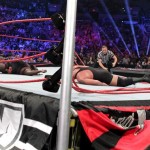
And that’s exactly what a match like Mark Henry vs. Big Show is, though I can’t remember the WWE delivering on their promise in quite the same way as they did here. Usually, when the WWE promotes a MONSTER VS. MONSTER match on the order of Show vs. Henry, things tank. They sag. They make me want to never turn on my TV again. This was the professional wrestling equivalent of Rampage: World Tour, and every second of it, from the opening bout of clubbering to the closing spot where the freaking ring collapsed beneath a Henry superplex, was exhilarating.
I’m well-aware that the superplex spot has already happened, and that the Big Show was involved (as was Brock Lesnar). But this was different. This involved Mark Henry, who is much larger than Brock Lesnar, and who has been a perennial screw-up when it comes to huge spots like this. Despite how good Mark Henry has been for the past several months, this was his true coming out party–the moment where he revealed himself not only as a spectacle, but as an excellent storyteller finally worth all the money and second chances he has been given. It was also a big moment for the Big Show, who, for many, has never quite lived up to the immense hype and expectations heaped onto him when he debuted all the way back in 1995. The focus of Mark Henry’s title reign is that it’s justified fifteen years of failure. Big Show has World Titles and the occasional stand-out match or moment on his resume, but his name isn’t exactly synonymous with success, either. Despite that, he and Henry have been the most compelling angle in wrestling for the past month, and they absolutely stole the show where, six months ago, a match between the two would have filled the audience with dread. Everybody involved deserves a ton of credit for this one.
Alberto Del Rio vs. John Cena: Del Rio finally gets a long main event showcase, but must fight in a ruined ring, in a match where most of his offense is no longer in the field of play. Despite those long odds, he comes through with one of the best performances in his short WWE career, against the always underrated Cena. Essentially a better-paced WWF Hardcore Championship match from 1999, Del Rio got ragdolled by Cena quite a few times, getting hurled into a barricade at the match’s start and being dumped onto a table from a lighting rig near the end. Ricardo Rodriguez was great, as usual, as Del Rio’s meat shield, but this was very much his show, and he and Cena put together the match that the WWE must have had in mind when Del Rio first took the WWE Championship from CM Punk.
That being said…
Questionable Decision of the Week: As much as I’d like to put Eve’s new music here, the interference by the Sharecroppers at the end of the Cena/Del Rio match did absolutely nothing but serve to awkwardly shoehorn Cena into another feud he previously had no business in. Not only that, but it made sure that Cena, who somehow survived being buried under huge metal objects and being beaten around the arena, lost his first Last Man Standing match (he’s been in a ton) to the incredibly lame combo of a tandem beatdown and a shot from the WWE Championship, the design of which needed to be changed yesterday. If Cena is WWE’s Superman, as is often put forth, he went down last night to something decidedly less powerful than Kryptonite. A disappointing end to an otherwise unique, enjoyable match.
 vs.
vs.