Tag: movie review

  • Movie Review: The Hobbit: The Battle of the Five Armies (2014)

    Movie Review: The Hobbit: The Battle of the Five Armies (2014)

    The Battle of the Five Armies 01

    If ever there was a reason for Peter Jackson to split his adaptation of The Hobbit into three movies, this, I presume, is it: All-out war between dwarves, elves, men, and orcs. Forgetting how slim J. R. R. Tolkien’s novel is for a moment, the progression of this trilogy makes plenty of sense. A party of travelers leave The Shire for The Lonely Mountain, where there is a great trove of treasure and a long-dead dwarven kingdom where lies the dragon who rent it asunder. The mountain must be journeyed to, the dragon must be dealt with, and, with the dragon slain, the fate of the mountain must be decided. Of those three movements, The Hobbit: The Battle of the Five Armies is, thankfully, the installment with the least amount of fat.

    The first piece of business this film attends to is the slaying of the dragon who necessitated the quest. Smaug, after surviving the dwarves’ attempt to kill him with molten gold, flies off to destroy Laketown, forcing his enemies to witness the destruction of their friends and allies from afar. Laketown is so much kindling to the dragon, who sets most of the village on fire in one pass. There is much wailing and gnashing of teeth as the town tries to evacuate. Bard (Luke Evans) breaks out of prison and is the only man who tries to defend the town, firing arrows at Smaug in futility until he is given one that works. Smaug falls dead, but the town is ruined and winter is coming. The survivors decamp to the Lonely Mountain to ask for their share of the dragon’s horde, so that they might rebuild. News of the dragon’s death also reaches the woodland elves, who set out to reclaim some elven heirlooms.

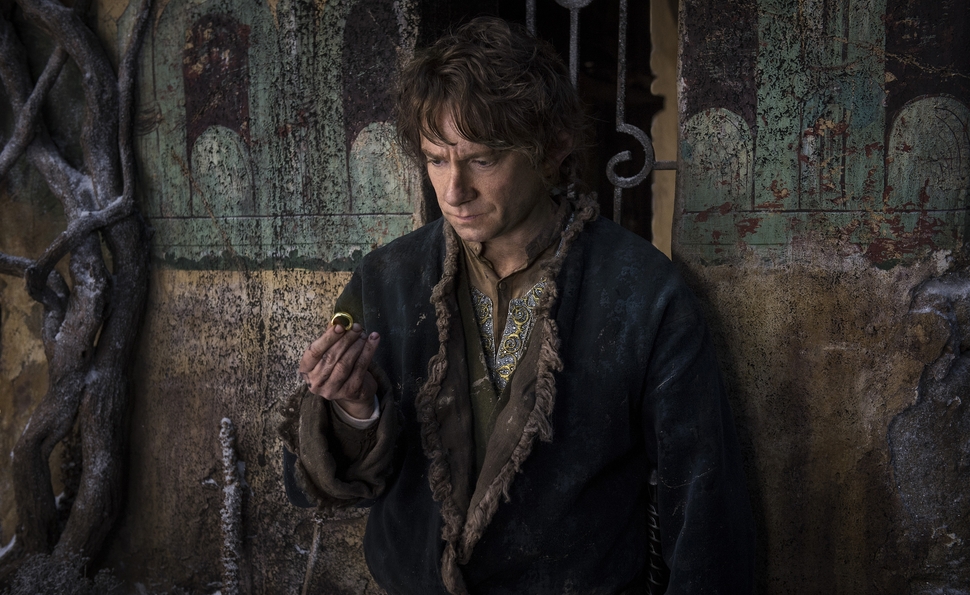
    In the Lonely Mountain, however, Thorin Oakenshield (Richard Armitage) is overcome by his lust for gold, glowering and mad with desire for the Arkenstone, the crown jewel of the king of the dwarves. This stone is in the possession of Oakenshield’s burglar, Bilbo Baggins (Martin Freeman), who has claimed it as his 1/14th of the keep. When Bilbo sees that his friend is so lost that he would go to war over gold, he parlays with Bard and the elf king Thranduil (Lee Pace), giving them the Arkenstone so that they might ransom it, averting war. It so happens that war is coming regardless of what happens, because the two unaccounted for armies, both of them Orc hordes, can’t be reckoned with.
    The Battle of the Five Armies 02

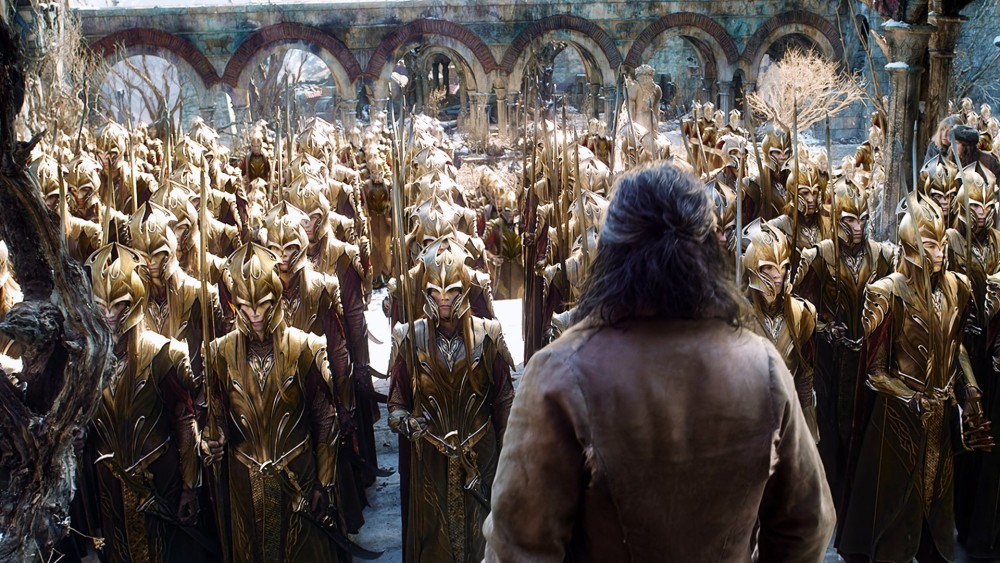
    When the battle actually starts, it’s like Jackson is finally expelling all the breath he’s been holding since the outset of The Hobbit: An Unexpected Journey. Jackson and cinematographer Andrew Lesnie use the series’ trademark sweeping long shots to show the movements of huge blocks of elves, dwarves, and orcs across the valley at the foot of the Lonely Mountain, and they are as breathtaking and spectacular as ever. The camera revels in the glint of elvish armor and the iron of dwarven shields, the blocking of bodies and the breaking of ranks. In close quarters, however, the fighting only works to show how thin Jackson’s conception of the novel as three films was. A dragon lays waste to a city, armies clash, but when a sequence focuses on a man or a dwarf or an elf or an orc as a singular entity, they’re as wraith-like as the Nazgul, apparitions of little substance because they’re meant only to serve as preamble to something else.

    And while it’s so often fruitless to complain about the problem with prequels and adaptations, that so much of The Battle of the Five Armies serves to set up The Fellowship of the Ring often leaves poor Bilbo Baggins standing around with Gandalf, waiting for his inevitable happy ending in the Shire. That’s a shame, too, as the best sequences of The Hobbit, like Jackson’s Lord of the Rings before it, have so often been the ones that show how stout its little protagonist is in the face of problems that are too large even for the gods and immortals whose company he keeps. Martin Freeman, as Bilbo, is as engaging as ever, and the scenes where he speaks with or for Thorin Oakenshield are the best of this film. They’re quiet. They’re meaningful. They aren’t undercut by odd bits of comedy. This, however, is not a film about Bilbo Baggins. Rather, it’s the one that leaves him behind, old and doddering, so that his younger relations can go off and deal with necromancers, rings of power, and the return of a certain king. There has never been a moment where The Hobbit didn’t feel subordinate to The Lord of the Rings, and that, more than bloat or pacing or anything else, is what’s so bothersome about this film in particular. Like a relative who has already finished the book, The Hobbit is always tittering excitedly about what’s going to happen next instead of appreciating the story being told.


    The Hobbit: The Battle of the Five Armies. With Martin Freeman (Bilbo Baggins), Ian McKellan (Gandalf the Grey), Richard Armitage (Thorin Oakenshield), Orlando Bloom (Legolas), Evangeline Lilly (Tauriel), Lee Pace (Bard), Christopher Lee (Saruman), Hugo Weaving (Elrond), Cate Blanchett (Galadriel), and Benedict Cumberbatch (Smaug/Sauron). Directed by Peter Jackson from a screenplay by Jackson, Fran Walsh, Philippa Boyens, and Guillermo del Toro. Based on the novel The Hobbit, by J. R. R. Tolkien

  • Movie Review: Pride (2014)

    Movie Review: Pride (2014)

    I’m going to be honest here: The same thing that drew me to Pride had me dreading my experience of the film. Dreading it. I saw a set of .gifs on Tumblr, a showy scene where a queer activist tells a mostly closeted kid that a big part of queer history was reclaiming the slurs used against the community and using them against the oppressor. True, I suppose… but for a bunch of activists holed up in an apartment above a gay book store, everybody seemed so clean. They looked like characters from an ensemble comedy, or “punk” retrospectives like CBGB, where even the most strung out and miserable dregs of the scene were presented like automatons from a ride at Walt Disney World. I thought, based entirely on a series of images that’d been taken out of context, that I was in for a glib view of history, a film informed by the Vaseline-smeared lens of cinematic uplift.

    And I wasn’t entirely wrong. Pride is big and showy, an ensemble drama that’s more about culture clash than it should be, because that’s what happens with the passage of time: Corporations decide to fund and distribute a film about a socialist movement, the brief and unlikely union of red queers and mining unions, and a big deal must be made of gay vs. straight, London vs. Whales, young vs. old. Before a camera, with the issue’s many moving parts streamlined to make it all fit within the confines of a single motion picture, the people who were part of the movement become larger than what they stood for. It’s easy, after all, to talk about heroes. It’s uncomfortable, however, for a state-funded film to speak of revolution. A film like this has to frame the battle as won. A film needs resolution, and a film about queer and worker politics needs a resolution that says things got better so we can feel better about the world we live in when we leave the theater.

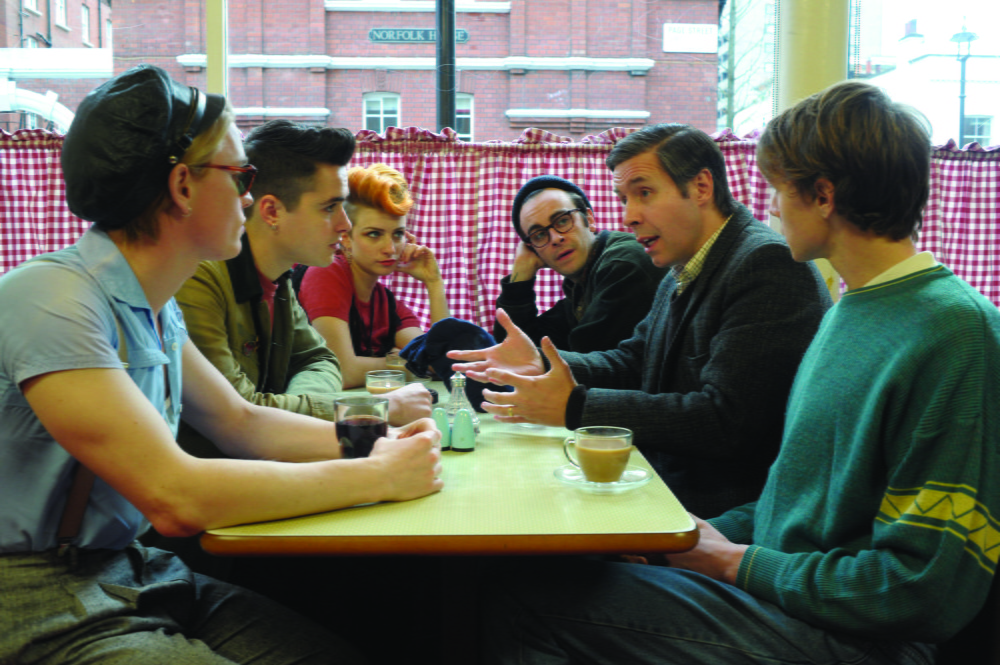
    So Pride isn’t about revolution or politics, despite its trappings. A group of lesbian and gay activists, seeking to stick it to Margaret Thatcher, figure out that governmental policies effecting Welsh miners are just as oppressive as the policies they face at the outset of the AIDS epidemic. Mark Ashton (Ben Schnetzer) forms the Lesbians and Gays Support the Miners campaign and, along with his comrades at the book store, starts raising money for the strike fund of the first miner’s hall that will welcome them. A garbled connection over the phone sends LGSM to the village of Onilwyn, where they are begrudgingly accepted because they’ve come with a good bit of coin. LGSM starts winning over the majority of the miners with the support of union leaders Cliff (Bill Nighy) and Dai Donovan (Paddy Constantine), miner’s wives (led by Jessica Gunning), and their dancing. But there’s a homophobic faction of villagers who are willing to damage their own cause so long as it sends the gays and lesbians back to London where they belong.

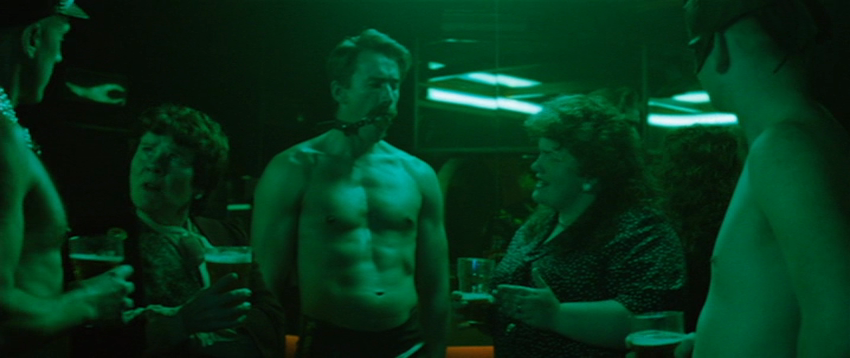
    Pride 2014 leather bar

    The year-long strike and its inner-workings are Zola’s Germinal brought to life, but Zola is dour and sad and suggests that coal miners—all workers, really—will be crushed endlessly under the boot heel of the bourgeois. Pride is a crowd-pleaser, though, all big hair and synth-driven soundtrack, punctuated by the occasional protest song or bit of danger. The first thirty minutes or so feature a lot of hard looks and hocked loogies from the breeder set. Bill Nighy gives a walking tour and recites poetry. Dominic West has an elaborate dance number where he leaps onto a table and shouts about how he misses disco. The old women of the village have a hell of a time learning about gay culture. There are two coming out narratives and two AIDS narratives, all of which suggests a story better suited to a TV miniseries. But while the whole enterprise should feel overstuffed and exhausting, Pride manages to be very fun, a heaping spoonful of sugar to go along with the biter knowledge that the 1980s weren’t all that enjoyable, music and fashion and community aside.

    That fun is tempered by Pride’s treatment of history as a closed book with some of its chapters excised. In the opening information dump, a newscaster mentions Thatcher’s plans to cut jobs, but goes into no detail about how a general strike works or what it entails. It looks like a long game of bingo over a few pints. Thatcher’s anti-gay policies are also at the fringes of the film, but here we’re operating with the blind faith that LGSM’s handshake deal with the miner’s union will pay off somehow. Everybody but LGSM, it seems, is living it up, as if government oppression was a thing only seven or eight queer people in all of London wanted to deal with. There again is the problem of framing this material as a film and not something longer and looser, a thing that can contract and expand and breathe. Nowhere is this more apparent than how the film presents feminist issues as an odd collection of notions to be laughed at (what, worry for your safety as a gay woman in a town full of leering miners?) or nodded to in knowing solidarity (yes, yes, sex can be enjoyable for women!). Also odd is the miners’ stated goal of getting everything back to normal, but that’s a movie revolution for you: All of the red propaganda filling the screen is a prop, “authentic,” but not authentic.

    While there’s nothing particularly striking about the visuals of Pride, I’m a union baby through and through—I was raised singing “Solidarity” and get misty-eyed when I see large-scale demonstrations in the movies, even if the people marching are too clean to suggest the kind of real-life suffering that engenders public action. It’s not much of a spoiler to say that Pride ends at the 1985 London Pride Parade, where LGSM are told they’ll have to march in the back. Nobody wants politics anymore. Everybody wants to party. Mark cries bullocks into his megaphone, but the attitude of the parade organizers and the film they appear in are the same, at heart. All of that political stuff is hard to handle. Can Bill Nighy recite another poem, please?


    Pride. With Bill Nighy (Cliff), Imelda Staunton (Hefina Hedon), Dominic West (Jonathan Blake), Paddy Constantine (Dai Donovan), Andrew Scott (Gethin Roberts), George MacKay (Joe Copper), Ben Schnetzer (Mark Ashton), and Jessica Gunning (Siån James). Directed by Matthew Warchus, from a screenplay by Stephen Beresford.

  • Movie Review: The Texas Chain Saw Massacre (1974)

    Movie Review: The Texas Chain Saw Massacre (1974)

    The Texas Chain Saw Massacre 01

    essentialForty years later, The Texas Chain Saw Massacre shouldn’t be as powerful as it ultimately is. Tobe Hooper’s film is written in the bones of anybody who has even a slight appreciation for horror, and has been diminished by sequels and remakes and the continued recycling of its plot and scares. When I saw it recently at an anniversary screening, the audience spent much of their time laughing. Until Leatherface. With his hammer. With his mask. With his chainsaw. The plight of young adults looking to screw speaks to the young, I guess, but a man wearing another person’s skin over his face? That’s universal terror.

    The film is unsettling from the opening note of its score, which is set against the title card’s laughable claim that the young men and women who found their way into Leatherface’s clutches were enjoying an “idyllic summer” (because the idylls of youth are often spent wondering if your grandfather was dug up by a cult of art-maniacs and pissing into a bottle on the side of the freeway). The first shots are disorienting, a sequence of flashbulbs casting an intense, brief light on rotting meat. Human meat. A corpse in the awful Texas summer. There’s nothing right about the world here, and yet, for the kids assembled in that van, there’s nothing to do but move forward. The worst is always behind them until it’s right there, screaming and swinging his chainsaw.

    It’s never clear why Sally Hardesty (Marilyn Burns), her brother Franklin (Paul Partain), and their friends (Allen Danziger, William Vail, and Teri McMinn) decide to stay the night at the old Hardesty homestead. They’re out of gas (because of course they are) and the closest station won’t have any until morning, but the house they’re planning to sleep in is a husk (because of course it is) and their van is smeared with the blood of a lunatic hitchhiker, who slashed Franklin with a straight razor after terrifying everybody in the van by pulling faces and cutting open the palm of his hand. They can’t leave, but it doesn’t seem like they want to. Texas is gritty and hot, a miserable, sick place where people tailgate at the local cemetery, but the Hardestys can’t help where they are, nor what those places do to them.

    This is America, Hooper’s film argues, a brutal land that hides away its psychopaths in places where they can quietly maim the innocent. It’s an argument made more visceral by the conditions the film was shot under—brutal sixteen-hour days in excessive heat, with no pay up front. The sweat, exhaustion, exasperation, and terror is real. But the screening I attended would seem to suggest that these things no longer hold sway the way they did in 1974. The audience laughed at the crazed hitchhiker (Edwin Neal), Grandfather (John Dugan), Old Man (Jim Siedow) and Leatherface (Gunnar Hansen) in drag; twice—when the opening scene reveals the corpse art, and when the family has Sally over for dinner—a man raised a digital camera to his eye and took pictures of the screen. As The Texas Chain Saw Massacre was creating its grim spectacle from ramshackle houses and chicken bones, I found myself as agitated by the crowd watching the film as I was by the film being watched.

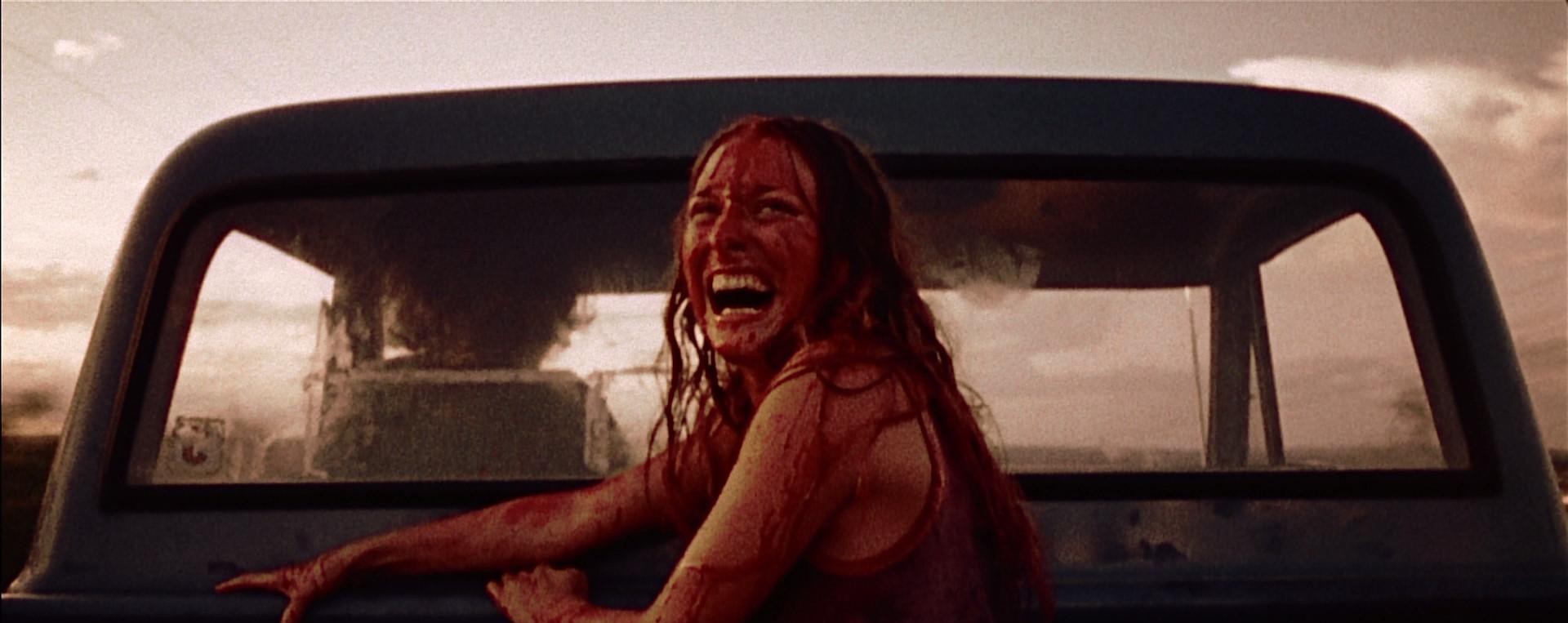
    The Texas Chain Saw Massacre is not a film that allows its audience to get comfortable for long, though. Leatherface’s murders are too brutal for that, deftly edited so that the shock of seeing a man get clubbed by a hammer quickly moves to the nausea of watching him twitch on the ground. Though its influence is unmistakable, few American slasher films work to this level. Its elements—the houses, the masks, the power tools, the fresh-faced victims—are endlessly transplanted, but are powerless when divorced from their original context. Its descendants play up the camp or the gore, gaze longingly at the bodies of those wandering into hell, or are completely undermined by the utter clarity of digital cinema. The Texas Chain Saw Massacre warns the audience that the events it is about to see are real, then presents those events through so many layers of grime and filth it’s hard to believe that anybody left the set unscathed. If the image of the family gathered around Sally at dinner seems ridiculous in 2014, the shots it is cut with—Sally’s eye in extreme close-up, widened and darting around the room for a means of escape—cast that image as real; the eye screams though she doesn’t. Her eye screams even if we refuse to scream along with it.

    Finally, we are left with Leatherface, dancing with his chainsaw in the morning sun. Are there many horror films that do their gristly work in the daylight? Or with such unsettling beauty? Made on a paltry budget with limited physical resources, Hooper and cinematographer Daniel Pearl subtly shift gears from the docu-realism of the graveyard scenes to the grotesque tableau of Leatherface’s murders so that it all feels unmistakably real, even when a man in a bad latex mask is feebly trying to live up to his reputation as the best killer at the old slaughterhouse. Far from operating under the pretense that a good murder or two is all that it needs to be memorable, The Texas Chain Saw Massacre revels in a miasma of sick, miserable images. It takes a prism to our world and twists it something awful, but manages, even in its darkest corners, to delight and disgust the viewer, often in the same frame.


    The Texas Chain Saw Massacre.  With Marilyn Burns (Sally Hardesty), Paul A. Partain (Franklin Hardesty), Allen Danziger (Jerry), William Vail (Kirk), Teri McMinn (Pam), Edwin Neal (Hitchhiker), Jim Siedow (Old Man), and Gunnar Hansen (Leatherface). Directed by Tobe Hooper, from a screenplay by Hooper and Kim Henkel.

  • Movie Review: G.B.F. (2013)

    Movie Review: G.B.F. (2013)

    GBF

    First, I’d like to acknowledge that the mere existence of a movie like G.B.F. is a good thing. Maybe it’s because I wasn’t looking hard enough (or at all) as a teenager, but there haven’t been many gay high school romantic comedies created for a mainstream audience. They existed at the fringes of culture, no doubt, but not to someone whose key to the world of cinema was a Blockbuster Video membership card. Even as the genre has progressed and films are more accessible due to the rise of Netflix and VOD, the LGBT community has mostly sat this one out: for various reasons, lesbians, bisexual men and women, and trans men and women (not to mention folks all across the spectrum) have largely been erased from popular culture (when a show like Orange Is the New Black is a success, this is the exception), and gay men are mostly there as sidekicks, ready to roll their eyes at a moment’s notice. We live in a supposedly post-everything society, and this is still how culture presents people outside the margins.

    So it’s good, then, that G.B.F. exists, and that it opens on a group of friends comprised thusly: two gay men, one queer woman, one straight man of color. This is not the way characters in this genre are grouped. This may be the first group in so heavily and innocuously queered. This is vital because representation is vital, and because, too often, marginalized groups aren’t represented at all. And this is cinema we’re talking about. Gay, liberal cinema. It’s important to have a gay romantic comedy because But I’m A Cheerleader came out in 1999. Because Glee is one television show, and one is nothing. Because it’s nice to have a film that doesn’t begin, climax, or end in tragedy. G.B.F. wastes no time at all in letting you know that things are different. The opening credits feature a panda vomiting rainbows. This, the panda roars, spewing hues of pride across page after page of a high school yearbook, is gonna be gay. Only instead, this is just another bad high school comedy. This one just happens to sting a bit more.

    It’s not enough, I think, for a movie to have good intentions. When I first heard about G.B.F., it was in the context of its MPAA rating, which is R, and how that rating might prevent some kid who needs a movie like this in their life from seeing it. This isn’t far outside the realm of possibility—the documentary This Film Is Not Yet Rated makes abundantly clear the kind of hell liberal censors put artists through; poor John Waters, after screening A Dirty Shame for the board, was told that, after awhile, they simply stopped counting the film’s infractions. While an R rating is hardly as damming now as it was before the internet made it possible to acquire everything regardless of entities like the MPAA, the R rating is the province of teen sex movies where sluggish miscreants get hammered with their mutant pals while trying to have sex with some object the dictionary calls “woman,” not that of the sweet-natured romance G.B.F. is marketed as. There’s a point to that, of course, but presuming G.B.F. was released with a PG-13 rating, it’d likely be the only one that drops a word like “jizzbin” as a casual means of describing one of its characters.

    GBF 2

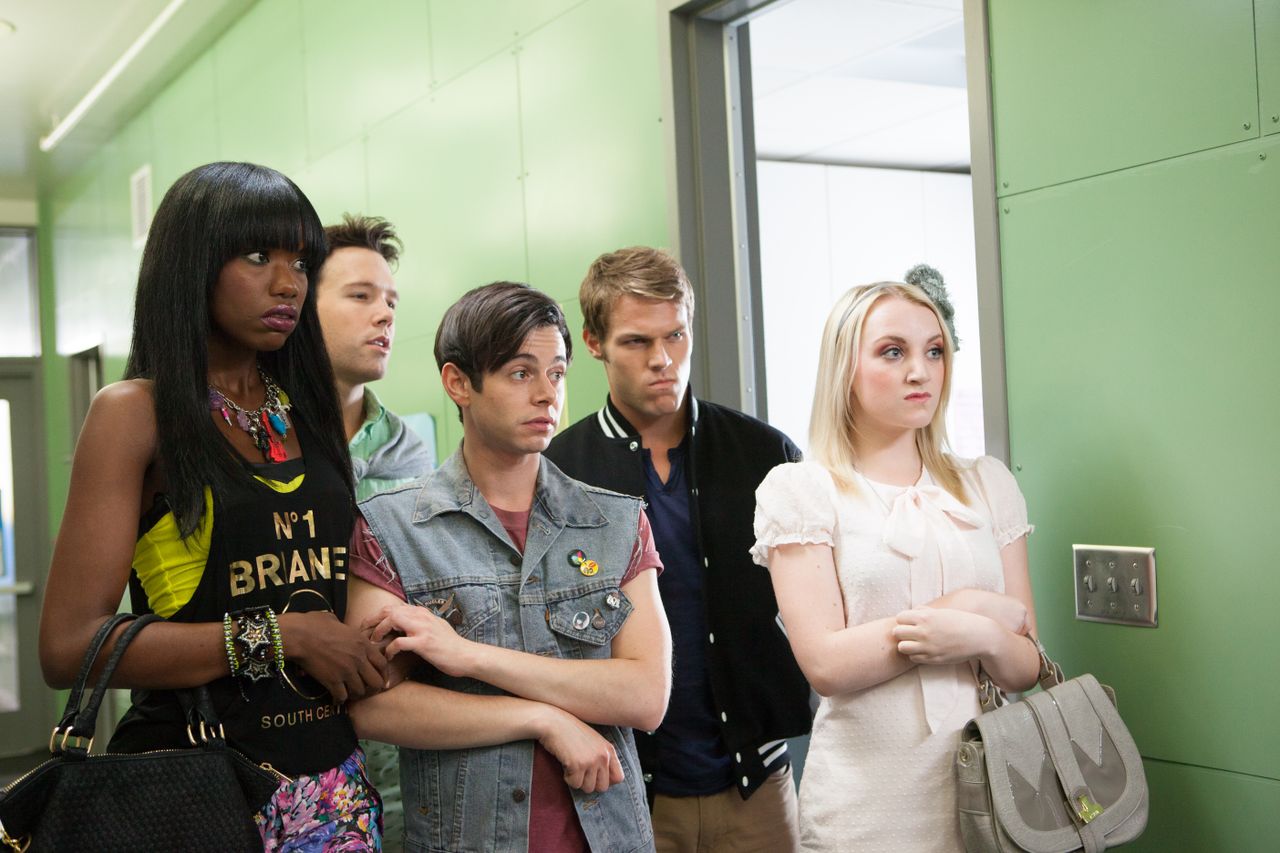
    Not to act as the tone police or anything, but G.B.F. is surprisingly mean-spirited for what it’s meant to be, or, I suppose, what it could have been. In the history of North Gateway High School, there’s never been a publicly gay student. There’s a smattering of them, sure, all obviously gay (though nobody in the film can parse this, short of the parents back home) but none of them are out. When a teen rag reports that gay best friends are on trend, one of those students in the closet plans to come out, hoping to leverage that article into a role as sidekick to one of the three most popular girls in school. Tanner Daniels (Michael J. Willett) is this closet queen’s accomplice, an also-in-the-closet kid who’d rather read comic books and not get beaten up than climb to social ladder. But when a series of contrivances leads to the school’s Gay-Straight Alliance outing him (they need an actual, living gay person in the group for it to exist, or something), he becomes the first and gains all of the privilege and esteem and makeover montages that come with that designation.

    There are a number of topics here that are worth talking about, all of which are frequently glossed over in many discussions about gay rights. The pressure placed on an individual to come out, the sometimes detrimental actions of allies—heck, just growing up gay in a society that now “accepts” that—but G.B.F. has 90-minutes to play with and no interest in the details it uses to race to the finish of its cut-and-paste plot. Prom is coming up, after all, and to be its Queen, one of those three popular girls will have to play hag to the school’s lone fag. In a movie replete with stereotypes, these three can be labeled thusly: The “White” One, The “Mormon” One, and The “Black” One. You can assign these labels to all of the primary characters—The “Gay” One, The “GAY” One, The “Lesbian” One, The “Mormon” One Who Is in the Closet—without exaggerating how poorly the screenplay understands teenage culture; everybody is as fake as the Bucci sweaters they wear.

    There is some sweetness here—Megan Mullalley shows up as a mother who has been waiting for some time for her son to tell her that he’s gay—but it is largely wasted; everyone in G.B.F. is beautiful and the biggest consequence anybody has to face for racism, sexism, or homophobia is that they’re not invited to the cool kid prom…but then everybody is anyway, and the world keeps on spinning. A better script wouldn’t necessarily have made G.B.F. a good teen movie—the direction is much too flat, and none of the adult roles register much higher than celebrity cameo—but that’s the major sticking point here, that the “teenage voice” adopted here is curdled to the point of bitterness. The result is an awkward, gawky prom date who means well, but keeps saying the wrong thing. Loudly. If this is what a gay teen comedy looks, sounds, and acts, maybe the genre isn’t ready to come out of the closet.


    G.B.F. With Michael J. Willett (Tanner Daniels), Paul Iacono (Brent Van Camp), Sasha Pieterse (Fawcett Brooks), Xosha Roquemore (Caprice Winters), Andrea Bowen (‘Shley Osgoode), Evanna Lynch (McKenzie Pryce), Natasha Lyonne (Ms. Hogel), and Megan Mullally (Mrs. Van Camp). Directed by Darren Stein, from a screenplay by George Northy.

  • Movie Review: The Hunger Games: Catching Fire (2013)

    Movie Review: The Hunger Games: Catching Fire (2013)

    hunger games catching fire

    Katniss Everdeen has nightmares. This is important. This means something. Luke Skywalker blew up a space station that housed millions of men and women without shedding a tear. James Bond remembers the dozens of women slaughtered by association by naming martinis after them and glowering at the baccarat table. Bella Swan slurps blood from a Styrofoam cup. The Hunger Games: Catching Fire doesn’t allow its heroine much time to rest after her victory in the franchise’s titular organized bloodletting, but when it does, even her few moments of rest are shattered by memories of the Games. A nation believes they’ve gained a young star. In reality, they’ve rendered a young woman a hollow shell.

    Having made history as the first ever co-winners of The Hunger Games, Katniss (Jennifer Lawrence) and Peeta Mellark (Josh Hutcherson) clearly suffer from PTSD. Twenty-two children were killed in the Games, and while they weren’t personally responsible for even the majority of them, they lived for months expecting knives in their backs, finding solace in the report of an unseen cannon. Back in District 12, they try to return to something like a normal life, but even if nobody from home treats them any differently for making it out of the arena, the state has relocated them to the district’s Victor’s Village, whose only other occupant is Haymitch Abernathy (Woody Harrelson), whose alcoholism probably makes a little more sense to them now. Though they barely know each other, Katniss and Peeta survived by convincing a nation that they were star-crossed young lovers. Thrust into the role of celebrity, they have to maintain that ruse before the cameras and the fawning millions in their living rooms. Both wonder if eating the poison berries that won them the Games would have been a kinder fate.

    In victory, Katniss becomes a symbol, a sign to the downtrodden lower districts that they can rise up against the opulence of Panem, whose capitol houses the uber-wealthy who exploit the labor of the starving working class. President Snow (Donald Sutherland), who watched ambivalently as Katniss and Peeta upended the rules of his Games, takes a much more active role in Katniss’ life outside the arena. He meets her in District 12, threatening to kill her and her family and her actual boyfriend, Gale (Liam Hemsworth), if her act with Peeta isn’t convincing. Her happiness—or the perception of her happiness—may quell a brewing rebellion. This is a losing proposition. On the train to the Capitol, where a huge party is to be held in her honor, Katniss sees graffiti of the mockingjay symbol she’s become associated with and anti-government slogans. When she arrives in District 11, her and Peeta are unable to read the cards prepared for them by their PR rep, Effie Trinket (Elizabeth Banks), and instead give teary dedications to Rue, the little girl who died in their Games. An old man in the crowd whistles the call Katniss and Rue had and holds up a sign of the revolution. He is dragged before the stage and shot in the head. Katniss and Peeta read from the cards from that point on, but this scene continues to play itself out.

    Catching Fire eventually makes its way back into the arena, but it and its predecessor are at their most interesting when exploring the kind of dystopia that would broadcast the life-or-death struggle of 24 well-armed children. While The Hunger Games only captured glimpses of the other districts, focusing largely on the Games themselves, Francis Lawrence finds the franchise’s heart beating in the districts. Lawrence, whose I Am Legend and Constantine were toothless sci-fi adaptations to whom the concept of mythmaking was alien, while not doing anything to rock the boat too hard, manages to craft a middle entry that does three things more expertly than many expensive sequels: feel larger than its predecessor, further define the characters, and improve upon what previously worked. Much of that is due to Jennifer Lawrence, whose Katniss is now a character and not an archetype. It’s still hard to believe that the star of these massive Hunger Games films and Oscar-baiting prestige ensembles like Silver Linings Playbook was in Winter’s Bone three years ago, and it’s something of an odd fortune that the trajectory of her career matches that of the character she’ll likely forever be identified as. In life, Lawrence gets Google news alerts when she steps out of the house with a new haircut. In Catching Fire, a pregnancy hoax involving her is nearly enough to end a seventy-five year tradition.

    By involving Snow and featuring a new game maker (Philip Seymour Hoffman, playing himself as a D&D dungeonmaster with one of the series’ more ridiculous names), Catching Fire raises the stakes so high that the 75th Hunger Games’ twist—all of the competitors are surviving winners from Games past—feel trifling by comparison. Sutherland’s despotic President Snow is sniveling and arch in a way villains in movies this large no longer are allowed to be; watching him preen and glower like an evil, gay Santa Claus has been a highlight of the series. Hoffman’s Plutarch Heavensbee  isn’t quite as dynamic, but he’s an upgrade over the original film’s focal point for Katniss Everdeen’s rage, who was mostly notable for his beard. Heavensbee is the architect of a plot to restore the districts to order by wiping out their symbols of hope. While it’s hardly subtle, watching him tell President Snow to broadcast speculation about Everdeen’s wedding dress and honeymoon location next to scenes of beatings and executions in the districts is the kind of specific, calculated evil action movies figure their audiences can’t handle. Here, the storm clouds never dissipate. If any sunshine is going to punch through, it’s sure taking its damn time.

    hunger games catching fire

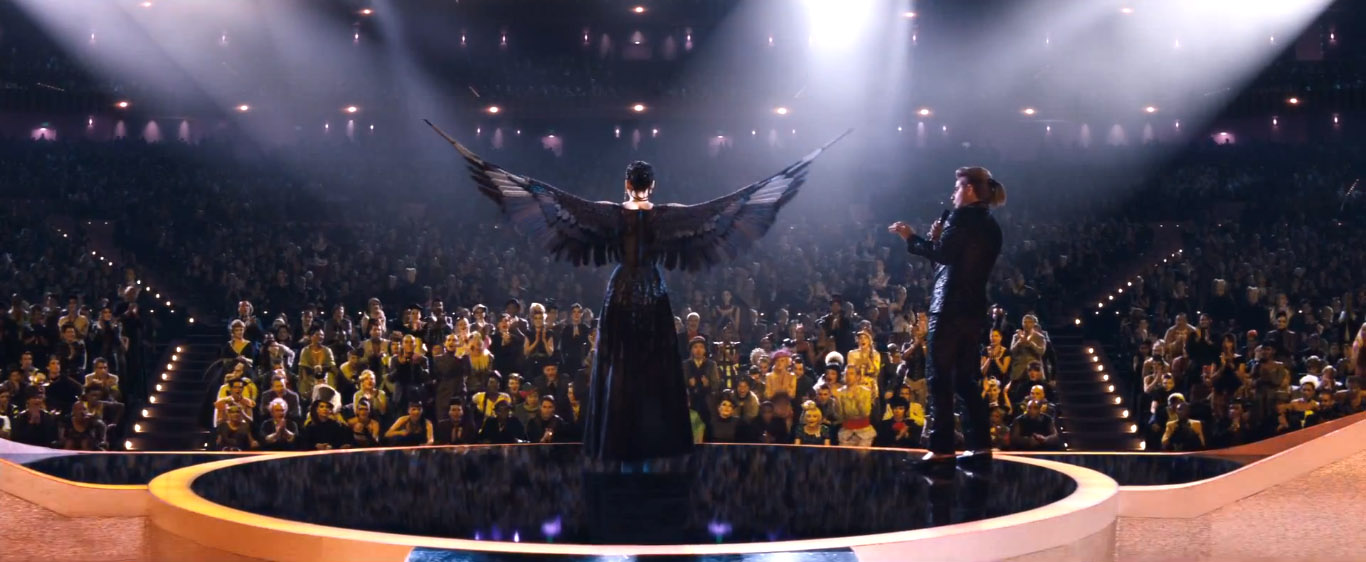
    All of which is nice, but ultimately somewhat empty. Catching Fire is somewhat hamstrung by its obligations to young adult literature in a post-Twilight world, which necessitates a go-nowhere love triangle between Katniss, Gale, and Peeta. Beyond the state’s intervention, there’s never a moment when one of the men in her life controls her, and in the arena it’s usually Peeta who is in need of rescuing. This makes The Hunger Games the standard bearer for love triangles done pleasantly enough, if that’s a standard worth bearing, but I can’t help watching the scenes where Katniss and Peeta pretend to love one another with an editor’s eye, wondering if it would have been more dramatic had two actual lovers been forced into the Games twice instead of two people who have to pretend for the sake of a narrative. Stanley Tucci returns as Caesar Flickerman, the voice of that narrative, and while he’s charming and funny in his role as the ingratiating host of The Hunger Games, success has made his character something of an ironic statement, simultaneously mocking the hosts and unearned grandeur of reality television talent contests while occupying a significant amount of space in a major Hollywood movie being used to shill everything from Subway sandwiches to Covergirl makeup. Not that Catching Fire had to inspire revolution to work, but if a major film harps on the need for its audience to question authority while simultaneously shilling for the footlong creamy sriracha steak melt—a delicacy the denizens of District 12 would murder you for the right to look at, let alone consume—how successful can that film be in realizing its ambitions?

    The answer, of course, is very. Catching Fire’s ambition is to make money, and it is doing so hand over fist. The film rarely falters or falls short of being entertaining spectacle, but it’s telling that for all the scorn it heaps upon the rich for enjoying the bread and circuses of the Games, it never stops long enough to ask the same question of the audience in the theater. Intrinsically, one knows that the ritualized slaughter of children is a horrible practice. Perversely, The Hunger Games franchise films these long sequences not as a horror, but an entertainment. The kills are quick and clean and leave no blood. When the show’s helicopter arrives to dispose of a body, it is hefted into the air striking a messianic pose to a theme commissioned just for the solemnity of the occasion. Those who die in the Games are offerings to the state, sure, but are they not also offered up to us? Are we not somewhat culpable?


    The Hunger Games: Catching Fire. With Jennifer Lawrence (Katniss Everdeen), Josh Hutcherson (Peeta Mellark), Liam Hemsworth (Gale Hawthorne), Woody Harrelson (Haymitch Abernathy), Elizabeth Banks (Effie Trinket), Lenny Kravitz (Cinna), Philip Seymour Hoffman (Plutarch Heavensbee), Stanley Tucci (Caesar Flickerman), and Donald Sutherland (President Coriolanus Snow). Directed by Francis Lawrence and produced by Nina Jacobson and Jon Kilik. Screenplay by Simon Beaufoy and Michael deBruyn, based on the novel Catching Fire, by Suzanne Collins.

  • Movie Review: Thor: The Dark World (2013)

    Movie Review: Thor: The Dark World (2013)

    Thor-The-Dark-World

    Thor: The Dark World is the year’s fifth superhero movie. That’s five different films where spandex-clad men bash in the brains of other spandex-clad men. Five films featuring speeches on subjects like truth, justice, and doing the right thing. Five films where one major city or another—sometimes fictitious, sometimes not—is turned into a smoking cinder by the gods who use it as an arena. The Thor films—counting The Avengers, whose villain Loki is central to the narrative of the entire Marvel cinematic universe, there have been three—have a decided advantage over other movies in the genre. In Thor, director Kenneth Branagh was able to find a nice balance between fish-out-of-water humor and action largely indebted (though unfortunately not monetarily so) to Jack Kirby. Thor: The Dark World director Alan Taylor wisely decides to spend much of his time exploring Thor’s celestial homeworld of Asgard. It’s a nice change of pace from a Marvel film’s usual focus on large, clean military installations and glittering R&D research laboratories, but even the best aspects of this movie aren’t enough to distract from what is now a very shopworn formula.

    But if long-running network sitcoms and The Avengers franchise have proven anything, it’s that people like hanging out with their favorite characters, even if nothing truly significant happens. Thor: The Dark World does more with the fallout from The Avengers than Iron Man 3, did, sending Thor (Chris Hemsworth) planet-hopping with his warrior friends to quell the revolts stirred in the wake of Loki’s (Tom Hiddleston) rebellion against Odin (Anthony Hopkins) and his near-conquest of Earth. Odin’s helpful narration reveals that there’s a threat much greater than these rebellions, a long-lost cosmic weapon created by a race of dark elves upset that the Big Bang turned all the lights of the universe on. The opening scene—Norse gods crossing their swords and shields against the space lasers and gravity grenades of their elven enemies—is a highly polished mash-up of pulp sci-fi and hard fantasy paperback covers, but there’s nothing particularly creative or threatening about this largely faceless horde. Even their weapon—The Aether, which threatens to turn the lights off again—inspires a shrug of the shoulders. But when Thor’s girlfriend Jane Foster (Natalie Portman) finds herself the vessel of this cosmic power, the God of Thunder hastily arrives on Earth to whisk her away to the halls of Asgard, hopeful for a cure.

    Of course, there isn’t one. Odin, clearly the most pragmatic man on a floating rock connected to the rest of the universe by a rainbow bridge, suggests that Jane’s malady is evidence of the difference between the fate of an Asgardian and the fate of a human, imploring his son to maybe fall in love with someone more suitable as Queen of the realm; Sif (Jaimie Alexander), for instance. But Thor: The Dark World doesn’t fool around with love for long. The Aether is something of a homing beacon, and its inhabitance of Jane Foster’s body sends a signal to the dark elves, who’ve long been asleep at the fringes of the universe. They storm Asgard furiously, laying waste to the city and killing Frigga (Rene Russo), the Queen. Odin vows to quash the elves, even at the cost of his realm. Thor, however, has other ideas. Hoping to save his people and Jane Foster, he reaches out in desperation to Loki, serving out a life-sentence in a rather nice-looking jail cell for his crimes, and plots a sneak attack on the elf Malekith (Christopher Eccleston) and his few compatriots who remain from the prelude’s long-ago war.

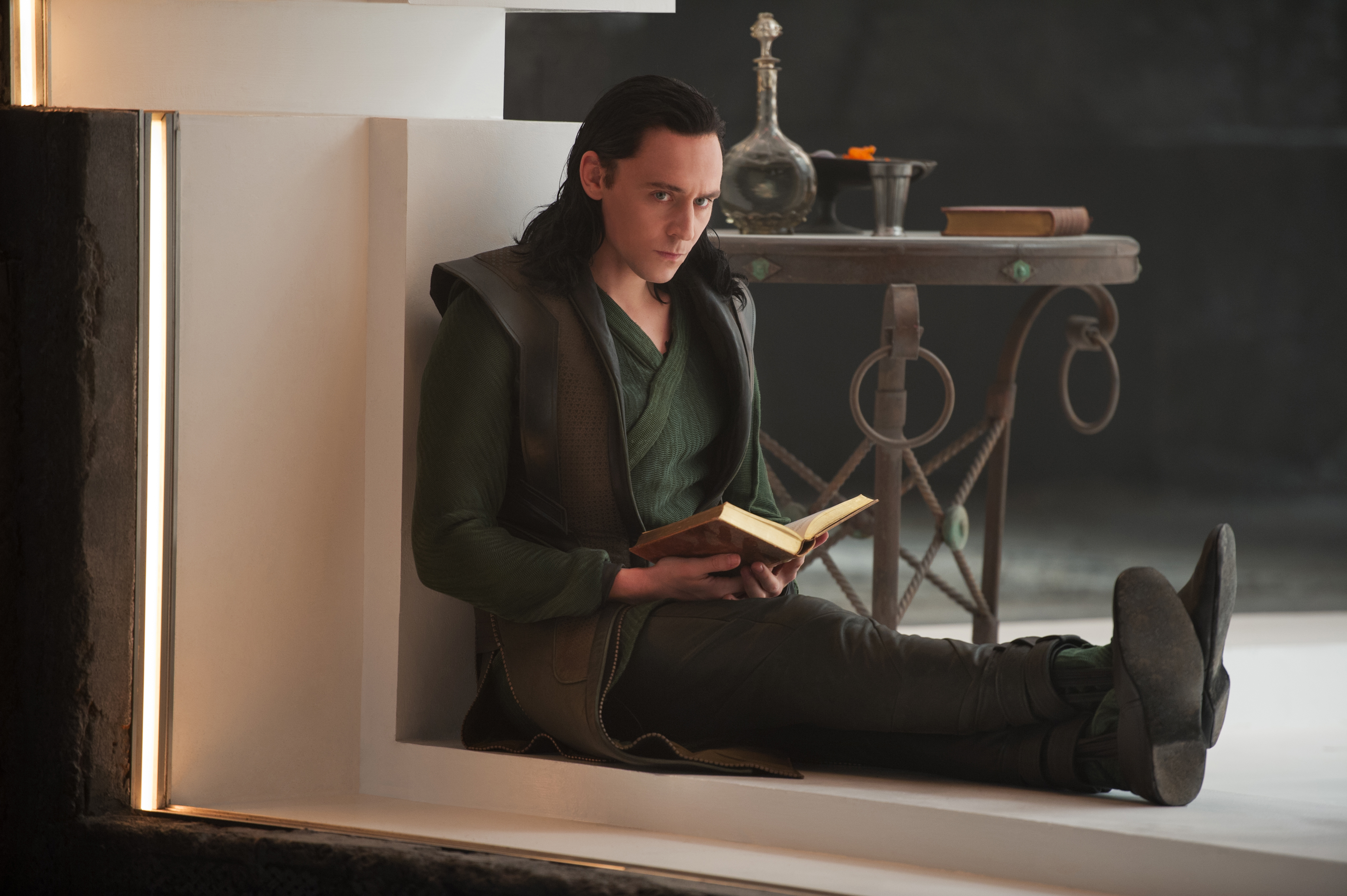
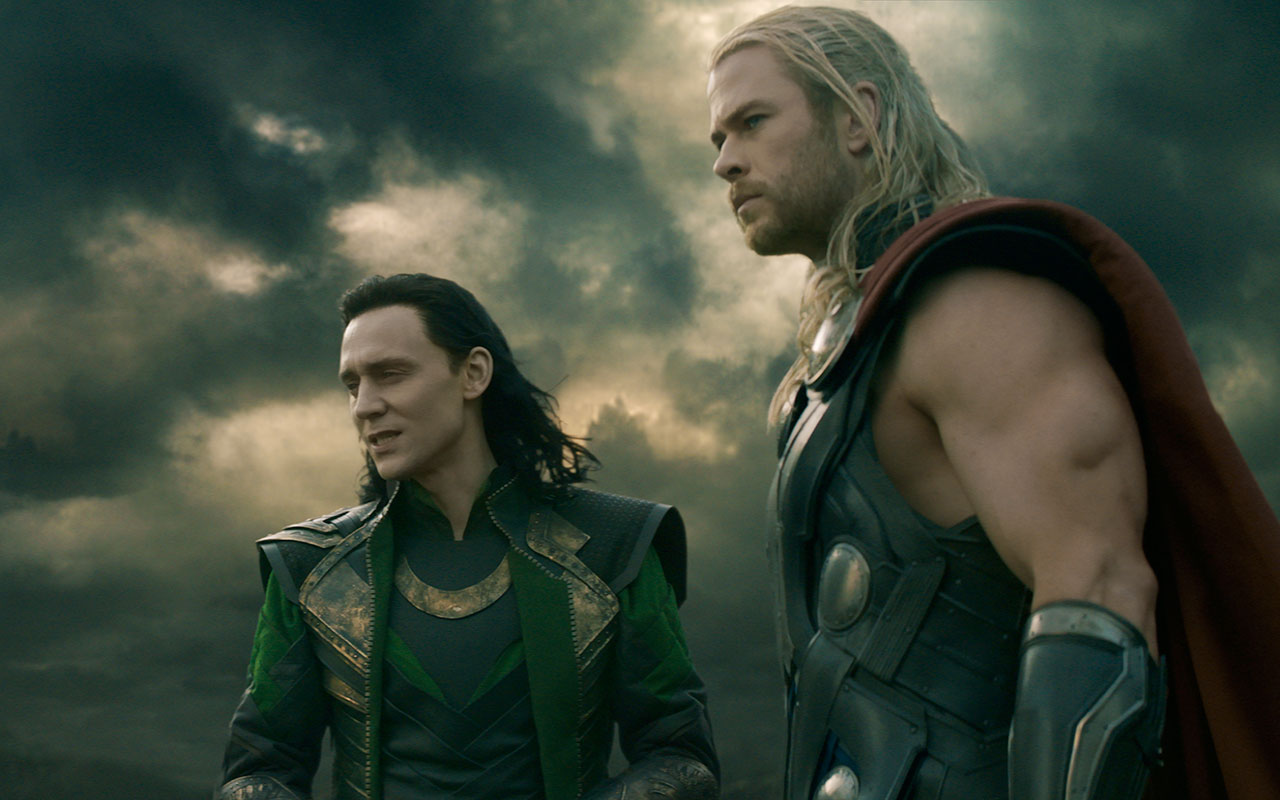
    Of course, the real draw here is Hiddleston’s Loki, who is once again the most compelling, entertaining aspect of a Marvel film. This is causing something of a problem, narratively speaking, as all of the movies in this franchise have largely used even their heroes most iconic villains as one-off castaways, focusing instead on whatever piece of world-destroying technology they happen to possess. Loki’s popularity, which is potentially greater than that of any of the Avengers save Iron Man, virtually guarantees that he’ll continue to be part of the narrative, even as phases two and three of the Marvel cinematic universe provide ever-diminishing space for him. Thor: The Dark World flirts with making Loki something of an anti-hero. Sure he destroyed an entire town in New Mexico and most of Manhattan in a fit of jealousy, but he was pithy and funny while he did it, and he is burdened with issues of identity, purpose, and godhood in a world where he may be the only person smart enough to qualify as a psychoanalyst. While plotting his jailbreak, every character (and the audience) knows for a fact that any Loki/Thor team-up is doomed to end in betrayal, but they (and we) go along with it. For Asgard, Loki serves as an unlikely last hope. For the audience, the ambitious terrorist of the cosmos happens to be written in such a way that he seems like the most fun guy to have a drink with.

    Thor the dark world loki

    As for the film’s human ciphers—Foster, Erik Selvig (Stellan Skarsgard), and Darcy Lewis (Kat Dennings)—they’re largely inessential, shoehorned in because the final battle needs some recognizable faces running around in panic while the world burns. Portman, as Jane Foster, does her usual capable job, and a scene where she goes on a dinner date with some guy but can’t think of anybody but Thor is one of those fleeting instances where these movies actually address what it’d be like to be a normal human being in a world occupied by gods and monsters, but even with a cosmic entity flowing through her veins she’s little more than a combination damsel in distress/MacGuffin. The Selvig character has the most to do with the continuing story of The Avengers, though his function here as the world’s most brilliant man to have stripped nude at Stonehenge while muttering incoherently about Ragnarok is largely that of comic relief. Skarsgard and Dennings are given the film’s snappiest non-Loki dialog, but the film just isn’t as interesting when focusing on its earthbound characters, which, if anything, is an indication of how fully-realized Asgard has become, almost by accident. Jane Foster’s visit and the dark elf raid necessitates that a good deal of Thor: The Dark World‘s runtime takes place on Asgard, which, fantasy tropes aside, manages to feel like a real place. The plot doesn’t allow for much exploration of the realm’s tertiary Asgardians, which is something of a shame.  I have a rough idea of what a political science major does, but a character like Heimdall (Idris Elba), who can see some ten trillion souls, probably deserves a better fate than serving as Thor’s Facebook app or failing at his job as gatekeeper.

    Thor: The Dark World was perfectly enjoyable; not only was it the best superhero film of the year, it may be the best of The Avengers series. But these movies have quickly become a succession of James Bond adventures, right down to the credit text assuring viewers that THOR WILL RETURN in a year or so, whenever the next production requiring a blonde-haired, hammer-wielding meathead is mounted. The difference is that Thor is part of something larger and ultimately more organized than Bond or any other long-running franchise, and coming at a two- or three-a-year pace as these Marvel movies do, there’s less opportunity for Thor to distinguish himself from Captain America, let alone allowing Thor: The Dark World to stand apart from Thor. For now, audiences seem contented by these opportunities to sit down and catch-up with their favorite superheroes and villains. Manhattan may still be smoking, and Liverpool may lie in ruins, but nothing about Earth is fundamentally altered. There’s comfort in that, I suppose, but it’d be nice if a Marvel movie shocked the world by growing up a little, maybe by being something more than not terrible.


    Thor: The Dark World. With Chris Hemsworth (Thor), Tom Hiddleston (Loki), Natalie Portman (Jane Foster), Anthony Hopkins (Odin), Christopher Eccleston (Malekith), Jaimie Alexander (Sif), Rene Russo (Frigga), Idris Elba (Heimdall), Stellan Skarsgard (Erik Selvig), and Kat Dennings (Darcy). Directed by Alan Taylor and produced by Kevin Feige. Screenplay by Christopher Yost, Christopher Markus, and Stephen McFeeley, based on the comic book Thor, created by Stan Lee, Larry Lieber, and Jack Kirby.