
Category: Reviews

  • Movie Review: Happy People: A Year in the Taiga (2010)

    Movie Review: Happy People: A Year in the Taiga (2010)

    happy people a year in the taiga

    essentialThere are no filmmakers quite like Werner Herzog, who has been so prolific over the course of his career that it’s hard to fathom how his every move construes a passion project of some kind. Working in fiction or documentary, in books and lectures, in scripts and plays, Herzog’s is a voice so indelible, so distinct, that not even the strictures of a three-part miniseries on the sensationalist true crime cable network Investigative Discovery could hope to suppress him. Happy People: A Year in the Taiga finds Herzog editing and narrating a series of documentaries by videographer and “co-director” Dimitry Yasyukov, and the result is something of an inverse Grizzly Man. Herzog is clearly enamored with both subjects, but where he couldn’t understand (and was even somewhat frustrated by) the life of Timothy Treadwell, he looks upon the fastidious men of Siberia as if there’s was a life he could settle into. Here, he’s looking into another kind of abyss, but returning with something warm.

    Of course, when speaking of “warmth” in a Werner Herzog film, that quality is relative to the environment. Even beyond the snow-crusted, freezing forests of Siberia and Encounters at the End of the World‘s Antarctic wastes, those environments are universally extreme, cruel, and fit to be occupied only by the world’s most clever—and most stubborn—human beings. The fur-trappers who live in Siberia, who have lived in Siberia since the government dropped them from a helicopter in the 1970s with a rifle and a weak promise to return with food and supplies, aren’t phased by the conditions, nor are they particularly philosophical about their place in the world. Yasyukov’s cameras capture them at work building huts and crafting skis, fetching driftwood from the river so the village will have fuel for the winter, and Herzog makes reference at several points to the modern tools the trappers allow themselves—snowmobiles, mostly—but what looks backwards to an westernized city-dweller is a necessity of the Taiga. Modern tools and methodology aren’t built with a fur trapper’s use in mind.

    Happy People: A Year in the Taiga is as methodical in its approach to the life of a trapper as its subjects are to the business of trapping. Each man has a tract of land in the Taiga, and each spends an entire year preparing that tract for the winter’s hunt, which is performed in utter solitude. In spring, summer, and early fall, the 300-person village of Bakhtia prepares for the season in the same way, planting, fishing, building dug-out canoes, baking bread, getting ready for the business of survival in a region where, beyond the snowmobiles and chainsaws employed by the trappers, the only hint of the outside world is the Pokemon t-shirt a child wears. Later, before the river freezes over for the year, a politician visits on a luxury boat bearing sacks of grain and a karaoke machine. The village’s children dance along to the music, but the adults wordlessly load the politician’s gift into the truck and drive it away without listening to his pledge to rid Russia of corruption. There’s no corruption in Bakhtia, just work.

    HAPPY PEOPLE - A YEAR IN THE TAIGA

    And the trappers are exceedingly good at their work, otherwise the merciless Taiga (or its bears, who make fleeting cameo appearances at the fringes of Yasyukov’s camera) would’ve had its way with them decades ago. The documentary’s central hunter, at rest, tells Yasyukov a few stories from his decades in the region. The partner the Soviet government left him with? He didn’t make it through the first winter. His favorite dog? Eviscerated by a bear. This second event, he says, caused him emotional distress, but the dog did her duty, she was a useful tool. Late in fall, he and the other trappers head back into the forest. “These are happy people,” Herzog intones, in his way. Somehow, it’s hard to disagree.

    If Happy People is flawed, it’s in that the film is only partially Herzog’s. He edited and narrated this finished product, but it was stitched together from four complete documentaries, and, unlike Grizzly Man, the questions Herzog is answering are not his own, but Yasyukov’s. Over the last decade, Herzog’s camera has grown into something more than an extension of the director—it’s as though the camera is a person the director is in conversation with, as if both beings are contemplating the same vast unknown. The images Yasukov captures are startling in their beauty, but are more interested in recording fact than theory. The film never feels more like a Werner Herzog film than when the camera comes to rest on the trapper’s dogs, for whom Herzog’s voice is a wonderful medium. Leaping from their masters boat to swim after a moose or running behind a snowmobile for 150 kilometers between camp and the village, Herzog is as awed by their determination as he is by the trappers’. The master, Herzog says, leaves the village and is able to contemplate space and solitude. The dog is afforded no such luxury, but, finding an animal in a hollowed out tree, is able to provide for himself and the trapper. For this, he is rewarded. There’s a measure of happiness in that act, too.


    Happy People: A Year in the Taiga. Directed by Werner Herzog and Dimitry Yasyukov. Produced by Herzog and Timur Bekmanbetov. Screenplay by Herzog, Yasukov, and Rudolph Herzog.


  • Movie Review: Antichrist (2009)

    Movie Review: Antichrist (2009)

    antichrist2

    essentialLars von Trier’s Antichrist is a film as beautiful as it is horrifying, its beautiful compositions juxtaposed against emotional and physical brutality. Its leads, Charlotte Gainsbourg and Willem Dafoe, are given occupations rather than names, and it is the weight of those occupations, as well as the weight of their grief, that crushes them both. She is an academic. He is a therapist. While making love one afternoon in the winter, their son manages to escape his cradle, climb out onto the window-ledge, and fall to his death. During the funeral, She faints and is placed in a hospital for psychiatric evaluation. He, being a therapist, believes himself more capable of treating his wife than the new doctor she’s been assigned and, proscribing a course of exposure therapy, removes the two to their cabin in the forest, which, without irony, the two call Eden.

    von Trier, who declared himself the world’s greatest director after Antichrist‘s contentious showing at the Cannes Film Festival, has said that the film began as an exercise in making a horror picture, and elements of the genre certainly inform Eden’s trappings. The couple take a train and a rented Jeep out to the woods, where they must hike through the woods to their cabin, which is every bit the genre’s typical rickety shack, with secrets hidden in the attic and beneath the floorboards. When the two sleep, acorns rain from the sky as though trying to soften the resolve of an obstinate Pharaoh. He leaves his hand hanging from an open window and wakes to find it covered in fungus. These are Biblical trials, made no easier by the appearance of “Three Strangers,” but they pale in comparison to the psychological horror Eden represents for the therapists wife, and the physical manifestations of that fear that she will later visit upon him.

    Antichrist is a movie with witchcraft in its heart. Though She casts no spells and He isn’t under any but the pull of his own ego, the reason for their trip to Eden ties back to her attempt to finish a thesis on gynocide; notebooks He finds in the attic are covered in with-hunt imagery and handwritten notes that grow more erratic as she becomes unbalanced. What’s clear is that she not only came to believe that women were inherently evil, but that she came to practice as a witch, in essence becoming her double. Until ramping up the violence in its final act, Antichrist plays on witch imagery are subtle, but there: child endangerment, insatiable libido, desire to commune with the impenetrable will of nature. He is so off-put by his surroundings—a deer with a stillborn fetus hanging from its vulva, a decomposing fox—that her behavior passes as part of the grieving process until it’s far too late.

    Charlotte Gainsbourg’s performance as She is brutal and uncompromising. Antichrist doesn’t make her the villain, but she is a puzzle Dafoe’s character must solve, and her resolute sadness over the death of her son creates a mask that’s impossible for that character to permeate, but one that nevertheless engages the viewer. Antichrist—written by von Trier as he was coming out of a bout of depression that he believed would be his undoing as a filmmaker—is sly in arranging the puzzle pieces; the viewer and Dafoe are given the key piece of information that fits everything together at the exact same time. The result is the creation of two viewing experiences, one in which the audience fumbles around in the forest as lost as Dafoe, and one with all the facts in evidence; one film about depression, the other about a demonic vessel.

    Throughout both versions of the film, it is Gainsbourg, not Dafoe, who is our hero. Never mind the torture she employs to his anatomy, Antichrist is first about a grieving mother, second about a woman’s power. Both are considered from the point of view of the film’s male character—and thus rendered abstract—and both happen to be more terrifying than the compelling bits of body horror von Trier conjures. In grief or in thrall to the devil, Gainsbourg’s character is the same: without God, or, put secularly, living in the absence of mercy. There’s certainly an element of horror to what von Trier puts Dafoe through, but that’s just window dressing. Hers is the struggle, and with such futility: chaos has already reigned over Eden so long.


    Antichrist. With Willem Dafoe (He) and Charlotte Gainsbourg (She). Directed by Lars von Trier and produced by Meta Louise Foldager. Screenplay by von Trier.

  • Movie Review: Riddick (2013)

    Movie Review: Riddick (2013)

    Riddick

    Though I’d certainly like to, there’s no denying the pleasure of a movie like Riddick—a meat-and-potatoes sci-fi brawler that’s light on the kind of moral hand-wringing weighing down its contemporaries. After a summer of apocalyptic confrontations and destroyed worlds, Riddick‘s uncomplicated plot—a simple, man vs. monster narrative—is something of a breath of fresh air. There are problems—significant problems—as the film attempts to zoom out from its protagonist’s quest to survive a desolate, hostile planet, but if writer/director David Twohy and Vin Diesel’s stalled saga becomes the franchise the two have always envisioned, there’s just enough here to suggest Richard Riddick’s journey home as worthwhile of a few summers as the adventures of, say, Thor or Superman.

    Largely without dialogue beyond a gruff Diesel voiceover, the first third of Riddick functions as one of the more compelling features of an otherwise dull summer. A king at the conclusion of The Chronicles of Riddick, Diesel’s titular one man army finds himself exiled on a planet that was barely discovered before its human occupants decided abandonment a better course of action. Beyond air and water, everything Riddick encounters is hostile. Dog-like creatures hunt him in packs, and worse creatures lurk in the shadows and muck, standing between the man and his sustenance. It’s an odd path for an action movie to take, but in its spare, brutal shorthand, Riddick lets the audience know that this is a film about the unequivicated power of masculinity.

    Because the movie can’t be 90-minutes of Vin Diesel talking to a CGI dog, Riddick finds a mercenary outpost and pulls an emergency beacon. This hails two squads to descend upon the planet. One, a rag-tag bunch of ill-equipped thugs (led by Jordy Molla and seconded by Dave Bautista), is there merely to collect Riddick’s head in a box. The other is an incredibly professional, well-appointed outfit. Their leader, Boss Johns (Matthew Nable), doesn’t care much for the price on Riddick’s head—he wants to find out what happened to his son, last seen in Pitch Black. His lieutenant, Dahl (Katee Sackhoff), is the group’s muscle. But, as is the theme of all Riddick movies, women aren’t taken seriously even when their machismo outpaces that of the men in the room. The leader of the two-bit mercenaries, head-box in hand, tells Dahl that he’s going to have sex with her. “I don’t fuck guys,” she snarls, busting the guy’s lip open with one solid shot.

    This line serves two important purposes, neither of which have to do with Dahl defending herself from multiple attempted rapes. As a scuttling horde of beasts trap both mercenary teams and Riddick in the same room, it’s clear that for all his “head in a box!” bravado, Molla’s Santana character is a secondary threat at best, a villain to be laughed at and discarded when things get tense. And, as Sackhoff’s character is the one who so effectively neuters Santana, her declarative sets the character up as both a Strong Female Character in the pejorative sense—a real cool lady with guns and breasts!—and a sexual challenge for Riddick. Chained up and awaiting execution, Riddick laughs and tells the room the exact plot of the third act, including that he’s “going to go balls deep” in Dahl, but only after she asks because Riddick, killer or not, is at least willing to wait for consent.

    As an unabashed fan of 1980s action movies, I’m willing to forgive a lot of Riddick‘s flaws in the name of bloody, mindless fun. Over a dozen men chase Riddick to the gates of hell for a piece of the bounty, yet none of them are developed much beyond the fact that they’re all bad asses, with Dahl’s woman warrior and some punk kid’s nervous preacher thrown in for variety, I guess. I didn’t expect nuance from the film, but I also didn’t expect it to have an understanding of sexuality cribbed from a sexually frustrated session of Dungeons & Dragons. Beyond her saying that she doesn’t fuck guys, there’s nothing in the film suggesting that Dahl wouldn’t. But in an action movie you tend to take people by their words, their wardrobe, and the size of their gun. She’s got the biggest of the bunch, and there’s no evidence from the others in her crew that she’s lying when she says, to a room full of dudes, that she doesn’t fuck guys. “I’m gonna go balls deep” is something a teenager says before rolling to score with a rescued princess, not the password required to flip a woman’s switch from gay to straight. There is no switch, and it’s strange to see a movie in 2013—the third installment in a series that’s featured progressive depictions of women before—wheel out this old, depressing trope in the name of adding one more notch to its alpha’s belt.

    Almost as soon as Dahl is called out for and reassigned to her gender, she is put in the spaceship with the nervous kid and told to chill out while the men kill the aliens and recover the lost power cells necessary for everybody to escape. She does, and she fucks Riddick because he survives the night without being eaten alive. And though this is an R-rated film, replete with gore and cursing and breasts, Riddick can’t even do its characters a solid and show them enjoying or even engaging in sex. “Tell Dahl to keep it warm for me,” Riddick says, keeping it macho to the end. It’s a bitter coda to an otherwise uncomplicated, accomplished riff on monsters and mayhem. There’s potential here, especially if Sackhoff returns to a future installment and is given more to do than sit around waiting. But if Riddick is proof of anything, it’s that few things in a film are as frustrating as unrealized potential.


    Riddick. With Vin Diesel (Riddick), Jordi Molla (Santana), Matthew Nable (Boss Johns), Katee Sackhoff (Dahl), and Dave Bautista (Diaz). Directed by David Twohy and produced by Diesel, Ted Field, and Samantha Vincent. Screenplay by Twohy, based on characters created by Jim Wheat and Ken Wheat.

  • Graphic Novel Review: DC Universe by Alan Moore (2013)

    Graphic Novel Review: DC Universe by Alan Moore (2013)

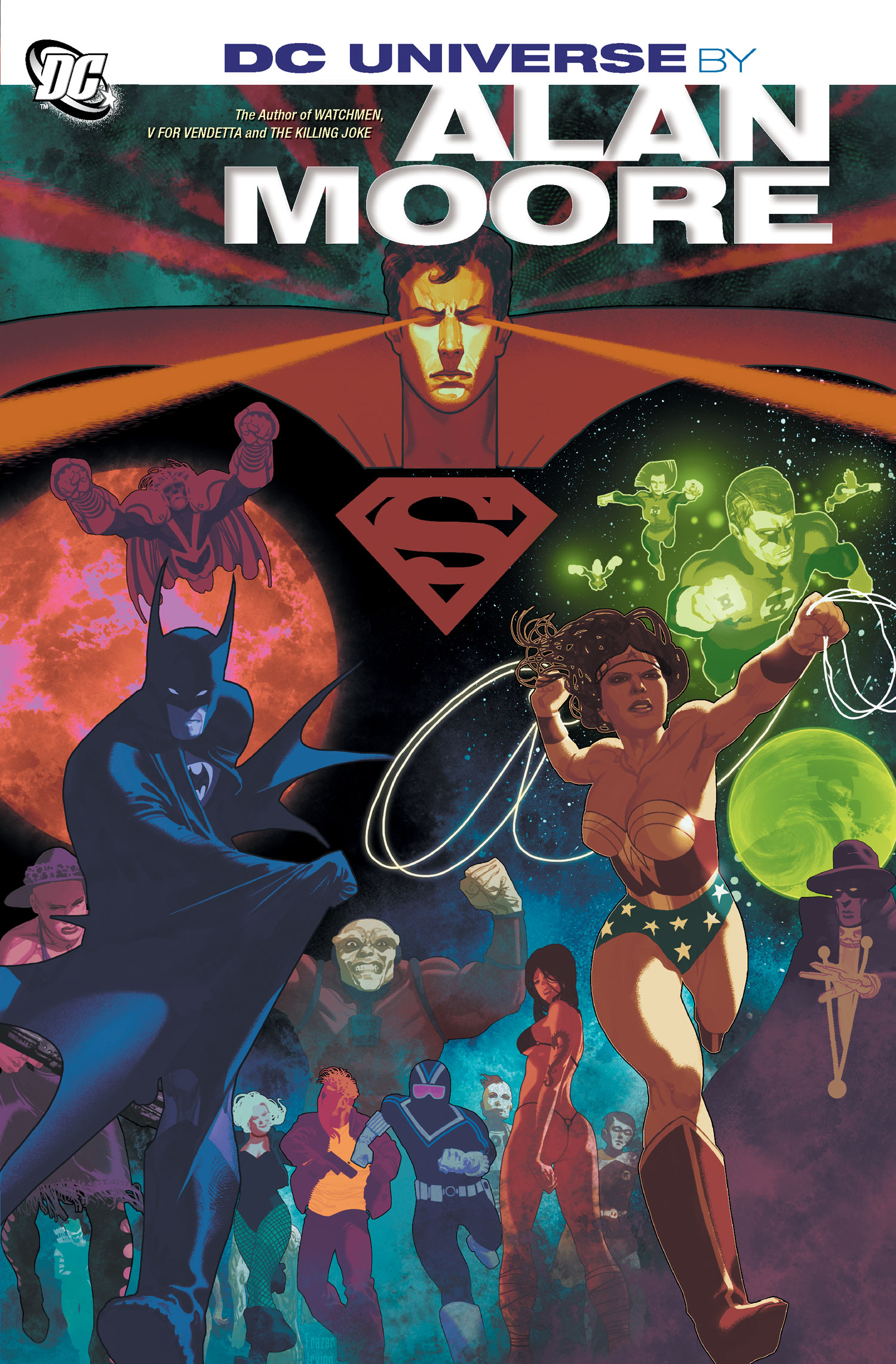
    DCU by Alan Moore

    Simultaneously a celebration of a unique body of comics and a liberal application of salt to long-open wounds, DC Universe by Alan Moore is, as one would suspect, a collection of the odds-and-ends of Moore’s superhero work during his important, often tumultuous tenure with DC Comics. But for the exception of the author’s work on Swamp Thing and Batman: The Killing Joke, all of the work Moore did under the standard of DC Comics is here. Also included, presumably both as a lure for those who already owned the 2006 version of this collection and given the WildStorm Universe’s integration into the DCU under the banner of The New 52 (still called that, somehow, two years into the initiative), is a majority of the non-America’s Best Comics work Moore produced for Image Comics. The result is a volume that both unifies many of the comic books Moore did that are too short to justify individual collected editions while presenting the influential author’s superhero works in schizophrenic disharmony, the 1980s books of a hungry genius rubbing elbows uncomfortably with his more mercenary late-90s output, already largely an extreme response to his Watchmen and V for Vendetta.

    The highlights here, of course, are two of the seminal stories in the Superman cannon, “For the Man Who Has Everything” and “Whatever Happened to the Man of Tomorrow?” Along with Superman/Swamp Thing team-up “The Jungle Line,” Moore only wrote four Superman comics, but they’re enough that his legacy, among other things, will hold him up as one of the best writers to’ve ever worked on the character. Moore begins each with the conceit that Superman is either in mortal peril or already dead, and works quickly to establish that fact in ways that are asynchronous to the Superman mythos. When Superman “died” in 1992, it was at the hands of larger-than-life monstrosity Doomsday. While titanesque marauders threaten Superman here, as well, big bads like Mongul and the Kryptonite Man pale in comparison to biology and ingenuity. In “For the Man Who Has Everything,” Superman receives a strange plant for his birthday that latches on to him and grants him a hallucination of his heart’s desire. In “The Jungle Line,” it’s a miracle fungus spore that survived the trip from Krypton, as Kal-El himself did. “Whatever Happened to the Man of Tomorrow” feints with the threat of a Lex Luthor/Brainiac team, but Luthor’s mental prowess and Brainiac’s galaxy-spanning A.I. pale in comparison to the machinations of fifth-dimensional imp Mr. Mxyzptlk, to whom they are mere pawns. (more…)

  • Movie Review: Man of Steel (2013)

    Movie Review: Man of Steel (2013)

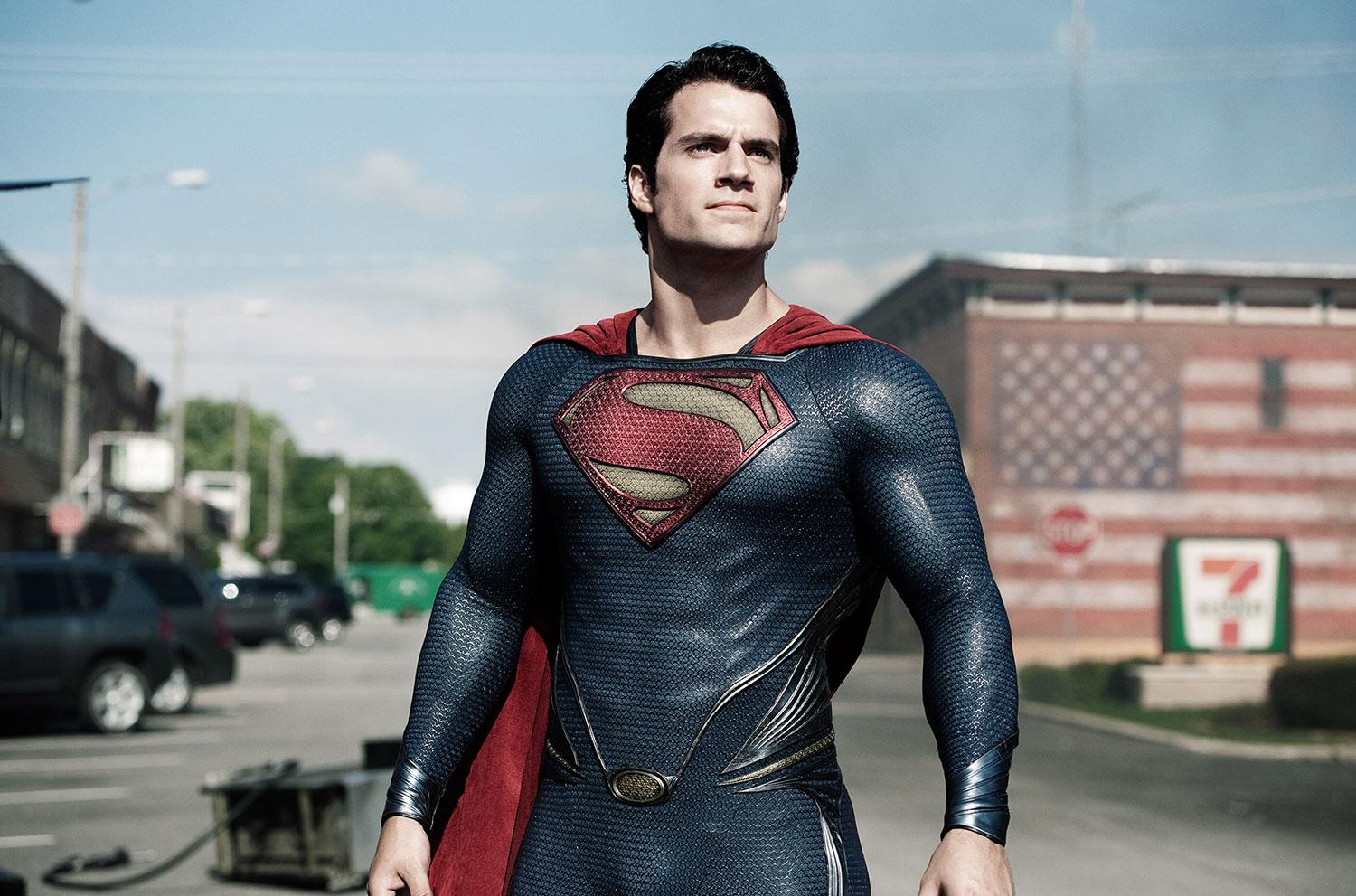
    Clark Kent on Free Slurpee Day

    Though the “S” on his hero’s chest is Kryptonian for “hope,” the only thing Zack Snyder believes in is destruction. In Man of Steel, the director has more money and a larger army of special effects artists at his disposal, and he uses both expertly in his most pyrotechnic sermon on annihilation to date. In casting the last son of a dying planet as a messianic instrument of war against the whiles of godlike invaders of that same planet, Snyder has managed to rip the heart from his savior, twisting a symbol of truth and justice into a sign of the apocalypse.

    Superman—not a name uttered often, or without blushing, during Man of Steel’s overstuffed run-time—has been the ubiquitous superhero in American popular culture for 75 years, but it’s worth pointing out those 75 years have, through artistic highs and lows, been stewarded by corporate interest. So too has Superman’s mantle, that he is the self-appointed guardian of “truth, justice, and the American way.” The American way, given several summers of reductive, gritty tent pole films where outsiders execute bloodless 9/11 scenarios on our cold, largely vacant metropolises, is fear, which often enters Man of Steel’s narrative under the guise of “hope” (that big “S” Clark Kent eventually wears), or, even more stealthily, choice. It’s hard not to blame Snyder and screenwriter David S. Goyer for dragging their cosmic, primary color wearing hero Earthbound—darkness is a proven winner in superhero films, as Goyer and producer Christopher Nolan proved with their recently concluded Batman trilogy.

    And there is no end to darkness in Superman’s story. His life begins just as all other life on his home planet of Krypton is destroyed. The first natural birth in several centuries, Kal-El, the future Clark Kent (Henry Cavill), is placed on a rocket by his father (Russell Crowe) and mother (Ayelet Zurer) and sent out to a new world, where he can carry on his people’s legacy among the humans of Earth. His rocketship lands in a Kansas cornfield, where it is discovered by the Kents, Jonathan (Kevin Costner) and Martha (Diane Lane). Among other things, Man of Steel is preoccupied with the relationship a son fosters with his father, and poor Clark has two, neither of which can understand his plight. Jor-El, of course, is dead. Pa Kent, on the other hand, is a human being, and they don’t exactly give human beings instruction manuals on how to raise children who fell out of the sky.

    As an origin story, Man of Steel’s primary objective (and, really, the albatross around its neck) is to serve as an introduction to Clark Kent’s story. While there are brief flashes of the franchise yet-to-come—the Daily Planet and its editors (among them Laurence Fishburne as a marginalized Perry White) appear mostly in the climactic sequence that destroys much of Metropolis, lending their human features to Snyder’s point-and-click urban obliteration—the Superman of Goyer’s imagination cherry-picks from other successful franchises before finding himself locked in mortal combat with General Zod (Michael Shannon). After watching his adoptive father die, Clark Kent leaves Kansas to find himself. He drifts from job to job, one small outpost to the next, living at the fringes of humanity until a job he’s on leads to the discovery of a Kryptonian spacecraft. Also on this arctic expedition is Lois Lane (Amy Adams), putting her journalistic reputation on the line when she writes not only of the unidentified flying object, but the strange, wandering worker whose DNA activated its onboard computer and defenses. The activation of that ship is something of a beacon for the universe’s last remaining portion of Kryptonians, General Zod and his followers, who were banished to the ominous Phantom Zone for trying to overthrow the Kryptonian government some 33-years prior to the main action of this film. Zod arrives on Earth, heralded by a video message for humanity that suggests he spent several years adrift in space earning a film degree, demanding the Kryptonian be handed over, lest the planet perish.

    All of this is paint-by-numbers for summer superhero timewasters—indeed, General Zod and Iron Man 3’s Mandarin may have taken the same filmmaking course—but Man of Steel has a higher calling, using the promise of wanton destruction as a stealth lecture on the life of Jesus Christ, a role Superman is dreadfully miscast in. Snyder is at his best, however, while setting this story up. His Krypton is a prog-rock hellscape populated by the denizens of a science-fiction Rome, and, free from the limitations of physical space or human emotion, he crafts his most visibly striking sequences since 300. They are so abstract, in fact, that it’s easy to miss the specifics of Russell Crowe’s exposition; how his son, a miracle birth, will grow up among humankind and eventually save them, as a god would. This sequence is densely packed with dragons, laser cannons, and spaceships that double as fertility totems—blink and you’ll miss the MacGuffin—but Snyder returns to beat this pulpit several times over. Witness Clark Kent performing miracles in his youth. Note how old he is when revealed to the world as something greater than human. See how he gives himself over to General Zod—who looks rather strikingly like a Hollywood Julius Caesar—so that man can be saved. The metaphor’s a real groan—the best representations of Superman in popular culture are those that are more human than divine—painfully accentuated by a scene where a doubting Clark Kent visits a priest to suss the whole thing out, a stained glass Jesus looking down above his shoulder.

    Snyder’s Superman is particularly unfit for the burden of cinematic messiah because, well, it’d hardly be a Zack Snyder film if self-sacrifice meant giving oneself up without bloodshed. Man of Steel’s climactic brawls are overblown and orchestrated to the same degree as the centerpieces of the Matrix sequels, and while it’s hard not to be impressed with the monstrous task undertaken by Snyder’s effects team—not only are two cities effectively leveled, but in flight and in fight, the world Superman occupies looks and feels hypothetically as it would to somebody of his abilities; impressive, but easily destroyed—the problem with these scenes, beyond the generally tiresome 9/11 imagery, is that they have no life to them. The staff of the Daily Planet run from falling buildings, but there are zero stakes to their plight. In a PG-13 movie arguably more interested in being a Trojan horse for the International House of Pancakes than the consequence of space aliens pulverizing a major American city, Ragnarok was bound to be bloodless, but for it to be without heft? Superman has reversed the Earth’s rotation for less. Here, Lois Lane falls into his arms and gives him a hero’s kiss; the world, as absurd and dangerous as it’s presented to be, returns to normal. It may not have been convincing, but at least Tony Stark had to deal with seeing an alien armada at the far edge of the universe. The destruction here may be more realistic an illusion than in any superhero film short of Nolan’s Batman trilogy, but it’s no trick to destroy a lot of buildings, if all you want to do is destroy a lot of buildings.


    Man of Steel. With Henry Cavill (Clark Kent/Kal-El), Amy Adams (Lois Lane), Michael Shannon (General Zod), Kevin Costner (Jonathan Kent), Diane Lane (Martha Kent), Laurence Fishburne (Perry White), and Russell Crowe (Jor-El). Directed by Zack Snyder and produced by Christopher Nolan, Charles Roven, Emma Thomas, and Deborah Snyder. Screenplay by David S. Goyer, based on characters created by Jerry Siegel and Joe Shuster.

  • Movie Review: Texas Chainsaw (2013)

    Movie Review: Texas Chainsaw (2013)

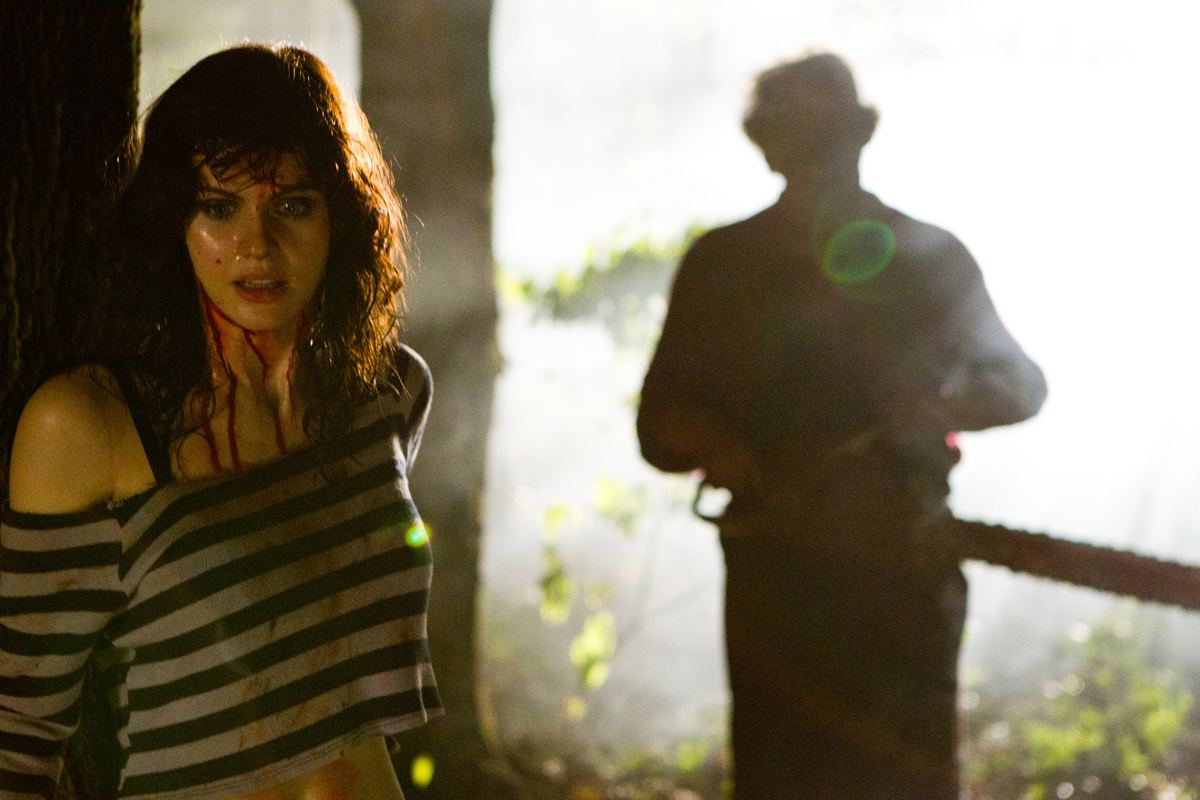
    Texas Chainsaw 3DIn an effort to skirt the negative connotations of the word “remake,” Texas Chainsaw (a title as unwieldy as the titular weapon, in instances when one’s intended victim is running—even when the modifier “3D” is added) bills itself as a remaking, going to the trouble of re-shooting the iconic end of Tobe Hooper’s 1974 slaughterhouse and playing the opening credits over a sizzle reel of highlights from The Texas Chain Saw Massacre, which, along with Halloween, inadvertently invented and codified the slasher genre. This, charitably speaking, is a huge tactical error. Though the 2003 remake and its sequel aren’t exactly remembered kindly, Hooper’s film—liked or loathed—is marked by its grit and inventiveness. Filmed digitally on HD cameras and following genre conventions step-by-step, grit and inventiveness are two things absent from Texas Chainsaw, so much so that the two films may as well be related in name only.

    Immediately, Texas Chainsaw asks the viewer to make large leaps of logic, noticeable even within the constraints of genre. A girl (Alexandra Daddario) discovers she was adopted when she’s informed that her grandmother by birth died, leaving her an inheritance on the outskirts of Newt, Texas. Forget that this leads to yet another scenario where an attractive young girl and a few of her attractive young friends pile into a crappy van and set out for remote lodgings. Heather Miller discovers that she is a Sawyer, and, when she pulls up onto the property she’s inherited, finds herself the sole beneficiary of a vast fortune: a mansion house, silver dining service, state-of-the-art security system—the works.

    Yes, Leatherface (Dan Yeager) is lurking in the basement, but that’s not important. Think back to the events of the original film. The Sawyer clan are a bunch of drooling, inbred simpletons. The smartest of them run a gas station and bar-be-cue joint that serves human meat. Moreover, the townsfolk that torched down the Sawyer joint in the prologue are celebrated as heroes, so it’s unlikely that the last one left alive got anything like a gigantic settlement package. How did grandma Sawyer and Leatherface find themselves in a mansion? Texas Chainsaw doesn’t care, even when it insinuates that the townsfolk—who murdered about 20 people with the tacit approval of the sheriff but, for whatever reason, are only able to muster up the occasional bit of graffiti on the new Sawyer digs—are still pretty heated about the time a bunch of yokels on the far outskirts of town quietly killed and ate some strangers.

    There are other implausibilities in Texas Chainsaw capable of bending the mind—despite taking place now, for example, Leatherface is the spry, chainsaw-wielding killer he was in 1974, decades be damned—but to waste time discussing each one is to ignore the fact that this is simply a bad movie, and not the kind whose mistakes and wormholes make for a memorable experience. The movie tries, I suppose, to do a few things to pass the time. Heather’s boyfriend (Trey Songz) sleeps with her best friend (Tania Raymonde); a hitchhiker (Shaun Sipos) tags along with the gang to the mansion, only to ransack the place while its empty, some other guy (Keram Malicki-Sánchez) claims to be a decent cook. But they’re all hunks of meat waiting to be butchered, and Texas Chainsaw, rather than hold itself up as a flimsy allegory to the horrors of war like its predecessor did, acts shamelessly as a 90-minute vehicle for men who enjoy listening to screaming women to do so at length.

    That Texas Chainsaw never rises above menacing its barely-clothed young women is a problem, one that it shares with every by-the-numbers slasher flick that uses a knife in the gut as a substitute for rape. Given that horror films are the only medium using 3D as the gimmick was intended (that is to say, the chainsaw is coming right at you!), there’s some subtext to scenes like the one where Leatherface plunges his chainsaw into a closed casket to get at the cowering, crying Heather, but Texas Chainsaw offers little beyond this, even in the name of academic analysis. Despite the name, Texas Chainsaw is just another entry in a broken, ineffective genre. It’s useless, except to mark the passage of time.


    Texas Chainsaw. With Alexandra Daddario (Heather Mills), Dan Yeager (Leatherface), Trey Songz (Ryan), Scott Eastwood (Carl), Taina Raymonde (Nikki), Shaun Sipos (Darryl), and Keram Malicki-Sánchez (Kenny). Directed by John Luessenhop and produced by Carl Mazzocone. Screenplay by Kirsten Elms, Adam Marcus and Debra Sullivan, based on characters created by Kim Henkel and Tobe Hooper.