Tag: WWE

  • The Women’s Royal Rumble and the History it Rewrote

    The Women’s Royal Rumble and the History it Rewrote

    I don’t watch WWE much these days. Outside of last night’s Royal Rumble and the majority of Saturday’s NXT Takeover, the last WWE telecast I saw from start to finish was the 2016 Money in the Bank pay-per-view. Call it disinterest or protest (it’s a little of both), but regardless it is impossible to like wrestling, to be a known wrestling fan, and not be up to speed on the comings and goings of the world-wide leader in sports entertainment. Leftists, trans women, poets and essayists, every circle I run in has a deep appreciation for wrestling, and at $9.99 and airing at a reasonable hour (if not for a reasonable amount of time), WWE is how most of my friends and acquaintances on the internet scratch that itch.

    It’s not hard to fall into the routine of a WWE production. Beyond the atrocious way the shows are edited, the WWE template has been the way it is now since the end of the Attitude Era, the Crash-TV T&A product that enabled it to beat World Championship Wrestling’s formula of cool, edgy dads strangling every hope for the future. It’s the stars that have changed, and, in many ways, the ambitions of the company.

    I want to point to 2012 as the year WWE became obsessed with bronzing its decades long ubiquity. It was the year David Shoemaker (then of Grantland, now of The Ringer) coined the phrase “Reality Era” for their product, which had a much nicer ring to it than “worked-shoot era,” which is what CM Punk’s infamous “pipebomb” promo supposedly launched. Grantland, you’ll recall, was a website published under the ESPN banner, and while ESPN and credibility aren’t exactly in the same neighborhood, Shoemaker’s coverage was the beginning of WWE becoming a part of the fabric of popular culture in a way it never had before, which is to say that online verticals, hungry for clicks, began treating WWE like a normal part of the television landscape. Buzzfeed, AV Club, Sports Illustrated — outlets that would have covered WWE once or twice a year around WrestleMania — started doing so more frequently, and while a lot of that coverage was (and is) rather tepid, it’s the kind of hokum that WWE lives for as a company.

    The most notable change in WWE programming is the Women’s Revolution, which, stripped of its pomp and circumstance, was the company’s noble realization that women, too, were capable of wresting. Old trademarks and butterfly-and-vagina adorned championships were retired in favor of an on-air promise that the women’s division would be taken seriously. It helped early on, when the company gave the trio of Paige, Charlotte Flair, and Becky Lynch the name “Submission Sorority,” that the bar for success was incredibly low, but for the most part they’ve followed through on that promise in a way they’ve otherwise never done. Its NXT developmental program did the hard work of training an audience who’d been previously trained to not care about women’s wresting to get invested in it. The lengthier, more grueling contests on NXT Takeovers translated well to Raw and SmackDown!, and at the Royal Rumble, the women went on last.

    My issue with the presentation of women’s wrestling in the “Reality Era” is how smugly WWE has gone about this transition, noting every first time ever gimmick match as if ticking off boxes this late in a 20-year stretch of presenting women’s wrestling is something to be proud of, rather than be embarrassed by. That it has chosen to front Stephanie McMahon as the genius figurehead behind these changes when, in her role as chief of creative, she and her father Vince McMahon were responsible for overseeing the era it was so ashamed of is a hard enough pill to swallow before considering how easily the click-hungry sites offhandedly covering its shows eat WWE’s ongoing act of contrition up.

    Stephanie McMahon, hardly content to give a speech about the need for a women’s Royal Rumble, was also a guest commentator, introduced by WWE lead announcer Michael Cole as “a former women’s champion in her own right” and, at the conclusion of the match, congratulated by him as a “trailblazer,” as if she been directly responsible for the labor of the match itself. McMahon, giving one of the worst calls in the history of the company, replied “congratulations to us all.” It was the lit candle on a cake the company has wanted to eat since the beginning of its self-fashioned, media-fueled revolution, and one of a few calls McMahon made that had me wincing because my institutional memory of the company goes back far enough to see through the smokescreen of the evening’s many surprise entrants to the way those women were treated in an era the company would rather I forget.

    It’s hard to know where to start. There’s Lita, the first surprise entrant, whose ring gear bore the Time’s Up hashtag and whose arms had the names of women in WWE’s past who weren’t alive for the match. Forced into the role of the slut after her very public break-up with Matt Hardy, her eventual retirement from WWE involved a tag team stealing things from her locker room so they could auction them off in front of her. The items included a pair of panties, which they encouraged commentator John Bradshaw Layfield to sniff before throwing them into the crowd, and a vibrator. The last surprise entrant, Trish Stratus, was once forced to bark like a dog and strip in the middle of the ring at the behest of Vince McMahon, her real-life and kayfabe boss, and, as the storyline going into WrestleMania 17 went, his mistress. Lita and Stratus, in case you’re wondering, are held up by WWE as the best two women wrestlers in company history.

    Other entrants in the Royal Rumble fared about as well. Torrie Wilson, who, like Stratus, was also written in as one of Vince McMahon’s mistresses in that man’s unending quest to prove his virility, is otherwise most famous for a storyline in which her (kayfabe) dad married another woman on the roster, had sex with her, and died. Molly Holly, who, between the brief period where WWE partnered with Japanese promotion AJW and had the likes of Aja Kong and Bull Nakano on the roster and the current influx of talent, may be the most talented woman the WWE employed, was subjected to ridicule for being a prude and worked a program with Stratus booked entirely on the premise that she had a big ass and wore “granny panties.” McMahon referred to this as “defying stereotypes.”

    None of this is to say that the women’s Royal Rumble wasn’t good. It was great, in fact, one of the most thrilling I can recall. Even the most questionable decisions in the match, like having Michelle McCool run roughshod and eliminate a slew of women who were going to be on the card the next day, had a logic to them, as McCool was, as noted on commentary, one of the tallest women in the match. The WWE’s women’s division is deep, and the returns of women like Lita, Stratus, Holly, and Beth Phoenix served only to highlight that, as they acquit themselves very well after years of inactivity. Battle royals are a great means of hiding flaws — not only ring rust, but how young many of the women in the match are to wrestling — but if any of those women had a short run on one of WWE’s brands or, like Mickie James, stuck around for awhile, they would not only add something to a roster that is capable of supporting more than one story at a time, but they might get to leave WWE with more dignity than they were afforded before the press started paying attention.

    The male gaziness of WWE’s presentation of women’s wrestling was historically awful, and I mean “historical” in the sense that no other major wrestling promotion did it as poorly as they chose to do it. At least half of the women in that match had at one point or another been ridiculed for being fat, promiscuous, ugly, or insane. WWE is probably right to think they can simply drop the curtain on all of that and move on with zero culpability, but it is jarring to see and hear it happening in real time, not to mention frustrating. The underlying message of the transition to the current way of doing things is that the old way sucked. It did, but to put the burden of that on the women whose only crime was suffering through the Diva era is not only insulting, but actively hinders what they’re trying to accomplish by not acknowledging how the company’s culture has changed.

    The match ultimately served that narrative purpose, highlighting the good of the past and rewriting the bad, transitioning from women like Lita and Stratus to Sasha Banks, Becky Lynch, Bayley, and Asuka. It wasn’t necessary, but it was incredibly well done, right down to the final two participants being Nikki Bella and Asuka. Nikki Bella, along with her sister Brie, are 10 year veterans of the WWE system, two models who were hired, as the story goes, because the man in charge of hiring wrestlers at the time thought they were attractive. Like Stratus before them, they ground it out for years and, in the process, became good professional wrestlers. Early in the WWE’s public push for the Women’s Revolution, the Bella Twins existed as its foils, the women who were supposed to remind the viewer of how bad things were, but it’s possible to make a case for Nikki as the most improved wrestler over the past five or six years, a compelling face or heel whose victory last night, had it happened, would have been an earned one.

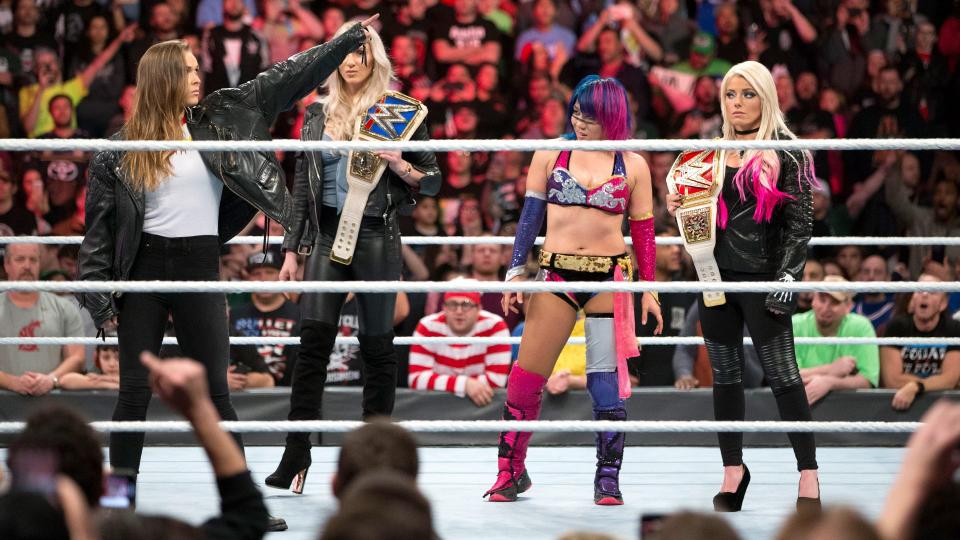
    That it came down to her and Asuka made things tense. Asuka, like men’s Rumble winner Shinsuke Nakamura, is something the WWE has never had before, a wrestler too good, too uniquely charismatic to be saddled with the company’s usual hang-ups about Japanese wrestlers. Her win felt like a foregone conclusion unless, as the rumor went, Ronda Rousey was the surprise last entrant. When the former UFC Champion didn’t show during the match, my relief was palpable. But, just before Asuka was able to choose which champion she wanted to fight, Joan Jett’s “Bad Reputation” hit and Rousey emerged, wearing “Rowdy” Roddy Piper’s clothes and possessing none of his fire. Silently, Asuka was the star of a moment that should have been hers but ultimately wasn’t, impossible to look away from while Rousey glowered and pointed at the WrestleMania sign, arms too short to make it out of Piper’s jacket. In that moment, however, it was Rousey and McMahon at the center of everything, a manufactured moment projected onto the real one happening over Asuka, Bliss, and Flair, and a choice that may ultimately come down to Rousey picking her poison instead of the winner of the Royal Rumble, despite the former getting washed in her last professional fight and the later’s billing as an undefeated phenom.

    For now (and likely forever), WWE is content with surface-level sheen and the empty praise of the outlets that are happy to provide it. That’s why Ronda Rousey’s debut as an active concern in the women’s division, taking the heat from Asuka and placing the focus on her and McMahon was ultimately a fitting way of ending the show. Sure, Rousey is a transphobic Sandy Hook truther who looked lost the last time she was in a UFC bout, but she’s a brand people know and respond to, someone whose name looks good in headlines. If there’s one thing that’s been true of the Reality Era since it started, it’s that WWE trusts that, and is content to bury its flaws beneath that recognition, more than it trusts the stories and characters they’ve built on their own.

  • Mr. Wonderfuls: On Wrestling’s Gay Characters

    Mr. Wonderfuls: On Wrestling’s Gay Characters

    Note: This essay was originally written in 2015, and published in The Atomic Elbow #22 in June 2017. References to “this year” are to 2015. For more information on The Atomic Elbow, which is the best wrestling zine in the United States, check out its website

    It’s March 21, 2015. Ring of Honor Television Champion Jay Lethal just defended his title without lifting a finger. His scheduled opponent, Donovan Dijak, decided to instead join forces with Lethal, hoping to learn something from the long-tenured ROH star and his manager, and the three celebrate in the ring when, suddenly, music unfamiliar to them all begins to play. At the entrance way, two beefy men are using feather ticklers to obscure a third man. When they lift them, there he is—Dalton Castle, a man in a gold lamé jumpsuit and sequined cape, sporting a head of just-been-fucked hair though it’s only 8:00pm. “Boys,” he says to his boys, “It’s time to break some hearts!”

    Once in the ring, Castle displays his peacock cape in its full glory, crowing to the fans as Lethal and his cohort look on, mystified. The crowd, for their part, don’t know what to make of Castle, either. He’s a new character in Ring of Honor, and, to be frank, he’s gay. Really gay. ROH as a touring promotion has existed for 13 years, and Castle is just their second gay act, so far as I can recall. The first—a tag team of mincing rough trade known as The Christopher Street Connection—appeared on the very first ROH show. They were roundly crushed by a pair of big nasties called Da Hit Squad and ushered from the building as the crowd chanted homophobic slurs. The company has grown a lot in size and presentation since that show, but Ring of Honor’s fans are still known as a rough crowd, perhaps the roughest in professional wrestling, which, despite kingpin World Wrestling Entertainment’s overtures to young children, is still largely enjoyed by straight, white men from the ages of 18 to 35, forever the prime Nielson demographic.

    Still, there’s Castle, and his valets are stripping him out of his bodysuit—the Party Peacock is molting—and Lethal looks like he’d rather be dead than watch what’s happening in front of him. Castle takes the microphone and begins to speak, not in an overly flamboyant way, but considering that he’s just lovingly rubbed the face of a mostly-nude adonis in a Mardi Gras mask, an affected lisp is unnecessary. As Castle challenges Lethal to a match for the championship, his boys assume the position on the mat, one on his knees and the other on all fours, allowing their man to recline upon a beefcake chaise lounge. At this point, the live crowd is in on Dalton Castle. Not just as a gay professional wrestling character—old hat in 2015—but as a gay hero standing opposite a threat that is clearly evil.

    Lethal beats Castle, of course—long-tenured champions rarely lose to debuting characters—but what’s notable here is the role reversal, the gay character as a good man, all proclivities aside. Wrestling has been on television since the birth of the medium. It has seen and addressed every pop culture phenomena, political crisis, and social phobia that could be exploited to make a dollar. This is an entertainment vehicle where men are men, yes, but it’s also one where RoboCop might save a wrestler in peril, or where an in-ring confrontation between “Macho Man” Randy Savage and Kona Crush can be compared to a summit between the United States and the USSR. Just this year, a Russian bruiser rolled to the ring on a tank, backed by a full military escort, and lost to a lone American who pumped himself up by playing audio of Ronald Reagan speeches over videos of amber waves of grain. World Wrestling Entertainment, by far the largest, most successful promotion in the history of professional wrestling, employs an out gay wrestler and has another one in their hall of fame, but despite all of the pomp and circumstance at their disposal, and though 65 years have passed since Wrestling from Marigold first graced the DuMont Network, there has never been a good guy gay character with a higher profile than Dalton Castle.

    I’m tempted to ask why, but know the answer begins and ends with homophobia. Sure, there’s a latent homoeroticism to professional wrestling—always has been, always will be—but to acknowledge this aspect of the industry in any other context than one that implies revulsion would be a true revolution. Hulk Hogan strips down to his skivvies and oils up his 305 pounds of muscle because those are the rules, brother. “Adorable” Adrian Adonis does it because he (shudder) enjoys it. The roots of homophobia in professional wrestling are deep, knotted and gnarled in the origins of the product seen today. The gimmick—an outsized human stereotype played for effect in the ring—came to maturation with wrestling’s debut on network television, in the guise of Gorgeous George.

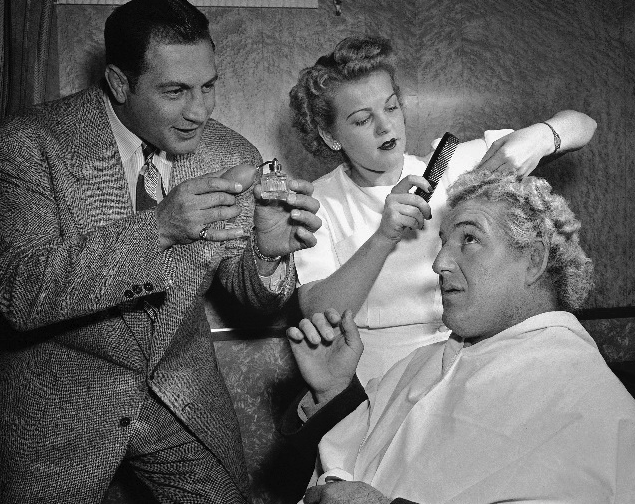
    Formerly a mid-card nobody of average distinction, George Raymond Wagner made no bones about his looks being the reason for his success within the squared circle, frequently telling those who came to interview him for the local sports pages the same story: Inspired by the tresses of George Washington’s hair upon the dollar bill, he grew his hair out, dyed it blond, had it marcelled, and legally changed his name to Gorgeous George, lest anyone be fooled by a host of imitators. He was accompanied to the ring by a valet or a manservant, though the manservant garnered more fervor for the act and stuck. Jeffrey, donning similar attire as his master, would stroll to the ring with a bath mat, an oriental rug, and a silver tray bearing an atomizer of cologne. The bath mat was used so George wouldn’t sully his feet on the ring apron, the rug for his corner. The atomizer disinfected the ring, the referee, and, if Jeffrey could manage, his opponent—Gorgeous George was a confirmed germaphobe, as it so happened, and abhorred the sweat on his opponent’s brow and the funk of the evening’s matches upon the ring canvas. If the venue had an organ, it would play him to the ring with “Pomp and Circumstance,” and whatever town Gorgeous George was in would be treated to an appearance by a real, live celebrity, a debonair man of wit and taste who, as it so happened, was skilled in the arts of leverage and deception. He had a family, multiple wives and multiple children, but the presentation of his character was decidedly effeminate. Writing to Grantland Rice in 1948, sports reporter Gene Fowler described his pre-match routine thusly:

    In the dressing room, Gorgeous George’s valet, Jeffrey, spreads out the splendid habiliments to be worn in the ring. This night it was Gorgeous George’s pleasure to wear green trunks and green socks. He also selected a pair of white kid shoes worn high up on the calf, like the old Queen Quality numbers owned by the cotillion belles of Frank Croninshield’s day. Gorgeous George’s dressing room that night was a custom-built creation of orchid-colored silk, flamboyantly flowered. When asked if Adrian had made this garment, George replied, “No, my friend, it was designed by an Eastern couturier.” Then he added “It contains seven yards of material.”[note]Rice, Grantland. “Gene Fowler Reports on Gorgeous George.” The Atlanta Constitution 15 Feb. 1948: 11B. ProQuest. Web. 21 Apr. 2015.[/note]

    This, in effect, is the prototypical gay wrestling gimmick, an effete man of Wildean graces, a poet who preferred the hammerlock to the pen. Gorgeous George was a genius of marketing, handing gold-plated Bobbie pins to his female faithful and swearing them into his fan club, “So help me George.” The pins could also be used as weapons, jabbed into an opponent’s gullet or stolen from him and used to gain an advantage, what he called a “vulgar stratagem.”

    The queerness of the character was not lost on his critics. Reports of upcoming appearances by Gorgeous George practically delight in comparing him to his sweaty, hulking opponents. A 1948 Washington Post article describes George’s pre-match visit to the salon, then wonders “what will happen to those luscious ringlets after [Marvin Mercer] digs his perspiring paws into them”[note]Fishbein, Sy. “Gorgeous George Smells Up the Joint In What’s Called Wrestling at Turner’s.” The Washington Post 17 Nov. 1948: 13. ProQuest. Web. 21 Apr. 2015.[/note]. Clutching her pearls, The Atlanta Journal Constitution’s Doris Lockerman really goes after George, beginning her column by saying she’s glad that Oglethorpe University sealed their time capsule before they had to take note of him, lest the citizens of 2035 despair for humanity, and finishing by claiming that her cocker spaniel hated him so much that he had to be muzzled during the wrestling matches on television. As she puts it,

    Even in this mad, mad world, I don’t see how Gorgeous got started. Even in Hollywood some of the residents should have had a normal allergy to a man dressed up like a woman. The only people I know who can get a real laugh out of a caveman dressed up like Belle Watling are the lodge brothers, who enjoy such things as Womanless Weddings on public street corners, or pretend they do in the name of fraternity.[note]Lockerman, Doris. “Gorgeous George, Eyeful for Future.” The Atlanta Constitution 13 Mar. 1950: 12. ProQuest. Web. 21 Apr. 2015.[/note]

    A man dressed up like a woman. There it is. That’s the objection to a gay gimmick in wrestling, an objection that has sounded from Gorgeous George to Adrian Street to Adrian Adonis to Goldust and, which, presumably, informs the look of disgust on Jay Lethal’s face while Dalton Castle talks about stretching out his hamstrings. Wrestling, for everything that’s unreal about it, has always been obsessed with degrees of reality. Real women. Real men. Gorgeous George fell between those distinctions and was hated for it.

    But, in wrestling, if enough people hate you, you can really make a name for yourself. Beyond modern titans like Hulk Hogan, Steve Austin, or Dwayne “The Rock” Johnson, no other professional wrestler had his life as slavishly chronicled by the media as Gorgeous George. No other wrestler of his era inspired as many rumors or tales of various misdeeds. In one city, the athletic commissioner recommended a lifetime ban because George cheated to win a match. In another, a middle-aged woman sued him because she touched his hair and was punched in the face for it[note]Mosby, Aline. “It Might Cost Gorgeous George $35,000 For Tossing His Curls (and a Left Hook).” The Washington Post 13 Jun. 1948: C1. ProQuest. Web. 21 Apr. 2015.[/note]. Gorgeous George was a straight man, but he was a queer terrorist by profession, a tough fag who transcended the public’s conception of butch or femme. He inspired John Waters and Divine, who watched him as children. Overnight, he transformed professional wrestling from a serious-if-fixed sporting event to the hedonistic pleasuredome millions revel in each week. Before him, the body was a tool. After him, a wrestler couldn’t survive if the body wasn’t also somehow spectacle. Men took to wearing masks and creating secret histories. They had complicated workout routines and demonstrated ridiculous strongman feats. There were midget wrestlers and lady wrestlers, a wrestling bear named Victor who was addicted to grape soda, and, in Andre the Giant, a wrestler who could legitimately be billed The Eighth Wonder of the World. Men have stolen pieces of his gimmick—the atomizer, the valet, the music, even his name—but could never successfully replicate his presence outright. The only thing to do with the Gorgeous George character is to make it more outrageous. To dye your hair blond and drape your frame in boas, to hike up your skirt and mince your way to Parts Unknown.

    Looking at Gorgeous George stand across the ring from an opponent of his era—a working class stiff in black trunks and a crew cut, maybe a cauliflowered ear or two—it’s rather easy to mark him as queer by contrast, but, as mentioned, the whole of wrestling quickly became as outsized as he was. Gorgeous George died in 1963. That same year, “Nature Boy” Buddy Rogers became the first World Wide Wrestling Federation World Heavyweight Champion, a title that survives today under the auspices of World Wrestling Entertainment. Rogers, like George, was a pretty boy. He wore robes. He dyed his hair blonde. He had class. Unlike George, he was portrayed as a tough guy, and his “Nature Boy” character, which was later taken up by Ric Flair, became synonymous with slick, womanizing charm—claiming in an interview he’d booked up an entire floor at the hotel, Flair proclaimed himself “Space Mountain” because women were lined up around the block to be seen with him. Or take the case of sad-sack good guy Brutus “The Barber” Beefcake, friend to Hulk Hogan and (presumably) his millions of Hulkamaniacs. How can a gay menace exist in an environment where a part-time hair stylist with a glorious Kentucky waterfall can strut to the ring clad in fishnets to preen and give his opponent a haircut?

    Roland Barthes’ “The World of Wrestling” is frequently employed to discuss the roles of face (good) and heel (bad) wrestlers, but Barthes’ argument, that fans show up to a wrestling match to see the idea of justice played out in the ring, does not comment on American professional wrestling, nor does it consider the ramifications of the gimmick and the storyline, two crucial elements of wrestling that were still nebulous as Barthes was writing. His text[note]Barthes, Roland. “The World of Wrestling.” Mythologies. New York: Farrar, Straus and Giroux, 1972. 15-25 Print.[/note], of course, is fundamental to a basic understanding of the wrestling match in a vacuum, but it cannot account for one promoted with an agenda. It’s best, when thinking about how homosexuality is portrayed in a wrestling show, to think of the face as a character the audience is meant to identify with, and the heel as a character they’re opposed to. Beyond good and evil, as Vaughn May wrote in “Cultural Politics and Professional Wrestling,”

    Professional wrestling preaches a profoundly conservative message that holds much appeal for cultural traditionalists. The overwhelming majority of “good guys,” or fan favorites, are committed to a traditionalistic moral universe centered on hard work, achievement motivation, self-control, and in some cases, respect for family and religion. The overwhelming majority of “bad guys” have a much more “modern” value orientation that rejects the emphasis on self-control, hard work, and earned reward.[note]May, Vaughn. “Cultural Politics and Professional Wrestling.” Studies in Popular Culture 21.3. 79-94. JSTOR. Web. 19 Apr. 2015.[/note]

    The gay villain, given a twisted version of the Gorgeous George template, is a “modern” character. He cheats and connives, but frequently what’s most important about a gay character is that he has no control over his outlandish impulse to paint his face and wear women’s clothing, to kiss men in public without shame or recompense.

    The ultimate wrestling face is Hulk Hogan. Here is a transcript of an interview he did with Gene Okerlund in 1986 to promote a match in San Francisco against “Adorable” Adrian Adonis:

    Hulk Hogan: Well you know, “Mean” Gene, “controversial” is not the word for this dude, man. I mean, hey A.D., which way is the wind blowing today, brother?  Have you taken a walk on the wild side in a while? Well all I’ve got to say to you, Adrian Adonis—Cow Palace, San Francisco! This is Hulk country, brother. And you’re going to take a walk on the wild side. Not the kind of walk you like to take, because there ain’t going to be any swishing around. You’re going to walk right into the pit of the combat zone, brother. You’re going to face the eye of the Hulkster, brother, and then you’re going to go down. You know, “Mean” Gene, I just wonder what kind of entourage Adrian Adonis—Adorable Adrian—is going to have with him at the Cow Palace.

    Gene Okerlund: Well, regardless of the man’s personal preferences, Hulk Hogan, you’ve got to say, as a professional, he is mighty good. There is no question in my mind. He is deserving of a title shot.

    HH: Well you know, I don’t mind his personal preferences, because that’s really not my business. All I’ve got to say, Adrian Adonis, you’re the number one contender, dude, and that means when you come into the Cow Palace, you’d better be ready to take care of business. And all I’ve got to say—you’d better be serious as a heart attack, brother, because if you come to that ring with all those bows and feathers in your head, you’re going to be the shortest-lived number one contender there ever was. San Francisco’s mine, A.D.! Hit the road!

    Leaving aside Hogan’s desire to defend San Francisco (of all places!) from Adonis’ lavender menace, I want to focus on his rhetorical strategy. At the end of his oratory, Hogan focuses on what he perceives to be Adonis’ lack of work ethic, and not because the Adorable One is a fairly rotund competitor. This binary is, according to May, a means of distinguishing a face from a heel. Hogan, obviously, works hard for what he has. He’s got the championship. He has a ridiculous physique. He refers to his desire as “the eye of the Hulkster” and his matches as “the combat zone.” Adonis, by contrast, can’t be taken seriously because of “all those bows and feathers” in his head. Adonis’ look—again the blond hair, Hogan’s mentioned bows and feathers, lavender scarves, and Boy George makeup—marks him as a hedonist, and Hogan’s claim that Adonis’ “personal preferences” don’t matter to him simply are not true. Adonis, who debuted the “Adorable” character by saying he “Jumped out of the closet and there were no brooms behind me” is coded gay, and, even if one doesn’t read much into Hogan nervously repeating the phrase “all I’ve got to say,” his reference to Lou Reed’s “Walk on the Wild Side” can’t be ignored, though it certainly would have gone over the head of any young Hulkamaniac not acquainted with the song. Hogan is either asking Adonis if he’s had sex with a transsexual hooker, or implying that the moment Adonis retired his leather jacket and came out of the closet was the moment when “he” became “she.” The way he wonders about the people Adonis will bring with him to San Francisco is beside the point—one fairy or one-hundred, Hulkamania will run wild over them all.

    Here, I find myself at something of an impasse. I began this essay with Dalton Castle as a means of showing how the gay character has changed, intending to argue that, rather than castigate the existence of an Adrian Adonis, that queer pop culture fans, critics, and performers would benefit more from appropriating straight culture’s appropriation of camp. I was thinking about how there have been gay professional wrestlers, how none of them have played gay characters, and how straight men have spent entire careers playing gay stereotypes for an audience of homophobes. I read Henry Jenkins III’s article “Never Trust the Snake” and encountered an anecdote about how, when he was a child, the fun-loving Bushwhackers encouraged the crowd at the Boston Gardens to chant “Faggot, faggot, faggot” at the Beverly Brothers, a team who coded as gay because they wore lavender trunks:

    The two brothers, clad in lavender tights, hugged each other before the match, and their down-under opponents, in their big boots and work clothes, turned upon them in a flash, “queer baiting” and then “gay bashing” the Beverly Brothers. I sat there with fear and loathing as I heard thousands of men, women, and children shouting “Faggot, faggot, faggot.” I was perplexed at how such a representation could push so far and spark such an intense response. The chanting continued for five, ten minutes, as the Bushwhackers stomped their feet and waved their khaki caps with glee, determined to drive their “effeminate” opponents from the ring. The Beverly Brothers protested, pouted, and finally submitted, unable to stand firm against their tormentors.[note]Jenkins III, Henry. “’Never Trust a Snake’: WWF Wrestling as Masculine Melodrama.” Steel Chair to the Head: The Pleasure and Pain of Professional Wrestling. Ed. Nicholas Sammond. Durham: Duke University Press, 2005. 33-66. Print.[/note]

    And, just once, I wanted that fear and loathing to be felt by the straight crowd. I wanted a version of events where the Beverly Brothers stood tall and defended themselves. Not against the accusation of being gay, but against a culture that insists that two men who hug each other and wear lavender are worthy of public ridicule. But the Beverly Brothers were straight men, not even real brothers, and two straight men pretending to be gay men sticking up for themselves is something I cannot abide. The kind of justice I want to see in a professional wrestling ring can only be doled out by a member of the queer community, but I was willing to settle with Castle, I suppose, because so many minorities are already ill-represented in the major leagues of North America—women and persons of color especially—that a gay character (a character) even existing in 2015 felt special to me.

    But I’ve never pulled gay characters out of the complex tapestry that is a professional wrestling program before. Adrian Adonis existed as a splash of color. His precursor, “Exotic” Adrian Street, never intended his character to be coded gay. He dyed his hair blonde in tribute to Buddy Rogers and tried to give a hard, rock and roll edge to the Nature Boy routine, but the fans in his home country of England didn’t read the character that way. According to an interview with Street in the documentary Changing Perceptions[note]WrestleMen.com Wrestling. “Pro Wrestler Adrian Street talks about Gay Character.” Online video clip. YouTube, 10 Apr. 2010. Web. 22 Apr. 2015.[/note], Street says that English fans responded to his look by yelling “Ohh, isn’t she pretty!” and “Give us a kiss, Mary!” Incensed, he responded by playing up the flamboyant aspect of his character and found that it served to further rile up the audience. So he became, to quote his song “Sweet Transvestite with a Broken Nose,” “King Kong with lipstick, Fay Wray with balls.” Up against the hillbillies and musclemen of the National Wrestling Alliance, Street was (and to an extent still is) the kind of freak I could identify with. But he’s a heel. So were Gorgeous George, Adrian Street, and Goldust. And if Vaughn May’s breakdown of the face/heel dynamic is correct, that means that I’ve been identifying myself with outsiders, with gay sleaze who don’t exist, as a John Waters heroine might, to satirize America’s discomfort with queer bodies, voices, and experiences, but to uphold nation’s spoken or unspoken belief that those things are morally reprehensible.

    In the course of my reading, I remember why I stopped watching wrestling cold turkey in 2002. During that time, the WWE was flirting with the idea of airing a gay commitment ceremony on SmackDown!, one of their flagship shows. In September, after nearly a year of being tag team partners, Billy Gunn and Chuck Palumbo were convinced by their manager (a mincing hair stylist named Rico) to run to the altar. The WWE had experimented with odd, belittling sexual encounters in the year leading up to this—Kane was accused of having slept with the corpse of his dead girlfriend, and a pointless segment promising “Hot Lesbian Action” aired on Raw—but the company was seemingly serious, or at least serious enough that GLADD consulted them on the storyline. As is par for the course, Gunn and Palumbo weren’t gay (and neither was Rico); they were straight men getting paid good money to go through with a publicity stunt at the expense of the queer community. I was 14 at the time, queer but unable to put words to my queerness, and suddenly these “gay” wrestlers were everywhere in the media. A New York Times headline called Billy and Chuck “Accidental Crusaders,” and quoted WWE executive producer Kevin Dunn as saying “They’ll definitely have a baby-face run. Guaranteed. It will be great television”[note]Miller, Jonathan. “Billy and Chuck, Accidental Crusaders.” New York Times 25 Aug. 2002: H12. ProQuest. Web. 21 Apr. 2015.[/note]. As usual, neither Billy nor Chuck came out and said they were gay. They were called flamboyant. They were called outrageous. They gave each other hugs and chocolate. Then they proposed and went on a media tour. On The Today Show, Matt Lauer gave the beaming tag team a crystal gravy bowl on behalf of GLADD, putting over how the pair were winning over the fans through their in-ring ability.

    All of this is in stark opposition to the actual ceremony, where the grooms made their entrance to “It’s Raining Men” and stood before a decrepit old preacher who went on about the importance of commitment. For five minutes, a sold out crowd boos all of this. Then the music of The Godfather, a retired pimp character, plays, and he offers the pair the services of his women if they would just reconsider, playing heavily to Billy Gunn’s straight past. The crowd loves the idea, but Billy and Chuck are convinced to continue until they’re meant to exchange vows. When the preacher asks Billy if he pledges to commit himself to Chuck, Billy reacts like he’s waking from a nightmare, like he has no idea he’s at his own ceremony. The vows? Those get booed. Fans in the arena chant “Just say no!” while Rico looks on imperiously, trying to force the now obviously straight Billy Gunn to pledge his everlasting commitment to a tag partner he’s had for a year. He says yes, passing the buck to Chuck, who also reacts like he has no idea he was playing a gay character the whole time. Rico coerces him into saying yes, but before the preacher can make it official, Billy and Chuck stop the show. Chuck says “It wasn’t supposed to go so far.” Billy says “This was all just supposed to be a publicity stunt. We’re not gay. We’ve got nothing against gay people.” And the fans roar. The men in the ring, they’re not gay. It is safe to be straight at a wrestling show after all. This heavily-promoted farce played out for 20 minutes on network television, all of it causing my guts to churn. I wouldn’t watch wrestling again until 2007, when YouTube came into being and was a haven for wrestling I’d never seen before, both American and otherwise. GLADD, for their part, said that the WWE played them for fools for two months. Obviously nobody involved was watching the product, or they would have figured it out much sooner. When I watch a match with a transgressive, gender-bending gay character, I feel much less offended than when I’m watching something like this commitment ceremony. I can handle being an outlaw. I can’t handle asking for acceptance and having 14,000 people mock me for it.

    The question I asked myself, going into this essay, was why an organization like GLADD would embrace a gimmick like Chuck and Billy sight unseen while casting aspersions upon a character like Goldust for promoting unpleasant stereotypes about the gay community. My choice to identify with Goldust, which I did as a child, certainly has as much to do with the kind of queer that I am as does my choice to find revulsion in the Chuck and Billy storyline. I didn’t know the words for it at the time, but I was eight years old and transgender, and here comes this space alien looking weirdo—face paint, latex body suit, blond wig—Goldust looked like the Oscar statuette if the Oscar statuette needed party drugs to get it up. He spoke in this deep, rumbly baritone, referencing movies that I’d never heard of, walking to the ring filmed in slow motion while his luxurious music shimmered in the background. When the Ultimate Warrior (a confirmed homophobe who once went on record as saying that “queering don’t make the world work”) returned to the World Wrestling Federation in 1996, Goldust confronted him in the ring, breathing “Warrior, come out and play” into the microphone. When Ahmed Johnson was knocked out on a stretcher, Goldust administered mouth-to-mouth, leaving facepaint and lipstick on his rival’s lips. To get into the head of Razor Ramon, he drew a heart on his chest in red lipstick and wrote “Razor” over it in black. In Sharon Mazer’s seminal studying of professional wrestling, she notes that the character archetype created by Gorgeous George and extended through to Goldust, in intersecting with “comic book drag” and “rocker/outlaw machismo,” makes the masculinity on display in professional wrestling seem “extraordinarily diverse and by no means mutually exclusive or discrete. … Superficially, it appears that the truth about men is that they are so antagonistically individuated that, while they idealize a brotherhood of man, in practice they cannot come within sixteen or eighteen feet of one another without coming to blows”[note]Mazier, Sharon. Professional Wrestling: Sport and Spectacle. Jackson: University Press ofMississippi, 1998. Print.[/note]. And again, there’s the “real” man and “not real” man dichotomy, signaled by sequins and makeup and how much attention one pays to their hair. I identified with these not real men because I’m not a real man, myself, because beyond them, the only characters in the entertainment I’ve been enthralled with since I was four years old who come close to serving as surrogates for my desires are muscular or curvy or fat cis women who are frequently shamed for what, to me, seems an ideal body.

    But I keep running up against the fact that these men are, first and foremost, men, that they are all uniformly straight, and that they all seem uncomfortable with their lived experience as a faux-homosexual. The Adrian Street interview makes it clear that the man hasn’t considered the humanity of the people he spent decades parodying. After his untimely death in a car accident, a television news obituary noted that, after playing the “Adorable” character, Adrian Adonis’ career in America was in a shambles, requiring a tour in Japan to rehabilitate it. Dustin Rhodes, retiring the Goldust character on a 1998 episode of Raw, claimed that the character had cost him his relationship with his father, his wife, and his child. When he asked why all of that had to happen to him, a fan in the audience screamed “Because you’re a faggot, Rhodes!” The Goldust character has since returned on a number of occasions, still referred to as “The Bizarre One,” but his gay past is a long-buried gay past. The one active gay wrestler on the show, Darren Young? After coming out, he lost his character, got injured, and returned as a man who seems genuinely happy to have a job. He smiles. He wrestles. He loses every night. Every now and again the idea of lipstick lesbianism is flirted with on WWE programming—a heel Diva (WWE’s awful trademarked term for “woman wrestler”) will start making gestures at her babyface opponent. She may kiss her. The announcers may imply something about her being bisexual. But female characters in WWE, who I have not given much space to here, are never even truly bisexual—they are one ripped, statuesque man away from forgetting all the time they spent flirting with the Diva’s Champion, none of it mattering until the next time the straight male audience in attendance needs the extra titillation, a little reminder that wrestling isn’t gay.

    What does this confirm? Beyond the fact that queerness is still feared in many conservative circles, not much. The tough fag archetype I’ve described throughout, to Mazer, merely conforms to wrestling’s masculine ideal:

    [T]he proof of the man is not in his appearance, which he manipulates for his own and our pleasure. The proof of the man is in the force and skill he applies, whether he wins or loses, with and against other men. When Gorgeous George stops patting his hair and grapples with Larry Moquin, when Ricky Starr stops his pirouettes and drop-kicks Karl von Hess into a squirming mass on the floor, when Mr. Perfect pursues Luger out of the arena, when Shawn Michaels pulls himself up from the floor in a last, futile attempt to prevent Razor Ramon’s reach for the championship, what is made visible is nothing less than manliness itself, the will and spirit of a “real” man as it underlies and transcends both character and circumstances, latent (if not immediately apparent) in all men.

    If what gay characters serve to prove is the essential masculinity of every male wrestler, then I have been looking in the wrong places for my heroes, my own vulgar stratagem of queering every wrestler I see ending in futility. Wrestlers can recover from their queerness like a snake can shed its skin. In the case of Dalton Castle, who also wrestles as Ashley Remington, a yachtsman who gives his fallen foes a fruit basket in the spirit of good sportsmanship, a queer body is a thing he can leap in and out of in a moment’s notice, within the span of the same two-hour program, if necessary.

    Rather than urge for the reclamation of these characters, what I’d like to see is an actual queering of what is a flagrantly homophobic, misogynist, transphobic space. Wrestling, for all the baby steps it has taken in the past twenty years, is so repressive that it is completely within the realm of possibility for a muscular woman or a fat man or an out homosexual or a genderqueer anybody to enter it at almost any level and completely change it. There is evidence for this beyond our borders and in independent professional wrestling in the United States. Gay wrestling characters, exoticos, are held in high esteem in Mexican lucha libre. In Japan, women’s wrestling routinely sold out the same large venues used by male promotions. In the United States, intergender wrestling is the focus of a debate about realism, gender roles, the male gaze, and so on. I want Darren Young to have a long, successful career. I want wrestling to become a safe enough space that more wrestlers can come out, if that’s what they feel comfortable doing. I want to see a trans wrestler. And, above all else, I want all of these things to happen not to reinforce wrestling’s already established brand of hetero and cis sexualism, but in a context where these characters have something going on for them beyond the mere fact of their queerness. Professional wrestling may be a cartoon, it may be empty spectacle, but, like too many other things in pop culture, it has played at being the outlaw for too long. It’s time to retire the old Mr. Wonderfuls. It’s time for something else to take their place.

     

  • B Show: TAKA Michinoku and Scott Taylor vs. Tajiri and Brian Christopher (1/11/97)

    B Show: TAKA Michinoku and Scott Taylor vs. Tajiri and Brian Christopher (1/11/97)

    [su_youtube url=”https://www.youtube.com/watch?v=EGc2eDON4kI”]https://www.youtube.com/watch?v=EGc2eDON4kI[/su_youtube]
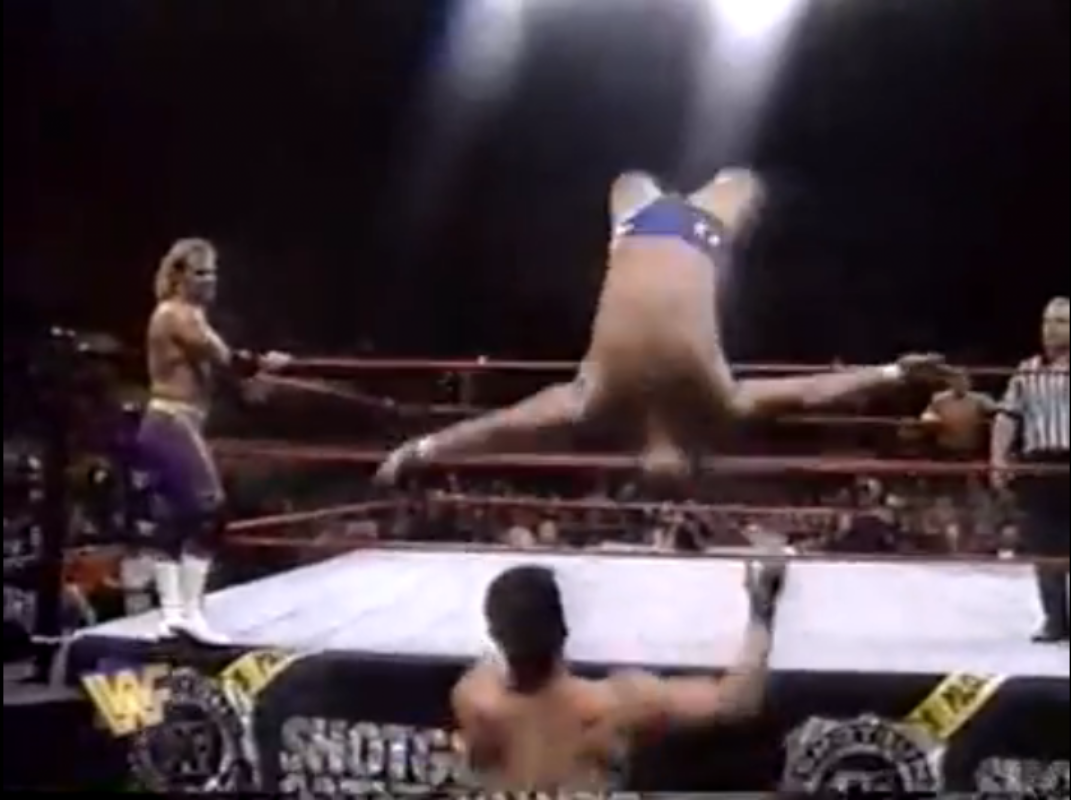
    This match, from an episode of Shotgun Saturday Night, functions as something of a preview for the WWF’s Light Heavyweight division, which was launched in 1997 as a half-assed response to WCW’s Cruiserweight division, which was on fire at the time. Just five days prior to the airing of this tag team match, Eddie Guerrero and Rey Mysterio Jr. wrestled in a title vs. mask match that still stands as one of the best of that era, and the WWF wanted in on the sort of high-flying excitement WCW’s use of lucha libre stars from Mexico gave them in support of main event matches largely promoted around ex-WWF talent. They brought in a fair number of luchadores, but what’s ultimately memorable about the WWF’s Light Heavyweight division is its reliance upon Memphis stalwarts Brian Christopher and Scott Taylor, and the way they featured super junior stars who’d built their names in the Japanese independents, namely TAKA Michinoku.

    Taylor and Christopher would later become famous as Scotty 2 Hotty and Grandmaster Sexay who, along with Rikishi, formed the unit known as Too Cool. Here, they’re on opposite sides of the ring. Christopher, working a Memphis heel character, teams up with Tajiri, who moonlighted in the WWF and was a member of the Big Japan Pro Wrestling promotion before becoming a regular in ECW. Taylor tags with TAKA Michinoku of Michinoku Pro who, as is noted in the commentary, has signed a long-term contract with the WWF. TAKA’s contract was long term and largely a waste of a wonderful talent, but in November 1997 it’s pretty clear that they’re building the division around TAKA, who is in the ring against his opponents for much of the contest.

    There’s a fundamental weirdness to this match, the Memphis studio-style babyface fire of Taylor and heel heat of Christopher mix strangely with their Japanese counterparts. TAKA is all natural charisma, but Tajiri has yet to find his edge as a character. Shot in Tulsa, Oklahoma, it makes perfect sense that Taylor and Christopher would start things off. Christopher and Taylor are, watching them work, two guys that seem both distinctly out of time and of it, if that makes any sense. Before a studio audience in Memphis, Christopher’s strutting and stalling would have a crowd seething—he’s the kind of wrestler you wish went through a territory in its prime. I hated watching them as a kid, but the opening exchange reminds me that I think Taylor and Christopher were and remain fairly underrated. They’re safe, exciting hands, and that’s why they’re in the ring introducing the crowd to the concept of “Light Heavyweights.”

    The pair tag in their partners, and the tenor of the match changes. Of the four people involved, Tajiri has the least to do with the new division, but he looks impressive early on, tying TAKA up in a bow-and-arrow hold, sending the future champion out of the ring with a spinning heel kick, and nailing him with a beautiful Asai Moonsault. In three moves, you have what Japanese Super Juniors brought to the table: deft technical wrestling, hard strikes, and nimble acrobatics. TAKA responds with a massive springboard crossbody to the outside, and even if they’re sweetening the crowd in post (I usually can’t tell), it’s pretty clear that what these two men are able to do in the ring has the Tulsa crowd interested. TAKA is on point until a combination of Christopher’s cheapness ant Tajiri’s kicks put him down again.

    Christopher is so good at his cocky, shitheel persona. He’s small compared to the majority of the WWF roster at the time, but he manages to fill up the room. Christopher’s ego gets the better of him, and his inability to communicate gets the better of Tajiri, and Scott Taylor puts his power mullet to work. Some of the stuff he tries works. Some of it doesn’t. He’s just there to give TAKA a breather before he comes in to finish Tajiri off with the Michinoku Driver, which was and remains one of my favorite finishing moves in wrestling.

    This match may not seem like much, and there’s a sequence or two that are compromised by a language or style gap, but that difference in styles is exactly why I like it, and why I liked watching weekend wrestling shows in general. It was something new and different compared to the brawling at the top of the card, and it feels even more different now as the WWE pushes its homogenized wrestling style further and further away from anything that feels organic. The idea of a Cruiserweight or Light Heavyweight division in wrestling is less necessary now when guys like Daniel Bryan and Seth Rollins are able to win the WWE World Heavyweight Championship, but they were a staple of B shows and will be a staple of this feature. In this kind of cosmic mismatch, you’re able to see something new as it’s being born. There’s something worthwhile about that, even if the end product as misunderstood and ultimately neglected by its promoter.


  • Wrestling Review: WWE NXT (5/27/15)

    Wrestling Review: WWE NXT (5/27/15)

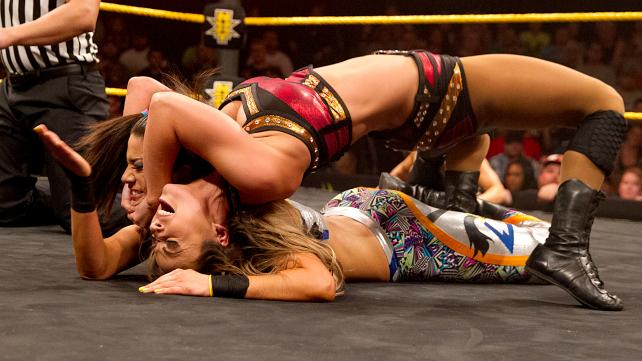
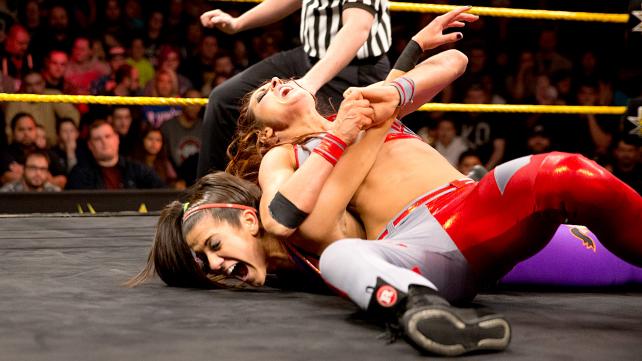
    Emma vs bayley

    Last week, NXT aired another live Takeover special, which means that this week was used to hit pause and take a deep breath before soldering on to the next two-hour event that convinces the bored, jaded folks constantly threatening to cancel their subscription to the WWE Network to keep hanging in there for more of that good stuff. Considering that two out of five of Triple H’s prized NXT stars—Sami Zayn and Hideo Itami—are out of action with injuries for awhile, that pause is warranted. But if anybody tuning into a regular episode of NXT for the first time after Takeover was expecting the same kind of breakneck-paced action of that show, then this week’s show is a lesson in tempered expectations. It’s not so much that anything about NXT this week was bad. It’s always a solid hour of wrestling, able to tell its stories in clear, concise, and (mostly) compelling fashion, featuring at least one match that’s worth remembering, but when NXT pumps the breaks, it really pumps the breaks.

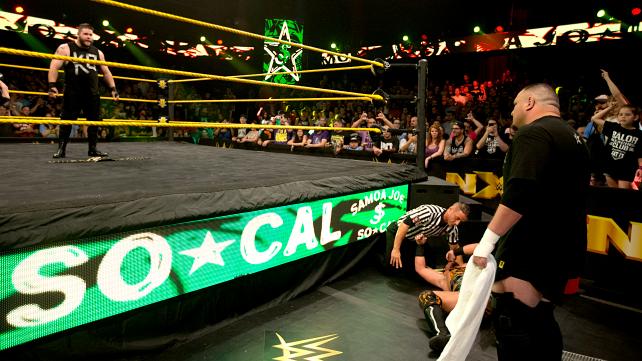
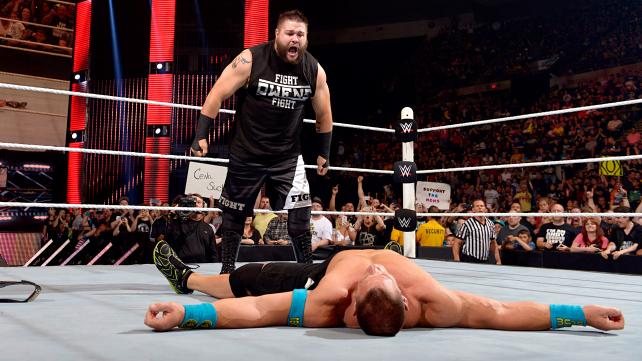
    Kevin Owens is, of course, preparing for his first match on the main roster, which is, as you may or may not have heard, against John Cena. After putting Sami Zayn out of action last week and crushing John Cena with another pop-up powerbomb, he’s got a lot of momentum on his side and he knows it. He hits the ring to begin the show, entering to Zayn’s music, which he says will never be played again. I don’t envy Owens in this spot at all, as he has to address a lot of moving parts in this promo: Zayn, John Cena, Samoa Joe—and that’s before NXT General Manager William Regal comes to the ring to make clear that he doesn’t appreciate what Owens has done as champion. Their brief exchange is great—I love Owens’ character, a bad man who really believes that his actions are good, and Regal is one of my favorite wrestlers and personalities ever. The NXT General Manager is a thankless role, one that doesn’t get a lot of airtime (which means that it’s honestly a waste of Regal), but this week William Regal makes it count. He’s tired of watching Owens beat his roster up to the point that they have to take a stretcher out of the arena. Last week they teased Regal vs. Owens and brought out Samoa Joe. This week their disagreement brings out Solomon Crowe. Crowe is still newish to NXT but is no stranger to Owens, the two having met in the indies, but their rivalry is considerably less storied than the one between Owens and Zayn, so Owens plays Crowe like a nobody. Crowe’s gimmick is that he’s a computer hacker, but in the ring with Owens he is all nebbish babyface, mad about what Owens did to Zayn. He questions Owens’ moral turpitude and “earns” a main event match against the champion. Owens vows that, just like his other rivals, Crowe will leave the NXT Arena on a stretcher.

    With Kevin Owens being pulled in so many directions, NXT has also been focusing on its strong women’s division in a way that no other wrestling promotion on television has proven themselves capable of. After a match of the year candidate against Sasha Banks, Becky Lynch was the subject of NXT‘s best video package, spotlighting her journey from a young woman with a dream to her show-stealing match last week. Alexa Bliss’ sudden allegiance with NXT Tag Team Champions Blake and Murphy means that Carmella will be physically involved in the issue surrounding those titles, and Bliss has an edge to her character beyond the default girl-next-door bubbliness she debuted with. It’s a vaguely defined edge, though, as Blake and Murphy, despite being an able team, don’t really have characters themselves beyond being kind of dirty and maybe into dubstep. That’s been one of NXT’s major failings for me, is how beyond former indie darlings and high concept characters like Tyler Breeze, most of the roster is interchangeable. The point, I suppose, is whether or not they can go in the ring, but it’s nice when NXT provides a template for the lazy, downtrodden Raw and SmackDown! writers so that a call-up isn’t forced to stand around pumping their fists in silence like the Lucha Dragons.

    The strongest work this week was put in by Emma, who has taken NXT’s other female cliché (a “change in attitude”) and run with it much farther than I would have expected given her goofy, dance-centered character. That she flopped so hard on Raw and was at the center of a weird shoplifting saga that resulted in her being fired and rehired in short order, so it’s within the realm of believability that her change of attitude is motivated by something real. She’s been saddled with Dana Brooke, who is super green. I wasn’t particularly impressed with her at Unstoppable, and, standing ringside, all she really has to do is flex her rather impressive muscles. Her role, like most roles women play on WWE program, is not unfamiliar to anybody watching Raw or SmackDown!, as Tamina Snuka has been playing it since her debut, for the Usos, A.J. Lee, and now Naomi. While it’s a good idea, a sneaky, bitter heel looking for help in their crusade against another woman, the lady version of the Shawn Michaels/Diesel relationship has yet to really play itself out. There’s no denying that NXT is a much more satisfying experience when it comes to women’s wrestling, but a sketch of an idea is still a sketch of an idea. Why does Dana Brooke do the things Dana Brooke does? Who is she? For that matter, who is Alexa Bliss and why is she hanging with a pair of mean dudes after spending so much time as a bubbly cheerleader who called her moves things like “the sparkle splash?” I appreciate how much NXT focuses on women, but beyond those who’ve had careers outside of NXT or who came to it attached to their father’s legacy, that “focus” often means just being on screen while something else happens.

    Samoa Joe Kevin Owens

    Actually, that’s become something of a noticeable problem on NXT as time passes and certain stars get called up to the main show: Beyond Triple H’s acclaimed, no-brainer “leaders of the new school” signings and those who had a character before their arrival, the show is almost shockingly bereft of depth. So many of the WWE-bred NXT regulars, like poor Tye Dillenger, look and wrestle in this beyond flavorless manner that suggests there’s little more to them than being dropkick fodder for Finn Bálor. Solomon Crowe represents something of an experiment, a hybrid of WWE’s predilection towards hiring buzzed about indie wrestlers who wouldn’t have stood a chance of signing even two years ago and their penchant for goofy gimmicks. Looking at Crowe, it’s more than a little hard to buy him as some cyberpunk hacker on the fringes of society, and that character did not mesh well with the ancient babyface fire he was meant to channel in the opening segment of the night. As Sami Callihan, he wrestled main events on the indies against Kevin Owens (née Steen), so tonight’s NXT main event is another that’s happened before, but not under the WWE’s bright lights, and not in the WWE’s gadget-heavy ring.

    In one sense, it was actually kind of refreshing to see a formerly big match-up turned into a tune-up for Owens as he heads into the biggest match of his life at Elimination Chamber. 1.3 million or so people subscribe to the WWE Network, and Owens/Cena is an exclusive to that platform, but over the past two weeks he has brought his unlikely presence to the largest possible audience for wrestling in 2015, and is, in fact, being billed as the next big thing for it. And it’s not just Owens’ career that’s in the balance here, but the perception of NXT as a brand. WWE has tried and failed to market outsider offshoots of itself for a long time now—Shotgun Saturday Night, the revival of the ECW brand, and the original concept for NXT were failures because, despite branding, they felt a lot like WWE, just with the lights dimmed down a bit. NXT as it is now does not have that problem, as WWE has succeeded in building a bubble universe, an arena full of people whose fervor for what they’re seeing would rival the crowds at an ROH, PWG, AIW, Chikara, or Beyond Wrestling show if there wasn’t such an overbearing sense of mandatory fun at the NXT Arena. Moments like the confrontation between Owens and Samoa Joe are cool, but I think it’s time to recognize that they’re not cool because of anything the WWE is doing, unless we want to say (to admit?) that what WWE is doing is piling money onto a product whose presentation has been mastered by other promotions for a decade plus, and at an operating budget that would make Triple H laugh. It’s not enough to put Samoa Joe and Kevin Owens in the same ring together—the rest of the show, for it really be that much better than the main roster, needs to be clicking at the same level as its indie stars. If that seems like an unrealistic expectation, well, that kind of comes with the territory of booking an indie promotion on a million dollar budget.


    WWE NXT: 5/27/15, Tampa, Florida

    1. Emma (w/Dana Brooke) def. Bayley via submission. GRADE: B-

    2. Blake and Murphy (w/Alexa Bliss) def. Elias Samson & Mike Rollins via pinfall. GRADE: C+

    3. Finn Balor def. Tye Dillenger via pinfall. GRADE: C

    4. Kevin Owens def. Solomon Crowe via pinfall. GRADE: B-

  • Wrestling Review: WWE Raw 5/25/15

    Wrestling Review: WWE Raw 5/25/15

    Dean Ambrose is a cop you idiot

    I know, I know. I haven’t reviewed an episode of Raw since February. In truth, I just haven’t watched that much wrestling since the build into and great release of WrestleMania. I can’t afford the indies like I used to, and beyond NXT and Lucha Underground, everything I watch (even New Japan Pro-Wrestling) seems content to remain in a post-big show holding pattern that isn’t going to cure me of the fact that, for whatever reason, I’m just flat burnt out on the stuff. World Wrestling Entertainment’s main programming has been stuck in this holding pattern since Survivor Series, for whatever that’s worth, and, heading into this Sunday’s surprise Elimination Chamber special, the company is only capable of manufacturing one or two moments or matches that pique my interest. This Sunday, that match is Kevin Owens vs. John Cena, a dude I stumped hard for when he was on the independents against a guy who I think ranks among the all-time greatest. So, wearily, I turned on Raw to see how that program would build, and was greeted by the WWE roster reciting a speech by Ronald Reagan, who is this (and every) year’s hot president for Vince McMahon, beacon not only of that shining city on a hill, but for the last time McMahon’s now incredibly dated concept of narrative storytelling worked without anybody wondering why nobody on his staff had the guts to tell him “no.”

    In a month, it’ll have been four years since C.M. Punk dropped his famous “pipe bomb” promo, the worked shoot where he went off on John Cena and Vince McMahon and Triple H and anybody else he perceived as having held him back despite being the best in the ring, on the microphone, and so on. This ushered in what Grantland‘s The Masked Man dubbed “The Reality Era,” but that’s never really panned out. If anything, what Punk’s sudden ascent marked was the beginning of WWE’s Indie Era, which, like the much maligned WWF New Generation era that launched with the departure of Hulk Hogan in 1993, has had its share of ups and downs. At no other point in wrestling history was it possible for someone like CM Punk to become a star on mainstream television, or Daniel Bryan, or Seth Rollins and Dean Ambrose, or, if the Internet has its way, Sami Zayn and Kevin Owens. All of these wrestlers had careers, great careers, before they came to World Wrestling Entertainment, but the fact that they don’t exactly build wrestlers like Hulk Hogan anymore means that it’s possible for somebody who used to toil in an Indiana barn for a bunch of hillbillies who paid $10 to see some blood to rub elbows with Jon Stewart or main event a WrestleMania despite the clear wishes of those writing the show. Punk has, obviously, since left wrestling, disgruntled to the point that he’d rather get wrecked in the UFC and write comic books. Daniel Bryan, who will go down as the biggest success story of the Indie Era, has injured his neck to the extent that he probably shouldn’t wrestle again. NXT is currently a warehouse for former indie darlings to keep wrestling while waiting for a call-up to the main roster, a WWE-built alternative to WWE that, giving credit where credit is due, has largely convinced folks that the WWE, finally, is on the road to something that looks like real, substantive change. That, or everybody is so pleased with NXT that they actively hope that their favorites won’t get the call, because the main roster might take a good thing like Kevin Owens and ruin him.

    Kevin Owens John Cena

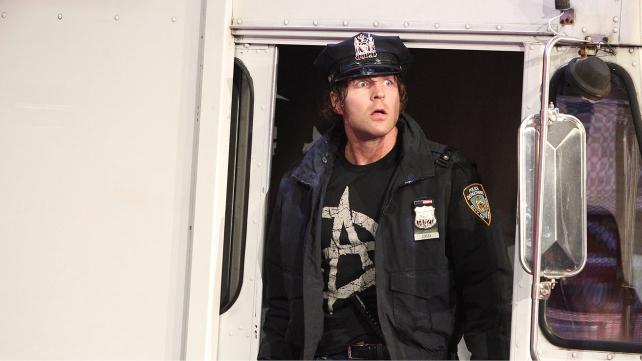
    Those fears are perhaps unfounded, as Owens is showing up on Raw in basketball shorts destroying Cena with his wicked pop-up powerbomb like he’s not a 15-time WWE Champion, but, then again, looking at Seth Rollins and Dean Ambrose as they head into a WWE Championship match at Elimination Chamber, perhaps not. This Raw was booked around that match, made unofficial last week when Ambrose threatened to crush Rollins’ head on a pile of cinderblocks—a nice callback to last year’s goofy angle that took the beyond-hot Ambrose out of action for a few months so he could film a movie nobody is going to see. The Authority, which, by now, is Rollins and a bunch of old dudes in suits, opened the show by giving Ambrose the evening to put his name on a contract to make the match official, first inviting him to an obvious ambush (spoiled by Ambrose’s running buddy Roman Reigns), then conspiring to have him arrested for accidentally assaulting a camera man. With Ambrose in jail, all Raw had to do was kill time until the end of the night, when he would obviously be freed and sign the contract. Saved at the last minute by a WWE staff member uploading a video to YouTube (reality!), Ambrose either stole or was allowed to borrow an NYPD van and officer’s uniform, whereupon he returned triumphant to the Nassau Colosseum to rescue Reigns and ink his name on the contract. It was an angle straight out of the Attitude Era, Stone Cold Steve Austin commandeering a zamboni or a beer truck or his own skull-festooned pick-up to ruin Vince McMahon’s night, but the Austin character (and the McMahon one, for that matter) was able to command “reality” in a way the Ambrose one isn’t, or isn’t allowed to. Of all the ex-Shield members, Dean Ambrose has unquestionably been the worst-written since that unit’s dissolution last year, but he’s the one that fans have most latched on to. He’s teflon-coated, whether he’s rolling a hot dog cart to the ring or threatening to make J&J Security work barefooted, like Hobbits. His continued popularity is a testament to the sort of connection that WWE’s indie-bred stars are able to foster with an audience that likely isn’t aware that indie wrestling exists, but it’s a complete mystery to me after a year of goofy, go-nowhere promos that are way too light on the fact that his ex-friend Seth Rollins tried to end his career once.

    That said, assuming the goofy garbage of a marquee Dean Ambrose match is left to the side, the in-ring quality of this Sunday’s match will be hard for anything else on the card to live up to. In Raw‘s opening contest, a tag match that saw Ambrose joined by Reigns and Rollins by Kane, the two brought a lot of flash to the now beyond-tired Roman Reigns vs. Kane formula, going so far as to exchange the signature moves of Kazuchika Okada and Hiroshi Tanahashi, two of New Japan Pro Wrestling’s ace performers who are also, more often than not, rivals. And that Ambrose won the match with a backslide and not his finishing maneuver or through disqualification suggests that his match against Rollins, however uninspired Raw‘s storyline was, won’t just be a throwaway title defense on a show otherwise devoted to Cena vs. Owens and the titular Elimination Chamber match.

    Given the decidedly low-stakes of both Chamber matches, that’s good. I’m generally not a fan of WWE booking pay-per-views around specific match genres beyond the Royal Rumble—in a medium that requires the occasional bit of surprise spectacle, calling an event Hell in a Cell and giving us three Hell in a Cell matches on it robs us of both—and the return of the Elimination Chamber for a Tag Team Title match and to decide the once-again vacant Intercontinental Championship only reveals how weak the tag team division is beyond the champions and their primary challengers, and how low the current writer’s rooms energies are ebbing. The Intercontinental Championship was just decided in a multi-man ladder match at WrestleMania, and, with June’s Money in the Bank approaching, yet another multi-man ladder match, likely involving a fair number of the men featured in the Elimination Chamber, will take center stage. Thus the build for the Chamber isn’t on the danger of the match itself or the struggle to get into the match, but on the fallout of the John Cena vs. Rusev I Quit match from this month’s Payback, which saw Lana throw in the towel for her man when she heard him say “I quit” in his mother tongue. Their promo on Raw was half-amazing, half-train-wreck, a pile-up of cold war and sitcom marriage cliches largely sold by the fact that Rusev is one of wrestling’s more engaging characters on the microphone, and Lana a rare great managerial presence whose character, sadly, will not work with anybody but her now former charge. Once Rusev convinces Lana to come to the ring, he starts plying her with rhetoric so pig-headed that even the crowd knows they’re watching something sexist, saying that Lana clearly just wants Rusev’s attention, and that he is ready to give it to her. In what is unquestionably the best thing said on WWE TV since Nikki Bella said she wished her sister died in the womb, Rusev tells Lana “I know you want to crush America and the American spirit just as bad as I,” and he means it. The two embrace, and, just as I’m starting to get misty-eyed for this pair of crazy kids, Rusev asks Lana to admit that she was wrong. This, obviously, she does not do. Rusev goes off, saying that he’s done being nice and that, well, he owns Lana. Lana has none of this, says “I am no longer your victim,” and leaves. Here’s the thing. World Wrestling Entertainment has set the bar so low for female characters that this isn’t just a step in the right direction, it’s Neil Armstrong walking on the moon. But then Lana leaves the ring and makes out with Dolph Ziggler to “get back” at Rusev, and that fantasy is over right quick because it’s 2015 and women on Raw can only be defined by how much they hate other women (see every Diva’s Championship feud, including the current issue between Paige, Naomi, and the Bella Twins), or their relationship with a man. The small blessing here is that Rusev would later return fire by beating Ziggler up in front of Lana, putting him in the Accolade while screaming “KISS HIM NOW!” That ruled.

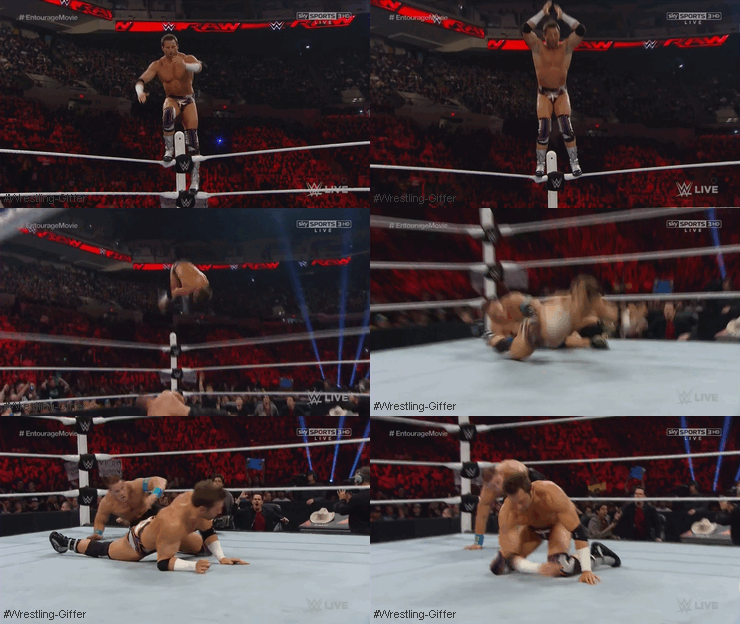
    Raw didn’t cure what ails me when it comes to professional wrestling, and, in truth, I’m not sure Elimination Chamber will, either. I know that NXT is out there tearing it up (and yes, Unstoppable was another impressive live special from that crew), and my beloved indies soldier on though I am currently unable to pay for them. WWE thrives because it is the easiest wrestling program to access, and ease-of-access breeds complacency. For too long now, it feels like there’s been talk of “grabbing the brass ring” and little actual follow-through. Owens changes that, maybe, but then again, maybe not. His fellow NXT alum Neville is currently wrestling good-to-great matches on the main roster in near-silence because some idiot decided to call him “The New Sensation” instead of just letting him grow organically. Too much of Raw feels perfunctory, there in hopes that a familiar face or move will get the live crowd to pop, and, as such, it feels like I’m watching the most talented wrestlers in the world do battle in a pool of molasses. It’s gotten to the point that John Cena’s usual pandering to the WWE Universe now includes a caveat that it may, in fact, be time for something new. He was talking about the “LET’S GO CENA/CENA SUCKS” chant finally giving way to a name his detractors could believe in, but I’m not sure the solution is as drastic as having Kevin Owens come in and destroy an already barren planet. Nah. If the roster were doing half as much as Zack Ryder did in his match against John Cena, pushing his envelope way beyond what any reasonable person expected of him because he was wrestling his last match in the arena where he learned to love wrestling, we’d be doing just fine. Sure, Ryder ate shit on his 450 splash, but I’d rather watch a beautiful failure than a wrestling promotion in cruise control.

    from Wrestling Giffer
    from Wrestling Giffer 


    WWE RAW 5/25/15 – Long Island, New York

    1. Dean Ambrose & Roman Reigns def. Seth Rollins & Kane via pinfall. GRADE: B

    2. Rusev def. R-Truth via submssion. GRADE: N/A

    3. Ryback def. Wade Barrett via pinfall. GRADE: B-

    4. Neville def. Stardust via pinfall. GRADE: C

    5. Dolph Ziggler def. Sheamus via pinfall. GRADE: C+

    6. UNITED STATES CHAMPIONSHIP: John Cena (champion) def. Zack Ryder via pinfall. GRADE: B

    7. Tamina def. Paige via pinfall. GRADE: D

    8. 10 VS. 3 HANDICAP MATCH: The New Day def. Tyson Kidd & Cesaro, The Ascension, Los Matadores, The Prime Time Players, and the Lucha Dragons via disqualification. GRADE: N/A

  • Wrestling Review: WWE NXT (2/25/15)

    Wrestling Review: WWE NXT (2/25/15)

    Watching NXT this week, I was reminded of classic World Wrestling Federation style storytelling from the late 80s and early 90s, the Saturday to Monday cycle of somewhat competitive squash matches that exist to promote live shows, both on pay-per-view and in the Civic Centers and National Guard Armories of small town America. NXT is leaving Full Sail University for a series of untaped live shows in the midwest, and these hour-long episodes do build to live specials meant to be seen by the WWE Network’s one-million subscribers. The difference between NXT’s storytelling cycle and the old WWF’s is a matter of time and talent; NXT has less of the former and more of the latter.

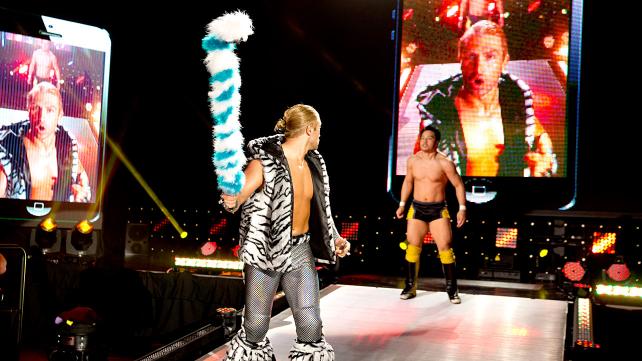
    As a compromise (a blessed, wonderful compromise), NXT begins with the announce team welcoming us to the show and entrances for the first match. This is a great formula. The wonderful miracle of NXT, even when the matches on the show aren’t in the indie dream match format of the Takeover specials, is that so much of its character work is done in the ring. The first match, Hideo Itami vs. Bull Dempsey, doesn’t have much of that, though it does reestablish a diminished Bull as a physical threat. Itami, still adjusting to the WWE style, is coming along quite nicely. Beyond his match against Tyler Breeze, this is my favorite effort of his under the WWE banner. Dempsey, when he’s not being asked to feed into Baron Corbin’s horrible-looking big dude offense, is convincingly tough, and he spends the whole match beating up the man formerly known as KENTA. Itami, long used to the sort of punishing big dude offense that is quite popular in Japan, makes Dempsey look like a monster at times, particularly when the two collide head-on. Itami only needs a tiny opening to get his kicks in, though, so all of Dempsey’s bullying is for nothing. Itami’s dropkick variations are enough to win him the match. Celebrating on the ramp, though, Itami is ambushed by Tyler Breeze. Not happy with his loss to Itami at Takeover, Breeze tries to embarrass the Japanese superstar by taking a selfie of himself with Itami’s prone body in the background. But he can’t get the angle right, even with the aid of his selfie stick, and Itami comes right back on him. Breeze is able to escape Itami’s wrath before taking too many kicks, and it looks like we’ve got a real issue between the two. In my fantasy booking scenario, Breeze recruits Dempsey in his effort to derail Itami’s career, promising him a makeover in return for his protection. That’s what I want—a queer HBK/chubby Diesel team-up scenario. Chop chop, NXT.

    WWE NXT Hideo Itami Tyler Breeze

    There’s a promo video for The Brian Kendrick, who is this week’s special return. It’d be great if, instead of spoiling the fact that Kendrick is tonight’s return (something they did because, when taping four weeks of television at once, a big return like this will be spoiled online), they had him meet backstage with NXT General Manager William Regal, perhaps set up a reason why Kendrick is immediately wrestling the #1 Contender to the NXT Championship. The one thing I don’t quite understand about NXT is its aversion to promos that last longer than thirty seconds. Not that the show isn’t good without them, but as a developmental space it seems worthwhile to see how well these characters do in longer skits and angles. Also, I want more William Regal, especially if he’s no longer part of the announce team. As tired as I am of the General Manager gimmick, Regal is a big exception.

    The Lucha Dragons, looking to regain their Tag Team Championship form, wrestle against the blue-chip team of Tye Dillenger and Jason Jordan. Before the bell rings, however, the WWE Network feed is hacked by Solomon Crowe. He does every former indie darling’s debut NXT promo, which is to say that he’s all about that NXT Championship. He mashes one of his hot dog colored fingers to the screen of his tablet computer and we’re back to the ring. That’s not a good advertisement for the security of the Network, but I’ll flip if he threatens to release the credit card information of everybody who subscribes if Regal doesn’t give him a title shot. In the ring, Jason Jordan is able to handle the speed and agility of Kalisto and Sin Cara quite handily. He’s pretty clearly the breakout member of this tag team that nobody cares about. He tags to his partner, who is pretty sure he’s got things even though the Dragons are able to quickly overwhelm him. Jordan calls for a tag, but Dillenger tells him to relax. When Dillenger finally goes for a tag, Jordan is done with him. He drops from the ring apron and bails, leaving Dillenger to fend for himself. He very quickly loses. After a commercial break, Tye Dillenger is still in the ring. He is really, really mad at Jason Jordan and demands he come to the ring so they can settle this 45-second long rivalry. Instead, he gets Baron Corbin. The two have a match. It’s a Baron Corbin match, though, and Dillenger just got beat up by two dudes, so he eats Corbin’s finish and goes home. Later, in a 10 second promo, Jason Jordan says that he did what he did because he did what he did, and he’ll explain himself when he’s ready. It’s really weird how this tag team break-up angle is happening with a team that has never mattered to the overall fabric of the show.

    In other promos, Charlotte, despite taking the loss at NXT Takeover: Rival, is confident going into her rematch with Sasha Banks, since Sasha has never beaten her one-on-one. Finn Bálor is ready for Kevin Owens, but can’t afford to look past The Brian Kendrick. Rhyno is backstage, looking like a tough old bastard over-burdened by his muscle and desire to cut people in half. He explains that he’s back because NXT inspired him to find the fire and drive he once had, and because he likes crushing fools with the Gore. Again, and particularly for the likes of Charlotte and Finn Bálor, it’d be great to see these run a little longer than one question and a 30-second reply. To return to the NXT/World Wrestling Federation comparison, feuds were frequently continued via backstage interviews that functioned like a conversation, and the interviewers themselves had identifiable personalities and ongoing relationships with the talent. “Let me tell you something, Mean Gene” is as much a part of the wrestling lexicon as Hulk Hogan’s three demandments, and the old WWF presentation style filtered over onto ESPN, where SportsCenter anchors had their own tics and catchphrases. It’s something that’s coming back into the main product through figures like Renee Young, but slowly. Similarly, I wouldn’t be averse to a full-time return of picture-in-picture promos during the early parts of matches. I like a lot of the characters on NXT, and any way I can see and hear them is good, both for me as a fan and them as a performer.

    WWE NXT Bayley Becky Lynch

    Despite any assertion to the contrary, the NXT women’s division is not booked as a response to what’s happening on Raw or SmackDown!, but the work being done in developmental does hint at some hope for the future. Bayley’s character wouldn’t be given the time of day on Raw, but here she’s been subtly progressing as an in-ring character for some time now, from her beginning as a hug-loving comedy character who made her way into the hearts of the NXT Universe to her current place as a skilled wrestler trying to achieve her dream of championship glory. Lynch, too, has adapted to her aggressive, grungy gimmick rather well, despite whatever misgivings Corey Graves has about the kind of music she listens to. I really like Bayley here, using old-school sledgehammer blows and keeping constant pressure on her opponent without looking to the crowd for approval. She goes for a belly-to-belly suplex off the turnbuckles but is shoved off and snaps her arm on the rope. She keeps fighting, but her weakened arm leaves her vulnerable. Lynch counters out of another belly-to-belly and catches Bayley in an armbar, which she transitions into a nastier-looking armbar for the win. This has been an interesting pattern in the women’s division of NXT, the use of submissions that become a more effective variant of the submission, and I really like it. It’s like when Kurt Angle started adding a leg grapevine to his ankle lock to trap his opponent, only here its not part of the wrestler’s normal routine. It’s an added bit of drama that makes Bayley look better for not tapping out to the initial permutation of the move, and makes Lynch look more sadistic for finding the next variant.

    Though a significant amount of time on the show and online was spent building to The Bryan Kendrick’s re-debut, the opening half of his match against Finn Bálor is mostly about the unsettling presence of Kevin Owens, who provides guest commentary. The vibe of NXT when Owens is around is much different from when he’s not. While nobody on the commentary team doubts him when he says that he wrestles for his family, it’s his sadism that everybody is upset with, especially considering his friendship with Sami Zayn. Owens is actually pretty phenomenal in this role, adding a lot to a match that is worked slowly to accommodate the storyline at the commentary table. Kendrick tries to get back into the ring at one point by flipping up and over Bálor and tweaks his knee. When Bálor gives Kendrick some spact to recover, Owens tears into him. “That was a gift,” he says, which is true. “That’s why Finn Bálor won’t beat me.” It’s really good, both in establishing Bálor as a face and Owens as a bully, family or not. From there, Alex Riley, a man formerly known as the “Varsity Villain,” questions Owens’ methods and says that, as a man, he wouldn’t have done what Owens did to Sami Zayn. Owens decides to leave commentary. Just the way everybody at the table is blocked, shoulders slightly turned from Owens, does a great job of putting over how little the champion is liked by those covering his career. It takes away from what’s happening in the ring, as the camera stays with commentary during several audibly loud bumps.

    WWE NXT Finn Balor Brian Kendrick

    That disconnect between in-ring action and Owens’ storyline aside, Kendrick and Bálor have a pretty good TV main event. Unlike Rhyno’s re-debut last week, which was all about the image of Rhyno as a returning monster, Kendrick is decidedly a guy on Finn Bálor’s level—if NXT existed in 2009, he would have been its unquestioned ruler. That Bálor didn’t take advantage of Kendrick’s knee comes back to haunt him for a bit, as Kendrick is able to work a slick tornado DDT and nasty-looking tiger suplex in around Bálor’s dropkick-heavy offense. He’s unable to hit his finisher (Sliced Bread or The Kendrick, depending on your level of familiarity with the guy), but turns around and takes a huge lariat from Bálor. That lets him hit his big dropkick into the corner and his double stomp, and Bálor is your winner. Kevin Owens is back out on the ramp, watching Bálor celebrate. Bálor wants the champion to get into the ring, but Owens has other ideas. He keeps eyeing Alex Riley, who can see doom approaching on his monitor. Owens grabs Riley by the lapels of his suit jacket and hurls him over the commentary table. It’s a good-looking bump Riley takes, perhaps the most impressive of his career, and it adds another layer to Owens’ status as a widely unliked champion. Bálor looks on as Owens makes his way to the back, content that his attack on the ex-wrestler sent a message to his next challenger.


    Results

    1. Hideo Itami def. Bull Dempsey via pinfall. GRADE: C+

    2. The Lucha Dragons (Sin Cara & Kalisto) def. Tye Dillenger & Jason Jordan via pinfall. GRADE: C+

    3. Baron Corbin def. Tye Dillenger via pinfall. GRADE: N/A

    4. Becky Lynch def. Bayley via submission. GRADE: B

    5. Finn Bálor def. The Brian Kendrick via pinfall. GRADE: B