Category: Reviews

  • Movie Review: The Hobbit: An Unexpected Journey

    Movie Review: The Hobbit: An Unexpected Journey

    The Hobbit

    Peter Jackson’s The Hobbit: An Unexpected Journey, attempts a rare trick, inflating the narrative of a relatively short novel to accommodate a studio’s need for a franchise. By revisiting his earlier Lord of the Rings movies, plumbing the depths of other Tolkien works, meandering, as The Fellowship of the Ring did, in the Shire, and through invention, Jackson has succeeded in his task—J.R.R. Tolkien’s The Hobbit, as interpreted by Jackson, Guillermo del Toro, and an army of writers, producers, actors, extras, and digital effects artists, will indeed fill the overlarge frame it’s been mandated. The question going into The Hobbit, and this is of particular importance following the bloat of the underrated King Kong and the nigh unforgivable The Lovely Bones, is whether or not Jackson would be able to pull back on his particular brand of bombast long enough to tell a good, engaging story about a band of outsiders questing to rid a mountain of a gold-loving dragon.

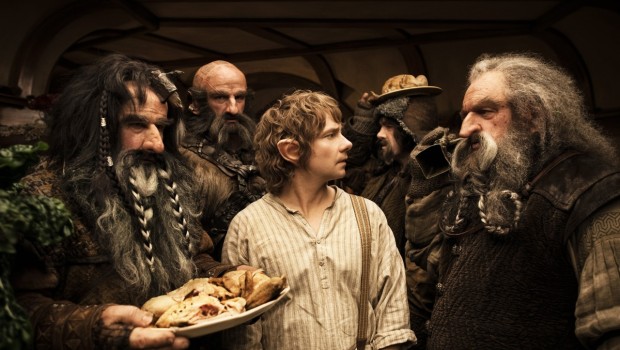
    Yes and no. At times, The Hobbit: An Unexpected Journey manages to recall the highest points of Jackson’s Lord of the Rings trilogy. The characters are warm, the landscapes vast and pristine, the CGI mostly an enhancement. In adapting a beloved book as a prequel to a beloved film franchise, Jackson invites nostalgia from the film’s opening moments, as Bilbo Baggins (played as an older hobbit by Ian Holm, and for the majority of the film by Martin Freeman) is shown writing an account of his life for the benefit of his nephew Frodo (Elijah Wood), himself a future adventurer. Gandalf the Grey (Ian McKellen), Elrond (Hugo Weaving), Galadriel (Cate Blanchett), Saruman (Christopher Lee), and Gollum (Andy Serkis) appear throughout, if not to propel the plot, then to gently remind viewers of the elements shared by this trilogy and the one from the recent past.

    The bulk of this chapter deals with the preparations made by Bilbo, Gandalf, and a company of dwarves—led by the brooding, kingly Thorin Oakenshield (Richard Armitage)—before attempting to infiltrate the former dwarven homeland, now occupied by a dragon named Smaug. Much has been made of how slowly the first hour of The Hobbit slogs through these details, and that’s true; however clever it seems to have the old Bilbo coyly writing his memoirs as Frodo waits for the arrival of Gandalf with his fireworks, one can’t help but feel cooped up in Bilbo’s den, especially when entering the film with the knowledge that Bilbo sets off on an adventure, finds a ring, gains the respect of his company, and so on. This is an inferiority complex unique to prequels, one that has damned many such efforts in the past, but once Jackson sets his company out into Middle Earth, things pick up considerably.

    The Hobbit also suffers from some of Jackson’s penchant for self-indulgence. I saw the movie in 2D, and while the vistas of New Zealand and its populace of CGI orcs, mountain trolls, and giant eagles looked mostly good, there were times, when panning through the goblin kingdom or over a vast mountain, when the visuals were noticeably less crisp than in any recent Jackson film, as if I were being punished for choosing not to see the film in 3D and at a higher framerate. In one of the film’s huge battle sequences, pitting the dwarves and Gandalf against a gleefully Dickensian goblin king (Barry Humphries) and his army, the disconnect between what’s real and what was filmed against a greenscreen becomes too much. It’s obvious that none of the dwarves will die, but they rack up the kills on the poor, witless goblin army like an expert video gamer in the early levels of a well-worn arcade game.

    Though he certainly tries, Jackson is unable to differentiate many of the dwarves tagging along with Bilbo and Gandalf on their journey. Some are fatter, older, or jollier than others, but, for the exception of the mopey, vengeful Thorin, they’re all mostly the same. The Hobbit: An Unexpected Journey relies upon Freeman and McKellen to carry the bulk of the film’s 169-minutes, which they’re quite capable of. When Gandalf the Grey is held back by a largely ominous, slow-moving discussion foreshadowing the conflict of the second film, Bilbo finds himself matching wits against Gollum. As Gollum, King Kong, Cesar the Ape, or Captain Haddock, few actors have meant as much to special effects spectacles as Andy Serkis, who could probably lend humanity to a broomstick. The tragedy of Gollum and the character’s madness, however, are two well-trod roads, and his game of riddles against Bilbo Baggins, though vital to series lore, never rises above being a witty aside. Compared to Gandalf’s conversation with Elrond, Galadreil, and Saruman, however, it’s pressing, kinetic stuff. Still, for all its down moments, The Hobbit: An Unexpected Journey is that rare creature: a good, mainstream fantasy film, a franchise-extending artifact that manages to find enough warmth to justify its existence.

    I’ll admit, when it comes to splitting book adaptations into an endless succession of questionable sequels, I’m a bit of a skeptic. It’s a recent trend, the franchise addendum, and begs an odd indulgence of its core audience, the fans of the book: pay for some now, and pay again for the rest later. Harry Potter did this. The Twilight Saga did this. Upcoming adaptations of The Hunger Games and 50 Shades of Grey will likely follow suit, with little question of the studio’s motive in releasing as many gigantic blockbusters as possible in successive years. But that’s decidedly not the tone of the coverage surrounding this particular adaptation. A relatively slim volume, especially compared to the tomes that contain the largely empty prose of E.L. James, Stephanie Meyer, or Suzanne Collins, the only precedent for turning Tolkien’s fantasy into a full-blown sojourn on the level of the Lord of the Rings trilogy are the expanded editions of those films, which further packed and padded a series of movies that were, at times, already overstuffed. For many fans of Harry Potter or Twilight, the added film served as an opportunity to bring the series to a fitting, properly epic conclusion. As a casual onlooker, I can’t say I agree with their enthusiasm. I try, as much as possible, to separate a book from the film based upon it, but, for me, the adaptations that work the best are the ones that pare down on the impulses a blank page grants an author, rather than eat-up more than an already considerable chunk of time trying to please every die-hard in the audience.

    What Jackson has done with The Hobbit is rare in that the decisions he’s made in adding to The Hobbit are decidedly not made for the benefit of his die-hard audience, who, to paraphrase the words of The Mountain Goats’ John Darnielle, want a one-film version of The Hobbit where a dragon is slain in the end. I won’t suggest that Jackson’s planned trilogy (who knows—maybe they’ll split the third film in two, like a magician with a saw) isn’t an opportunity for Warner Brothers, New Line Cinema, and MGM to fashion themselves a clutch of gold, but if any literary universe is capable of sustaining the sort of expansion the director and his writers have undertaken, its Tolkien’s. The horde of books, short stories, note cards, and outlines the author left is breathtaking, and the odds of any of that material making its way to the theatre on its own are slim. Some of Jackson’s additions, like Radagast the Brown (Sylvester McCoy)—a wizard who speeds his way through Middle Earth on a rabbit-driven sled, his goofiness in the face of world-ending danger a reminder of the sillier aspects of George Lucas’ Star Wars prequels—add nothing. A necromancer (Benedict Cumberbatch in name only—he appears momentarily as a CGI construct, bits and bytes over flesh and blood) from another Tolkien story serves to perhaps unnecessarily tie together events from this film and the Lord of the Rings. But the film’s main addition, the Pale Orc, is not only something created wholecloth for this film, but is a character whose quest to murder Thorin Oakenshield for the loss of his arm is more immediately relatable to on screen than, say, a pack of talking dogs or a flock of hyper-intelligent eagles. The stakes of prequel films, whose outcome is determined by prior movies whose success does not always equal interest in “the rest of the story,” are notoriously low. By playing with elements from Tolkien’s expanded Middle Earth, Peter Jackson has found a way to infuse his prequels with tension and suspense. In its best moments, The Hobbit: An Unexpected Journey easily meets the expectations of its pedigree. The Hobbit may not be either a perfect film or adaptation, but neither were those sainted films preceding it.


    The Hobbit: An Unexpected Journey. Directed by Peter Jackson. With Ian McKellen (Gandalf the Grey), Martin Freeman (Bilbo Baggins), Andy Serkis (Gollum), Richard Armitage (Thorin Oakenshield), Sylvester McCoy (Radagast the Brown), Hugo Weaving (Elrond), Cate Blanchett (Galadreil), Christopher Lee (Saruman), Ian Holm (old Bilbo), and Elijah Wood (Frodo).

  • Movie Review: Beasts of the Southern Wild (2012)

    Movie Review: Beasts of the Southern Wild (2012)

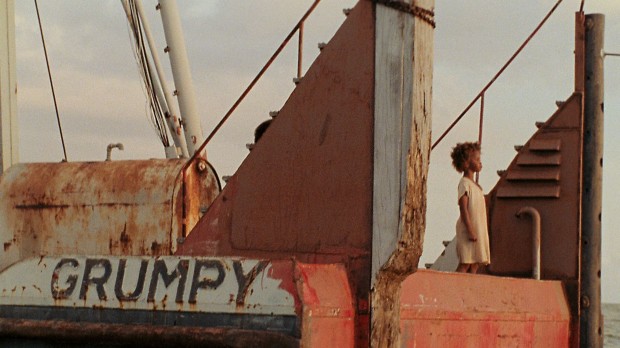
    essentialBeasts of the Southern Wild is an astonishing debut film. Its cinematography, score, and lead performances are among the most compelling of the year, drawing apt comparisons to Terrance Malick and David Gordon Green, whose pastoral films are often unnerving in their attention to man’s connection (or lack thereof) to nature. Beasts of the Southern Wild is a film about community, a unique community of survivors stranded but enjoying life on The Bathtub, a tiny island that’s the only un-flooded piece of land in what used to be the Louisiana bayou. Director Benh Zeitlin and writer Lucy Alibar—working from Alibar’s play Juicy and Delicious—are never quite clear about what happened to Louisiana or how the remaining United States could so callously erect a levee separating The Bathtub from civilization, but given the biblical rainstorm and the melting polar ice caps, it’s obvious that nature is not just something to be in awe or take advantage of, but an irresistible force. Humans, in the face of such power, are ever the movable objects.
    But the people living in The Bathtub are resilient, tragically so. Early on, Hushpuppy (Quvenzhane Wallis), the film’s six-year-old narrator, leads us through this place. Though signs of trouble are evident—the film is quite liberal in its application of ruin and rust, and characters wear sub-thrift store quality clothing—Hushpuppy looks at life on the island as something special and idyllic, not exactly untroubled, as her relationship to her father, Wink (Dwight Henry), will later attribute, but nice enough compared to the worries of folks in the city across the bay. In The Bathtub, people live on what nature provides. There’s enough fish, poultry, beer, and vegetation to go round, and things have been going round now for sometime.

    Hushpuppy and the children living on the island with her go to school to learn the basics of survival. Despite the fireworks and baby races of the film’s opening minutes, Beasts of the Southern Wild takes place in a ruined world teetering on the brink of complete destruction. Hushpuppy’s teacher (Gina Montana) talks about a race of beasts called the Aurochs—great, man-eating pigs who existed only as engines of destruction. Kill or be killed, is the message. Take care of your own or get taken care of.

    Hushpuppy’s dad isn’t exactly in the business of taking care of his own. After spending the bulk of the year with the film’s excellent, unavoidable trailer in my head, it was rather jarring to see several moments spun as pieces of a whimsical father-daughter relationship come instead from a place of raw, devastating meanness. Hushpuppy’s relationship with Wink, the driving force of the film, is one teeming with fear. Having set her house on fire—the two live in separate houses, and Hushpuppy is trusted with gadgets like flamethrowers—Hushpuppy hides under a cardboard box as Wink storms the house, looking for her. It isn’t the thought of being consumed by fire that impels Hushpuppy to flee her burning shelter, but the thought of being caught by Wink. The ensuing confrontation between the two—Wink slaps Hushpuppy, Hushpuppy tells Wink she hopes he dies so she can eat cake on his grave, Hushpuppy punches Wink in the heart hard enough to upset a sickness that worsens as the film goes on—is the first of several incredibly tragic sequences. But the two never separate for long, and from there Wink is determined to instill in her some sense of masculinity, something he believes she’ll need once he’s gone. The relationship between the two oscillates between Hushpuppy’s belief that her actions are what’s responsible for the world breaking, and Wink coming to realize his daughter’s unique, self-fashioned strength.

    The performance of Quvenzhane Wallis is Beasts of the Southern Wild’s strongest asset. Young and untrained, she has a genuine, unforced nature that captivates, propelling the film through even its murkiest sequences. A child philosopher and a patently unreliable narrator—are the monsters pursuing her real, or a figment of the imagination?—Hushpuppy’s various theories about the nature of the world and her role in it, without Wallis’ untrained readings, would sound too esoteric, too purposefully vague, too precocious. However naïve Hushpuppy’s beliefs, her soliloquies have the benefit of sounding like hard-won knowledge. The relationship between her and Wink also feels more grounded as a result of the actors in these roles, essential given the film’s use of magical realism. Before starring in Beasts of the Southern Wild, Dwight Henry owned a deli across the street from the casting agency. If what transpires between he and Wallis never feels quite like true father/daughter interaction—and given what passes as Wink’s idea of fatherhood, that’s just as well—that their relationship plays like two people living together and not an actor and a child actress working together makes things that much more visceral.

    The metaphors used by Beasts of the Southern Wild are often blunt, something akin to a railroad spike driven home with a sledgehammer. Katrina imagery looms large over the flooded Bathtub, and the survivors clear status as second- or third-class citizens is meant to be evocative of those left behind in New Orleans, even if the hurricane and the city are left unmentioned. The club Hushpuppy eventually finds herself in—a strip joint offering food and the companionship of adults, but also the sad realities of life away from The Bathtub and Wink, a place Hushpuppy was clearly not meant to stay—is called Elysian Fields, a little too on-the-nose considering who Hushpuppy thinks she meets there and the significance of that missing person to her incomplete childhood. That’s a consequence of using a child’s point-of-view as the film’s frame of reference, the added storybook sheen that sometimes twists the knife and sometimes feels alien.

    Another consequence is that Hushpuppy’s unquestioned love of The Bathtub and those living in it sometimes comes across as the filmmakers paying reverence to a band of noble savages. Well-intentioned or un-thought of, Wink’s almost-unquestioned leadership of the refugees and the film’s constant praising of them for living as nature gives and scrapping by when nature takes away feels creepily similar to the cult worship of the noble savage in other films. When Hushpuppy is taken in by the government and is put in a dress with her hair combed back, Wink’s resistance and Hushpuppy’s silence are clear signals that something is wrong, that these people, rescued from their flooded wasteland, are prisoners. Their escape and flight back home is meant as this swelling moment of uplift. Maybe, putting aside all notions of responsibility, it is. But The Bathtub and Wink’s way of living aren’t just dangerous, they’re doomed. Tragic as the fate of those living in The Bathtub may be, that their resolve to stay is played for cheers may be Beasts of the Southern Wild’s most subtle twist of the knife.


    Beasts of the Southern Wild. With Quvenzhane Wallis (Hushpuppy), Dwight Henry (Wink), and Gina Montana (Miss Bathsheba). Directed by Benh Zeitlin from a screenplay by Zeitlin and Lucy Alibar, based on the play Juicy and Delicious by Alibar.

  • Movie Review: Abraham Lincoln: Vampire Hunter (2012)

    Movie Review: Abraham Lincoln: Vampire Hunter (2012)

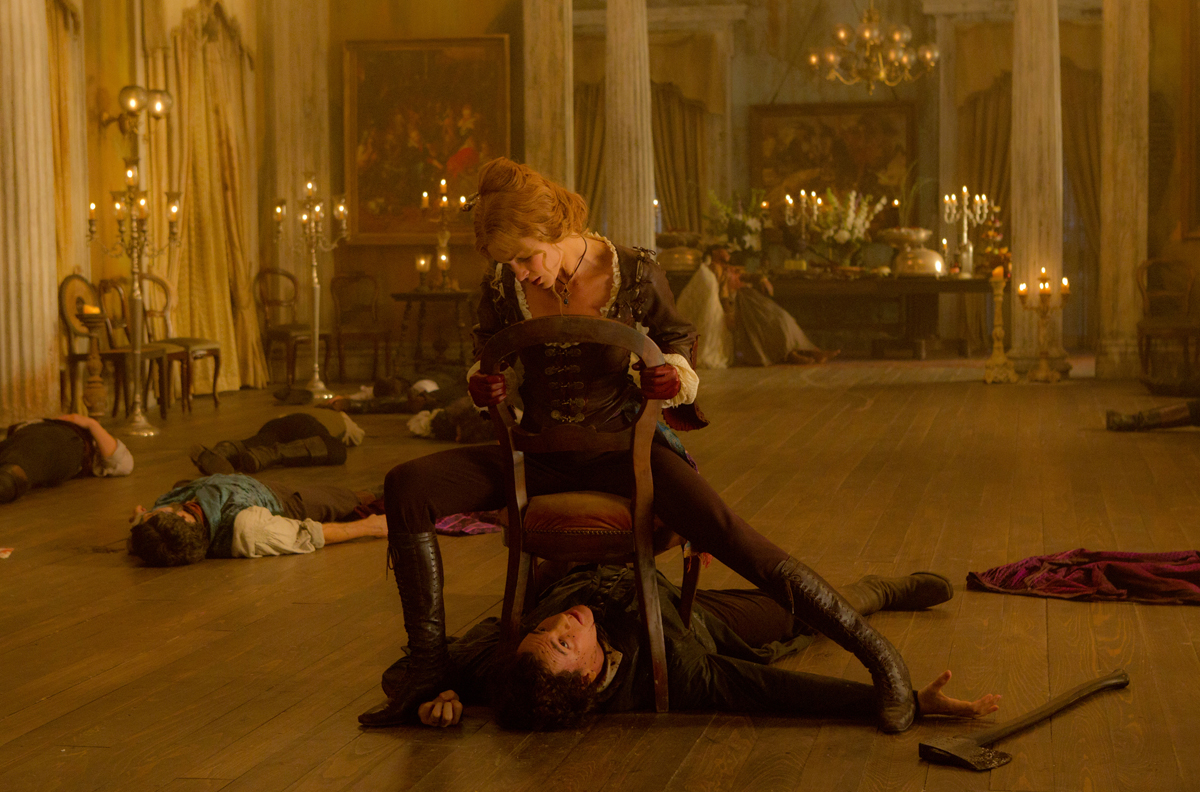
    Abraham Lincoln: Vampire Hunter, like Snakes on a Plane, tells you everything you need to know about it in the four words comprising its title. Timur Bekmambetov’s film gains or loses an audience based on how cool one perceives the sight of Abraham Lincoln chopping down wave after wave of CGI vampires down with a silver-lined ax as being. Whereas Snakes on a Plane suffered from bowing too much to the internet meme culture that got so much from the movie’s premise that they didn’t feel the need to see the actual film, Abraham Lincoln: Vampire Hunter is so dry and mirthless one wonders what the point is. Dour films about CGI bloodsuckers are released two at a time. One featuring a kick-ass, kung-fu president almost can’t help standing out among the crowd. Despite those easy expectations, Bekmambetov—whose Wanted neutered a comic book about a world overrun by Batman villains by becoming an uninspiring Matrix clone—does almost everything in his power to disappoint. In this, he succeeds.

    But let’s forget about that for a moment. Forget, too, everything you think you know about Abraham Lincoln. Let’s say that his true passion in this world was the slaying of vampires, that, after witnessing the murder of his mother by a particularly nasty vampire, the young Mr. Lincoln (Benjamin Walker) puts down his law books and takes up his axe. Endowed by his creator with certain unalienable rights, among them the pursuit of bloody vengeance, Lincoln puts a ball squarely in the eye of Jack Barts (Marton Csokas), his mother’s killer, but Barts doesn’t die. When Lincoln is rescued by Henry Sturges (Dominic Cooper), a man who observed the future president drinking furiously in preparation for his task, he’s let in on the secret history of the world: vampires exist, and, since the colonization of America, have used the vast plantations of the south and the country’s reliance upon slavery as a free buffet.

    This sounds like the set-up to a pretty good genre flick but Lincoln’s vampire slaying origins are hashed out for half of the film’s runtime and involve all manner of uninteresting characters. There’s William Johnson (Anthony Mackie) and Joshua Speed (Jimmi Simpson), two of Lincoln’s earliest and closest friends, and Mary Todd (Mary Elizabeth Winstead), atypical one-dimensional love interest. Sturges himself is a glum tutor with a secret as obvious as the sunglasses he constantly wears, and Lincoln makes for a particularly uninspired chosen one, disavowing guns in favor of an axe he whips around at lightning speed. The antagonist vampires—Adam (Rufus Sewell) and Vadoma (Erin Wasson)—are distinguished mainly by their pointy teeth and flashy attire.

    The movie starts rolling when Lincoln is in the White House. The Emancipation Proclamation is issued to deprive southern vampires of their main food source, Union troops are befuddled when they find that their bullets do little against the vampiric armies of the Confederacy, and the South seems poised to break through at Gettysburg. It’s at this point that Lincoln remembers that silver destroys vampires and orders the appropriation of every last piece of silver. As Roger Ebert points out in his review of this movie, it seems like Lincoln is able to gather, melt, and re-purpose every ounce of silver in the United States of America in a day. The better to reach the film’s climactic action sequence, of course. What’s more strange, to me, is that the protection, fueling, and conduction of the train falls upon Lincoln and his small band of friends. Even if you’re trying to sneak the train past an unsuspecting enemy, is the President of the United States really the best choice to pilot a speeding locomotive?

    Abraham Lincoln: Vampire Hunter lives and dies by that sequence, pitting Lincoln and his friends against the vampire horde determined to derail the train bearing silver munitions to the front line. With the bridge on fire and the odds of survival against them, Lincoln, Speed, Johnson, and Sturges battle a veritable army of vampires, hacking, slashing, and shooting through wave after wave of them, hardly pausing to reload. The effectiveness of this scene is directly proportional to the number of murky, blue and grey lit, slow motion kung-fu action sequences you’ve seen lately. Considering that the market is absolutely saturated with such set pieces and that the only things distinguishing this one from the rest are the president and his ax,  it’s rather unfortunate that Bekmambetov and screenwriter/novelist Seth Grahame-Smith didn’t approach the film with the same lightheartedness the mash-up genre was practically founded upon. The occasion of a president slaying vampires is treated as just another excuse for a group of characters to violently dispatch as many computer generated images as the budget allows. In this instance, Abraham Lincoln: Vampire Hunter is late to the party: the genre has long been out of such excuses.


    Abraham Lincoln: Vampire Hunter.  With Benjamin Walker (Abraham Lincoln), Dominic Cooper (Henry Sturges), Anthony Mackie (Will Johnson), Mary Elizabeth Winstead (Mary Todd Lincoln), Rufus Sewell (Adam), Marton Csokas (Jack Barts), Jimmi Simpson (Joshua Speed), and Erin Wasson (Vadoma). Directed by Timur Bekmambetov from a script by Seth Grahame-Smith, based on the novel Abraham Lincoln: Vampire Hunter, by Grahame-Smith.

  • Movie Review: Lincoln (2012)

    Movie Review: Lincoln (2012)

    Lincoln begins in full Spielbergian splendor, capturing the smoky, mud-caked futility of full-scale war. It pulls back quickly and returns to the battlefield only to survey a battle’s aftermath, as the purpose of this film is not to document the ebb and flow of a costly, generation destroying war, but the effect of that war on one man: Abraham Lincoln, 16th President of the United States. As played by Daniel Day-Lewis, Lincoln is a troubled man. His limbs creak. His mind races. The Civil War is nearly at an end, but its major undertaking remains unfinished.

    The passage of the 13th Amendment is paramount to Lincoln’s second term as president, and the line he walks to get it passed in the House of Representatives is perhaps the thinnest in American political history. The South, buckling under the weight of Sherman’s march to the sea and Grant’s pursuit of the Army of Northern Virginia, is ready to capitulate. The North, having seen tremendous losses on both sides, is ready to hear terms of surrender. It is widely thought that the Confederacy will put down their guns if the Union allows them to keep their slaves, but, however much that would please a wounded nation, it is not good enough for Lincoln that so many men die to maintain the status quo. According to Secretary of State William Seward (David Strathairn), there exists a chance for the passage of the 13th Amendment. It requires two concessions on Lincoln’s part: the continuation of an all-but-concluded war, and the extension of bribes to those members of the Democratic Party who could be convinced to change their vote.

    To anybody with even a minute knowledge of American politics, that Lincoln would bribe the opposition in order to get a bill passed will not come as a surprise. Nevertheless, it’s refreshing to see him portrayed as something deeper than the simple, sainted American politician who saved the country and freed the slaves. His decision to push for the 13th Amendment had real, horrifying consequences, and it fell on his shoulders to spin that decision to a country that didn’t so much care if the right thing got done. In one of the film’s best sequences, Lincoln meets with a husband and wife who are disputing with another party over the rights to a toll road. Seward, fuming in the corner, takes the opportunity to ask the pair if they support abolition. Supposing it ends the war more quickly, as the president has promised, then yes, they do. And supposing it doesn’t? Well, better to end the war now than waste the lives of more white boys on the behalf of another race.

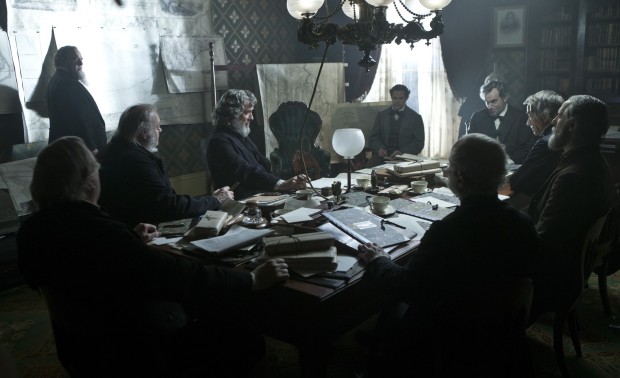
    In sticking to candlelit meeting rooms and harrumphing  political chambers, Steven Spielberg’s film takes on overtones of a Shakespearian tragedy. Lincoln is not without its comedic elements—William Bilbo (James Spader), a Republican lobbyist, finds that his particular brand of salesmanship doesn’t work with every Democrat, even those who stand to gain plenty from his propositions—but, when it wanders off from the main narrative, is mostly taken by melodrama. Given the various tragedies that befall the Lincoln family, a preoccupation with doom and gloom is perhaps understandable. Squeezed in here, Robert Todd Lincoln’s (Joseph Gordon-Levitt) preoccupation with joining the Union war effort, Tad Lincoln’s fascination with daguerreotype images of slave children, and Mary Todd Lincoln’s (Sally Field) stormy, madwoman-in-the-attic private mannerisms seem like loose threads from a much longer cut of the film. Compared to a shot of Lincoln juxtaposed against flickering candlelight or the decision to keep going past the film’s logical endpoint to squeeze in as much of Lincoln’s assassination as possible without making it interesting, these are minor trespasses.

    The resulting film is sloppy and frustrating at times, but fitfully as inspired as anything Spielberg has made. He manages to bring together melodrama, comedy, political tension, and baiting, crowd-pleasing performances like Tommy Lee Jones’ radical Republican leader Thaddeus Stevens in a way that’s rarely insulting, and manages to wring a good amount of drama to one of the most written about eras of American history. Tony Kushner’s adaptation of Team of Rivals: The Political Genius of Abraham Lincoln is sharp and precise. Lincoln’s backwoods lawyer persona comes across in the many parables he tells, but these stories are more important to Lincoln than to those gathered around him. Wrestling with the constitutionality of the Emancipation Proclamation, debating the merits of sending his son to war, the president spends as much time trying to convince himself that he’s taking the proper course of action as he does anybody else. No wonder the war looks to have crippled him. It’s not just the soul of the country he’s gambling on, but his own.


    Lincoln.  With Daniel Day-Lewis (Abraham Lincoln), Sally Field (Mary Todd Lincoln), David Strathairn (William Seward), Tommy Lee Jones (Thaddeus Stevens), Hal Holbrook (Francis Preston Blair), Joseph Gordon-Levitt (Robert Todd Lincoln), James Spader (William Bilbo), John Hawkes (Colonel Robert Latham), and Tim Blake Nelson (Richard Schell). Directed by Steven Spielberg from a script by Tony Kushner, based on the book Team of Rivals: The Political Genius of Abraham Lincoln by Doris Kearns Goodman.

  • Movie Review: Goon (2012)

    Movie Review: Goon (2012)

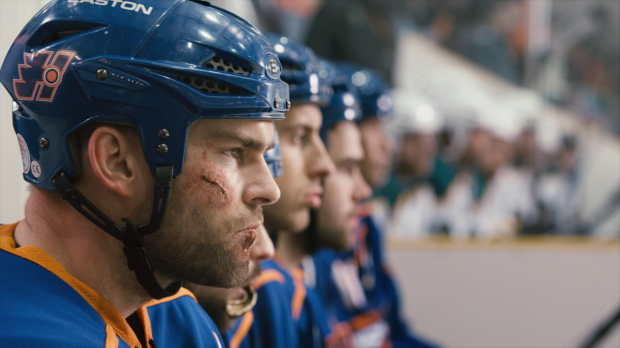
    essentialGiven the National Hockey League’s flirtation with work stoppage-induced disaster, Goon plays like an unrequited love letter to a sport whose heart is three sizes too small. The hockey immortalized here—the slow, bone-crunching, blood curdling style of play where one or two men on every squad was hired more for their fists than their abilities with a stick—has been on the endangered list for some time now, first as a consequence of the League’s desire for a faster game, then as concerns over concussion-related brain damage rose, but that doesn’t matter. The hockey of Goon is that of pop-culture past, three twenty-minute periods of blood, mullets, and dirty-minded foreign players. Those wondering how hockey could engender such a devoted, wounded fan base would find their answer here.

    Goon’s hero is a nice, well-adjusted dude named Doug Glatt (Seann William Scott). He’s a bouncer with fists of steel and an indestructible head, skills that serve him well when his buddy Pat (Jay Baruchel, who also co-wrote with Superbad‘s Evan Goldberg) lets his mouth run away with him at a game. When a player has enough of Pat, he charges into the stands. He is promptly put down by Doug, who is quickly invited to play for the local squad. He turns into a local sensation and is hired onto a farm-league team in Halifax, where he’ll serve as an enforcer to Xavier LaFlemme (Marc-Andre Grondin), a shaken star trying to return to form after suffering a monstrous, highly illegal hit from Ross “The Boss” Rhea (Leiv Schreiber), a goon whose particularly dirty style of play sees him in the minor leagues and on his last legs.

    Like Slap ShotGoon follows its fictional team through the wilderness that is minor league hockey. Their hometown of Halifax is a veritable paradise compared to the prospect of “riding piss-hole” on the bus to another town, the punishment for turning in a particularly awful performance. Doug’s teammates are the usual assemblage of sports comedy also-rans: LaFlemme is a womanizing drug addict, the captain is an alcoholic, the coach issues meaninglessly aggressive proclamations, and the announcer is a half-hearted amalgam of Bob Uecker in Major League and John Candy in Rookie of the Year, but the Slap Shot formula—as proven successfully here and by Major League—still works, putting those stereotypes to work as parts to a lovingly constructed machine as opposed to identifiable components left out on the workbench.

    It helps that Doug Glatt is an incredibly likable focal point. A well-meaning, dim-witted black sheep in a family of doctors, Doug’s a guy trying to make the best of the gifts he has. He’s incredibly polite to the men he bludgeons, but his parents look at his barbaric conquests on the rink—and the signs in the crowd reading “Glatt is Hebrew for ‘Fuck you!’”—with obvious disdain. He’s supported by Pat and his brother, but those guys would support him through anything. In a strange city, teaming with a bunch of weird men who look at him like he’s a circus freak, its understandable that Doug looks for some outside validation. He finds it in Eva (Alison Pill), a self-described bad girlfriend who loves beer and finds the violence of the hockey rink a huge turn-on.

    The only character beyond Doug who receives more than an embellishment of detail is Ross Rhea, his rival in the pugilistic arts. That’s thanks largely to reputation. With his mullet, his goatee, and his seen-it-all attitude, Leiv Schreiber is an amalgam of the game’s deadliest goons, a caveman philosopher who sees the destruction of Doug Glatt as a last chance to define his legacy before the game phases him out completely. The miracle of Goon is that it’s able to build anticipation for the eventual slugfest beyond the occasional reminder that, yes, this is important stuff. Even better, the fight lives up to the hype, a gladiatorial death match that’s more gruesome than the pile of dead teenagers at the end of a slasher film.

    If you’re able to look past Goon‘s flaws as a sports movie—the relationship between Scott and the talented but underutilized Alison Pill, being a romance between a nice athlete and a girl with low self-esteem, begins saccharine sweet and ends up somewhat grating—what’s left is an incredibly pleasant experience, made better when the credits roll without the film taking an uncalled for detour into pious sermonizing. Sports movies have become a mostly toxic genre thanks to the odd notion that without several manufactured moments of life-affirming uplift, the events depicted will register as mostly pointless. Goon is proof that if filmmakers love a subject enough, something worthwhile will emerge.


    Goon. With Seann William Scott (Doug Glatt), Leiv Schreiber (Ross Rhea), Alison Pill (Eva), Jay Baruchel (Pat), Marc-Andre Grondin (Xavier LaFlemme), and Eugene Levy (Dr. Glatt). Directed by Michael Dowse from a screenplay by Baruchel and Evan Goldberg.

  • Movie Review: 21 Jump Street (2012)

    Movie Review: 21 Jump Street (2012)

    When Easy A was released last year, it ushered in a brief era of John Hughes nostalgia and the feeling that things within the high school comedy genre could, in fact, get better. A year of repeat viewings and Emma Stone Tumblr .gifs later, and the shine of Will Gluck’s comedy has mostly diminished. It’s a ramshackle tribute to a bygone era in teen filmmaking, its obsolescence made clear by a lack of Hollywood follow-through  It’s much easier to throw a handful of Disney Channel stars into a foreign country or move the cheerleader movie plot into another sport than to hit the sweet spot Easy A was lucky enough to find. No matter. For all that film’s charm and quirk, I was left waiting to see if the high school comedy’s raunchier parasitic twin would crawl its way out of the ditch a legion of Superbad imitators left it dying in. Finally, with 21 Jump Street, it has.

    It’s as odd a candidate as any. A remake of an 80s television program granted enduring cult popularity due to the later fame of one of its stars, featuring a pair of 30-year-old men impersonating high school students doesn’t immediately figure as a good time. Directors Phil Lord and Chris Miller have been here before, though, eviscerating high school culture with their MTV cartoon Clone High, and are smart enough to realize that pop culture and mass media have muddied old tropes and expectations. Nerds, geeks, and environmental activists are portrayed as hip, now. Gays and lesbians are accepted by their peers. While real life rarely bears this out, this is the entertainment industry’s standard operating procedure when making mainstream high school movies. Quirky girl meets sensitive guy, is guided towards relationship by gay best friend. Rinse, wash, repeat. It’s within that formula that 21 Jump Street scores its biggest points. The fish are large and the barrel is small, but Lord and Miller are the first to take aim and fire.

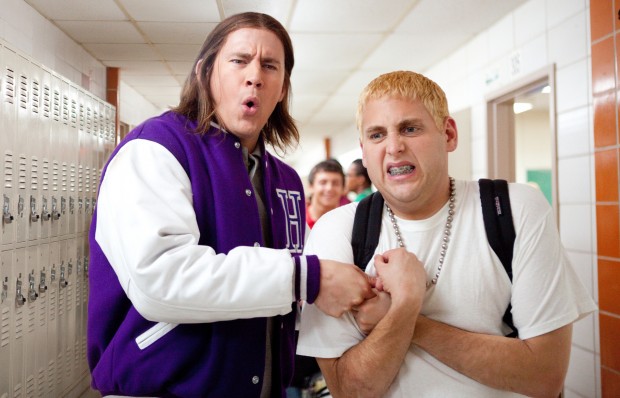
    Morton Schmidt (Jonah Hill) and Greg Jenko (Channing Tatum) are two police academy graduates who’ve long dreamed of the exciting life cops lead. Formerly the high school nerd and jock, respectively, Schmidt and Jenko find each other in class struggling through the areas of their expertise. Jenko helps Schmidt with the rigorous physical activities required of men on the beat, and Jenko helps Schmidt prepare for the exam. They graduate as partners, but police work is hardly the fantasia of explosions, guns, and high-speed chases they imagined. Patrolling the park on their bicycles, they deal with lost Frisbees and rowdy kids. When they luck into a bust of a drug-dealing motorcycle club, they botch things royally and find themselves hustled down to a relaunched undercover program headquartered on 21 Jump Street.

    Though it’s intoned that the Jump Street program is a last resort for young-looking cops this close to handing in their guns and badges, those working the beat seem experts at breaking up high school drug rings. Jenko and Schmidt are assigned to one such task at a school where a new drug is on the verge of going viral, spreading uncontrollable giggles and potential overdoses across the city. Schmidt, the most popular person of his graduating class, is beyond elated for this second chance to relive his peak years. Jenko, who survived his four years at school as an obese Eminem-lookalike, is less than stoked. But it’s 2012, and everything is different. Because of a mix-up with their files, Morton ends up in the less-challenging classes intended for his partner, while Greg ends up taking AP chemistry. Somehow, they fall in with those crowds. Morton becomes one of the most popular guys in high school while Greg falls in with the calculator-and-pocket-protector brigade, still rendered invisible. Morton even ends up skirting an affair with Molly (Brie Larson), the most popular girl in school.

    21 Jump Street never really comments on the creepiness of Jonah Hill’s character having an obvious, hopeless crush on someone half his age, but it has a lot of fun showing him and Tatum so obviously out of their respective elements. Of course, the seedy underbelly of the popular nerd crowd is that they’re the ones dealing drugs, so Morton is caught trying to remain popular with them while figuring out who their supplier is. And Tatum, high on the new drug and blowing through a pop-culture-addled science equation involving unobtanium and radioactive spiders, is appropriately awkward as an obviously too-old-for-high-school man way out of his league. In these situations, 21 Jump Street is often funny enough that it doesn’t matter that both men are being fed bulk amounts of Valuable Life Lessons.

    Where the movie falters is in the police procedural stuff that exists at the film’s fringes. The drug kingpin is an underwhelming reveal, and beyond a sequence where flammable objects refuse to blow up, action movie parody has been done better elsewhere. Ice Cube’s turn as a deliberate, knowing black police captain stereotype is the film’s most tired joke. Cube has enough charisma to make it work once, but even then, it’s redundant: Parks and Recreation‘s Nick Offerman, in a cameo as Jenko and Schmidt’s initial supervising officer, is so note-perfect in drolly observing the ridiculousness of rebooting a mostly forgotten program from the 1980s because the department has “completely run out of ideas” that any further comment from the duo’s supervisors feels like overkill. Going to college with Ice Cube hurling angry thunderbolts at his incompetent officers is an exhausting proposition, but then again, so was the idea of a completely frivolous re imagining of a cult TV show.


    21 Jump Street.  With Jonah Hill (Schmidt), Channing Tatum (Jenko), Brie Larson (Molly), Rob Riggle (Mr. Walters), Ice Cube (Capt. Dickson), Chris Parnell (Mr. Gordon), Ellie Kemper (Ms. Griggs), Nick Offerman (Capt. Hardy), Peter DeLuise (Doug Penhall), and Johnny Depp (Tom Hanson). Directed by Phil Lord and Chris Miller from a screenplay by Michael Bacall, based on the television series 21 Jump Street, created by Patrick Hasburg and Stephen J. Cannell.