Category: Film

  • The Balcony Is Closed

    Roger Ebert

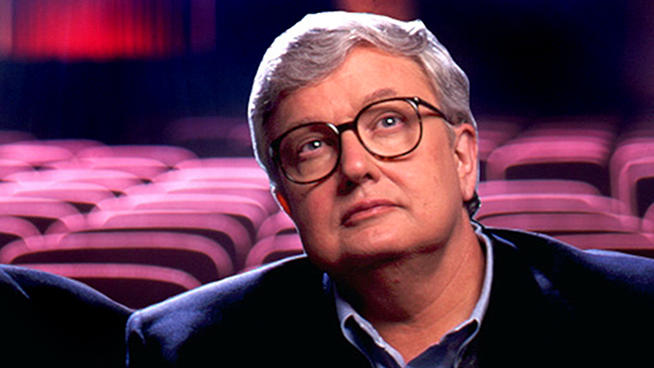
    I met Roger Ebert in 2010, but, like most people who’ve written something about him in the days following his death, I’ve known of him for much longer. He and Gene Siskel, along with Mr. Rogers and the Sesame Street gang, were part of my afternoon television childhood. Unlike Cookie Monster, Oscar the Grouch, and the amiable folks who lived in Mr. Rogers’ neighborhood, the portly, bespectacled Ebert and his tall, balding companion were my antagonists, using their opposable thumbs to strike down or damn with faint praise whatever theatrical entertainment happened to pass my fancy from one week to the next.

    I’ve always been a moviegoer. With the exception of its first three years, when I lived in a suburb of Chicago, Illinois, my childhood was lived within the shadow of the local multiplex, which was so close to home that I was eventually trusted to walk myself to it. Within driving distance are relics of America’s film-obsessed past: a dollar theater, a repertory house with a theater organ, and a drive-in that still plays that cutesy “Lets Go to the Movies” jingle between every movie. My mother introduced me to At the Movies as an exercise in critical thinking. This was important, because while children are more intelligent than most filmmakers would assume, the sheer largeness of a theater screen and the images projected onto it often win out over quality. Even if I went to a movie like Street Fighter with my mom and enjoyed it, the level of conversation I was able to have about that movie and those that followed improved, from “I liked it!” to “I liked it because,” which, really, was what At the Movies asked of its audience. (more…)

  • Movie Review: Dredd (2012)

    Movie Review: Dredd (2012)

    Dredd

    essentialLet’s clear the air: Dredd is so unlike Sylvester Stallone’s execrable Judge Dredd that, were it not for the title character and the iconic helmet worn by both Stallone and Karl Urban, the two wouldn’t appear to share the same source material. Dredd, though not half as smart as the 2000 A.D. comics that inspired it, has a bleak, is an uncommonly inspired shoot-em-up. Its first shot, with the towering buildings of Mega City One casting grim shadows over the ruined earth the city is build upon, evoke a daytime Blade Runner. Its last borrows liberally from The Dark Knight. The plot, which sees Dredd and a rookie judge navigate their way through a locked-down apartment complex filled with men willing to die in protecting the leader of their drug cartel, happens to resemble that of The Raid: Redemption. But merely comparing Dredd to other action movies won’t do. It’s a smarter, nastier film than many of its contemporaries, and, at its best, gives rise to moments of raw terror and startling beauty, the two often going hand-in-hand.
    Dredd begins by surveying the oppressive expanse of Mega City One, giving a curt assessment of the cursed remainder of America that stretches from Boston to Washington D.C. The only thing standing between the city and self-imposed extinction are the judges, who enforce a rather draconian set of laws from the monolithic Hall of Justice. The Judges can only respond to six percent of crime in the city, so it’s a particularly unlucky day for the criminal that runs across one. Here’s how quickly things can spiral out of control for a Judge in Mega City One: Dredd ends up storming the Peach Trees apartment complex with a rookie Judge because he recognizes the burns on the mouth of a mutilated corpse as belonging to the paraphernalia found on a trio of reckless drivers taken down on a prior bust. The drug is called Slo-Mo, and it’s a tricked out super-crank that allows its users to experience life in grungy, slightly candy colored variant of bullet time. Obviously, the dudes who were skinned alive and tossed from a balcony while under the influence didn’t enjoy their trip.

    The dynamics between Dredd’s old, hardened cop and Anderson’s naive rookie, the threat of a new drug going viral, a ruthless crime lord eyeing aggressive expansion onto new turf—none of Dredd‘s elements are particularly fresh, but the fact that the film is willing to hit the beats of these tropes without relying on too many gimmicks beyond the lurid, graphic details of its violence sets it apart from a generation of action movies that’ve mined  and processed the better parts of exploitation movies to the point that original material has largely been rendered unpalatable. Shot on practical sets, using 3D cameras, and cutting back on CGI excess, Dredd‘s a relatively cheap film—hence the use of asthma inhalers and caulk guns as key props—that looks expensive, as opposed to the other way around. Karl Urban’s Judge Dredd is the genre’s first genuine synthesis of Eastwood grit and Bronson nihilism, a balance that’s only previously been struck when one of those icons walked onto the turf of the other. The film sometimes violates its internal logic and, once it settles into Peach Trees, is only able to match the uniquely American horrors of the opening act in brief flashes, but there are pleasures to be found in standard, apolitical action movies, and Dredd finds those, too.

    Dredd‘s strength lies in how screenwriter Alex Garland pares down the galaxy-trotting Dredd mythos while suggesting the larger world beyond the blast shields of Peach Trees. While movies like Total Recall and The Matrix suggest that it is possible to create great, world-hopping science fiction on film, the closed world presented here forces the viewer to confront the reality of its titular character. Though Anderson is given more than her fair share of the script’s weaker moments, she serves as an able means of accessing Dredd—because identifying with him directly is impossible for all but the most detached—and as a strong, capable hero in her own right. That’s the best trick Dredd pulls: providing one hero with which one sympathises, and another that acts as a brutal extrapolation of America’s extremist overcorrection for violent tragedy. Anderson pushes forward while Dredd causes one to recoil in horror. Bodies liter the food court and there’s blood in the wishing fountain, but fret not; the mall will re-open in one hour.


    Dredd. With Karl Urban (Judge Dredd), Olivia Thirlby (Cassandra Anderson), Lena Headey (Ma-Ma), Wood Harris (Kay), Domhnall Gleeson (clan techie), and Warrick Grier (Caleb). Directed by Pete Travis and produced by Alex Garland, Andred MacDonald, and Alion Reich. Screenplay by Garland, based upon the 2000 A.D. comic book Judge Dredd, created by John Wagner and Carlos Ezquerra.

  • Movie Review: Gangster Squad (2013)

    Movie Review: Gangster Squad (2013)

    Gangster Squad

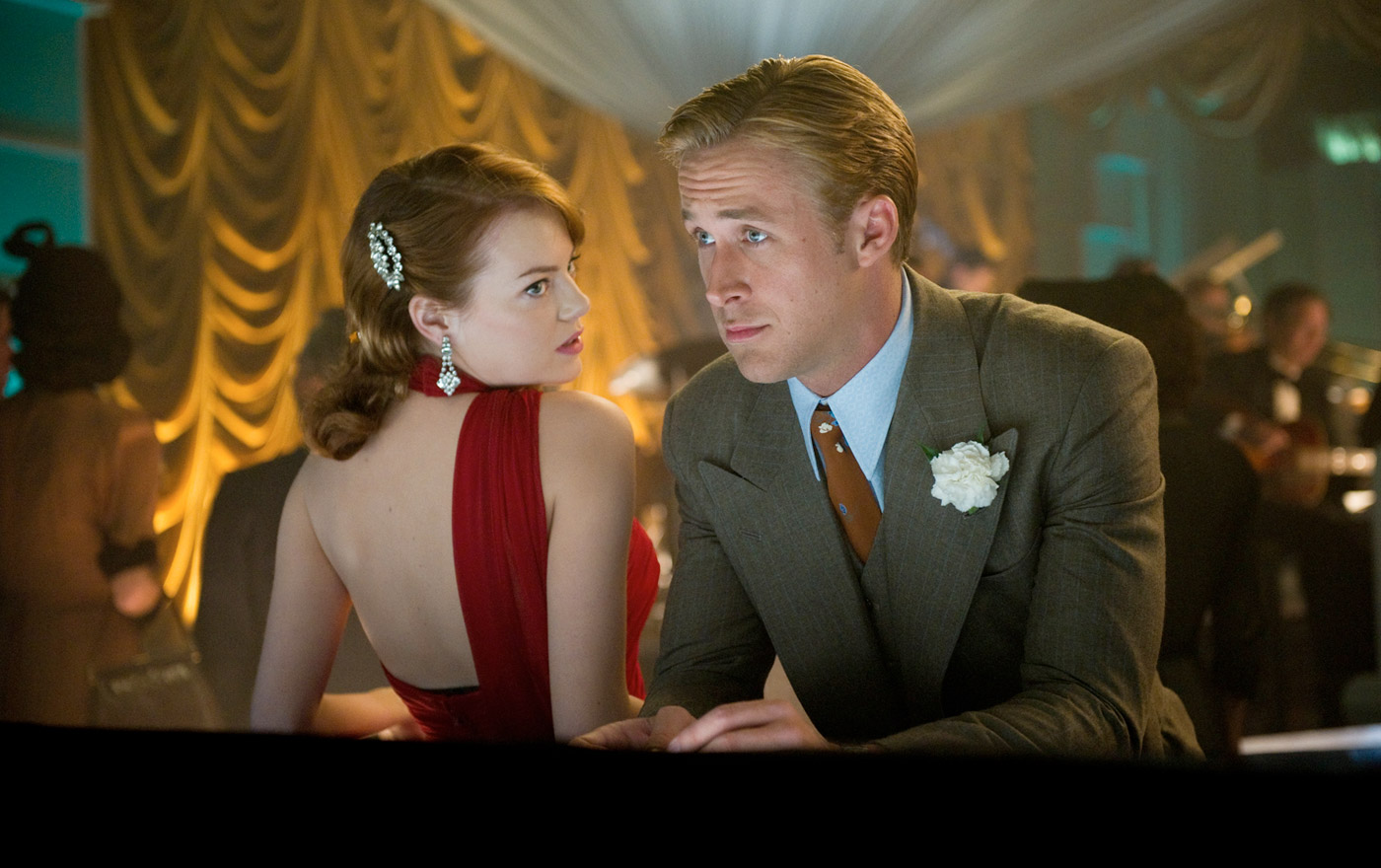
    There’s nothing new to Gangster Squad, Ruben Fleisher’s amalgamation of and fetishized love letter to the film noir. Outwardly, there’s little wrong with Fleisher’s approach—the film looks and feels like a theme park noir, approximating the style, tropes, accents, and dames in red dresses of the pulpy, lurid dramas that continue to pump their dark blood through the heart of American culture. The problem here is that, like a theme park attraction, the performers appear to be dead tired, sleepwalking their way through an old-as-dirt story that’s been repeated to the point of boredom. To compensate, Fleisher paints his sets red with the blood of countless goons and has his stars grit their teeth while pulling the trigger. This solves remarkably little.

    The story of Mickey Cohen and the Gangster Squad is one of the more thrilling ones in mob canon. At one point in time, Cohen’s mug was capable of selling more papers than anybody in America, and part of his charm (if you can call it that) is that he seemed to genuinely relish his celebrity. He was a complex man, as were those assigned to take him down. Gangster Squad‘s biggest disappointment  then, is in how it goes about simplifying the story: Mickey Cohen (Sean Penn) is a ruthless gangster, John O’Mara (Josh Brolin) is an honest cop, and it’s up to O’Mara and his crew of specialized police officers to cripple Cohen’s operations by sabotaging his business interests and murdering his lackeys. The movie spends a lot of time saying that Cohen is a terrible human being, and, to be sure, being the head of a crime syndicate and a vengeful individual gives Fleischer and screenwriter Will Beall plenty of opportunity to unleash Penn’s squirmy, seething portrayal of Cohen upon Los Angeles, but he is largely backgrounded, yelling at his crew for being foiled by the Squad and leering at Grace (Emma Stone), his moll.

    This leaves the interesting bits up to the Gangster Squad itself, but even given a near two-hour runtime, none of the heroes rise above action figure characterization. O’Mara is chosen to lead the squad because he has special ops training, Jerry Wooters (Ryan Gosling) is a jaded ladies man, Coleman Harris (Anthony Mackie) is the Squad’s connection to the streets, Conwell Keeler (Giovanni Ribisi) is skilled with bugs, Navidad Ramirez (Michael Peña) is the rookie, and Max Kennard (Robert Patrick) is the group’s grizzled, six-shooting veteran. We only know anything about O’Mara, Wooters, and Keeler’s lives beyond the percent for the purpose of drawing a basic emotional response when they or (somebody close to them) get murdered or shot at. This happens frequently.

    Though hardly surprising considering his background in music videos, Fleischer’s sense of style remains the most potent element of his films. His particular quirks are more self-evident in a movie like Zombieland, whose genre is generally ill-served by gifted directors and given over to a relentless stream of jump scares and attempted gross-out kill scenes. That Zombieland has endured to the point of becoming something of a cult movie is a testament not only to the movie’s famous Bill Murray cameo, but well-conceived bits like the Zombie Kill of the Week and its hero’s Survival Rules, both of which are catnip to .gif-addicted Tumblrphiles. Its only competition (and its better) is Shaun of the Dead. It’s unfair, but Gangster Squad courts danger by inviting comparison to The Untouchables, L.A. Confidential, Casino, and Goodfellas—mafia movies that stand apart from the peers of their era in large part because of how good they look—and loses harshly as a result. Gangster Squad has the look and cast of an Oscar-contending prestige picture. Too bad it’s got the brains and heart of a basic cable time-waster. 


    Gangster Squad. With Josh Brolin (Sgt. John O’Mara), Ryan Gosling (Sgt. Jerry Wooters), Sean Penn (Mickey Cohen), Emma Stone (Grace Faraday), Nick Nolte (Bill Parker), Anthony Mackie (Det. Coleman Harris), Giovanni Ribisi (Det. Conwell Keeler), Michael Peña (Det. Navidad Ramirez), and Robert Patrick (Det. Max Kennard). Directed by Ruben Fleischer and produced by Dan Lin, Kevin McCormick, and Michael Tadross. Screenplay by Will Beall, based on the book Gangster Squad: Covert Cops, The Mob, and the Battle For Los Angeles by Paul Lieberman.

  • The Problem With the Oscars Is the Oscars

    The Problem With the Oscars Is the Oscars

    85th Annual Academy Awards - ShowI knew before Seth MacFarlane was announced as the host of this year’s Academy Awards that I would not be watching the ceremony. If Tina Fey and Amy Poehler, two incredibly talented women whose shows 30 Rock and Parks and Recreation rank among my favorite of all time, couldn’t convince me to watch the Golden Globes, there’s no way MacFarlane, the creator of several shows I hate almost instinctually, could get me to tune in for the Globes’ stuffier, more overbearing sibling. But then a curious thing happened: a grinning, self-satisfied MacFarlane took to the stage and started singing about how great it was to be in a crowd with so many women whose breasts he’s seen, and the Academy Awards became more noticeably sexist than ever before. There’s been so much talk about these Academy Awards that one could be intimate with them without having watched, but, like a good cultural critic, I did. The end results were, to be kind, less than impressive. (more…)

  • Movie Review: A Good Day to Die Hard (2013)

    Movie Review: A Good Day to Die Hard (2013)

    A Good Day to Die Hard

    In A Good Day to Die Hard, John McClane emerges from a taxi cab in Moscow as a man finally transformed into an action movie caricature. Sure, the three installments standing between this film and the 1988 original have done their part to dehumanize their hero, but even Live Free or Die Hard, where the boozing, troubled detective launches a cop car into a helicopter like a kid seeking an achievement trophy on the X-Box 360, knows its protagonist well enough to put something of his—a daughter—up as stakes against the megalomaniacal villain of the moment. Not here. As soon as McClane lands in Russia, he’s running and jumping and shooting through a procession of grey, vaguely Russian sets with his son, who has grown up to be a CIA superspy. John McClane in 1988 winces as he walks barefoot across a sea of broken glass. John McClane in 2013 leaps from a tall building and pinballs through chutes and girders, miraculously dodging machine gun fire from a helicopter before landing on the ground, where he pulls a hunk of rusted metal from his son’s abdomen without so much as a hint of concern.

    John McClane is minimized in what’s been marketed as a tribute to his legacy, to the point that both his son (Jai Courtney) and daughter (Mary Elizabeth Winstead, in a brief cameo) make light of or treat as a burden their father’s decades-spanning, if incidental, career thwarting large-scale terrorist plots. They seem resigned to the fact that his mere presence in Russia means that cars will be smashed, guns will be fired, and anything combustible will explode. McClane was formerly an interesting protagonist. He drank too much. He was estranged from his wife. He was distant from his children. Even with a machine gun in his face, the worst part of his day was waking up with a hangover. Now he’s been neutered. He’s just an ornery old man, but not in the way of so many Clint Eastwood characters. John McClane is Bruce Willis in The Expendables: an image meant to inspire nostalgia and given one throwaway joke. Here, it’s that he’s on vacation, a sentiment as truthful as it is funny. McClane repeats the phrase so often you wonder if director John Moore had Willis record it once in a soundbooth so it could be played whenever things got too quiet.

    Despite every attempt to convolute things, the plot of A Good Day to Die Hard is stupidly simple. John McClane, hearing that his son is in some kind of unspecified trouble in Moscow, hops a plane and ends up making a mess of a years-long sting intended to flip a Russian dissident (Sebastian Koch), who has spent the last few decades in prison due to his connection to the Chernobyl disaster. Things between John and his son are pretty sour, which is reflected upon whenever the McClanes aren’t haphazardly massacring civilians: Jack refuses to call his father “Dad,” instead opting for his Christian name, and both men agree that they don’t come from a “hugging family.” It’d be tragic were not these macho platitudes meant to be celebrated.

    Willis is often accused of not trying very hard in vehicles like this, letting his smirk and the accumulated dirt on his wifebeater do the heavy lifting, but movies like RED, Looper, and Moonrise Kingdom either work with or around Willis’ limitations, using him less as a featured attraction than as part of their palette. That’s impossible here, given that Bruce Willis is John McClane, and that a Die Hard movie without him simply isn’t a Die Hard movie at all, but there are ways of accounting for Willis—interesting villains, innovative action sequences, a non-standard plot—that A Good Day to Die Hard has no interest in. Sure, there’s a lot of smoke as to who the bad guy is, but when picking one out from a line-up of uninspired Russian mafia types, does the end result really matter?

    No, and that’s exactly why the McClanes make a 12-hour car ride to Chernobyl in 30-minutes: so that the fallen statues and ruined hammers and sickles of the ruined city can once again beat the dead horse of Cold War nostalgia. Here, in the third act, things get implausible—the lightspeed trip to the city, the chemical spray that immediately de-radiates the area it’s sprayed in, the fact that the McClanes walk around Chernobyl wearing regular clothes when every Russian in the city is wearing a biohazard suit—but not in a fun way. There are thirty-something well-trained Eurothugs patrolling the city with an arsenal of guns, explosives, and helicopters. There are two Americans among them, loudly dispatching everything in their crosshairs. A Good Day to Die Hard is just another action movie asking its audience to believe and be invested in this scenario.

    Every Die Hard movie, in an effort to somehow be bigger and badder—more Die Harder—than the first, has comicaly exaggerated McClane’s abilities or his wit. A Good Day to Die Hard is guilty of the former and largely abandons the later. Say what you will about any of Die Hard‘s sequels, but none of them have felt this unnecessary. A “Die Hard” movie in name only and a “Bruce Willis movie” insofar as it’s a movie Bruce Willis appears in, A Good Day to Die Hard could have been called anything, could have starred anybody but Willis, and would have been better off, if only for the lack of comparison. Do the movie a favor and cast the albatross around its neck overboard, and you’re still left with a sub par action movie, the kind that’s released early in the year not to grab a larger audience during the late-winter burial period, but because it’s one of the films being buried.


    A Good Day to Die Hard. With Bruce Willis (John McClane), Jai Courtney (Jack McClane), Sebastian Koch (Yuri Komarov), Mary Elizabeth Winstead (Lucy McClane), Yuliya Snigir (Irina), and Cole Hauser (Mike Collins). Directed by John Moore and produced by Alex Young and Wyck Godfrey. Screenplay by Skip Woods, based on characters created by Roderick Thorp.

  • Movie Review: A Glimpse Inside the Mind of Charles Swan III (2013)

    Movie Review: A Glimpse Inside the Mind of Charles Swan III (2013)

    A Glimpse Inside the Mind of Charles Swan IIIThe only explanation for a movie like A Glimpse Inside the Mind of Charles Swan III is that America loves a good rehabilitation story, and few in that vein have been juicier than Charlie Sheen’s. For all the attention garnered by his very public firing from Two and a Half Men and the meltdown that followed, Sheen’s path back to respectability—whatever that means to him—is very different from that which has been encouraged by reality television. Instead of signing up for a session with Dr. Drew and engaging in public bloodletting, Sheen returned to work. He created and produced a one man show and toured around the country. He signed on to a new sitcom, Anger Management, and went on a marathon binge of filming, creating 90 episodes where once there was but a whisper of a show about a Charlie Sheen like character attending anger management courses. And now, with Charles Swan III, Sheen has made his long-promised return to film. He should have stayed away.

    Sheen’s career over the past few years has been deeply rooted in his belief that people like him. This isn’t an unfair assumption. To tour as Charlie Sheen and to play Charlie Sheen on television is to court a certain audience—fans, mostly—who are willing to put up with a performer’s foibles in order to enjoy his vibe; his Charlie Sheenness, if you will. These are designed to be disposable units of entertainment, each installment as forgettable and vaguely pleasing as the last. Films, however, are different. They’re longer, obviously, but movies—especially art movies, which is what Charles Swan III desperately wants to be considered as—tend to be indelible, a side effect of being projected on gigantic screens. Even from a balcony, there is no mistaking the Charlie Sheen of Charles Swan III with a mere mortal. He’s a being of pure ego, a puppy demanding your love and affection with the force of a hurricane.

    Director and screenwriter Roman Coppola caters to Sheen’s sensibility, casting him as a  successful artist whose commercial prospects have made him a rockstar. His friends love him, women can’t get enough of him, and when life gets him down, the world stands still waiting for him to roar back to life. Charles Swan III spends a considerable amount of time in a funk. His girlfriend (Katheryn Winnick), enraged that he keeps a drawer full of candid nude Polaroids of ex-flings, dumps him. Depressed, he gathers her shoes into a garbage bag and attempts to throw them over a cliff. When he fails, his frustration leads him to crash his car in a record producer’s swimming pool, where he has a mild heart attack. Over the course of conversations with his sister (Patricia Arquette) and friends (Jason Schwartzman as comedian Kirby Star, Bill Murray as his accountant, Saul), and Charles’s elaborate fantasies about death, sex, and persecution, Coppola tries his damnedest to paint Swan—and Sheen—as a figure deserving of sympathy, but he fails his man at every turn.

    Charles Swan III is a fairly detestable human being, and the world he lives in is a male fantasia where women are either sex objects, ball busters, or savages. Murray, Schwartzman, and the rest of the cast play down to Sheen’s level, presenting caricatures of the personae they’ve developed in the films of Wes Anderson, which is appropriate given that Coppola—who co-wrote Moonrise Kingdom and The Darjeeling Limited—has chosen to make a cardboard Wes Anderson picture. Beyond the early notion that Swan has an overactive imagination, there’s no reason for him to have a couch that looks like a fully-dressed hot dog or for his car to have gigantic decals of bacon and eggs applied to the doors other than that it looks cool and whimsical in some modest, unexplained way. The production design of Charles Swan III is the only element of the film worth praising, but even that must be within reason. However dollhouse-like Anderson’s films often end up looking, at least his houses, schools, and trains feel lived-in. Coppola’s, on the other hand, tend to feel like a warehouse filled with kitschy “vintage” stuff he found on Etsy, like Juno’s hamburger phone if the point of making Juno was the hamburger phone.

    Before accepting that he’s a likable, misguided, goofball lothario, Charles Swan III spends a lot of time fending off accusations of selfishness and laziness. Coppola’s film strikes this apathetic tone early, which may be proper of any movie where Charlie Sheen tap dances on his own grave. Though Coppola has said otherwise, positing his decision to cast Sheen as an opportunity for the talented actor of Wall Street and Platoon to once again make something of himself, the resulting movie looks, sounds, and feels like a too-late cash-in on the Year of Charlie Sheen, nudging his 60 Minutes interview and his Comedy Central roast into decidedly pretentious waters. A Glimpse Inside the Mind of Charles Swan III is excruciating, like watching a 90-minute press junket interview where Sheen pretends, albeit not very hard, to be a more likable version of himself. He’s already done that across several forms of media, many considerate enough to allow one to change the channel.


    A Glimpse Inside the Mind of Charles Swan III. With Charlie Sheen (Charles Swan III), Jason Schwartzman (Kirby Star), Bill Murray (Saul), Katheryn Winnick (Ivana), Patricia Arquette (Izzy), Aubrey Plaza (Marnie), Dermot Mulroney (Doctor), and Mary Elizabeth Winstead (Victoria). Directed by Roman Coppola and produced by Coppola and Youree Henley. Screenplay by Coppola.