Depending on who you ask and when you ask them, 2013 was either one of the cinema’s best years, or one of its absolute worst. I didn’t find it to be either, exactly, but with my 2013 Guilt List standing at 92 films (including everything from Blue Is the Warmest Color to Escape Plan, as that’s how wide my definition of “guilt” goes when it comes to movies), my year unfortunately skewed more towards the apocalyptic wasteland of this summer’s comic book adaptations than, say, Her or Inside Llewyn Davis, neither of which have played my new home in Athens, Georgia. So, rather than give a definitive list of the ten best films of the year, here’s 2013 in the movies I think will bear revisiting as the years pass, with apologies to the Guilt List and every comic book movie minus Thor. There are nineteen films on this list, with room for everything from deeply flawed Ryan Gosling vehicles to deeply flawed stabs at recognition from the Academy of Motion Picture Arts and Sciences. In alphabetical order, then:
12 Years a Slave
Dir. Steve McQueen
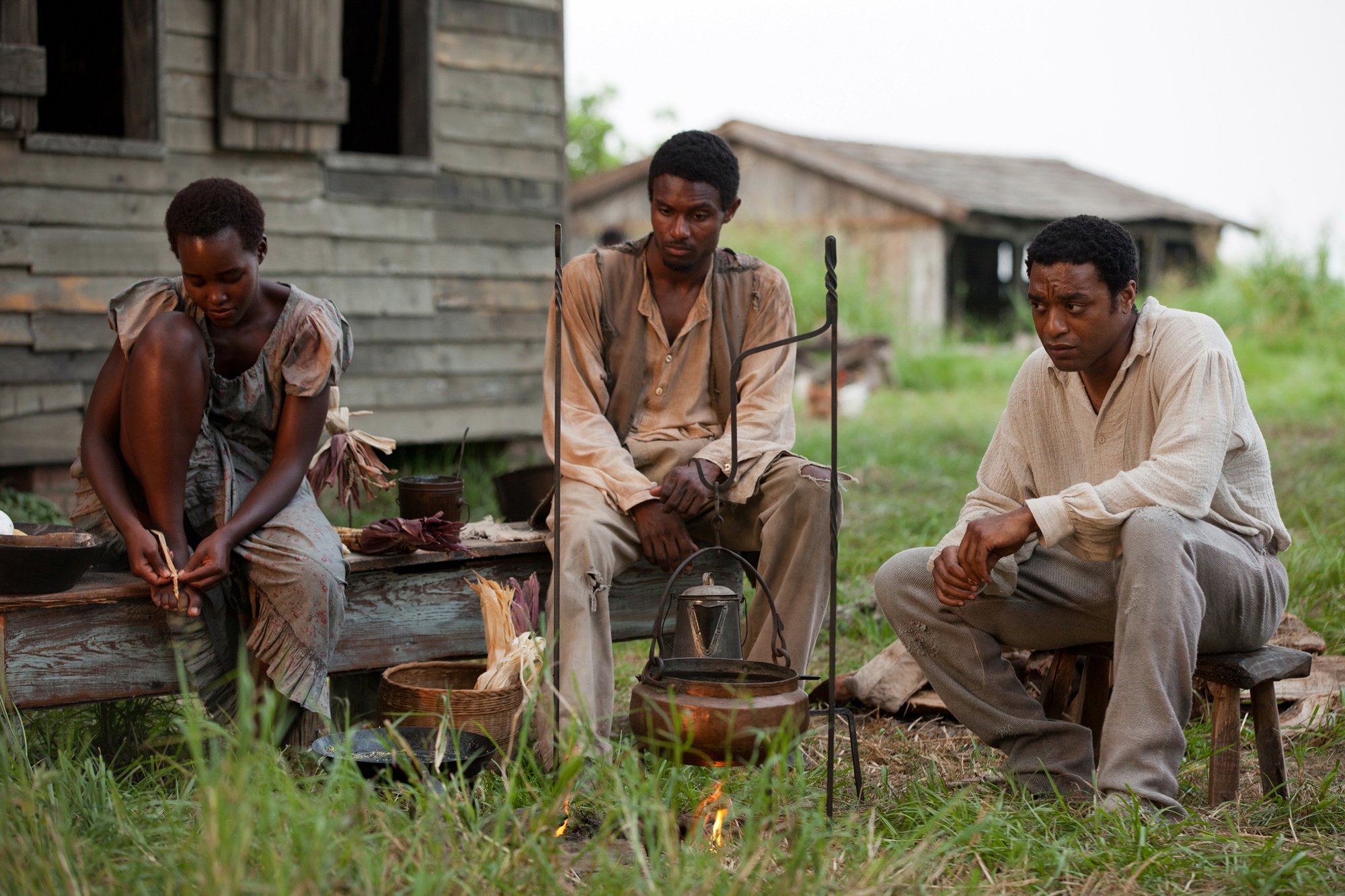
Roxane Gay wrote brilliantly about 12 Years a Slave and its being symptomatic of the Academy Awards’ preference for black films that feature suffering or otherwise subjugated protagonists. It may not offer anything new to a history of slavery films, but considering how furiously white America is working to reshape the nation’s history as something less brutal and more respectable than human bondage, that a black director has piloted an uncompromising adaptation of a slave’s memoirs to near-universal acclaim and major awards consideration is something of a miracle. Beyond politics, 12 Years a Slave is one of the most technically accomplished films of the year. McQueen and his regular cinematographer Sean Bobbitt have, against an unending wall of brutality, composed some of the year’s most beautiful—and most startlingly violent—scenes, and against a cast including Brad Pitt, Michael Fassbender, and Paul Giamatti, the work of Lupita Nyong’o as Patsey, a slave without Solomon Northup’s (Chiwitel Ejiofor) hope of rescue, is a revelation. The presence of Pitt as a Canadian who lectures Fassbender’s plantation owner on the cruelty of slave life consequence free—he isn’t even fired—goes a long way in proving Gay’s point; he holds court speaking with his Lt. Aldo Raine affectations and is Solomon’s eventual benevolent savior. The circumstances are wildly different here than in, say, The Blind Side or The Help, but 12 Years a Slave‘s final act hints that serious black narratives are being made for white audiences, who are more than willing to sit patiently through a few hours of torture and scourging so long as the payoff is uplifting.
The Act of Killing
Dir. Joshua Oppenheimer
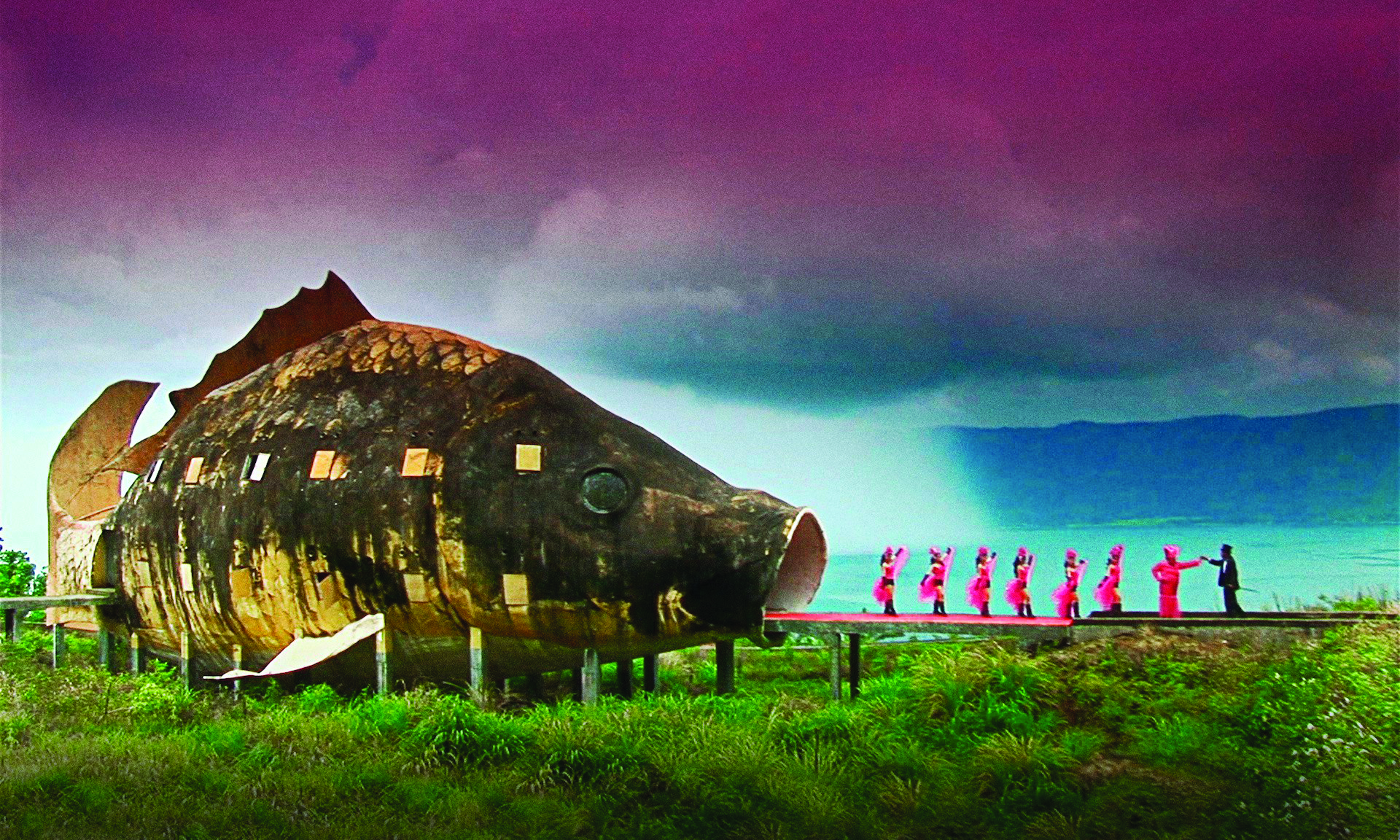
Anwar Congo is what most would call a monster. During the anti-communist purge of 1965 and 1966, Congo was elevated from his station as a film-obsessed gangster to become head of one of the country’s most efficient killing squads. Congo is estimated to have personally murdered 1,000 dissidents, most of them by wire. The Act of Killing is a film about this man and his crimes, and its subject is only too happy to serve as its star, historian, and demonstrator. He has seen much death, but to watch him show the best technique for strangling a man, explaining that he wouldn’t wear white pants were the killing real, so as to not stain them, is to see a man completely unaware of his role in history. Oppenheimer (and his partner Christine Cynn; the two worked with an anonymous third director) works simultaneously to report on the largely untold consequences of American globalization while examining just how deep Congo’s unwillingness to confront the crimes of his past runs. Now a doddering old man, Oppenheimer allows Congo to live out his fantasies of being in one of the Hollywood movies he imagined himself starring in while leading his death squad. Initially thrilled with the chance to set himself up as a conquering hero, Congo retreats farther and farther into himself until he is asked to play one of his victims. Congo’s realization is the most startlingly honest sequence in any film this year, humanizing Oppenheimer’s villain in a way that only great films can, without letting the bastard off the hook for what he’s done. “I can really feel it,” Congo moans, trying to convince the director of his sincerity. If he can, it’s about forty years too late.
Behind the Candelabra
Dir. Steven Soderbergh
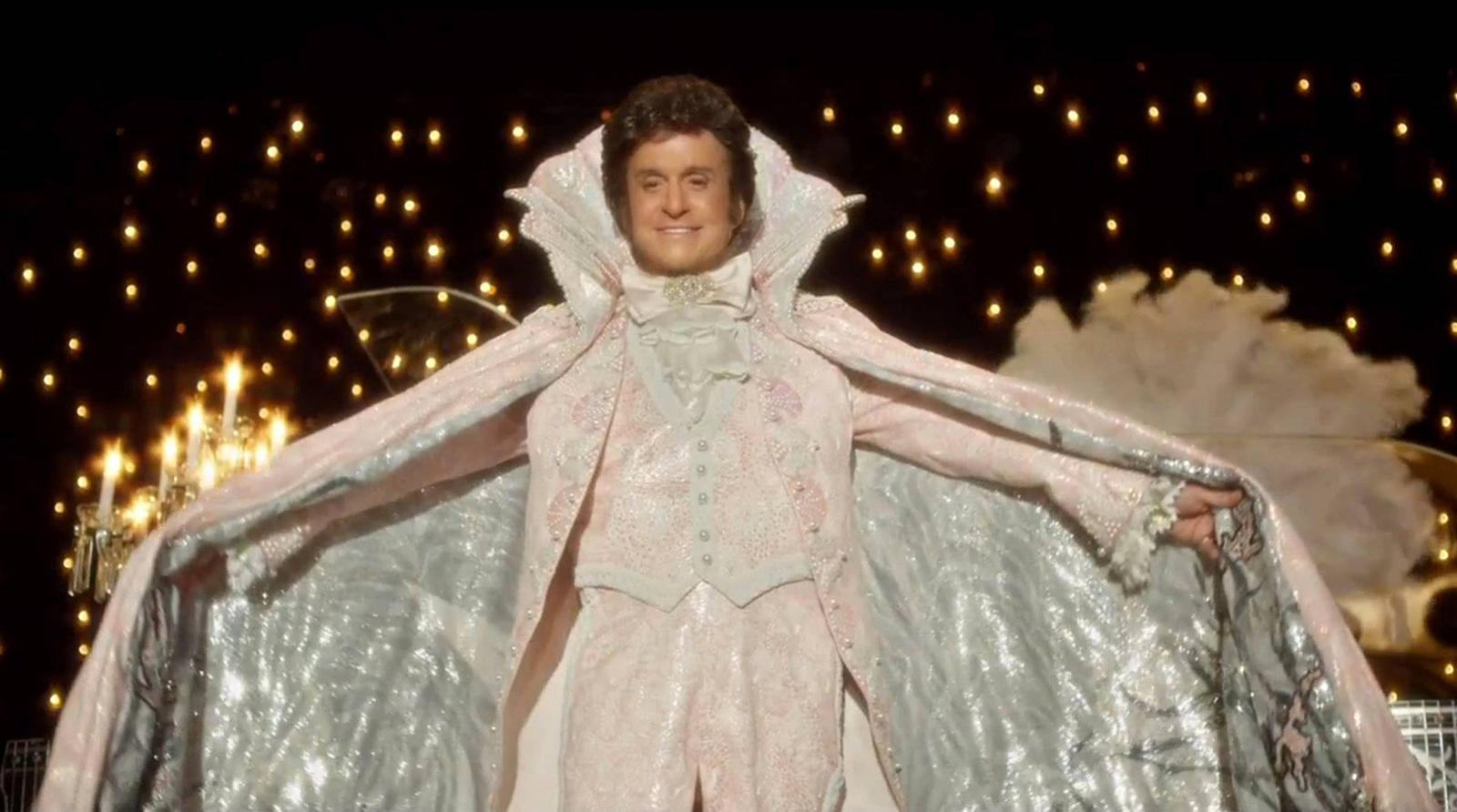
Despite the A-list actors and the man behind the camera, certain portions of Behind the Candelabra feel like the television movie it became. Given its subject, perhaps that is appropriate. It’s easy to look at Liberace as the living, breathing embodiment of gay camp, but to his fans—and to Liberace, to whom “camp” meant a disgusting tent pitched out somewhere in nature—his wardrobe, his car, his rings, and his candelabra were rewards earned for decades of hard work. For Liberace, the con he pulled was two-fold: convincing his fans he was a nice pianist who loved his mother, and convincing those same people that he wasn’t gay. Even before he died of AIDS-related health complications, it must have been obvious he was gay, but it seemed like for every tabloid that wanted to nail Liberace to the wall for who he slept with, there was some doddering old woman who believed he was just waiting for a girl as nice as he was to sweep him away. Steven Soderbergh’s biopic doesn’t really address the central fallacy of Liberace’s public life any more than it has to, which is fine: the one scene where a couple of gay men laugh at the straight folks in the crowd for failing to acknowledge Liberace as the flaming queen that he is was enough. In focusing on Liberace’s lover, Scott Thorson, Soderbergh has made a film about sexual identity and gay politics, using two of the biggest movie stars in the world to do so. In chronicling what is essentially a divorce case that took place before gay marriage was even conceivable, it functions as a better argument for gay rights than years of glossy propaganda produced by the Human Rights Campaign. If most mainstream films featuring gay couples seem intent on making those characters extranormal—Stepford Homosexuals, if you will—Behind the Candelabra does the gay community a solid in portraying its queer couple as real, troubled men: paunchy, balding, sweaty, paranoid, gross, inconsiderate, and often unfuckable. A lot of what I’ve read critically on Behind the Candelabra treats its eventual home on HBO as a slight on Soderbergh, Michael Douglas, and Matt Damon, and maybe it is if you wanted to see Douglas nominated for Best Supporting Actor at the Academy Awards. Studios, however, are at a loss when presented with gay stories. On cable television, that doesn’t really matter. Behind the Candelabra became an early year event and a shining beacon, something good, during the summer when new articles were going up daily about 2013 being one of the worst years for film in recent memory.
Berberian Sound Studio
Dir. Peter Strickland

Buried in any number of algorithmicly-composed lists on your Netflix homepage, Berberian Sound Studio was the best horror film of 2013, shedding nary an ounce of blood while still perfectly evoking the squeamish delights of Italian giallo. Brought in as a sound engineer on the unseen film The Equestrian Vortex, Toby Jones is a squat, polite, hopelessly lost man who couldn’t see himself working on a horror picture until his two assistants began smashing watermelons for one of the film’s many gory moneyshots. Though we can’t see the film, Jones’ Guilderoy can and is tortured by it, its cast and crew, watching intently as he rips at the stalks of one vegetable to simulate the sounds of human hair being ripped from the scalp or smashes another to approximate ritual dismemberment. The film is mostly in Italian, furthering the disconnect between Guilderoy and his life back in England as his coworker’s apparent friendly ribbing turns hostile. Punctuated by the screams of its cast and held together by Broadcast’s intoxicating score, Berberian Sound Studio really only has one note, but it’s a note that is mashed with glee by a group of artists reveling in the frayed edges of filmmaking, both the process of creating a film and the off-kilter personalities of those responsible for that creation.
Blackfish
Dir. Gabriela Cowperthwaite

The best traditional documentary of the year, Blackfish did a better job of radicalizing me than most docs engineered for that purpose. Perhaps, having been raised on Free Willy and the promise of trips to see Shamu, I’m an easy mark for footage of a whale climbing up to its platform, where a gaping wound begins to pour blood. Maybe that makes me more willing to believe the oceanographer who says that whales dorsal fins flop over in captivity, that they live lifespans roughly equivalent to that of humans, and that each individual pod has something like an individual language, especially when the corporation responsible for the capture and lifelong subjugation of these and other animals has everything to gain from their self-mythology of happy whales in small pools. Though certainly guilty of returning to the well of embarrassing-in-retrospect SeaWorld commercials one too many times, director Gabriela Cowperthwaite has managed to craft an effective documentary of current events out of court depositions and talking heads, no mean feat considering the countless hours of television that’ve adopted and perfected the format. After establishing a kind of middle ground between exploitation portrayals of orcas as low-rent Jaws stand-ins and SeaWorld’s own representation of the animal as something cute, cuddly, and capable of crushing a bus full of doe-eyed children, Blackfish instead shows that what we think we know about the orca is largely guesswork, and that the end-result of that guesswork is that companies like SeaWorld have in captivity whales like Tilikum, who is responsible for the deaths of three people, two of whom were trainers. Because this is America, footage of one of these trainer’s deaths, Dawn Brancheau, is in the documentary. Perhaps because of this, Blackfish is the rare documentary that has produced more than anecdotal change since its release: gates are down at SeaWorld, many performers have canceled shows at the parks, and Disney reportedly changed the ending of its upcoming Finding Nemo sequel because maybe some fish wouldn’t choose to be held in captivity, were choice a factor.
The Bling Ring
Dir. Sofia Coppola

Though less likely to stir-up parental hysteria than an accidental viewing of Spring Breakers on Amazon Prime, Sofia Copella’s The Bling Ring chases after the same high. A group of loosely connected high school friends discover that major celebrities, perhaps believing the faux utopia they occupy is real, leave their opulent estates virtually unlocked. It isn’t the clothes they steal, the private parties they throw for themselves in these empty mansions, or the camaraderie of being in a group that drives these kids to burglary, but the fact that doing so puts them in the same sentence with Paris Hilton and Audrina Patridge. 2013 was thick with people moralizing over the rise of the selfie, and The Bling Ring is a film for that corner of the selfie-taking world that can’t put the camera down at a funeral or before a heist. Coppola’s screenplay leaves something to be desired, leaning heavily on a pastiche of character elements borrowed from high school comedies better equipped to handle the intricate details of teenage social life (though that says something positive, maybe, about the genre when a gang of four girls and one queer boy feels passe), and the conclusion she comes to is underwhelming senior thesis stuff. But while the Bling Ring is operational, especially in sequences like the one-take shot of the group ransacking Patridge’s glass house, it’s hard to deny how potent Copella’s drug is.
Blue Jasmine
Dir. Woody Allen

Watching Blue Jasmine, I found myself wondering if Woody Allen remembered what it was like, being poor. Ostensibly, his film yanks its title character from the monied stratosphere, pulling her down from her medicated, disinterested life on the east coast and throwing her to the hungry, angry dogs of San Francisco. But the “poor” Jasmine (Cate Blanchett) experiences feels like a less-than-authentic version of west coast bohemia—the streets are dirty, apartments are an aspiration, and the men who want to fuck you are named Chili, but there’s no real struggle. Given Allen’s oddly stereotypical riff on the 1% (Alec Baldwin shows up to play the version of himself that appears in Capital One credit card ads), it says a lot about Blanchett’s performance (and Sally Hawkins, as her sister, and Louis C.K. and Andrew Dice Clay, who are both believable representatives of the world Blue Jasmine tries to occupy) that Allen finds a lot of compelling middle ground between his two cartoonish representations of the haves and have-nots. And considering how unhinged Blanchett’s character is, perhaps the glassy eyed-indifference of her past and the poverty-by-way-of-Anthropologie of her present are both creations of her unhinged mind. Jasmine Francis is all things at once to her story—hero, villain, victim; a woman so ashamed of her past that she refuses to go by her real name, but so disgusted by her circumstances that she pushes away even the smallest gesture of compassion. Allen is no stranger to writing strong, distinct characters, but Jasmine is his best in some time, and Blanchett is transcendent in the role.
Frances Ha
Dir. Noah Baumbach

Greenberg has been sitting at the top of my queue in Netflix for a while, now. I saw the movie once, when it came out, and have felt a nagging impulse to revisit it ever since—it was one of my favorites, that year—but, now that I have the option to do so whenever I feel, I just can’t. Part of this, I suspect, is because I remember what it was like being in the theater, alone, watching that film on its last day of release in Cincinnati, paralyzed in my seat as Ben Stiller contemplated a dead raccoon. 2010 was a year of personal crisis for me, and something about the scene with the raccoon really hit me. I saw Frances Ha on the last day of its release in Ann Arbor, Michigan under the same circumstances. I had recently gotten an art degree, but was doing nothing with it; waiting out the deadlines for prospective PhD programs to get back to me and trying to face up to the likelihood that I’d be stuck with a cubicle job in Detroit (that I was, honestly, lucky to have) for the foreseeable future. I was depressed, and Frances Ha really spoke to that depression. I also missed the first fifteen or twenty minutes, so when it popped up on Netflix, I immediately re-watched it. I didn’t have the same experience, and it didn’t feel nearly so profound as when I was in the middle of a rather dire period of my life, but Baumbach really is a tremendous director, and Greta Gerwig may be the most arresting actress of her generation. I’m not a Brooklyn hipster and the kind of poor that Frances’ roommates speak about being lucky not to be is the kind of poor I actually am, so, in a way, Frances Ha went from being a document about how I perceived myself to a fantasy about what I’d like to be: broke but able to fly to Paris, stuck in a rut but still aspiring to do something with my art degree. I’m lucky to have avoided that fate entirely, but no movie in 2013 was able to say so much to me at such radically different points of my life.
Happy People: A Year in the Taiga
Dir. Werner Herzog and Dmitry Vasukov

After a slow trudge through the festival circuit, Werner Herzog’s re-edit of a Russian documentary series finally reached widespread distribution this year. Though it lacks the flair of the documentaries Herzog shoots himself, Happy People: A Year in the Taiga makes for a tremendous third entry in the director’s unofficial trilogy of nature documentaries, often feeling like the intersection of a Venn diagram of Grizzly Man and Encounters at the End of the World. Like those films, Herzog’s fascination is with the fastidiousness of men and women living at the extremes of human existence and the means of their survival. Unlike Timothy Treadwell or the scientists in the Antarctic, the villagers didn’t choose to live in the Taiga—one trapper, who has mastered the art over decades of routine, explains that he was assigned the job by the communist government, airlifted to the forest, and left with the vague promise that more supplies would come later. Beyond Pokémon t-shirts and the occasional visit from a political candidate and his karaoke machine, the trappers and their family seem frozen in time, making their own skiis, canoes, traps, and lean-tos, farming to subsist on a winter’s worth of bread and root vegetables. But compared to native life, which is on the verge of disappearing completely, the goings-on in the village are practically contemporary. The sequence with the natives is perfect, contemporary Herzog, a seemingly unrelated interlude that serves as the thesis of the film. Most Americans, I imagine, will watch this film from the comfort of their beds, on a Netflix-equipped laptop. That’s an unimaginable comfort for Happy People‘s subjects, just as their lives are, beyond the limits of this documentary, unimaginable to the typical docu-viewer. But the natives, hooked on vodka and stuck doing the worst menial labor of a town where even the most important work is menial, are even a level below that. They’re unavoidable, like the albino crocodiles of Cave of Forgotten Dreams, and make romanticizing life in Sibera tough even for those viewers most prone to doing so. For Herzog, everywhere there is pain and regret, even in parts of the world where it is too cold for feelings.
Gravity
Dir. Alfonso Cuarón
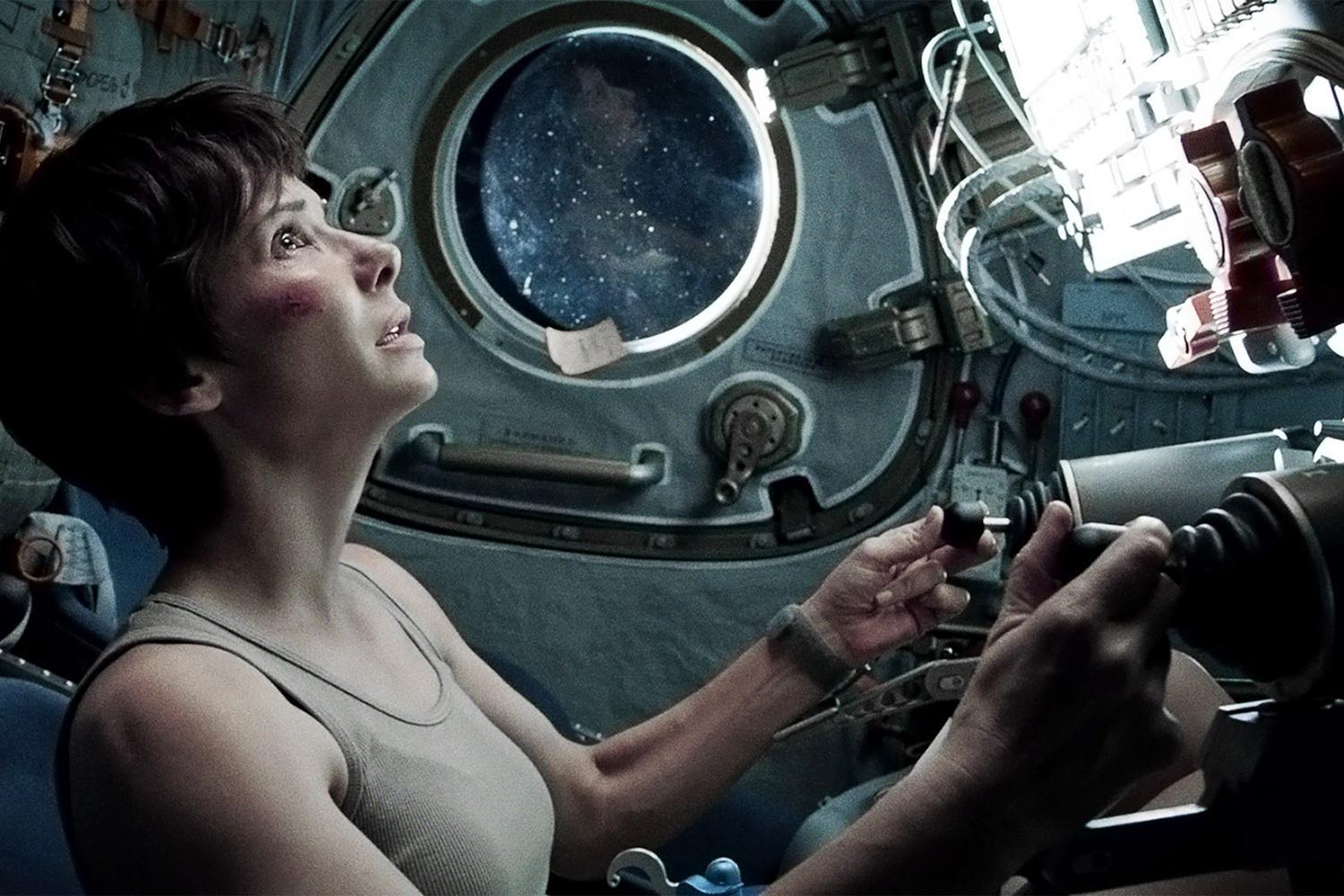
There’s a distinct possibility that a second viewing on a smaller screen would have knocked Alfonso Cuarón’s lightweight space drama off of this list entirely, and that’s a problem. As much as I appreciate a good gimmick (3D that’s worth paying for is hardly Percepto!, but it’s something), I have huge reservations with Gravity, which puts all of its money on the screen, and none of it in the screenplay. Tentatively a feast for the eyes (unless repertory theaters come back, then long may this description reign), Cuarón and his son Jonás throw every possible disaster movie platitude out there, from an astronaut who is weeks away from retirement before the disaster strikes, to an atheist scientist coming to Jesus when all hope appears lost. It succeeds despite its aspiration to be an Oprah’s Book Club selection thanks entirely to its gorgeous cinematography—Gravity, unlike many films that receive this distinction, is a rollercoaster, a Space Mountain that threatens to ditch its patrons in the void. Sandra Bullock will receive plenty of awards consideration, but she doesn’t do much with what little she’s given. George Clooney plays a cocky space cowboy, which is to say that he plays himself, which is to say that he plays Bruce Wayne circa Batman and Robin, which is to say that he is charming and useless in equal measure. I think I’ve largely described something that will soon be on a lot of OKCupid profiles as a standard favorite movie, but between Gravity and Pacific Rim, it’s Cuarón’s technical achievements that I was more impressed by.
It’s a Disaster
Dir. Todd Berger
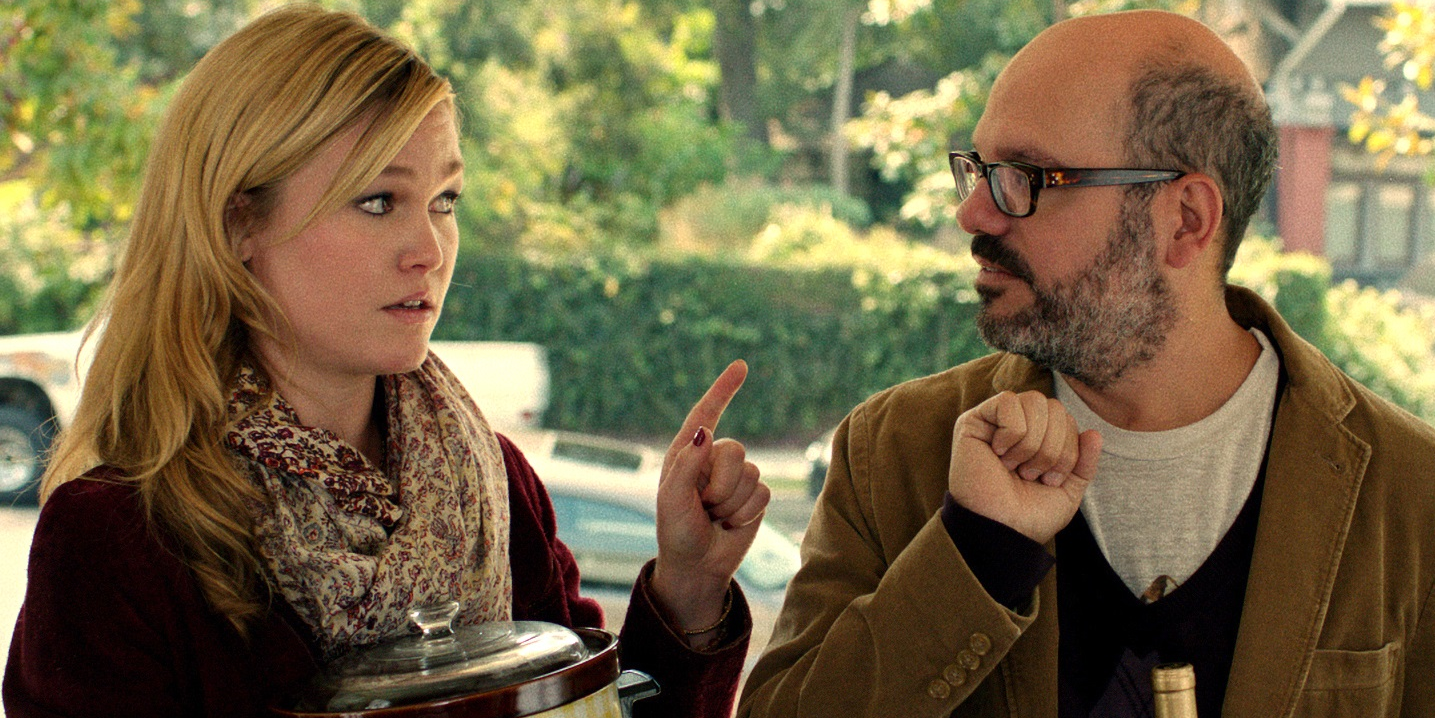
It’s a Disaster isn’t the funniest film of the year, nor is it the most poignant Friends vs. The End of the World riff in a year that was overstuffed with them. It was also the smallest of the three major ones (for every year will, for better or for worse, bring us television adaptations of Zombieland and Japanese curiosities like Zombie Ass: Toilet of the Dead), made on a shoestring and distributed widely on VOD services. Lacking the budget, stars, dick jokes, and Backstreet Boys cameos of This Is the End, It’s a Disaster is that film with a heart, the often effective shocks of Rogen/Goldberg replaced with a plausible house party for the apocalypse. And while watching Jonah Hill get raped by a demon is kind of gross, I suppose, there’s something truly unsettling about Ugly Betty reciting the effects of nerve gas upon the human body, a late couple to the party choking on the stuff outside. The late film twist involving one of the characters doesn’t quite work, though it does allow It’s a Disaster to end on its biggest laugh, a variation on the old game where two kids have to go to sleep, but nobody wants to be the first to hang up the phone. It’s a Disaster would have worked without its gimmick, which says a lot about the easy chemistry of its ensemble. The world here ends with a whimper, but then again, that’s kind of how it would go out, isn’t it?
Only God Forgives
Dir. Nicolas Winding Refn

I’m not sure that I buy Only God Forgives as a calculated response to the success of Refn and Gosling’s Drive, the purposeful antithesis to their lurid neo-noir that gained a cult with such immediacy that I was able to see it in a beleaguered mall multiplex one afternoon in Bowling Green, Ohio. Drive wasn’t a stab at making a mainstream film anymore than Only God Forgives is an attempt to disgust the same crowd who loved it when Ryan Gosling drowned Albert Brooks in the Pacific Ocean. Refn makes his movies and lets the chips fall where they may. There’s something admirable and dangerous about that, and this, at first, was the only thing that kept me watching the film beyond its first act, which is so audacious that it sets the revenge plot moving for a murdered rapist/murderer/pedophile who is first seen requesting a 14-year-old prostitute. But Gosling’s mother-mandated quest for the head of the police officer who allowed the killing of his brother is upended by that police officer, a Lieutenant with a taste for karaoke and Biblical retribution. Like his character in Drive, Gosling here is near mute, weathering his mother’s abuse and staring intently at something we never see, but Julian lacks the resolve of the Driver and is ultimately no match for Lt. Chang, who is literally and figuratively the angel of vengeance in this world. This was declared the most divisive movie of 2013 by the social media site Letterboxd, and that’s entirely fair. Beyond the lush Thai scenery and another killer Cliff Martinez score, folks expecting another Drive will be sorely disappointed. But there were few films as risky as this one, where a major American movie star challenges a Thai actor to a fight and gets his ass kicked soundly for an eternity, with no return bout. The payoff here is worth squirming through the first twenty minutes.
The Place Beyond the Pines
Dir. Derek Cianfrance

The Place Beyond the Pines is overlong and sloppy, attempting to smash the decades spanning familial drama of a series like The Godfather into a single three-act film, if Michael Corleone were the best carnival dirt bike rider in upstate New York. The third act, which takes place sixteen or so years removed from the event that ties the three films together, is necessary in the sense that it provides closure, but a real let-down; neither the writing nor the acting are up to the standard of the film’s first two thirds, and its closing shot seems tailor-made for a washed-out .gif set on a Tumblr. But those first two acts, man. Ryan Gosling is the kind of quiet, intense character he is in a Nicolas Winding Refn film, though it feels much different, watching that character operate here, since it’s so different from the one Gosling played in director Derek Cianfrance’s Blue Valentine. And while Bradley Cooper will continue to make more money and earn more acclaim for his roles in films like Silver Linings Playbook and American Hustle, he plays a conflicted cop so well in The Place Beyond the Pines that it’s easy to forget that Cooper rose to prominence as a sleazy, dickish elementary school teacher in The Hangover. The way these characters intersect involves a fair measure of All Cops Are Bastards boilerplate, but the turmoil their meeting leaves Eva Mendez—an actress who has created an unlikely sideline for herself as the siren of off-beat dramas like this and Herzog’s Bad Lieutenant: Port of Call New Orleans—in says more about class privilege than one might reasonable expect from a film that uses a shotgun to apply temporary tattoos to Ryan Gosling. The Place Beyond the Pines requires effort to enjoy and will eventually collapse under its own pretension regardless, but in terms of scope and ambition, there weren’t many films capable of topping this one.
Room 237
Dir. Rodney Ascher
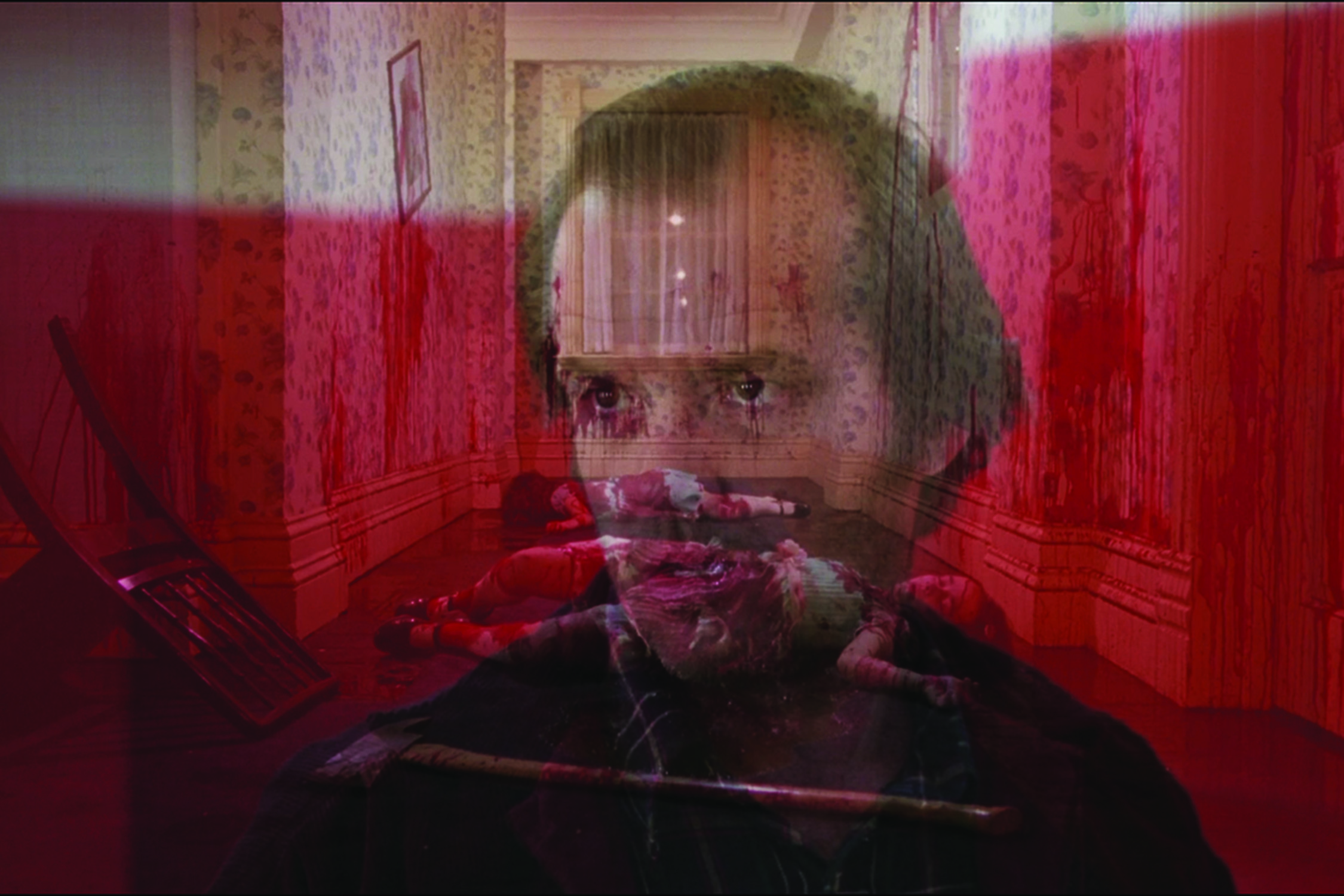
The various theories about Stanley Kubrick’s The Shining—moon landing apologia, allegory for the slaughter of Native Americans, Holocaust metaphor—are united in their lunacy and banal attention to detail (Look! An arrangement of Calumet Baking Powder canisters! Hey! The Apollo 11 is there onDanny’s sweater!) but buried beneath the not-quite-lucid theorizing of the quacks who’ve spent their lives decoding every frame of Kubrick’s adaptation of (or, if you prefer, gigantic “fuck you” to) Stephen King’s novel is some rather fascinating film criticism and experiments in experience. Room 237 gathers a diverse array of Kubrick scholars to speak about their passion projects relating to this particular film, and while none of them are particularly in conversation with one another, seeing a film show how radically five different people can interpret one pop culture artifact is grist enough for the mill. The conspiracies, obviously, are the meat here, but hearing about the guy who projects two copies of The Shining at once, one moving forward and one playing backwards, with clips of that process, manage to cast the well-worn images of Kubrick’s film in a new light, and the more academic theorizing that happens here, as well as the amount of work that has gone into showing that the Overlook Hotel has an architecturally impossible layout, are fascinating compared to the illusions reached for by the moon-landing theorist who claims to have been cold called on several occasions by the FBI. All of the theories here, regardless of visual or textual evidence, are too grounded in coincidence to make The Shining any more profound than it already is (and, for me, The Shining is very profound), but that, too, speaks to the film and the director’s power. Stanley Kubrick, for all his exactitude, was a human being. Yes, he oversaw The Shining, but even the most hardcore proponent of auteur theory wouldn’t posit that Kubrick arranged the contents of the walk-in fridge by hand, hiding a codified message within, or that, while shooting, the man had control over the sun. Kubrick’s powers were immense, but the man wasn’t exactly subtle. If he meant half of what the people in Room 237 believe, The Shining would have beaten that message into the collective consciousness with a gigantic ceramic penis.
The Spectacular Now
Dir. James Ponsoldt
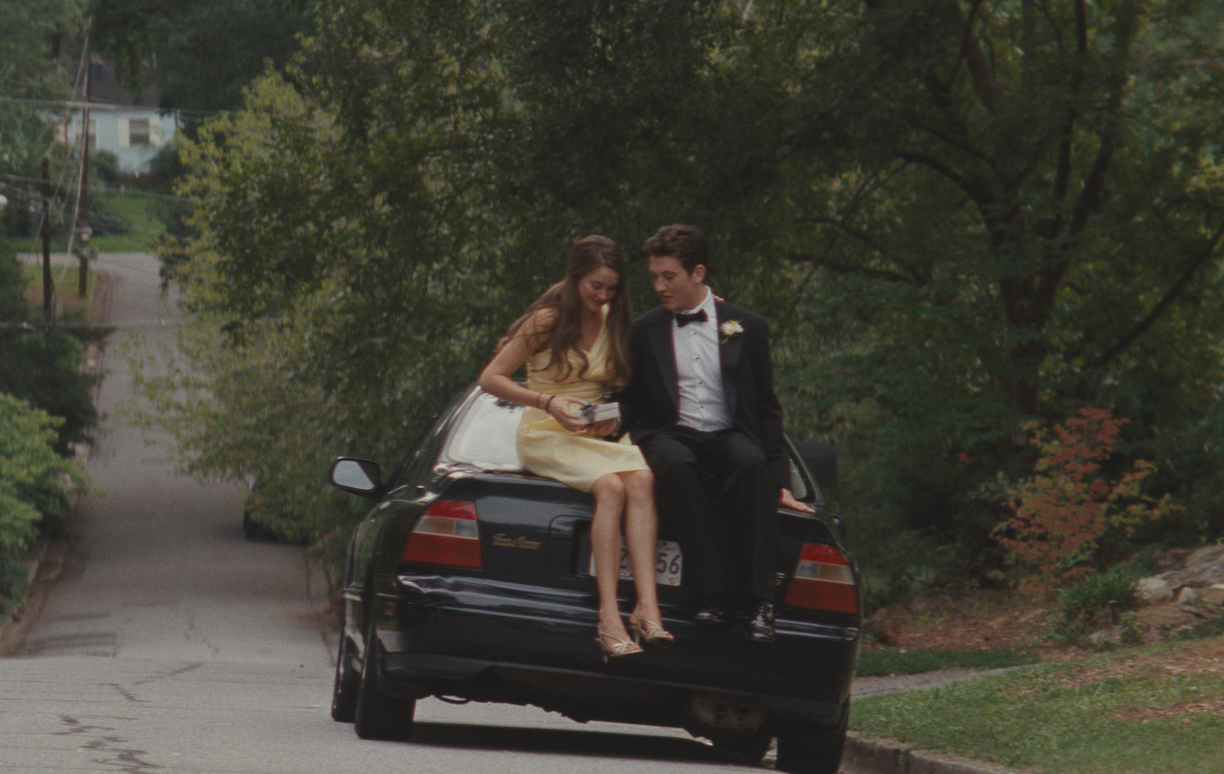
Were it not for the fact that I moved to Athens, where The Spectacular Now was filmed (“Look,” an excited high school kid said, pointing to the screen at a local fried chicken chain, “a Zaxby’s!”), I might not have seen it. Trailers for high school rom-dram-coms set in idyllic, green utopias, usually backed with trailers for high school rom-dram-coms seeking the sweet spot of 1990s nostalgia, played with such frequency at the arthouse theaters I went to in Michigan that they all started to blur together—a mish-mash of trees and swimming pools and young faces. It turns out that The Spectacular Now wasn’t a comedy at all, which, considering the toxic nature of screenwriting duo Scott Neustadter and Michael Weber’s {500 Days of Summer}, was something of a relief. Though still decidedly a romance, The Spectacular Now is serious drama, well-aware of the fact that high school students have problems as real as adults. It’s an odd comparison, but I recently watched the first few episodes of American Horror Story. In its attempt to be as lurid and shocking as possible, the gamut of problems its high school protagonist faces—bullying, abusive boyfriends, depression, familial distress, cutting, etc.—becomes as farcical as, say, the faux-promiscuity of Emma Stone’s character in Easy A. Here, Sutter Keeley (Miles Teller) is clearly an alcoholic and rarely appears without a red Dixie cup in his hand or a flask in his pocket. Keggers and house parties are such a staple in high school films now that it’s almost shocking when Sutter’s boss (Bob Odenkirk) calls him out on it, and legitimately shocking when Sutter chooses alcohol over his potential. Of course, the kid cleans up (romance movie!), but not before The Spectacular Now makes clear just how willing Miles is to wreck his life and drag down the people he loves to stay drunk. A very mature negotiation of an often cloying genre.
Spring Breakers
Dir. Harmony Korine

John Waters called Spring Breakers “the best sexplotation film of the year,” and he’s not lying. Faster, Pussycat! Kill! Kill! by way of the Disney Channel, Harmony Korine sends a gang of young starlets to St. Petersberg for spring break with no moral compass, no ambitions beyond getting fucked and fucked up—when one of them gets too skittish, no longer able to imagine a world where spring break lasts forever, he sends them home on a Greyhound bus. Shot and edited to resemble a banned music video watched through the haze of a sizzurp binge, Korine turns the MTV-sponsored fantasy of spring break into a waking nightmare of bared flesh, spinning rims, and gold teeth. James Franco, playing Alien—a white rapper whose empire is largely financed by stealing from the drunk, stoned tourists who invade his turf one week a year to indulge their hedonist impulses—creates the kind of indelible character worthy of his self-curated reputation as a pop art renaissance man. Sneering at his budding gangsters as he bails them out of jail, bragging about having Scarface on repeat, or giving head to the barrel of a gun, Alien is a guy who dreamed of being bad, and who finds new ways of achieving that dream every day. Spring Breakers is a trash masterpiece, a giddy and lurid exercise in stunt casting and outrageous set pieces, from the innocuous use of a minor professional wrestler as a youth pastor to a montage of brutal crimes set to a sentimental Britney Spears ballad. Like a Nightline special where a blacklight is taken to hotel linens, no filth is left unexamined.
Upstream Color
Dir. Shane Carruth

Given the force with which studios flooded multiplexes with sequels, remakes, and vain attempts to launch new franchises, it’s incredible that 2013 had room for a film like Upstream Color, which no amount of summarization can do justice to. It is, at once, an elaborate heist film, a science fiction puzzlebox, and an intimate epic, quietly laying out its materials and trusting the audience to sort them out with as much care as they were assembled. A student of mine in freshman composition wrote an essay on this film (which surprised me, because what freshman in a composition course puts Upstream Color in their Netflix queue?) and came pretty close, I think, to one of the movie’s essential truths, writing that being in a relationship with someone is like being tied to them with a thread, only neither person knows where that thread came from or can remember, exactly, how the thread was knotted in the first place. She left out, however, that the thread here is a parasite, which is fine because I’m still trying to figure out what Walden has to do with anything going on here. If there was a job to be performed during the production of this film, director/star/writer/producer Shane Carruth did it, eventually distributing the film on his own in limited release, then on home video and Netflix, where its presence in a haphazardly composed list of New Releases acts simultaneously as invitation and challenge. That’s a gutty undertaking for an artist, even one as fiercely independent as Carruth.
The Wolf of Wall Street
Dir. Martin Scorsese

From the very beginning, Jordan Belfort lets you know he’s in control. Racing down the freeway in a Lamborghini, a beautiful woman’s head in his lap, he complains, via voiceover, that the color of the car is incorrect. Wham! it changes—isn’t it great, being rich? Yes, unequivocally. The Wolf of Wall Street will make no argument against that, not when its protagonist, who swindled hundreds of millions of dollars pushing fake stock, got out of prison and immediately hit the public speaking circuit, offering sales strategies to men who probably wouldn’t be in a hotel conference room with him were they meant to be salesmen. But Belfort is long exiled from the trading floor, where he was the ruler of a vast empire, writing checks and racking up credit card debt at a rate that’d be alarming were it not for the fact that he made money twice as fast as he could spend it. His inner circle may have consisted of nerds and outcasts, but Belfort, the subject of a Martin Scorsese picture, is unmistakably a shakedown artist, a man living so fast and so recklessly that his regimen of drugs, pills, and alcohol weren’t crippling inhibitors, but necessary supplements, like a bodybuilder’s creatine. The Wolf of Wall Street is frequently vulgar and absolutely unashamed of its depiction of drug use, the stock market, and Belfort’s treatment of women, but Scorsese hardly valorizes him—for all his magnetism, for all his control of the narrative, nothing Belfort does or says can convince even the dimmest rube that he isn’t a total scumbag, and that’s pretty much how a film about a Wall Street pirate should operate. In the aftermath of the financial crisis, there’ve been films about men like Jordon Belfort; there’s even been a sequel to Wall Street. But despite the world’s mistrust of the markets, despite the still-visible anger over the bailout, these movies often end up toothless, tacitly professing their belief in the noble billionaire. Not here. The Wolf of Wall Street runs three hours, even finding room Belfort’s endless bacchanal for a gay orgy held at his expense, but you’d be hard pressed to find a minute where Jordan Belfort has a soul. Sure, The Wolf of Wall Street says that it’s good to be a prick. It is. Even when the FBI holds a press conference announcing the arrest of someone like Jordon Belfort, there’s always another WASP waiting to sponge up as much money as he can before he, too, gets popped. That kind of scum never scrubs clean.
The World’s End
Dir. Edgar Wright
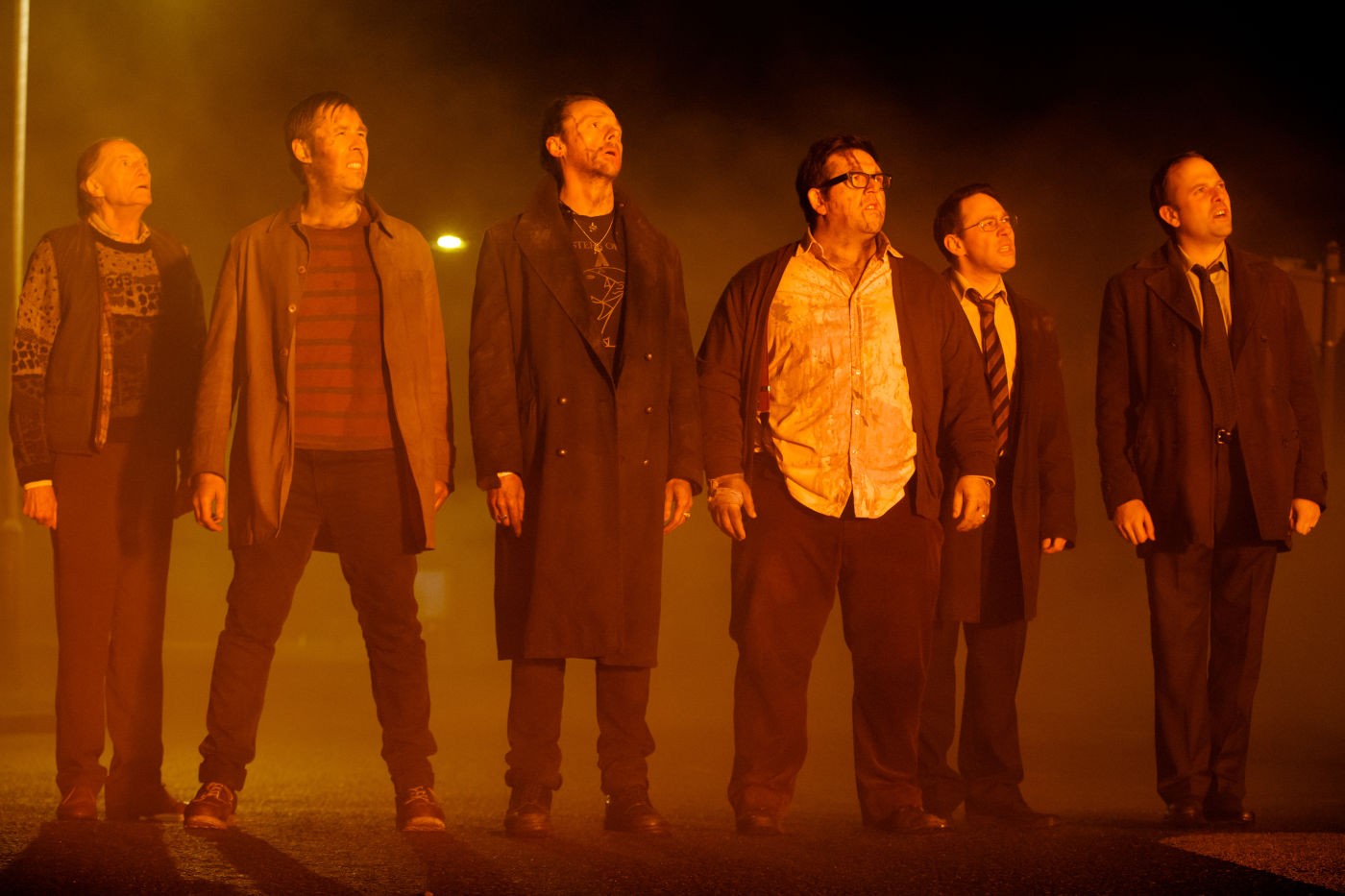
Navigate around its special effects laden fight sequences, the bulk of which are fairly tiresome once the group figures out what they’re up against, and The World’s End is a very compelling comedy about ruined friendships and alcoholism. You have to do a lot more navigating here than in prior Wright/Pegg/Frost collaborations, as The World’s End, perhaps anticipating Edgar Wright’s leap into the Marvel cinematic universe, is both less focused—it isn’t spoofing the conventions of horror or action films so much as it becomes a muddled attempt at one—and more preoccupied with pulping every last robot occupying the formerly quaint village of Newton Haven. It’s less funny than Shaun of the Dead and Hot Fuzz, and less technically accomplished than Wright’s Scott Pilgrim vs. The World, but until it comes around to identifying with Simon Pegg’s drunken, nostalgia-obsessed wrecking ball, The World’s End is the most mature of the Wright/Pegg/Frost Three Flavours Cornetto Trilogy. The villain here is a member of the group. He’s not infected with a disease, and he’s not a slasher. His weapons are an unwashed trench coat, an old rust bucket of a car (with original mixtapes), and an unending phrasebook of forgotten high school catchphrases. This character belongs to a collective history—I have had friends in my life like this, and I have been this friend to others. Both positions are painful, and enduring comedy often comes from a place of pain. Like a lot of films on this list, the ending (despite being somewhat triumphant) sells out the larger issue at hand. It isn’t that the world is ending now, but that, for Gary King, the world ended when he graduated high school.
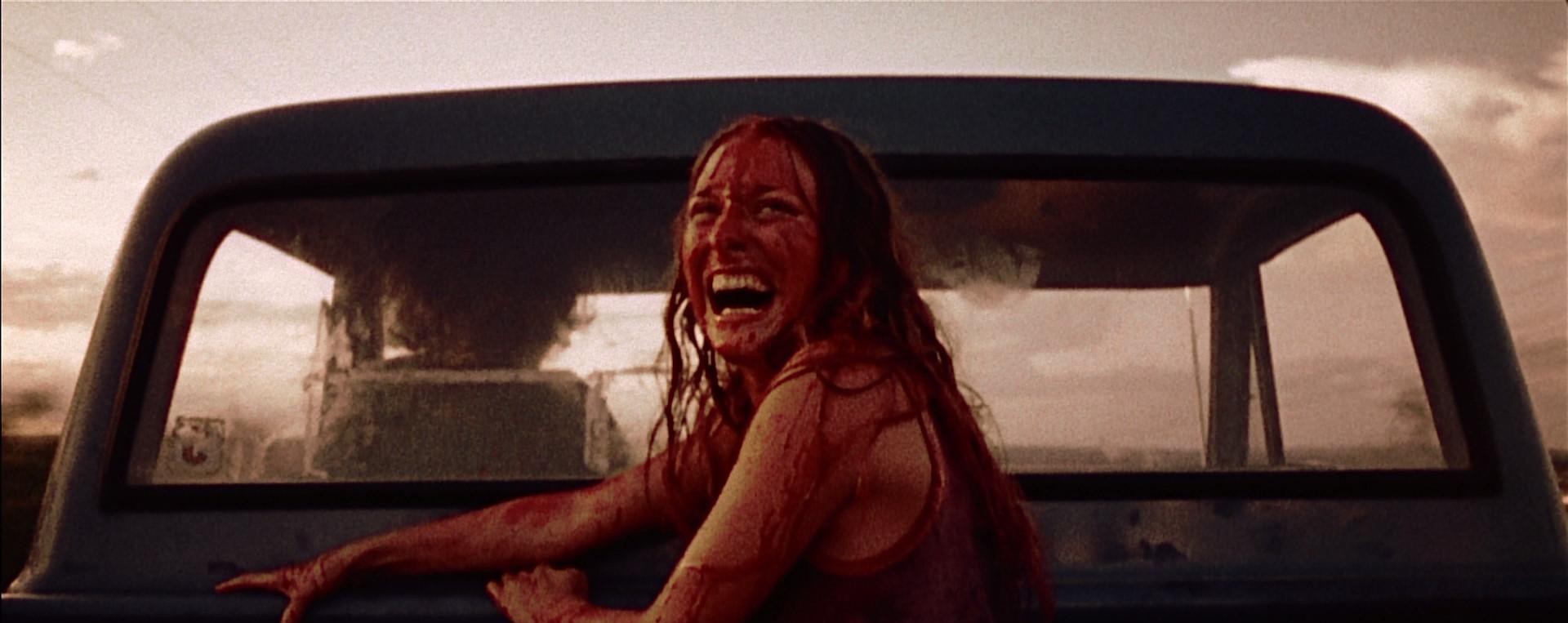
 Forty years later, The Texas Chain Saw Massacre shouldn’t be as powerful as it ultimately is. Tobe Hooper’s film is written in the bones of anybody who has even a slight appreciation for horror, and has been diminished by sequels and remakes and the continued recycling of its plot and scares. When I saw it recently at an anniversary screening, the audience spent much of their time laughing. Until Leatherface. With his hammer. With his mask. With his chainsaw. The plight of young adults looking to screw speaks to the young, I guess, but a man wearing another person’s skin over his face? That’s universal terror.