Category: Film

  • Movie Review: Antichrist (2009)

    Movie Review: Antichrist (2009)

    antichrist2

    essentialLars von Trier’s Antichrist is a film as beautiful as it is horrifying, its beautiful compositions juxtaposed against emotional and physical brutality. Its leads, Charlotte Gainsbourg and Willem Dafoe, are given occupations rather than names, and it is the weight of those occupations, as well as the weight of their grief, that crushes them both. She is an academic. He is a therapist. While making love one afternoon in the winter, their son manages to escape his cradle, climb out onto the window-ledge, and fall to his death. During the funeral, She faints and is placed in a hospital for psychiatric evaluation. He, being a therapist, believes himself more capable of treating his wife than the new doctor she’s been assigned and, proscribing a course of exposure therapy, removes the two to their cabin in the forest, which, without irony, the two call Eden.

    von Trier, who declared himself the world’s greatest director after Antichrist‘s contentious showing at the Cannes Film Festival, has said that the film began as an exercise in making a horror picture, and elements of the genre certainly inform Eden’s trappings. The couple take a train and a rented Jeep out to the woods, where they must hike through the woods to their cabin, which is every bit the genre’s typical rickety shack, with secrets hidden in the attic and beneath the floorboards. When the two sleep, acorns rain from the sky as though trying to soften the resolve of an obstinate Pharaoh. He leaves his hand hanging from an open window and wakes to find it covered in fungus. These are Biblical trials, made no easier by the appearance of “Three Strangers,” but they pale in comparison to the psychological horror Eden represents for the therapists wife, and the physical manifestations of that fear that she will later visit upon him.

    Antichrist is a movie with witchcraft in its heart. Though She casts no spells and He isn’t under any but the pull of his own ego, the reason for their trip to Eden ties back to her attempt to finish a thesis on gynocide; notebooks He finds in the attic are covered in with-hunt imagery and handwritten notes that grow more erratic as she becomes unbalanced. What’s clear is that she not only came to believe that women were inherently evil, but that she came to practice as a witch, in essence becoming her double. Until ramping up the violence in its final act, Antichrist plays on witch imagery are subtle, but there: child endangerment, insatiable libido, desire to commune with the impenetrable will of nature. He is so off-put by his surroundings—a deer with a stillborn fetus hanging from its vulva, a decomposing fox—that her behavior passes as part of the grieving process until it’s far too late.

    Charlotte Gainsbourg’s performance as She is brutal and uncompromising. Antichrist doesn’t make her the villain, but she is a puzzle Dafoe’s character must solve, and her resolute sadness over the death of her son creates a mask that’s impossible for that character to permeate, but one that nevertheless engages the viewer. Antichrist—written by von Trier as he was coming out of a bout of depression that he believed would be his undoing as a filmmaker—is sly in arranging the puzzle pieces; the viewer and Dafoe are given the key piece of information that fits everything together at the exact same time. The result is the creation of two viewing experiences, one in which the audience fumbles around in the forest as lost as Dafoe, and one with all the facts in evidence; one film about depression, the other about a demonic vessel.

    Throughout both versions of the film, it is Gainsbourg, not Dafoe, who is our hero. Never mind the torture she employs to his anatomy, Antichrist is first about a grieving mother, second about a woman’s power. Both are considered from the point of view of the film’s male character—and thus rendered abstract—and both happen to be more terrifying than the compelling bits of body horror von Trier conjures. In grief or in thrall to the devil, Gainsbourg’s character is the same: without God, or, put secularly, living in the absence of mercy. There’s certainly an element of horror to what von Trier puts Dafoe through, but that’s just window dressing. Hers is the struggle, and with such futility: chaos has already reigned over Eden so long.


    Antichrist. With Willem Dafoe (He) and Charlotte Gainsbourg (She). Directed by Lars von Trier and produced by Meta Louise Foldager. Screenplay by von Trier.

  • Movie Review: Riddick (2013)

    Movie Review: Riddick (2013)

    Riddick

    Though I’d certainly like to, there’s no denying the pleasure of a movie like Riddick—a meat-and-potatoes sci-fi brawler that’s light on the kind of moral hand-wringing weighing down its contemporaries. After a summer of apocalyptic confrontations and destroyed worlds, Riddick‘s uncomplicated plot—a simple, man vs. monster narrative—is something of a breath of fresh air. There are problems—significant problems—as the film attempts to zoom out from its protagonist’s quest to survive a desolate, hostile planet, but if writer/director David Twohy and Vin Diesel’s stalled saga becomes the franchise the two have always envisioned, there’s just enough here to suggest Richard Riddick’s journey home as worthwhile of a few summers as the adventures of, say, Thor or Superman.

    Largely without dialogue beyond a gruff Diesel voiceover, the first third of Riddick functions as one of the more compelling features of an otherwise dull summer. A king at the conclusion of The Chronicles of Riddick, Diesel’s titular one man army finds himself exiled on a planet that was barely discovered before its human occupants decided abandonment a better course of action. Beyond air and water, everything Riddick encounters is hostile. Dog-like creatures hunt him in packs, and worse creatures lurk in the shadows and muck, standing between the man and his sustenance. It’s an odd path for an action movie to take, but in its spare, brutal shorthand, Riddick lets the audience know that this is a film about the unequivicated power of masculinity.

    Because the movie can’t be 90-minutes of Vin Diesel talking to a CGI dog, Riddick finds a mercenary outpost and pulls an emergency beacon. This hails two squads to descend upon the planet. One, a rag-tag bunch of ill-equipped thugs (led by Jordy Molla and seconded by Dave Bautista), is there merely to collect Riddick’s head in a box. The other is an incredibly professional, well-appointed outfit. Their leader, Boss Johns (Matthew Nable), doesn’t care much for the price on Riddick’s head—he wants to find out what happened to his son, last seen in Pitch Black. His lieutenant, Dahl (Katee Sackhoff), is the group’s muscle. But, as is the theme of all Riddick movies, women aren’t taken seriously even when their machismo outpaces that of the men in the room. The leader of the two-bit mercenaries, head-box in hand, tells Dahl that he’s going to have sex with her. “I don’t fuck guys,” she snarls, busting the guy’s lip open with one solid shot.

    This line serves two important purposes, neither of which have to do with Dahl defending herself from multiple attempted rapes. As a scuttling horde of beasts trap both mercenary teams and Riddick in the same room, it’s clear that for all his “head in a box!” bravado, Molla’s Santana character is a secondary threat at best, a villain to be laughed at and discarded when things get tense. And, as Sackhoff’s character is the one who so effectively neuters Santana, her declarative sets the character up as both a Strong Female Character in the pejorative sense—a real cool lady with guns and breasts!—and a sexual challenge for Riddick. Chained up and awaiting execution, Riddick laughs and tells the room the exact plot of the third act, including that he’s “going to go balls deep” in Dahl, but only after she asks because Riddick, killer or not, is at least willing to wait for consent.

    As an unabashed fan of 1980s action movies, I’m willing to forgive a lot of Riddick‘s flaws in the name of bloody, mindless fun. Over a dozen men chase Riddick to the gates of hell for a piece of the bounty, yet none of them are developed much beyond the fact that they’re all bad asses, with Dahl’s woman warrior and some punk kid’s nervous preacher thrown in for variety, I guess. I didn’t expect nuance from the film, but I also didn’t expect it to have an understanding of sexuality cribbed from a sexually frustrated session of Dungeons & Dragons. Beyond her saying that she doesn’t fuck guys, there’s nothing in the film suggesting that Dahl wouldn’t. But in an action movie you tend to take people by their words, their wardrobe, and the size of their gun. She’s got the biggest of the bunch, and there’s no evidence from the others in her crew that she’s lying when she says, to a room full of dudes, that she doesn’t fuck guys. “I’m gonna go balls deep” is something a teenager says before rolling to score with a rescued princess, not the password required to flip a woman’s switch from gay to straight. There is no switch, and it’s strange to see a movie in 2013—the third installment in a series that’s featured progressive depictions of women before—wheel out this old, depressing trope in the name of adding one more notch to its alpha’s belt.

    Almost as soon as Dahl is called out for and reassigned to her gender, she is put in the spaceship with the nervous kid and told to chill out while the men kill the aliens and recover the lost power cells necessary for everybody to escape. She does, and she fucks Riddick because he survives the night without being eaten alive. And though this is an R-rated film, replete with gore and cursing and breasts, Riddick can’t even do its characters a solid and show them enjoying or even engaging in sex. “Tell Dahl to keep it warm for me,” Riddick says, keeping it macho to the end. It’s a bitter coda to an otherwise uncomplicated, accomplished riff on monsters and mayhem. There’s potential here, especially if Sackhoff returns to a future installment and is given more to do than sit around waiting. But if Riddick is proof of anything, it’s that few things in a film are as frustrating as unrealized potential.


    Riddick. With Vin Diesel (Riddick), Jordi Molla (Santana), Matthew Nable (Boss Johns), Katee Sackhoff (Dahl), and Dave Bautista (Diaz). Directed by David Twohy and produced by Diesel, Ted Field, and Samantha Vincent. Screenplay by Twohy, based on characters created by Jim Wheat and Ken Wheat.

  • Movie Review: Man of Steel (2013)

    Movie Review: Man of Steel (2013)

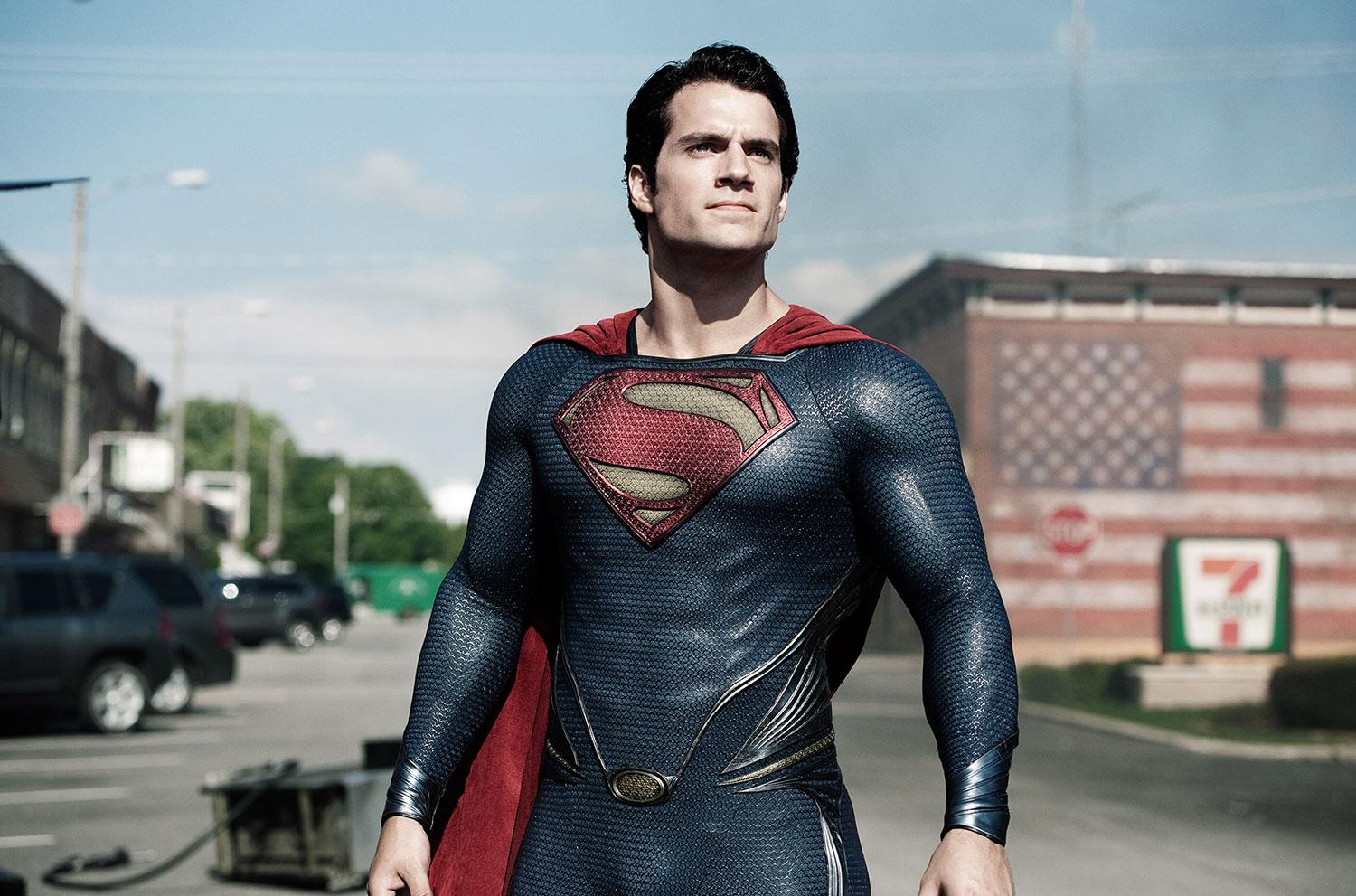
    Clark Kent on Free Slurpee Day

    Though the “S” on his hero’s chest is Kryptonian for “hope,” the only thing Zack Snyder believes in is destruction. In Man of Steel, the director has more money and a larger army of special effects artists at his disposal, and he uses both expertly in his most pyrotechnic sermon on annihilation to date. In casting the last son of a dying planet as a messianic instrument of war against the whiles of godlike invaders of that same planet, Snyder has managed to rip the heart from his savior, twisting a symbol of truth and justice into a sign of the apocalypse.

    Superman—not a name uttered often, or without blushing, during Man of Steel’s overstuffed run-time—has been the ubiquitous superhero in American popular culture for 75 years, but it’s worth pointing out those 75 years have, through artistic highs and lows, been stewarded by corporate interest. So too has Superman’s mantle, that he is the self-appointed guardian of “truth, justice, and the American way.” The American way, given several summers of reductive, gritty tent pole films where outsiders execute bloodless 9/11 scenarios on our cold, largely vacant metropolises, is fear, which often enters Man of Steel’s narrative under the guise of “hope” (that big “S” Clark Kent eventually wears), or, even more stealthily, choice. It’s hard not to blame Snyder and screenwriter David S. Goyer for dragging their cosmic, primary color wearing hero Earthbound—darkness is a proven winner in superhero films, as Goyer and producer Christopher Nolan proved with their recently concluded Batman trilogy.

    And there is no end to darkness in Superman’s story. His life begins just as all other life on his home planet of Krypton is destroyed. The first natural birth in several centuries, Kal-El, the future Clark Kent (Henry Cavill), is placed on a rocket by his father (Russell Crowe) and mother (Ayelet Zurer) and sent out to a new world, where he can carry on his people’s legacy among the humans of Earth. His rocketship lands in a Kansas cornfield, where it is discovered by the Kents, Jonathan (Kevin Costner) and Martha (Diane Lane). Among other things, Man of Steel is preoccupied with the relationship a son fosters with his father, and poor Clark has two, neither of which can understand his plight. Jor-El, of course, is dead. Pa Kent, on the other hand, is a human being, and they don’t exactly give human beings instruction manuals on how to raise children who fell out of the sky.

    As an origin story, Man of Steel’s primary objective (and, really, the albatross around its neck) is to serve as an introduction to Clark Kent’s story. While there are brief flashes of the franchise yet-to-come—the Daily Planet and its editors (among them Laurence Fishburne as a marginalized Perry White) appear mostly in the climactic sequence that destroys much of Metropolis, lending their human features to Snyder’s point-and-click urban obliteration—the Superman of Goyer’s imagination cherry-picks from other successful franchises before finding himself locked in mortal combat with General Zod (Michael Shannon). After watching his adoptive father die, Clark Kent leaves Kansas to find himself. He drifts from job to job, one small outpost to the next, living at the fringes of humanity until a job he’s on leads to the discovery of a Kryptonian spacecraft. Also on this arctic expedition is Lois Lane (Amy Adams), putting her journalistic reputation on the line when she writes not only of the unidentified flying object, but the strange, wandering worker whose DNA activated its onboard computer and defenses. The activation of that ship is something of a beacon for the universe’s last remaining portion of Kryptonians, General Zod and his followers, who were banished to the ominous Phantom Zone for trying to overthrow the Kryptonian government some 33-years prior to the main action of this film. Zod arrives on Earth, heralded by a video message for humanity that suggests he spent several years adrift in space earning a film degree, demanding the Kryptonian be handed over, lest the planet perish.

    All of this is paint-by-numbers for summer superhero timewasters—indeed, General Zod and Iron Man 3’s Mandarin may have taken the same filmmaking course—but Man of Steel has a higher calling, using the promise of wanton destruction as a stealth lecture on the life of Jesus Christ, a role Superman is dreadfully miscast in. Snyder is at his best, however, while setting this story up. His Krypton is a prog-rock hellscape populated by the denizens of a science-fiction Rome, and, free from the limitations of physical space or human emotion, he crafts his most visibly striking sequences since 300. They are so abstract, in fact, that it’s easy to miss the specifics of Russell Crowe’s exposition; how his son, a miracle birth, will grow up among humankind and eventually save them, as a god would. This sequence is densely packed with dragons, laser cannons, and spaceships that double as fertility totems—blink and you’ll miss the MacGuffin—but Snyder returns to beat this pulpit several times over. Witness Clark Kent performing miracles in his youth. Note how old he is when revealed to the world as something greater than human. See how he gives himself over to General Zod—who looks rather strikingly like a Hollywood Julius Caesar—so that man can be saved. The metaphor’s a real groan—the best representations of Superman in popular culture are those that are more human than divine—painfully accentuated by a scene where a doubting Clark Kent visits a priest to suss the whole thing out, a stained glass Jesus looking down above his shoulder.

    Snyder’s Superman is particularly unfit for the burden of cinematic messiah because, well, it’d hardly be a Zack Snyder film if self-sacrifice meant giving oneself up without bloodshed. Man of Steel’s climactic brawls are overblown and orchestrated to the same degree as the centerpieces of the Matrix sequels, and while it’s hard not to be impressed with the monstrous task undertaken by Snyder’s effects team—not only are two cities effectively leveled, but in flight and in fight, the world Superman occupies looks and feels hypothetically as it would to somebody of his abilities; impressive, but easily destroyed—the problem with these scenes, beyond the generally tiresome 9/11 imagery, is that they have no life to them. The staff of the Daily Planet run from falling buildings, but there are zero stakes to their plight. In a PG-13 movie arguably more interested in being a Trojan horse for the International House of Pancakes than the consequence of space aliens pulverizing a major American city, Ragnarok was bound to be bloodless, but for it to be without heft? Superman has reversed the Earth’s rotation for less. Here, Lois Lane falls into his arms and gives him a hero’s kiss; the world, as absurd and dangerous as it’s presented to be, returns to normal. It may not have been convincing, but at least Tony Stark had to deal with seeing an alien armada at the far edge of the universe. The destruction here may be more realistic an illusion than in any superhero film short of Nolan’s Batman trilogy, but it’s no trick to destroy a lot of buildings, if all you want to do is destroy a lot of buildings.


    Man of Steel. With Henry Cavill (Clark Kent/Kal-El), Amy Adams (Lois Lane), Michael Shannon (General Zod), Kevin Costner (Jonathan Kent), Diane Lane (Martha Kent), Laurence Fishburne (Perry White), and Russell Crowe (Jor-El). Directed by Zack Snyder and produced by Christopher Nolan, Charles Roven, Emma Thomas, and Deborah Snyder. Screenplay by David S. Goyer, based on characters created by Jerry Siegel and Joe Shuster.

  • Movie Review: Texas Chainsaw (2013)

    Movie Review: Texas Chainsaw (2013)

    Texas Chainsaw 3DIn an effort to skirt the negative connotations of the word “remake,” Texas Chainsaw (a title as unwieldy as the titular weapon, in instances when one’s intended victim is running—even when the modifier “3D” is added) bills itself as a remaking, going to the trouble of re-shooting the iconic end of Tobe Hooper’s 1974 slaughterhouse and playing the opening credits over a sizzle reel of highlights from The Texas Chain Saw Massacre, which, along with Halloween, inadvertently invented and codified the slasher genre. This, charitably speaking, is a huge tactical error. Though the 2003 remake and its sequel aren’t exactly remembered kindly, Hooper’s film—liked or loathed—is marked by its grit and inventiveness. Filmed digitally on HD cameras and following genre conventions step-by-step, grit and inventiveness are two things absent from Texas Chainsaw, so much so that the two films may as well be related in name only.

    Immediately, Texas Chainsaw asks the viewer to make large leaps of logic, noticeable even within the constraints of genre. A girl (Alexandra Daddario) discovers she was adopted when she’s informed that her grandmother by birth died, leaving her an inheritance on the outskirts of Newt, Texas. Forget that this leads to yet another scenario where an attractive young girl and a few of her attractive young friends pile into a crappy van and set out for remote lodgings. Heather Miller discovers that she is a Sawyer, and, when she pulls up onto the property she’s inherited, finds herself the sole beneficiary of a vast fortune: a mansion house, silver dining service, state-of-the-art security system—the works.

    Yes, Leatherface (Dan Yeager) is lurking in the basement, but that’s not important. Think back to the events of the original film. The Sawyer clan are a bunch of drooling, inbred simpletons. The smartest of them run a gas station and bar-be-cue joint that serves human meat. Moreover, the townsfolk that torched down the Sawyer joint in the prologue are celebrated as heroes, so it’s unlikely that the last one left alive got anything like a gigantic settlement package. How did grandma Sawyer and Leatherface find themselves in a mansion? Texas Chainsaw doesn’t care, even when it insinuates that the townsfolk—who murdered about 20 people with the tacit approval of the sheriff but, for whatever reason, are only able to muster up the occasional bit of graffiti on the new Sawyer digs—are still pretty heated about the time a bunch of yokels on the far outskirts of town quietly killed and ate some strangers.

    There are other implausibilities in Texas Chainsaw capable of bending the mind—despite taking place now, for example, Leatherface is the spry, chainsaw-wielding killer he was in 1974, decades be damned—but to waste time discussing each one is to ignore the fact that this is simply a bad movie, and not the kind whose mistakes and wormholes make for a memorable experience. The movie tries, I suppose, to do a few things to pass the time. Heather’s boyfriend (Trey Songz) sleeps with her best friend (Tania Raymonde); a hitchhiker (Shaun Sipos) tags along with the gang to the mansion, only to ransack the place while its empty, some other guy (Keram Malicki-Sánchez) claims to be a decent cook. But they’re all hunks of meat waiting to be butchered, and Texas Chainsaw, rather than hold itself up as a flimsy allegory to the horrors of war like its predecessor did, acts shamelessly as a 90-minute vehicle for men who enjoy listening to screaming women to do so at length.

    That Texas Chainsaw never rises above menacing its barely-clothed young women is a problem, one that it shares with every by-the-numbers slasher flick that uses a knife in the gut as a substitute for rape. Given that horror films are the only medium using 3D as the gimmick was intended (that is to say, the chainsaw is coming right at you!), there’s some subtext to scenes like the one where Leatherface plunges his chainsaw into a closed casket to get at the cowering, crying Heather, but Texas Chainsaw offers little beyond this, even in the name of academic analysis. Despite the name, Texas Chainsaw is just another entry in a broken, ineffective genre. It’s useless, except to mark the passage of time.


    Texas Chainsaw. With Alexandra Daddario (Heather Mills), Dan Yeager (Leatherface), Trey Songz (Ryan), Scott Eastwood (Carl), Taina Raymonde (Nikki), Shaun Sipos (Darryl), and Keram Malicki-Sánchez (Kenny). Directed by John Luessenhop and produced by Carl Mazzocone. Screenplay by Kirsten Elms, Adam Marcus and Debra Sullivan, based on characters created by Kim Henkel and Tobe Hooper.

  • Movie Review: Iron Man 3 (2013)

    Movie Review: Iron Man 3 (2013)

    Iron Man 3

    The narrative purpose of any post-Avengers Marvel movie is not to majorly shake-up any of the characters at the core of the franchise—regardless of what Iron Man 3’s closing narration has to say about Tony Stark (Robert Downey, Jr.) and his place in the world, everything you know about him going in remains the same at the end—but to slowly push each individual piece away from alien-wasted Manhattan, towards the next apocalypse. With that in mind, director Shane Black does fine work within the paint-by-numbers structure of a solo Avengers outing. Tony Stark is charming, crass, egotistical, and the possessor of enviable wealth, fame, and success. He deals with the fallout of Manhattan—he freaks out at the mention of wormholes—and with the wreckage of an impetuous youth. In the end, he is Iron Man, and Black and Downey do their best to mash that triumphant, wailing note as long and as loud as humanly possible.

    This is the beginning of Marvel Studio’s much-hyped “Phase Two” of Avengers movies, and, while they’ve got the formula figured out, holes in the fabric are beginning to show. However fine or fleshed-out the assembled Avengers seem, the love-interests, friends, and rivals propping up the individual pillars of the eventual tent of proportions beyond belief are frustratingly one-note. This is the third Iron Man film where Stark’s opponent is a disenfranchised corporate raider, where Stark’s claim that he’s not going to play ball with the United States government clashes with the need for him to protect the American status quo, and where Pepper Potts (Gwyneth Paltrow) serves as Iron Man’s damsel in distress. Marvel Studios will probably never run out of oily businessmen, things that go boom, or plots against America, but considering that the best parts of Iron Man 3 occur just beyond that storytelling triumvirate is enough to make thoughts of such comic book movies pleasurable.

    The script—based on modern comics legend Warren Ellis’ Extremis, which provided the blueprint that brought Iron Man to the screen—looks back at Tony Stark before his transformative stay-over in Afghanistan, where his genius was preoccupied by liquor and women. At a New Year’s Eve party, he flirts with Maya Hansen (Rebecca Hall), a botanist who is working on a chemical compound that allows organic lifeforms to regenerate lost limbs. This work—and Stark’s bankroll—is much admired by Aldrich Killian (Guy Pearce), a crippled man who has risen up from his circumstances to lead a radical biotech think-tank, Advanced Idea Mechanics. Twenty years later, after Stark has glimpsed an alternate dimension, Killian reemerges at the offices of Stark Industries, impossibly handsome and courting a business relationship with Pepper, Tony’s hand-chosen CEO. When suspicious head of security Happy Hogan (Jon Favreau) is sent to the hospital as a result of his investigation into Killian, a mysterious terrorist known as The Mandarin (Ben Kingsley) claims responsibility. Stark, sleepless since Manhattan, stares deep into the recording smartphone of a TMZ reporter and swears revenge. The Mandarin, well-rested in his undisclosed compound, replies to Stark’s challenge by bombing his opulent mansion.

    Hansen and Killian are tied up in all of this, but how, I will not say. It’s in the aftermath of this attack on Stark’s property (and, one assumes, the vault of armor he’s been working on while awake), that Iron Man 3 lets loose a little. Previous Iron Man movies have toyed with the idea that their villains could somehow gain possession of either Stark’s armor or the War Machine (rechristened Iron Patriot here, and given a Captain America paint job) rig donned by Stark’s buddy James Rhodes (Don Cheadle, as the straight-man to Downey’s buddy cop), but rarely have him out of the armor for long. With his suit dead and his AI malfunctioning, Tony Stark spends the majority of Iron Man 3 without a suit. This doesn’t exactly make the stakes any higher—Tony Stark is a man of rippling musculature and Hawking smarts, so it’s not like the suit is compensating for a lack of anything—but, in forcing him to rely on help from a kid (Ty Simpkins)—who is something of a budding, rural Iron Man himself—provides the series a much-needed breath of fresh air.

    Still, it’s impossible to regard Iron Man 3 as anything more than a small cog in an impossibly large machine. Here are the further adventures of a man who has touched the fringes of the cosmos, who has built himself a mind-controlled suit that allows him to fly. While I don’t exactly enter a Marvel Studios offering expecting it to ponder the universe, it’s curious to me that, in Tony Stark, they’ve managed to so effectively lash a man and his jetpack to Earth. Iron Man 3’s pleasures are small and terrestrial. As soon as it stops making money, Tony Stark’s smirking visage will be replaced by the flowing, flaxen locks of Thor, an iron suit swapped out for an iron hammer. The machine will continue to assemble these small dramas, pushing out from the port of one Avengers movie to the next. I wonder, will they all be so modest? If so, Marvel Studios has not succeeded in creating a universe, but a facsimile of the publishing house that birthed it, at its most conservative. Theirs is not a house of ideas, but of pleasing mediocrities.


    Iron Man 3. With Robert Downey, Jr. (Tony Stark/Iron Man), Gwyneth Paltrow (Pepper Potts), Don Cheadle (Col. James Rhodes/Iron Patriot), Guy Pearce (Aldrich Killian), Rebecca Hall (Dr. Maya Hansen), Jon Favreau (Happy Hogan), Ty Simpkins (Harley), and Ben Kingsley (The Mandarin). Directed by Shane Black and produced by Kevin Feige. Screenplay by Drew Pearce and Black, based on “Iron Man” by Stan Lee, Larry Leiber, Don Heck, and Jack Kirby, and “Extremis,” by Warren Ellis and Adi Granov.

  • Movie Review: Room 237 (2013)

    Movie Review: Room 237 (2013)

    Room 237

    essentialThe theories held by the crackpots who are given time to talk about their obsession with Stanley Kubrick’s The Shining during Room 237‘s investigation of the film’s many supposed secret meanings are all crazy, but, in a way, they aren’t. More than any Kubrick film beyond 2001: A Space Odyssey, The Shining has inspired so much writing, diagramming, alternate screening methodologies, and impassioned conspiracy theories that to print them all out and assemble them into a cohesive narrative of cinematic obsession would be impossible. That director Rodney Ascher has made anything from this geyser of misinformation is a respectable achievement in itself, a remarkable feat of picking, choosing, and whittling down, working an unwieldy tangle of trees into a serviceable canoe. That Room 237 is so compulsively watchable is a tribute to Kubrick’s filmmaking, which is captivating even when taken out of context, toyed with, projected back on itself, and advanced frame-by-frame through moments that, without the benefit of ghost hunting, simply wouldn’t be compelling on their own.

    Room 237 does not purport to hold any of the answers to the questions its five interviewees ask, and is a much better documentary for not playing referee. Its more academic theories—that The Shining is either a deconstructionist take on 2001: A Space Odyssey that plays that film’s narrative backwards, or that the film is subliminally about sexually deviant behaviors—hold more water than the conspiratorial ones that range from the genocide of Native Americans to the Holocaust to Kubrick’s supposed involvement in a staged moon landing, but that those ideas wouldn’t be out of place in a panel at a respectable academic conference makes them less interesting, even as they lend credence to Ascher’s purpose in making this film. What bonds the two schools of thought together is the absurd amount of attention the theorists pay even the most esoteric details of the film, not just the Tang in the pantry or the Native American art hanging in the Colorado Lounge, but that Jack Torrence’s typewriter is of German make, or that the color of the Volkswagen the Torrences drive to the Overlook Hotel is not red, as Stephen King described, but orange. It’s also fun to note how interviewees see different things in the same scene and use those bits of ephemera as irrefutable evidence of their truth without acknowledging any other argument: the Tang in the pantry represents the falsified moon landing to one, the Calumet baking powder, with its Native American emblem on the tin, a sure sign of genocide to another.

    Were these five unique visions of The Shining‘s purpose presented separately, the best the presenters could hope for would be to exhaust their audience. Instead, though nobody addresses a theory that isn’t their own, Ascher’s sequencing of opinions places Bill Blakemore, Geoffrey Cocks, Juli Keans, John Fell Ryan, and Jay Weidner in conversation with one another, not necessarily about what The Shining means, but about what it means to truly, deeply fall in love with a film and its director, to be bugged by it, prodded by it, and ultimately changed by your experience of it. Each one of the subjects Ascher interviews tells a somewhat similar story of how they came to understand The Shining. Most, mirroring the critical consensus of the time, found themselves underwhelmed by the film upon first viewing. Kubrick, afterall, was a master, and master filmmakers don’t waste their time on horror pictures (never mind the fact that they often do). Something about the movie stuck with them, though, prompted a repeat viewing during which The Shining unlocked itself to them the way room 237 unlocked itself to Danny and Jack Torrence. Sure, their love is much more obsessed than, say, the frat boy who is really in touch with The Boondock Saints—mapping out the impossible windows of the Overlook seems a particularly depressing enterprise, Rob Neary sculpting Devil’s Tower from his plate of mashed potatoes without the benefit of a Spielbergian payoff—but people don’t talk about movies in loving detail anymore. Rather than mock these people—a tough impulse to resist when one implicates that NASA has been harrassing him for uncovering the truth—we should value them.

    That being said, the fatal flaw of each argument presented in Room 237 is that the kind of deep-belief necessary to formulate these theories and present them to a skeptical audience requires the interviewees to blind themselves to the fact that Kubrick, dictatorial as he was on set, was as error-prone as any other director, or that coincidence is often more intoxicating if taken as proof in ones belief than as pure happenstance. When a red Volkswagen does appear in The Shining, crushed under an overturn semi-truck on the impassable road between Dick Hallorann and the Overlook Hotel, is not just a red Volkswagen; instead, it’s a subtle kiss-off to King, an announcement that his novel was to take a back seat to Kubrick’s global mea culpa for the fake moonshot. Some of the claims made in Room 237—that Barry Lyndon was “the work of a bored filmmaker,” for one—feel like non-starters, even when they’re presented as magic bullets. But that’s the thing with belief: what looks like a tiny wrinkle to an outsider is a pillar of faith to somebody else. And that, ultimately, is what Ascher sets out to prove with his “inquiry into The Shining;” not that anybody interviewed here is correct, but that everybody is, that the act of watching a film is an act of ownership. Stanley Kubrick may have made The Shining, but you may mold it into anything you like.


    Room 237: Being An Inquiry Into The Shining In Nine Parts. A documentary directed by Rodney Ascher and produced by Tim Kirk.