Tag: Zack Snyder

  • Movie Review: Man of Steel (2013)

    Movie Review: Man of Steel (2013)

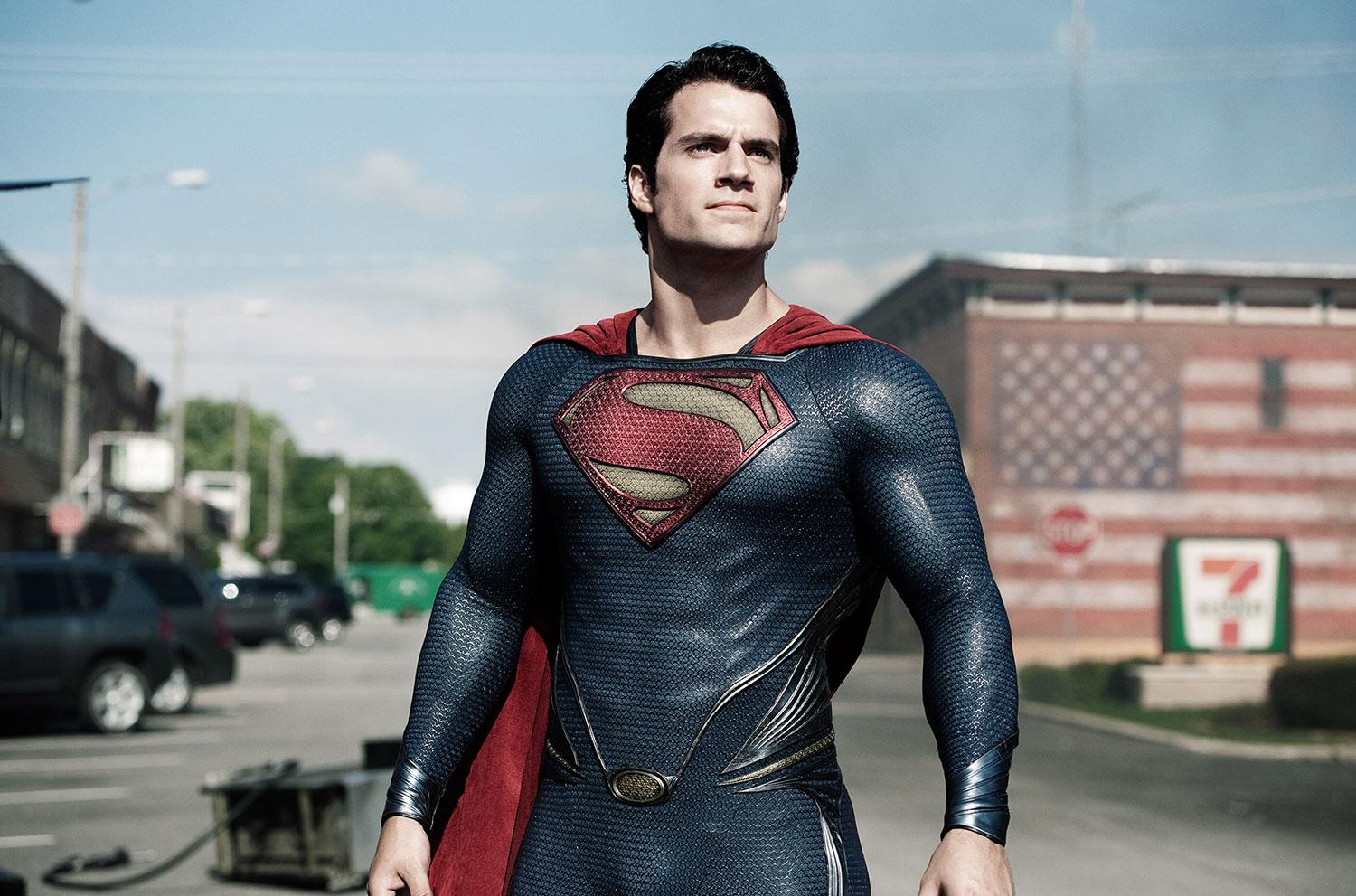
    Clark Kent on Free Slurpee Day

    Though the “S” on his hero’s chest is Kryptonian for “hope,” the only thing Zack Snyder believes in is destruction. In Man of Steel, the director has more money and a larger army of special effects artists at his disposal, and he uses both expertly in his most pyrotechnic sermon on annihilation to date. In casting the last son of a dying planet as a messianic instrument of war against the whiles of godlike invaders of that same planet, Snyder has managed to rip the heart from his savior, twisting a symbol of truth and justice into a sign of the apocalypse.

    Superman—not a name uttered often, or without blushing, during Man of Steel’s overstuffed run-time—has been the ubiquitous superhero in American popular culture for 75 years, but it’s worth pointing out those 75 years have, through artistic highs and lows, been stewarded by corporate interest. So too has Superman’s mantle, that he is the self-appointed guardian of “truth, justice, and the American way.” The American way, given several summers of reductive, gritty tent pole films where outsiders execute bloodless 9/11 scenarios on our cold, largely vacant metropolises, is fear, which often enters Man of Steel’s narrative under the guise of “hope” (that big “S” Clark Kent eventually wears), or, even more stealthily, choice. It’s hard not to blame Snyder and screenwriter David S. Goyer for dragging their cosmic, primary color wearing hero Earthbound—darkness is a proven winner in superhero films, as Goyer and producer Christopher Nolan proved with their recently concluded Batman trilogy.

    And there is no end to darkness in Superman’s story. His life begins just as all other life on his home planet of Krypton is destroyed. The first natural birth in several centuries, Kal-El, the future Clark Kent (Henry Cavill), is placed on a rocket by his father (Russell Crowe) and mother (Ayelet Zurer) and sent out to a new world, where he can carry on his people’s legacy among the humans of Earth. His rocketship lands in a Kansas cornfield, where it is discovered by the Kents, Jonathan (Kevin Costner) and Martha (Diane Lane). Among other things, Man of Steel is preoccupied with the relationship a son fosters with his father, and poor Clark has two, neither of which can understand his plight. Jor-El, of course, is dead. Pa Kent, on the other hand, is a human being, and they don’t exactly give human beings instruction manuals on how to raise children who fell out of the sky.

    As an origin story, Man of Steel’s primary objective (and, really, the albatross around its neck) is to serve as an introduction to Clark Kent’s story. While there are brief flashes of the franchise yet-to-come—the Daily Planet and its editors (among them Laurence Fishburne as a marginalized Perry White) appear mostly in the climactic sequence that destroys much of Metropolis, lending their human features to Snyder’s point-and-click urban obliteration—the Superman of Goyer’s imagination cherry-picks from other successful franchises before finding himself locked in mortal combat with General Zod (Michael Shannon). After watching his adoptive father die, Clark Kent leaves Kansas to find himself. He drifts from job to job, one small outpost to the next, living at the fringes of humanity until a job he’s on leads to the discovery of a Kryptonian spacecraft. Also on this arctic expedition is Lois Lane (Amy Adams), putting her journalistic reputation on the line when she writes not only of the unidentified flying object, but the strange, wandering worker whose DNA activated its onboard computer and defenses. The activation of that ship is something of a beacon for the universe’s last remaining portion of Kryptonians, General Zod and his followers, who were banished to the ominous Phantom Zone for trying to overthrow the Kryptonian government some 33-years prior to the main action of this film. Zod arrives on Earth, heralded by a video message for humanity that suggests he spent several years adrift in space earning a film degree, demanding the Kryptonian be handed over, lest the planet perish.

    All of this is paint-by-numbers for summer superhero timewasters—indeed, General Zod and Iron Man 3’s Mandarin may have taken the same filmmaking course—but Man of Steel has a higher calling, using the promise of wanton destruction as a stealth lecture on the life of Jesus Christ, a role Superman is dreadfully miscast in. Snyder is at his best, however, while setting this story up. His Krypton is a prog-rock hellscape populated by the denizens of a science-fiction Rome, and, free from the limitations of physical space or human emotion, he crafts his most visibly striking sequences since 300. They are so abstract, in fact, that it’s easy to miss the specifics of Russell Crowe’s exposition; how his son, a miracle birth, will grow up among humankind and eventually save them, as a god would. This sequence is densely packed with dragons, laser cannons, and spaceships that double as fertility totems—blink and you’ll miss the MacGuffin—but Snyder returns to beat this pulpit several times over. Witness Clark Kent performing miracles in his youth. Note how old he is when revealed to the world as something greater than human. See how he gives himself over to General Zod—who looks rather strikingly like a Hollywood Julius Caesar—so that man can be saved. The metaphor’s a real groan—the best representations of Superman in popular culture are those that are more human than divine—painfully accentuated by a scene where a doubting Clark Kent visits a priest to suss the whole thing out, a stained glass Jesus looking down above his shoulder.

    Snyder’s Superman is particularly unfit for the burden of cinematic messiah because, well, it’d hardly be a Zack Snyder film if self-sacrifice meant giving oneself up without bloodshed. Man of Steel’s climactic brawls are overblown and orchestrated to the same degree as the centerpieces of the Matrix sequels, and while it’s hard not to be impressed with the monstrous task undertaken by Snyder’s effects team—not only are two cities effectively leveled, but in flight and in fight, the world Superman occupies looks and feels hypothetically as it would to somebody of his abilities; impressive, but easily destroyed—the problem with these scenes, beyond the generally tiresome 9/11 imagery, is that they have no life to them. The staff of the Daily Planet run from falling buildings, but there are zero stakes to their plight. In a PG-13 movie arguably more interested in being a Trojan horse for the International House of Pancakes than the consequence of space aliens pulverizing a major American city, Ragnarok was bound to be bloodless, but for it to be without heft? Superman has reversed the Earth’s rotation for less. Here, Lois Lane falls into his arms and gives him a hero’s kiss; the world, as absurd and dangerous as it’s presented to be, returns to normal. It may not have been convincing, but at least Tony Stark had to deal with seeing an alien armada at the far edge of the universe. The destruction here may be more realistic an illusion than in any superhero film short of Nolan’s Batman trilogy, but it’s no trick to destroy a lot of buildings, if all you want to do is destroy a lot of buildings.


    Man of Steel. With Henry Cavill (Clark Kent/Kal-El), Amy Adams (Lois Lane), Michael Shannon (General Zod), Kevin Costner (Jonathan Kent), Diane Lane (Martha Kent), Laurence Fishburne (Perry White), and Russell Crowe (Jor-El). Directed by Zack Snyder and produced by Christopher Nolan, Charles Roven, Emma Thomas, and Deborah Snyder. Screenplay by David S. Goyer, based on characters created by Jerry Siegel and Joe Shuster.
  • Whatever Enthusiasm I Had for Guardians of the Galaxy Just Died

    Whatever Enthusiasm I Had for Guardians of the Galaxy Just Died

    The Internet continues to be unendingly kind to the Marvel cinematic universe in the wake of The Avengers and its lead-in movies, especially as those involved have started to drop hints as to what’s coming next. Of all the weird, harebrained places Disney could choose to go—and, if the Avengers movies have gone anywhere, none of those places have been weird or harebrained—the announcement of 2014’s Guardians of the Galaxy was unquestionably the strangest. A C-team of heroes comprised of guys like Rocket Raccoon and Drax the Destroyer doesn’t seem like the sort of thing that’ll be a huge box-office success. Thinking about it, neither did Iron Man.

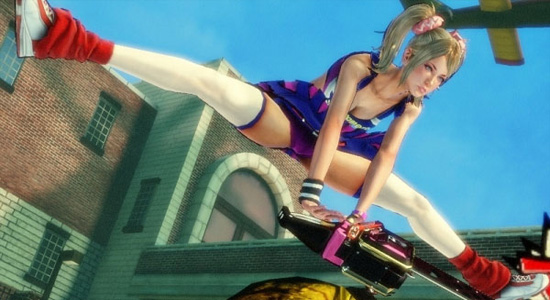
    Guardians of the Galaxy is slated to be directed by James Gunn. Gunn cut his teeth doing Troma movies and wrote the screenplays for Scooby Doo and Scooby Doo 2: Monsters Unleashed, films that are noted for their penchant for ironic self-commentary. Recently, Gunn is responsible for the film Super and the video game Lollipop Chainsaw. That he was announced as the director of a big-budget superhero epic under the purview of Disney surprised me, given that I’ve seen Super and have watched the majority of Lollipop Chainsaw played out on YouTube. Both were exercises in identifying with the horribly puerile sensibilities of a teenage boy; Super the broken heart, Lolipop Chainsaw the rampaging penis.

    Online, Gunn is all-penis. A year ago on his blog, Gunn wrote a post entitled “The 50 Superheroes You Most Want to Have Sex With: 2nd Annual Poll Results!” (He deleted it today, but the Internet forgets nothing.) Polls like this, sad as they are, are nothing new for even reputable comic book websites, but Gunn’s commentary on most of the choices are what pushes the post over the cliff. In Gunn’s defense, he was writing to a group of like-minded fanboys a year ago in promotion of Super, which was coming out on DVD. But that’s a really weak defense. As a joke, as a parody, or as an exercise in fan service, most of what Gunn writes is deplorable and colors in the shady moral areas of Super and Lollipop Chainsaw accordingly.

    On Gambit:

    My girlfriend voted for this Cajun fruit. I think she’s looking to have a devil’s three way with the two of us.  The idea of my balls slapping against Gambit’s makes me sick to my stomach, but I can’t deny the fellow’s pure HEAT, as he yet again placed so high on this list, despite being male and in the presence of so many A-listers.

    On Emma Frost:

    For those men who love rude bitches, the White Queen is number one.

    On Black Widow:

    Natasha Romanova is the highest debut on the list, and, considering she’s fucked half the men in the Marvel Universe, it’s much deserved.

    On Zatanna:

    guess what, Zatanna? Won uoy od mir sboj.

    On Black Canary:

    I sometimes think that the Black Canary is the hottest chick in the DC Universe until I remember that she, uh, fucks Green Arrow.

    On Dazzler:

    Disco Dazzler, Rave Dazzler, and Punk Rock Dazzler, they all have one thing in common – a friggin’ GREAT vagina.

    On Batwoman:

    This lesbian character was voted for almost exclusively by men. I don’t know exactly what that means.  But I’m hoping for a Marvel-DC crossover so that Tony Stark can “turn” her.  She could also have sex with Nightwing and probably still be technically considered a lesbian.

    The accompanying artwork skews heavily towards reptile-brained male fantasy. A charming, 1970s Aquaman rests right below a suggestive image of Psylocke’s ass and several places above an image of Tigra chosen to support Gunn’s joke that, as a consistently poorly written character, you’d “have an easy time talking your way into her pants.” It’s tough to see Gunn’s independent work as anything but reflections of these values, which he now brings to big-budget fruition in Guardians of the Galaxy. Or maybe not. I imagine there are few franchises under tighter control than The Avengers, and that whatever impulse Gunn has to “hilariously lampoon” sexism and homophobia by being a sexist homophobe will be reigned in by a company that’s long known that one does not simply make a billion dollars on a film without appealing to women and gays. Due to the seemingly boundless success Zack Snyder has had in snagging high profile projects, I’m not so convinced.

    I’ve had problems with Zack Snyder’s work for some time now, and whatever excitement I had for the next rebooting of Superman pretty much dissipated when he was announced as its director. Beyond Snyder’s gimmickry (boy does his filmmaking rely on gimmicks), 300Watchmen, and Sucker Punch suggest that Snyder has it out for gays and women, who are constantly punished in Snyder’s films by superior exemplars of masculinity. Sucker Punch has been defended amply by writers I admire (Kim Morgan called it “one of the most misunderstood, feminist, wildly experimental, anti-patriarchy pictures” of 2011), but Snyder’s films just don’t do much for me (beyond his often stirring use of opening credits montages) because his ideas, however bold they seem, are often empty and unsupported.

    I can see the argument for Sucker Punch as a feminist, anti-patriarchy film when someone is writing about it as such, but when watching the movie I fail to register anything deeper than a gathering of video game cut-scenes stitched together by sequences where a group of underprivileged, mentally unstable, disadvantaged girls are aggressively sexualized for the purpose of tantalizing—not repudiating—a male audience. If Snyder is responding to his own work—much like Russ Meyer did with Faster, Pussycat! Kill! Kill!—then it’s in a way so subtle that the audience who enjoyed the homophobia of 300 and the value-added rape scenes in Watchmen escape from his feather-light and puerile retelling of Alice’s Adventures in Wonderland without the burden of guilt. I think Superman has always had (and sometimes lives up to) great potential as a character, but I can’t imagine a Superman movie by Zack Snyder being any good. The best Superman stories, including the best Superman film, rely too much upon Lois Lane, and Snyder, thus far, has proved incapable of directing a film where a woman rises above the status of sexual object.

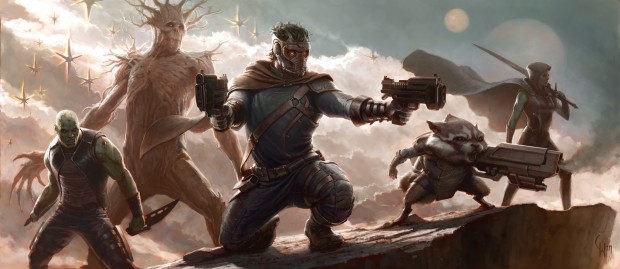
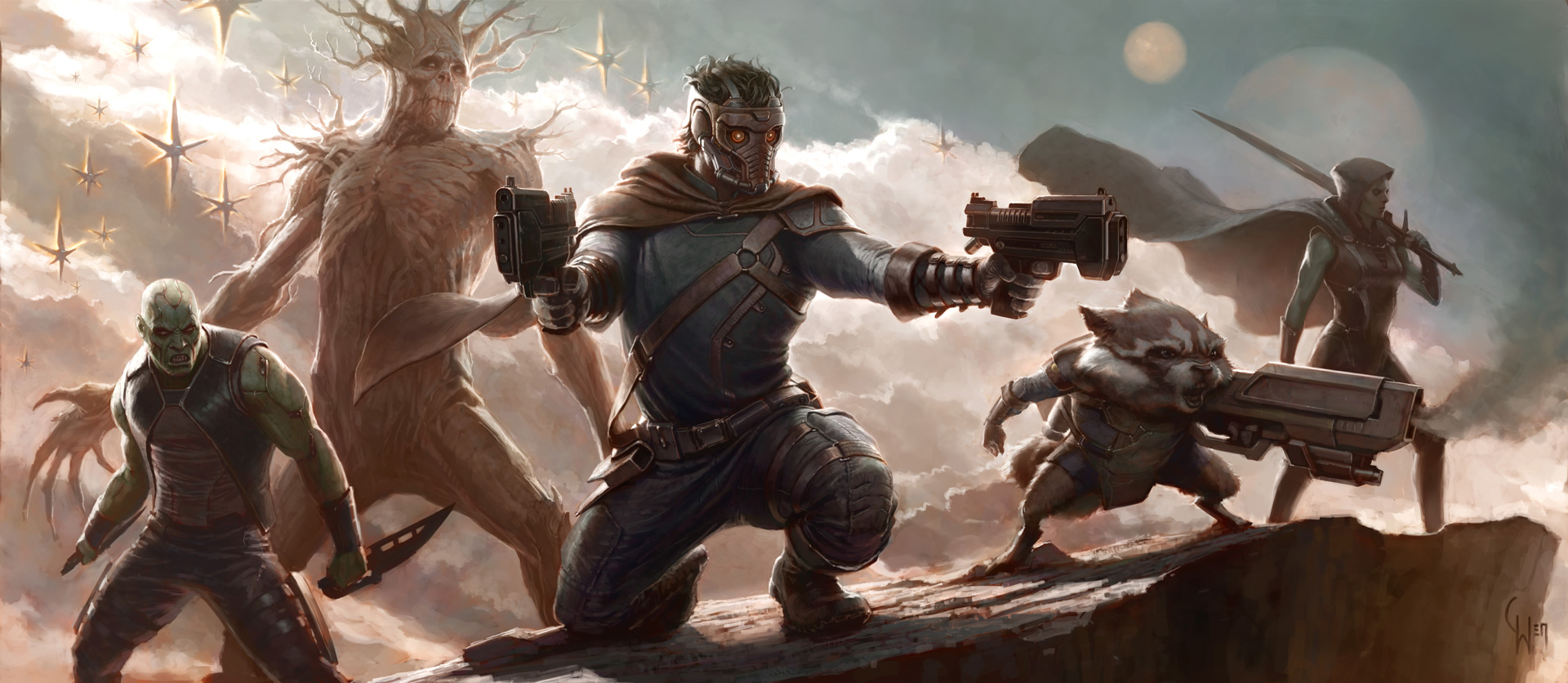
    Based on the above concept art, the one female character appearing in Gunn’s forthcoming Guardians of the Galaxy is Gamora. Not being an aficionado of the more space operatic elements of the Marvel Universe, the only thing I know about her is that she’s the adopted daughter of Thanos, who, if The Avengers was any indication, is probably going to be the main villain of the eventual sequel. Gamora’s slot as the sole female in a club almost exclusively comprised of men is symptomatic of a larger problem with superhero team-ups and is not Gunn’s fault, I realize. A criticism of the Marvel franchise—any comic book movie franchise, really—is that the women within them are only useful for their ability to match wits with their male counterparts. The only heroine not defined by her relationship to a man is Black Widow, and even that’s tenuous. Knowing that the director of a movie that’ll at least tangentially involve Black Widow has written, in so many words, that she’s a slut, is more than a little disconcerting. There’s a fine line separating the depiction of women in action movies as real (or real-ish) people or as hollow, vacuous, fan-servicing shells. It’s pretty clear to see what side of that line Gunn is on.

    Critically, I try very hard not to let my personal biases for or against somebody involved in the production of an entertainment act as a kind of pre-judgement. Had I not stumbled upon the uproar over Gunn’s year-old article, it’s possible that I would have known nothing more about him in 2014, watching Guardians of the Galaxy, than that he directed a mediocre superhero movie and developed a mediocre video game. That movie may have won me over, or it may not have. But the excitement I had for a weird sci-fi movie with anthropomorphic raccoons and other wayfaring space creatures died early this morning with the mental image of Wonder Woman lassoing a guy’s penis. I’m a man, and I understand that the vast majority of content produced within this particular genre is a direct appeal to my gender, but when I read a comic book or watch a movie, I tend to only really enjoy the experience when said comic or film doesn’t make me feel like a creep. Guardians of the Galaxy is so early in production that its IMDB page doesn’t list a cast, but there’s something almost irredeemably seedy to it, now. Unless Disney removes Gunn from the helm, deleting him like an ill-advised blog post, I suspect that seediness will linger, tainting a franchise that, for all its fun, doesn’t really hold up to intense scrutiny.