 There are no filmmakers quite like Werner Herzog, who has been so prolific over the course of his career that it’s hard to fathom how his every move construes a passion project of some kind. Working in fiction or documentary, in books and lectures, in scripts and plays, Herzog’s is a voice so indelible, so distinct, that not even the strictures of a three-part miniseries on the sensationalist true crime cable network Investigative Discovery could hope to suppress him. Happy People: A Year in the Taiga finds Herzog editing and narrating a series of documentaries by videographer and “co-director” Dimitry Yasyukov, and the result is something of an inverse Grizzly Man. Herzog is clearly enamored with both subjects, but where he couldn’t understand (and was even somewhat frustrated by) the life of Timothy Treadwell, he looks upon the fastidious men of Siberia as if there’s was a life he could settle into. Here, he’s looking into another kind of abyss, but returning with something warm.
Of course, when speaking of “warmth” in a Werner Herzog film, that quality is relative to the environment. Even beyond the snow-crusted, freezing forests of Siberia and Encounters at the End of the World‘s Antarctic wastes, those environments are universally extreme, cruel, and fit to be occupied only by the world’s most clever—and most stubborn—human beings. The fur-trappers who live in Siberia, who have lived in Siberia since the government dropped them from a helicopter in the 1970s with a rifle and a weak promise to return with food and supplies, aren’t phased by the conditions, nor are they particularly philosophical about their place in the world. Yasyukov’s cameras capture them at work building huts and crafting skis, fetching driftwood from the river so the village will have fuel for the winter, and Herzog makes reference at several points to the modern tools the trappers allow themselves—snowmobiles, mostly—but what looks backwards to an westernized city-dweller is a necessity of the Taiga. Modern tools and methodology aren’t built with a fur trapper’s use in mind.
Happy People: A Year in the Taiga is as methodical in its approach to the life of a trapper as its subjects are to the business of trapping. Each man has a tract of land in the Taiga, and each spends an entire year preparing that tract for the winter’s hunt, which is performed in utter solitude. In spring, summer, and early fall, the 300-person village of Bakhtia prepares for the season in the same way, planting, fishing, building dug-out canoes, baking bread, getting ready for the business of survival in a region where, beyond the snowmobiles and chainsaws employed by the trappers, the only hint of the outside world is the Pokemon t-shirt a child wears. Later, before the river freezes over for the year, a politician visits on a luxury boat bearing sacks of grain and a karaoke machine. The village’s children dance along to the music, but the adults wordlessly load the politician’s gift into the truck and drive it away without listening to his pledge to rid Russia of corruption. There’s no corruption in Bakhtia, just work.
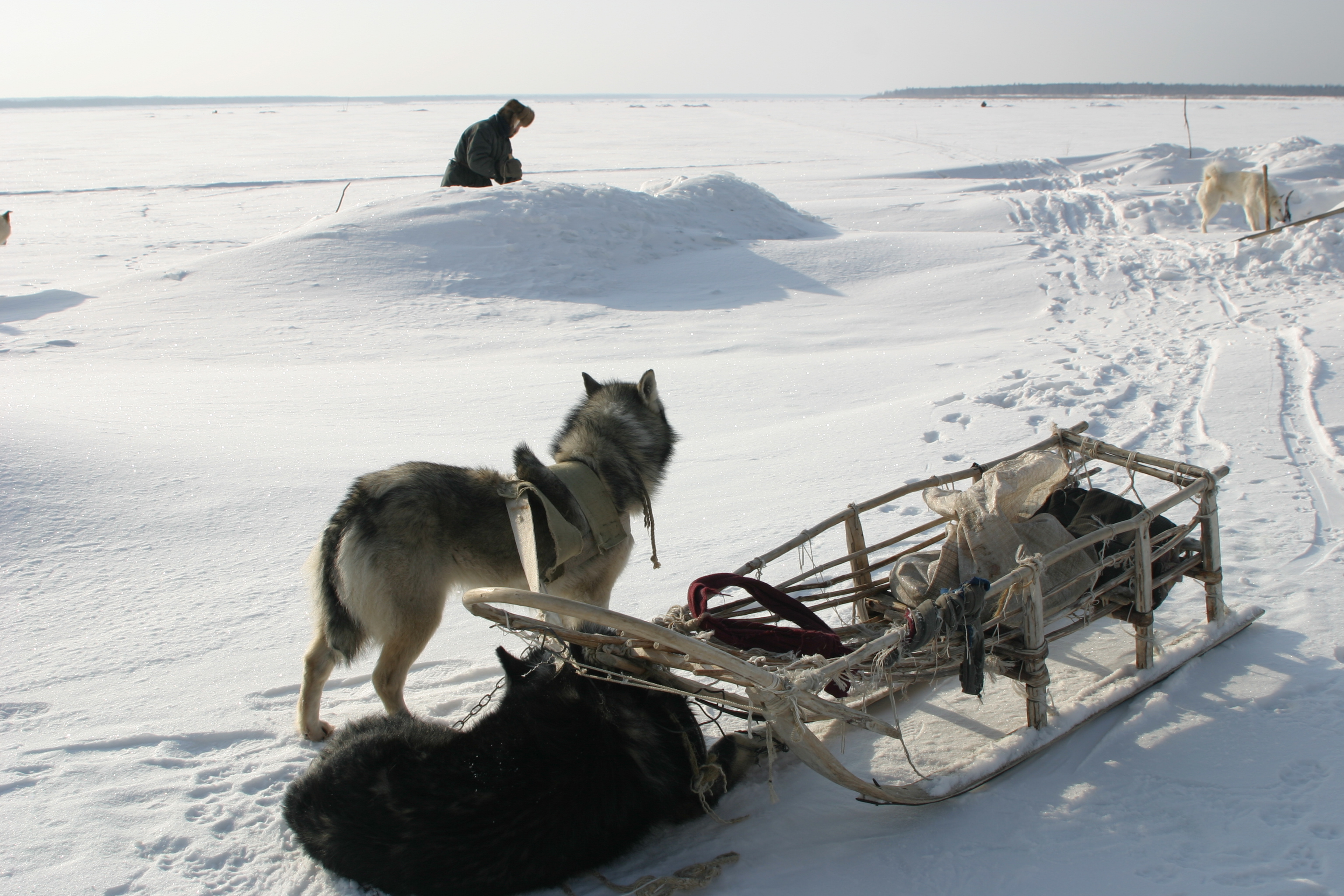
And the trappers are exceedingly good at their work, otherwise the merciless Taiga (or its bears, who make fleeting cameo appearances at the fringes of Yasyukov’s camera) would’ve had its way with them decades ago. The documentary’s central hunter, at rest, tells Yasyukov a few stories from his decades in the region. The partner the Soviet government left him with? He didn’t make it through the first winter. His favorite dog? Eviscerated by a bear. This second event, he says, caused him emotional distress, but the dog did her duty, she was a useful tool. Late in fall, he and the other trappers head back into the forest. “These are happy people,” Herzog intones, in his way. Somehow, it’s hard to disagree.
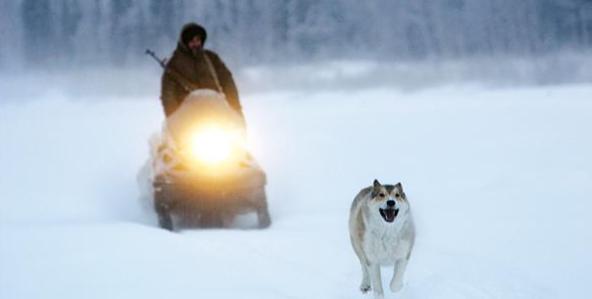
If Happy People is flawed, it’s in that the film is only partially Herzog’s. He edited and narrated this finished product, but it was stitched together from four complete documentaries, and, unlike Grizzly Man, the questions Herzog is answering are not his own, but Yasyukov’s. Over the last decade, Herzog’s camera has grown into something more than an extension of the director—it’s as though the camera is a person the director is in conversation with, as if both beings are contemplating the same vast unknown. The images Yasukov captures are startling in their beauty, but are more interested in recording fact than theory. The film never feels more like a Werner Herzog film than when the camera comes to rest on the trapper’s dogs, for whom Herzog’s voice is a wonderful medium. Leaping from their masters boat to swim after a moose or running behind a snowmobile for 150 kilometers between camp and the village, Herzog is as awed by their determination as he is by the trappers’. The master, Herzog says, leaves the village and is able to contemplate space and solitude. The dog is afforded no such luxury, but, finding an animal in a hollowed out tree, is able to provide for himself and the trapper. For this, he is rewarded. There’s a measure of happiness in that act, too.
Happy People: A Year in the Taiga. Directed by Werner Herzog and Dimitry Yasyukov. Produced by Herzog and Timur Bekmanbetov. Screenplay by Herzog, Yasukov, and Rudolph Herzog.