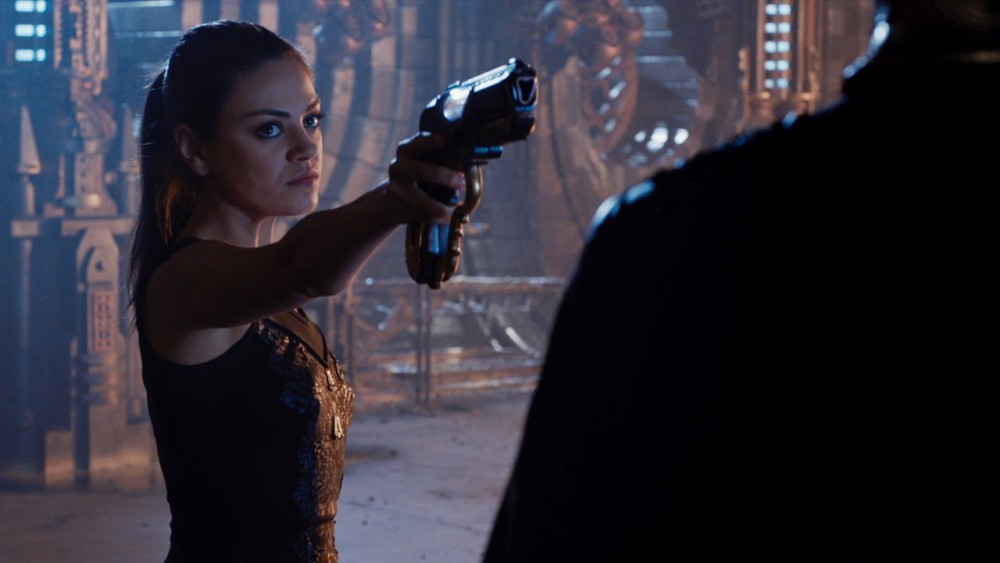
When I came to this space in order to praise Jupiter Ascending, I did so with the belief that, with 10 or 12 hours to tell their ludicrous story of star-crossed love between a human-bee genetic duplicate of a murdered immortal and a space werewolf sporting an especially bad goatee Andy and Lana Wachowski would have really had something. Sense8, created by the Wachowskis and Babylon 5’s J. Michael Straczynski, disabused me of that notion quickly, using its time and format to do little more than sketch out its interesting high-concept science fiction premise and build a world that is remarkably similar to our own.
On the surface, there’s a lot going on here, as eight people from eight radically different parts of the world and stations of life find themselves psychically linked and, it seems, randomly dropping in on each other’s lives. For the show to really work, all eight of the “senseates” need to feel like their own people, so that there’s really something to the idea that, together, they’re more than their individual qualities. The problem is that, with eight central characters, it’s hard to get most of them out of the blocks. Here’s who and what we know at the beginning of the series:
- Will Gorski (Brian J. Smith): A good, white cop from Chicago.
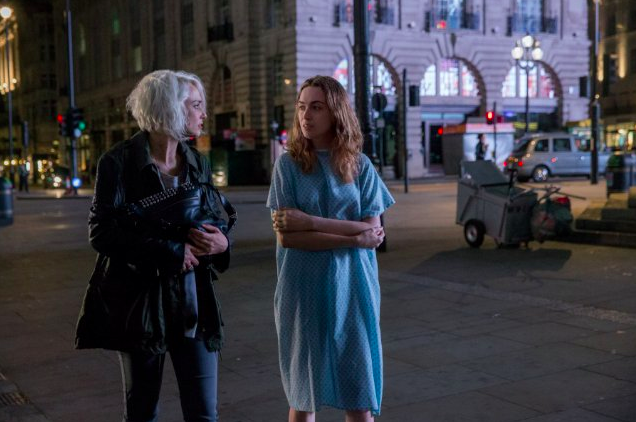
- Riley Blue (Tuppence Middleton): An up-and-coming DJ living in London; formerly of Iceland.
- Nomi Marks (Jamie Clayton): A trans woman from San Francisco who is a skilled computer hacker.
- Lito Rodriguez (Miguel Ángel Silvestre): A superstar actor in Mexico who is in the closet about his homosexuality.
- Sun Bak (Bae Doona): The daughter of a powerful Korean businessman. Skilled in kung-fu.
- Wolfgang Bogdanow (Max Riemelt): An expert safecracker out of Berlin with a lot of unresolved father issues.
- Kala Dandekar (Tina Desai): A pharmacist in Mumbai who is struggling with the implications of her pending arranged marriage to a man who doesn’t keep her religion.
- Capheus (Aml Ameen): A Jean-Claude Van Damme-obsessed van driver from Nairobi who is desperate to purchase medicine for his mother.
Looking beyond Gorski, whose good, white cop is the default focal point of television as a medium, that’s a pretty solid foundation for a show about strangers who need to come together to solve a problem, an engaging mix of queer faces and global perspectives that serve to make Sense8 interesting until it becomes clear that, for the most part, these characters and their stories are window dressing for a presumably doomed romance between the cop and the DJ. Once the show is beyond the benefit of a doubt, one wonders what the point of having so many brief sketches of life in India or South Korea or Kenya is, as the Wachowskis and Straczynski are never able to move beyond broad stereotypes for these people and their circumstances.
Their chief achievement here is to split the atom that was Neo, the quintessential 90s action hero, who was an expert in everything because everything was loaded onto a floppy disc and downloaded directly into his brain. Split up, its more than a little disappointing that those traits are a) the point of grouping these eight people together and b) that some of these skills and character traits don’t go much father than a vague, American understanding of the world. Of course the only thing we know about the Indian woman (beyond her eventual fascination with the white criminal) is that she’s arranged to be married to someone she doesn’t love. Naturally, the kung-fu master of the group is from Asia. And yes, there is heart to the idea of a son trying to provide his mother with AIDS medication, but for an American audience whose conception of Africa is Blood Diamond and Hotel Rwanda, grisly gang violence is a more engaging backdrop. Maybe this would be excusable if the pieces on the board moved much, but as Sense8 narrows its focus to Will and Riley and the plot to capture and experiment on one or both of them, it’s clear that a multitude of queer, colored shoulders are being put to the wheel for the sake of white heteronormativity.
This is particularly underwhelming given how much The Wachowskis seem to relish a character like Lito, whose lover (Alfonso Herrera) is something of a renaissance man, a skilled chef with a passion for Diego Rivera and lucha libre. The two are walking a thin line between bliss and public shame, and when they are blackmailed by an acquaintance (Eréndira Ibarra) who becomes their live-in beard to get out of an abusive relationship with a violent ex-lover, he has to figure out whether to play the coward to protect his career and identity, or to rescue his friend from her stalker and deal with the consequences. I want to see how that storyline plays out. Similarly, there’s Nomi, who is not only trans but in a relationship with a woman (Freema Agyeman) who loves her fiercely. Nomi is the first of the senseates captured by Whispers (Terrence Mann, who has to deal with that name), an evil senseate who runs the shadowy organization that functions as the main threat to our heroes, and she is sedated and secreted away to a private, heavily armed wing of a hospital where her mother (who insists on using Nomi’s birth name) strips her of any right to medical independence, agreeing to what is essentially a lobotomy after some slick talk from the medical professionals. This deliberate violation of autonomy is a thing that really happens to trans persons every day and to see it here (or in Orange Is the New Black and Transparent) is still new, still has a capacity for horror. Nomi and Amanita are given a lot of time and backstory before it’s necessary to saddle the hacker at a computer, and the Wachowskis use that time to explore Nomi as a sexual and political person, a figure who isn’t on the spectrum between tragic and life-affirming, but who just is. Other than a sex scene that sees Lito and Will accidentally having the best orgasms of their lives together, my favorite bit of Sense8 is a flashback to Nomi and Amanita’s first Pride as a couple, where Amanita steps up to defend her girlfriend from a friend who is dressing Nomi down for being a man colonizing a woman’s space. It’s a small moment, but it manages to make both of these characters feel like people, which is something Sense8 desperately needs more of. More than that, the sequence is a bit of queer politics that isn’t aired out much in popular culture, which is still struggling to find much use for trans women (and has yet to find a purpose for trans men) beyond totemic symbols for Living Authentically by assimilating as much as possible.
Sense8 has potential, maybe more than this season lets on. In terms of science fiction concepts, this is one of the best that’s made it to series since Battlestar Galactica, which used the threat of human extinction and the promise that not every human was as he or she seemed to ramp up the drama in lieu of constant violence. The eight senseates here barely know each other beyond what skills they bring to the table, and maybe with every individual threat to them tied off they’ll have time to sit down and chat, become themselves without having to be told, over and over, how their powers work and what that means for them. As much as I enjoyed the quieter moments of the show, Sense8 was too frequently punctuated by mandatory violence and sex, meaningless sequences that suggested a real lack of ideas. Even in episodes directed by The Wachoskis or Tom Tykwer, those sequences frequently lack the visual flair or sexual energy that makes their films stand out, as if television is a language they’re still trying to learn. If nothing else, I’m curious to see if they have anything to say once they have that language figured out.
Sense8. With Aml Ameen (Capheus), Bae Doona (Sun Bak), Jamie Clayton (Nomi Marks), Tina Desai (Kala Dandekar), Tuppence Middleton (Riley Blue), Max Riemelt (Wolfgang Bogdanow), Miguel Ángel Silvestre (Lito Rodriguez), Brian J. Smith (Will Gorski), Freema Agyeman (Amanita), Terrence Mann (Whispers), Naveen Andrews (Jonas Maliki), and Daryl Hannah (Angelica Turring). Created by The Wachowskis and J. Michael Straczynski, with episodes directed by The Wachowskis, Tom Tykwer, James McTeigue, and Dan Glass.