Tag: The New 52

  • The New 52: I, Vampire #1

    The New 52: I, Vampire #1

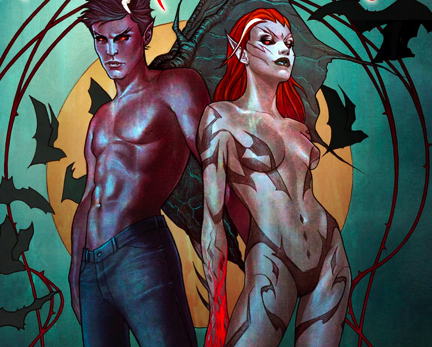
    In 1981, perennially underrated comics scribe J.M. DeMatteis began writing I…Vampire, a back-up feature in DC’s monthly horror anthology House of Mystery. It’s main character was a vampire (obviously), who, in order to maintain his humanity, drank only animal or bottled human blood. It’s been over 25 years, but the concept of the “vegetarian vampire” has permanently embedded itself in pop culture, not only because of the sullen Cullen clan at the heart of the Twilight series, but because of the synthetic human blood that’s allowed vampires to come out of the casket in HBO’s True Blood and the Sookie Stackhouse mystery novels that inspired them. Not that Stephenie Meyers or Charlene Harris were DeMatteis fangirls in the eighties (if they were, they might both be better at depicting the human element that is so often absent in their work), but it’s understandable why DC Comics, in relaunching their entire universe, would choose to publish a book like I, Vampire, no matter how obscure the original property was. Like a dog, the company is returning to territory it’s previously marked. Yes, DC Comics are fighting well out of their weight in the vampire market–comic books that aren’t about Batman or the X-Men stand virtually no chance outside the ever-shrinking comic book market–but there’s still some cash left to be milked from the vampiric cow and, by rights, I suppose some of that cash should go to the company that unwittingly gave much to the new vampire.
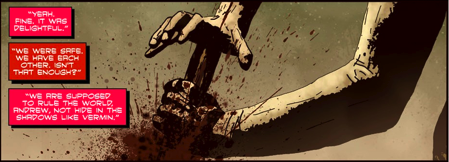
    Unfortunately, I, Vampire can’t quite break free from the new vampire’s current deathgrip on culture, meaning that any money it does manage to wring out of a seemingly coffinbound genre will be grubbed up by being exactly like everything else. Essentially a romance with the promise of world-ending destruction, Andrew Bennett’s a vampire-killing vampire, the sort of dude whose been around the block several thousand times, the kind of cat who puts others out of their misery so he can hang on to whatever scrap of humanity is left after a few centuries of nightjobs and vampire slayings. Unfortunately, Andrew turned his lover, Mary, into a vampire as well and–surprise!–she likes the experience, tires of drinking animal blood and, unsurprisingly, calls for a vampire uprising. The book will eventually get to the uprising, but first there’s a lot of hand-wringing, a ton of baby-come-ons that are pretty much like every discussion a vampire’s ever had on the subject of their humanity.
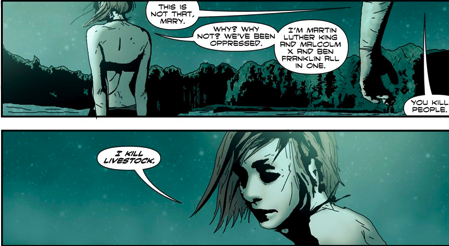
    Maybe there’s something to the theme of vampires finding or losing their humanity, but I, Vampire does not do a good job of bringing something new to an incredibly crowded party. Matter of fact, it rushes into some decidedly Twilight-esque platitudes, particularly where the male/female dynamic is concerned. Granted, it’s hard to write a piece of vampire fiction with a vampire villain that isn’t couched in cliche, but after Twilight, it’s hard to read something where the male protagonist harshly chastises his lady-love over a disagreement. Andrew even goes so far as to warn Mary that starting a war against the human race might be dangerous, especially considering that said race calls Batman, Wonder Woman, Superman, and half the Green Lantern Corps its protectors. Were another guy sitting with Andrew by the lake, casually chatting about his plans to kill everything and have the vampires take over, the conversation would end with a stake in that vampire’s heart. Here, Andrew is hesitant because it’s his lover, sure, but when are we going to move beyond the point where the male is The Protector in a male/female relationship? Moreover, when will women in popular entertainment realize that their men are unsupportive jerks and leave them in the dust without a pleasantly written note pledging her undying love despite their differences?
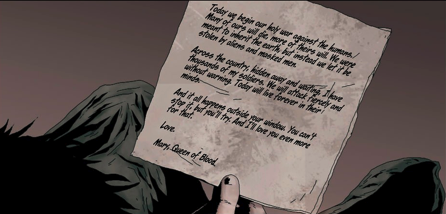
    As if the dynamic between Andrew and Mary wasn’t enough, I, Vampire‘s another book where the fate of the world seems at stake. Andrew wakes up one night and sees the streets of Boston littered with corpses, casualties of Mary’s newly-declared holy war. I understand the need to quickly ramp up excitement, but I would be more interested in the eventual Andrew vs. Mary showdown had not other #1s in the DC relaunch done the “we’re all gonna die” thing much better. I, Vampire very clearly isn’t interested in exploring the relationship between the two, is clearly convinced that the way to a reader’s heart is through the sort of vampire-cum-video-game violence that derailed the half-brilliant Daybreakers, the emotional investment of a beach read. I should have known all of this going in. The difference between this and the 80s iteration is as clear as the difference between a comma and an ellipsis, I…Vampire and I, Vampire. One is hesitant, full of trepidation. The other doesn’t give a damn. Full speed ahead. Blow everything up and pick through the rubble later. I don’t know–I guess I figure that, in 2011, we deserve a better class of vampire lit.
  • The New 52: Justice League Dark #1

    The New 52: Justice League Dark #1

    Magic is a curious thing in the world of mainstream superhero comics, cryptic and undefined, with the power to do precisely what the writer or editorial edict decrees necessary. In (forgotten?) Marvel Comics mega-event The House of M, the Scarlet Witch used magic to significantly alter the reality of the world, creating a dystopian society ruled by her father, where mutants were supreme beings and humans were second class. The biggest complaint, looking past Hawkeye’s rather inconsequential death, was that House of M represented a massive upgrade in Scarlet Witch’s power–before that event, she’d never displayed any powers of the magnitude required to change reality. But changing reality is at the heart of all magic, even parlor tricks. When the way we perceive reality changes, when magicians are writing the rules, anything is possible.

    This is why, in the DC Universe, Superman’s other weakness is magic, writ large and ill-defined. His physiology follows very precise rules, but comic book magic undermines all of those, replaces the rules with its own logic. The magician says that Superman is capable of feeling pain? Superman is capable of feeling pain. This is the unexploited crisis of the DC Universe: There are a lot of magicians running around, many of them driven mad by their power. That’s a lot of extranormal juju to be messing with, and a guy like Superman, hell, any number of guys in the DC Universe, are going to be helpless in the face of chaos. When this is the case, who ya gonna call?

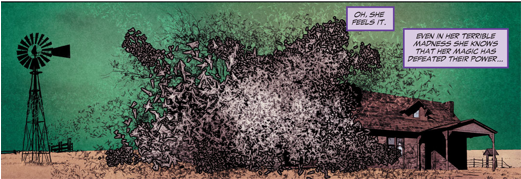
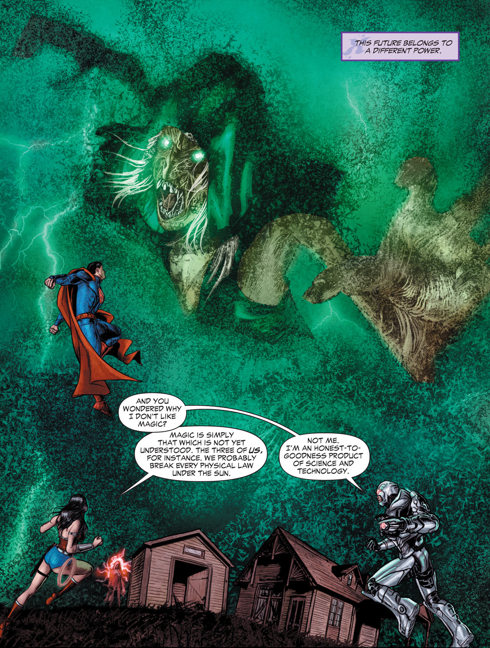
    In Justice League Dark #1, it’s a yet-unnamed collective of hero magicians, comprised of the expected (Zatanna, Madame Xanadu), the unexpected (John Constantine, back from his incredibly lengthy stay in the Vertigo “universe” ), and the somewhat obscure (Shade the Changing Man). None of them seem particularly pleased to be in this circumstance, which is to be expected, but when Superman, Cyborg, and Wonder Woman fail to stop the encroaching madness of The Enchantress, it’s up to a league of oddballs to stop a mad witch.

    The Justice League’s involvement in Justice League Dark is tangential at best, so people picking it up hoping that there’ll be new team adventures featuring Batman, Wonder Woman and Superman may be disappointed to find them easily defeated/on the sidelines. Justice League Dark is a horrible name for a book, and in it, Superman seems to have forgotten both about his weakness against magic and his costume change, but, beyond the book’s ties to the DC Universe’s heavy hitters, Justice League Dark #1 manages to get me interested in DC’s magic-based heroes, which isn’t easy. Seeing Shade the Changing Man and Constantine–who is literally dropped back into the DC Universe–back in DC continuity is welcome, and writer Peter Milligan (X-Force) not only has a handle on his widely disparate cast of characters, but he’s an expert with team dynamics and the offbeat. If Justice League Dark is allowed to be weird and on the outer limits of what constitutes a DC Comics superhero book, it’ll continue being one of the more pleasant surprises of  the brand-wide relaunch.

    The art, by Mikel Janin, shows a surprising amount of depth as the issue sinks further and further into the Enchantress’ madness. The first seven or so pages are fairly standard of mainstream comics, but the Enchantress’ attack on the Justice League is drawn huge and intimidating, the chaos enveloping the Justice League convincingly morbid, rightly grotesque. Watching the team come together against a world-threatening event would be enough to get me to come back, but I’m especially looking forward to seeing how the Enchantress pulls reality away from a group of heroes whose ties to it were tenuous at best.

  • The New 52: Wonder Woman #1

    The New 52: Wonder Woman #1

    Of the DC Trinity, Wonder Woman was arguably the hero who stood to gain the most from a universe-wide relaunch. She’s been mucked-up and un-mucked-up so many times that my head spins a little just thinking about her recent history. Of course, the biggest problem with the series has been the nonexistent but perceived need to update Wonder Woman, who, whether written by a New York Times bestselling author or wearing pants, couldn’t sell more books if doing so would save a besieged Paradise Island. The best two Wonder Woman runs in recent memory, Greg Rucka’s and Gail Simone’s, focused not on her image in relation to modern society, but her place in it. Both modernized Wonder Woman, but in ways slight and not off-putting; Rucka’s Diana was an ambassador to the United Nations, and Simone’s was a modern take on John Byrne’s conception of Wonder Woman as a heroine of gods and monsters for our time. They weren’t looking to sell Wonder Woman as anything more than the protagonist of a great comic book, and now, with the TV series dead in the water and hopes for a non-Batman DC Comics movie doing well quashed by the failure of Green Lantern, Wonder Woman is free from the shackles of consumerist oppression.

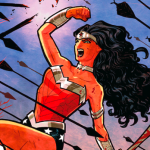
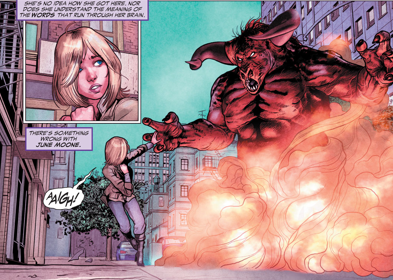
    The resulting comic book, Wonder Woman #1, is exactly the kind of thing I hoped for from the New 52 initiative, movement in a positive direction for a favorite character of mine. In it, a woman is visited by Hermes, who tires to warn her of an impending attack by a duo of centaur-assassins. The shotgun-wielding woman with a pixie haircut doesn’t believe Hermes, of course, until the assassins beat down her door, brandishing swords and bows. Hermes gives the woman a key, which spirits her off to an apartment belonging to Diana Prince, who you might know as Wonder Woman. As you can see in the picture above, she’s pretty good at protecting those who randomly drop in on her while she’s sleeping. She’s freakin’ Wonder Woman.

    What’s most appreciable about Wonder Woman #1 is that it does not question who Wonder Woman is, nor does it treat the reader like an idiot. You don’t need to be a mythology buff or a Wonder Woman fanboy to understand that ancient Greek gods walk among us, and that it’s Wonder Woman’s charge to protect those effected. Sure, one’s appreciation of Wonder Woman #1 likely increases if you can spot Hera (she of the peacock cape) or know who Apollo is (the oracular god of the Sun…hence the three young women he uses as oracles), or have read any mythology where either a) a powerful being is told that he’ll be killed by a soon-to-be-born child or b) a god sleeps with a mortal and is mysteriously absent to deal with the consequences, but these are stories as old as storytelling, they’re familiar, they’re still good, and here, added to them, is our time and place and a superhero.

    I was surprised to see this from Brian Azzarello, whose previous DC work beyond the fantastic, gritty crime saga 100 Bullets and other adult-orientated comics includes a shaky run on Batman and two mini-series featuring more “realistic” takes on iconic villains–Lex Luthor and the Joker–that didn’t really do much for me. The story here is solid, updating some gods as one would expect, keeping others as they were, and focusing on Wonder Woman’s heroism, though I suspect one “life changing” factoid or another will be dropped on her soon enough. The art, by Cliff Chiang, is what really pops here, both in its scale and its attention to detail. Despite the fact that the two women at the center of the book are barely clothed, neither is sexualized. Considering the mild controversy that arose over the cover of Justice League #1, where Wonder Woman, as is typical for the female character in a mostly male book, struck a lascivious pose that looked out of place amid the scowly, barrel-chested bros behind her, who somehow towered over Diana despite her being an Amazon.

    Chiang’s artwork, if nothing else, shows him as an artist capable of portraying a Wonder Woman of mythic proportion without salivating over her. The art’s dynamic nature is helped in large part by some bold inking and a reverence for the style seen in DC’s classic animation, pioneered by Bruce Timm. I wouldn’t return to Wonder Woman just for the artwork, but, combined with Azzarello’s confident tone, Wonder Woman #1 joins Simone’s Batgirl on a very small list of titles that has me both interested in the direction of a character that I like, and a universe that is open to its own curiosities.

  • The New 52: Hawk and Dove #1

    The New 52: Hawk and Dove #1

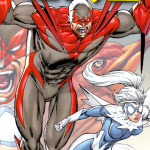
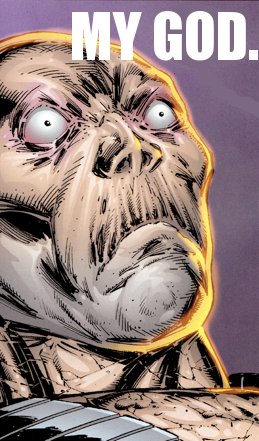
    Because I’m an incredibly mature young man, this review was going to consist of nothing but panels from Hawk and Dove #1 where a character has their teeth clenched. About three pages in, however, I realized that that course of action would result in the longest post in the history of this blog, since almost every panel drawn by 90s comic book superstar Rob Liefeld features a man or woman with his mouth agape, pearly whites smashed together. Seriously, more teeth are gnashed in a single page of Hawk and Dove than in a year’s worth of One Life to Live. Instead of posting single images, I’ve mashed all the teeth gnashing into one image. Observe:

    The horror…

    If you’re a big time Rob Liefeld fan, rejoyce–he’s in full force here, and while his art has gotten a bit slicker since the days of special edition first issues with plated-titanium covers that’ve been preserved and polybagged for future value, slicker inking techniques and better paper quality can’t hide the man’s ineptitude. Liefeld’s cause could have been better helped by Sterling Gates’ script, which sees the titular heroes of the book save the Washington Monument from a terrorist’s hijacked plane (which, depending on your taste, may be a bit too exploitative), but, thinking about it, having an overmuscled action hero and his impossibly proportioned femme-sidekick save America’s favorite phallic symbol makes perfect sense.

    What doesn’t make sense, at least to me, is the decision to relaunch an entire freaking universe in an attempt to move out of the past, only to hand one of 52 new books over to an artist who represents exactly the sort of thing comic books, as a medium, need to run away from. Don’t get me wrong–there’s certainly room for a throwback here and there, and I’m looking forward to checking out DC’s western and military anthology books and hope they do well. Hawk and Dove, however, represents DC’s first major fumble. Yes, Liefeld is a magnet for controversy, but it’s not like he’s a creative giant on the level of, say, Grant Morrison, who is controversial in the sense that he at least does something different or interesting when handed the ball. Rob Liefeld’s kind of controversy doesn’t create cash–it drives money away. The guy hasn’t been cool since his Levi’s Jeans commercial and, fittingly, Levi’s haven’t been cool in 20 years, either. Despite all this, Hawk and Dove will probably go on for another five or six issues, ending either when sales drop or Liefeld gets tired of the project and decides to move on to something “new.” And he’ll probably be paid unjust sums of money to do it, too.

  • The New 52: Teen Titans #1

    The New 52: Teen Titans #1

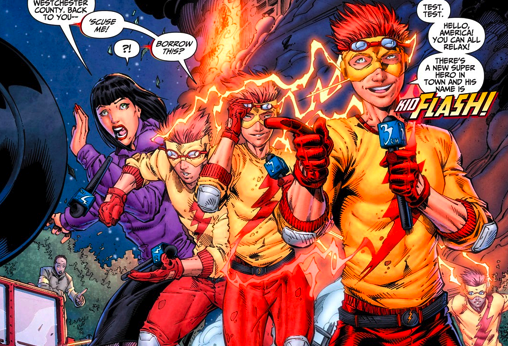
    It only took a page, but I hate Kid Flash.

    Really, the above frame from Teen Titans #1 is my problem with the idea of teen superheroes in the DC Universe: They are either the emotionally underdeveloped, cocky douchebag kid brothers and sisters of the Justice League, or they’re way too smart, way to poised, way too ready to take on the problems of the world. For all the negativity (rightly) heaped on Frank Miller’s All-Star Batman and Robin the Boy Wonder, his take on the DCU’s hero/junior hero dynamic at least tried to make it clear that, no, things weren’t normal, no, they weren’t going to get better, and yes, everything was terrifying. Scott Lobdell’s Teen Titans so far don’t touch on the terrifying nature of the job these kids are doing, though it hints at the underlying metaphor of superpowers-as-puberty. His Kid Flash is an all-swagger jerk. His Red Robin is, as you’d expect from one of Batman’s compatriots, a master tactician. His Wonder Girl, upon realizing that she’s being hunted by a shadowy extra-governmental organization, says that things will never be the same.

    Wonder Girl, it should be said, hates being called Wonder Girl. But that’s life for the kid heroes of the DC Universe, either suffering an identity crisis or from a lack of attention from their chosen role model. But they’ve got bigger problems than worrying about their old, idyllic lives racing stolen cars down the Pacific Coast Highway. The shadowy extra-governmental agency is called N.O.W.H.E.R.E., which is one of those acronyms that will probably forever be without explanation, and Red Robin (Tim Drake, for you Robin III fans out there) is a blogger and proprietor of a Wikileaks-esque operation, an anonymous folk hero who knows that he and other teen heroes, so derided in the media, aren’t going to do well on their own. So it’s a race between Robin and the trenchcoat-bedecked leader of N.O.W.H.E.R.E. to track down the teen heroes (Teen Titans, if you will) and create a team out of ’em. Judging from the cover, it looks like Superboy, Starfire, a purple robot and a spider-woman have yet to join.

    This issue never quite rises above teen comic cliche, and every Teen Titans comic runs headlong at the monumental task of equaling the Marv Wolfman/George Perez book from the 80s. It attempts to take a similar path as Marvel’s Runaways and Young Avengers, making it clear that these kids either have no ties to the big league heroes, or that their ties are tenuous at best. They’re on the run. They may have issues with their parents. But they’re archetypes, and as a writer myself, I often wonder if there’s any way to evolve a character from there. Will Red Robin always be the leader? Will Kid Flash always make me want to punch him? It’s issue one, which is way too early to tell…but nothing else in the first issue makes me want to come back and find out.

    Brett Booth’s pencils are alright, though they’re very clearly in a Michael Turner vein. Lots of teen side-boob and mostly-naked aliens coming down the pipe. This seems like a wrong (read: dumb) move by DC Comics, who’ve somehow missed out on the potential goldmine the Teen Titans property has represented since the Teen Titans cartoon aired on TV. I don’t know if you know this, but comic books used to be very popular with cartoon-watching children. Not only that, but cartoon-watching children are now a vast, mostly untapped market for the medium. Sideboob and near nudity have been available in nearly every comic book I’ve read since I started reading them. The market for sideboob and near nudity is saturated. Why not throw a bone to the under-sixteen set? Why not try to interest new people? Why not offer something flashy and effervescent? It doesn’t have to be a cartoon, but it should probably be trying to attract the old cartoon’s audience. It doesn’t have to be a farce, but it should be different, shouldn’t it?

  • First Issue Collector’s Item: Suicide Squad #1

    First Issue Collector’s Item: Suicide Squad #1

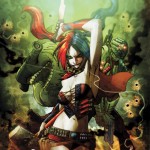
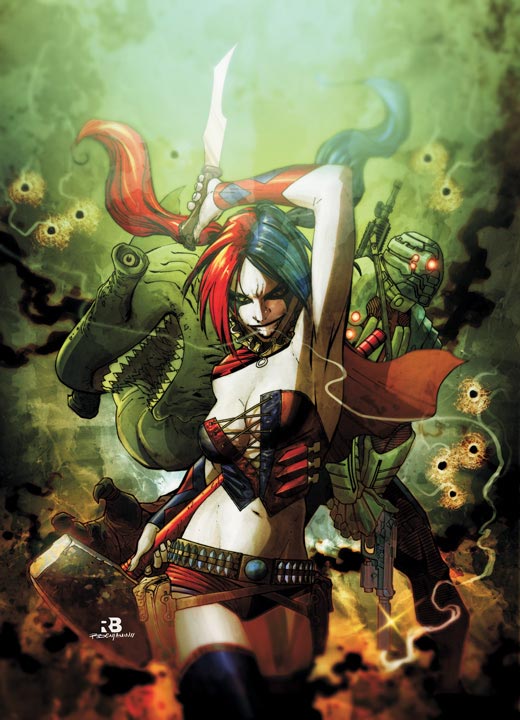
    Suicide Squad harley quinn

    One of my difficulties in getting into DC Comics (and when I worked at a comic shop and had free reign with my pull list, believe me, I tried) is that the collection of villains faced by guys like the Flash, Green Lantern and Green Arrow are often, well, boring. Even Batman has some rogues that were just impossible for me to get into, as they had, in my estimation, no real purpose. A guy like the Penguin, for example. Great in the old TV show. Great in Batman Returns. Terrible in the comics, where he was a nightclub owner who may or may not have been running guns, who may or may not have been a good source of wisdom. Too often, a member of the Bat Family would drop in on his club, beat up Penguin until he squawked, and that’d be it. Deadshot, one of the main characters of Suicide Squad has kind of the same problem. He’s an assassin, and that’s it. You pay him, he shoots people, he moves on. Oh sure, he’s a talented assassin, and he only misses if Batman screws up his shot, but if you think about the number of superheroes and supervillains in the DC universe…there’ve got to be HUNDREDS of guys just like Deadshot out there, making a pretty good living despite the fact that they’re not dressed in some snazzy armor or carrying a wrist gauntlet gun. What’s so exciting about that?

    The Suicide Squad, as created by John Ostrander, has a way of re-contextualizing these villains. Taken from their cells by a secret government agency and fitted with a tiny bomb that will blow up if they disobey orders or drop off the grid, the men and women who make up the team of ex-cons are sent to do some of the DCU’s more ruthless tasks–at the end of this issue, for instance, they’re sent on a mission to attack an NFL-sized stadium with some 60,000 people inside. Not only does it give a nobody like King Shark something to do with his life beyond biting the arms off of passers-by, it gives dudes like Deadshot something to fight for–not only will the agency kill him if he screws up, but they know his secrets and can hurt him that way, too. (more…)