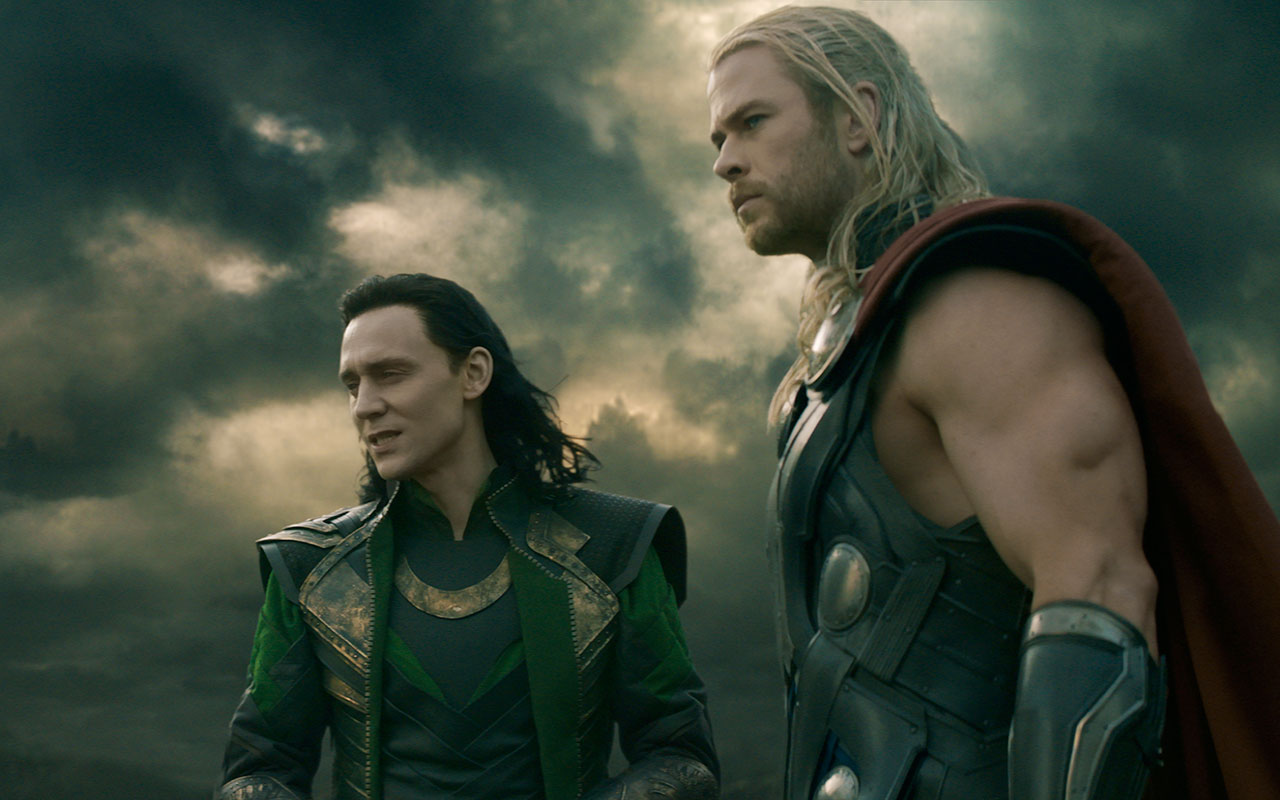
Thor: The Dark World is the year’s fifth superhero movie. That’s five different films where spandex-clad men bash in the brains of other spandex-clad men. Five films featuring speeches on subjects like truth, justice, and doing the right thing. Five films where one major city or another—sometimes fictitious, sometimes not—is turned into a smoking cinder by the gods who use it as an arena. The Thor films—counting The Avengers, whose villain Loki is central to the narrative of the entire Marvel cinematic universe, there have been three—have a decided advantage over other movies in the genre. In Thor, director Kenneth Branagh was able to find a nice balance between fish-out-of-water humor and action largely indebted (though unfortunately not monetarily so) to Jack Kirby. Thor: The Dark World director Alan Taylor wisely decides to spend much of his time exploring Thor’s celestial homeworld of Asgard. It’s a nice change of pace from a Marvel film’s usual focus on large, clean military installations and glittering R&D research laboratories, but even the best aspects of this movie aren’t enough to distract from what is now a very shopworn formula.
But if long-running network sitcoms and The Avengers franchise have proven anything, it’s that people like hanging out with their favorite characters, even if nothing truly significant happens. Thor: The Dark World does more with the fallout from The Avengers than Iron Man 3, did, sending Thor (Chris Hemsworth) planet-hopping with his warrior friends to quell the revolts stirred in the wake of Loki’s (Tom Hiddleston) rebellion against Odin (Anthony Hopkins) and his near-conquest of Earth. Odin’s helpful narration reveals that there’s a threat much greater than these rebellions, a long-lost cosmic weapon created by a race of dark elves upset that the Big Bang turned all the lights of the universe on. The opening scene—Norse gods crossing their swords and shields against the space lasers and gravity grenades of their elven enemies—is a highly polished mash-up of pulp sci-fi and hard fantasy paperback covers, but there’s nothing particularly creative or threatening about this largely faceless horde. Even their weapon—The Aether, which threatens to turn the lights off again—inspires a shrug of the shoulders. But when Thor’s girlfriend Jane Foster (Natalie Portman) finds herself the vessel of this cosmic power, the God of Thunder hastily arrives on Earth to whisk her away to the halls of Asgard, hopeful for a cure.
Of course, there isn’t one. Odin, clearly the most pragmatic man on a floating rock connected to the rest of the universe by a rainbow bridge, suggests that Jane’s malady is evidence of the difference between the fate of an Asgardian and the fate of a human, imploring his son to maybe fall in love with someone more suitable as Queen of the realm; Sif (Jaimie Alexander), for instance. But Thor: The Dark World doesn’t fool around with love for long. The Aether is something of a homing beacon, and its inhabitance of Jane Foster’s body sends a signal to the dark elves, who’ve long been asleep at the fringes of the universe. They storm Asgard furiously, laying waste to the city and killing Frigga (Rene Russo), the Queen. Odin vows to quash the elves, even at the cost of his realm. Thor, however, has other ideas. Hoping to save his people and Jane Foster, he reaches out in desperation to Loki, serving out a life-sentence in a rather nice-looking jail cell for his crimes, and plots a sneak attack on the elf Malekith (Christopher Eccleston) and his few compatriots who remain from the prelude’s long-ago war.
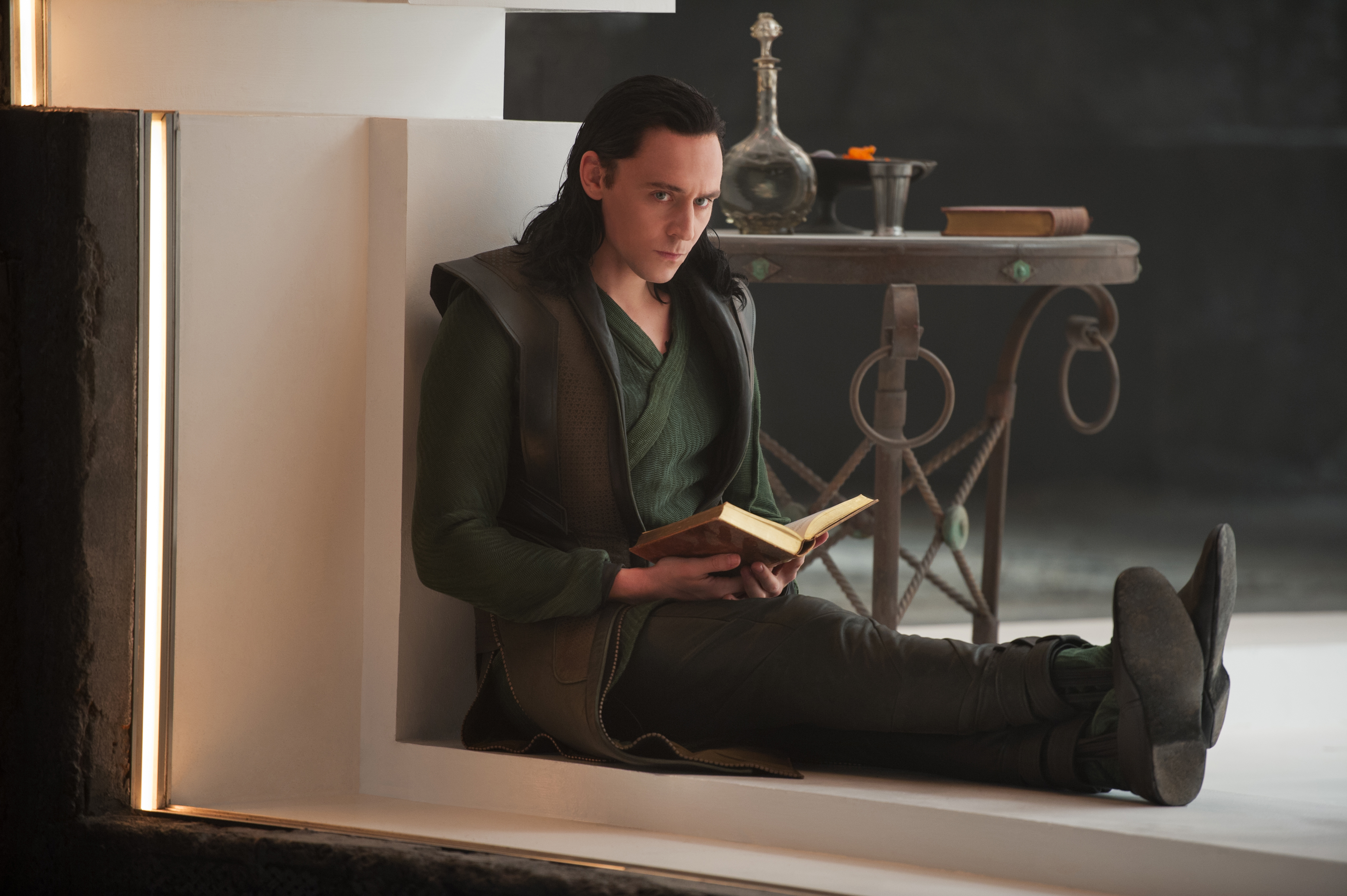
Of course, the real draw here is Hiddleston’s Loki, who is once again the most compelling, entertaining aspect of a Marvel film. This is causing something of a problem, narratively speaking, as all of the movies in this franchise have largely used even their heroes most iconic villains as one-off castaways, focusing instead on whatever piece of world-destroying technology they happen to possess. Loki’s popularity, which is potentially greater than that of any of the Avengers save Iron Man, virtually guarantees that he’ll continue to be part of the narrative, even as phases two and three of the Marvel cinematic universe provide ever-diminishing space for him. Thor: The Dark World flirts with making Loki something of an anti-hero. Sure he destroyed an entire town in New Mexico and most of Manhattan in a fit of jealousy, but he was pithy and funny while he did it, and he is burdened with issues of identity, purpose, and godhood in a world where he may be the only person smart enough to qualify as a psychoanalyst. While plotting his jailbreak, every character (and the audience) knows for a fact that any Loki/Thor team-up is doomed to end in betrayal, but they (and we) go along with it. For Asgard, Loki serves as an unlikely last hope. For the audience, the ambitious terrorist of the cosmos happens to be written in such a way that he seems like the most fun guy to have a drink with.
As for the film’s human ciphers—Foster, Erik Selvig (Stellan Skarsgard), and Darcy Lewis (Kat Dennings)—they’re largely inessential, shoehorned in because the final battle needs some recognizable faces running around in panic while the world burns. Portman, as Jane Foster, does her usual capable job, and a scene where she goes on a dinner date with some guy but can’t think of anybody but Thor is one of those fleeting instances where these movies actually address what it’d be like to be a normal human being in a world occupied by gods and monsters, but even with a cosmic entity flowing through her veins she’s little more than a combination damsel in distress/MacGuffin. The Selvig character has the most to do with the continuing story of The Avengers, though his function here as the world’s most brilliant man to have stripped nude at Stonehenge while muttering incoherently about Ragnarok is largely that of comic relief. Skarsgard and Dennings are given the film’s snappiest non-Loki dialog, but the film just isn’t as interesting when focusing on its earthbound characters, which, if anything, is an indication of how fully-realized Asgard has become, almost by accident. Jane Foster’s visit and the dark elf raid necessitates that a good deal of Thor: The Dark World‘s runtime takes place on Asgard, which, fantasy tropes aside, manages to feel like a real place. The plot doesn’t allow for much exploration of the realm’s tertiary Asgardians, which is something of a shame. I have a rough idea of what a political science major does, but a character like Heimdall (Idris Elba), who can see some ten trillion souls, probably deserves a better fate than serving as Thor’s Facebook app or failing at his job as gatekeeper.
Thor: The Dark World was perfectly enjoyable; not only was it the best superhero film of the year, it may be the best of The Avengers series. But these movies have quickly become a succession of James Bond adventures, right down to the credit text assuring viewers that THOR WILL RETURN in a year or so, whenever the next production requiring a blonde-haired, hammer-wielding meathead is mounted. The difference is that Thor is part of something larger and ultimately more organized than Bond or any other long-running franchise, and coming at a two- or three-a-year pace as these Marvel movies do, there’s less opportunity for Thor to distinguish himself from Captain America, let alone allowing Thor: The Dark World to stand apart from Thor. For now, audiences seem contented by these opportunities to sit down and catch-up with their favorite superheroes and villains. Manhattan may still be smoking, and Liverpool may lie in ruins, but nothing about Earth is fundamentally altered. There’s comfort in that, I suppose, but it’d be nice if a Marvel movie shocked the world by growing up a little, maybe by being something more than not terrible.
Thor: The Dark World. With Chris Hemsworth (Thor), Tom Hiddleston (Loki), Natalie Portman (Jane Foster), Anthony Hopkins (Odin), Christopher Eccleston (Malekith), Jaimie Alexander (Sif), Rene Russo (Frigga), Idris Elba (Heimdall), Stellan Skarsgard (Erik Selvig), and Kat Dennings (Darcy). Directed by Alan Taylor and produced by Kevin Feige. Screenplay by Christopher Yost, Christopher Markus, and Stephen McFeeley, based on the comic book Thor, created by Stan Lee, Larry Lieber, and Jack Kirby.
