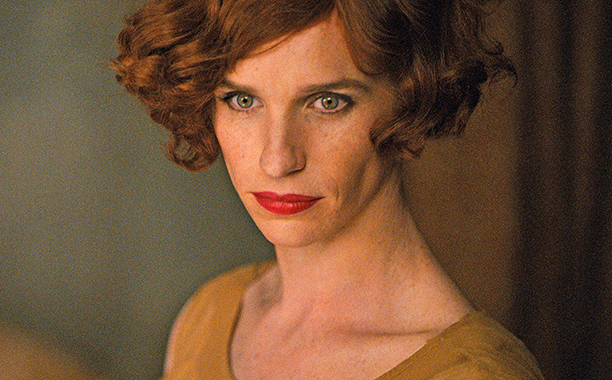
Since the release of its trailer last month, something about The Danish Girl— Academy Award-winning director Tom Hooper’s Eddie Redmayne-starring biopic about Lili Elbe, the first trans woman to undergo gender confirmation surgery—has nagged at me, tugging at some part of my consciousness that refuses to allow me to look past another Oscar-hopeful film that’s cast a cis man as a trans woman. I’m a trans woman, and I’m tired of this trend (and the trend of cis actors receiving awards for trans stories while trans actors and actresses struggle to find work), but I like Redmayne and find Hooper’s films audacious enough to admit that I’ll be giving The Danish Girl a shot when it is out of the festival circuit and in wide release.
But there’s my consciousness and how it keeps poking at me, like a burr stuck in my collar. The Danish Girl isn’t like Dallas Buyer’s Club, which garnered Jared Leto an Oscar for Best Supporting Actor amidst article after article of criticism for that film’s handling of its (fictional) trans character and Leto’s handling of the acclaim. Here, I just Googled The Danish Girl, which currently clocks in at 81% Fresh on Rotten Tomatoes. Variety put Redmayne’s “transformation” on its cover. WIRED helpfully suggests that I “prepare all of my tears” for the trailer. Buzzfeed, too, is excited, calling the trailer “incredibly powerful.” I’ll watch the trailer again in a minute, but my eye is wandering over to Google Images, laden with pictures of Eddie Redmayne en femme. I’m looking at the film’s poster, which is the sort of sleepy, respectable design work that will get your elders whispering excitedly about that transexual movie with the guy who played that guy. Scan down past Redmayne and his co-star, Alicia Vikander. Stop just before the credits that note that this movie, “inspired by the extraordinary true story,” is not based on Lili Elbe’s own memoir, but on a novel written by a cis man. There, the tagline: Find the courage to be yourself.
There it is: The Trans Narrative.
Trans people are useful, in mainstream culture, as an inspirational teaching tool. Here is a woman who was trapped in a man’s body, the narrative goes, and how she fixed that should serve as inspiration to us all. Well, yes and no. If popular culture is going to slowly (but surely) peddle in trans narratives as inspirational pablum, the ultimate result (one hopes) is the kind of sympathy that makes real, substantive change happen for us. When a cis actor wins an award for a trans role and dedicates his or her performance to the trans community, it is this that they are ultimately gesturing to. It’s an actor’s job to find the humanity in their character, and to translate that so that it comes across to the audience. At the same time, to watch a film or a television show with a cis actor in a trans role is to confront the reality that trans bodies and narratives are often commodified without the benefit of trans remuneration, and that the process of change through narrative storytelling is slow. In short, representation really does matter, not just in front of the camera but behind it.
How our stories are told and who tells them is just as important as any casting decision. Consider, for instance, Dallas Buyer’s Club director Jean-Marc Vallée’s that in casting for a trans role, he wasn’t “looking for the real thing,” pondering whether or not there even was such a thing as a trans actress. (The interview on CBC’s Radio Q was purged when former host Jian Ghomeshi was released amid accusations of sexual assault, but lives on through a back channel of trans- and ally-maintained Tumblrs that decried the transmisogyny of the film.) That’s not a failing on Jared Leto’s part, but a failure of vision at the highest level. Which is why, with The Danish Girl, it’s important to look past the casting of Redmayne as Elbe towards the promotional material, since this is how trans bodies will be packaged and sold until the film’s wide release, whereupon it will be repackaged and resold as a daring, brave performance by a gifted actor.
[su_youtube url=”https://www.youtube.com/watch?v=d88APYIGkjk”]
Tom Hooper, obviously, has a profound love of period pieces and biopics, and all the trappings of that genre are here. The subjects are monied, the sets are grand, the dresses are lavish. The big hook, of course, is seeing Redmayne as Lili Elbe, and, yes, he is beautiful in a dress and make-up. When a man at a party says that he feels compelled to ask her permission to kiss her (which, woah, buddy, way to seek consent in a way that borders on sociopathic), the audience says Of course! because Lili Elbe is so goddamn radiant. Red wig, red lips, green dress—she pops against the muted blues and grays of the set design, whereas Elbe’s masculine presentation (Einar Wegener, a name which, you’ll find, the film’s promotional material frequently refers to Elbe by, which is a rather deliberate act of misgendering) blends in completely with the surroundings.
This is a key piece of The Trans Narrative, which supposes that trans women (pop culture has yet to find any purchase for trans men) live dull, colorless lives until they discover lipstick and rouge, that our identities are no more complex than a fresh coat of paint. I’ve wondered, as a trans woman who has written about film for seven years, if movies were capable of something as intense and intimate as a transition narrative, and The Danish Girl’s trailer suggests that it is not. Two hours is a brief, unenviable amount of time when dealing with what is, for many, the unfathomable idea that a person might identify as something other than the gender they were assigned at birth. So the trailer focuses as much as it can on the things that have become hallmarks of The Trans Narrative: life “as a man,” the moment one discovers that they are trans, and, most titillatingly, The Surgery.
The trailer leaves The Surgery and its consequences (here, Elbe’s death) as it relates to Elbe’s life to the imagination: There’s Magnus Hirschfeld speaking quietly about the never-before-performed procedure, Elbe and Gerda Wegener declaring their devotion to one another despite the risk they are taking. The trailer thus hinges on the moment of discovery, Elbe modeling a dress for her partner’s painting.

Hooper’s cinematographer shoots Redmayne’s hands, feet, and face in an extreme close-up, resembling Hooper’s brazen decision to focus tight on his actors’ faces in Les Miserables. The way the trailer cuts from stockings to bodice to face lends Elbe’s moment of discovery a sense of tactility that is frankly impressive, given that we’re not there fingering the dress with Redmayne. But it’s also knowingly erotic—here, we’re voyeurs looking in on a private moment between husband and wife, and the look upon Elbe’s face as she traces the dress is one of pleasure and desire. It’s also the look of a person who, oddly, seems to have never touched a dress before, as The Trans Narrative demands of its protagonist that every feminine article she comes in contact with carries the shock of something new.
Despite the frock draped upon her posed body, Elbe remains a mute, gray figure in her mute, gray house. The trailer’s first real touch of color breezes into the room at the precise moment Elbe discovers, to her surprise, that she’s a woman: It’s Amber Herd’s Oola Paulson, dressed like she’s completely unaware of the somber tone Hooper is otherwise aiming for. She bequeaths unto Lili her name and a kiss—color!—and cuts to an establishing shot of the lights in a room turning on for a party.
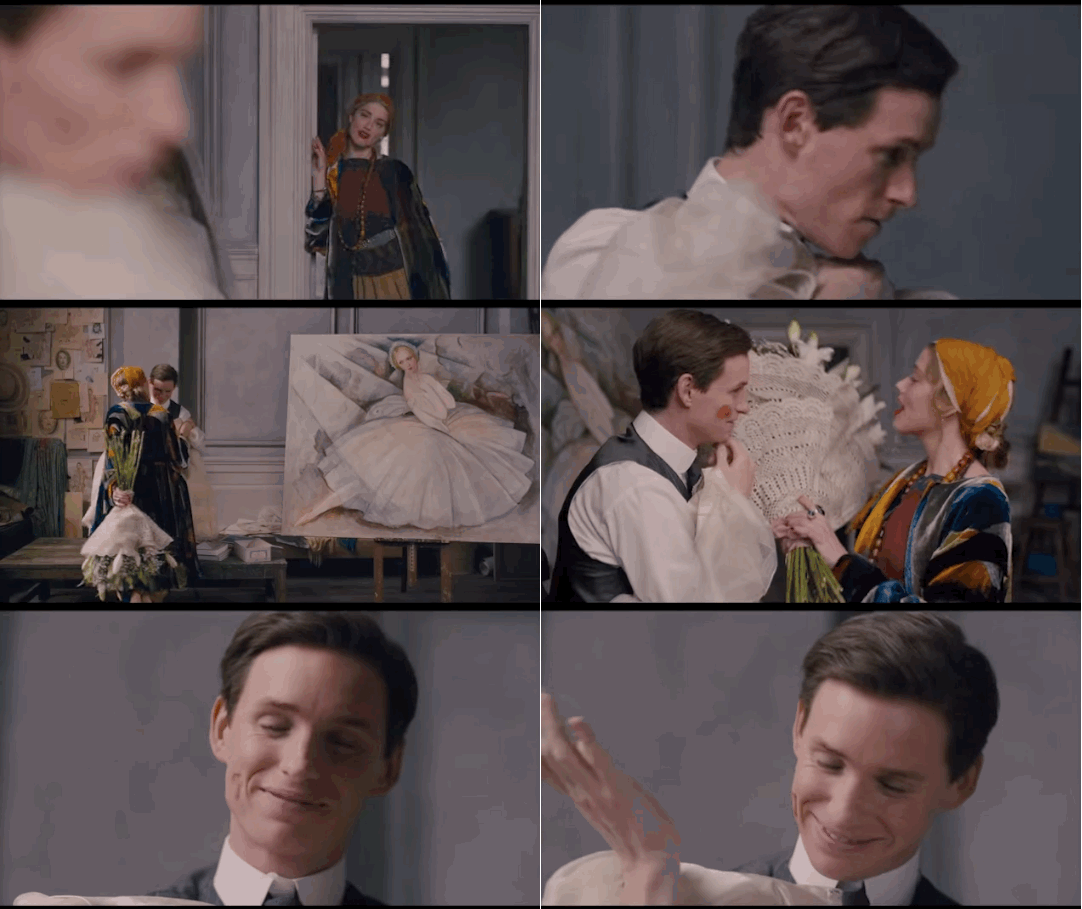
It’s hard to miss the metaphor here, but again, it’s in keeping with the narrative. Here’s a lifeless, broken person in need of repair, a trans person made better through the concern and kindness of her cis contemporaries. I’ve got nothing against framing The Danish Girl as a love story where two people have to work through a series of incredible (and incredibly dangerous) circumstances (even if that’s, as they say, not the whole story), but as a trans narrative, again, we have a failure of imagination that is inherent to the system that birthed it.
The Danish Girl is a movie about a man who wants to become a woman, which is a false narrative cis culture uses to “understand” us. Lili Elbe was a woman, and her story is one of a woman taking great pains for society to accept her as such. Casting a trans actor in this version of events would change nothing without a fundamental shift in the production’s understanding of what’s at stake for Elbe and the trans women that came before and after her. That Hooper’s production appears to suck all the marrow out of this story is hardly surprising. This is the business of inspiration, after all, to take real people and turn them into a message. To take a woman and reduce her to a Girl.