 Welcome to the new, hopefully improved edition of Wrestling Worth Watching. Back when Fear of a Ghost Planet started, this post was a way of looking at everything that happened in the world of televised wrestling that was good, from Chris Jericho trolling the crowd to Brodus Clay debuting as a funk-loving tubbo from outer space to a decent match on some indie fed’s YouTube channel. It was an ambitious project, and one that ultimately failed. In 2012, there is just too much wrestling out there to keep track of it all as it happens. So I’ll be forward and honest from the start of this new project: I don’t watch Impact Wrestling, as they don’t make an honest effort to make their shows available beyond airdate, and Ring of Honor doesn’t air where I live, though I’ll try to catch it whenever possible. These posts may seem like they’re dominated by the WWE, but that’s the reality of nearly every wrestling fan’s situation: the promotion who airs the most free wrestling is the one that gets watched the most. If you’d like to chime in with matches from elsewhere that should be noted, hit me up in the comments section.
Monday Night Raw (8/22/12)
Team Rhodes Scholars vs. Rey Mysterio & Sin Cara: For a month now, the WWE has done everything in its power to revitalize its tag team division, waking the dead by calling a time-tested audible in the long-running Daniel Bryan/Kane feud by pairing the two up and giving them the Tag Team Titles, running an angle where a rival team formed as a result of the champions’ dysfunction, then having a month-long tournament featuring several new teams. The only team that’s broken up as a result of not winning the tournament was the one pairing Kofi Kingston and R-Truth, the previous champions. Now there’s a power tag team (Primetime Players), a team of brothers (The Usos), a high-flying tag team (Justin Gabriel and Tyson Kidd) and these two teams, the most popular/hated and established of the bunch. Theirs was the best tag team match of the week, setting up the long-anticipated slight-letdown of a match between the Rhodes Scholars (I think putting “Team” in front of everything has been the worst part of the division’s rebuild. Team is implied!) and Team Hell No (the exception to the rule, as “team” is meant pseudo-ironically, though “Team Friendship” will forever be the better name). The only reason this wasn’t the best match on Raw is because Dolph Ziggler and Daniel Bryan would later take the floor for 15 minutes.
Daniel Bryan vs. Dolph Ziggler: For a long time, the only person the Money in the Bank briefcase turned into a star was Edge, and really all his surprising title victory over John Cena did was solidify his place as a top-tier talent. The second person to benefit from the odd bump the briefcase provides was C.M. Punk, though it took two tries—and an incredibly good feud against Jeff Hardy—to get it right. Everybody else either wasn’t ready, or wasn’t given something beyond that moment of glory, but in Edge and Punk, the briefcase has found purpose: either a crafty, dickish heel cashes it in and proves himself, or a mawkish good guy cashes it in and quickly turns evil. Dolph Ziggler and Daniel Bryan are the next generation of men who’ve somehow taken that gaudy briefcase and turned it into a platform from which better careers are launched, Ziggler by taking Edge’s role, and Bryan by taking to Punk’s. While both remain a title reign away from true greatness, their match Monday on Raw was a gift from the ghost of WWE’s future, a thrilling contest teasing at the possibilities a full-blown rivalry between the two contain. The point of this was to reestablish the dysfunction between Bryan and his tag team partner Kane, and while that mission was accomplished and the work those two have done together has been very good, matches like this mean I can’t wait much longer to see Bryan on his own again, a mean little man with a nasty beard and a worse submission hold.
C.M. Punk vs. Sheamus: Though they didn’t mention it, there was a nice synergy to this contest, the 30 or so men around the ring not only serving as flesh-and-blood metaphor for the inescapability of the Hell In a Cell structure, but as closure to the mini-issue between Punk and Sheamus that started at the Raw in Chicago, when Punk bolted on a slated title vs. title match to eat at The Wiener’s Circle and hang with Paul Heyman. I haven’t seen every Lumberjack Match ever, but I feel pretty confident in claiming this as one of the best. The match is a throwback to a time when a sheer mass of humanity was enough to pique a crowd’s interest, and lately has been relegated to the typical blow-off match between Divas, the lumberjill match, if you will. Anymore, they’re confusing affairs, the lumberjacks rarely doing their job—containing the action in the ring—and instead clubbering on any poor bastard who ends up on the floor. So it was a sigh of relief when C.M. Punk landed on the floor, in a sea of humanity, and was merely tossed back into the ring. And it was surprisingly O.K. when Sheamus was thrown out there and got beat up, because he landed amongst a crowd of heels and wound up brawling back. Barroom brawls are an environment Sheamus thrives in, and lumberjack matches are a situation where crafty bad guys have to be their most cunning. C.M. Punk was just that, Sheamus was in his element, and the result was the most satisfying Raw main event in some time. The stuff with Ryback I covered last week, but having 30 men around the ring, overkill in any other match, was worthwhile just to see them split when the dude’s music hit.
WWE Main Event (8/24/12)
Dolph Ziggler vs. Ryback: There’s really no better opponent for Ryback than Dolph Ziggler, a wrestler who is, in every aspect, the second coming of “Mr. Perfect” Curt Hennig. If you’ve ever seen Hennig pinball around the ring for a larger, more muscular opponent, then you know what I’m talking about. Ryback’s an act only the most cynical wrestling fan doesn’t like, a monster in the Goldberg fashion who steamrolls through opponents with a variety of ridiculous power moves and stiff-looking strikes. Ziggler flopped around the ring for Ryback’s routine like a mad-man, putting over the legitimate danger presented by the monster while also showing that there’d be no escape for C.M. Punk on Sunday, even without the presence of a gigantic steal cage. The match did its job very well without tanking Ziggler. Credit for that goes to the length of the match—thus far the longest match of Ryback’s run—and to The Miz’s commentary, which pointed out that, against Ryback, everybody is off their game.
WWE Hell In A Cell (8/28/12)
The Miz vs. Kofi Kingston: The third match between these two in as many weeks, and, in many ways, the best of the bunch. Hard to believe that their issue began when Larry King’s wife threw a cup of water in The Miz’s face, but I’ve come away from their series as a fan of both men, when before I was ambivalent towards both of them. The opening two minutes or so were great, Miz and Kingston both fighting and failing to apply their finishing maneuvers, the fact that spots from previous matches evolved and became something else was a very nice touch, and the finishing struggle between the two, with Miz keeping the full nelson he uses in the Skull-Crushing Finale on as the two rolled to the ring and got back up to their feet, was tremendously exciting. Lately, Kofi’s Trouble in Paradise kick has been a devastating-looking, come-from-nowhere move akin to Shawn Michael’s Sweet Chin Music. That’s worked a lot better than the old set-up, where Kofi stands in the corner and tries to pump the crowd for it, much like Michaels did for his kick. And while you wouldn’t know it from the anemic crowd, the last three or four minutes of the match, from when Miz started targeting Kofi’s leg with a weird-looking, over-the-shoulder knee-breaker to the finish, was tremendously compelling stuff. Knee braces and leg casts are things the heel usually removes on an injured opponent, but they took things a step further here, with Miz injuring Kofi’s leg mid-match and stripping his boot and knee pad to further exploit the injury. I loved everything about it, even The Miz’s awkward execution of the half-crab.
The Big Show vs. Sheamus: For me, this was the match of the week, but I’m a big fan of Hoss vs. Hoss battles, something they featured plenty during the championship run of Mark Henry, and not enough during Sheamus’s time with the belt. Built up as a showdown between two knockout blows—The Big Show’s Knockout Punch and Sheamus’s Brogue Kick—the story of this contest wound up being much more complex, with Sheamus withstanding a number of Big Show’s past and present finishing moves, including the giant punch, and Big Show kicking out of the Brogue Kick, becoming the first man to do so in the process. The crowd—dead most of the evening—came alive when Sheamus picked up The Big Show and dropped him with a perfect-looking White Noise, and for good reason: however good Sheamus’s matches as champion have been (and however much he’s been built as the best champ in 10 years), they’ve lacked effective spectacle. The only other guy on the roster who has picked a guy like Show up on his shoulders is John Cena, but you expect that from him. This was built as blow vs. blow, a straight brawl, but that maneuver, more than Sheamus’ triumph over Daniel Bryan at WrestleMania, will be the defining moment of his championship reign. The finish, which saw Show sidestep a second Brogue Kick while throwing a K.O. Punch the champion’s way, was the best moment of the week, two semi-trucks playing chicken in the rain, only one driving away without jackknifing. This one wasn’t pretty, but boy was it effective.
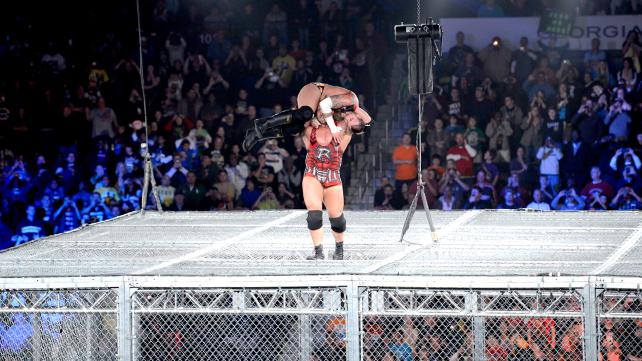
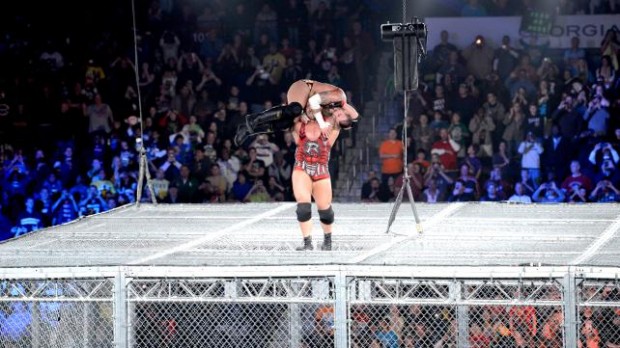
C.M. Punk vs. Ryback: The most controversial match of the year, as even anti-Ryback partisans realized the risk of this match: Ryback loses the “wrong way,” and the WWE is out one potential game-changing superstar. Popular wrestling journalist (a three-word oxymoron, if ever there was one) Dave Meltzer says that he read through dozens of bad-to-middling ideas for the finish of this match, and that all of them were better than the one chosen here. Whatever. In 1998, Ryback’s ancestor Bill Goldberg defeated Hulk Hogan in the Georgia Dome in Atlanta, ushering in what many felt was a new era in WCW. He was undefeated. He was slightly green. But he was at the apex of his popularity and ready for the championship. At Starrcade that year, he was defeated by Kevin Nash, who was aided by long-time running buddy Scott Hall, who used a taser to put “Da Man” (Bobby Heenan’s spelling, not mine) down for the count. It was an awful finish, an anti-climax that didn’t make a whole lot of sense (Hall and Nash were feuding, Goldberg was on the verge of reaching Hogan-esque levels of global fame), and Goldberg—and WCW—never quite recovered. The finish to the Hell in a Cell match between Punk and Ryback is similar in a way—Ryback was screwed over—but the circumstances are different. It doesn’t matter if the “GOLDBERG” chants that follow Ryback are now affectionate, if the same people who chant that stop to join the rest of the crowd in Ryback’s WWE-mandated “FEED ME MORE” chant, Ryback was not ready for the WWE Championship. To my recollection—hardly a useful tool, but one that probably feeds the WWE machine better than a photographic memory of every Ryback match—the man hadn’t bumped for move one of any opponent he faced before this match, from the jobbers named after presidents to the duet of former champions he faced leading into his main event this week. Here’s what Punk needed in order to win: the most biased official in wrestling history. Brad Maddox, last seen close to a month ago missing C.M. Punk’s foot on the ropes, stopped Ryback while he was marching around the ring with Punk on his shoulders. He low-blowed the man, slipped behind him, and quickly counted to three as soon as Punk pushed him over the ref and made the cover. I don’t want to say that it was brilliant, but it clearly shows that someone in the back learned from the essential mistake of the Nash/Goldberg issue, which was never successfully resolved. This was a FIRST TIME ENCOUNTER. That it happened in one of WWE’s most legendary matches was something of a head-scratcher, a calendar-based necessity, but really, it’s the only place it should have happened. Ryback’s destructive ways aided and got in the way of his goal. The cage provided a place where he could look momentarily weak, but also like the freaking monster he is. It allowed Paul Heyman to be at his panicked best. It meant that Punk and the referee would be unable to escape swiftly into the night. It meant Ryback would get his revenge. And he did so memorably, tossing Maddox into the cage as if he were Bam Bam Bigelow and the poor referee his Spike Dudley before chasing Punk up the cage and delivering Shellshocked 20-feet in the air. The show ended with Ryback nodding his head to his own music, foot planted firmly on Punk’s chest. Those who don’t think Ryback got his due last night, that his star was aborted rather than born, aren’t paying attention. The focus of this match, after all, was Punk establishing his legacy, finally gaining the respect of the WWE Universe. Punk is an asshole. A dick of the highest order. His legacy is that of a great, long-tenured heel champion. He stands in defiance of what the fans want to see. He makes those fans want to see his comeuppance even more. He finds and exploits the loophole and expects you to respect him for it. I’m going to come just short of calling this match brilliant, but it’s another example of why Punk’s run as WWE Champion, of late, has been one of the most effective such runs in memory. You wanted Ryback to win? You’re upset with the finish? That’s exactly how WWE wants you to feel. Tune in tonight on Raw to see that snide jerk get what’s coming to him.

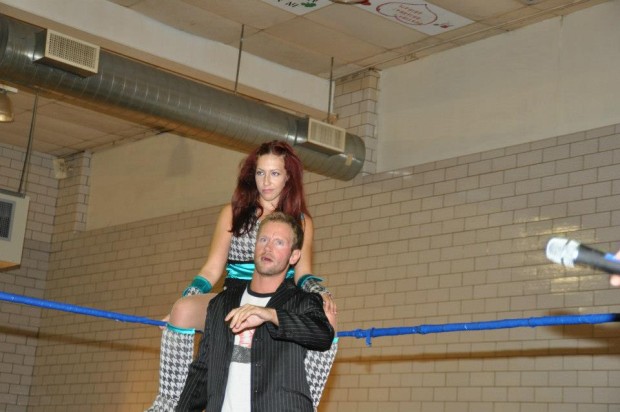
 Wrestling is not without its share of unusual villains. Greg’s hero, Hulk Hogan, lectured his fans on the importance of training, praying, and eating vitamins for a decade before turning his back on a legion of Hulkamaniacs, and many diminutive ex-WWE superstars—Gowen among them—continue to ply their trade in bingo halls and National Guard armories as brash, cocky egomaniacs, indignant that they’ve been “reduced” to wrestling in a high school gymnasium. Iron is unique among wrestling’s unusual heels in that he was forced into his villainy by a fan-base that rejected him and sided with his tormentor, Iron’s teacher-turned-bully, Josh Prohibition.