 Cultish devotees of film often celebrate failure, box office, critical, or otherwise. By designating awards to the year’s worst movies, organizing midnight screenings of a film on the fringe, and writing endlessly about one flop or another, bad movies have a way of sticking around well beyond their typical cultural sell-by date. The phrase “so bad it’s good” is often ascribed to these movies when, in a pre-Internet, pre-Mystery Science Theatre 3000 world, they used to be considered so bad, they’re virtually forgotten. In Best Worst Movie, or Worst Movie? Fear of a Ghost Planet takes a good, hard look at the supposed jewels hiding in a cinematic junk heap. This week, it’s 2008’s strippers-and-zombies epic, Zombie Strippers.
In 2008, as a means of introducing a decidedly NSFW review of the straight-to-DVD breasts-and-gore-fest Zombie Strippers, I wrote that I had never visited a strip club. A weird boast, but something that remains true four years later. My impression of the typical strip club is still informed by what I’ve seen in movies and what I’ve heard from people who have been. In my mind, they’re a strange mixture of Las Vegas glitz and Detroit misery, over-the-top routines and under-the-table transactions, beautiful women bearing it all while also bearing scars. Zombie Strippers presents a world wholly unlike the one I believe in, a world where the only desperation in the job is that it’s been made illegal by a long-reigning Bush/Cheney oligarchy, the only desperate people behind the club’s closed doors the men desperate to get their rocks off. This being a movie starring Jenna Jameson, they do just that. Then they’re eaten.
This is the movie that launched dozens of hopeful Strippers vs. _______ films into the straight-to-DVD sea, and is, in most ways, the only one worth a cursory glance. Beyond Jameson—who plays, appropriately enough, the lead stripper-turned-zombie-stripper—Zombie Strippers functions as an introductory class in stunt casting. Blink and you’ll miss Tito Ortiz as the club’s cowardly bouncer. Stay long enough, and you’ll see Robert Englund in one of his meatiest non-Nightmare roles, the sleazy proprietor of Club Rhinoceros who offers up “face dances” to his customers, leering at the dismay of his dancers, a cadre of women cast as if director Jay Lee was trying to complete a Stereotypical Stripper BINGO card. Vying for the sliver of spotlight that isn’t Jameson’s are a goth (Roxy Saint), Jameson’s rival (Shamron Moore), and a bubbly Christian girl (Jennifer Holland), new to the city but determined to make enough money to keep up with the bills for grandma’s colostomy.
Since Jenna Jameson’s character is the first to be turned into a zombie, it’s Holland’s Jessy whom the film comes to rest upon. When it turns out that being an undead, rotting stripper results in more turned heads and flashed cash, she’s left in a pickle more typical of Ugly Duckling teen romances: submit to peer pressure and join up with the gaggle of flesh-eaters, or be herself, lose everything, and end up mid-afternoon lunch. Given her cornhusking ways, aww shucks accent, and her devotion to Jesus Christ, what she ultimately decides shouldn’t be hard to figure out. The rest of the strippers aren’t nearly as levelheaded. Once the guys in the club go nuts for Jameson and Saint’s living dead girl routine—which isn’t a world of difference from the 15 minutes of stripping Zombie Strippers featured before anybody lost a limb—the rest of the strippers line up and ask to be bitten.
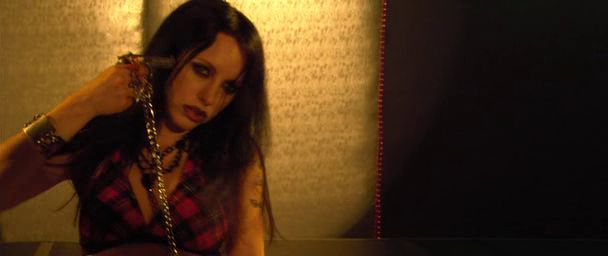
Wondering why the women zombies can strip while the male ones moan and shamble? That’s just the first instance of Zombie Strippers trying its hardest to have and eat as much cake as possible. Early, a scientist explains that the zombie virus remains pure in women and goes bad in men—reanimated women soldiers come back with the strength and ability of ten highly skilled operatives, while reanimated women shuffle around with their arms outstretched. So a good stripper becomes a super stripper when bitten, twirling around the pole like a tornado while the bros in the club make it rain. If I were to die tomorrow, the zombified stripping in this movie would likely go down as the least erotic thing I’ve seen in a movie. The routines of the live strippers here rate a close second.
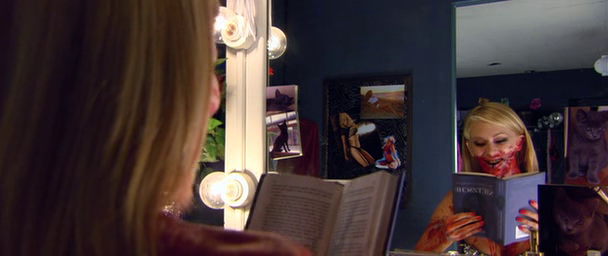
Famously—if anything in Zombie Strippers remains famous four years later—the inspiration for this film comes from an existentialist play. Existentialism’s fingerprints are everywhere, from the name of the town (Sartre) to the hardcover copy of Thus Spoke Zarathustra Jameson reads (“This really, really makes sense now,” she claims) to and the identity crises suffered by the strippers who still number among the living, but the film is only playing at being smart. In terms of depth, Zombie Strippers‘ treatment of existentialist thought runs as shallow as its criticisms of the Bush presidency, a compendium of bumper-sticker sloganeering laid out on a one-page pamphlet dropped onto a group of unsuspecting shoppers at a mall by an anarchist collective trying to hide the gigantic cups of Jamba Juice occupying whatever hand isn’t striking down the man.
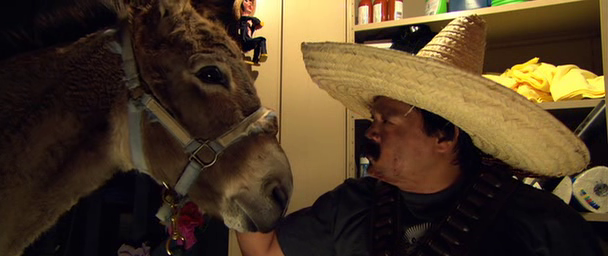
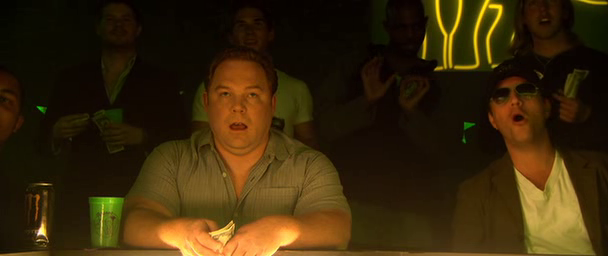
The fact is, Zombie Strippers is as bad—and, at times, as bigoted—as the machine it purports to rage against. The closest this film comes to making a solid argument is when Holland’s character goes up on stage for the first time and tearfully enters her routine. The men surrounding the stage, pumping their fists and waving dollar bills in the air, moan and gnash their teeth like a zombie horde. Men are pigs! the movie lazily points out, but when Robert Englund holds his Mexican janitor’s hand up to the poor guy’s face and asks what color it is, when that janitor is naming his bullets after Mexican heroes before calling the last two “Cinco De Mayo” and “guacamole” because the screenwriters can’t use Wikipedia, when the zombie super-strippers, rotting on stage, take to insulting each other’s hair and cellulite, when the club’s black DJ approaches a a zombified stripper and, in an effort to subdue her, uses a pimp-slap, the marketing copy of this film being some subversive political and social thought piece goes out the window, leaving Zombie Strippers with one leg to stand on: its special effects.
Those, at times, are impressive. Beyond their purpose, what often separates SyFy Original Movies from a proper release in theatres or on a VOD platform is that the special effects fail to live up to the promise of the week’s exotic, too-expensive-to-be-properly-realized title. The zombie make-up here is often pretty good, the best fleshwalker being the unfortunate patron who has his head pried apart like a bag of chips. Chin distended and tongue lolling around, it’s the closest thing to horror in Zombie Strippers, horror not being the film’s aim, but nevertheless an effective image. The work done on Jameson and the rest of the strippers once again suggests that Jay Lee wanted something that’d generate buzz—Jenna Jameson, zombie!—but not at the risk of failing to titillate those who popped the DVD in just wanting to see zombies strip. That goes out the window in the film’s final firefight, as Lee uses every hokey CGI trick at his disposal to crush zombie heads like watermelons, blow their heads up, and have Jameson fire billiard balls howitzer-like from her vagina before getting torn apart, limb by limb. The only things keeping this from SyFy’s Saturday line-up? Nudity, and Robert Englund. That’s an incredibly thin line.
I’ve yet to see anything anointing Zombie Strippers the dubious honorarium of being “so bad it’s good,” but I’ve seen a lot of processed trash in the years following Grindhouse, and this example still stands out, made more noticeable by movie like this year’s Strippers vs. Werewolves and the dozen-or-so uninspired zombie movies that rise every year to stalk the OnDemand section of your local cable operator. It’s easy to see why so many get made: this is a fairly lavish production in comparison to most, but it’s still cheap enough to score a profit on even the most modest return, the big set-pieces looking like a bunch of kids playing a point-and-click shooter at the local arcade. The big, egregious sin here is dressing up a story about strippers and the zombies that bite them as something more than a 90-minute buffet of breasts and blood. Only those with the most sophomoric tastes will find anything here worth remembering. I imagine that sad bastard before his television, gnashing his teeth and pumping his fist. What he would give to be eaten alive by one of these women. No judgement here. We all have immature fantasies about the first time. It’s growing up that matters, and in that regard, Zombie Strippers has aged about as fine as the prospect of a face dance from one of its stars.
Best Worst Movie, or Worst Movie: Worst Movie
Zombie Strippers. Directed by Jay Lee. With Jenna Jameson (Kat), Robert Englund (Ian), Jennifer Holland (Jessy), and Roxy Saint (Lillith). Released April 18, 2008, by Stage 6 Films.
