Category: Film

  • Whatever Enthusiasm I Had for Guardians of the Galaxy Just Died

    Whatever Enthusiasm I Had for Guardians of the Galaxy Just Died

    The Internet continues to be unendingly kind to the Marvel cinematic universe in the wake of The Avengers and its lead-in movies, especially as those involved have started to drop hints as to what’s coming next. Of all the weird, harebrained places Disney could choose to go—and, if the Avengers movies have gone anywhere, none of those places have been weird or harebrained—the announcement of 2014’s Guardians of the Galaxy was unquestionably the strangest. A C-team of heroes comprised of guys like Rocket Raccoon and Drax the Destroyer doesn’t seem like the sort of thing that’ll be a huge box-office success. Thinking about it, neither did Iron Man.

    Guardians of the Galaxy is slated to be directed by James Gunn. Gunn cut his teeth doing Troma movies and wrote the screenplays for Scooby Doo and Scooby Doo 2: Monsters Unleashed, films that are noted for their penchant for ironic self-commentary. Recently, Gunn is responsible for the film Super and the video game Lollipop Chainsaw. That he was announced as the director of a big-budget superhero epic under the purview of Disney surprised me, given that I’ve seen Super and have watched the majority of Lollipop Chainsaw played out on YouTube. Both were exercises in identifying with the horribly puerile sensibilities of a teenage boy; Super the broken heart, Lolipop Chainsaw the rampaging penis.

    Online, Gunn is all-penis. A year ago on his blog, Gunn wrote a post entitled “The 50 Superheroes You Most Want to Have Sex With: 2nd Annual Poll Results!” (He deleted it today, but the Internet forgets nothing.) Polls like this, sad as they are, are nothing new for even reputable comic book websites, but Gunn’s commentary on most of the choices are what pushes the post over the cliff. In Gunn’s defense, he was writing to a group of like-minded fanboys a year ago in promotion of Super, which was coming out on DVD. But that’s a really weak defense. As a joke, as a parody, or as an exercise in fan service, most of what Gunn writes is deplorable and colors in the shady moral areas of Super and Lollipop Chainsaw accordingly.

    On Gambit:

    My girlfriend voted for this Cajun fruit. I think she’s looking to have a devil’s three way with the two of us.  The idea of my balls slapping against Gambit’s makes me sick to my stomach, but I can’t deny the fellow’s pure HEAT, as he yet again placed so high on this list, despite being male and in the presence of so many A-listers.

    On Emma Frost:

    For those men who love rude bitches, the White Queen is number one.

    On Black Widow:

    Natasha Romanova is the highest debut on the list, and, considering she’s fucked half the men in the Marvel Universe, it’s much deserved.

    On Zatanna:

    guess what, Zatanna? Won uoy od mir sboj.

    On Black Canary:

    I sometimes think that the Black Canary is the hottest chick in the DC Universe until I remember that she, uh, fucks Green Arrow.

    On Dazzler:

    Disco Dazzler, Rave Dazzler, and Punk Rock Dazzler, they all have one thing in common – a friggin’ GREAT vagina.

    On Batwoman:

    This lesbian character was voted for almost exclusively by men. I don’t know exactly what that means.  But I’m hoping for a Marvel-DC crossover so that Tony Stark can “turn” her.  She could also have sex with Nightwing and probably still be technically considered a lesbian.

    The accompanying artwork skews heavily towards reptile-brained male fantasy. A charming, 1970s Aquaman rests right below a suggestive image of Psylocke’s ass and several places above an image of Tigra chosen to support Gunn’s joke that, as a consistently poorly written character, you’d “have an easy time talking your way into her pants.” It’s tough to see Gunn’s independent work as anything but reflections of these values, which he now brings to big-budget fruition in Guardians of the Galaxy. Or maybe not. I imagine there are few franchises under tighter control than The Avengers, and that whatever impulse Gunn has to “hilariously lampoon” sexism and homophobia by being a sexist homophobe will be reigned in by a company that’s long known that one does not simply make a billion dollars on a film without appealing to women and gays. Due to the seemingly boundless success Zack Snyder has had in snagging high profile projects, I’m not so convinced.

    I’ve had problems with Zack Snyder’s work for some time now, and whatever excitement I had for the next rebooting of Superman pretty much dissipated when he was announced as its director. Beyond Snyder’s gimmickry (boy does his filmmaking rely on gimmicks), 300Watchmen, and Sucker Punch suggest that Snyder has it out for gays and women, who are constantly punished in Snyder’s films by superior exemplars of masculinity. Sucker Punch has been defended amply by writers I admire (Kim Morgan called it “one of the most misunderstood, feminist, wildly experimental, anti-patriarchy pictures” of 2011), but Snyder’s films just don’t do much for me (beyond his often stirring use of opening credits montages) because his ideas, however bold they seem, are often empty and unsupported.

    I can see the argument for Sucker Punch as a feminist, anti-patriarchy film when someone is writing about it as such, but when watching the movie I fail to register anything deeper than a gathering of video game cut-scenes stitched together by sequences where a group of underprivileged, mentally unstable, disadvantaged girls are aggressively sexualized for the purpose of tantalizing—not repudiating—a male audience. If Snyder is responding to his own work—much like Russ Meyer did with Faster, Pussycat! Kill! Kill!—then it’s in a way so subtle that the audience who enjoyed the homophobia of 300 and the value-added rape scenes in Watchmen escape from his feather-light and puerile retelling of Alice’s Adventures in Wonderland without the burden of guilt. I think Superman has always had (and sometimes lives up to) great potential as a character, but I can’t imagine a Superman movie by Zack Snyder being any good. The best Superman stories, including the best Superman film, rely too much upon Lois Lane, and Snyder, thus far, has proved incapable of directing a film where a woman rises above the status of sexual object.
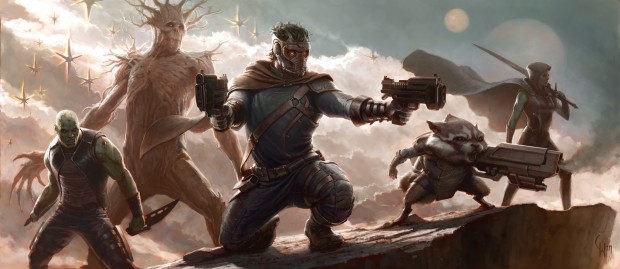
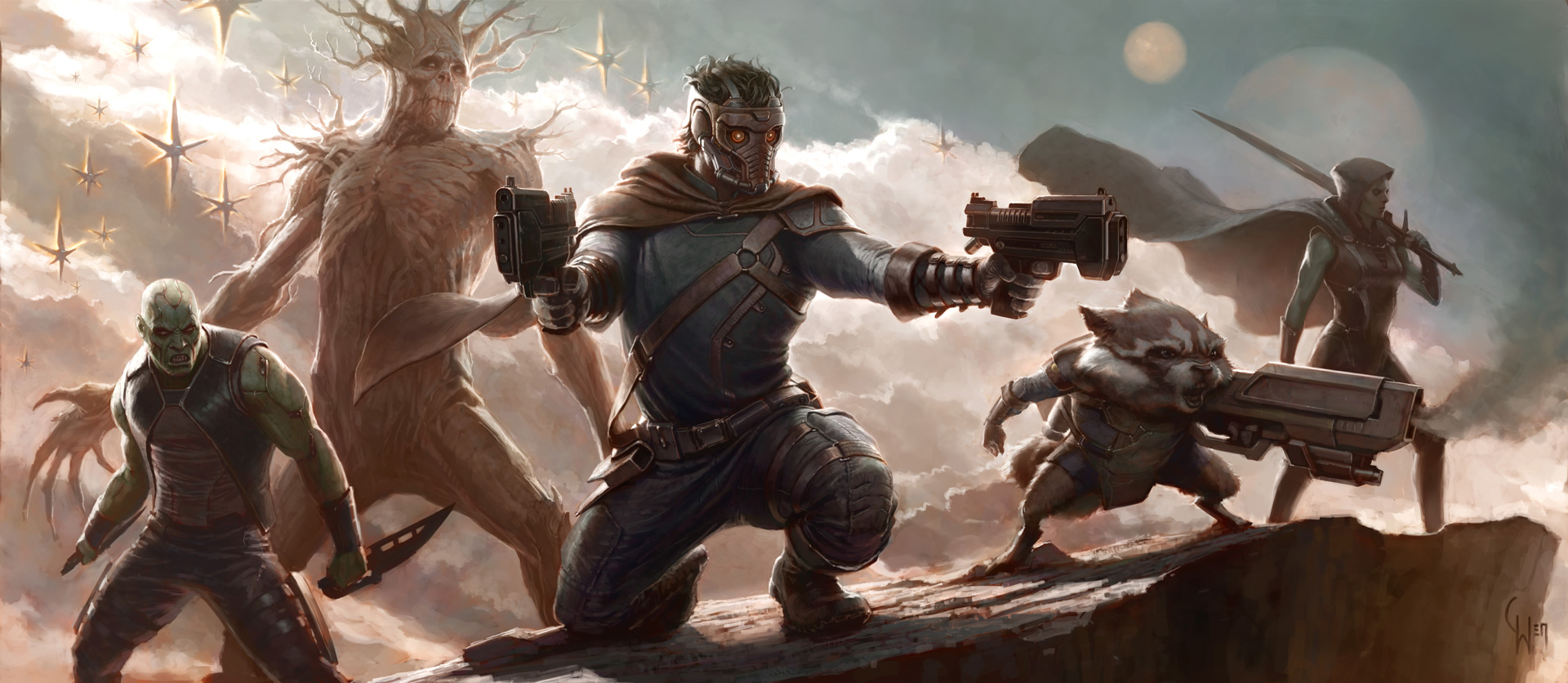
    Based on the above concept art, the one female character appearing in Gunn’s forthcoming Guardians of the Galaxy is Gamora. Not being an aficionado of the more space operatic elements of the Marvel Universe, the only thing I know about her is that she’s the adopted daughter of Thanos, who, if The Avengers was any indication, is probably going to be the main villain of the eventual sequel. Gamora’s slot as the sole female in a club almost exclusively comprised of men is symptomatic of a larger problem with superhero team-ups and is not Gunn’s fault, I realize. A criticism of the Marvel franchise—any comic book movie franchise, really—is that the women within them are only useful for their ability to match wits with their male counterparts. The only heroine not defined by her relationship to a man is Black Widow, and even that’s tenuous. Knowing that the director of a movie that’ll at least tangentially involve Black Widow has written, in so many words, that she’s a slut, is more than a little disconcerting. There’s a fine line separating the depiction of women in action movies as real (or real-ish) people or as hollow, vacuous, fan-servicing shells. It’s pretty clear to see what side of that line Gunn is on.

    Critically, I try very hard not to let my personal biases for or against somebody involved in the production of an entertainment act as a kind of pre-judgement. Had I not stumbled upon the uproar over Gunn’s year-old article, it’s possible that I would have known nothing more about him in 2014, watching Guardians of the Galaxy, than that he directed a mediocre superhero movie and developed a mediocre video game. That movie may have won me over, or it may not have. But the excitement I had for a weird sci-fi movie with anthropomorphic raccoons and other wayfaring space creatures died early this morning with the mental image of Wonder Woman lassoing a guy’s penis. I’m a man, and I understand that the vast majority of content produced within this particular genre is a direct appeal to my gender, but when I read a comic book or watch a movie, I tend to only really enjoy the experience when said comic or film doesn’t make me feel like a creep. Guardians of the Galaxy is so early in production that its IMDB page doesn’t list a cast, but there’s something almost irredeemably seedy to it, now. Unless Disney removes Gunn from the helm, deleting him like an ill-advised blog post, I suspect that seediness will linger, tainting a franchise that, for all its fun, doesn’t really hold up to intense scrutiny.


  • Movie Review: Goon (2012)

    Movie Review: Goon (2012)

    essentialGiven the National Hockey League’s flirtation with work stoppage-induced disaster, Goon plays like an unrequited love letter to a sport whose heart is three sizes too small. The hockey immortalized here—the slow, bone-crunching, blood curdling style of play where one or two men on every squad was hired more for their fists than their abilities with a stick—has been on the endangered list for some time now, first as a consequence of the League’s desire for a faster game, then as concerns over concussion-related brain damage rose, but that doesn’t matter. The hockey of Goon is that of pop-culture past, three twenty-minute periods of blood, mullets, and dirty-minded foreign players. Those wondering how hockey could engender such a devoted, wounded fan base would find their answer here.

    Goon’s hero is a nice, well-adjusted dude named Doug Glatt (Seann William Scott). He’s a bouncer with fists of steel and an indestructible head, skills that serve him well when his buddy Pat (Jay Baruchel, who also co-wrote with Superbad‘s Evan Goldberg) lets his mouth run away with him at a game. When a player has enough of Pat, he charges into the stands. He is promptly put down by Doug, who is quickly invited to play for the local squad. He turns into a local sensation and is hired onto a farm-league team in Halifax, where he’ll serve as an enforcer to Xavier LaFlemme (Marc-Andre Grondin), a shaken star trying to return to form after suffering a monstrous, highly illegal hit from Ross “The Boss” Rhea (Leiv Schreiber), a goon whose particularly dirty style of play sees him in the minor leagues and on his last legs.

    Like Slap ShotGoon follows its fictional team through the wilderness that is minor league hockey. Their hometown of Halifax is a veritable paradise compared to the prospect of “riding piss-hole” on the bus to another town, the punishment for turning in a particularly awful performance. Doug’s teammates are the usual assemblage of sports comedy also-rans: LaFlemme is a womanizing drug addict, the captain is an alcoholic, the coach issues meaninglessly aggressive proclamations, and the announcer is a half-hearted amalgam of Bob Uecker in Major League and John Candy in Rookie of the Year, but the Slap Shot formula—as proven successfully here and by Major League—still works, putting those stereotypes to work as parts to a lovingly constructed machine as opposed to identifiable components left out on the workbench.

    It helps that Doug Glatt is an incredibly likable focal point. A well-meaning, dim-witted black sheep in a family of doctors, Doug’s a guy trying to make the best of the gifts he has. He’s incredibly polite to the men he bludgeons, but his parents look at his barbaric conquests on the rink—and the signs in the crowd reading “Glatt is Hebrew for ‘Fuck you!’”—with obvious disdain. He’s supported by Pat and his brother, but those guys would support him through anything. In a strange city, teaming with a bunch of weird men who look at him like he’s a circus freak, its understandable that Doug looks for some outside validation. He finds it in Eva (Alison Pill), a self-described bad girlfriend who loves beer and finds the violence of the hockey rink a huge turn-on.

    The only character beyond Doug who receives more than an embellishment of detail is Ross Rhea, his rival in the pugilistic arts. That’s thanks largely to reputation. With his mullet, his goatee, and his seen-it-all attitude, Leiv Schreiber is an amalgam of the game’s deadliest goons, a caveman philosopher who sees the destruction of Doug Glatt as a last chance to define his legacy before the game phases him out completely. The miracle of Goon is that it’s able to build anticipation for the eventual slugfest beyond the occasional reminder that, yes, this is important stuff. Even better, the fight lives up to the hype, a gladiatorial death match that’s more gruesome than the pile of dead teenagers at the end of a slasher film.

    If you’re able to look past Goon‘s flaws as a sports movie—the relationship between Scott and the talented but underutilized Alison Pill, being a romance between a nice athlete and a girl with low self-esteem, begins saccharine sweet and ends up somewhat grating—what’s left is an incredibly pleasant experience, made better when the credits roll without the film taking an uncalled for detour into pious sermonizing. Sports movies have become a mostly toxic genre thanks to the odd notion that without several manufactured moments of life-affirming uplift, the events depicted will register as mostly pointless. Goon is proof that if filmmakers love a subject enough, something worthwhile will emerge.


    Goon. With Seann William Scott (Doug Glatt), Leiv Schreiber (Ross Rhea), Alison Pill (Eva), Jay Baruchel (Pat), Marc-Andre Grondin (Xavier LaFlemme), and Eugene Levy (Dr. Glatt). Directed by Michael Dowse from a screenplay by Baruchel and Evan Goldberg.

  • Movie Review: 21 Jump Street (2012)

    Movie Review: 21 Jump Street (2012)

    When Easy A was released last year, it ushered in a brief era of John Hughes nostalgia and the feeling that things within the high school comedy genre could, in fact, get better. A year of repeat viewings and Emma Stone Tumblr .gifs later, and the shine of Will Gluck’s comedy has mostly diminished. It’s a ramshackle tribute to a bygone era in teen filmmaking, its obsolescence made clear by a lack of Hollywood follow-through  It’s much easier to throw a handful of Disney Channel stars into a foreign country or move the cheerleader movie plot into another sport than to hit the sweet spot Easy A was lucky enough to find. No matter. For all that film’s charm and quirk, I was left waiting to see if the high school comedy’s raunchier parasitic twin would crawl its way out of the ditch a legion of Superbad imitators left it dying in. Finally, with 21 Jump Street, it has.


    It’s as odd a candidate as any. A remake of an 80s television program granted enduring cult popularity due to the later fame of one of its stars, featuring a pair of 30-year-old men impersonating high school students doesn’t immediately figure as a good time. Directors Phil Lord and Chris Miller have been here before, though, eviscerating high school culture with their MTV cartoon Clone High, and are smart enough to realize that pop culture and mass media have muddied old tropes and expectations. Nerds, geeks, and environmental activists are portrayed as hip, now. Gays and lesbians are accepted by their peers. While real life rarely bears this out, this is the entertainment industry’s standard operating procedure when making mainstream high school movies. Quirky girl meets sensitive guy, is guided towards relationship by gay best friend. Rinse, wash, repeat. It’s within that formula that 21 Jump Street scores its biggest points. The fish are large and the barrel is small, but Lord and Miller are the first to take aim and fire.

    Morton Schmidt (Jonah Hill) and Greg Jenko (Channing Tatum) are two police academy graduates who’ve long dreamed of the exciting life cops lead. Formerly the high school nerd and jock, respectively, Schmidt and Jenko find each other in class struggling through the areas of their expertise. Jenko helps Schmidt with the rigorous physical activities required of men on the beat, and Jenko helps Schmidt prepare for the exam. They graduate as partners, but police work is hardly the fantasia of explosions, guns, and high-speed chases they imagined. Patrolling the park on their bicycles, they deal with lost Frisbees and rowdy kids. When they luck into a bust of a drug-dealing motorcycle club, they botch things royally and find themselves hustled down to a relaunched undercover program headquartered on 21 Jump Street.

    Though it’s intoned that the Jump Street program is a last resort for young-looking cops this close to handing in their guns and badges, those working the beat seem experts at breaking up high school drug rings. Jenko and Schmidt are assigned to one such task at a school where a new drug is on the verge of going viral, spreading uncontrollable giggles and potential overdoses across the city. Schmidt, the most popular person of his graduating class, is beyond elated for this second chance to relive his peak years. Jenko, who survived his four years at school as an obese Eminem-lookalike, is less than stoked. But it’s 2012, and everything is different. Because of a mix-up with their files, Morton ends up in the less-challenging classes intended for his partner, while Greg ends up taking AP chemistry. Somehow, they fall in with those crowds. Morton becomes one of the most popular guys in high school while Greg falls in with the calculator-and-pocket-protector brigade, still rendered invisible. Morton even ends up skirting an affair with Molly (Brie Larson), the most popular girl in school.

    21 Jump Street never really comments on the creepiness of Jonah Hill’s character having an obvious, hopeless crush on someone half his age, but it has a lot of fun showing him and Tatum so obviously out of their respective elements. Of course, the seedy underbelly of the popular nerd crowd is that they’re the ones dealing drugs, so Morton is caught trying to remain popular with them while figuring out who their supplier is. And Tatum, high on the new drug and blowing through a pop-culture-addled science equation involving unobtanium and radioactive spiders, is appropriately awkward as an obviously too-old-for-high-school man way out of his league. In these situations, 21 Jump Street is often funny enough that it doesn’t matter that both men are being fed bulk amounts of Valuable Life Lessons.

    Where the movie falters is in the police procedural stuff that exists at the film’s fringes. The drug kingpin is an underwhelming reveal, and beyond a sequence where flammable objects refuse to blow up, action movie parody has been done better elsewhere. Ice Cube’s turn as a deliberate, knowing black police captain stereotype is the film’s most tired joke. Cube has enough charisma to make it work once, but even then, it’s redundant: Parks and Recreation‘s Nick Offerman, in a cameo as Jenko and Schmidt’s initial supervising officer, is so note-perfect in drolly observing the ridiculousness of rebooting a mostly forgotten program from the 1980s because the department has “completely run out of ideas” that any further comment from the duo’s supervisors feels like overkill. Going to college with Ice Cube hurling angry thunderbolts at his incompetent officers is an exhausting proposition, but then again, so was the idea of a completely frivolous re imagining of a cult TV show.


    21 Jump Street.  With Jonah Hill (Schmidt), Channing Tatum (Jenko), Brie Larson (Molly), Rob Riggle (Mr. Walters), Ice Cube (Capt. Dickson), Chris Parnell (Mr. Gordon), Ellie Kemper (Ms. Griggs), Nick Offerman (Capt. Hardy), Peter DeLuise (Doug Penhall), and Johnny Depp (Tom Hanson). Directed by Phil Lord and Chris Miller from a screenplay by Michael Bacall, based on the television series 21 Jump Street, created by Patrick Hasburg and Stephen J. Cannell.

  • Movie Review: Cosmopolis (2012)

    Movie Review: Cosmopolis (2012)

    essentialIn reviewing the Don DeLillo novel that became this film, John Updike lamented that, despite the “haloes of import” weaving themselves around the events of the book, “the trouble with a tale where anything can happen is that somehow nothing happens.” There’ve been many odysseys since Homer recounted the one undertaken by Ulysses, but the modern odyssey has been cursed with the observation that nothing happens—despite all possibilities and evidences to the contrary—since Leopold Bloom took his in the novel bearing the homeric hero’s name. Boiled down, Ulysses is an argument that a single day in the life of an ordinary man has the same epic potential as a woe-begotten voyage across the sea.  Cosmopolis, the DeLillo novel adapted by David Cronenberg, makes the same argument, except its protagonist is so obviously set apart from the notion of normality that, rather than watching him shit in an outhouse, we’re left wondering if he shits to begin with.

    Don’t take this as evidence that nothing important happens here. Eric Packer (Robert Pattinson) is as unsympathetic as protagonists get—an unaccountably rich young man who travels across the city in his bulletproof, cork-lined, technological terror of a limousine for a haircut despite Presidential visits, populist uprisings, and threats directed specifically towards him—but there’s something profound in the mundane way he comes to realize that his life is in crisis, something powerful about the way he responds.

    It’s clear from the start that Packer could live in his limousine if he needed or wanted to. It’s outfitted with supercomputers and high-definition video screens, comes with a dedicated driver and crack security force. He tells a person in the car with him that he had the limo lined with cork to keep out street-level noise. There’s a hint of annoyance when he reports that it doesn’t work. He asks the driver where the cars go at night. He’s moved by the death of a rapper whose music constantly plays on the second of his private elevators. Packer’s elevated himself to godhood and isolated himself in his car, his office, and his apartment, but this is the day the world checks in to remind him that he is just a man.

    This is fine by Packer, whose unstated goal for the evening is complete self-destruction. A parade of people who work for him (Jay Baruchel, Juilliette Binoche, Samantha Morton, and Emily Hampshire, among others) sit across from him in the limousine and deliver various bits of bad news. He gambled against the rising value of the Yen and lost. He cannot buy and transport a cathedral from Europe for the purpose of sealing it away from the rest of the world. His wife (Sarah Gadon) seems to only tenuously remember their marriage. Both question its function, have yet to consumate. His chief of security (Kevin Durand) knocks on the window to tell him that it’s better to turn back. There’s the President’s visit. The rapper’s funeral. A riot. His limo is battered, damaged, vandalized. He is stalked through the city despite his vehicle’s relatively mundane appearance among the rest of the white limousines. Though his life is actively worsening with every inch of separation between his limo and its point of origin, Hacker remains undaunted. He will have that haircut.

    The haircut, of course, is nothing. It’s desire. Desire, Cronenberg suggests, more often than not ends in disappointment. Of the two arguments Cosmopolis makes, this is the more successful. This is obviously a film for and of its time, but any statement Cronenberg tries to make about the nature of money and misery can’t help but ring hollow. Eric Packer is a man too far removed from humanity to let something like the loss of wealth and autonomy spoil this detachment, and when a figure emerges from the shadows to embarrass him, his response is a fit of brutal violence. The most effective scenes here involve Packer’s interrogations of those whom he has real, unadulterated contact with. How does one detach themselves from the notion that someone is only sleeping with you because the thought of you as an assassination victim is a small excitement in an otherwise routine day? The idea of a haircut is nice, but does the excitement remain once the barber has dusted your shoulders? If he should slip and cut off too much?

    Cosmopolis is a surprisingly unsettling film for much of its runtime, content to limit the actions to the busy, businesslike world of Packer’s limousine and the anarchy going on outside. The limo is not unlike the gate of a fortress, and those outside it, having laid siege on the vehicle’s occupant for most of the day, are tantalizingly close to bashing those gates in. One Packer roams free from his car, Cronnenberg is unable to maintain the vibe and momentum he’d so subtly built. The conflict, from that point on, is no longer between two colliding worlds, but two ships sending each other conflicting signals. In the barber chair or seated across from his “credible threat” (Paul Giamatti), Packer’s interactions with the people unfortunate enough to be in the same room as him feel like two people reading aloud pages from vastly different books. On one hand, that’s human interaction. On the other,  Cosmopolis‘ refusal to submit to the needs of a standard narrative leads to a frustrating conclusion, with nothing resolved. The lives of two men intersect. All we know is that both have urges. For what? Not even they seem so sure.


    Cosmopolis. With Robert Pattinson (Eric Packer), Kevin Durand (Torval), Jay Baruchel (Shiner), Juliette Binoche (Didi Francher), Samantha Morton (Vija Kinsky), Sara Gadon (Elise), Emily Hampshire (Jane Melman), and Paul Giamatti (Benno Levin). Directed by David Cronenberg from a screenplay by Cronenberg, based on the novel Cosmopolis by Don DeLillo.

  • Movie Review: Beyond the Black Rainbow (2012)

    Movie Review: Beyond the Black Rainbow (2012)

    Beyond the Black Rainbow is a curiosity; were it released in the heydey of low-budget, straight-to-VHS horror films, it would have been the format’s most staggering achievement, an ambitious blend of Kubrickian visual cues and DIY attitude. In 2012, with VOD services and endless ways of accessing talented, self-assured gems that’d otherwise slip between the fingers, there are plenty of movies vying to occupy the same space as this one, films using the same low-fidelity ethic, films with the same influences, films purporting to de or reconstruct a genre. As such Beyond the Black Rainbow is a victim of its time, a retro-futuristic slasher film with a tense atmosphere, but not much that holds up to intense scrutiny.
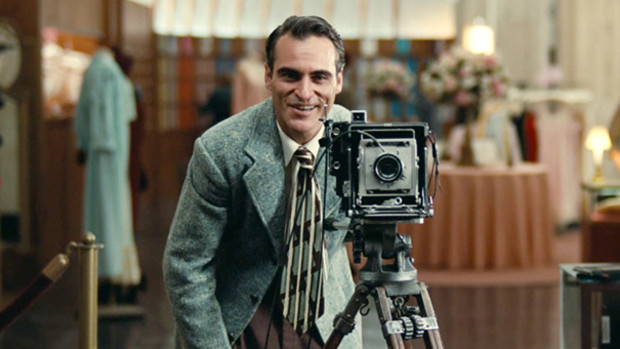
    Director Panos Cosmatos spends the majority of Beyond the Black Rainbow building an intensely mysterious world, an odd dome in Parts Unknown where resides the last remaining members of the Arboria Institute, an ironically named cult-cum-learning-center that proposes, in the film’s infomercial-like prelude, to help its adherents reach a higher purpose. Twenty years elapse between what’s shown in the Arboria Institute’s pitch and the events of Beyond the Black Rainbow. If the Institute is thriving, we don’t know. Working in its dome are a nurse and a doctor. Living there (against her will) is a girl, her room a bed, a television, and a computer-controlled glass door. The harsh whites of the Institute suggest an extreme sterility, like somebody walking its hallways has something to hide. The score is dark and threatening, a dirty, synth-driven engine to rival the one propelling Drive.

    Though Cosmatos has been accused of taking inspiration from and composing his film inbetween bong rips, focusing more on what’d look good to somebody under the influence than on his film’s narrative, it’s the vibe and atmosphere of the Arboria Institute that stand as Beyond the Black Rainbow‘s greatest achievement. The rest of the film, despite the relative paucity of hand-holding dialog, is much simpler than it looks. Trim away the fat—the Institute, the protagonist’s telekinetic powers, most of the supporting cast—and Beyond the Black Rainbow reveals itself as the story of a man driven to do terrible things by his obsession over a woman.

    A doctor (Michael Rogers) makes daily interrogations of a patient (Eva Allen). The patient appears to be the only person living at the Arboria Institute, though she is visited by the doctor and a nurse. What’s unclear initially is if the doctor seeks to cure his patient, or torture her. For that matter, it’s unclear if the doctor is even a doctor, or if Barry Nyle is something else entirely. Elsewhere within the Institute, there’s a pyramid made of light. When the light is on, the girl is weak, helpless. She takes Dr. Nyle’s abuse. She sits in the corner of her cell like a ragdoll. When the light is off, she can move. She can think. Considering what she’s able to do when given this ability, it seems like a bad idea for Dr. Nyle to turn the pyramid off, but he’s toying with her. He wants to see what she will do. When the illusion of freedom is complete, he turns the light back on. They start over again.

    The other elements of Beyond the Black Rainbow aren’t nearly as compelling as the relationship between Dr. Nyle and his patient. The nurse is disposed of after she sees what Nyle has been drawing in his diary. Dr. Nyle’s wife is disposed of once his intentions towards the girl become clear. The founder of the Arboria Institute still lives within its walls, but he’s dying alone in a room deep within the compound. Beyond the Black Rainbow visits these people to show Dr. Nyle’s psyche unraveling. It’s effective until midway through the movie, when we flash back to Nyle’s initiation an unnerving scene bathed in white, a white Nyle vomits all over. It’s the other side of 2001‘s lysergic ultimate trip. What comes out the other end is a man willing to kill to consumate his obsessive behavior.

    Emerging from the flashback, suffers from narrative sloppiness and a sudden urge to shock its viewers. I suppose that, in a lair as large as the one this film occupies, anything could be living within its many rooms, but the decisions Cosmatos makes are often confusing, robbing the girl’s escape of the sense that Dr. Nyle is the threat until he stalks out into the open after her, his head newly shaven. The imagery is often compelling, but a sketchy sense of narrative is a big impediment to anything like a lasting impression. Were the scenes in this movie the sentences of an essay, you could rearrange them at will without losing (or further granting) it meaning.


    Beyond the Black Rainbow. With Michael Rogers (Barry Nyle), Eva Alan (Elena), Scott Hylands (Mercurio Arboria), Marilyn Norry (Rosemary Nyle), and Rondel Reynoldson (Margo). Directed by Panos Cosmatos from a screenplay by Cosmatos.

  • Movie Review: The Master (2012)

    Movie Review: The Master (2012)

    essentialPaul Thomas Anderson’s The Master is an often impenetrable movie, its characters—masters of obfuscation, all—shroud themselves in secrecy and purposeful vagueness in much the same way their real-life counterparts did. Forget the Church of Scientology, though. If you go into this film looking to see how Anderson does or doesn’t explore the motivations of a man like L. Ron Hubbard, you’ll only end up lost. The Master is a movie involving a cult. For it’s members, it is The Way, not The Cult. That’s how all cult members see their cult of choice, and that’s all anybody can really say about the subject-at-large. Instead of considering The Master as a film about a cult, think of it as a film about the strange, seemingly incongruous relationship between the man at the helm of a burgeoning movement and another man who is very much an outsider. The common denominator between the two? Magnetism.

    Of course, magnetism is what draws devotees to a master, but Freddie Quell (Joaquin Phoenix) is a rabid, masterless animal whose primary concerns are sex and alcohol. In the Navy, as a department store photographer, working fields in California, Quell is an artist of unorthodox liquors, guzzling rocket fuel, paint thinner, mouthwash—everything but beer, whiskey, or wine, so long as he remains in a pleasant stupor. The men and women Quell works with are inexplicably drawn to Quell and his potions, surrendering sex and sense for the stuff in Freddie’s flask. That some people end up dead after drinking his liquor is of no greater consequence to him than a morning hangover, the realization that he can’t remember his evening. That a migrant worker dies because of Freddie’s mixture has him on the run, but fortune smiles upon him: he stows himself aboard a private yacht belonging to a wealthy author who agrees to take him on as a seaman so long as he produces more of “that wonderful potion.”

    The author in question is Lancaster Dodd (Phillip Seymour Hoffman), a man who claims that his books hold the key to humanity’s shedding its animaistic urges and ascending to a higher plane of being. He’s promised the world—and his growing group of followers—a sequel that will reveal more of what’s necessary. On the boat, he entertains guests by day and locks himself in the study at night, working on the book. Then he finds Freddie. Freddie with his potions. Freddie the animal. Freddie whose conversion to Dodd’s way of thinking would represent a major breakthrough for The Cause. Freddie who hasn’t felt at home, who hasn’t been purposed, since returning from the war. Lancaster Dodd offers Freddie Quell a home and a purpose. Of course he joins.

    Inevitably, this has repercussions neither party foresaw, though it’s probably worth questioning if Freddie thinks any of his actions through before undertaking them. Dodd has in Quell something of a Pit Bull, an animal who lashes out to protect his master. A man like that has his uses, but if the aim is to civilize the beast within Freddie, his boorish behavior isn’t helping. Dodd, staring into the jagged, broken crevasse of Quell’s face, must wonder if his new devotee hears his message, or if he merely pretends to, having no other place to go. Freddie, meanwhile, takes to the rituals and routines of The Cause like a tortured psychiatric patient, which, I would argue, he is. The film’s best sequences have Dodd and Quell seated across from one another, Dodd pestering Quell with a series of questions, statements, or tasks. His rules are strict. If Freddie makes an error, they begin again. Freddie makes many errors. Dodd’s relentless calm taunts him. Quell breaks down. Screams. Cries. Pours forth stories he’s never told anyone. Then Dodd asks if he’s a liar. They begin again. Sometimes Dodd’s son-in-law (Rami Malek) is in the room with him as an agent provocateur, theorizing about and insulting Freddie as he calmly tries to take this round of abuse. He’s often unable to sit through the first sentence, having already jumped to the conclusion. They begin again.

    The impenetrability of The Master, whatever the codified messages contained in the mostly un-preached-from books of The Cause stand for, are subterfuge for a narrative mostly concerned with the deeply intense relationship that quickly develops between Dodd and Quell, who find themselves wrestling—sometimes literally—with opponents they’ve grossly underestimated. This is most evident observing the behavior of Dodd, the man who wants to cure man of its animal impulse. The façade he’s built and strengthened, the movement he’s grown, the success he’s experienced, all that comes under fire as it becomes more and more clear that Freddie isn’t improving, that the methods of The Cause are inspiring little to no change him. The pressure this causes leads Dodd—who flawlessly presents himself as an erudite man of class and good standing on most nights—to blow-up at the timid followers who know more about Dodd’s Cause than he does, rebuking them more harshly than he does Freddie because, unlike Quell, they won’t fight back.

    Quell, either because he wants to ride this train as long as possible or because he really does see The Cause as a way to better himself, finds temptation everywhere. Despite the war and his behavior, women are drawn to him. There’s always a steady supply of alcohol, always a man who needs to be assaulted to protect Dodd’s interests. Dodd tries breaking Quell’s behavior through the endless repetition of question and task, often leading Freddie to bash his head against the wall. Peggy Dodd (Amy Adams)—Lancaster’s wife—takes a more direct approach as members of The Cause grow increasingly wary of him, threatening abandonment if he can’t stop drinking. He agrees, but, again, Freddie’s a liar. He can’t stop himself from drinking anymore than he can stop Dodd’s daughter (Ambyr Childers) from flirting with him. Both, after all, are methods of escape Freddie has experience with, that he knows will feel good, even if only for a little while.

    It won’t take much deep reading to see Peggy as the true driving force of The Cause, a woman who knows she’s married to a fraud and has every intention to continue perpetuating it. She drives Dodd to write, pushes him across country to promote his teachings, perceives the damage Freddie has caused them. Lancaster’s actions are not those of a man who is the master, but of a man who finds himself serving two taskmasters: his wife, and his mission to cure Freddie. One has to give. When he hugs Quell, congratulating him on finally passing examination, it is very much like the kiss Judas gave to Christ, simultaneously a knife in the back and an act for those around them left not bleeding. Really, the hug is meant to assuage Freddie Quell’s growing doubt and rage, but Dodd has made another critical underestimation of his pupil, not nearly the simpleton rube he seems.

    Plenty has been written about Paul Thomas Anderson’s decision to film The Master in 65mm, both in terms of how the format may have been wasted on a film that doesn’t spend much time outdoors, and how the increasingly rare process draws the viewer into the landscapes provided by Hoffman and Phoenix. The way a film is shot often rates as minutia, but here, I think is purpose. There’s an intensity between the characters that matches the scope of the screen, the two men struggling with their need and desire to conquer each other, the woman losing sight of the small empire she’s built. The triangle between the three is not unlike the relationships between characters in a D.H. Lawrence novel: there’s a sexual charge to the proceedings, but the men lack the vocabulary necessary to trigger any release. Anderson’s focus on interior space here also recalls Lawrence, making the brief interludes when the film opens to wide spaces—the ocean, the desert—all the more terrifying. As Freddie rides a motorcycle out to the vanishing point, leaving Lancaster Dodd and his family to observe him growing smaller and smaller in the distance, the silent space between the two men could suffocate them both.


    The Master. With Joaquin Phoenix (Freddie Quell), Phillip Seymour Hoffman (Lancaster Dodd), Amy Adams (Peggy Dodd), Laura Dern (Helen Sullivan), Ambyr Childers (Elizabeth Dodd), Jesse Plemons (Val Dodd), and Remi Malek (Clark). Directed by Paul Thomas Anderson from a screenplay by Anderson.