
 The only explanation for a movie like A Glimpse Inside the Mind of Charles Swan III is that America loves a good rehabilitation story, and few in that vein have been juicier than Charlie Sheen’s. For all the attention garnered by his very public firing from Two and a Half Men and the meltdown that followed, Sheen’s path back to respectability—whatever that means to him—is very different from that which has been encouraged by reality television. Instead of signing up for a session with Dr. Drew and engaging in public bloodletting, Sheen returned to work. He created and produced a one man show and toured around the country. He signed on to a new sitcom, Anger Management, and went on a marathon binge of filming, creating 90 episodes where once there was but a whisper of a show about a Charlie Sheen like character attending anger management courses. And now, with Charles Swan III, Sheen has made his long-promised return to film. He should have stayed away.
Sheen’s career over the past few years has been deeply rooted in his belief that people like him. This isn’t an unfair assumption. To tour as Charlie Sheen and to play Charlie Sheen on television is to court a certain audience—fans, mostly—who are willing to put up with a performer’s foibles in order to enjoy his vibe; his Charlie Sheenness, if you will. These are designed to be disposable units of entertainment, each installment as forgettable and vaguely pleasing as the last. Films, however, are different. They’re longer, obviously, but movies—especially art movies, which is what Charles Swan III desperately wants to be considered as—tend to be indelible, a side effect of being projected on gigantic screens. Even from a balcony, there is no mistaking the Charlie Sheen of Charles Swan III with a mere mortal. He’s a being of pure ego, a puppy demanding your love and affection with the force of a hurricane.
Director and screenwriter Roman Coppola caters to Sheen’s sensibility, casting him as a successful artist whose commercial prospects have made him a rockstar. His friends love him, women can’t get enough of him, and when life gets him down, the world stands still waiting for him to roar back to life. Charles Swan III spends a considerable amount of time in a funk. His girlfriend (Katheryn Winnick), enraged that he keeps a drawer full of candid nude Polaroids of ex-flings, dumps him. Depressed, he gathers her shoes into a garbage bag and attempts to throw them over a cliff. When he fails, his frustration leads him to crash his car in a record producer’s swimming pool, where he has a mild heart attack. Over the course of conversations with his sister (Patricia Arquette) and friends (Jason Schwartzman as comedian Kirby Star, Bill Murray as his accountant, Saul), and Charles’s elaborate fantasies about death, sex, and persecution, Coppola tries his damnedest to paint Swan—and Sheen—as a figure deserving of sympathy, but he fails his man at every turn.
Charles Swan III is a fairly detestable human being, and the world he lives in is a male fantasia where women are either sex objects, ball busters, or savages. Murray, Schwartzman, and the rest of the cast play down to Sheen’s level, presenting caricatures of the personae they’ve developed in the films of Wes Anderson, which is appropriate given that Coppola—who co-wrote Moonrise Kingdom and The Darjeeling Limited—has chosen to make a cardboard Wes Anderson picture. Beyond the early notion that Swan has an overactive imagination, there’s no reason for him to have a couch that looks like a fully-dressed hot dog or for his car to have gigantic decals of bacon and eggs applied to the doors other than that it looks cool and whimsical in some modest, unexplained way. The production design of Charles Swan III is the only element of the film worth praising, but even that must be within reason. However dollhouse-like Anderson’s films often end up looking, at least his houses, schools, and trains feel lived-in. Coppola’s, on the other hand, tend to feel like a warehouse filled with kitschy “vintage” stuff he found on Etsy, like Juno’s hamburger phone if the point of making Juno was the hamburger phone.
Before accepting that he’s a likable, misguided, goofball lothario, Charles Swan III spends a lot of time fending off accusations of selfishness and laziness. Coppola’s film strikes this apathetic tone early, which may be proper of any movie where Charlie Sheen tap dances on his own grave. Though Coppola has said otherwise, positing his decision to cast Sheen as an opportunity for the talented actor of Wall Street and Platoon to once again make something of himself, the resulting movie looks, sounds, and feels like a too-late cash-in on the Year of Charlie Sheen, nudging his 60 Minutes interview and his Comedy Central roast into decidedly pretentious waters. A Glimpse Inside the Mind of Charles Swan III is excruciating, like watching a 90-minute press junket interview where Sheen pretends, albeit not very hard, to be a more likable version of himself. He’s already done that across several forms of media, many considerate enough to allow one to change the channel.
A Glimpse Inside the Mind of Charles Swan III. With Charlie Sheen (Charles Swan III), Jason Schwartzman (Kirby Star), Bill Murray (Saul), Katheryn Winnick (Ivana), Patricia Arquette (Izzy), Aubrey Plaza (Marnie), Dermot Mulroney (Doctor), and Mary Elizabeth Winstead (Victoria). Directed by Roman Coppola and produced by Coppola and Youree Henley. Screenplay by Coppola.
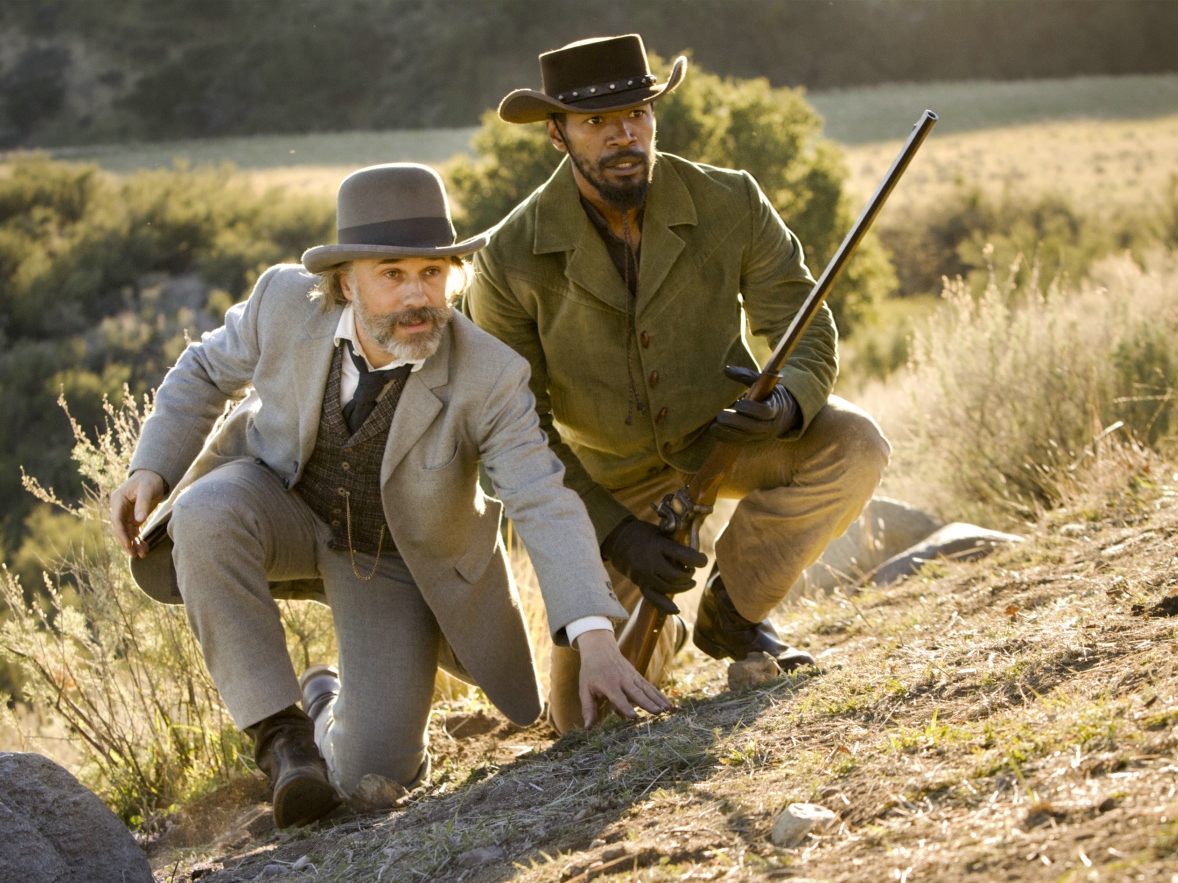
 Django Unchained, the latest in a string of violent revenge fantasies from director Quentin Tarantino, never quite feels like a finished film. According to Tarantino and Samuel L. Jackson, there exists a much longer cut of the movie that fills in crucial information on a number of characters, and given that its soundtrack is punctuated with bits of dialog not heard in the film, that longer cut is also a few shades more sadistic than what made theaters. Much has been said and written about the way Tarantino peppered Django Unchained with racial epithets unbecoming of a white director or a politically correct society, but it’s the violence I keep coming back to. Not the cartoonish shootouts pitting skillful bounty hunting duo Django (Jamie Foxx) and Dr. King Schultz (Christoph Waltz) against any number of hickish gunslingers, but the violence of slavery itself, particularly as it is visited upon Django’s wife, Broomhilda (Kerry Washington), who is whipped, branded, raped, scolded, and locked in an iron box under the hot sun as punishment for trying to run away.

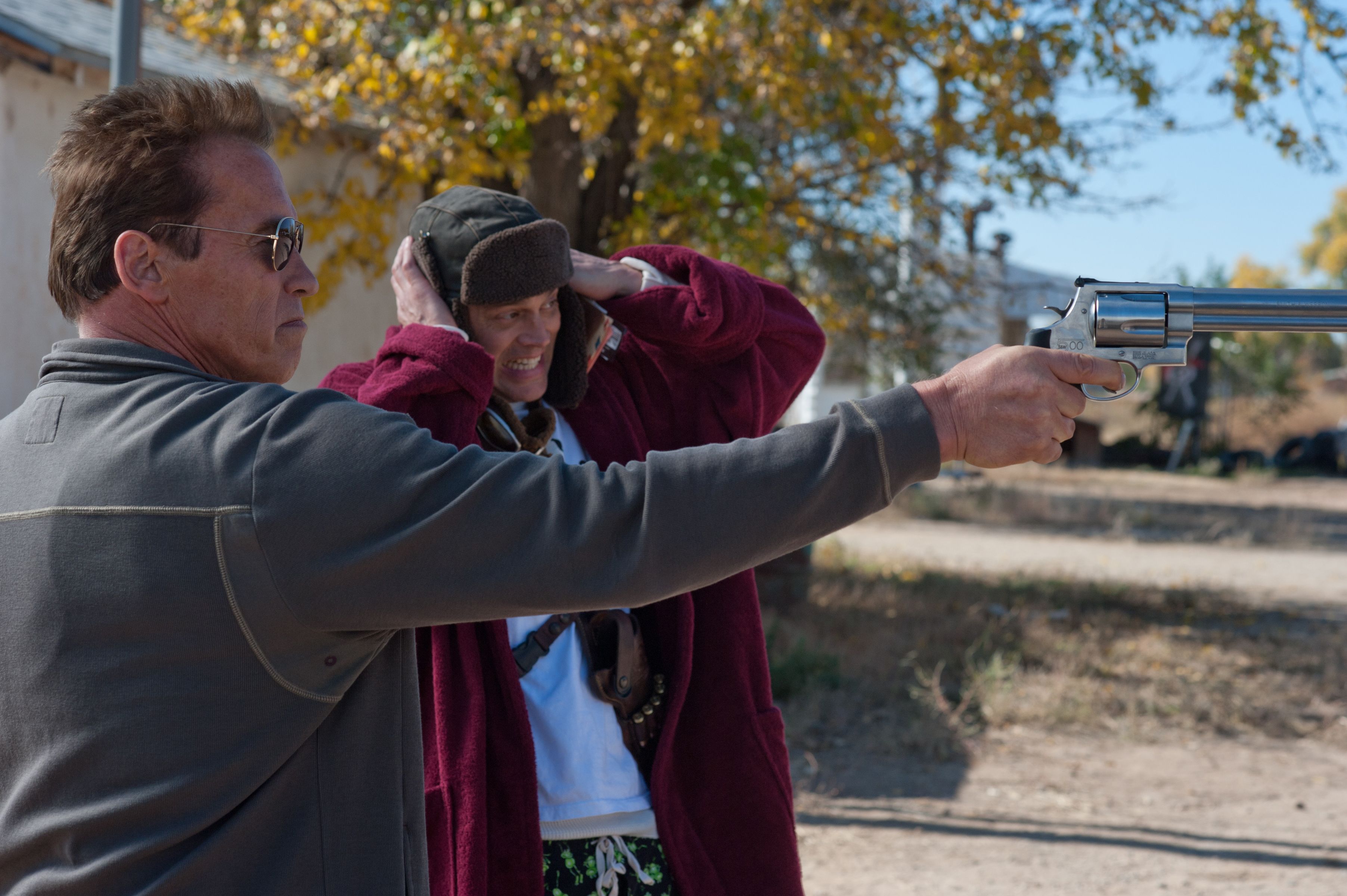
 Though botox, spray tans, and intense training regimens can try to reverse the ill-effects of time, even the most stalwart action hero will eventually succumb to the ravages of his old age. Though Channing Tatum, Sam Worthington, Gerard Butler, and Jason Statham are for one reason or another incapable of claiming the skull- and gun-hewn thrones of 80s titans Arnold Schwarzenegger and Sylvester Stallone, nearly every role the two have taken since Terminator 3 has acknowledged that their heads will eventually be unable to bear those heavy crowns. Of course, the empire the pair surveyed has shrunken considerably since the 1980s. While Stallone has been able to make hay by revisiting Rocky and Rambo and has made a small fortune with the Expendables movies, the kind of dumb, charming action movies he and Schwarzenegger used to make between tentpole movies like First Blood or Predator are no longer the cash cows they once were, nor do they make tentpole movies like First Blood or Predator anymore. After an extended dalliance with politics, Schwarzenegger makes his proper return to action films with The Last Stand but, instead of being hailed as a conquering hero, finds himself saddled with a January release date—typically the death knell for films that aren’t expanding Oscar contenders.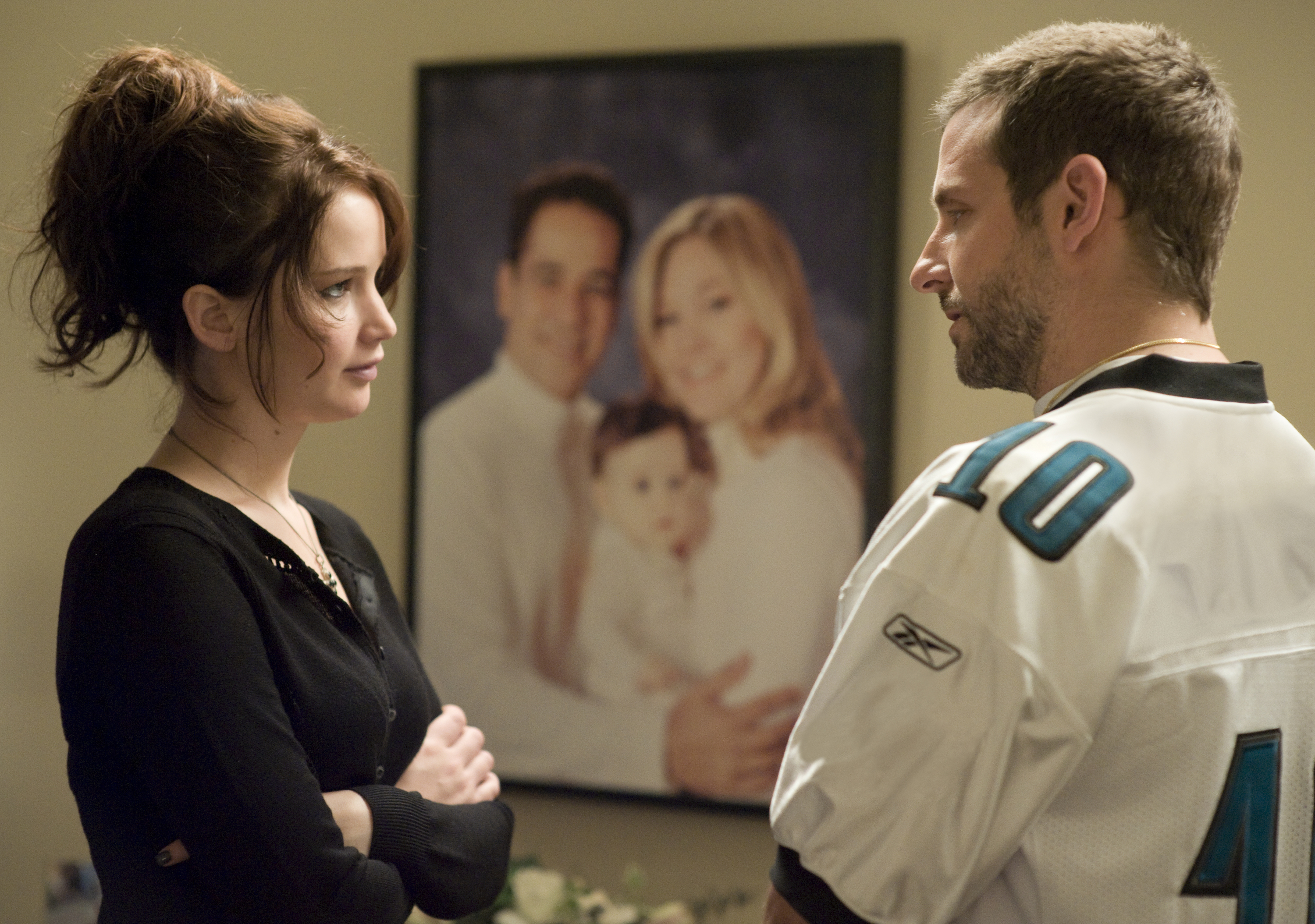
 David O. Russell was seemingly born to make movies about the modern American male. As codified in Three Kings, The Fighter, and now Silver Linings Playbook, an American man is intense, uncompromising, and without a filter. He is always underestimated. He is driven to conquer. In search of Kuwaiti gold, championship belts, or the satisfaction of winning a high stakes gambit, an American man never rests. To rest is to die. Patrick Solitano (Bradley Cooper) is unquestionably an American man. Told by his wife that he needs to lose weight, he dons a hoodie and a garbage bag and sprints through the neighborhood. Wishing to reconnect with her, he reads every book she assigns to her high school students. Told by doctors, friends, relatives, and the police that he can’t see his wife again, his mind races; he has to see her—the only question is how?
 Way out west they made this movie, a movie I want to tell you about, movie by the name Movie 43. At least that’s the handle its loving producers gave it. Movie 43 doesn’t have much use for the name, itself. This Movie 43, even though its about a deranged man (Dennis Quaid) who pitches a movie to some poor schmuck producer (Greg Kinnear) at gunpoint, never calls itself anything. That’s fine. Movies as bad as Movie 43 probably don’t wish to self-identify. There’s a lot about Movie 43 that doesn’t make a lot of sense to me, and a lot about where it was produced, likewise. But, then again, maybe that’s why I find that place so darned interesting.